TTG Asia
Asia/Singapore Friday, 19th December 2025
Page 1539

Malaysian agents craft special luxury deals for Asians

0

As hotels and tour operators in Malaysia rack up higher tourist receipts thanks to the competitive ringgit, they are rolling out upscale offerings targeted at Asian visitors.

Industry players note that Asian visitors are more willing to splurge, even upgrading their hotel rooms and purchasing more luxurious experiences.

Tan: more room upgrades

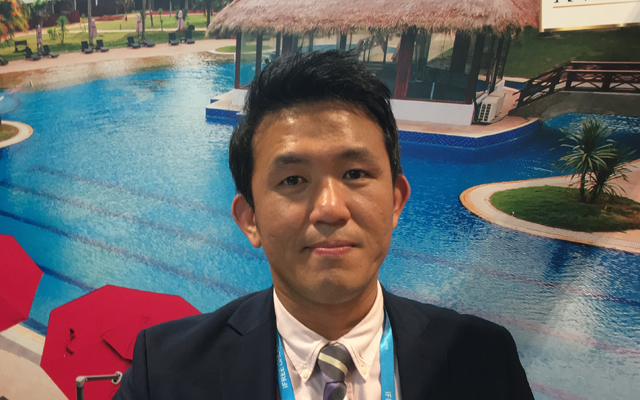
Sand & Sandals Resort & Spa, located on Desaru Beach, has seen an uptick in guests choosing larger and more plush room categories, said its director of sales, Owen Tan.

“Our guests are also spending more in restaurants and on spa treatments,” noted Tan. “We are now offering spa and water-sports packages to attract more visitors.”

The resort’s key markets are in Asia, including Singapore, China and Hong Kong.

Also identifying this trend, inbound tour operator Synergy Tours – which previously specialised in the European market – has developed packages specifically for Asian travellers that include shopping stops and upscale hotels.

“Asians prefer the city life and are more willing to spend on shopping, such as buying products unique to the destination,” said Kan Pooi Yew, business development manager of Synergy Tours. “Shopping is in high demand for this market.”

She added: “We’re not offering budget tours for the Asian market since everyone else is doing the same.”

Instead, it is targeting Chinese business travellers with packages that include value-adds like transportation, guided tours and translation.

Conversely, the European market prefers to spend less while on a longer trip in Malaysia.

“Even though their currency is much higher than the ringgit, Europeans are not willing to spend much,” said Kan. “We frequently receive requests for more budget-friendly options.”

However, longhaul markets stretch their vacation time longer, with Europeans touring Malaysia for one to two weeks with Synergy Tours or even staying up to a month in resorts on Langkawi, according to MK Hotels & Resorts’ group assistant director of sales, Mohd Ariff Mokhtar.

These markets often prefer value-for-money offers or completely relaxation without any extra activities or experiences, said Kan and Ariff respectively.

  • reporting live from PATA Travel Mart, Macau

Qatar Tourism Authority opens offices in China as ADS comes into effect

0
Photo credit: Qatar Tourism Authority

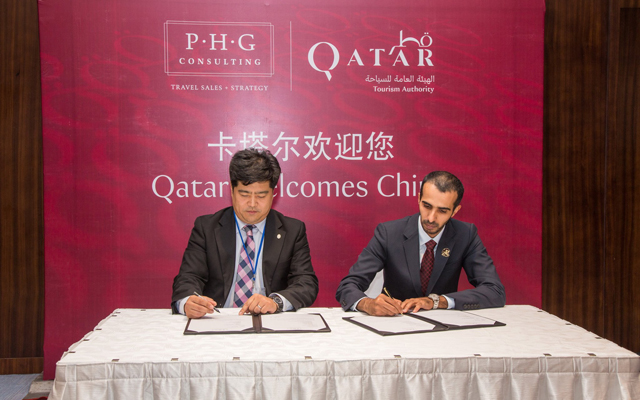
On the back of Qatar getting Approved Destination Status from China, Qatar Tourism Authority (QTA) has opened representative offices in China, with headquarters in Beijing and supporting locations in Shanghai and Guangzhou.

The offices will be operated in partnership with Preferred Hospitality Group’s PHG Consulting division, which provides representation and consultancy services for destinations and travel players.

Photo credit: Qatar Tourism Authority

According to Rashed AlQurese, chief marketing and promotion officer at QTA, Qatar´s marketing campaign in China will cover promotional initiatives, including workshops, sales visits, travel agents destination training through QTA´s online TAWASH programme, partnerships with tour operators, and innovative activities.

“China has risen rapidly as a major source of outbound tourists and we have identified it as a key source market for future growth, among both leisure and business visitors,” said AlQurese. “Our on-the-ground presence in China will enable us to actively promote Qatar to Chinese consumers, and develop relationships with members of the Chinese travel trade.”

He continued: “Now that Qatar has been granted Approved Destination Status, our work can begin immediately, and will culminate in a major campaign that will kick off in January, which will include advertising in major publications, key outdoor locations and fam trips for media.”

Moreover, QTA’s website is now available in Mandarin, giving Chinese travellers easy access to information about the destination´s tourism offerings, hospitality options and key tourism events online. Visit Qatar will also establish a presence across the most prominent Chinese social media platforms in the coming months.

Commented Sultan Salmeen Al Mansouri, Qatar´s ambassador to China: “Qatar has become an increasingly accessible destination for Chinese travelers, especially after Qatar waived entry visa requirements for Chinese citizens.

“At the same time, the Chinese outbound tourism market has been growing exponentially, making the time ripe for Qatar to establish a presence in China and actively engage with the domestic travel and tourism market.”

QTA´s office in China is the third to open in Asia and the ninth globally. It joins an international network currently covering the UK, Ireland, France, Germany, Austria, Switzerland, Italy, Turkey, the US, the GCC markets and South-east Asia. QTA officials anticipate the opening of additional offices in Russia and India before the end of the year.

Giannouka rises to top APAC post at Carlson Rezidor

0
Giannouka at APAC helm

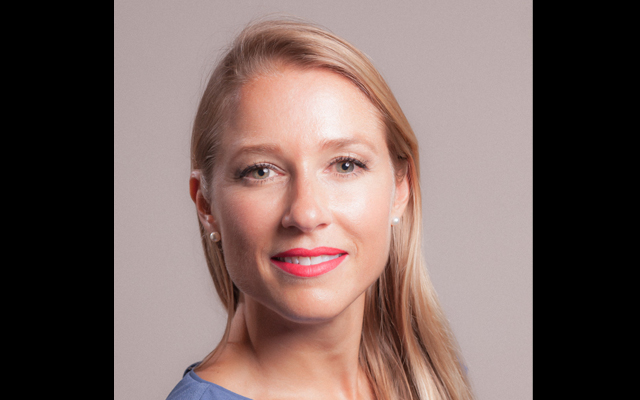
Carlson Rezidor Hotel Group’s restructure in January this year has resulted in the departure of several of its regional leaders, including its Asia-Pacific president, Thorsten Kirschke, and the group has just now has appointed Katerina Giannouka as Kirschke’s replacement.

The appointment is a rise for Giannouka, who was previously head of development for Asia-Pacific and China for Rosewood Hotel Group. Based in the Asia-Pacific regional office in Singapore, she will join no later than December 4 and will report directly to John Kidd, CEO and COO of Carlson Hotels.

Giannouka at APAC helm

Following HNA Group’s acquisition of Carlson Hotels in December 2016, which also resulted in HNA owning 51.3 per cent of Rezidor, Kidd leads Carlson Hotels while Federico Gonzalez Tejera is CEO of Rezidor. While they operate as separate entities, a global steering committee was set up with the aim of providing strategic direction to both companies. Tejera is chairman of the committee.

Giannouka will also be a member of Carlson Hotels’ Executive Leadership Committee where she will work in tandem with the global and Asia-Pacific leadership teams to drive success and growth for Carlson Rezidor Hotel Group, a statement said. In her role, she will be responsible in leading the Asia-Pacific executive committee and its corporate offices in Singapore, Shanghai and Delhi.

“Asia-Pacific is a key growth engine for Carlson Rezidor Hotel Group as we expand our presence and develop our successes,” said Kidd. “Katerina’s dynamic and energetic leadership experience, complemented with business intelligence and a tenacious work ethic, are testament to her accomplishments in Asia-Pacific and EMEA. I am confident that she will propel our Asia-Pacific business to greater heights.”

Artotel comes out of transformation with four hospitality brands, event arm

0
Adding a beach club concept and a budget hotel brand to its hospitality portfolio

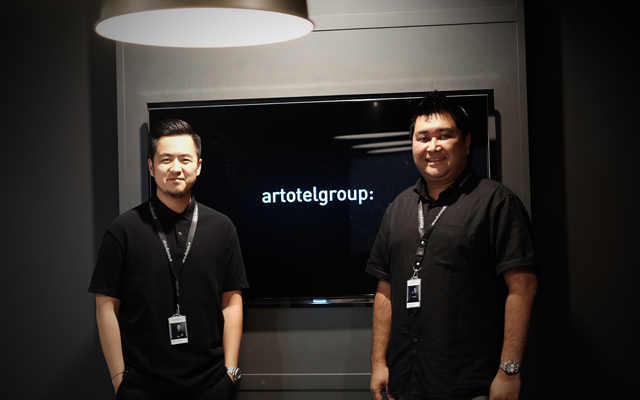
Formerly just a hotel management company focusing on art-inspired hotels, Artotel Indonesia has transformed into Artotel Group, a company with three businesses lines, namely hospitality, event management and curated merchandise.

Under its hospitality portfolio are four brands: Bobotel, Artotel Beach Club, a boutique Curated Collection with Canggu and Lombok properties in the pipeline, and Artotel which debuted in 2012.

Adding a beach club concept and a budget hotel brand to its hospitality portfolio

Bobotel is a budget hotel brand targeting mass market. With 15m2 rooms, Bobotel will typically be attached to commercial spaces like malls, airports, main train stations and office buildings. The first opening is expected in Kelapa Gading this year.

The first Artotel Beach Club will open late 2017 iin Sanur, Bali and will offer local cuisine and laidback beach vibes.

The group will soon launch its event management arm, Artotel Project Series, which will offer consultation services for the organisation of events such as art exhibitions and art workshops. It will also offer consultancy to businesses wanting to collaborate with local artists.

In May, Artotel Group also introduced Art of Life offering a collection of urban and hip merchandise featuring original arwork from emerging Indonesian contemporary artists. There’s a website for it to reach local and overseas markets and an Art of Life booth in every Artotel hotel.

Along with the expansion, former corporate general manager Eduard Rudolf Pangkerego has been promoted to COO of Artotel Group.

“We hope that with our transformation and expansion, the company is now able to accommodate all market demands in Indonesia and of course globally,” Erastus Radjimin, CEO of Artotel Group, said, adding that hopes are for its four hospitality brands to grow beyond Indonesia.

Tour East boosts Europe sales network

0
The DMC opened a sales office near Frankfurt and appointed a representative in the UK

Tour East Group, part of the JTB DMC network, has upgraded its UK, Europe and Russia sales infrastructure.

A sales office has been opened just outside Frankfurt to service the Continental Europe region, and is headed by newly appointed director of business development – Europe, Vishen Mootoo.

The DMC opened a sales office near Frankfurt and appointed a representative in the UK

In the UK, Select-Representative has been appointed to support sales activities in the UK, Ireland & Scandinavia.

Both join the existing Moscow office to deliver a market-focused support mechanism.

Shige Suzuki, president and CEO, Tour East Holding, said the changes come at a strategic time for the group as it rolls out its next generation of B2B booking engine for hotels and resorts.

SHR makes a move on Asian hotels

0
Rosser: cross-context booking experience

Asia has one of the fastest growing hotel markets in the world, but as the industry moves into the mobile space, the region’s immense potential remains largely untapped.

“Half of all online travel is booked on mobile devices in China. But beyond China mobile penetration falls, with 80 per cent of travel still booked on laptops or desktops in India and 70 per cent in Japan,” said Drew Rosser, SHR’s vice president of sales.

Rosser: cross-context booking experience

Referencing a Phocuswright hospitality trend report, Rosser noted that Asia had one of the fastest-growing hotel markets in 2016, with a projected growth rate of seven to nine per cent over the next four years.
In South-east Asia, mobile bookings make up 62 per cent of hotel reservations by Indonesian travellers – the highest in the region. Trailing behind are Thailand at 42 per cent and Malaysia at 23 per cent.

Spotting this trend, Rosser said SHR is making moves on Asia to open players in the region up to its mobile solutions. This includes Windsurfer, which will be the first CRS to interface with Protel HotelSoftware and include Protel’s new Whisper Screen technology.

The newly forged alliance gives SHR access to Protel’s 14,000 global hotel clients’ transaction and preference data, enabling them to offer their hotel clients data insights pertaining to guest experience.

SHR is banking on Protel’s network to roll out outreach and marketing efforts in Asia, including “joint webinars, roadshows, speaking engagements and press releases”, shared Rosser.

More than 2,500 hotels in 81 countries currently use Windsurfer, and SHR hopes to grow this number by tailoring its products to Asian markets.
One example is through social media and messaging functions. Rosser added: “As we look at our product growth, we believe that it is the guest who should be at the centre, driving decisions for technology.

“One way of doing this is having a cross-context booking experience… Now with the adoption of messaging apps, hotels must once again meet the guest communication in the format in which they want to hear from them.”

He described flexible communication between hoteliers and their guests through different booking stages; such as emails during the planning phase and SMS during the in-stay phase.

“With this in mind our portfolio growth will reflect this direction in the upcoming months and years,” said Rosser.

  • reporting live from PATA Travel Mart 2017, Macau

New hotels: Hotel G Yangon, Hard Rock Hotel Shenzhen, and more

0

Hotel G Yangon
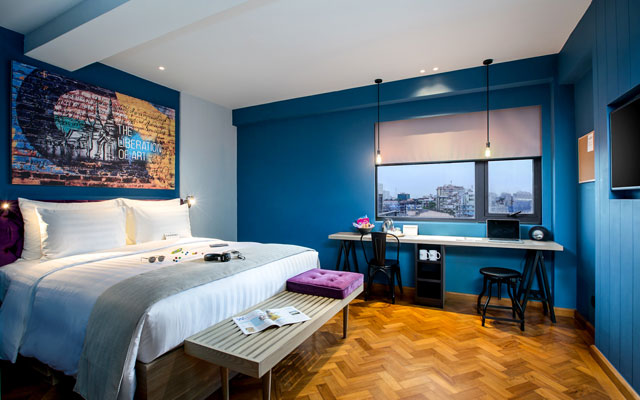
Billed as “Yangon’s first lifestyle hotel”, Hotel G Yangon’s 85 rooms range from 15m2 to 30m2 across four categories – Good, Great, Greater and Greatest, and come furnished with a Bluetooth stereo alarm, LED smart TV and Press Reader. Higher category rooms also have a Handy. Facilities include a gym, studio with a weekly schedule of yoga, pilates and Zumba classes, a gift shop, and the Babett Eatery & Bar.

Hard Rock Hotel Shenzhen
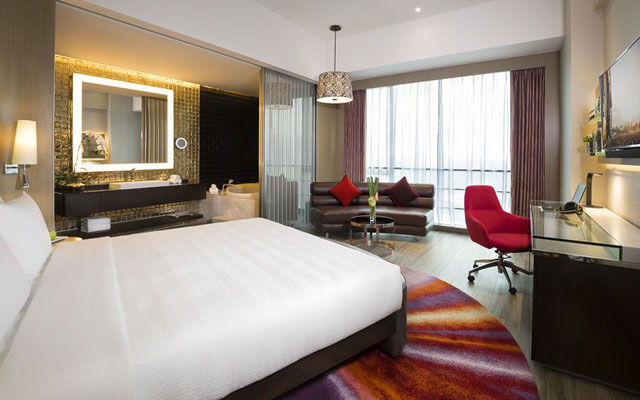
This is Hard Rock’s first hotel in Mainland China. It is located in Shenzhen’s Mission Hills Centreville. Throughout the 258-room property, guests will be able to check out over 160 rare and valuable memorabilia – from Hard Rock’s 80,000+ piece collection – on display. Amenities include four F&B venues, 1,000m2 of event facilities, kids’ club, gym and rooftop pool. The hotel also offers the brand’s signature music amenity programme, The Sound of Your Stay, where travellers can rent a Fender guitar, or mix music with the Traktor Kontrol Z1 controller.

Hotel COZi Wetland
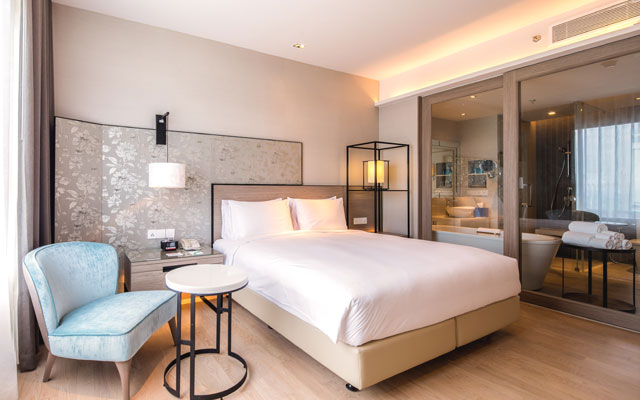
Tang’s Living Group’s has launched its first hotel under the midscale Hotel COZi brand in Hong Kong. Five minutes away from Wetland Park, the hotel offers 336 rooms across 16 floors. All rooms have free Wi-Fi and Handy, but higher category rooms come with extras such as a microwave oven and multifunctional radio. Three more properties will open in Tsuen Wan, Kwun Tong and Tuen Mun.

Holiday Inn & Suites Rayong City Centre
The first Holiday Inn & Suites Hotel in the eastern province of Rayong offers 288 rooms over 30 storeys, 64 of which are longer-stay suites while 224 are guestrooms. Facilities include nine meeting rooms and ballrooms, an infinity pool, fitness centre and five F&B options. The hotel is just over 30 minutes from U-Tapao Rayong Pattaya International Airport and next door to Passione Shopping Mall.

Cassia Bintan
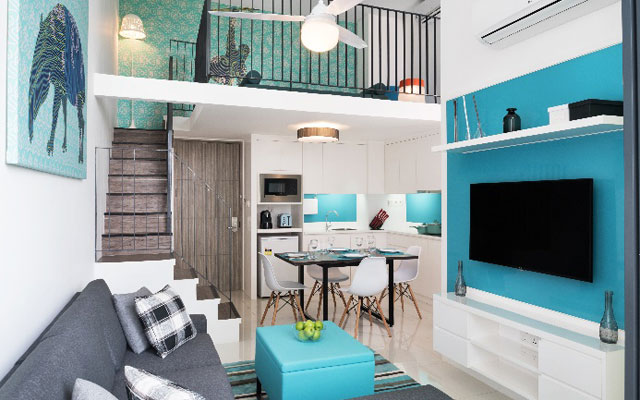
Part of the Laguna Bintan integrated complex, Cassia Bintan currently has 56 available rooms (with plans to increase capacity to 180 by 2019). Room configurations vary, from one- to two-bedrooms, to loft living or single level with kitchenette. Each of its rooms and public spaces are decorated with traditional Indonesian art created by local artist Adi Dharma. Amenities include the Xana Beach Club, numerous dining options, while various activities such as jetskiing or ATV-ing can also be arranged.

Maldives: a paradise redefined?

0

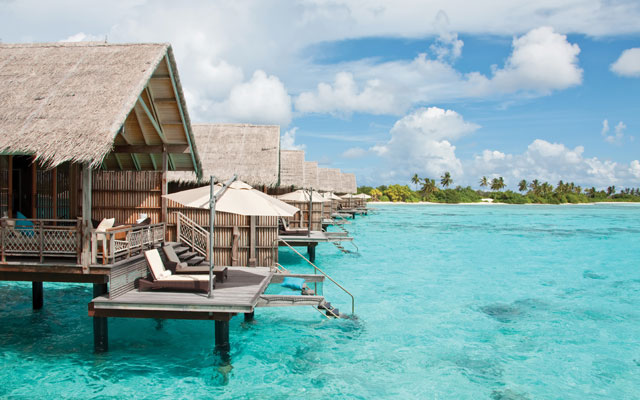
The Maldives’ exclusive island resort image is what made it into a premium destination on the international travel scene, but the entry of budget airlines, as well as a surge in budget accommodation options have put the atoll nation within reach of a larger group of travelling masses.

But that consequent rise in tourist arrivals hasn’t eased the oversupply currently grappling the Maldives, which had 28,726 beds in 2016 compared with 25,221 beds in 2010, according to statistics from the Ministry of Tourism, Arts and Culture Maldives.

In 2009, tourist arrivals by air to the Maldives totalled 655,852 and average occupancy stood at 70.2 per cent while the average length of stay was 7.8 days. In 2016, tourist arrivals by air had doubled to 1.3 million but average occupancy rates dropped to 68 per cent; the average length of stay, meanwhile, declined to 5.6 days.

As a result, price wars have become inevitable as the Maldives grapples with a room glut.
Suresh Dissanayake, corporate general manager – sales & marketing, Adaaran Resorts in Maldives, said: “Two years ago, a room in a five-star property in Maldives was sold from US$700 with breakfast. Now, five-star room rates start from US$500.”

Peter Gremes, general manager at Reethi Beach Resort on Fonimagoodhoo Island on Baa Atoll, added: “Christmas has traditionally been a peak season in the Maldives and it was unheard of in the past for hotels to offer discounts. For this year, some five-star resorts are offering up to 20 per cent discounts… and four-star properties that maintain their rates now become more expensive.”

Gremes expects even fiercer competition in 2018. “With more new properties coming up in Maldives, average room rates will drop further. There’s also competition from guesthouses on local islands and from Airbnb,” he said. “Then there’s external competition – destinations such as Phuket, Bali, Hawaii and Mauritius, among others, are also vying for international tourists.”

The government and private sector both realise that the way forward is to increase tourist arrivals to lessen the impacts of oversupply and bring up room rates. However, Shabeer Ahmed, founder of Sunland Group, warns that this must be done gradually instead of aiming at a high level in the short term.

At the Bank of Maldives Hotelier Summit, which was part of the inaugural Travel Trade Maldives event in July, Suresh opined that the Maldives should explore “organising international sporting events and entertainment events as well as using international celebrities” to promote the destination.

But that is easier said than done, countered Ibrahim Asim, director, Maldives Marketing & PR Corporation (MMPRC), largely due to the logistical challenges that organising large events would pose to small islands like Malé. Island resorts also face constraints in limited hotel capacity and transport options to cope with large visitor influx.

To make the Maldives a top of mind destination for international visitors, MMPRC in February launched an integrated marketing campaign, Story of Maldives, for 2017 and 2018. The campaign focuses on emerging trends such as experiential travel, food, cultural tourism and ecotourism, placing a huge emphasis on utilising the Internet and social media to tech-savvy millennials.

The government has also embarked on an ambitious US$800 million mega project to expand and upgrade the Maldives’ main entry point, Velana International Airport. The plans include the construction of a brand-new runway, which can accommodate the world’s largest passenger airliner – the Airbus A380 – when it is operational by mid-2018.

“The runway will definitely be an incentive for bigger and more aircraft to use Velana. As of July 2017, there were 34 airlines flying to Velana,” revealed Lionnel Maugis,” chief development officer, Maldives Airports Company.

More domestic airports are being constructed at farther islands such as Kulhudhuffushi in Haa Dhaalu Atoll, Funadhoo in Shaviyani Atoll, Nilandhoo in Faafu Atoll, and Maavarulu and Faresmaathoda in Gaaf Dhaal Atoll. When these five airports are operational come October 2018, they will improve connectivity from Velana International Airport.

As well, new airlines flying into Malé’s Velana International Airport in the coming months include Alitalia’s thrice-weekly flights from Rome (commencing October 31, 2017) and Air France’s twice-weekly services from Paris’ Charles de Gaulle Airport (commencing November 1, 2017).

This is indeed good news for the Maldives as both Italy and France are major European markets and had contributed to 71,202 and 40,487 visitor arrivals respectively in 2016, taking up third and fourth places after Germany (106,381) and the UK (101,843).

AirAsia Thailand recently commenced flights into Malé from Bangkok in July. Meanwhile, AirAsia Malaysia is looking at increasing its daily frequency in the near future due to the existing high passenger loads, Spencer Lee, head of commercial, AirAsia Malaysia, revealed in mid July.

The million-dollar question
But a bigger question surrounding the Maldives’ branding persists.

The Maldives’ accommodation scene was upended in 2009, when the government allowed locals to open their own guesthouses on local islands. This shift in policy opened new accommodation options as tourists were no longer limited to resort islands.

Then came the LCCs the likes of AirAsia, Tigerair, flydubai and SpiceJet flying into Male, when coupled with the shift in accommodation policy, started attracting middle and budget travellers as the destination becomes more affordable.

It also means the Maldives is losing its luxury shine, and opinions are now divided on whether the atoll nation should rethink its position as a luxury destination in light of the recent price wars.

Of the opinion that the Maldives should reassess its marketing strategy, Reethi Beach Resort’s Gremes opined: “We should not concentrate exclusively on the luxury segment. We should also look at attracting the middle-income segment and budget travellers holidaying in the Maldives.”

Mohamed Reza, director business development at Sunset Maldives, an inbound travel agency, added: “When (tourists) see the room rates at resorts and luxury brand names like Jumeirah, Four Seasons, St Regis and Shangri-La, they think this is a luxury destination. More needs to be done to promote affordable luxury in order to grow the budget and middle income segment of travellers.”

Furthermore, the “affordable luxury” strategy has proven successful for Plumeria Maldives Hotel in attracting millennial and student travellers, especially the Asian markets as well as the growing price-sensitive markets from Eastern Europe, sales executive Rial Hossain told TTG Asia.

On the contrary, Resort Life Travel’s head of reservation Yves Laurrice Conti thinks that the destination should keep its luxury branding or risk diluting its image, which will be difficult to recover from.

She shared: “Some travel bloggers describe their experiences of staying in guesthouses on local islands as a luxury destination on a budget. This ‘luxury destination on a budget’ tagline should be promoted more for guesthouses on local islands but not for the four- and five-star island resorts. The luxury branding should be used to remind the market at all times what Maldives has to offer.”

Teoh Leng Lan, executive director of Malaysia-based Sedunia Travel, contended: “The destination has to be remarketed in line with changing trends. Luxury and affordable luxury – why not keep both brands and have the best of both worlds?

“You’ve got to differentiate the atoll islands from Malé and the local islands. The atoll islands must still be promoted as luxury because so much capital, time and effort had gone into developing the resort properties. It is not right to take away the luxury branding, but at the same time, you can still sell affordable luxury in Malé and the local islands.

“Now that rates on the atoll islands have dropped from a few years ago, don’t you think it will attract more interest from visitors?” she questioned. “(How the Maldives is marketed) should trigger an interest to the destination.”


Shout out to Alberta

0

It’s the province Canada’s charming prime minister Justin Trudeau forgot in his speech when he kicked off the country’s 150th birthday celebrations on July 1, shouting out to all of Canada’s 13 provinces and territories – except Alberta. Realising his gaffe, Trudeau, in the true style of a heart-throb, jumped back on stage, blew Alberta a kiss and proclaimed: “I love you, Alberta”.

These days however, the western province of Canada is on the mind of Asian travellers, especially those from China, Japan and South Korea, where it’s seeing “very promising tourism growth” thanks to rising numbers of millennials, said Travel Alberta’s vice president business development, Karen Soyka.

This generation seeks adventure, exploration and authenticity and Alberta’s spell-bounding mountains and glaciers, national parks and wildlife, arts and culture, shopping and dining, make it a compelling package. Banff, Jasper and Lake Louise in the Canadian Rockies were packed with young Asian jet-setters (as this editor saw during a holiday there in mid-June), their excited voices showing a diverse Asian market. Aside from Chinese, Japanese and South Koreans, there were many Indians and Indonesians.

There is even more reason to visit Alberta this year. In celebration of Canada’s 150th anniversary, Parks Canada is offering free admission to Canada’s national parks and historic sites across the country throughout 2017.

Canada has 16 UNESCO World Heritage sites and five are in Alberta, namely the Dinosaur Provincial Park, Canadian Rockies, Waterton Glacier International Peace Park, Wood Buffalo National Park and Head-Smashed-In Buffalo Jump.

China is Alberta’s largest and fastest-growing Asian market, with 85,000 arrivals in 2015 (latest available data show). Japan is Alberta’s second largest Asian market with 60,000 arrivals, followed by South Korea with 35,000 visitors.

New direct flights are helping to accelerate growth from these markets. Hainan Airlines just celebrated its first anniversary of non-stop services between Beijing and Calgary, a great jump-off point to Alberta’s UNESCO Heritage Sites. “These flights operate three times a week, and demonstrate continued interest from China in Alberta tourism experiences,” said Soyka.

There’s also a direct flight on Air Canada between Narita and Calgary, and additional air capacity from Japan to Vancouver and Toronto.

Korean Air, meanwhile, flies daily to Vancouver and Toronto with connections to Alberta five times a week. Korean Air, Asiana Airlines and Delta Air Lines’ daily flights from Seoul to Seattle help bring Korean travellers to Alberta. Alberta is the only Canadian province with an active Korean-based representative who promotes the destination to choose Alberta for their next overseas vacation, said Soyka.

The biggest challenge to increase its pie of the Asian market is to get more of the region’s travellers to know what Alberta has to offer, she said. The province got a fillip last May when Calgary hosted Rendezvous Canada, with 1,800 delegates.

To capitalise on Canada’s 150th anniversary, Travel Alberta is working with tour operators in Asia to develop special thematic itineraries such as RV (recreational vehicle) tours, marathon tours and photography tours that promote longer stays and more independent travel.

It is also developing ‘hub-and-spoke’ itineraries with Calgary and Edmonton as the ‘home base’, and daytrips from these cities to nearby hidden gem experiences in lesser-known regions of Alberta.

As Alberta forgives Trudeau for his slip-up, it can take heart in knowing it’s not forgotten among young, gung-ho Asians seeking ‘the real thing’.

Growing to higher heights

0
The Murray Grand Room

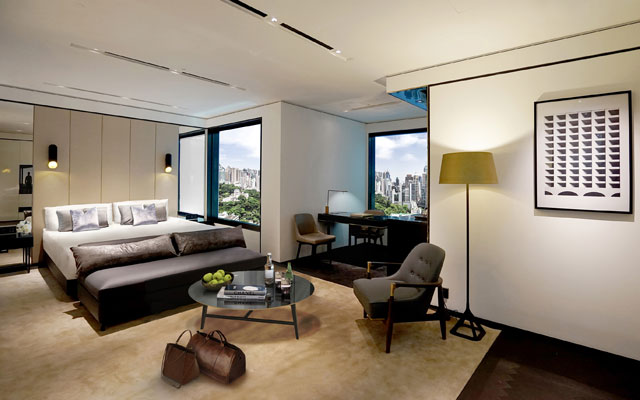
Land-scarce Hong Kong will embrace a new wave of luxury five-star hotels starting later this year when The Murray, Hong Kong, a Niccolo Hotel opens later this year with 336 rooms, followed by the 398-room Rosewood Hong Kong and the 129-room St Regis Hong Kong next year, and the 460-room Fullerton Hong Kong Hotel Ocean Park in 2020.

The industry is watching the new properties in anticipation, as the last year that saw a luxury hotel opening was in 2011, when the Ritz-Carlton Hong Kong was launched.

Without any new supply until the launch of Kerry Hotel, Hong Kong in April this year, the city now has 27 luxury hotels as of June 2017, up from 26 in 2014 and 19 in 2007, according to STR.

The Murray Grand Room

Four Seasons Hotel’s general manager and regional vice president, Christoph Schmidinger, told TTG Asia: “After two years of stagnant growth, business from China is rebounding. The supply of luxury hotels will grow significantly in the months to come and we expect the demand to be buoyed by continued strong demand from business travel and increased travel from emerging markets and China.”

While there isn’t any threat of oversupply, Schmidinger believes occupancy growth in Hong Kong will be moderate until all new supply is absorbed. In the short term, he expects the city’s rates might be affected but will return to current levels soon thereafter.

With the booming growth of new luxury hotels across Asia, Harbour Plaza 8 Degrees’ general manager Christina Cheng thinks that the luxury hotel sector will come under pressure in terms of service and pricing strategy.

She said: “In Hong Kong, five-star guestrooms share 27 per cent of hotel supply YTD 2017 with average occupancy around 84 per cent, reflecting sufficient supply in the market. This new wave creates price competition that will spread from (within) same class hotels to lower ranking hotels, affecting the average rate over the whole industry.”

She added: “Luxury hotels are recording lower average rate compared to the same period last year for the first five months, which explained why upscale hotels have been reducing their prices for optimum yield to maximise the market share… mid-range hotels are still benefiting from tourists with less spending power looking for affordable lodging.”

With rates coming under pressure from the increase in luxury room supply, Swire Travel, managing director, Gloria Slethaug already observed a 5.4 percent drop in average room rate for Jan-May 2017, welcome news as the competitive rates help travel agents to roll out more attractive offers for Hong Kong.

“(Greater competition) should drive luxury hotels to differentiate products and services and create additional value for customers e.g. some hotels have short three-hour itineraries for hotel guests seeking bleisure. In addition, agents can also use this opportunity to develop bleisure programmes.

“Like Bangkok and Singapore in the region, an ample number of luxury hotels will help to drive the meetings and incentives sector and make Hong Kong more competitive as a MICE destinations,” she elaborated.

However, W Travel Services’ managing director Wing Wong does not think the new luxury hotels will benefit leisure agents much.

He explained: “As I focus on groups and leisure business, the luxury hotels are too expensive for our clients. It’s typical for VIP or high-end guests to book direct rather than via agents. Unless I am a corporate travel agent, I don’t think our service is needed.”