AccorHotels has acquired a 50 per cent stake in South Africa-based Mantis Group, a collection of privately owned, managed and branded five star properties and lodges located around the world.
The Mantis network features 28 managed properties, plus a global network of branded hotels and residences, including boutique villas and flagship properties such as Founders Lodge – a South African game reserve in the Eastern Cape, Mantis St Helena – a boutique hotel on the remote island in the Atlantic Ocean, as well as the Draycott Hotel in London.
Draycott Hotel
Sebastien Bazin, AccorHotels’ chairman and CEO, said: “Mantis is a pioneer in customised, one-of-a-kind travel services in some of the most imaginative hotels across the world. With this strategic partnership, we are reinforcing the group’s footprint in Africa.”
This strategic partnership is accompanied by the launch of Community Conservation Fund Africa (CCFA), a non-profit organisation which aims to amplify both groups’ commitment towards preventing the accelerating decline of Africa’s wildlife and bringing together three internationally renowned conservation organisations – Wilderness Foundation, Tusk Trust and African Parks.
The partnership agreement is subject to regulatory approvals.
The Malaysian government is planning to introduce a price ceiling for domestic airfares by mid-2018, a move that has brought cheers to the local trade for its potential to encourage more tourist inflows and movements around the country.
Deputy transport minister Ab Aziz Kaprawi said the move comes on the back of complaints of expensive flight tickets during festive seasons, reported news agency Bernama.
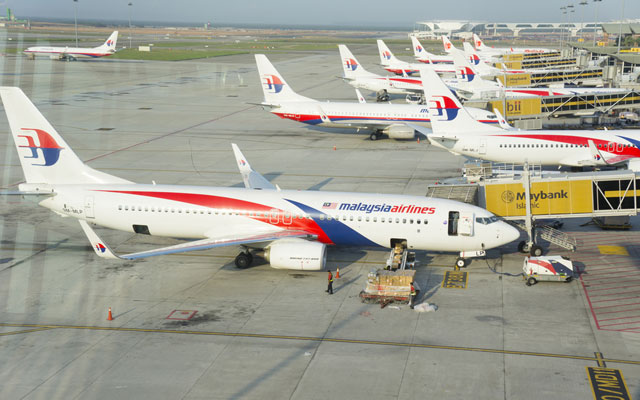
Malaysia Airlines is one of the numerous airlines that operate domestic routes in the country
A study by Malaysian Aviation Commission (MAVCOM) showed a five-fold increase of airfares during festive periods.
The Malaysian Association of Tour and Travel Agents (MATTA) supports the Ministry of Transport’s decision, suggesting that any rise in fares should be capped between 1.5 to two times.
Said MATTA president KL Tan: “Airlines should review their pricing strategy during low and high periods so as not to (penalise) passengers travelling during peak seasons. Airlines have various classes and fares based on their Reservations Booking Designator to maximise revenue.
“Authorities such as MAVCOM and Malaysia Competition Commission should closely monitor and ensure airlines do not form or behave like cartels to drive up fares, especially during peak seasons.”
He added: “High domestic fares have driven away many Malaysians to overseas destinations flying on cheaper airfares.”
Tourism and culture minister Mohamed Nazri Abdul Aziz commented that a cap on domestic airfares will also benefit international tourists as most international airlines fly only to Kuala Lumpur, and tourists may choose to take domestic flights to visit other parts of the country.
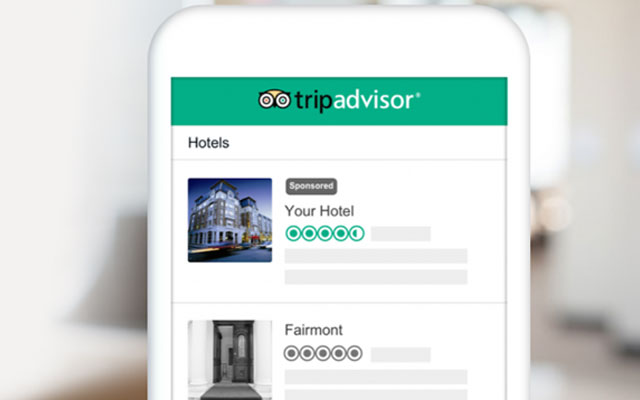
by putting your listing on top of TripAdvisor search results for travelers searching for a place to stay in your area
Hotels no longer need to rely on just great user reviews and competitive rates to ascend to the top of listings on TripAdvisor; they can now buy a top spot with the latter’s launch of Sponsored Placements.
TripAdvisor has officially launched paid hotel placements following a three-month beta period, which it says saw over 10,000 accommodation owners sign up for the advertising service.
Hotels can now increase the visibility of their TripAdvisor listings
Access to Sponsored Placements is available to all accommodation providers with an active Business Advantage subscription and who share rates and availability through TripAdvisor.
The new advertising subscription will complement Business Advantage, which had evolved from TripAdvisor’s Business Listings to allow accommodation businesses to “impact booking decisions, differentiate from competitors, and measure and strengthen their online reputation”.
To set up a Sponsored Placements campaign, hotels select from three monthly cost-per-click budgets, with customisable budgets coming soon.
The ads are then automatically targeted to internet users searching for relevant accommodation options in the area. Businesses are only charged for the clicks their ads receive.
According to TripAdvisor, the accommodation owners who participated during the beta phase had launched thousands of ad campaigns across over 5,500 destinations.
Malaysia operations see first 2Q with revenue in the billions
AirAsia will add flights on routes to popular Philippine destinations
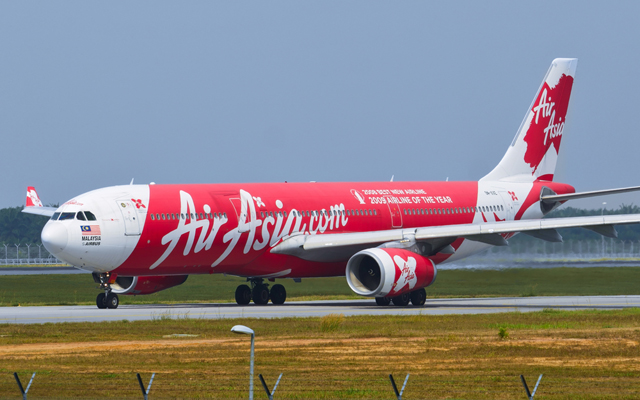
With the Philippine government ordering the closure of Boracay to tourists for six months starting April 26, airlines such as AirAsia and Cebu Pacific will temporarily suspend most of their scheduled Caticlan and Kalibo flights.
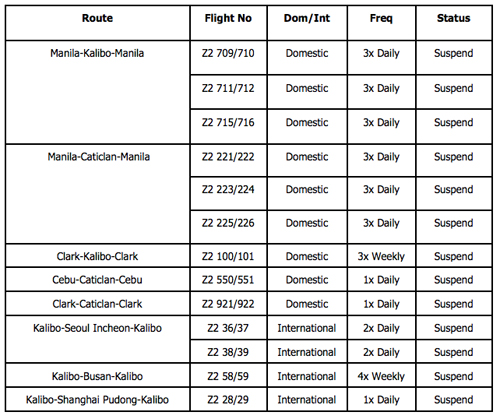
From April 26 to October 26, 2018, AirAsia will make the following changes:
Source: AirAsia
AirAsia will however continue to operate the daily Manila-Kalibo-Manila service under flight number Z2 713/714, and flights Z2 219/220 on the Manila-Caticlan-Manila route.
It will also mount additional flights to popular leisure destinations Palawan, Bohol, Cebu and Davao in the Philippines.
Meanwhile, Cebu Pacific will cancel the following flights to and from Caticlan and Kalibo from April 26 to October 27, 2018:
Source: Cebu Pacific
The airline will continue the below services:
Affected passengers of both airlines will be entitled to a full refund, and given the option to place the value of the ticket in a travel fund (e.g. AirAsia BIG Loyalty account) for future use; rebook the flight, or reroute to any domestic destination. Separate terms and conditions apply for the respective airline.
Rosewood Luang Prabang, Laos
The second South-east Asia resort for Rosewood Hotels & Resorts has opened in the UNESCO-listed town of Luang Prabang. There are 23 rooms across five categories, from the lead-in 48m2 Riverside Rooms to the 75m2 Hilltop Tents, all of which are decorated in a French-Indochine style. Some rooms feature private swimming pools, oversized balconies and wooden bathtubs. Amenities on-site include two restaurants, a spa and a swimming pool in the centre of the resort.
Hilton Mandalay, Myanmar
The former royal capital of Myanmar is now home to a 231-key Hilton hotel. The property faces Mandalay Hill, and as such many of the hotel’s guestrooms have private balconies, while some others come with terraces or kitchenettes. Recreational facilities include a swimming pool, large Jacuzzi, 24/7 fitness center, and the signature eforea spa that will open later this year. Complimentary bike rentals are available for guests as well. Other amenities include four F&B options, as well as a 256m2 ballroom.
Revivo Bali, Indonesia
Luxury wellness resort Revivo, the first opening by Revivo Wellness Resorts, is spread across three hectares in the hills of Nusa Dua in south Bali. The resort offers 16 Balinese-style suites including two four-bedroom villas. There is also a restaurant, bar and pool side lounge, spa, a 8,000m2 hybrid fitness area – comprising a yoga barn, martial arts hall, reformer Pilates studio, 25m-long pool and gym – and events space. Tailor-made retreats will be offered based on an individual’s needs, and there is also a regular schedule of healing programmes ranging from three to 14 days.
Hotel Oriental Express Osaka Shinsaibashi, Japan Hotel Oriental Express, a new hospitality brand, has opened its first hotel in Osaka. Standing a three-minute walk away from Shinsaibashi subway station Exit 1, it takes 40 minutes by train to reach the hotel from Kansai International Airport. The property features 124 rooms, a cafe and laundry room. All guestrooms are furnished with Simmons Beautyrest beds, a Handy Phone device and free Wi-Fi. Guests will also be able to enjoy a vegetarian breakfast comprising steamed seasonal vegetables and chopped salads.
Chimelong Panda Hotel, China
Guangzhou Chimelong Tourist Resort has opened the 1,500-key Chimelong Panda Hotel, bringing the total number of hotels in the integrated resort to three. Aside from its namesake animal, the kid-friendly property offers a teapot-shaped train, and a Kids Wonderland lounge that conducts educational activities such as handicraft workshops and science classes. Besides the two restaurants on-site, the hotel also has five multifunctional banquet halls of various sizes. Chimelong Panda Hotel also provides direct access to Chimelong International Circus and Chimelong Paradise theme parks.
Location
Situated in Urgup, where there is a cluster of cave hotels and historic mansions, the hotel is near Cappadocia’s must-visit sites such as Goreme Open-Air Museum and Underground City of Kaymakli, in addition to activities like hot air balloon rides, jeep safari and visits to underground dwellings and churches.
Ambience
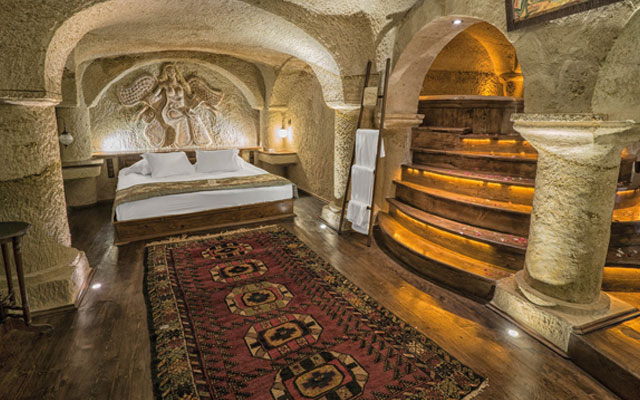
The hotel is sprawling and winding, all tied together by a restrained aesthetic that bridges the old with the new. There is great attention to detail in the decor, with a grand chandelier that breaks the bareness of the cave-like waiting area and a phonograph and art deco pieces in a corner.
Parts of the hotel not carved from volcanic rocks were built using natural materials including rock and wood to maintain the ambience. Concessions to modernity include fast and stable Internet connection and the glass lift that brings guests to the second floor.
From the second floor, guests walk to their rooms that are spread over five floors, which can be a challenge for the elderly and those with poor eyesight especially at night. Although wheelchairs are available, I suggest that the signage to the rooms and restaurants be enlarged. And while we love the ambient lighting, garden paths and stairways could better illuminated at night, and the elderly could be given rooms with better access.
Rooms
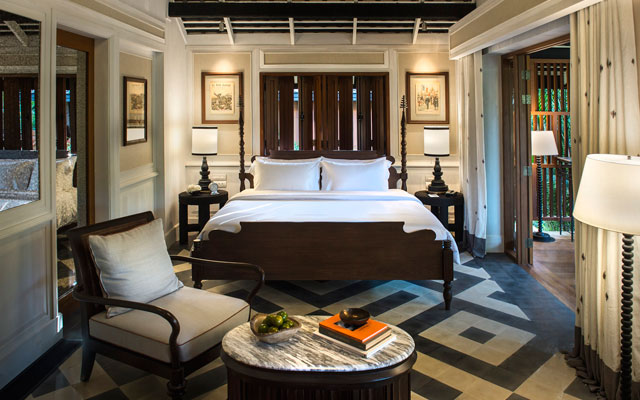
Rooms vary in size (30-80m2) and features. Certain ones pamper with jacuzzis, some feature terraces overlooking Cappadocia’s other-wordly landscape and others have gardens.
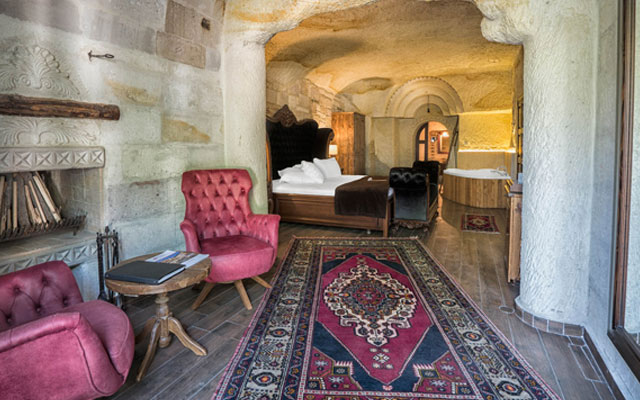
My standard room was a visual treat: a hearth, silken carpet on parquet floor, ambient mood lighting, and vintage bed, phone and lamps. The textured rock wall, domed ceiling with embossed artwork, and comfy beddings added to the sensory appeal.
A Deluxe Suite
The bathroom was a spacious and elegant cave with modern amenities including heater under the floor.
Outside my room was a garden abloom with roses and a trellis festooned with flowering plants, all lending to a home-away-from-home feel.
F&B
The hotel has four F&B outlets. While I didn’t have the opportunity to try the three restaurants serving up international and American fare, it was clear they served as vantage points for views of Urgup and Cappadocia’s surreal rock formation.
At Iris restuarant, buffet dinner and breakfast were a healthy spread of traditional Turkish fare, including a cornucopia of fresh fruits and vegetable salad, dried fruits and nuts, cheeses and olives, and main courses of fish and meat for dinner, or egg dishes for breakfast.
Facilities
The hotel’s Aura Spa has a luxurious design with hammam (Turkish bath), sauna, steam room, fitness facilities, massage room and indoor swimming pool.
For business events, the hotel has the Halys meeting room that seats 60 and another meeting room for 40 pax. A business centre and library are also available.
Service
The hotel was just six months old (in October 2017) so some minor glitches were understandable. I was given the wrong card key. The 68-year old and 80-year old members of our group were given rooms on the topmost floor, which entailed quite a walk up the ornate staircase.
Otherwise the service was within our expectations – prompt, polite and hospitable. We believe they would be able to iron out the minor glitches as they gain more experience and confidence.
Verdict
High marks for aesthetics. The hotel oozes character and is to date one of the most interesting hotels that I’ve stayed in.
No. of rooms 76 Rates From US$100 Tel info@bwpremiercappadocia.com
Why did you decide to sell?
For many entrepreneurs, exit is always at the back of their minds. There are four exit strategies – let it die a natural cause; pass it on to the next generation; IPO; sell. In the 24 years since I founded Country Holidays, there have been M&A talks to make the company stronger. When I met Simon (Russell, CEO of London-based Scott Dunn) in June 2016, we clicked. The story of Scott Dunn (founded 32 years ago) is similar to ours – same founder passion, same customer-centric focus, etc – and this we learnt not over an hour but over talking to one another for 1.5 years. (The sale was in January, and was 100 per cent, but Chang gets some shares in Scott Dunn.)
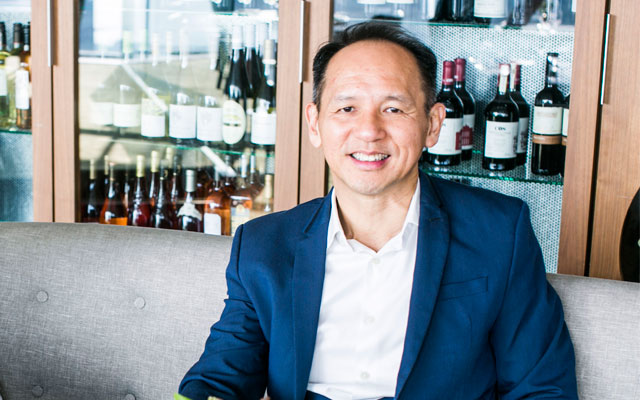
Chang Theng Hwee
How will it make you stronger?
Firstly, it’s the technology Scott Dunn brings. It has a massive IT team in London which has developed a sophisticated system that can tailor product and pricing quickly and easily. Our IT investment is probably just five per cent of what Scott Dunn has done over the years. We want that kind of system, but ours is ‘mini’ compared with theirs as our size prevents us from doing a system at that level. You must have enough sales and revenue to be able to do that. So the increase in efficiency is something we look forward to.
Secondly, it’s the professionalism – marketing proficiency; in-house digital marketing team whereas we sub-contract; in-house coaches to train staff on customer service, soft skills – again, not quite possible for us to do without the economies of scale. A company can’t develop wholesomely without all components coming into play. Imagine if you’re good at sales, but has no HR to support you. Scott Dunn parachutes that.
Thirdly, it’s staff morale. They see themselves as part of a big international company. They are happy with us – many have been with me for years – but now they are looking forward to international exposure. It’s energising for them.
Any misgivings on giving up the brand you’ve built?
There will be things I’ll miss. With the name, interestingly, each time we had a management meeting, we debated if we should change the name to better reflect our product. Half of the team said yes, the other, no. Some customers said what, ‘you won’t be Country Holidays anymore???’ I admit there’s sentimental attachment to the name, although I’m quite easy with the rebranding to Scott Dunn.
For me, I’ve been my own boss 24 years – you ask me for a budget? These are little things that will be new to me (laughs).
What’s the budget?
This year, frankly, we’re not talking about hitting figures. We want to make sure the integration is properly done. Though we’ve spoken to each other for 1.5 years, when marriage happens, there’s still a period of adaptation. So deliberately this year, it comes down to operations – how customers will benefit, are staff comfortable with each other, with systems, with cultural differences, personnel policies, etc.
I’m sure 1.5 years of talking has involved growth discussions?
The potential of Asia is tremendous. These are the golden years for those in their 50s and 60s in Singapore and Hong Kong. Their parental responsibilities are over and, unlike the baby-boomers of 10 or 15 years ago, where a trip meant going to America, these people have seen the world and are really into experiential travel.
Also, look at the whole South-east Asia – the rich Indonesians, Filipinos and Thais. The first generation sent their kids to the US; these kids, now in their 30s and 40s, are back with tons of money, are international, know the finer things in life. That’s a market much bigger than Singapore. There’s the Chinese market; the way they spend money is now legendary.
So we’re going to use Singapore as the base for South-east Asia, and Hong Kong for China. Dubai is a two-man office, but making inroads. The office is closer to London, and Scott Dunn has a lot of experience as well with this market. So with this three centres, we feel we are well-positioned to capture growth. We have not even thought of India. There are no figures yet, but we feel a 30-40 per cent growth would not even be a cause for popping champagne.
(Laughs) Prosecco then. So why do you need Scott Dunn? Couldn’t you expand on your own?
Like I said, Scott Dunn brought the three key things to the table. And to grow, you need financial muscle. I could build up my financial muscle slowly, but why not quicker? If I were to walk this journey alone, it would take many more years and, along the way, there’s always a financial risk.
Markets go up and down. I’ve gone through the 1997 Asian financial crisis, the SARS crisis, the US financial crisis 2007. We rode through them, but they did slow down expansion ambitions.
Agents now recommending Kampot and Kep over Sihanoukville
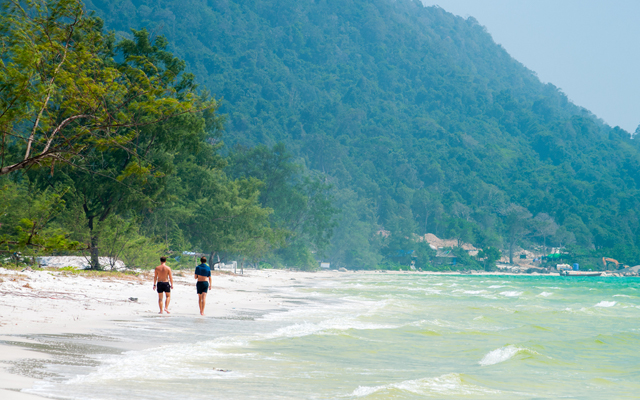
Mass construction of tourist infrastructure and the Chinese visitor invasion are driving European travellers away from the Cambodian coastal town of Sihanoukville, industry players claim.
Recent years have seen huge amounts of Chinese investment pumped into Sihanoukville, with the town and its coastline dotted with new hotel, casino, condominium and resort developments.
Despite having a population of fewer than 100,000, the town will soon house 30 casinos, up from 15 at the end of 2015 and 10 built in 2016 alone.
Agents now recommending Kampot and Kep over Sihanoukville
An estimated 70 per cent of international flights at Sihanoukville International Airport are also from Chinese cities.
Mick Spencer, owner of Ana Travel in Sihanoukville, said: “Already, we are seeing visitors skip the mainland on the way to the islands and going directly to Kampot or Kep on their return. We can expect there to be no let-up in construction and this will heavily affect tourism, not just international visitors but locals.”
He added the mass investment has also sent rental rates up. “No one is unaffected, while a few are making a lot of money,” he said.
Diethelm Travel Cambodia has also noted “migration” from Sihanoukville – especially this high season, said branch manager Coralie Romano.
Romano added: “In February, Kampot was the place to be. Not only because it has more to offer today than it did a few years ago but because people don’t want to go to Sihanoukville anymore because of the construction and the many Chinese tourists.”
She added agents are now recommending the islands and Kampot or Kep over Sihanoukville.
Khiri Cambodia’s general manager Miles Garrett agreed. “As a company, we can no longer recommend Sihanoukville to our clients. For the last few years we’ve only been using Otres Beach, but unfortunately the development there has made that beach an unpleasant experience,” he said.
In the first nine months of 2017, Chinese arrivals to Sihanoukville jumped by 170 per cent to 87,900.
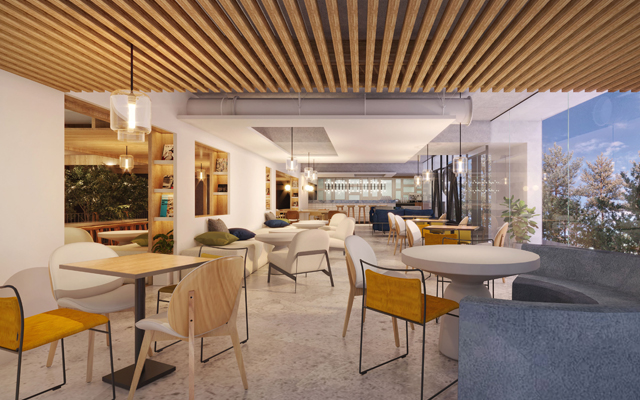
Mixed-use space where guests can eat, work and play
Mixed-use space where guests can eat, work and play
Breaking its convention of having hotel brands starting with the letter D (Dusit Thani, Dusit Devarana, Dusit Princess and dusitD2), Thai hospitality group Dusit International has unveiled Asai Hotels, a new affordable lifestyle brand targeted at the millennial-minded and scheduled to debut in Bangkok’s Chatuchak in 1Q2019.
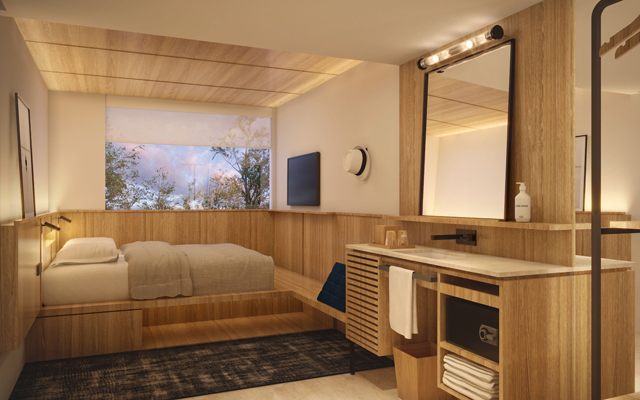
In line with the brand’s four pillars – thoughtful essentials, common areas, locally inspired and connected community – Asai properties will feature compact rooms (each approximately 15m2), and a mixed-use space taking in work and leisure areas as well as a restaurant.
Each Asai hotel will also leverage technology, availing self check-in kiosks and online guides to local attractions for example. Asai will also tie up with selected local online start-ups, such as TakeMeTour in Thailand, to offer personalised excursions.
Rooms come compact but with emphasis on bed and shower comfort
The debuting property, Asai Chatuchak, will open as the only hotel located within the popular weekend market. It will feature an eatery developed by Jarrett Wrisley and Paolo Vitaletti, Bangkok-based chefs and restaurateurs known for their sustainable approach to cooking, and their menus at Asai Chatuchak will highlight produce from Thailand’s Royal Projects.
Five more Asai properties are expected to open throughout 2019, three in Cebu, Philippines (in Lapu-Lapu, Oslob, and the city centre); one in Yangon’s historic Yankin Township; and a second hotel in Bangkok in the Sathorn district.
By the end of this year, Asai Hotels’ management team hopes to secure over 10 properties across South-east Asia and Japan. This includes owned and joint-venture properties as well as properties under hotel management agreements. Australia, Europe and Central America are also on the radar for potential projects.
Suphajee Suthumpun, Group CEO, Dusit International, commented: “In line with our three-pronged strategy for balance, expansion and diversification, the introduction of Asai Hotels will add a new innovative revenue stream to our company that complements our traditional hospitality offerings and actively responds to the needs and desires of millennial-minded travellers.”
Dusit International is in a growth phase that will see its current portfolio of 27 hotels surpass 70 worldwide within the next four years.
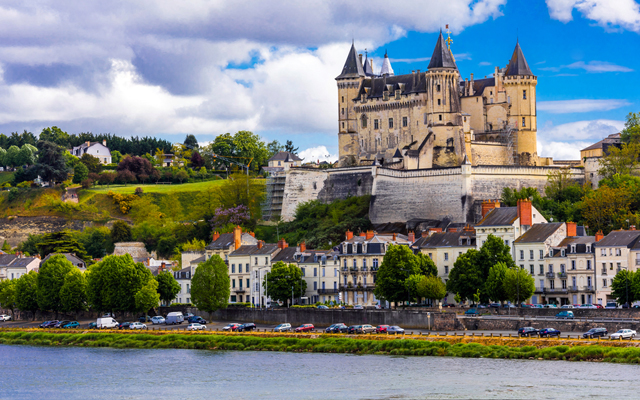
France’s Loire Valley region, which will in 2019 commemorate 500 years since the Renaissance with a year-long celebration, will take centre stage in Atout France’s international promotion efforts to attract more visitors including South-east Asian travellers.
2019 will be a celebration to mark the 500th anniversary of the death of Leonardo da Vinci at Amboise, the start of the construction of the Chateau of Chambord and the birth of Catherine de’ Medici in Florence.
Castles of Loire Valley
Francois Bonneau, Centre Val-de-Loire region president, speaking during a press conference during the recent 2018 Rendezvous en France travel market event in Paris, revealed that many events will be organised in castles and gardens in the Val-de-Loire region. He said: “There will be major exhibitions in the castles showcasing works of the past and current compositions.
“The 2019 celebrations will be much more than a simple commemoration. The programme will cover major themes of the Renaissance including heritage, arts and literature, music, architecture, gastronomy and craftsmanship.”
A cultural programme is currently being put together, composed of different highlights including a large travelling digital show mixing contemporary artistic and musical creation, an international architecture competition, guided tours, banquets, exhibitions and international symposiums, among others.
According to Atout France regional director – ASEAN, Morad Tayebi, the year-long celebration marks a wonderful opportunity to introduce destinations new to the South-east Asian market like the Val-de-Loire region, which is about an hour’s drive from Paris. The agency will also highlight Christian pilgrim travel in 2H2018.
Apart from the Lore Valley, Marseille, a city of Provence, will also gain greater exposure to international markets next year when it hosts Rendez-vous En France 2019 travel market.
Indonesia topped the list in 2017 with 180,000 arrivals, followed by Thailand, Malaysia, and Singapore at around 150,000 tourists each. In 2016, France received 160,000 visitors from Indonesia, 140,000 from Thailand, and around 120,000 visitors from Singapore and Malaysia each.