TTG Asia
Asia/Singapore Saturday, 25th April 2026
Page 1439

With new terminal opened, Cebu airport wants more international flights and visitors

0
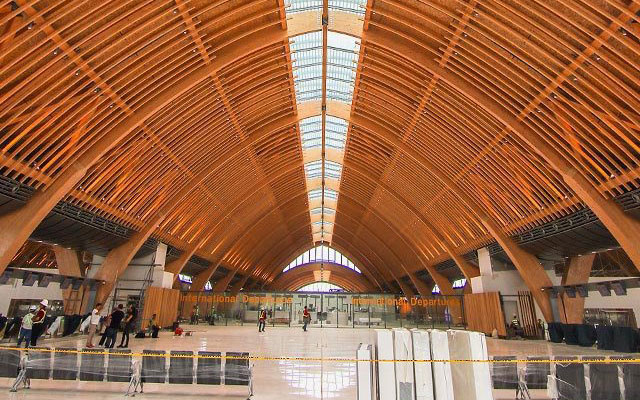
Striking wooden arches in the new terminal, made of glulam wood imported from Austria

The newly opened Terminal 2 of the Mactan Cebu International Airport (MCIA) is expected to attract more airlines as it nearly triples the airport’s annual capacity from 4.5 million to 12.5 million passengers.

Terminal 2, which handles all international flights leaving domestic flights to Terminal 1, makes MCIA the most modern and efficient airport in the Philippines.
Striking wooden arches in the new terminal, made of glulam wood imported from Austria

Apart from having a resort theme reflecting the tropical destination, the terminal also boasts several technology firsts such as high-speed inline baggage handling system, durable roof cladding that reduces UV, and washrooms with real moss walls to stabilise humidity and improve air quality.

Andrew Acquaah-Harrison, chief executive advisor of MCIA and manager at GMR Megawide Cebu Airport, said that in addition to Emirates’ successful Dubai-Clark-Cebu services and Qatar Airways’ Doha-Davao-Cebu flights commencing in the next three months, talks are ongoing with Turkish Airlines and Finnair to fly to Cebu and with Chinese carriers to launch more chartered and commercial flights.

Harrison said MCIA will step up efforts to market the airport, as well as the destination of Cebu, in collaboration with the tourism task force comprising airlines, hotels and resorts under the Department of Tourism through regular roadshows and talks with airlines.

Harrison: MCIA will hold regular roadshows and have talks with airlines to market both the airport and destination

MCIA is targeting Asian (India, Japan, China) and longhaul markets (Europe, the US, the Middle East, Australia). Still, foreign passengers are expected to comprise just 40 per cent of passenger capacity, and domestic travellers 60 per cent.

Colliers International research manager Joey Bondoc said the opening of MCIA’s Terminal 2 “comes at an opportune time” for Philippine inbound tourism, given the closure of Boracay island for six months since April 26 to pave the way for its rehabilitation.

Cebu Pacific (CEB), which has the largest number of flights in MCIA with 385 domestic and international services weekly, will add aircraft to serve the expected growth in passenger traffic.

CEB’s overall in charge for marketing, Michelle de Guzman, quoted CEO Lance Gokongwei as saying that the carrier’s services will probably increase by at least 20 per cent next year, without specifying the destinations covered.

De Guzman said they will stimulate the market in Cebu by offering year-round round-trip fares that are on average 44 per cent lower than the offerings from other airlines.

PATA partners travel data company to help partners unlock insights

0
Adara derives travel patterns, trends and behaviour from more than 750 million monthly unique traveller profiles across more than 190 travel brands

PATA has partnered Adara, a data solution for travel brands, to empower its members with destination visitor data which can be used to better drive marketing campaigns.

As part of the agreement, Adara will work with PATA to encourage its members to contribute data to the Adara travel data co-op. Adara will use the data to develop co-branded country and regional market intelligence reports, which will be made available exclusively to PATA members.

Adara derives travel patterns, trends and behaviour from more than 750 million monthly unique traveller profiles across more than 190 travel brands

“As many organisations focus their marketing efforts on digital marketing strategies, the access to quality data and proper analysis is fundamental to making smart business decisions,” said PATA CEO Mario Hardy.

“Our partnership with Adara will provide a more holistic view of the patterns, trends and behaviour of travellers for our members, helping them better plan their marketing strategies to achieve maximum return on their marketing investments.”

Built on the world’s richest travel data co-op, Adara offers people-based insights for travel companies and destinations as it derives travel patterns, trends and behaviour from more than 750 million monthly unique traveller profiles across more than 190 travel brands.

Layton Han, CEO of Adara, commented: “The partnership with PATA is an example of how sharing data safely and securely between disparate but linked data-sets helps to unlock actionable insights that would otherwise remain hidden in silos in individual companies and destinations. Adara is thrilled to be partnering with PATA and is dedicated to the Asia-Pacific region as we continue to grow and scale internationally.”

Skål Asia president announces resignation

0

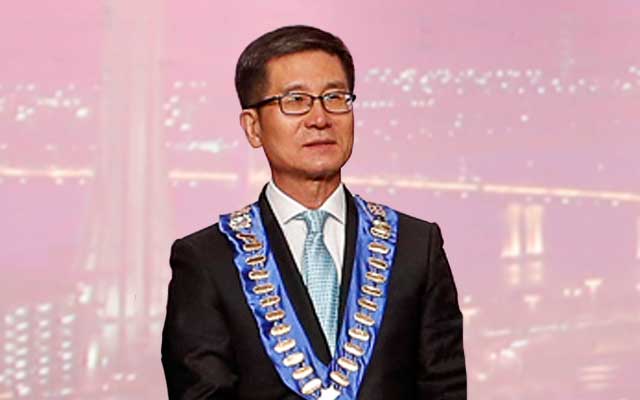
Robert Sohn has announced his resignation as Skål Asia Area (AA) president, citing business pressures for the surprise decision.

In an email to the board of officers, Sohn, who is also CEO of marketing and communications company Promac Partnership, said: “As the businesses of my company significantly increased and expanded, I as CEO have to devote myself to them. It is regrettable but I cannot but resign my position as president for Skål AA after the 47th Skål Asia Congress.”

Robert Sohn has announced his resignation to the board of officers

The announcement was made nine days after the conclusion of the Skål Asia Congress in Macau.

Sohn was appointed Skål AA president following the demise of the former president Marco Battistotti in a traffic accident in 2015.

“I am expecting the AA Committee to elect a new president as early as possible in accordance with the statutes. Any remaining duties will be discussed and transferred with the relevant directors,” Sohn commented.

Responding to Sohn’s sudden resignation, Andrew Wood, president of Skål International Bangkok, said: “We are all saddened at Robert’s resignation, he was the glue and the workhorse – no-one worked harder at keeping Skål Asia engaged and relevant in the region. The SAA board was cohesive and effective under his leadership. Membership grew and Robert captained a tight ship. We will need to discuss as a board our next step.”

Seabourn to add two new expedition ships

0
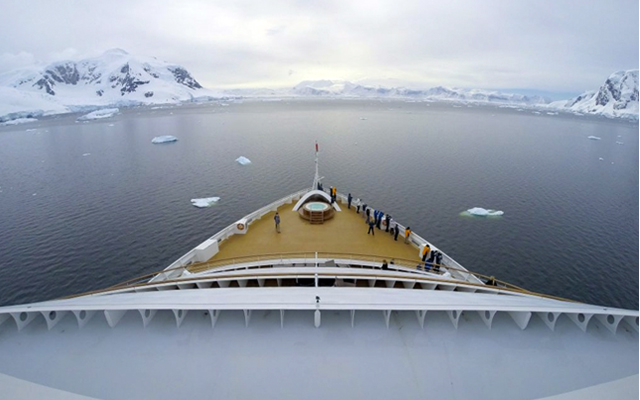
First ship planned to sail in the Arctic in late summer 2021, with a full winter season in Antarctica to follow

Luxury cruise operator Seabourn is looking to grow the expedition cruise market with two new expedition ships, scheduled to arrive in June 2021 and May 2022 respectively to increase capacity for the company in Antarctica, the Artic and other exotic destinations round the world.

Seabourn has signed a letter of intent for the construction of two new ultra-luxury expedition ships with a new partnership between Italian shipbuilders T.Mariotti and Damen, which will collaborate on the building of the two ships under the common name Mariotti Damen Cruise.

First ship planned to sail in the Arctic in late summer 2021, with a full winter season in Antarctica to follow

Designed specifically for the ultra-luxury expedition travel, the 170m, 23,000 gross ton vessels will each offer 132 oceanfront veranda suites and accommodate up to 264 passengers each. Both vessels will also carry their own two submarines, as well as kayaks and 24 motorised Zodiac boats for exploring.

“It’s been amazing to watch the growth of our expedition-style experiences since our first sailing to Antarctica in 2013 through today, where we now offer the Ventures by Seabourn programme in a number of desirable destinations around the world,” said Robin West, vice president of expedition operations and planning for Seabourn, commented in a press statement.

“A year ago we started developing the concept for this next chapter of our expedition story with dedicated ships built to take luxury travelers to the most coveted places on the planet and they will be thrilled to see these remote destinations in Seabourn style.”

Seabourn will announce design and service details for the new ships later this year. Specific details about itineraries and booking availability will be released in early 2019. The first ship is currently planned to sail in the Arctic in late summer 2021, with a full winter season in Antarctica to follow.

Onboard crew will include outstanding and well-travelled expedition teams comprising of experienced wilderness experts, scientists, historians and Zodiac operators. These experts are also part of the Seabourn Conversations programme, providing in-depth insights into the history, ecology and culture of the places they visit. Their insights are offered both in complimentary formal presentations on a variety of topics and in more casual conversations over meals or at leisure.

Lufthansa launches innovation hub in Singapore

0
XXXX

The Lufthansa Group has introduced an innovation hub in Singapore, on the back of Asia’s potential as a growing digital travel market.

With the launch of the hub on July 1, the group says it is now the first non-Asian airline group to expand its digitisation efforts into the region.

A screenshot from the Lufthansa Innovation Hub website

“Not only are the Asian markets showing particularly dynamic growth in our core businesses, but they are now often also leading the way in digital travel and mobility solutions,” commented Carsten Spohr, chairman of the executive board of Deutsche Lufthansa AG.

“With the new locations of the Lufthansa Innovation Hub, we want to learn from the developments in Asia, build specific partnerships in the digital context and benefit from our experience.”

The new digitisation unit is aimed at generating structured insights along the Lufthansa Group value chain, building concrete partnerships and investments, and ultimately developing in-house solutions tailored to local markets.

Experts from the Berlin team are currently working on local network expansion, targeted scouting and partnership initiation.

In addition to the Singapore office, the Lufthansa Innovation Hub is opening a new unit in Shenzhen (China) to stay current with the special status of China’s technological ecosystem.

Moreover, Lufthansa said in a statement that the Asian startup scene is now more than ever, driving a technological change along the entire travel and mobility chain.

This is reflected in a strong increase in startup and financing dynamics. Last year alone, 55 per cent (approximately US$14 billion) of global venture capital invested in travel and mobility tech went to China. There was also an increase in mega-financing rounds, most recently Grab (Singapore, US$1 billion) and Hellobike (China, US$321 million), Lufthansa pointed out.

“Singapore is a hotbed for innovation particularly in the context of urban mobility,” remarked Gleb Tritus, managing director of the Lufthansa Innovation Hub. “Today, we can already see how inner-city mobility will function, be distributed, and consumed in the future. In addition to having some of the most exciting mobility startups, acclaimed local research institutes in the sector are also joining forces.”

Launched in 2014, Lufthansa Innovation Hub is the corporate digitisation subsidiary of the airline group. It works with a team of entrepreneurs, venture capitalists and corporate aviation experts on new digital business models, partnerships and strategic investments along the entire travel and mobility chain.

Sandy Russell joins Wharf Hotels as VP sales and marketing

0

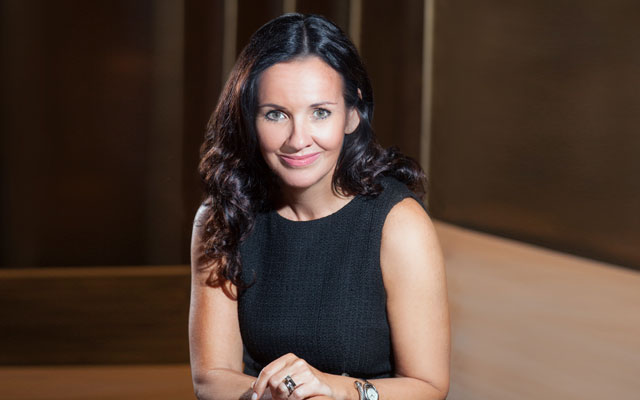
Wharf Hotels has appointed Sandy Russell as vice president, sales & marketing.

Overseeing the hospitality management company’s division, Russell will spearhead revenue optimisation and distribution initiatives alongside global sales and marketing to strategically build the group’s sales and marketing efforts internationally.

With over two decades of industry knowledge, Russell most recently held the position of vice president commercial operations Asia-Pacific at Carlson Rezidor Hotel Group, where she drove commercial strategies across the region for 116 hotels under six brands.

Niseko sees double-digit growth in foreign visitors: C9

0
XX

Foreign visitor arrivals into Japan’s Niseko grew 17% year-on-year in 2017 on the back of growing direct connectivity from more cities, according to C9 Hotelworks’ Niseko Property Market Update 2018.

In terms of five-year CAGR, the destination saw an increase of 16%.

Niseko is a popular winter destination

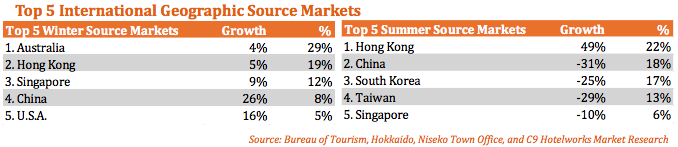
Last year, the summer season accounted for 48 per cent of total yearly visitors. Notably, the destination’s top five geographical source markets for summer travel are all from Asia – namely Hong Kong, China, South Korea, Taiwan and Singapore.

However, among the top summer source markets, Hong Kong was the only one that saw growth (+49%).

Despite China’s impressive five-year CAGR of 32 per cent – attributable to flights from eight Chinese cities to New Chitose Airport – the market saw the largest plunge among the top summer origin markets (-31 per cent) in 2017.

Looking forward, C9 projects the short-term impact of new Japanese legislation ‘minpaku’ for short-term residential rentals to ease and be favourable by the year end. Meanwhile, hospitality-led condominium development is expanding outside Niseko to nearby alpine resort areas in Kiroro and Rusutsu.

Island’s first co-working space opens in Mantra Samui

0

Mantra Samui Resort has launched a Work | Lounge on its property, a co-working workspace targeted at digital nomads living or visiting the Thai island destination.

The air-conditioned space provides high-speed Wi-Fi, a guest pantry stocked with a selection of drinks and snacks; a printer, an IP telephone for free international calls, hot desks and a blackboard. There are also sofa areas, a billiard table, TV screens and a PlayStation to unwind. Work | Lounge is open from 09.00 to 21.00 seven days a week.

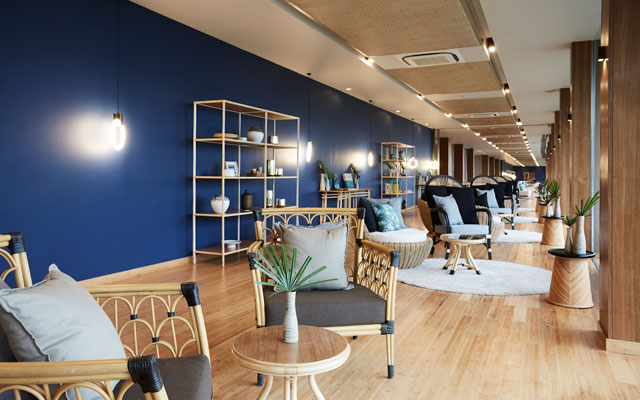
The recently-opened lounge space

Guests staying on the island for an extended period can book one of the resort’s new ‘Work | Stay | Play’ offerings, opting for plans that stretch from two weeks to three months.

Rates for these packages start from US$82 per night per person or US$91 for two people sharing a room, when staying a minimum of 31 days. For 22-30 days packages prices start at US$97 per night per person (or US$109 a night for twin sharing). Stays between 14-21 days begin at US$118 per night per person, or US$133 for two people. The package includes access to the Work | Lounge and daily breakfast.

Visitors not staying at the resort can purchase half-day access for 300 baht (US$9) or opt for a monthly pass for 12,000 baht.

For outside visitors, a pool pass to the infinity pool, an on-site gym pass and meals at the resort’s hilltop restaurant can be added to their Work | Lounge package.

Europe’s secondary destinations emerge from shadows of terror attacks

0
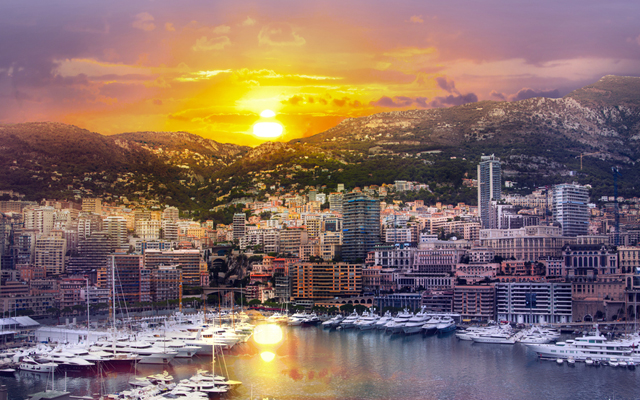
Monaco, a microstate on the French Riviera, is wanting to solidify market share through collaborating with its larger neighbours

In Europe, the tourism fallout from the terror attacks that struck the continent in recent years is promising to give secondary destinations their time in the spotlight, says Monaco’s NTO as it spearheads a multi-destination campaign in South-east Asia.

Among the factors that have kept Europe’s second-tier destinations in the shadows for years is how “(travel) agencies – generally not known as movers and shakers – would shun smaller destinations for capital cities and national airline hubs, more able to serve their streamlined and standardised business model”, according to Benoit Badufle, regional director, Monaco Government Tourist Bureau (Asia Office).

Badufle conceded: “The big capital cities in Europe enjoy a disproportionate share of the market, leaving second-tier cities, often more reliant on tourism resources, with the crumbs of that cake.”

Monaco, a microstate on the French Riviera, is wanting to solidify market share through collaborating with its larger neighbours

However, the tourism crisis brought on by attacks in capital cities in 2015 and 2016 not only demonstrated the importance of spreading risks beyond key gateways, but also presented an opportunity for secondary destinations to make their mark.

Ready to turn the crisis around and “make it an opportunity”, Monaco Government Tourist Bureau partnered Atout France and Spain Tourism Board – along with the Catalonia region, Avis Car Rental and Turkish Airlines – to roll out the Mediterranean Luxe campaign in South-east Asia last month.

“Many tour operators in Asia were for years (offering the same European cities) over and over again. But there was such a drop in 2016 that they had to do something about it. This became the right time to introduce destinations within European not affected by the crisis – so no Paris, London or Berlin,” Badufle shared.

Through the Mediterranean Luxe campaign, Badufle said the partners “want to bring travel industry partners together to develop new ideas and utilise tourist resources that have not received the attention they merit”.

A month into the campaign’s launch, the partners are drumming up interest for off-the-beaten-path Europe holidays, such as flexible self-drive experiences through Ibiza, Barcelona, Marseille, Cannes and Monaco.

Badufle continued: “In the second phase, we hope to run workshops or roadshows in South-east Asia and (spotlight) more concrete products including hotels, regional or municipal tourist offices, park attractions or cultural sites.”

For Monaco, South-east Asia is a strategic choice for a campaign like Mediterranean Luxe, said Badufle.

The combined outbound volume from South-east Asia is comparable to that of China, he remarked, adding that more of the region’s travellers are maturing and beginning to seek out European destinations beyond the must-sees for first-time visitors.

“Indonesia is important for its sheer size and Singapore (for its relative affluence), but even emerging markets such as Vietnam are beginning to produce a growing number of repeat travellers to Europe,” he said.

At the same time, the rise of new hubs between South-east Asia and Europe is allowing many of the region’s seasoned travellers to bypass European gateway cities, which they were likely to have already visited.

Badufle noted: “About 10 years ago, you still have to go through Frankfurt, London, Paris, Amsterdam, etc. to fly to places such as Marseille, Florence, Valencia and Barcelona. Now you no longer have to with new routes such as via Dubai and Istanbul.”

There is also growing intra-Europe access, which helps connect travellers to smaller European destinations. “A lot of countries such as Spain and Italy have seen the development of low-cost routes bringing people to Barcelona and Marseille,” Badufle added.

Mt Agung erupts again; Bali airport maintains normal operations

0
Recovery efforts include international promotions and lobbying for countries to lift travel advisories

Mount Agung in Bali erupted again at 21.04 local time last night, and again this early morning, spewing ashes up to two kilometres above the peak.

The volcano status is currently on alert level three, with the area within a four-kilometre radius from the crater declared closed to all visitors including hikers. However, as of this morning, Bali appears to be safe and the airport is running as per normal.

Volcano status on alert level three

The Crisis Centre Team of the Ministry of Tourism is currently in emergency response status, working in close cooperation with the Bali Tourism Hospitality task force to monitor the situation.

Guntur Sakti, the crisis centre leader, was quoted by detik.com as saying: “Tourism minister Arief Yahya himself is actively communicating with (stakeholders) to gain the latest information and to allow quick decision making.”