Shwezigon Paya, a Buddhist temple located in Nyaung-U, a town near Bagan
With Asian markets dominating in the face of declining European arrivals, Myanmar tourism players are shifting their focus to intra-regional travellers.
The Asian market accounted for 70 per cent of international arrivals to Myanmar in 2017. Growth in the market is led by Vietnamese visitors, with a 75 per cent year-on-year increase at Yangon International Airport (YIA), followed by the Philippines with a 62 per cent hike and Singapore by 20 per cent.
Even traditionally strong European markets are sliding; Shwedagon Pagoda in Yangon pictured
Thailand and China topped the arrivals chart, with YIA welcoming more than 230,000 and 140,000 respectively in 2017.
While Asian arrivals have increased, Western visitors have declined. The North American market fell by three per cent, while West Europe only saw a two per cent increase, with the traditionally strong markets of France plummeting 10 per cent, Germany 22 per cent and the UK two per cent.
Minister of hotels and tourism, U Ohn Maung, said the growth of regional markets has been bolstered by a visa waiver that has been in place for about a year for many South-east Asian countries. Additionally, the ministry is currently looking into developing a special visa on arrival for ASEAN countries plus three others – China, South Korea and Japan.
May Myat Mon Win, Myanmar Tourism Marketing chairperson, said this year will see an increase in digital marketing campaigns aimed at this segment, with the organisation actively targeting China. She said: “We’ve never done any marketing in China before, so this is a first.”
Min Than Htut, founder of Pro Niti Travel, added that while their traditional strong markets of the UK, the US and Canada will remain the main focus, this year will see them target parts of Asia – mainly Singapore, the Philippines and Indonesia. “We think Asia is where we have to go this year,” he said.
With the rise of inbound arrivals, Bertie Lawson, managing director of Sampan Travel, reminded that it is essential that responsible tourism is promoted, especially with the growing number of sustainable sites across Myanmar.
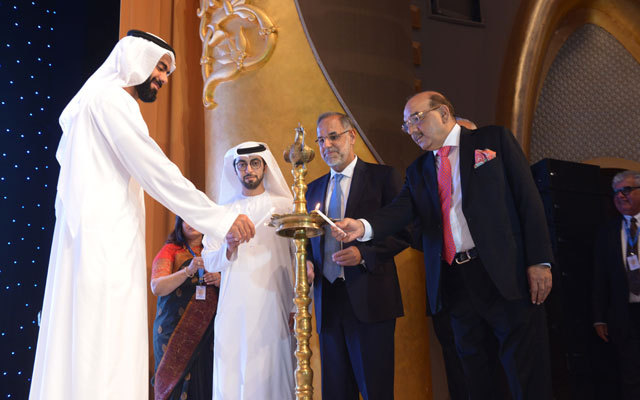
At the eighth edition of APG World Connect, an annual gathering of APG members, airline executives, travel agents and air transport professionals
Travel industry members can expect to learn more about the latest innovations in airline distribution when the GSA airline representation network AGP organises its annual aviation conference in Monaco this year.
To be held in Fairmont Monte Carlo from October 31 to November 2, the 10th APG World Connect will focus on the topic of “Connecting with the airline customer”, with the spotlight shone on its two recent key innovations.
At the eighth edition of World Connect, an annual gathering of APG members, airline executives, travel agents and air transport professionals
APG Distribution Platform is fully IATA NDC (New Distribution Capability) compliant and operates under the newest XML technology, while APG Access A1 allows airlines without a GDS presence to interline with all other airlines in the APG Interline E-Ticketing (APG IET) “hub” – an existing platform allowing travel agents to issue flight combinations from different airlines on one ticket and under one airline code.
“Both these innovations will be showcased to World Connect 2018 (attendees), some of whom are newer low-cost and hybrid airlines that have established an online presence using the Internet to reach travellers, and that now wish to expand their reach to customers of travel agents,” revealed Tunku Iskandar Tunku Abdullah, regional vice president & board member of The APG Network as well as group president, APG Malaysia & APG Singapore.
The new products come at a “minimal up-front cost”, and monthly variable costs are based on transaction volume, Iskandar added.
While the full programme for APG World Connect is still being developed, Jean-François Clervoy, a veteran who has taken three NASA space shuttle missions, has confirmed his attendance at the conference to share more about space exploration.
In 2017, revenues achieved by APG members for airline clients increased from €10.6 million (US$12.6 million) in 2012 to €18.3 million in 2017, an increase of 72 per cent. The highest growth in 2017 over 2016 was achieved by Asia-Pacific airline clients at 81 per cent. APG is targeting a 35 per cent growth in revenues for client airlines worldwide in 2018.
The APG Network comprises 111 members and service partners, and has commercial relationships with over 200 airlines.
Under pressure from their sophisticated clients to deliver the extraordinary, luxury travel buyers will be hard at work at the inaugural ILTM Asia-Pacific in Singapore next week in scouting for that special product or service at the show.
With a good turnout of sellers who are themselves upping their game in delivering experiential goods, buyers are not likely to be disappointed.
TTG Asia Luxury, the only travel trade publication partner of ILTM Asia-Pacific 2018, has a feature on Sellers Showcase in its latest issue that will be distributed to buyers and sellers of the show. Watch this video for a sneak preview of five products and services that will be on the shelves at the event next week, which will be held at Marina Bay Sands Singapore from May 21-24.
Make sure to grab your copy of the co-branded TTG Asia Luxury/ILTM Asia-Pacific issue which is packed with features on the state of Asian outbound luxury travel markets; how expert planners are changing to adapt to increasingly demanding clients; which destinations are emerging for luxury travellers and, of course, host Singapore, where new luxury hotels are opening and adding exciting accommodation choices to the city.
Thuan Dao, founder of BedLinker in Vietnam, is on a mission to leave tedious B2B booking processes behind.
Having spent 15 years working in reservation management, e-commerce and sales in Vietnam’s five-star hotels like Vinpearl and Sheraton Saigon Hotel & Tower, Thuan Dao noted several reoccurring issues.
Thuan Dao: speed, accessibility of information among the advantages of bringing B2B booking process online
He said: “Tour operators and travel agents work closely with hotels, and I saw a lot of problems. The main issue is because the booking process is offline, a lot of time is spent on the phone and can be time-consuming and costly.”
Aiming to use technology to tackle the problem, the 38-year-old recruited the help of a team of technology experts in India to create an online hotel B2B e-commerce platform, BedLinker.com, for travel buyers and sellers.
Thuan explained: “If you bring this process online, travel agents and tour operators (can better access) all of the information. They can check availability, rates and make bookings directly.”
Hotels and resorts pay a commission on bookings, with an additional option for suppliers to sign a wholesale contract. Here products are marked up by BedLinker.com, and resold to agencies.
“I knew technology could solve these issues,” said Thuan, who launched BedLinker in 2017. The Ho Chi Minh City-based startup now boasts a team of 20.
Already boasting a portfolio of products, BedLinker’s sister site, BedAllocator.com, is a booking engine software dubbed a “one-stop hotel chain platform”, and can be linked to BedLinker accounts. Buyers can search room availability, rates and book online.
A third product is EZbookmeetings.com, an online marketplace that caters to the MICE and business events sector. Clients can search for meeting spaces, book online and request additional amenities, such as tea and coffee, flip charts and audio equipment.
All three products have been launched, and Thuan is currently in talks with investors to further expand the business, such as by developing a similar online platform offering tours and tour packages. He also has his sights set on launching his products globally.
He said: “I wanted to give agents a platform where buyers can pick the best supplier with good rates and make bookings immediately.”
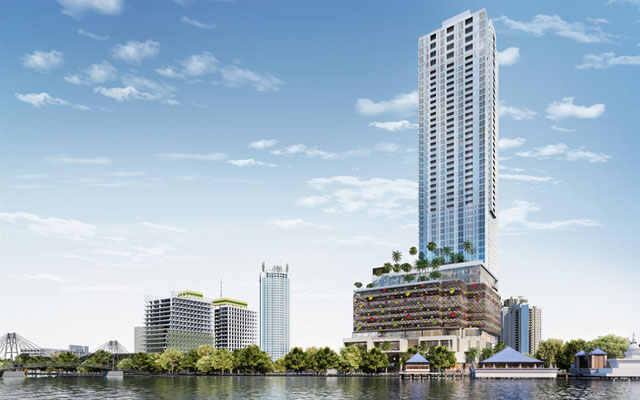
Artist impression of the property, which will feature 288 hotel rooms and 527 serviced apartment units
The 815-key Mövenpick Hotel Ho Chi Minh City is slated to open in 2020 as the centrepiece of the Kenton Node riverside mixed-use development, currently under construction along the Rach Dia river bank.
Offering 288 hotel rooms and 527 serviced apartments, Mövenpick Hotel Ho Chi Minh City will also feature a choice of restaurants and bars, an outdoor infinity swimming pool, a private spa, a fitness centre, and conference and banqueting facilities including a ballroom and several meeting rooms.
Artist impression of the property, which will feature 288 hotel rooms and 527 serviced apartment units
The surrounding 84,000m2 Kenton Node complex will boast high-end retail malls, restaurants, a multiplex cinema and other leisure facilities, plus office space, residential units, a marina, riverside promenade and parks.
The signing of Mövenpick Hotel Ho Chi Minh City is a “key part” of the Swiss chain’s ambitious expansion plans in the country, and will take its Vietnam portfolio to eight properties strong and over 3,000 rooms by 2020, said Andrew Langdon, chief development officer for Mövenpick Hotels & Resorts.
At present, the company is established in Hanoi, but the next few years will see the launch of a series of new hotels and resorts in key destinations across the country, including Cam Ranh, Phu Quoc, Quy Nhon, Quang Binh, Danang and Lang Co.
A mood of renewed hope and confidence filled Department of Tourism (DOT) offices in Makati City as some 500 employees welcomed newly-appointed tourism secretary Bernadette Romulo-Puyat on her first day at the helm.
Puyat took her oath of office administered by president Rodrigo Duterte on Monday, her 49th birthday, replacing former DOT head Wanda Tulfo Teo, who resigned last week.
Puyat’s first day with the DOT
Puyat was handpicked by Duterte immediately after Teo’s resignation over the controversy over a 60 million peso (US$1.2 million) DOT ad placement on a TV show produced and hosted by Teo’s brothers Ben and Erwin Tulfo.
The new DOT chief vowed to stop graft and corrupt practices by reviewing all the agency’s transactions with the help of her lawyers, reiterating that is the marching order she received from the president.
With regard to the review, Puyat requested the courtesy resignation of the relevant parties before she tackles suspect DOT programmes and projects with them.
Sheraton Hong Kong Hotel & Towers has appointed Allwyn D’souza and Joyce Wong as its new resident manager and director of sales & marketing respectively.
In this new role, D’souza will lead and guide the hotel’s operations division. Before joining Sheraton, D’souza was the director of room operation at Singapore Marriott Tang Plaza Hotel.
From left: Allwyn D’souza and Joyce Wong
He brings with him 17 years of hotel operations and guest relations experience across four Marriott hotel brands – Marriott, Renaissance, Courtyard and Marriott Executive Apartments – in countries such as Fiji, Malaysia, India and Singapore.
Meanwhile, Wong joins Sheraton from her most recent role as director of marketing at Hong Kong SkyCity Marriott Hotel.
In her new role, she will oversee the sales and marketing division of the 782-room hotel with 15 event and conference spaces, which includes proactive sales, event booking, marketing communications and reservations teams.
Wong has over two decades of experience in driving sales and MICE business from previous stints with InterContinental, Mandarin Oriental, Island Shangri-La, The Ritz-Carlton and JW Marriott in Hong Kong and China.
Lots of real estate activity in Danang but little planning, Atkinson says; pictured, beach in Danang and skyscrapers in the background
While hotel investors do not believe that the bubble will burst for Vietnam despite an imminent 43 per cent increase in the number of room keys – a whopping 35,000 additional keys, according to STR – they do believe its popular tourist areas will be ruined unless proper planning and development is implemented.
“Phu Quoc is a Boracay in the making,” declared Kenneth Atkinson, executive chairman, Grant Thornton Vietnam, “because there is no solid waste management at all. You’ve got 17,500 hotel rooms in three- to five-star categories (based on completed projects, approved ones and those under construction) – that’s more than Sydney has. You have an airport with a capacity for 2.5 million people a year. There are 100,000 inhabitants on the island and you’re going to need at least 25,000-30,000 people to work in hotels alone. So (there are) serious labour shortage and infrastructure problems, particularly waste management, which is becoming a serious issue on the island.”
Lots of real estate activity in Danang but little planning; pictured, beach in Danang and skyscrapers in the background
Atkinson was on a panel at the just-concluded South-east Asia Hotel Investors’ Summit in Bangkok, where moderator David Keen, CEO of Quo Global, raised his worries about Vietnam’s “crazy” growth and found Halong Bay, which he had visited several times in the last few months “hideous, frankly”.
“If we look at Phu Quoc, Ho Tram, Danang, Hoi An, there is little planning ahead. What’s going to happen to these gorgeous destinations?” Keen asked.
In Danang, real estate developers are competing to build taller and larger skyscrapers. The local media reported that in the near future, the tallest building in the central region would be in the city. Developed by PPC An Thinh Da Nang, the complex will cover an area of 2.2ha and include four 50-57-storey towers.
In Hoi An, a UNESCO World Heritage Site just 60km2 in size, Atkinson who visited six months ago found the number of visitors and tourist buses “horrifying”.
Michael Piro, COO of Indochina Capital, who is “bullish” on Vietnam with the launch of a new select service, millennials-focused brand targeting the domestic market, Wink Hotels, admitted to his “fair share of concerns about the lack of vision in the development of these areas”.
He said: “Vietnam is very blessed from a geographical perspective. It’s a shame to see it get washed up in development, excitement and greed.
“The big risk we carry is the areas become too rundown, with not enough care to maintain what people come to see. We really need to band together to ensure that the government hear from us, and now we have the Boracay (cleanup) as an example.”
Gonzalo Meceda, vice president development of Melia Hotels International, said he and his company were also worried about a “lack of planning” in the country. “I don’t think Danang is a place where it makes sense to build a 50-60-storey buildings. Hoi An is next to it, so that’s the next one. Phu Quoc – there is still time to save it; the government should focus on that,” he said.
Quo Global’s David Keen moderating the session on Vietnam featuring (from left) Grant Thornton Vietnam’s Kenneth Atkinson, Melia Hotels International’s Gonzalo Maceda and Indochina Capital’s Michael Piro
How it got this way
The panel spotlighted key reasons how Vietnam got this way, including arrivals demographics that comprised big-volume markets China and South Korea and, ironically, a private sector that had taken on the mantle of marketing Vietnam aggressively and even got involved in making it more accessible to visitors in order to fill its rooms.
The figures speak for themselves.
It took Vietnam only eight years to get to 13 million arrivals (2017 over 2016), compared to Thailand, which took 25 years to get from six million to 15 million, Atkinson pointed out. But, more than half of the 13 million were group travel, with the top four Asian markets comprising by far China, followed by South Korea, Japan and Taiwan.
Even if the government had increased the marketing budget from US$1 million to US$5 million, as Atkinson asserted, this paled in comparison to Thailand’s US$100 million or Malaysia’s US$80 million marketing spend. This saw the private sector stepping in to be the destination marketeer, and continuing to, in order to protect its own investments.
Indochina Capital, for instance, privately underwrote the first charter flight on Dragonair from Hong Kong to Danang, where it was building furiously. “There were a lot of naysayers,” recalled Piro. “Now, it’s one of the busiest flights; you can’t get a seat on Hong Kong-Danang direct flights. That was something we had to and happy to do, which not only yielded serious results for us as asset owners but also for Danang and Vietnam.”
Melia’s Macedo also said that in Phu Quoc, the private sector had done all the marketing last year. “But the Vietnam government has to be clear what it wants for the country. We can help, but we have been making the decisions ourselves. It shouldn’t be like that,” he said.
The government hasn’t been able to keep up with the tourist arrivals uptrend. Atkinson said: “Vietnam is not good at planning ahead. We’ve been talking for 10 years now about the new international airport in Ho Chi Minh City and at last they are clearing the land, which is going to take another two years. We’re probably eight to 10 years away in getting a new airport in Ho Chi Minh City…so how do you increase the number of tourists coming into Ho Chi Minh City?”
In spite of the ‘craziness’, investors evidently are still crazy about Vietnam. At present, RevPAR is still up 12 per cent in the first quarter. They look to a domestic market size of 70-80 million people and a growing upper middle class that is upwardly mobile and travelling more; a relaxation in visas; and the highest level of government spending on infrastructure in South-east Asia (5.3 per cent of total GDP).
As well, they are heartened by the government’s intention to shift the arrivals demographics. Said Atkinson: “Vietnam wants to get the average spend up to US$1,080 by 2020. About 30 per cent of the inbound market is Chinese low-cost or zero-cost, and that does not help. But more and more, we’re seeing more travellers from high-spending countries like Europe, particularly now that Vietnam Airlines has direct flights to Paris, Frankfurt and London and is starting US flights later this year. We’ve got to change the demographics a bit; we’ve seen how (the China and Vietnam South China Sea disputes) saw Chinese tourists fell off overnight to zero.”
Piro also looks beyond the frontline data. He said: “What’s the actual reality? Of the 43 per cent increase in room keys, how much is actually going to be realised? Having over a decade of experience in Vietnam, my estimate is half probably. If you look at what the actual increase in supply is going to be, and the real increase in demand (from both domestic and international), I don’t see a big issue.”
A Deluxe suite at Singapore’s Farrer Park Hospital
Singapore One-stop services rule it all
When it comes to patient comfort and hospitality, several Singapore hotels have gotten that down to a tee, offerings suites and amenities that cater to guests seeking medical services in hospitals nearby.
A Deluxe suite at Singapore’s Farrer Park Hospital
Most of these hotels are clustered in Novena and Farrer Park, the seats of major medical campuses including Mount Elizabeth Novena Hospital, KK Women’s and Children’s Hospital and Farrer Park Hospital.
One Farrer Hotel & Spa, for example, introduced The Farrer Suites – the first of its kind in Singapore – to cater to patients of Farrer Park Hospital and Farrer Park Medical Centre in the same building.
These self-contained suites are equipped with features such as adjustable Volker beds with pressure-relieving mattresses, a built-in counter for hand washing, a companion bed and dedicated butler service. The suites are accessible through a private lift system connected directly to the medical wings of the building, and are sold only through the hospital.
Meanwhile, Park Hotel Farrer Park is awaiting the opening of Farrer Square Medical Centre, which will connect 42 medical units to the hotel and Farrer Park Hospital.
Courtyard by Marriott Singapore Novena, which offers two mobility-accessible rooms and six elderly-friendly rooms, does not limit its connections to just Mount Elizabeth Novena Hospital next door, but also works with Tan Tock Seng Hospital and KK Women’s and Children’s Hospital on various fronts.
Peter Khong, general manager of Courtyard by Marriott Singapore Novena, shared that the hospitals not only refer international patients looking for external accommodation options, but also overseas doctors and consultants.
While Indonesia is an enduring source market for medical guests, One Farrer Hotel & Spa’s executive assistant manager, sales & marketing and rooms, Jessie Khoo-Gan, also noted rising demand from China, Vietnam, Thailand and India.
She added: “There has been an increase in medical travellers seeking preventive healthcare services and wellness; and we see a greater demand for premium luxury accommodation and services to complete their patient experience.”
Hotels also extend other areas of their hospitality services to warded patients. One Farrer Hotel & Spa shares its kitchen with the adjoining Farrer Park Hospital, providing five-star cuisine for the hospital; while Park Hotel Farrer Park provides a breakfast package for Farrer Park Hospital’s health screening patients.
Park Hotel Farrer Park’s general manager Sharmini Moganasundram is certain that hotels can continue to grow and benefit from Singapore’s established position as “the premier medical destination in the region”.
Khong concurred: “We are always open to exploring opportunities with our partners to offer additional value-added services.” – Pamela Chow
Malaysia Joint bid for Indonesians
With Indonesia accounting for 60 per cent of medical tourists to Malaysia, it’s no surprise that hotels located near major hospitals in Penang have their sights set on tapping this key South-east Asian source market too.
Glow Penang, which lies within walking distance to Loh Guan Lye Specialists Centre as well as a short drive to Island Hospital and Gleneagles Penang, already has strategies laid out with these private healthcare institutions in the pursuit of medical tourists from Indonesia.
Glow Penang’s hotel manager, Navintheran Sinarimuthu, said: “Most guests who stay with us and seek treatment from these hospitals are from Indonesia. They come here for health screening, dental, cosmetic procedures, eye and skin treatments.
“We promote our hotel directly to outbound agents in Indonesia who are involved in leisure and medical tourism as well as to the three (aforementioned) medical facilities in Penang. We provide special room rates with breakfast for the agents we work with,” he said.
Special brochures offering information about Glow Penang’s location and facilities are provided to agent partners as well as the reception areas of partner hospitals too, according to Navintheran.
The 320-key Berjaya Penang Hotel, likewise, takes advantage of its location opposite Penang Adventist Hospital as well as its easy access to other private hospitals in George Town area to attract medical tourists from Indonesia.
Amran Taib, executive assistant manager, Berjaya Penang Hotel, said: “We give corporate rates to the hospitals and also do joint promotions with them when we participate in medical fairs in Indonesia. We also promote the private hospitals in Penang by displaying their brochures in our hotel.”
He added: “We focus on cities that have direct flights to Penang as well as places without direct flights such as Balikpapan, Palembang and Jambi, where many medical tourists staying with us are from.
“Tourism authorities should further tap regional markets for medical tourism as these are our closest neighbours, and not just limit efforts to cities with direct air links to Penang,” Amran urged. – S Puvaneswary
Thailand Natural advantage
In Thailand, where medical tourism is a growth industry, it makes natural sense for hotels located in the vicinity of major private hospitals to target the international clientele that these institutions are serving.
Medical centres are hence increasingly embracing hospitality concepts alongside a rising number of hotel-hospital partnerships, observed Olivier Berrivin, managing director of international operations – Asia at Best Western Hotels & Resorts.
He remarked: “In addition, global economic pressures on hospitals and patients, combined with broader medical tourism trends, are creating a growing niche for hotels located on or near hospitals. This particular segment will only grow over time as some countries are now offering medical visas to encourage that trend.”
Medical tourists already make up a significant market for Best Western Premier Sukhumvit Soi 1 and SureStay Plus Sukhumvit Soi 2, thanks to their close proximity to Bumrungrad Hospital and its strongly established international reputation, according to Berrivin.
Amari Residences Bangkok, located within walking distance to the Bangkok Hospital, meanwhile, has “a collaborative working relationship” with the hospital as an affiliated hotel, providing additional services and support to guests requiring extra care and attention in consultation with the medical teams or accommodate patients who prefer to reside in a comfortable environment off the hospital premises, Onyx Hospitality Group’s senior vice president commercial, Debrah Pascoe, told TTG Asia.
While the Middle East is a dominant source market of medical tourists, the inbound medical tourism source market for Onyx is “gradually being balanced by medical tourism demand from other regional markets like Japan and South-east Asian countries”, Pascoe noted.
Down south in Phuket, Amatara Wellness Resort has already seized opportunities in Thailand’s thriving healthcare tourism sector by linking arms with prominent Thai travel players to offer integrative wellness programmes.
Last year, it rolled out a brain health enhancement retreat with Bangkok Hospital Phuket to promote brain health in the prevention of Alzheimer’s disease and dementia. In February this year, it entered into an MoU with Royal Orchid Holidays and Vitallife Wellness Center, a subsidiary at Bumrungrad International Hospital, to tap the increasing level of interest in health and wellbeing among travellers worldwide.
Other hospitality players like Thanyapura Phuket, which was previously focused on the sports tourism market, is now enhancing its on-site healthcare offerings to step up its pursuit of Thailand’s flourishing medical tourism sector. It recently appointed Edgar Toral, a 15-year veteran in Thailand’s medical tourism sector, to head the Thanyapura Integrative Healthcare wing, and has in place treatments and services ranging from chiropractic and acupuncture to post-surgical care and and vitality therapies.
“We are not competing against hospitals but complementing them,” said Toral. More complicated treatments will be referred to Thanyapura’s partner hospitals in Phuket, he added. – Xinyi Liang-Pholsena
South Korea Not just skin-deep interest
South Korea is well-known in the Asia-Pacific region as the place to go for everything from a quick nose tweak to procedures that are far more delicate. And many hotels are coordinating with hospitals and clinics to provide packages that meet guests’ needs throughout their visits.
The majority of overseas medical tourists to South Korea are from China, Russia, Japan, the US and Kazakhstan. Arrivals from Thailand in 2016 soared by an impressive 102 per cent, while the number of medical tourists from Mongolia, the UAE, Singapore and Vietnam also showed positive growth.
“We already have a selection of medical packages that we have developed in conjunction with the nearby Yonsei Severance Hospital,” said Jay Kim, sales manager for the Hotel Cappuccino. “Virtually all the guests staying with us for medical procedures are from Asia, including from Hong Kong and Singapore, and we are able to create tailor-made packages that meet guests’ needs and the requirements of the hospital.”

The hotel works closely with the hospital to devise programmes, and Kim anticipates demand to continue to rise in the medical tourism sector as more people across Asia receive word-of-mouth recommendations about the high quality and relatively low price of procedures in South Korea.
Other hotels prefer to work with specialist medical tourism agencies that operate websites to appeal to potential clients and offer full packages that include airport pick-ups, accommodation, shopping excursions, visits to some of the city’s must-see sights and the medical treatment.
“Recently we have had a lot of guests from the UAE coming for treatments, but we prefer to work through a specialist agency,” said an official of Hotel Artnouveau Seocho in the city’s Gangnam district.
The Walker Hill Hotel and Resort offers a selection of two-night-three-day packages and promotes the stays through advertorials in local media, its e-newsletter to guests who are in the hotel’s membership scheme or through companies that are similarly targeting the medical tourism sector.
Not all hotels are teaming up with medical institutions, however, with the Grand Hyatt Seoul happy to offer support for FIT guests who are visiting the city for a procedure or treatment, but preferring to steer clear of collaborating with medical institutions due to the “complexities” of managing medical packages, a spokesperson said. – Julian Ryall
India From traditional to hair-raising experiences
Hotels in key and secondary cities are benefiting from the growth of inbound medical tourism as the country sees the emergence of not only new markets like the US and the UK but also a wider range of treatments sought after in the country.
“Delhi-NCR is among top five popular medical tourism destinations in India as the region has a vast number of world-class private and government hospitals. We have collaborated with hospitals in our proximity like AIIMS and Safdarjung to tap international medical tourism clients,” said Manish Kumar, meetings director, Crowne Plaza New Delhi Mayur Vihar.
Hotel chains such as Crowne Plaza and Hilton offer facilities and services friendly to the needs of medical tourists like accessible rooms with roll-in showers and lowered beds, and F&B offerings customised to dietary requirements.
Many hotels have also sprung up in the vicinity of healthcare chains. The 201-room Hilton Garden Inn Gurgaon Baani Square is situated close to speciality hospitals like Medanta Medicity and Max Healthcare in Gurgaon. Lemon Tree Hotels has recently opened an 85-room hotel in Hyderabad’s Banjara Hills adjacent to the CARE Hospital.
“Medical tourism is a year-round business for Indian hotels. Besides offering special rates for medical tourists, we emphasise on meeting their dietary requirements,” said Sanzeev Bhatia, general manager, The Metropolitan Hotel & Spa.
With more than half a million medical tourists from abroad to India each year, hoteliers think more areas of medical treatments could be better promoted to grow this sector. Examples include traditional Ayurvedic naturopathy, dermatology or even hair transplants – the latter an increasingly sought after treatment.
“We have noted the trend that a large number of tourists from overseas want to know more about dermatology. So, speciality hospitals in these areas will be welcome,” said Kumar.
“As international medical tourism plays a big role in generating revenue in hospitality industry, hospitals should tie up with at least one hotel in the vicinity for their patients,” he urged. – Rohit Kaul
NTOs’ medical tourism procedures
Sherene Azli, CEO, Malaysia Healthcare Travel Council
Through our collaboration with hospitals and travel agents, we started introducing healthcare travel packages. These packages are a combination of healthcare treatments (dental, cosmetics, general health screening, wellness) bundled together with a tour of Malaysia’s many attractions and accommodation.
Apart from traditional marketing and promotions around the world, we also focus on strategic and niche marketing. We utilise digital marketing platforms to create more channels for two-way information exchange between global healthcare travellers and Malaysia healthcare players
Srisuda Wanapinyosak, deputy governor for international marketing (Europe, Africa, Middle East and Americas), Tourism Authority of Thailand (TAT)
For 2018, TAT will continue to emphasise our strong health and wellness position as “Thailand a Paradise for Longevity” and portray the country as the hub of health and wellness in South-east Asia.
Longevity products and services are proving a popular trend among health-conscious travellers who want to maintain themselves in healthy conditions. They come from all over the world, so in particular TAT is aiming CLMV (Cambodia, Laos, Myanmar and Vietnam), China and South Asian countries like Pakistan and Bangladesh.
For the Middle East countries, which we still consider a potential market, we will continue to promote our updated longevity products and services by penetrating possible cities.
Having worked extensively with leading medical tourism partners and other related businesses, TAT recently attended the 9th International Health and Medical Tourism Conference and Expo 2018 in Shanghai to promote our health and wellness tourism.
Things are looking up for Bali's hoteliers; Tanah Lot pictured
Indonesia’s Ministry of Tourism is refining its strategy to grow arrivals from India, with the market showing strong promise last year despite limited direct air connectivity.
Arief Yahya, Indonesia’s tourism minister, said in a statement: “India has become top five markets to Indonesia with the growth rate of 30 per cent, second highest growth rate after China (last year).”
Bali is currently popular but the ministry wants to help Indian agents promote other Indonesian destinations; pictured, Tanah Lot, a Hindu temple and tourist hotspot in Bali
Despite few direct air links between the two countries, arrivals from India last year totalled 485,000. In the first two months of this year, arrivals from India numbered 87,000, higher than the traditional markets of Japan (74,000 arrivals) and South Korea (63,000), according to the ministry’s data.
Commenting on the target of 700,000 arrivals from India this year, Nia Niscaya, deputy minister for tourism marketing development II (Asia, Africa, the Americas and Europe), said: “That is a high target to achieve. With limited seat capacity and direct service (Denpasar-Mumbai provided by Garuda Indonesia), we would like to optimise the available seats by making Singapore and Kuala Lumpur as hubs.”
The strategy to entice travellers to Singapore and Malaysia to extend their stays to Indonesia will be bolstered by the ministry’s Hot Deal packages to Batam-Bintam and Jakarta, as well as culture and heritage tours to Jogjakarta and beach resorts like Lombok.
In addition, the ministry is considering opening a Visit Indonesia Tourism Office (VITO) in Southern India, its third in the country after New Delhi and Mumbai.
Meanwhile, promoting destinations beyond Bali continues to be on the destination’s agenda.
“During our recent visit to India, major travel companies (Cox & Kings, Thomas Cook India, Yatra, MakeMyTrip and FCM Travel Solutions) told us Bali sold itself and asked us to come up with other destinations to promote. We plan to meet their needs,” Sigit Witjaksana, director of tourism marketing for Southern and Central Asia, Middle East and Africa, said.
Apart from participating at trade shows in India, the ministry intends to organise a sales mission to Mumbai, New Delhi, Calcutta, Chenai, Hyderabat and Ahmedabad in July.
Sigit said his department’s marketing budget was 17 billion rupiah (US$1.2 million). On top of that, the marketing communications department has three billion rupiah for digital marketing and ad placements for India.