Tour company Contiki has appointed James Marchant as global CEO.
Marchant will be responsible for the travel company’s global network of teams across Australia, New Zealand, the US, Canada, Europe, Latin America, Africa and Asia; as well as for developing and growing Contiki’s worldwide offering of trips.
He has relocated from London, and is based at Contiki’s head office in Geneva.
The seasoned professional joins Contiki from luxury holiday rental investment company Second Estates, where he was a marketing, loyalty and strategy consultant. He was also on the board of Black Tomato, the luxury travel agency that he helped to conceive and develop in 2005.
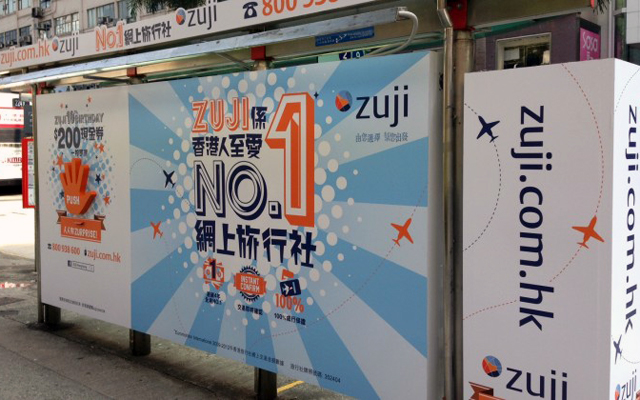
Zuji’s failure to fulfil its payment obligations for airline ticket sales and an abrupt suspension of booking functions are fuelling rumours that the OTA may be in trouble, although there has been no official word of any cessation of business.
When approached for comment, IATA’s spokesperson Albert Tjoeng said that Zuji’s participation in IATA’s Billing and Settlement Plan (BSP) had been suspended in November “as the company had infringed on its payment obligations for airline ticket sales”.
Photo credit: Marketing Interactive
He added: “Discussions are underway to reinstate Zuji’s participation in the BSP once repayment conditions are met.”
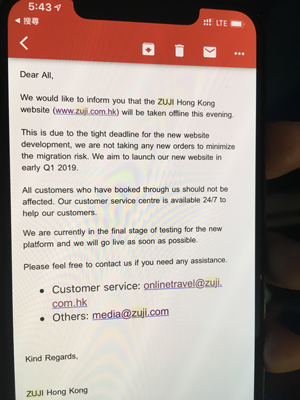
An online travel company disclosed to TTG Asia that it has not received payment from Zuji for advertising on its website, and has on Tuesday evening received an email from Zuji Hong Kong notifying that the OTA would be “taken offline” due to the “tight deadline for the new website development”.
Zuji Hong Kong’s email to an online travel site it advertises with
Meanwhile, Zuji Hong Kong will not be taking any new orders to minimise the migration risk, and it is aiming to launch its new website in early 1Q of 2019, the OTA wrote in the email.
At press time, both Zuji Hong Kong and Singapore sites redirect to the same landing page about a new site to come.
As a member of Society of IATA Passenger Agents (SIPA), Zuji Hong Kong has not formally informed the association of any suspension of business, according to honorary treasurer Tommy Tam.
Tam said: “There are rumours and I understand its website was down (since Wednesday) night. What surprised me is its advertisement is still up and running. Still, I have no idea what is happening to this OTA but something must be happening.
“Generally speaking, OTAs generate high growth of business but yield and rate of investment does not proportionally reflected given other incurred costs like marketing fees and IT investment. Competition is fierce.”
At press time, the Travel Industry Council (TIC) had not received any complaints regarding delay of payment to suppliers or issue of air tickets with regard to Zuji Hong Kong.
TIC’s executive director, Alice Chan, told TTG Asia: “We have enquired with Zuji Hong Kong this morning. They said they have suspended only their sales service. Their customer service team is still operating and their website will resume service anytime.”
This writer earlier made a call to Zuji Hong Kong’s customer hotline, which was answered by an overseas customer service personnel claiming to be unaware of the issue. He walked the writer through the booking process, which came to naught, and he then told the writer to report the issue to senior management.
Subsequent calls were made to Zuji Hong Kong’s corporate line over last few days but in vain.
Destinations are increasingly moving towards user-generated content and authentic experiences as part of their digital marketing strategies, shared several speakers at the recently-concluded PATA Destination Marketing Forum 2018 in Khon Kaen.
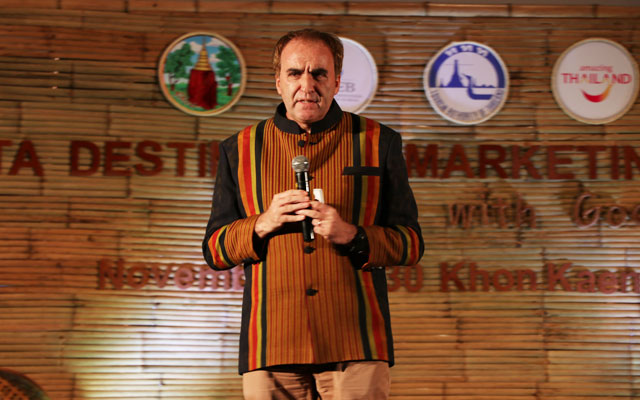
Damian Cook, CEO and founder of Kenya-based E-Tourism Frontiers, said: “Travel has become a shared experience. When people travel, they have an intense desire to share that experience constantly. Put smartphones and Wi-Fi into the mix, and you will have constantly shared content. That content is by-and-large publicly posted, accessible and visible to us.”
Cook: the best destination marketers are the travellers that visit the destination, and who share their experiences on social media (Photo credit: Ernelsa Villalba-Abelgas)
As the average social media user has an audience of 250 people, Cook urged destinations to think of every visitor to the country as someone who is going to share that experience with 250 people, which would make up a very large potential audience.
Previously, a traditional marketing model was to hire a marketing company to come to the destination and take photos or videos, and then delivering that specific content to the audience through paid channels.
“We now have people paying us to come to the country and take the best possible photo, from the food to the experience and scenery, and share it via predominantly free channels to an audience who knows and trusts them. This content is being shared in real time – and that’s where its power lies,” Cook added.
Mekong Tourism Coordinating Office has created a platform that drew articles and reports on destinations from various sources, driven in part by marketing budget constraints as well as a desire to tap user-generated content, revealed the DMO’s executive director, Jen Thraenhart.
He shared: “What better way than to get travellers to share their experiences while travelling around the region? Everyone’s already taking photos and videos for their own Facebook, Instagram or WeChat. The content is out there, but it doesn’t drive tourism.
“So we created a collaborative storytelling platform called Mekong Moments. This platform brought together the six countries (in the Greater Mekong Subregion), and six private sector organisations as founding partners.”
Mekong Moments was further developed to leverage visual content sharing. Beyond just pulling content, the platform also connects the content to commerce. For instance, visitors to the platform would click on a picture that interest them, and this picture could be by someone who tagged Mekong Moments, the destination and the business – for example a river cruise.
“Call this social commerce, but for this river cruise company, the more they encourage their guests to share their experiences, the more content is being created, the more the Mekong region is being promoted. This in turn also drives exposure for the business, and the region as a whole,” Thraenhart noted.
He added that there was a large amount of resources available, from hotel companies and tour operators to restaurants and development agencies. This platform was a way to motivate all tourism stakeholders to collaborate and contribute, where anyone, from a tuk tuk driver to a souvenir shop owner, can have their own presence on Mekong Moments.
Cook agreed: “Once these (active links) start working, and people receive booking enquiries, that really incentivises the industry to get their customers to take more photos, and tag them because they know the photo may end up being used by the DMO, which in turn drives business to them. This is a win-win relationship.”
Another example, related by Michael Goldsmith, vice president of marketing, Las Vegas Convention and Visitors Authority, was Brand USA’s Ask a Local programme, which used a documentary approach to share travel experiences and points of interest through the eyes of a local.
“As each US destination uploads information about their destination, the cost is extremely low as most of it is user-generated content, that is submitted by individuals in the destination,” he said.
Cook concluded: “Our best destination marketers are our visitors, and our priority has to be working with them to give them good shareable experiences – and they will.”
A new ecotourism event, Elephant Travel Mart 2018, is aiming to bring together ethical elephant tour operators and tour agencies in Chiang Mai on December 14.
The event, taking place at Khum Kan Toke, Chiang Mai, is jointly hosted by Save Elephant Foundation and Asian Elephant Projects.
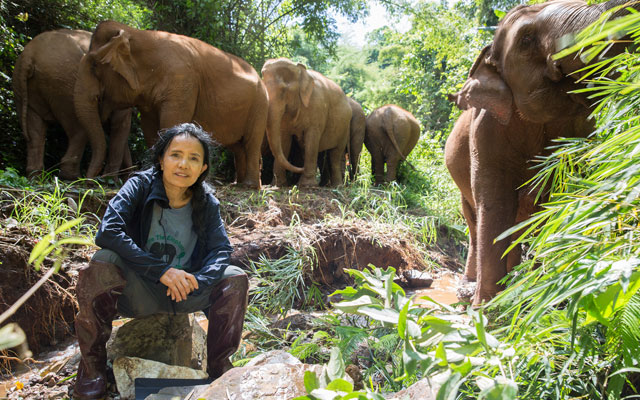
The event is the brainchild of Lek Chailert, who aims to create more ethical elephant programmes
Elephant tourism has long been associated with Thailand by travellers from around the globe and helps to attract millions of visitors to the country each year.
However, there has been a growing trend away from traditional forms of elephant tourism (such as elephant riding and circus shows) towards ethical elephant tours offering programmes that are sustainable and make the well-being of elephants a priority.
A key goal of Elephant Travel Mart 2018 is to provide a venue for people to gather and discuss how the travel industry can continue to adapt to respond to this trend and better meet the shifting demands of travellers.
Save Elephant Foundation’s Lek Chailert, who conceived of the event, commented: “If ethical tour operators using environmentally sound practices and tour agencies work together in response to the demand for sustainable ecotourism in Thailand, a mutually beneficial relationship can be achieved that will create widespread benefits for the elephants, the environment, small communities and the Thai economy.”
At the event, there will be 30 booths representing the Saddle Off projects promoted by Asian Elephant Projects.
In the evening, dinner will be served and entertainment provided by Thai stars including Rose Sirinthip, Baitoey R-Siam, King The Star and Bow Benjasiri. There will also be a lucky draw, followed by a closing address by Prayat Vorapreecha, honorary counsellor of Save Elephant Foundation.
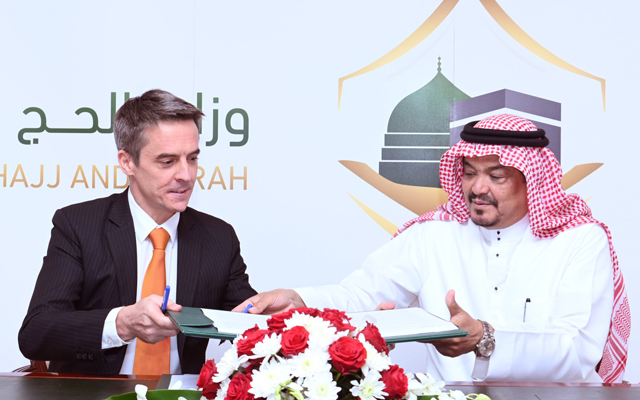
Saudi minister of Hajj and Umrah Mohammad Saleh bin Taher Benten (right) and Agoda's Damien Pfirsch
Agoda and Saudi Arabia’s Ministry of Hajj and Umrah have signed an MoU supporting the Kingdom’s vision to receive over 30 million pilgrims by 2030.
Umrah guests to the Kingdom can now visit a dedicated Agoda portal agoda.com/umrah to access select hotels that have been certified by the Ministry of Hajj and Umrah for Umrah visitors and pilgrims bookings.
Saudi minister of Hajj and Umrah Mohammad Saleh bin Taher Benten (right) and Agoda’s Damien Pfirsch
Pilgrims can find accommodation options and book through the multilingual and multi-currency portal.
Under the MoU, the first to be signed by the Ministry of Hajj and Umrah with a global OTA, the parties will explore redefining the future of travel for pilgrims to the destination, working in collaboration to help to build future services including guest flow and booking accommodation.
According to Saudi Vision 2030 announced in 2016, the last decade has seen the number of Umrah visitors and pilgrims entering the country from abroad treble.
Annual pilgrimages play a significant role in Saudi Arabia’s tourism industry, with the government aiming to grow this sector to 15 million Hajj and Umrah visitors annually by 2020, and 30 million by 2030.
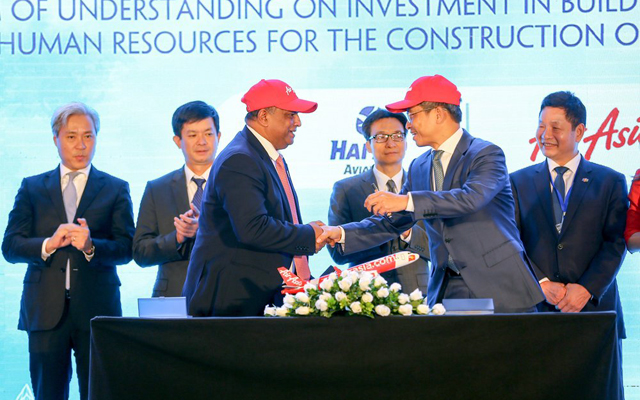
JV is not up as scheduled, but AirAsia's Tony Fernandes (left) and TMG's Tran Trong Kien reaffirm their commitment to the partnership
AirAsia has signed a Memorandum of Cooperation reaffirming its intention to set up an LCC in Vietnam with local partners, originally scheduled to take off early this year.
The agreement was signed by AirAsia Group CEO Tony Fernandes and Vietnamese businessman Tran Trong Kien, in his capacity as CEO of Thien Minh Travel Joint Stock Company (TMG) and general director of Hai Au Aviation Joint Stock Company (HAA), at the InterContinental Hanoi Landmark72 today.
JV not up as scheduled, but AirAsia’s Tony Fernandes (left) and TMG’s Tran Trong Kien reaffirm their commitment to the partnership
The signing, conducted on the sidelines of the Vietnam Travel and Tourism Summit 2018, was witnessed by Vietnamese deputy prime minister Vu Duc Dam and Vietnamese deputy minister of culture, sports and tourism Le Quang Tung.
AirAsia group CEO Tony Fernandes said: “AirAsia is an ASEAN airline. And in ASEAN, Vietnam is one of the last remaining countries with a large population we’re not in. Today’s memorandum reaffirms our commitment to making AirAsia in Vietnam happen. Last year, when we announced this JV, we were bullish about Vietnam and we remain incredibly bullish about serving one of the most dynamic, fastest-growing economies in Asia.
The LCC is already the largest foreign airline group in Vietnam by capacity, he pointed out. It operates to five destinations in the country, including the most recent addition, Phu Quoc.
“We will continue to expand our network to connect Vietnam to ASEAN and beyond, something our local JV will be able to accelerate,” Fernandes added.
TMG’s Tran Trong Kien said: “Vietnam tourism has performed extremely well. The number of international arrivals has doubled over the last three years and domestic and outbound travel have also grown tremendously. The sector has contributed greatly to recent economic development and social progress. Vietnam as a country needs better connectivity to continue this trend and for tourism to reach its full potential. Adding a new airline, especially at this stage… is a much needed move. This new airline will bring more and better choices to our people in the years to come.”
AirAsia operates 141 return flights weekly on 13 routes – including six unique routes – connecting Hanoi, Ho Chi Minh City, Da Nang, Nha Trang and Phu Quoc with Kuala Lumpur, Penang and Johor Bharu in Malaysia, Bangkok and Chiang Mai in Thailand and Manila in the Philippines, and has carried 12 million passengers to and from Vietnam since entering the market in 2005.
What impact has the spate of hotel consolidations had in Asia and on JLL’s movements in the region?
Our global merger and acquisition (M&A) team has facilitated the large-scale acquisition of Australia-based Mantra by French giant Accor in 2017. This transaction follows a number of high-profile M&A transactions among major hotel operator and investor groups such as AccorHotels’ acquisition of Fairmont Raffles Hotels International in 2016 and Marriott International’s merger with Starwood Hotels and Resorts.
Thai group Minor International announced last June that they are making a move to boost its European presence with plans to acquire NH Hotel Group for around 2.5 billion euros (US$2.9 billion).
Given this high volume of M&As in the region, we believe that the drive to add brands or geographies will continue to grow as traditional operators or private equity groups increasingly look for expansion and growth opportunities.
How about homesharing – how has this segment impacted the traditional hospitality playing field?
Within the homesharing space, we are also seeing an increase in hotel groups making strategic investments into homesharing platforms. This is part of a defensive play to disrupters entering the traditional hotel accommodation space.
What other key trends do you predict will influence Asia’s hotel market in 2019?
We do see more non-hospitality players entering the hospitality space – for example, Muji and Alibaba.
We also anticipate an increasing number of global private equity players and institutional investors – presently underweight in property – seeking exposure in the growing Asian tourism sector.
Lifestyle hotels are carving out a niche in Asia Pacific, boosted by strong demographic factors such as rapid population growth in India and China, the rise of millennials and even older guests becoming more tech-savvy.
Asia is known to be highly fragmented. How disparate is business interest each area?
Key gateway cities – Tokyo, Hong Kong and Singapore – remain highly sought after, albeit limited stock of quality trophy assets are offered for sale. Stable economic growth, robust tourism fundamentals and the low interest rate environment continues to attract diverse investor interest.
Despite the many hotels in Thailand’s capital Bangkok and other popular tourist destinations, relatively few hotels are offered for sale. When they are, as seen with the recent offerings of The Intercontinental Hotel Koh Samui and ex-Crown Plaza hotel in Bangkok, they are keenly contested by both domestic and regional investors.
Investors are now seeking opportunities to diversify their portfolio in various markets across South-east Asia and the Indian Ocean, including the Seychelles, Cambodia and Vietnam. JLL recently sold the Banyan Tree Seychelles and Raffles Portfolio Cambodia (Siem Reap and Phnom Penh).
Amidst the buzz of robotics, personalisation and partnerships – what were your key takeaways from 2018?
There will be 370 million youth travellers by 2020, of which three out of five will be from Asia. In time to come, the technology-savvy millennial travellers will dominate the travelling scene.
To keep up with the growing influence of these travellers, hotels are reinventing themselves by offering unique and personalised technology-based experiences.
Hotel chains are hungry for more smart hotels and more innovation to speed up efficiency and improve customer experience.
What key Asia markets and destinations will JLL be focusing on in 2019?
Japan, Singapore, Thailand will be the markets of increased focus in 2019.
In Japan, with the upcoming 2019 Rugby World Cup and 2020 Tokyo Olympics we anticipate heightened global awareness of Japan as an investment destination. A number of hotels developed by the mid-sized developers are also anticipated to come into the market for sale, creating further investment opportunities.
In Singapore, South-east Asian high net worth investors are looking for long-term holds and wealth preservation continues to make Singapore one of the region’s most sought-after destinations.
Finally, Thailand is expected to remain as one of the most active hotel investment markets in the region, driven by continued demand from international visitor arrivals, robust hotel trading performance, improving infrastructure and a stable political environment.
Oriental Land, the company that owns the rights to Tokyo Disney Resort, has unveiled plans to build a Toy Story-themed hotel and a new Beauty and the Beast attraction in the park.
Themed on the Disney/Pixar Toy Story franchise, the entire hotel, from the garden to the building’s exterior, will immerse guests in a world belonging to characters such as Woody and Buzz Lightyear.
The new-build is expected to have 11 storeys and house approximately 600 rooms, a restaurant and a Disney shop. The approximately 31.5 billion yen (US$279 million) project is expected to be completed in 2021.
According to a report by The Japan Times, a new Beauty and the Beast attraction is currently under construction in Tokyo Disney Resort. Slated for a spring 2020 opening, the 4.7ha new area will be the beast’s castle with towers rising up to 33m high, while the interior will feature bowl-shaped rides that move to the music from the movie.
In addition, an indoor theatre and a riding attraction based on the Baymax animation are also under construction.
The company is expected to invest some 75 billion yen in the development project, the largest sum it has spent since opening the Disneyland park in 1983.
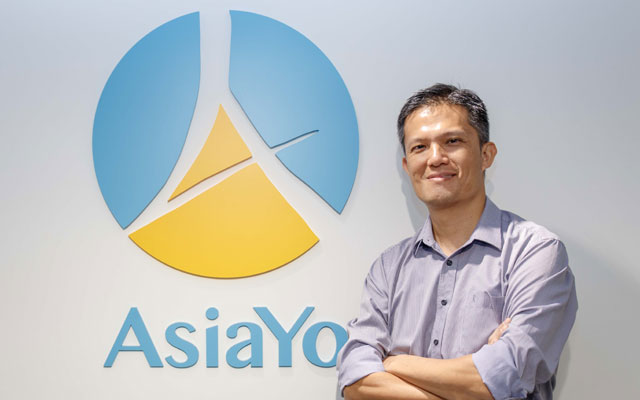
Taiwan-based vacation rental platform AsiaYo has raised US$7 million in a Series B funding round led by Alibaba Taiwan Entrepreneurs Fund and China Development Financial, which will fuel its expansion into South-east Asia.
Darwin Ventures and Delta Ventures also participated in the funding round.
Cheng, the founder of AsiaYo, wants to move into the South-east Asian market
The funding will be used to further fuel AsiaYo’s international ambitions in Asia, with activations in Singapore and Malaysia expected in early 2019.
This will be supported by ongoing product development and talent acquisition as AsiaYo sets its sights on attracting millennials to the hospitality and tourism industry.
“With rapid economic development across Asia, we have seen a significant rise in inter-regional tourism – AsiaYo has capitalised on this trend, demonstrating its growth potential,” said Andrew Lee, executive director of the Alibaba Taiwan Entrepreneurs Fund. “We’re currently working with AsiaYo to further develop technological capabilities in the travel industry.”
Working in collaboration with more than 50 partners globally, AsiaYo has established its presence in Japan, South Korea, Hong Kong and Thailand, with overseas bookings accounting for 60 per cent of the business. Currently available in English, Chinese and Korean, the company will soon launch a Japanese site in 2019.
Launched in 2014 by a former financial analyst, CK Cheng, AsiaYo has quickly expanded to now managing over 60,000 listings across 60 cities, and serving 300,000 members. From an original team of four, it now employs more than 100 people.
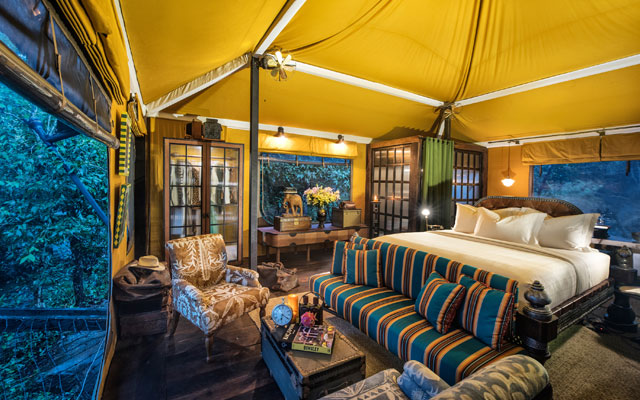
Shinta Mani Wild – Bensley Collection, Cambodia
This luxury tented camp experience, which lies three hours drive south of Phnom Penh, is home to 14 one-bedroom tents (100m2) and one two-bedroom tent (140m2) nestled amid a 350ha valley between the Phnom Bokor and Kirirom National Parks.
After arriving at this gate lounge by road or helicopter, guests can enjoy an adrenaline-filled entry to the resort via a 380m-long zipline over rivers and waterfalls, or simply opt for a jeep transfer.
Amenities at this remote outpost include the Waterfall Restaurant, Landing Zone Bar and Boulders Spa, while an extensive list of adventures – from hiking and expedition boat journeys to accompanying rangers and full-time researchers on field research – can be had.
Awei Pila, Myanmar
This exclusive resort, set on a remote tropical island in Myanmar’s Mergui Archipelago, will open its doors to guests on December 15. The newly-constructed property on the island of Pila – a two-hour speedboat ride from mainland – will feature 24 air-conditioned tented villas fronting a white-sand beach. Facilities include a restaurant, bar, spa and swimming pool. Water activities include kayaking, snorkelling, and diving are on offer, alongside island excursions and cooking classes. The property will open seasonally (closed June to September every year).
Hotel Nikko Bangkok, Thailand
The soon-to-open Hotel Nikko Bangkok stands at 27 Sukhumvit Soi 55, within walking distance from the BTS Skytrain Thonglor station. The five-star hotel offers 301 guestrooms and suites, including 10 extended stay rooms featuring a kitchenette. The hotel will have four restaurants and lounges, and offer over 1,800m2 of meeting space including the Fuji Grand Ballroom which can host up to 1,250 in a standing-cocktail setting.
Shama Hongqiao Shanghai, China
Thailand-based Onyx Hospitality Group has opened its 50th property, Shama Hongqiao Shanghai, in the Hongqiao business district. The property offers 132 apartments in six categories from studios up to two-bedroom residences. Each apartment is fitted with a customised Shama Slumber bed, fully equipped kitchenette, ample storage space, dual laundry washer and dryer, LED TV with international channels, Wi-Fi Internet access and a work desk. Amenities on-site include a gym and yoga room, business centre, and a breakfast outlet.
Ascott Sudirman Jakarta, Indonesia
The 43-storey serviced residence offers business travellers 192 units, ranging from studio, one-, to three-bedroom apartments. Each apartment comes with a fully-equipped kitchen, living room and dining area, bathrooms with bathtub and rain shower. There is also complimentary Internet access, LED smart TV with home entertainment system, washing machine and dryer. A swimming pool, all-day dining restaurant, gymnasium with steam and sauna facilities, outdoor tennis court, business centre and meeting rooms are among the facilities available at this property.