The recent move by casino operator Genting Malaysia to sue Twenty-First Century Fox and its soon-to-be owner Walt Disney for more than US$1 billion is not seen as a setback for the country’s tourism, say inbound travel agents.
Genting Malaysia in November 2018 accused the two of terminating a contract related to the construction of the first Fox-branded theme park in Genting Highlands.
The attraction was going to be the only operating 20th Century Fox theme park in the world and the first in Asia
Last month, Genting Malaysia’s chairman and CEO Lim Kok Thay told Singapore’s Business Times that the theme park “remains very much part of our plans”, while describing the theme park as “only a small part” of expansion plans for Resorts World Genting.
The opening of the branded theme park, originally scheduled for 2016, had been delayed numerous times. This led some inbound agents such as Azizi Borhan, managing director, Asutra Convex, to not promote the attraction even before news of the theme park potentially not materialising.
World Avenues’ executive director, Ally Bhoonee echoed similar sentiments: “We never promoted the Twentieth Century Fox World theme park because we didn’t want to take a risk. There were delays and no clear indication of when it would open. Our overseas agents have also not asked about it.”
He further remarked that the country has “plenty of other theme parks” that agents can include in itineraries.
Moreover, agents emphasise that theme parks are just one component of more extensive itineraries in Malaysia.
In Azizi’s experience, tourists typically spend just half a day in a theme park, with the rest of the itinerary packed with other activities such as shopping and sightseeing.
Ally added: “Even without a branded theme park, Resorts World Genting will still have its destination appeal. People go there for a change of weather, and the shopping, food and entertainment experiences.”
On the other hand, Raaj Navaratnaa, general manager, New Asia Holiday Tours & Travel, opined: “(Losing the theme park) will affect (potential) arrivals from Asian markets to some degree as there is no new international attraction of that class in Malaysia. We have to find other ways to attract weekend holidaymakers to Malaysia.”
For example, he shared that the company has developed edu-tourism packages to attract students from regional markets such as Vietnam and Thailand to take up short language courses in Malaysia, in addition to being the groundhandler for the Kabaddi World Cup from April 2 – 15.
Uzaidi Udanis, president, Malaysian Inbound Tourism Association, agreed that the theme park would have had a positive impact on arrivals. However, he stressed: “We cannot depend solely on a single product or be over-reliant on man-made theme parks. We need to create ‘natural theme parks’ in the forests, mountains and rivers.
“We are planning to have an inbound tourism boot camp in Langkawi from January 15 to 17 followed by one in Lahad Datu, Sabah in February. Through these camps, we intend to gather the inbound players together to identify new products that we can promote to overseas markets. We need to leverage our strength in culture and ecotourism and come out with more packages to attract international markets. This is our long-term strategy.”
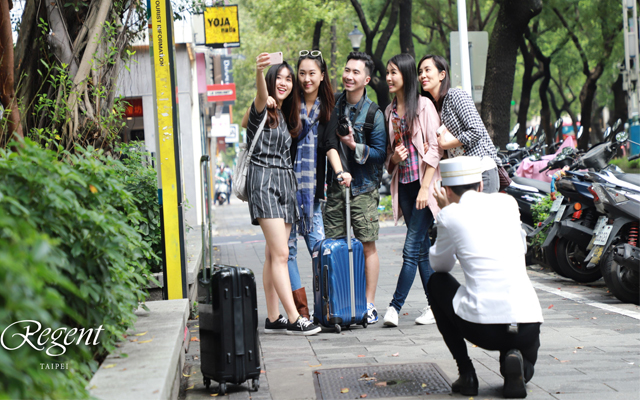
Photography Butlers now accomapnying guests to gram-worthy shots within Regent Taipei, and soon around the city as well
Guests at the Regent Taipei can leave their selfie sticks at the door without falling behind on the gram, as the hotel introduces what it says is an industry-first Photography Butler service.
Available by advance reservation only, Photography Butlers will accompany guests to popular Instagram check-in spots in the hotel, tourists attractions and “insider photo locations” across the city and take photos for guests.
Photography Butlers now accomapnying guests to gram-worthy shots within Regent Taipei, and soon around the city as well
Currently, photo location options include more than 30 Instagram-worthy spots within Regent Taipei; while scenic locations near the hotel will be available in the following phase. Routes and itineraries may be customised based on time available, season and number of people in the guest party.
The hotel added that travellers in Taipei who are unfamiliar with the city will be able to fully enter exploration mode without a selfie stick or having to hand their phones to strangers for photo-taking.
Photography Butlers are Regent Taipei employees who are “like-minded” and trained, and photo locations are selected based on research done on Instagram.
Alex, Regent Taipei’s chief concierge, Taiwan’s Golden Key society president and Regent Taipei employee photography club president, said: “By providing the Photography Butler service, surpassing the industry standard, we were already able to secure a major client’s return stay due to enhanced customer satisfaction.”
While Photography Butlers responds to the needs of guests in an always-on, snap-happy generation, the hotel admits it also serves as a strategic marketing tool by directly encouraging social media posting.
Regent Taipei managing director Simon Wu elaborated: “Enhancing guest satisfaction and driving digital engagement are continuous goals for us. Following the increase in FIT customers and the inseparable relationship between photography, social media and travel, the services we provide must also reflect these trends.”
The hotel had previously introduced other personalised services in the form of Wedding Butlers and Shopping Butlers.
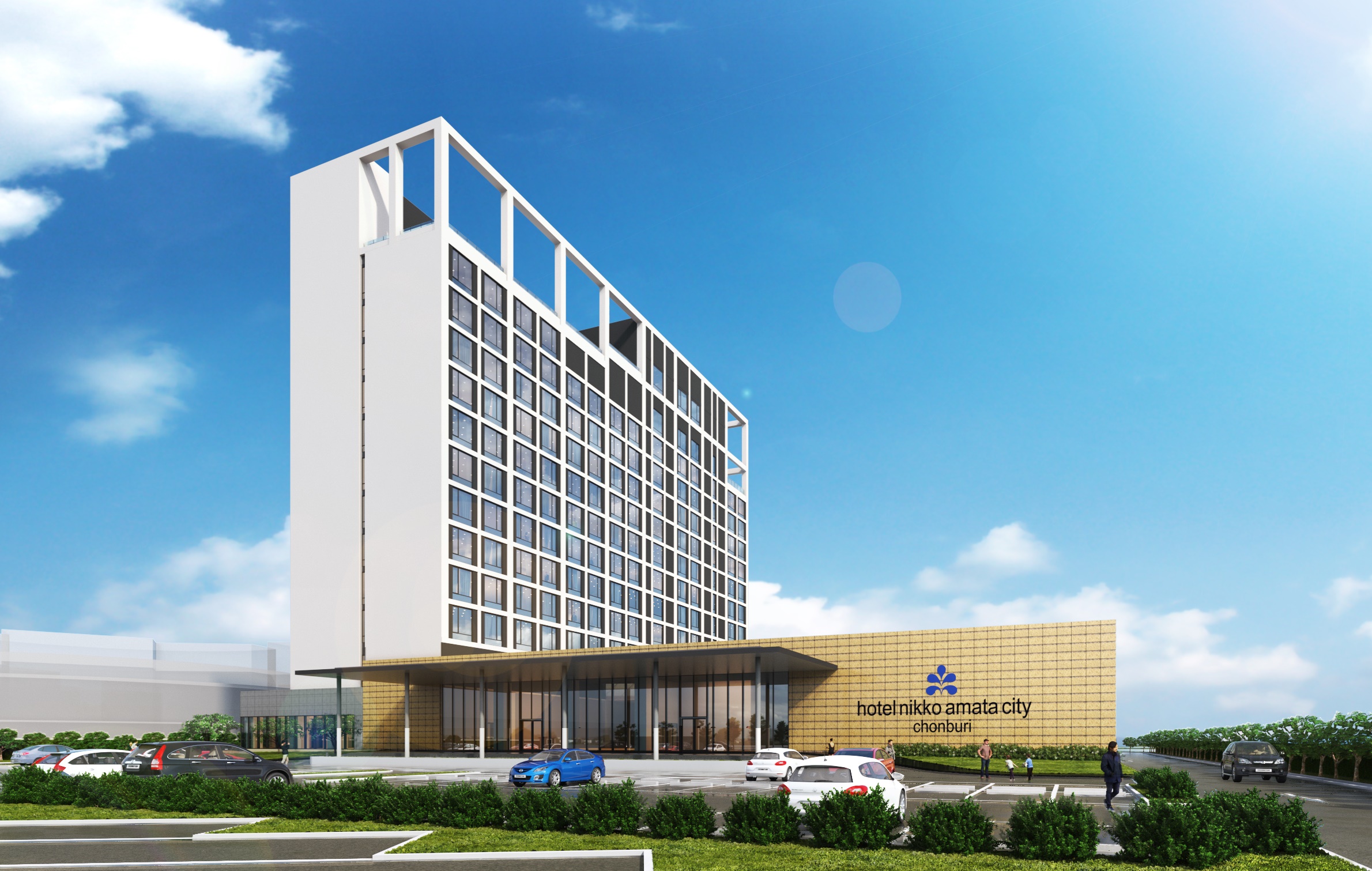
Okura Nikko Hotel Management, a subsidiary of Hotel Okura, will soon open two Hotel Nikko-branded properties in Cambodia and Thailand.
Slated to open in 2022, Hotel Nikko Phnom Penh will be the first Hotel Nikko-branded hotel in Cambodia. There will be 201 guestrooms in total, occupying floors 14-22, with a standard area of 36m2. Facilities include a wide range of restaurants including Japanese cuisine and all-day dining, as well as a sky bar on the 23rd floor.
1 of 2
Rendering of Hotel Nikko Phnom Penh
Rendering of Hotel Nikko Amata City Chonburi
Managed by UY United, the hotel will occupy the upper level of the tentatively named Japan Trade Center, a mixed development project currently under construction in Phnom Penh’s Toul Tum Poung district.
Thailand’s third Hotel Nikko will open in 2021 in Amata City Chonburi Industrial Estate, around 60km south-east of Bangkok. The hotel will be built on a site of approximately 21,000m2, near the entrance to Amata City Chonburi, a 4,000ha smart city that is already home to 750 international companies, of which 450 are Japanese enterprises.
Hotel Nikko Amata City Chonburi will offer around 250 guestrooms, each measuring 32m2. Amenities will include access to golfing facilities at the nearby Amata Spring Country Club, gym, public bath, banquet hall and restaurants.
These slated openings are part of Okura Nikko Hotel Management plans to expand the group’s global portfolio to 100 properties, primarily in Asia, by 2020.
ACTS Group is positioning Canvas as a brand seeking to nurture the connections between people and cultures (photo credit: ACTS Group)
ACTS Group, a Hong headquartered property developer, is launching a lifestyle brand, Canvas, which places community-centric, networking and cultural initiatives and values at the heart of its properties.
With flagship properties in Bali, Hua Hin and Bangkok, each Canvas product is meant to showcase its locations, while building “approachable and inclusive networks” and raising awareness of sustainability and cultural preservation, ACTS Group said in a statement.
ACTS Group is positioning Canvas as a brand seeking to nurture the connections between people and cultures (photo credit: Canvas)
The brand encompasses three components: Canvas Place, a hospitality and real estate development arm; Canvas Belong, with options for individual and corporate membership; and Blank Canvas, a platform for creative minds to gather.
Under the Canvas Belong programme, Canvas Citizens will enjoy a range of benefits from a welcome life coaching session, stays at new Canvas Place resorts in Bali and Hua Hin, cultural experiences and lifestyle offerings in dining and wellness in five cities, to enriching events with influential CEOs, entrepreneurs, designers, wellness and sports champions from around the world.
The membership programme will launch in Hong Kong on January 23, 2019, then Bangkok and Shanghai the following month.
Founder of ACTS Group, Carl Gouw, said: “Canvas seeks to inspire and nurture connections between people and cultures. Through the different components of Canvas, we are weaving together the story of creative ideas, cultural diversity and originality.”
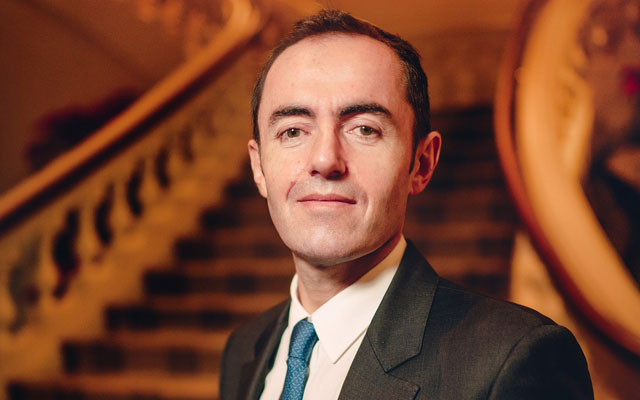
Edouard Demptos has joined Grand Hyatt Erawan Bangkok as general manager.
Prior to his move to Thailand, Demptos was hotel manager at Grand Hyatt Singapore, where he has been since June 2016.
The Frenchman first joined Hyatt Hotels & Resorts in 2004 and has since worked in Morocco, Spain, the Philippines, China and Singapore. He first arrived in Asia in May 2009 as director of F&B at the Hyatt Hotel & Casino Manila, and subsequently joined Hyatt on the Bund in April 2011 in the same capacity, before he was later promoted to executive assistant manager F&B and hotel manager.
From the east to west of our incredible archipelago, you can indulge in these stunning beaches that are ready to captivate you. Slather on your sun block, get out your coolest sun hat…..here are 6 Instagramable beaches to put on top of your best beaches bucket list in Wonderful Indonesia!
Pulau Lengkuas, Belitung
Apart from its unique and pristine beaches, visitors to Lengkuas Island in Belitung are also intrigued by the island’s lighthouse. This is just one historical landmark you can find in the area dating back to the Dutch colonial era when they built it in 1882. The 62-meter high lighthouse still operates to this day. The beaches and the lighthouse will make a sure hit for your Instagram feed…..
Jogan Beach, Yogya
Jogan Beach is approximately 70 kilometers or around two-hour drive from Yogyakarta. What’s so special about this beach? It hosts a stunning waterfall with a cliff standing around 10-12 meters high, the water flows directly from the cliff to the sea. A heart-stopping view! To reach the waterfall, the track is quite challenging. But don’t worry, once you reach the waterfall, all the challenges you went through will be worth it and make your photos even more memorable…
Kelingking Beach, Bali
A Jurassic park experience in Bali? You heard it right. The cliff on Kelingking Beach, Nusa Penida, Bali, has a peculiar shape. The cliff is formed like a T-Rex’s pinkie and definitely a crowd pleaser. The lush of green covering the lands, the T-Rex shaped cliff, the turquoise colored water that graces the astonishing white sands is simply a natural perfect picture that would blow you away.
Pink Beach, Komodo
Komodo Island is an official UNESCO World Heritage Site. It is located west of Flores Island in East Nusa Tenggara, and is most famously the home of Komodo dragons, the world’s largest lizards. The pink hues of this beach are said to be the result of microscopic animals called Foraminifera, which produces red pigments on the coral reefs. When these tiny fragments of the red coral are mixed with the sands on the shoreline, it naturally generates soft pink color. An automatically Insta-favorite view!
Bawana Beach, Sumba
Bawana Beach is located in Kodi, Southwest of Sumba, around a 90-minute drive from the town of Tambolaka. Itis the home to the iconic giant hole in the rock wall situated on the shoreline of the beach. The rock’s hole is an insta-favorite as it generates a dramatic view for those beachgoers seeking for the perfect picturesque snapshots especially during sunset. When the tide is high, you can also enjoy the beach view from Mareha hill. Simply gorgeous!
These are only a glimpse of many other splendors that await you in Wonderful Indonesia when you explore in our site. Click Indonesia.travel to find what you are looking for. Come visit soon, choose your adventure and experience be inspired by Wonderful Indonesia!
Find Paradise in Every Part of The Indonesian Archipelago!
Louis T Collection has appointed Chaivaree Chitrakorn as general manager of Mantra Samui Resort in Koh Samui.
Her second posting with the hospitality management company, Chaivaree joined Louis T Collection in June 2017 as hotel manager for Hotel Bocage, a six-room boutique hotel in the Thai resort town of Hua Hin.
The Thai national spent most of her career – as an attendance management executive – with Cathay Pacific Airways in Hong Kong, before relocating back to her homeland in 2017 to join Louis T Collection.
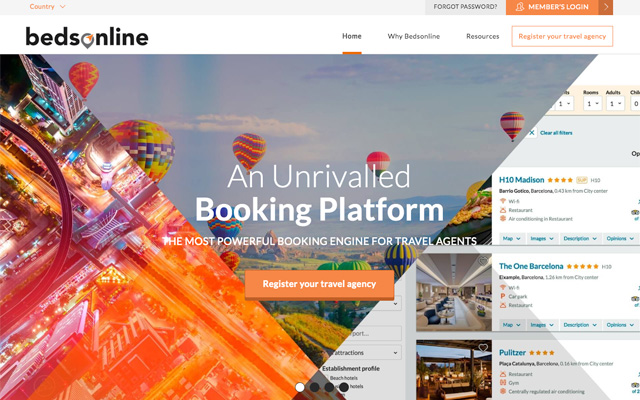
Bedsonline is offering an additional three per cent discount on all accommodation sales worldwide until January 17, 2019.
The deal is valid for all travel agents that work with Bedsonline on a commissionable basis.
This follows news announced in September 2018 that Bedsonline’s sister companies, TravelCube, TravelBound and GTA’s retail brand would all become part of the Bedsonline platform and brand, with customer migration now well underway.
Alistair Rodger, retail travel agents director, said: “Until January 17, all travel agents customers worldwide that work with Bedsonline solely in the discount model will have the opportunity to increase their profits, while benefiting from our global portfolio of more than 170,000 hotels, 18,000 activities and 24,000 transfer routes.”
Vietnam’s Quang Ninh – home to Halong Bay – has welcomed the opening of an airport, a cruise port and a highway, major infrastructural developments expected to boost tourism to the province as well as create new opportunities for international trade and economic cooperation.
After two years of construction, Van Don International Airport opened 50km from the UNESCO World Heritage Site of Halong Bay in Quang Ninh province.
The newly opened Van Don International Airport
This is the first international airport in Vietnam to be developed by a private company, namely, Sun Group, a Vietnamese developer of tourism, leisure and entertainment-focused properties and projects.
With a total investment of nearly 7.5 billion Vietnamese dong (US$310 million), the airport was constructed with the assistance of NACO (Netherlands Airport Consultants).
As a new gateway for both domestic and international travellers visiting Halong Bay, the airport is expected to receive an estimated 2-2.5 million passengers annually for the next two years and five million per year by 2030.
On the same day, Sun Group officially unveiled the new Halong-Van Don Highway and Halong International Cruise Port in Quang Ninh.
The new four-lane, 60km-long highway is said to reduce travel time from Van Don Airport to Halong city to under 50 minutes.
With total investment of over one billion dong, Halong International Cruise Port is the province’s first cruise port dedicated to receiving international cruise ships.
Located in Bai Chay ward, Halong City, the port can accommodate two cruise ships (up to 225,000 GRT each) at the same time and a total of 8,460 passengers, including crew.
The port terminal, designed by Bill Bensley, is pegged to be a new landmark for the city province.
Karen Yue, group editor CEO to look out for in 2019 There isn’t one in particular but I relish any opportunity to meet with a business leader who goes out of his/her way to grow his/her people and encourages activities that benefit the wider community his/her organisation operates in.
Industry pet topic The legacy of professional associations, which is often unseen by the general public. In a recent interview with the AIDS Society of India’s president, Ishwar Gilada for TTGassociations, I learnt that the association’s intensive promotion of far more affordable AIDS/HIV medication produced by qualified Indian pharmaceutical companies and their export to Africa have allowed more patients from that continent to access life-saving medication.
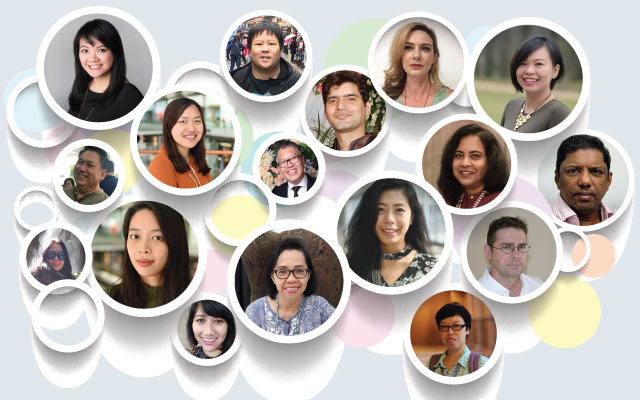
Karen Yue, Xinyi LIang-Pholsena, Yixin Ng
Xinyi Liang-Pholsena, editor, TTG Asia CEO to look out for in 2019 I’m definitely keeping an eye on Jane Sun, CEO of Ctrip, because she’s at the rare confluence of travel, technology and female leadership. Sun is also a vocal proponent of female empowerment and women’s rights, and has introduced female-friendly policies to the Ctrip workplace, including bold ones like reimbursing female executives for egg freezing procedures and breastfeeding mums to bring their babies along for work trips, something that progressive companies should emulate.
Industry pet topic I’m constantly intrigued by the transformative power of technology on the travel and tourism landscape. Technology has enabled travel companies to provide better service and engage with their customers, but yet people and good old service remain at the heart of this travel business. It’s a tightrope connecting people and technology in travel, and discovering the innovation, opportunities as well as challenges – and this space gets me excited.
Yixin Ng, assistant editor, TTG Asia Luxury CEO to look out for in 2019 Anyone who can show how we can champion the democratisation of travel (the more the merrier), minimise impact on communities and the environment, and retain authenticity in the process of brokering experiences – all at the same time.
In the industry today, there is no shortage of players working hard to uphold any two of these three values. But to simultaneously champion all three seems an almost impossible, and highly conflictual, undertaking for a travel business.
Industry pet topic Aspirational travel, be it exceptional travel experiences that speak to individual longings and values, or restorative getaways that help people pursue their aspirations back home.
Mimi Hudoyo, S Puvaneswary, Rachel AJ Lee
Mimi Hudoyo, editor, Indonesia CEO to look out for in 2019 Arief Budiman, chairman of the General Elections Commission. In the 2019 election year, Indonesia’s budding democracy and the wide support for the two presidential candidates will need a strong and fair leader to head the elections commission. A conducive election environment is important to keep the country’s tourism sector going. After all, an election is a celebration of democracy and should be a time for festivities, and not keep travellers away.
Industry pet topic The hotel industry. It’s a very dynamic sector with ever-changing, trends. Brands are growing fast – sometimes interestingly confusing, and likewise for the ownership. The hotel industry, especially for Indonesia, never bores me.
S Puvaneswary, editor, Malaysia/Brunei CEO to look out for in 2019 AirAsia Group CEO Tony Fernandes, whom I hope will spearhead the launch of new regional routes to smaller Australian cities. I’m keeping an eye out for direct flights between Kuala Lumpur and Tasmania – a destination I would love to visit.
Industry pet topic I am concerned about the impact of travel and tourism on climate change. Governments, the private sector and individual travellers should make bigger efforts to drive sustainable development to avoid a bleak future.
Rachel AJ Lee, subeditor CEO to look out for in 2019 Bruce Poon Tip, CEO of G Adventures. I like that G Adventures tours go off-the-beaten track, and the introduction of the Ripple Score shows that the company cares for the local communities it visits, and is a great initiative that spreads the tourism dollar. I look forward to see what other tourism initiatives the company will come up with.
Industry pet topic Responsible travel, which is intertwined with overtourism and pollution (think Boracay), and rural tourism. I think governments and stakeholders should do more to better disperse tourists, or perhaps think of feasible ways to proactively drive traffic elsewhere, instead of just paying lip service. If we don’t balance our human and natural resources properly, I fear that tourism may actually ruin destinations instead of helping the economy.
Pamela Chow, Paige Lee Pei Qi, Marissa Carruthers
Pamela Chow, reporter, Singapore CEO to look out for in 2019 Lionel Yeo, who made a noteworthy shift as the chief of the Singapore Tourism Board (STB) to Singapore’s ride-sharing frontrunner Grab. It will be interesting to monitor how Yeo’s previous tenure in a statutory board will inform his role as CEO advisor in Grab’s development, especially after Indonesian rival Go-Jek enters the game.
Industry pet topic STB’s Passion Made Possible campaign launch has considerably re-invigorated the local tourism scene, spawning a bumper crop of innovative Singapore tours and activities. It is eye-opening to see veterans and new blood alike presenting unique to-dos and must-sees, such as Teochew opera and after-dark neighborhood walks.
Paige Lee Pei Qi, assistant editor, special projects CEO to look out for in 2019 Anthony Tan, CEO & co-founder at Grab. This ride-hailing app has already expanded aggressively into food delivery and mobile payment solutions. I can’t wait to see what else Grab has gotten up their sleeves, especially with keen competitors like Go-Jek coming into Singapore.
Industry pet topic It’s not surprising that artificial intelligence (AI) is the buzzword these days and even more so for the travel industry. I love to watch how AI brings about revolutionary changes in the way we travel – it’s almost shocking to see what can only belong to a dystopian society become a reality today.
Marissa Carruthers, correspondent, Indochina CEO to look out for in 2019 Dutch entrepreneur Boyan Slat launched his first ocean clean-up in the North Pacific in September this year. By 2020, Boyan hopes a full fleet will be clearing the Great Pacific Garbage Patch. I hope this reminds the tourism industry of the part it must play in keeping our oceans clean and protecting marine life.
Industry pet topic My passion lies within grassroots and community-based tourism that scratches beneath a country’s surface and delves deeper beyond the usual tourist sights. The environment and nature are also topics close to my heart, especially living in Cambodia where forest and wildlife are dwindling. It is incredible to see more industry players stepping up with innovative tourism products that focus on conservation of wildlife and natural resources.
Rosa Ocampo, correspondent, Philippines CEO to look out for in 2019 Warren Buffett, CEO, Berkshire Hathaway. Will Buffett up his investment portfolio in the airline industry? His Berkshire Hathaway already partly owns United, American, Delta and Southwest airlines. And with the continuing growth in the hospitality industry, might he be tempted to own mega-hotel, mega-travel corporations and mega-technology providers?
Industry pet topic Urbanisation continues to uglify a growing number of Philippine destinations – metro Manila, Tagaytay, Baguio, Mactan Island and Cebu are already casualties, and Iloilo is getting there. More and more destinations are suffering from overpopulation, traffic congestion, pollution and flooding. We know we need town planning and to follow existing rules and regulations, but political will is lacking.
Prudence Lui, Rohit Kaul, Feizal Samath
Prudence Lui, correspondent, Hong Kong CEO to look out for in 2019 The helmsman of the soon-to-established Travel Industry Authority, which will replace Travel Industry Council as a statuary body to enhance the quality and promote sustainable, long-term development of the travel industry. I’m interested to know why he’s willing to take up this hot seat, his vision and how he plans to walk the trade into a comprehensive licensing regime for travel agents, tourist guides or tour escorts.
Industry pet topic Merger and acquisitions of travel agent business. As many family-run, homegrown agents have been acquired by investors, there are only a few operators left in the marketplace so it will be interesting to see how they stand on their own feet amid the competition. This year the 61-year Lotus Tours was acquired by Corporate Travel Management; who’s next?
Rohit Kaul, correspondent, India CEO to look out for in 2019 Vijay Shekhar Sharma, CEO of Indian e-commerce payment system and digital wallet company, Paytm. The company has emerged as the strongest player in this digital payment segment. It will be interesting to see how Paytm is working with Indian travel agents and hotels to popularise its digital payment platform.
Industry pet topic The health of Indian inbound sector because the current status of Indian inbound arrivals doesn’t justify the true tourism potential of India. Apathy from the government sector as well as lack of innovation from private players have been major stumbling blocks in the growth of Indian inbound tourism.
Feizal Samath, correspondent, Sri Lanka/Maldives CEO to look out for in 2019 Dileep Mudadeniya, head of brand marketing, Cinnamon Hotels and Resorts. He’s been a game changer not only at Cinnamon but also the country at large, conceptualising innovative ideas to take the company and country brands forward by bringing in high-profile events (think beauty pagents and West End musicals) and attracting tourists from the region.
Industry pet topic Without a doubt, it’s the struggle to get Sri Lanka’s long-awaited, global destination marketing on track. The project has struggled for the past three years, bogged down by bureaucracy and cumbersome procedures, frustrating an industry which has been waiting patiently for a new country marketing blitz to tell the world that Sri Lanka is back in business!
Julian Ryall, Tiara Maharani
Julian Ryall, correspondent, Japan CEO to look out for in 2019 I hope to see radical changes in many of Japan’s traditionally run business sectors. In the airline sector, All Nippon Airways is best positioned to lead that sort of change and I hope that president and CEO Yuji Hirako has what it takes to see that sort of evolution through. Asia needs the open skies and cheap flights that travellers in Europe and North America now take for granted.
Industry pet topic There has been so much growth in Japan’s hotels sector, from the budget category all the way up to the luxury end of the spectrum, that it can be hard to keep up with the changes. But this country really needs to up its game on the accommodation front, and the upcoming Tokyo 2020 Olympic Games and the anticipated arrival of 40 million sports fans and regular tourists has revolutionised the hospitality sector.
Tiara Maharani, correspondent, Indonesia CEO to look out for in 2019 Bambang Brodjonegoro, Indonesia’s minister for national development planning (Bappenas). During a speech at the National Tourism Ministry Meeting, Bambang said that he is developing a strategy for tourism to be a pillar of the Indonesian economy, and that a quick win for Indonesia’s economy is through tourism and business events. I am curious to know what makes Bambang confident about the tourism sector and how he would convince president Joko Widodo to implement the pro-tourism policies.
Industry pet topic Sustainable tourism. Indonesia is endowed with extraordinary natural resources and that must be preserved. Both the natural environment (such as beaches, forests, waterways) as well as the built environment (such as historic buildings and ruins) must be preserved for an area to be environmentally sustainable. This can usually be achieved by getting the locals involved in the tourism industry.