French luxury goods company LVMH – which owns iconic brands including Moët & Chandon and Louis Vuitton – is acquiring Belmond in a multi-billion-dollar deal expected to complete in 1H2019.
The deal is for US$25.00 per Class A share in cash, representing an equity value of US$2.6 billion and an enterprise value of US$3.2 billion.
Belmond Le Manoir aux Quat’Saisons, Oxford
In the 12 months ended September 30, 2018, Belmond recorded total revenues of US$572 million and adjusted EBITDA of US$140 million.
Established over 40 years ago with the acquisition of Hotel Cipriani in Venice, Belmond owns and operates a collection of hotel and luxury travel adventures in 24 countries.
Its portfolio comprises 46 hotel, rail and river cruise experiences, including Hotel Cipriani in Venice, Hotel Splendido in Portofino, Copacabana Palace in Rio de Janeiro, Le Manoir aux Quat’Saisons in Oxfordshire, Grand Hotel Europe in St Petersburg, Maroma Resort & Spa in Mexico, Hotel das Cataratas in the Iguassu National Park in Brazil, and Cap Juluca in Anguilla.
Belmond also operates trains such as the Venice Simplon-Orient-Express and Belmond Royal Scotsman as well as cruises including Belmond Afloat in France fleet and Belmond Road to Mandalay.
LVMH expects to significantly increase its presence in the luxury hotel world through this acquisition.
Commenting on the deal, Bernard Arnault, chairman and CEO of LVMH, said Belmond has strengths in its “exceptional assets”, heritage, innovative services, as well as complementary offerings to LVMH’s own Cheval Blanc maisons and the Bvlgari hotels activities.
Roland Hernandez, chairman of Belmond’s board of directors, said the board came to the conclusion that the transaction provides “compelling and certain value for shareholders” following a strategic review that attracted interest from real estate and lodging companies, sovereign wealth institutions and other financial buyers around the world.
The online travel industry is growing fast. In 2017 alone, it contributed over US$8.3 trillion to the global market. Travellers continue to crave personalised experiences and want to maintain control over their travel plans by using self-service solutions to organise trips that best suit them.
This has led to an explosion in data on traveller behaviour and preferences – a gold mine for travel marketers who want to offer customers the most desirable and timely products and services. Turning this data into meaningful customer experiences can lead to higher conversions, stronger engagement and repeat business.
How can marketers leverage demand and data to win not just short-term gains, but also long-term value?
The data dilemma
Vast amounts of data present challenges as well as opportunities. With information about customers’ travel destinations, preferences, budgets and more, marketers may struggle to identify, unify and analyse data from multiple sources (websites, apps, loyalty programmes, etc).
Travellers are looking for an easy search process that will help them find personalised, timely offers for just the right destination. Even with all this data, there’s a whole element that may be missing from the efforts of many marketers – knowledge about customer interactions across the Internet, such as recent searches and travel content consumed elsewhere online.
The AI answer
This is where AI is a clear solution – it can prove valuable in meeting the needs of customers seeking specific recommendations and customised experiences, all instantaneously and at the right point during their planning process.
An AI-powered marketing automation platform can help you better understand user interest and behaviour to create unique, personalised, relevant messaging and recommendations for each customer. It’s these customised interactions that drive conversions and loyalty.
Here are some of the key AI applications that travel marketers can leverage to create meaningful engagement:
Understand user intent based on behaviour outside the brand app or website
Sophisticated AI platforms not only analyse internal consumer data, but also seek to understand users’ external interests based on comprehensive data outside your own app or website. These insights can be used to offer hyper-personalised recommendations mapped to individual interests.
Identify the need of first-time visitors before they land
AI also allows you to decipher user preferences before they even engage with your platforms, and so you can personalise content for prospects when they first arrive on your website or app.
Identify the right opportunity
AI can identify exactly what your consumers are looking for, when, and on which device, letting you engage seamlessly with them across multiple screens using the right message and offer.
Effectively scale marketing efforts
By detecting patterns across your most valuable customers, AI can help you effectively scale marketing efforts by segmenting your consumers and creating lookalike audiences based on similar interests and preferences.
As the travel industry changes, one thing will remain the same: customer focus. By leveraging AI, you can connect with customers at a hyper-personalised level and create one-to-one engagement.
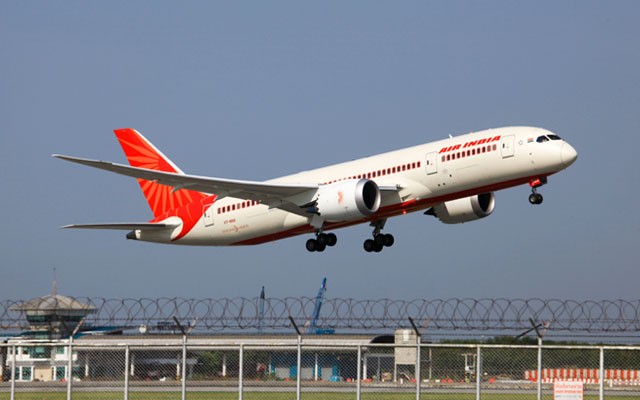
Indian travel agents and associations have taken offence to the recent decision of national carrier Air India to make Travelport its exclusive GDS provider for domestic flight content.
Starting December 4, 2018, Air India has disconnected its domestic inventory from Amadeus and will go on to pull its domestic inventory from other GDSs in 2019 – effectively continuing its inventory distribution with only Travelport.
Travelport wins tender for sole distribution supplier to Air India
A large section of Indian travel consultants polled by TTG Asia opined that the move will alienate the airline from the trade, as Amadeus is the GDS provider with the largest agency market share in the country at 40 per cent.
“Till recently it was easy for a medium-sized agency to offer a gamut of airline options, including Air India, to a client who could then make an informed decision. With this move, agencies like ours with no access to Air India’s choice of GDS will not be able to offer this airline as an option,” said Farah Raina, founder & CEO, Pink Elephant Sport & Pink Elephant Journeys.
“In the short run, due to this move and the resulting confusion, Air India will surely lose a lot of business to its competitors, which are more supportive of small- and medium-sized travel agents,” she added.
In a joint communication to Air India, two major Indian travel agents associations, Travel Agents Federation of India (TAFI) and Travel Agents Association of India (TAAI), expressed strong reservations about the airline’s decision.
“We were informed that Air India had to take this initiative to save on GDS costs, which are high. We explained that GDS cost is not as important as a seat sale. To lose out on the sale of a seat implies huge losses compared to the savings on GDS distribution,” read the communication.
Industry sources further speculate the move could have repercussions on Amadeus’ decision to continue its contract covering international bookings with Air India.
“If Amadeus decides to cancel its contract for international bookings, it will be a major jolt to Air India which is already under financial stress,” said a Chennai-based leading travel agent who wish not to be named.
However, it appears that Air India content is neither available domestically nor internationally.
An Amadeus spokesperson told TTG Asia: “Air India has decided to cancel its distribution agreement with Amadeus. The airline’s content is no longer available on the Amadeus system, in India or internationally. We have presented many options to Air India over recent months in an effort to give it access to the best technology with the broadest network of travel agencies globally and remain open to discussions.”
At press time, Air India was unavailable for comments.
Update: Amadeus has gotten in touch with TTG Asia to clarify that Air India content is not available domestically or internationally.
With cruise tourism in the Philippines on an upward growth trajectory, the emergence of this sector is bringing along with it growth opportunities as well as challenges.
Tourism undersecretary Benito Bengzon Jr revealed that there were 190 cruise calls this year, up from 140 the previous year.
Boracay, for instance, is one destination that is if continued to accommodate mega cruise ships with more than 1,000 passengers, it might exceed the tourist carrying capacity which was recently imposed on the popular island.
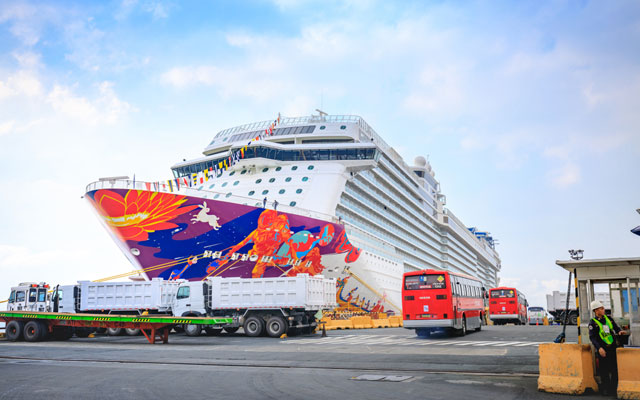
World Dream docked at the Port of Manila
When interviewed on the sidelines of the Kain Na (Let’s Eat) culinary tourism launch in Davao last Friday, Bengzon Jr said that Boracay’s local government has to decide whether it would continue to allow large cruise ships to dock at the island.
A Boracay-based tourism member added that other concerns the island had was the lack a proper cruise terminal, the impact on coral reefs when the ships drop anchor, and low earnings from shore excursions as cruise passengers do not stay overnight and spend lesser than longer-staying tourists.
But Travel Plus International’s sales and reservations manager Tonette De Vera offered differing views, indicating that during shore excursions, cruise passengers would usually lunch on and buy souvenirs on Boracay – and other similar island destinations – before returning to the ship in the afternoon.
Destinations should therefor roll out more creative offerings to capture greater spending from cruise visitors, urged de Vera.
Moreover, word-of-mouth endorsement and social media postings by cruise passengers to Boracay and similar destinations are valuable marketing opportunities for the country, she added.
Cruising also helps to promote new and lesser visited destinations, particularly for smaller expedition-type ships of up to 300 pax, which typically go to places inaccessible to mega ships, noted Benjie Bernal, tour operations manager of Sharp Travel Services.
For example, Kalanggaman Island in Leyte became more popular when his company included it in the cruising itinerary several years ago. Other recent additions include Calaguas Island in Camarines Norte and Batanes.
With lower fuel prices and strong economic growth, the global airline industry net profit is expected to hit US$35.5 billion in 2019, slightly ahead of the US$32.3 billion expected net profit in 2018 which saw profitability squeezed by rising costs, according to IATA forecasts.
It is expected that 2019 will be the 10th year of profit and the fifth consecutive year for airlines to deliver a return on capital to investors.
“We had expected that rising costs would weaken profitability in 2019. But the sharp fall in oil prices and solid GDP growth projections have provided a buffer. So we are cautiously optimistic that the run of solid value creation for investors will continue for at least another year. But there are downside risks as the economic and political environments remain volatile,” said Alexandre de Juniac, IATA’s director general and CEO.
The 2019 industry outlook is based on an anticipated average oil price of US$65 per barrel, lower than the US$73 recorded in 2018, following the increase in US oil output and rising oil inventories.
Fuel is expected to account for 24.2% of the average airline’s operating costs, an increase from 23.5% forecast for 2018.
Meanwhile, passenger traffic (RPKs) is expected to grow 6% in 2019, outpacing the forecast capacity (ASKs) increase of 5.8%, and remains above the 20-year trend growth rate. This in turn will increase load factors and support a 1.4% increase in yields. Passenger revenues, excluding ancillaries, are expected to reach US$606 billion (up from US$564 billion in 2018).
Asia-Pacific carriers are expected to report a US$10.4 billion net profit in 2019, up from US$9.6 billion in 2018, with net profit per passenger projected to be US$6.15 (3.8% net margin). Lower fuel costs, low levels of fuel hedging and strong regional economic growth are supporting profitability in 2019 in this region, according to IATA.
Gloria Guevara Manzo
President & CEO
World Travel & Tourism Council
ISSUES TO WATCH IN 2019
The issue of capacity growth. As of 2017, there were four billion air travellers worldwide and it will double to 7.8 billion by 2036, according to IATA. However, that doesn’t mean the same growth in airports, so more efficient processing of passengers is needed.
The solution is biometrics technology, which is addressed by our Seamless Traveller Journey initiative to pilot biometric data use throughout the passenger journey, from airport, cruise, hotels, car rental… to everything.
The second issue is crisis management. The next disaster is just a matter of when and where, be it an earthquake, tsunami or disease outbreak. We need to be prepared and manage (disasters) better. We work with governments to provide a protocol and be more engaged.
The third issue is about sustainable growth, which covers the future of jobs, social responsibility, human trafficking, illegal wildlife trade, and destination stewardship to reduce overcrowding and climate change.
YEAR-END READING LIST The Robots Are Coming! The Future of Jobs in the Age of Automation by Andres Oppenheimer. This book is coming out next year.
Mark Meehan
Managing director Asia Pacific, Middle East and Africa
Travelport
ISSUES TO WATCH IN 2019
1) The trade disagreements and tariffs between the US and China will have an impact on trade and travel between the regions. I foresee potential opportunities as well as investments moving to other developing markets in the near term.
2) Some of these investments will certainly be for the fast growth in ASEAN’s travel sector, creating interesting opportunities as travel brands and companies rush to invest in this region. Strong Chinese brands such as Ctrip as well as major Western brands like Expedia and Booking are investing and expanding in the region.
3) Ensuring we have the right resources in the right markets at the right time. The wider geographical region I now manage offers great opportunities to align teams and technology around developing and fast-growing markets.
YEAR-END READING LIST
My daughter, who has just started at a new school, has been given a reading list of books as long as my arm. In a moment of madness I said I would read some of the books to be more understanding of what she is ‘enduring’, so I am currently reading Gulliver’s Travels – quite appropriate!
Arthur Kiong,
CEO
Far East Hospitality
ISSUES TO WATCH IN 2019
In 2019, we will be launching three new hotels on Sentosa Island. That’s a total of 839 new room inventory, increasing the island’s supply by 27 per cent.
Obviously it is incumbent on us to create new demand – business travel/MICE, mid-tier travellers and niche markets – to feed the new supply and not cannibalise the existing business.
The vast majority of hotels on Sentosa is in the luxury and upscale tiers. We wish to complement existing hotels by addressing underserved segments.
We will be synchronising efforts (to attract new sources of customers) with various stakeholders including the Sentosa Development Corporation, Sentosa Harbourfront Business Association and Singapore Tourism Board.
YEAR-END READING LIST
Books by Stephen Meyers, Signature in the Cell and Darwin’s Doubt, are on my reading list. I am fascinated by how consciousness comes into being and learning about this through what we now know about cosmology and developments in the quantum realm. I particularly enjoy learning about how modern science is questioning the premises of macro-evolution theories; that life came about through a mindless process over billions of years.
Quek Swee Kuan
CEO
Sentosa Development Corporation
ISSUES TO WATCH IN 2019
2019 will be an exciting milestone for Sentosa Development Corporation, as we will see several initiatives coming together to propel The State of Fun into the next stage of growth. Playing a crucial role in shaping Sentosa’s future will be our masterplan, which will build on our strengths as a holiday island-in-the-city offering an array of day-to-night leisure experiences in one place.
We will soon share more details of our plans, including efforts to strengthen leisure experiences through the curation of new attractions, improvement of transport connectivity and enhancement of our popular beaches, while ensuring efficient land usage and environmental sustainability.
In 2019, we will also deepen our engagement with locals and tourists. We will collaborate with well-known brands to bring in unique and exciting offerings, like we did with Disney for the 2018 edition of Sentosa Sandsation. We will also strengthen our engagement with the international MICE and leisure markets, and leverage technology and data such as through our refreshed MySentosa app. Stay tuned!
YEAR-END READING LIST
I intend to read Why Ecology Matters by Charles Krebs as we finalise the Sentosa masterplan.
Angie Stephen
Managing director for Asia-Pacific
Royal Caribbean International
ISSUES TO WATCH IN 2019
Port development opportunities in South-east Asia for creation of more destinations and more berthing space for larger ships, as our 4,900-guest Quantum Class ships are making more calls in the region.
We will also continue to focus on our travel agent training in view of our new offerings on the global and regional cruising scene, notably Ovation of the Seas’ first Alaskan season and Oasis of the Seas’ Mediterranean cruises lined up next year.
YEAR-END READING LIST 12 Rules For Life – An Antidote To Chaos by Jordan B Peterson
Angeline Tang
Regional director – leisure travel & partnerships, Asia Avis Budget Group
ISSUES TO WATCH IN 2019
More Asians are travelling overseas for their holidays, opting for more free-and-easy holidays over group, sit-in-coach or packaged tours.
Self-drive vacations are getting more popular among Asians, allowing travellers to move at their own pace and customise their own itineraries, while still enjoying hassle-free bookings through travel agencies.
As travellers today become more adventurous, we will continue to engage with travel agents to help them better understand self-drive holidays, car rental booking processes and terminologies, plan self-drive itineraries for their customers and of course, to have their customers drive with Avis and Budget!
We will continue to grow our leisure outbound business actively through our local outbound teams and GSAs in key source markets within Asia. We will run more campaigns, promotions, events to engage the travel trade on the B2B2C segment.
To assist the travel trade to sell self-drive holidays, Avis Budget Group has recently launched beep, our one-stop portal for both the Avis and Budget brands. There are training modules, destination and driving guides, booking tools, making it easier for travel trade professionals to offer products and services for their customers. Rates are also commissionable and at the end of the training, travel trade professionals are also rewarded with a certificate of completion of the training modules.
YEAR-END READING LIST Life Without Limits by Nick Vujicic, This Is What Inequality Looks Like by Teo You Yenn, and Robert Kuok – A Memoir co-authored by Andrew Tanzer.
Arief Yahya
Minister of tourism
Indonesia
ISSUES TO WATCH IN 2019
First, disaster issues. In September 2017, Mount Agung erupted, followed by an earthquake in Lombok, then a tsunami in Donggala Palu. Travel advice from many countries were issued in the wake of these disasters, bringing serious impacts on Indonesia tourism. Tourists became hesitant to travel to destinations that were exposed to force majeure and disasters.
Second, political issues. 2019 is an election year in Indonesia. Tourist destinations need to ensure that domestic competition does not affect public trust of the country abroad, especially among tourists.
Third, zero-dollar tours, an issue we need to seriously control. This has happened in Thailand and Malaysia, and now it could also happen in Indonesia, especially in Bali, as some errant travel agents practise zero dollar tours.
Olivier Berrivin
Managing director, international operations, Asia
Best Western International
ISSUES TO WATCH IN 2019
Among the many elements that might affect our development growth, the two major ones are economical and political as they are linked to investment decisions and some projects are being delayed until investors feel the markets are more stable.
Thailand is among our top three markets – the other being Vietnam and Japan – and with the general elections scheduled in early 2019 we hope the new government will keep developing infrastructures and promote tourism to a wider range of markets for the country to remain a top destination.
Other factors, like general safety, are also impacting tourism flows. The perfect example is the current drop of Chinese tourists, attributed mainly to the boat sinking incident in Phuket a few months ago.
Last but not least, an increasing number of new brands and soft brands are introduced by our main competitors and targeting the midscale segment, where we traditionally develop half of our new projects so it makes things a bit more challenging.
In addition, we are launching two new brands this year – Sadie and Aiden – and they will allow us to increase our footprint further by bringing quality projects to the markets in line with clients’ expectations.
YEAR-END READING LIST The Laws of Human Nature by Robert Greene; Neverwhere and Norse Mythology by Neil Gaiman; The Subtle Art of Not Giving a F*ck by Mark Manson (probably my favourite this year!); and Legion by Brandon Sanderson.
Yuthasak Supasorn
Governor
Tourism Authority of Thailand
ISSUES TO WATCH IN 2019
For 2019 and beyond, Thai tourism will emphasise on the promotion of responsible tourism. As a result of our unique geographical location, at the crossroads of Asia and within a few hours flying distance of some of Asia’s most populous cities, we see no shortage of numbers in the years ahead. The key will be to manage those numbers.
Hence, we are striving to reduce tourist congestion in the main hubs by promoting 55 secondary provincial destinations, upgrade the standards of safety and security, and inculcate a higher level of environmental consciousness across the entire industry.
Overall, we are aligning the future path of our industry in line with the UN Sustainable Development Goals. Thailand is known all over the world for its superb tourism products and services as well as the friendliness and hospitality of its people. We now have to better balance quantity versus quality and marketing versus management. This will be our agenda for going forward.
YEAR-END READING LIST
My choice is Freakonomics written by Steven D Levitt and Stephen J Dubner. This book captures my attention because its shows how economic methodology is implemented to substantiate the truth even if it goes against the beliefs of the majority of people, or two things that seem irrelevant turn out to have a cause and effect on each other. This would be a great book to kick off the new year to better deal with problems with an unconventional attitude in a fast-paced world.
Siew Kum Hong
Regional director Asia-Pacific
Airbnb
ISSUES TO WATCH IN 2019
We see sustained growth in the region’s embrace of home sharing by both hosts and guests, and we will continue building out our product to better serve our community. Earlier this year, we launched Airbnb Plus, a selection of homes verified for quality and comfort. With around 3,000 listings around the world from Bali to Shanghai today, Airbnb Plus is part of our strategy to create an Airbnb for everyone, catering to the needs of every type of traveller.
In the corporate travel space, nearly 700,000 companies have signed up with Airbnb for Work to provide corporate road warriors the option of staying in a work-friendly home. Our latest expansion into teambuilding experiences and homes for offsites, meetings and relocations strengthened our corporate offerings. This brings the best of Airbnb to the professional world to help foster a sense of belonging, even at work.
Driven by a new experience-led economy where greater value is placed on experiences over ownership, Airbnb Experiences are growing rapidly in Asia-Pacific. We now have over 2,700 experiences in more than 200 markets in the region, creating a new wave of hospitality entrepreneurs who are sharing their passions with travellers seeking authentic travel experiences.
YEAR-END READING LIST Blitzscaling: The Lightning-Fast Path to Building Massively Valuable Companies by Reid Hoffman and Chris Yeh; The Founder’s Mentality: How to Overcome the Predictable Crises of Growth by Chris Zook and James Allen; and Bad Blood: Secrets and Lies in a Silicon Valley Startup by John Carreyrou
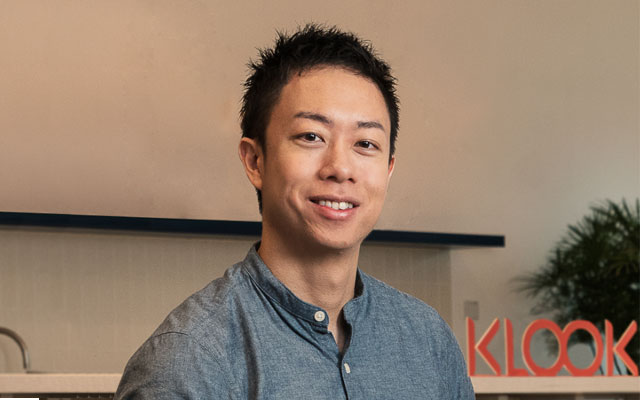
Eric Gnock Fah
COO & co-founder
Klook
ISSUES TO WATCH IN 2019
Rolling into 2019, the few issues and opportunities we have been watching closely are:
• Change of travellers’ preferences for things to do. As travellers worldwide are developing a more sophisticated selection of preferred activities during their travels, we strive to diversify our offerings in a variety of ways. This includes adding more off-the-beaten-path activities in popular destinations, as well as cities that are less-touristy or off the radar. This is in line with our global expansion into the US and Europe, which aims to further widen our offerings on the platform.
• Travellers are currently also interested in one-off and seasonal events in-destination. According to a Klook survey across 12 user countries, 54 per cent of travellers have planned their trips around seasonal activities or one-off events, then booked flights and hotels to round out the itinerary. In response to the trend, Klook has already curated a selection of seasonal activities, including ones that highlight the fall foliage in Japan and South Korea, Oktoberfest in Munich, and the Yee Peng Festival in Chiang Mai. We will continue to curate similar offerings in 2019 to fulfill the demand for this market.
YEAR-END READING LIST
I plan to read this year’s issues of National Geographic at one go. I’ve always been a fan of the magazine and I used to read them on a monthly basis whenever they were released, but I couldn’t keep up this year due to my busy schedule.
Tamas Hanyi
General manager Asia-Pacific
Finnair
ISSUES TO WATCH IN 2019
Finnair is undergoing the fastest growth phase in our 95-year history. We have a clear strategy to focus on Asia-Europe traffic with increased capacity, new services and strong ambitions.
Finnair now serves 19 destinations in Asia and over 100 destinations in Europe, and we can connect these cities by flying the shortest route via Helsinki.
During this growth we have managed to improve our fuel efficiency by flying new A350 aircraft, however the rise in fuel prices is something we all need to be watching in 2019.
YEAR-END READING LIST
I plan to read Southeast Asia, An Introduction History by Milton Osborne. The culture and history of the region is extremely fascinating and this book will help to better understand the people in the daily life, both on business and personal level.
Johanes Widjaja
President director
Santika Indonesia Hotels & Resorts
ISSUES TO WATCH IN 2019
The presidential and legislative elections in Indonesia. Whoever is elected president will have the power to pass new regulations into law that could have an impact on the hotel industry.
Another issue is growth of digital technology, which has given rise to increased competition from OTAs and a new breed of “invisible” competitors which are not in direct competition with us but still have a major impact on our hotel business.
Lastly, the hotel industry is experiencing rapid sales growth, driven by the boom in digital platforms as well as the more traditional offline sector. In order to embrace both (platforms), we have improved our loyalty membership system, My Value, by introducing a new app earlier this year and we are working to perfect the app by next year.
YEAR-END READING LIST
We are studying Hermawan Kertajaya’s Citizen 4.0 as our reference on how to act to address the needs of the millennial generation. We have also created Kampi, a new brand designed specifically for millennials in response to the changing lifestyles of young people today.
Chang Theng Hwee
CEO
Scott Dunn Asia
ISSUES TO WATCH IN 2019
Having just merged with Scott Dunn and switching to the Scott Dunn brand, it is of utmost importance that we ensure existing Country Holidays clients continue to book with us and have excellent relations with Scott Dunn. We will have to monitor that closely, as we execute our ambitious expansion plan in Asia as part of our two-pronged approach to build up bigger teams in Singapore and Hong Kong and reach out to new markets.
YEAR-END READING LIST
As in past year, travel-related articles and periodicals as well as management books, especially those on managing team cultures.
Puttipong Prasarttong-Osoth
President
Bangkok Airways
ISSUES TO WATCH IN 2019
Bangkok Airways is not only an airline business. Our aviation business synchronises airline, airports, airport-related business and strategic investments. Key growth strategies can be defined by each business:
• Airline: The key strategy is to be a regional airline with 70-plus airline partners in order to serve tourist destinations especially in South-east Asia with untried and unfound destinations. In 2019, the company is planning to sign codeshare agreement with two or three leading airlines as well as to deliberately select aircraft fleets to match with our route network with cost efficiency.
• Airport: As we own three airports in Thailand in Samui, Sukhothai and Trat, our airport business strategy is to expand and improve service facilities and infrastructures in order to accommodate more demand in the future.
• We are looking to build and manage additional airports both in Thailand and in the region; explore duty-free business partners to expand the airport business; set up an aviation training school to serve demand of airline industry; and explore aircraft refuelling business – BAFS in order to fulfil our airline and airport business
• Airport-related business: The company is expanding the business to various key airports in Thailand to facilitate direct flights about in-flight meal servings such as Bangkok Air Catering in Chiang Mai, which will start to operate by end of 2018.
Other business expansions: The company also has plan to build maintenance, repair and operating supplies (MRO). The MRO will be built at Sukhothai airport to serve customer target in the region.
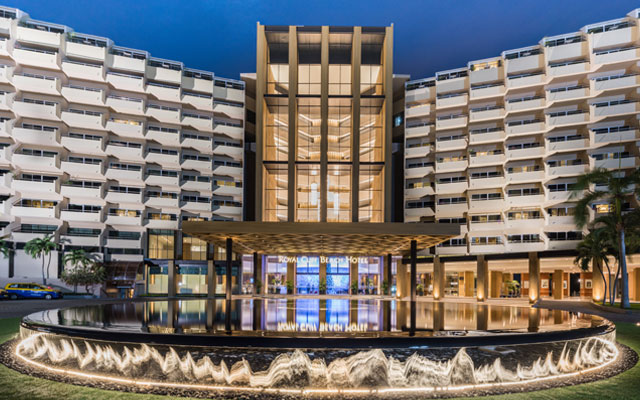
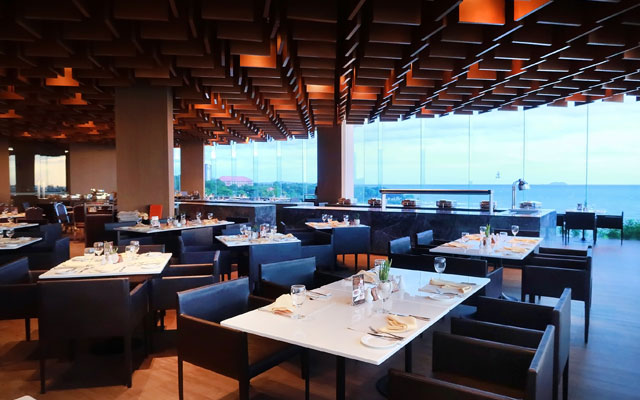
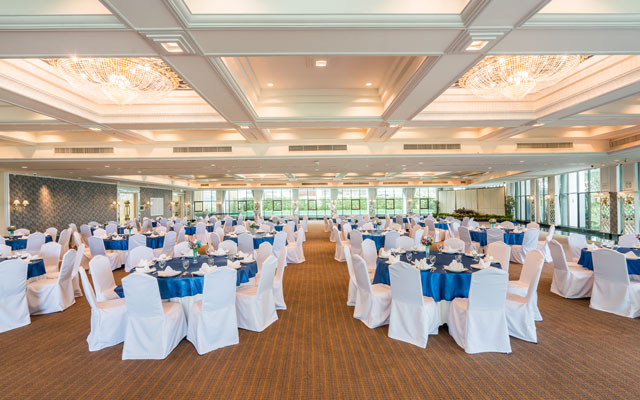
Royal Cliff Hotels Group, an over 40-year landmark in Pattaya, has unveiled a complete overhaul spanning common areas, F&B and event spaces, as well as rooms and suites.
Thai architect Duangrit Bunnag once again oversaw the construction and design of the property’s new features.
1 of 6
Royal Cliff's Facade
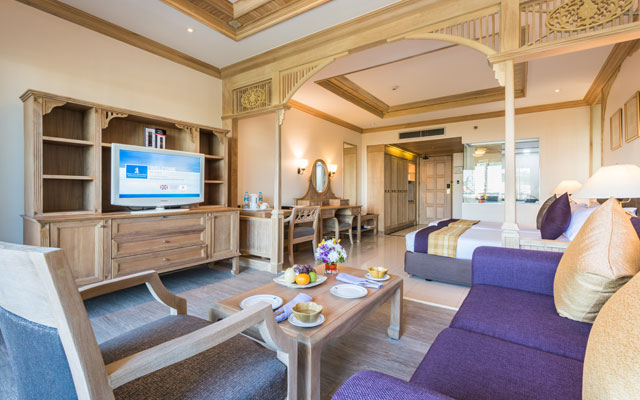
Mini Suite Mountain View
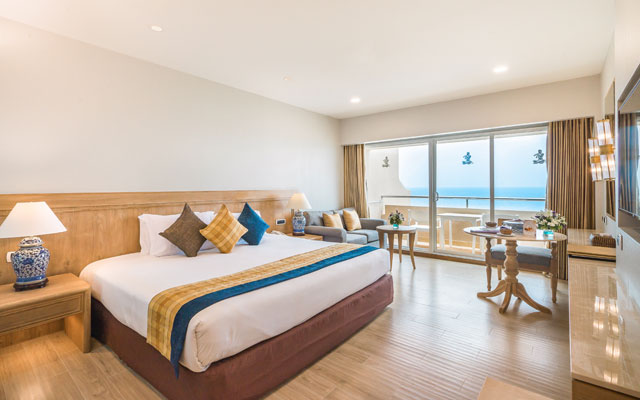
Ocean Deluxe
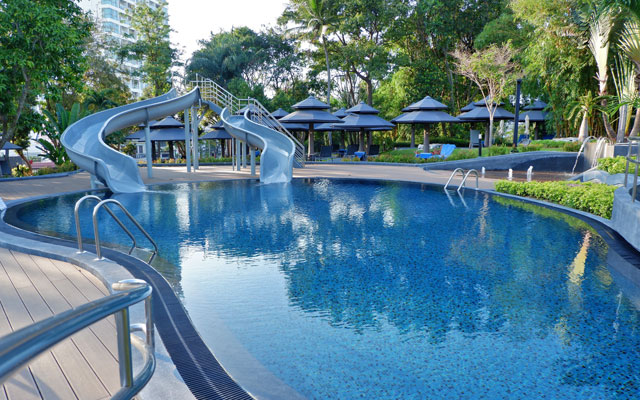
Fitz Club Pool
Panorama Restaurant
Royal Summit Chamber
The upgrades include Mini Suites and the new Ocean Deluxe room, repainted and refurbished with new bathroom fixtures installed.
The Panorama Pool View and Sea View restaurant has also been updated, with old structures stripped off and knocked down to give the space a higher ceiling and brighter walls.
In addition to a redesign of common areas such as the entrance and lobby, Royal Cliff also features a new lobby bar and bakery.
The swimming pool at Fitz Club – Racquets, Health & Fitness was transformed to sport an Amazon vibe as well as to feature fun slides. With outdoor spaces, it has also become a venue option for weddings, receptions and other events.
As well, the property, which boasts over 13,000m2 of meeting space, now features a newly upgraded Royal Summit Chamber. The space has mobile partitions, and can be transformed into two smaller sections with dedicated entrances. It also has a satellite kitchen and a new spacious foyer for coffee breaks and pre-function cocktails.
EasyRentCars and KrisFlyer have jointly launched a partnership entitled Earn Miles with Every Ride, allowing KrisFlyer members to earn four miles for every US$1 spent on every car rental before March 31, 2019.
After March 31, 2019, KrisFlyer members who complete a car rental with EasyRentCars will then earn two KrisFlyer miles for every US$1 spent.
A screenshot from EasyRentCars’ website
“Airplanes and cars are two very important forms of transportation,” said Karen Wang, marketing director of EasyRentCars, in a statement.
“We chose to work with KrisFlyer because we believe in the superior service the Singapore Airlines group of airlines provides, and hope to work towards a way to better connect flights to land transportation. We hope to build a healthy transportation ecosystem, thus providing more benefits to our customers.”
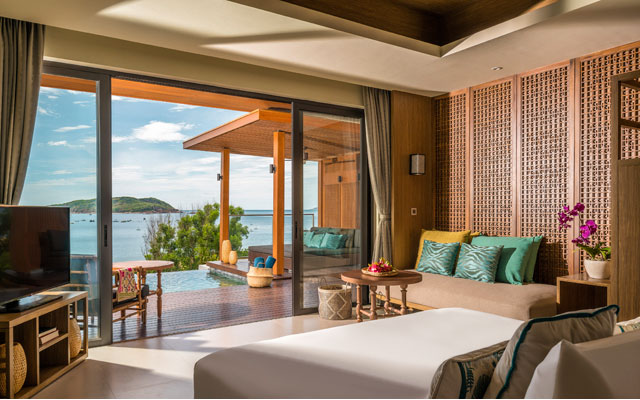
Anantara Quy Nhon Villas, Vietnam
This new-build resort along Vietnam’s south-central coastline has opened its doors with 26 one and two-bedroom ocean-facing villas. The spacious villas boast timber sundecks made from locally-crafted wood, oversized bathtubs, private pools and extended low overhanging roofs. Guests will be treated to in-room villa host services and a range of customisable luxury amenities, such as preferred room scents, in-villa wine cellar and an in-villa delicatessen with a selection of charcuterie, cheese and ice cream.
Amenities at the 7.2ha resort include signature resort Sea.Fire.Salt, swim-up bar, the Anantara Spa, a pool and a gym. Private sessions can also be booked with alternative therapists trained in holistic healing. The resort is a 40-minute drive from Quy Nhon Airport and a 15-minute drive from downtown Quy Nhon.
Devasom Khao Lak Beach Resort & Villas, Thailand
Devasom Resorts has planted its second resort in Thailand in Khao Lak, after launching its first property in Hua Hin. The luxury boutique seaside resort offers a total of 69 keys – 24 Seaside Grand Deluxe rooms, 21 Seaside Junior Suite with Jacuzzi bath rooms, 12 Seaside Pool Paradise Suite rooms, eight Beach Pool Villas, two Two-bedroom Beachfront Family Pool Villas, and two Devasom Sky Villas.
There are two F&B options for guests: an all-day dining Takola Restaurant and Wine Cellar, and the Devasom Beach Grill and Bar by the beach. Recreational facilities include a spa, complimentary yoga and meditation sessions, a large two-tier saltwater swimming pool, gym, children’s swimming pool and kids’ club.
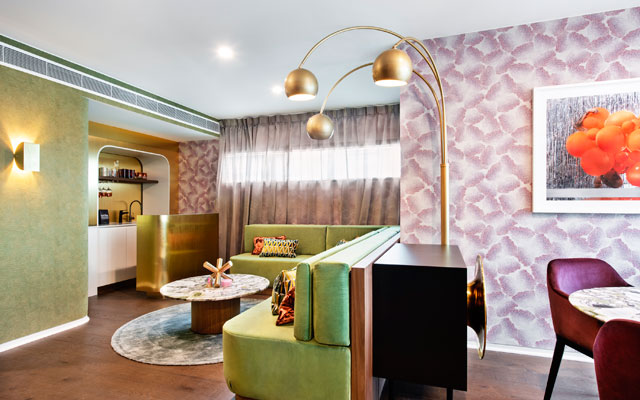
Ovolo The Valley, Australia
Ovolo Hotels’ latest opening offers 103 keys across five room categories, all of which serve up a frenzy of rich colour and playful furniture. The design hotel in Brisbane boasts two penthouse suites – furnished with original art pieces by Daniel R Watkins and Gerwyn Davies – aptly named Rockstar. As a brand standard, guests who book directly with Ovolo will receive complimentary Wi-Fi, self-laundry, breakfast, social happy hour, mini-bar and loot bag full of treats.
Facilities on-site include a rooftop swimming pool overlooking Fortitude Valley, gym, sauna and a meeting room. A new restaurant and bar concept is due to launch early next year as well.
Aloft Langkawi Pantai Tengah, Malaysia
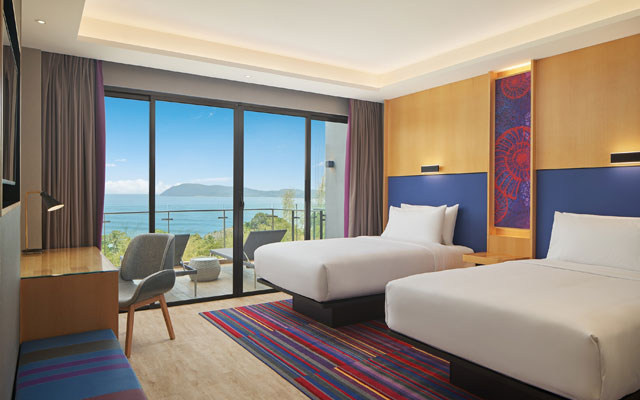
The Aloft Langkawi Pantai Tengah has opened along the western coastline of Langkawi Island in Malaysia, a short walk away from Pantai Cenang Beach. The hotel’s 208 rooms each feature a balcony, and mod cons such as complimentary high-speed Wi-Fi and 49-inch smart TVs.
Aside from the W XYZSM bar, all-day dining restaurant Nook, and 24/7 grab-and-go refuelling area, recreational facilities include a 24-hour fitness centre, outdoor infinity pool, and for the younger ones, a Camp Aloft programme and Kids Club. For events and functions, there is a 462m2 pillarless ballroom and two meeting rooms.
Radisson Ningbo Beilun, China
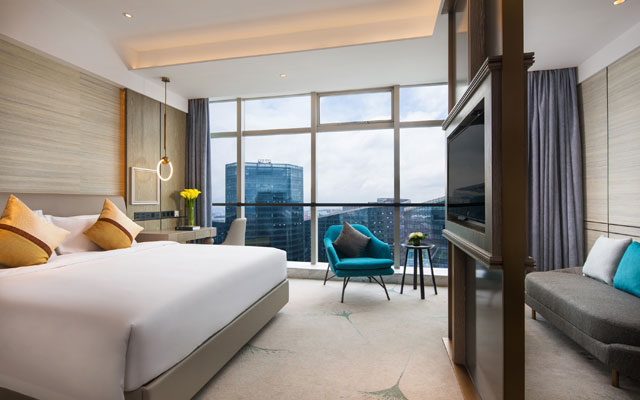
This opening by Radisson marks the hotel group’s entry into the port city of Ningbo in Zhejiang province. The 21-storey new-build offers 230 guestrooms and suites, with ample work space and complimentary Wi-Fi. Guests are also offered a choice of dining options, with two restaurants, a lobby lounge and an executive lounge. There are also two 800m2 ballrooms equipped with state-of-the-art audio-visual technology for functions.
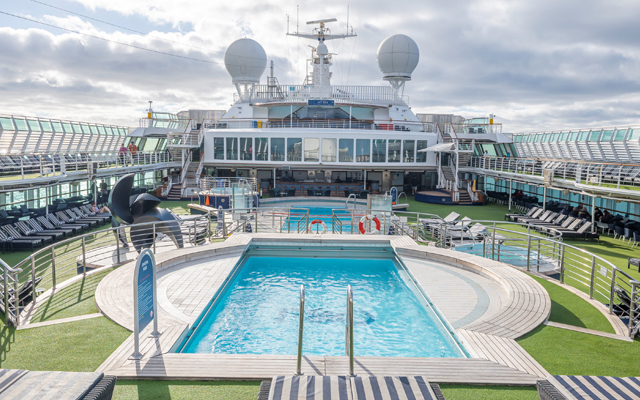
What World Dream shares a similar configuration with its sister ship, Genting Dream. As I had previously sailed on Genting Dream, I felt a sense of familiarity while boarding World Dream, and had no trouble navigating the latter that is a 150,695-ton, 18-deck behemoth.
But there are several new features which stand World Dream apart from Genting Dream, including two exclusive shows, Faith and Dulce Habana; an exclusive private dining room, Vintage Room; and a large indoor virtual reality game area called ESC Experience Lab.
The Balcony Stateroom
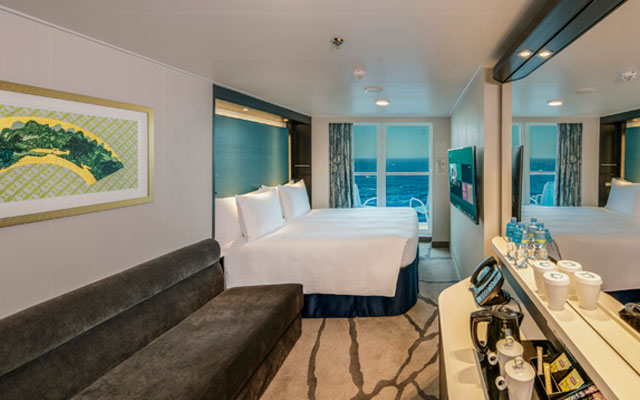
My twin-bed room was situated on deck eight, where more than half of the floor space is devoted to restaurants and art gallery spaces. I like my spacious balcony, which was approximately half the size of the actual room. There are about 1,040 other similar balcony staterooms, and features and amenities were similar to its sister ship.
Why
In April 2018, Dream Cruises rolled out a new culinary concept, Taste the Dream – Wine and Dine at Sea, by taking six Asia-based celebrity chefs with them to cook at sea. This new element helps to enhance the ship experience.
I attended was a finale session that featured Martin Yan and Hilda Chan, where both chefs cooked up a storm with Dream Cruises chefs and impressed guests with a limited-edition tasting menu.
Martin Yan’s live cooking demonstration
Their four-hands menu, staged on the Saturday night I was on board, ended my journey on a high note. It took place in the Silk Road Restaurant, and there were 25 tables booked out.
It warmed my heart when chefs Yan and Chan greeted guests in person, moving from table to table to interact with guests. I also had my menu signed by Yan when he came to my table.
This gourmet dining experience was not just limited to dinner, as both chefs held a live cooking demonstration in the afternoon that was open to all guests on board.
Guests looking for more private arrangements can book the three-hour chef’s table at the Vintage Room.
When it comes to dining, guests are spoilt for choice as the World Dream had 18 restaurants and bars. Palace Suite guests can also taste a specially created four-course set menu, which other guests can order for an extra HK$512 (US$66) per person (this does not include a 15 per cent service charge).
How
As I embarked on a two-night Weekend Getaway, boarding took place on a Friday night, with disembarkation set at 08.30 on Sunday morning, leaving only Saturday to fully explore the ship. Plan ahead by downloading the Dream Cruise app to view the daily schedule of activities.
I decided to experience the brand-new ESC Experience Lab. With a choice of versatile games, I tried the Finger Coaster and created my own ride-of-a-lifetime rollercoaster, and sat back to experience the full motion with simulated sound and downhill wind effects. Though it was a short ride, it was great fun.
Other activities include a complimentary wine workshop, where Palace Suite guests get priority entry. This hour-long class was conducted in English with Mandarin translation, and during this time I learnt more about the Wynns Coonawarra Estate and created my own blend.
To ease the boarding experience, self check-in kiosks were introduced at the Kai Tak Cruise Terminal in 1Q2018. Guests only need to scan their travel document to identify themselves for check-in, and the kiosk would automatically print out the cabin card. No group check-ins via the kiosk were available at press time.
Verdict
Riding on the wave of success Genting Dream has generated, World Dream has elevated the entertainment and gourmet experiences onboard to the next level. It’s an ideal short escape for guests to appreciate premium quality and service, and will be especially fun for family groups.
Rates
Prices start from HK$2,240 (US$287) per person, based on double occupancy and excluding gratuities, port charges and visas.























With lower fuel prices and strong economic growth, the global airline industry net profit is expected to hit US$35.5 billion in 2019, slightly ahead of the US$32.3 billion expected net profit in 2018 which saw profitability squeezed by rising costs, according to IATA forecasts.
It is expected that 2019 will be the 10th year of profit and the fifth consecutive year for airlines to deliver a return on capital to investors.
“We had expected that rising costs would weaken profitability in 2019. But the sharp fall in oil prices and solid GDP growth projections have provided a buffer. So we are cautiously optimistic that the run of solid value creation for investors will continue for at least another year. But there are downside risks as the economic and political environments remain volatile,” said Alexandre de Juniac, IATA’s director general and CEO.
The 2019 industry outlook is based on an anticipated average oil price of US$65 per barrel, lower than the US$73 recorded in 2018, following the increase in US oil output and rising oil inventories.
Fuel is expected to account for 24.2% of the average airline’s operating costs, an increase from 23.5% forecast for 2018.
Meanwhile, passenger traffic (RPKs) is expected to grow 6% in 2019, outpacing the forecast capacity (ASKs) increase of 5.8%, and remains above the 20-year trend growth rate. This in turn will increase load factors and support a 1.4% increase in yields. Passenger revenues, excluding ancillaries, are expected to reach US$606 billion (up from US$564 billion in 2018).
Asia-Pacific carriers are expected to report a US$10.4 billion net profit in 2019, up from US$9.6 billion in 2018, with net profit per passenger projected to be US$6.15 (3.8% net margin). Lower fuel costs, low levels of fuel hedging and strong regional economic growth are supporting profitability in 2019 in this region, according to IATA.