Scott Thomson has been appointed general manager of Hilton Taipei Sinban.
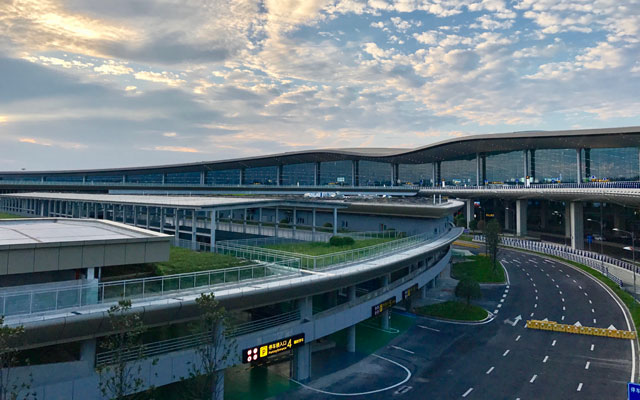
Thomson most recently served as general manager of the Hilton Chongqing.
Scott Thomson
The 25-year hospitality veteran began his career with James Cook Hotel Grand Chancellor in New Zealand, followed by several hotel management positions in Auckland, Hong Kong, Mumbai, New Delhi and Chongqing.
Business travel within Asia is growing at twice the pace of the rest of the world and even looks set to overtake the top-spending Americas within the next 10 years[1], making it an increasingly lucrative segment.
To capitalize on this huge growth opportunity APAC’s travel agents need to understand the unique habits and motivations of Asia’s business travelers, who tend to have a very different mindset from those that travel for leisure.
In-trip internet use is currently one the biggest differences between business and leisure travelers in the region. While leisure travelers rely mainly on Wi-Fi, our latest Journey of Me research found that business travelers are happy to pay to stay connected, with half (52%) of business travelers from Singapore purchasing a local sim card for internet access when overseas for work, which mirrors the general trend across APAC.
Another unique trait of Asia’s business travelers is that they find trip recommendations more relevant than leisure travelers do. Perhaps surprisingly given they travel on the company’s dime, the recommendations that they most value are suggestions to save them money (34%), followed by tips to ensure their safety (31%) and make their travel more comfortable (29%).
Asia is also starting to see the rise of a business traveler sub-group – the so-called ‘bleisure’ travelers – who combine work travel with wanting to enjoy local leisure activities while they’re overseas. As more millennial and Gen Z professionals climb the career ladder, ‘bleisure’ looks here to stay and as a result employers themselves are becoming increasingly accepting of the practice.
All of these trends present a big opening for Asia’s business travel agents (BTAs) to grow revenue and loyalty by creating services that cater to the ‘new’ needs of today’s business travelers, whilst also helping businesses themselves to navigate the unchartered territory of ‘bleisure’ travel.
In-trip presents one of the biggest opportunities.
Given Asia’s business travelers stay highly-connected when they’re overseas and place a premium on convenience, business travel agents can use their trusted position to become an intermediary for useful in-country services that fulfil dual business-leisure needs – from internet access, to parking, lounge access, restaurant recommendations and more.
To get this right, BTAs need to take a mobile-first approach to ensure that their mobile platform is fully optimized. Personalization is also imperative.
In short, in-trip offerings should be tailored as much as possible to both the trip location and the preferences of the individual traveler. Our research shows that business travelers from different countries tend to expect and want different things when in-trip, and the same will be true for travelers of different ages, seniorities, sectors and interests. The most successful BTAs will be the ones that can take a ‘concierge’ approach, informed by demographic, professional and behavioral data – the more targeted, the better.
Beyond in-trip services, another significant opportunity for BTAs is to directly cater for the leisure portion of the trip too by sharing timely content and offers related to the destination, to inform and inspire.
Offering in-trip, B2C services will be a new area for a lot of BTAs, so building a local network of reliable partners will be the best entry point for most. Given the responsibility and duty-of-care that BTAs owe to their business customers it’s critical that they apply the same level of stringent vetting and due diligence to choosing any partners that they work with for their ‘bleisure’ offer too, to ensure that they uphold the levels of safety, ethics and service that corporations expect for their employees, regardless of whether the traveler engages the service in their work or leisure capacity.
BTAs will also need to think carefully about the tone and style of their content if this is their first foray into business-to-consumer communication.
Ultimately, business travel agents should never lose sight of the fact that they are, first and foremost, providing a business service. But, as the nature of business travel itself changes there’s an opportunity, and a need, for BTAs to evolve their offering. BTAs that do this well will not only be able to solidify their relationship with their corporate clients through improved traveler service, but will also be able to unlock additional revenue in the process.
The Malaysian government is deliberating the imposition of a departure levy on all outbound air passengers starting June 1, 2019 to encourage travellers to take domestic holidays, but members of the travel industry are doubtful that the move will lead to the desired outcome.
When tabling Budget 2019 recently, finance minister Lim Guan Eng introduced the tax and its rationale of encouraging domestic tourism. The proposed levy is two-tiered, RM20 (US$4.80) for ASEAN-bound travellers and RM40 for other countries.
Departure levy won’t dampen outbound travel, says trade
Malaysian Association of Tour and Travel Agents president, KL Tan, believed the departure tax will not have a significant impact on growing tourism and it would not deter travellers who have already made up their minds to travel overseas.
He also pointed out that not all travel abroad is for “leisure” purposes, but also include travel for education purposes, business travel, visiting relatives and friends living abroad as well as for religious purposes such as pilgrimage.
This view is also shared by others in the trade. Stephen Thomas, managing director at Topaz Travel & Tours, said: “Our clients are mainly middle and upper middle class. If they can spend on a holiday to Europe or any other longhaul destination, paying an additional RM40 will not have an impact on their travel decision.”
Manfred Kurz, managing director at Diethelm Travel Malaysia, opined: “Outbound travel may slow down a little in the beginning but people will get used to the departure levy because they cannot get around it.”
To stimulate domestic travel, product owners should create awareness of their attractions through enticing promotional materials, suggested Raaj Navaratnaa, general manager, New Asia Holiday Tours & Travel.
He added: “Relevant government agencies should also study the trends of what Malaysians are looking for and the travelling needs of the younger generation and tailor products accordingly. There is not much information on agro-tourism and the historical site of Bujang Valley lacks exposure.”
Boutique hotel booking site Mr & Mrs Smith has raised six million pounds (US$7.8 million) through crowdfunding in mid October to accelerate the expansion of its hotel portfolio and into new verticals.
The financing came from about 2,000 public investors, ranging from existing members to new customers including angle investors.
Lohan: acceleration fast-tracked with funds injection
Founder and executive chairman, James Lohan, said: “When thinking about the next chapter for our 15th anniversary, we decided that we want to raise more money again, which happens with many growing companies.
“Last year we made 1.5 million pounds EBITDA so we are a profitable group, and for the last 12 months we grew 37 per cent (July 2017- June 2018). Frankly, we don’t technically need money but by raising money, we can move faster.”
Mr & Mrs Smith welcomed a new chairman and created the new position of chief growth officer, which is filled by Julian Diment who was in charge of sales and marketing, Lohan told TTG Asia. The company also recruited a new managing director in the US, with the market growing 45 per cent year on year.
“We will put in more time and effort there so we can curate more quickly, but we are not changing our way of curating. So far, there is a queue of roughly 500 interested hotels globally and we’ll expand the curation team in order to bring these hotels into our portfolio more quickly.”
The new funding also helps fuels SideStory, a tour experiences vertical recently added, which offers guided journeys to discover hidden gems, from photogenic corners, tucked-away market stalls, out-of-sight street art and exclusive ateliers.
Currently, the service is available only in London and Paris, but Lohan aims to roll out to 10 more cities before the end of 2019.
He explained: “It’s just started and we understand our guests’ desire to have more than just a hotel stay.”
While Asia is a sizeable market for the company, expansion in the region is for now constrained by language.
“Out of our 1.5 million membership, Asian membership accounts for 250,000… But (expansion) is a bit restricted at the moment. For now, we are only in English-speaking locations such as Singapore, Hong Kong, New Zealand and Australia.
“One of our challenges is that we are a content rich company and we are really investing more into our blogs and main website. So to keep up with editorial and translation, where should it be translated first? Should it be here or Germany? Mr and Mrs Smith will continue to invest more in Asia and is trying to work out what the Chinese play would be,” said Lohan.
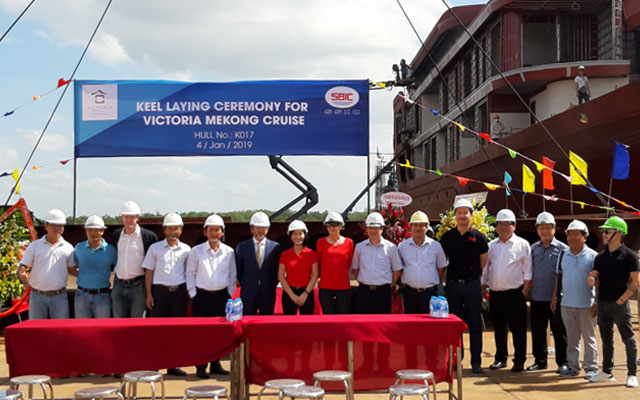
With a US$28 million capital injection from Bison Capital, boutique river cruise company Aqua Expeditions will now work towards increasing its fleet size by 150 per cent and add new geographic locations over the next two year.
Bigger fleet size and new geographic locations in the works for Aqua Expeditions
Making the announcement from the company’s Singapore headquarters in Singapore, CEO Francesco Galli Zugaro, said: “I am thrilled that after a decade of changing the face of river cruising on both the Amazon and the Mekong Rivers, we will extend our footprint to coastal cruising in additional soft adventure destinations.”
While the expansion was made possible by Bison Capital’s investment, Galli Zugaro will remain the majority shareholder and in charge of the company’s destiny and growth.
The first details of new vessels and routings will be announced later this month.
The company was founded 10 years ago offering high-end luxury cruises on the Peruvian Amazon and went on to launch its boutique sailings in South-east Asia’s Mekong Rivers.
With just two months to go until ASEAN Tourism Forum (ATF) 2019 in Vietnam, time is running short for sellers and exhibitors to book a stand at this key event for South-east Asia’s travel sector.
Taking place in Halong Bay from January 14-18, ATF 2019 is expected to welcome 1,500 delegates, including 500 hosted buyers and media.
ATF 2019 will be held in Halong Bay
Exhibitors have until November 30 to secure a space.
As well, exhibitors will enjoy a host of benefits including airport transfers between Hanoi international airport and Halong Bay, as well as complimentary pre-show and post-show city tours.
Darren Ng, managing director of TTG Asia Media, said: “The Vietnam Host Committee has made significant investment into the buyer and media hosting programme. Procurement demand for ASEAN is at an all-time high. This upcoming ATF is one not to be missed.”
Interested exhibitors can click here for more information on buyer profile, onboard exhibitors and other event news.
Thai Airways International (THAI) reported an operating loss of nearly 3.7 billion baht (US$111.6 million) in 3Q2018, compared to under 1.9 billion baht in 3Q2017, attributing this to natural disasters, a decline in the Chinese market and the 40 per cent rise in fuel cost.
Thai Airways also faces headwinds on rising fuel costs
Intense competition in the aviation industry has persisted into 3Q, with rising world oil prices that caused a reduction in travel demand while operating cost increased.
During the third quarter, total expenses increased by 5.3 billion baht or 11.3 per cent over the previous year due to an increase in fuel expenses of 3.5 billion or 29.4 per cent.
Non-fuel operating expenses increased by 1.9 billion or 5.5 per cent from last year, mainly due to the rise in maintenance and overhaul expenses as well as the increase in aircraft and spare part leases.
In September 2018, THAI was impacted by natural disasters including Typhoon Jebi that hit Japan and resulted in temporary closure of Kansai International Airport due to damaged and flooded runways.
The earthquake in Hokkaido and Typhoon Mangkhut in Hong Kong also forced THAI to cancel flights to several destinations.
The airline and its subsidiaries generated a total revenue of nearly 48 billion baht, a 2.2 per cent increase from the same quarter last year. The airline attributed increased revenues to excess baggage revenue at THB 304 million or 0.8 per cent from an increase in passenger traffic.
Sumeth Damrongchaitham, THAI president, shared that the airline also decommissioned two Boeing 737-400 aircraft, bringing the active fleet size to 103, four more compared to the same period last year.
Passenger traffic (RPK) increased by one per cent, while average cabin factor was 77.5 per cent, down from 78.2 per cent last year.
THAI carried six million passengers, nearly the same as the same period last year.
Wyndham Hotels & Resorts is set to open Ramada by Wyndham Halong Bay View come 1Q2020, adding to its existing Wyndham Legend Halong Bay in the destination.
The 200-room Ramada by Wyndham Halong Bay View will be located in the heart of the city’s main tourist area, overlooking the UNESCO World Heritage site of Halong Bay.
Ramada by Wyndham Halong Bay View will open in 1Q2020
The upper-midscale hotel will boast an infinity pool, a 1,000m² spa and fitness centre, retail outlets and a rooftop garden. F&B outlets span an all-day restaurant, a speciality seafood outlet, a restaurant with its own wine and cigar lounge, and a sky bar located on the 34th floor overlooking the bay.
Developed by Hong Quan Develop and Consultants JSC and owning company Lac Hong Construction & Investment JSC, Ramada by Wyndham Halong Bay View will offer easy access to all local business and leisure attractions, including the Halong Bay Cruise Boat Terminal, SunWheel Halong, Bai Tho Mountain and Yet Kieu Lake.
The hotel’s launch comes on the back of a major expansion of infrastructure at Halong Bay, including the recent opening of a new highway that has slashed the travelling time from Hanoi down to just two hours, and the construction of a new international airport just 50km from Halong City.
Agoda has joined forces with JTB Corp to strengthen and expand online sales and distribution of Japanese accommodations on both companies’ sites.
The OTA expects this partnership would help improve accessibility to the Japanese accommodation market nationwide, including hotels and ryokans, for both international and domestic travellers.
Agoda, JTB team up to enhance distribution of Japanese accommodations
John Brown, CEO of Agoda said: “We will be able to offer Agoda customers previously inaccessible choices of accommodation throughout Japan by accessing JTB’s extensive inventory.
“Meanwhile, our technology expertise will help JTB to achieve its online travel ambitions for growth more efficiently.”
The partnership will also leverage Agoda’s technological expertise to enhance the competitiveness of JTB’s Rurubu Travel and JAPANiCAN sites by targeting inventory and products to a wider consumer audience.
The partners plan to launch the renewed sites in late 2019.
In addition, under the agreement, Agoda and JTB will conduct user research to better understand the needs and habits of Japanese accommodation providers.
The move comes as Agoda enters a deal to become the sole travel accommodation supplier for Line Travel’s user base in Taiwan, traditionally a key visitor source market for neighbouring Japan. The agreement with Line Travel – the travel metasearch and media platform of the leading Taiwanese messaging app – will come into effect on November 28.
Bangkok’s newest riverside landmark, Iconsiam, hosted its grand opening on Friday to tens of thousands of people in attendance as well as South-east Asia’s largest-ever flying drone display with 1,500 drones.
Built on a 8.8ha plot on Charoen Nakhon Road by the banks of the Chao Phraya River, the US$1.7 billion, 750,000m2 project is a joint venture of Siam Piwat, Magnolia Quality Development Corporation (MQDC) and Charoen Pokphand Group.
Iconsiam launches in Bangkok
1 of 4
Chadatip Chutrakul, director of Iconsiam, dubbed the mega development “a destination – not a mall or a mixed-use development”, as it “brings together, in a single destination, a great riverside location with art, culture, lifestyle pursuits, endless dining options, super-luxury residences and shopping”.
Among Iconsiam’s key features is the River Park, a 10,000m2 riverside community space; SookSiam, a 16,000m2 space spotlighting products from across Thailand’s 77 provinces; and South-east Asia’s longest multimedia water feature, which is designed to be a global iconic attraction “and do for Bangkok what the London Eye does for London and the Botanic Garden at the Marina Bay Sands does for Singapore,” Chutrakul said.
Coming up in July 2019 will be a high-technology auditorium that aims to boost Thailand’s international incentives and convention industry, and the River Museum Bangkok.
Iconsiam also offers more than 7,000 Thai and international retail brands, including Japanese department store Takashimaya and Thailand’s first flagship Apple Store.
Iconsiam also houses two luxury residential condominium buildings developed with MQDC, the Magnolias Waterfront Residences and The Residences at Mandarin Oriental Bangkok – the first Mandarin Oriental branded residential development in South-east Asia.
Bangkok’s newest riverside landmark, Iconsiam, hosted its grand opening on Friday to tens of thousands of people in attendance as well as South-east Asia’s largest-ever flying drone display with 1,500 drones.
Built on a 8.8ha plot on Charoen Nakhon Road by the banks of the Chao Phraya River, the US$1.7 billion, 750,000m2 project is a joint venture of Siam Piwat, Magnolia Quality Development Corporation (MQDC) and Charoen Pokphand Group.
Chadatip Chutrakul, director of Iconsiam, dubbed the mega development “a destination – not a mall or a mixed-use development”, as it “brings together, in a single destination, a great riverside location with art, culture, lifestyle pursuits, endless dining options, super-luxury residences and shopping”.
Among Iconsiam’s key features is the River Park, a 10,000m2 riverside community space; SookSiam, a 16,000m2 space spotlighting products from across Thailand’s 77 provinces; and South-east Asia’s longest multimedia water feature, which is designed to be a global iconic attraction “and do for Bangkok what the London Eye does for London and the Botanic Garden at the Marina Bay Sands does for Singapore,” Chutrakul said.
Coming up in July 2019 will be a high-technology auditorium that aims to boost Thailand’s international incentives and convention industry, and the River Museum Bangkok.
Iconsiam also offers more than 7,000 Thai and international retail brands, including Japanese department store Takashimaya and Thailand’s first flagship Apple Store.
Iconsiam also houses two luxury residential condominium buildings developed with MQDC, the Magnolias Waterfront Residences and The Residences at Mandarin Oriental Bangkok – the first Mandarin Oriental branded residential development in South-east Asia.