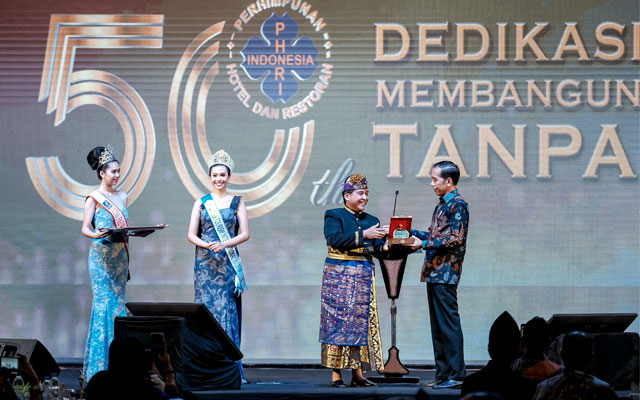
Haryadi Sukamdani presents Joko Widodo with the award during IHRA's 50th anniversary
Indonesia president Joko Widodo has been honoured as Father of National Tourism by the Indonesia Hotel & Restaurant Association (IHRA).
The award was presented by IHRA chairman Haryadi Sukamdani at the gala dinner held in conjunction with the association’s 50th anniversary on February 11.
Haryadi Sukamdani presents Joko Widodo with the award during IHRA’s 50th anniversaryIHRA
In his welcome address speech at the dinner, Haryadi said the title was given to the president for his leadership in the development of tourism and for his commitment to infrastructural development.
He added that infrastructural improvements during the president’s tenure – including toll roads, 11 new airports, seaports and power plants – directly affected the growth of tourism in the country.
Haryadi also mentioned that the visa free policy granted to 169 countries has helped the country’s arrivals growth surpass the regional average.
Moreover, under Jokowi’s administration, the tourism budget has increased from two trillion rupiah (US$142.8 million) in 2014 to 2.1 trillion rupiah in 2015, and 3.3 trillion rupiah in 2016. In 2018, the budget totalled 3.4 trillion rupiah and went up to 3.8 trillion this year.
IHRA records as of 1H2018 show that investment in hotel and restaurant development increased by 78.6 per cent since the president took his post.
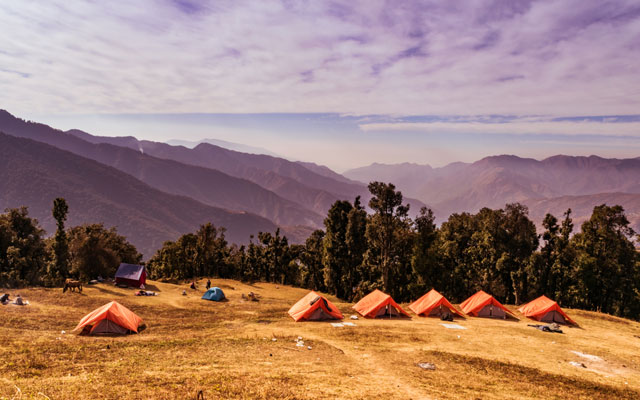
View from Nag Tibba basecamp, the highest peak in the lesser Himalayan region of Garhwal, Dehradun, Uttarakhand
Recent efforts by India’s Ministry of Tourism and state tourism boards to promote adventure tourism are expected to drive more international arrivals and promote the country as a destination for adventure holidays and activities.
Last year saw India making a visible push into the adventure tourism arena, with the Indian Ministry of Tourism declaring 2018 as the Year of Adventure Tourism while the state of Madhya Pradesh became the first destination in Asia to host Adventure Next in Bhopal in association with US-based Adventure Travel Trade Association (ATTA).
View from Nag Tibba basecamp, the highest peak in the lesser Himalayan region of Garhwal, Dehradun, Uttarakhand
Indian states like Uttarakhand, a state in northern India crossed by the Himalayas and which is better known for its Hindu pilgrimage sites and yoga offerings, are opening up to adventure tourism.
Uttarakhand is currently hosting PATA Adventure Travel And Responsible Tourism Conference & Mart in Rishikesh between February 13-15.
Dilip Jawalkar, secretary, tourism, religious affairs and culture department, government of Uttarakhand, commented: “Traditionally, we have been seeing demand from international markets for spiritual and wellness tourism. Adventure is a new segment for us and we want to promote destinations like Rishikesh and Auli for adventure activities.”
With the attention these recent trade events have brought to a previously under-tapped segment, travel operators and buyers alike are finally starting to realise the potential of India as a destination for adventure tourism.
Tom Parsley, personal travel consultant of Hays Travel, a UK buyer attending the PATA event in Rishikesh, expects the efforts of the Indian government and trade adventure tourism stakeholders will reap benefits in future.
“As an adventure destination, India is a new market for UK and in the past we have done tours of Golden Triangle and big monuments,” Parsely told TTG Asia. “Adventure is one of the fastest-growing outbound segments for UK, and India has jumped (ahead of) other countries to get to that market. I see demand coming from FITs to explore adventure tourism in India.”
Swadesh Kumar, president, Adventure Tour Operators Association of India, noted: “There has been a buzz created for adventure tourism in India and the promising future it holds. If India has to grow its inbound numbers rapidly, activity holidays need to be promoted. We as an association will try to bring more adventure tourism events in India.”
However, among the key impediments to the adventure tourism’s growth in India is the perception of the country as a cultural destination in the international markets.
“The perception of India remains as a cultural tourism destination and I don’t see it changing in the near future. If India wants to grow its adventure tourism segment it needs to adopt best practices from a market like Nepal,” Ambrose Bittner, founder & managing director of US-based Red Lantern Journeys, remarked.
Concurred Tejbir Singh Anand, founder & managing director, Holiday Moods Adventure: “At present international tourist arrivals for adventure are far less than cultural tourists in India. Traditionally, the image of India is (associated with) Taj Mahal, Kerala or Rajasthan, so international events like these will help to project the adventure side of India.”
It is hence vital for the Indian authorities to keep up its efforts of promoting Indian as an adventure tourism destination, Anand recommended.
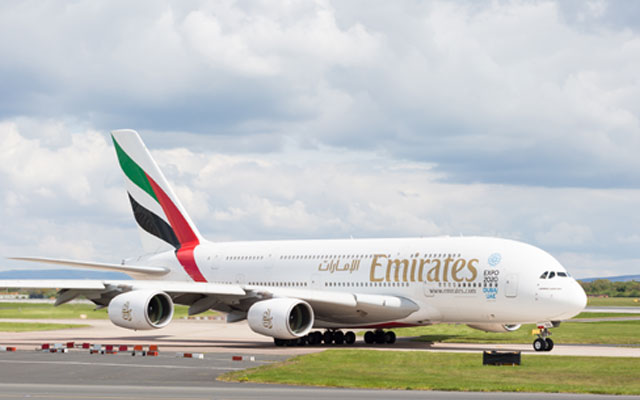
Airbus scraps A380 superjumbo jet as sales slump, the last straw being Emirates pullout
European aircraft manufacturer Airbus will soon cease production of the A380, with the last of the world’s largest passenger aircraft expected to be delivered in 2021.
The decision comes after Emirates, Airbus’ largest A380 customer, reduced its order from 162 to 123 aircraft. Fourteen more A380s are expected to be delivered to Emirates over the next two years regardless.
Airbus scraps A380 superjumbo jet as sales slump, the last straw being Emirates’ reduction
The UAE-based airline has also placed an order for 40 A330-900 and 30 A350-900 widebody aircraft.
Airbus’ CEO Tom Enders – who steps down in April – said in a statement that as a result of this, there is “no substantial A380 backlog and hence no basis to sustain production”.
Despite the aircraft manufacturer’s sales efforts with other airlines over the past few years, orders have slumped.
“The A380 is not only an outstanding engineering and industrial achievement. Passengers all over the world love to fly on this great aircraft. Hence today’s announcement is painful for us and the A380 communities worldwide. But, keep in mind that A380s will still roam the skies for many years to come and Airbus will of course continue to fully support the A380 operators,” Enders added.
“The A380 is Emirates’ flagship and has contributed to the airline’s success for more than 10 years. As much as we regret the airline’s position, selecting the A330neo and A350 for its future growth is a great endorsement of our very competitive widebody aircraft family,” said Guillaume Faury, president of Airbus Commercial Aircraft and incoming Airbus CEO.
Airbus will start discussions with its social partners in the next few weeks regarding the 3,000 to 3,500 positions potentially impacted over the next three years. However, the ongoing A320 ramp-up and the new widebody order from Emirates will offer a significant number of internal mobility opportunities.
Chinese ride-hailing giant Didi Chuxing has pumped US$100 million into India hospitality company Oyo.
The latest investment, which continues to value Oyo at about US$5 billion, comes two months after Singapore ride-hailing firm invested in the Indian unicorn for the same amount in Oyo in December 2018.
China’s Didi Chuxing latest to back Oyo hotels up
The latest investment has been made by Didi-controlled entity Star Virtue Investment, reported The Economic Times. This brings to a close Oyo’s US$1 billion financing round led by existing backer SoftBank Vision Fund, which has pumped US$800 million into the company, according to the same report.
Of the US$1 billion that the company has raised in the current round, Oyo has earmarked US$600 million to be channelled into its China business – Oyo Jiudian – with the rest going to other overseas markets such as India, South-east Asia and the UK.
Oyo had partnered with Didi for its foray into China in November 2017. According to data released by India-based startup company last month, Oyo Jiudian is present in 280 cities across China, operating more than 5,000 hotels and 260,000 rooms via a mix of franchised and leased properties.
Earlier this month, Oyo reported a more than three-fold jump in revenue for its India operations during the 2018 financial year. The company has projected a revenue of almost Rs15 billion (US$211 million) for the current financial year.
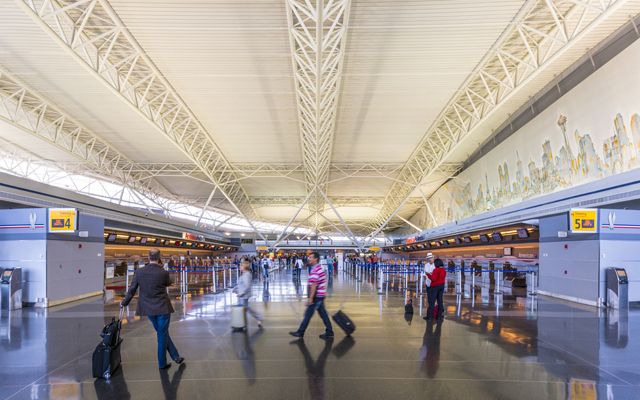
Continued uncertainty about inbound travel to US, associations say; John F. Kennedy International Airport pictured
The number of tourists arriving in the US from Asia-Pacific fell by 3.2% last year, according to latest findings from ForwardKeys, which predicts future travel patterns by analysing 17 million flight booking transactions a day.
The Kilauea volcano eruption in Hawaii, a top destination for Japanese travellers to the US, contributed to a drop in US-bound tourism in the second half of 2018. In addition, the number of Chinese visitors to the US during the year remained flat amid the ongoing trade war between the two countries.
John F. Kennedy International Airport
Asia-Pacific represents a 20% market share of US inbound travel.
On the plus-side, the ForwardKeys figures show a 3.2% increase in European visitors to the US compared with 2017, representing a 38% market share. But German tourists stayed away, down 8.7% on 2017.
Overall, total international tourist arrivals in the US in 2018 showed very modest growth, up 1% on the previous year.
The European nations leading the tourism growth are Ireland (+14.1%), Spain (+11.8%) and Italy (+10.5%). Elsewhere, Brazil (+12.8%) and Colombia (+10.3%) helped account for a 1.3% growth from the Americas.
New York City consolidated its position as the top US destination for international travellers, up 2.1%. The North-east as whole grew by 2.8%. Fort Lauderdale, in the South, and Detroit, in the Midwest, were the fastest-growing destinations, up 12.8% and 12.5% respectively.
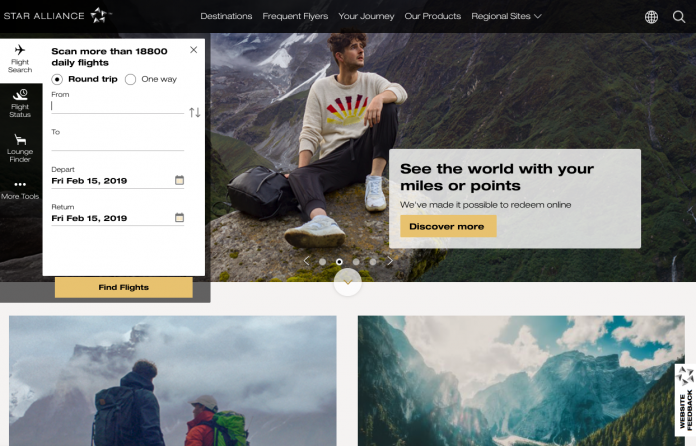
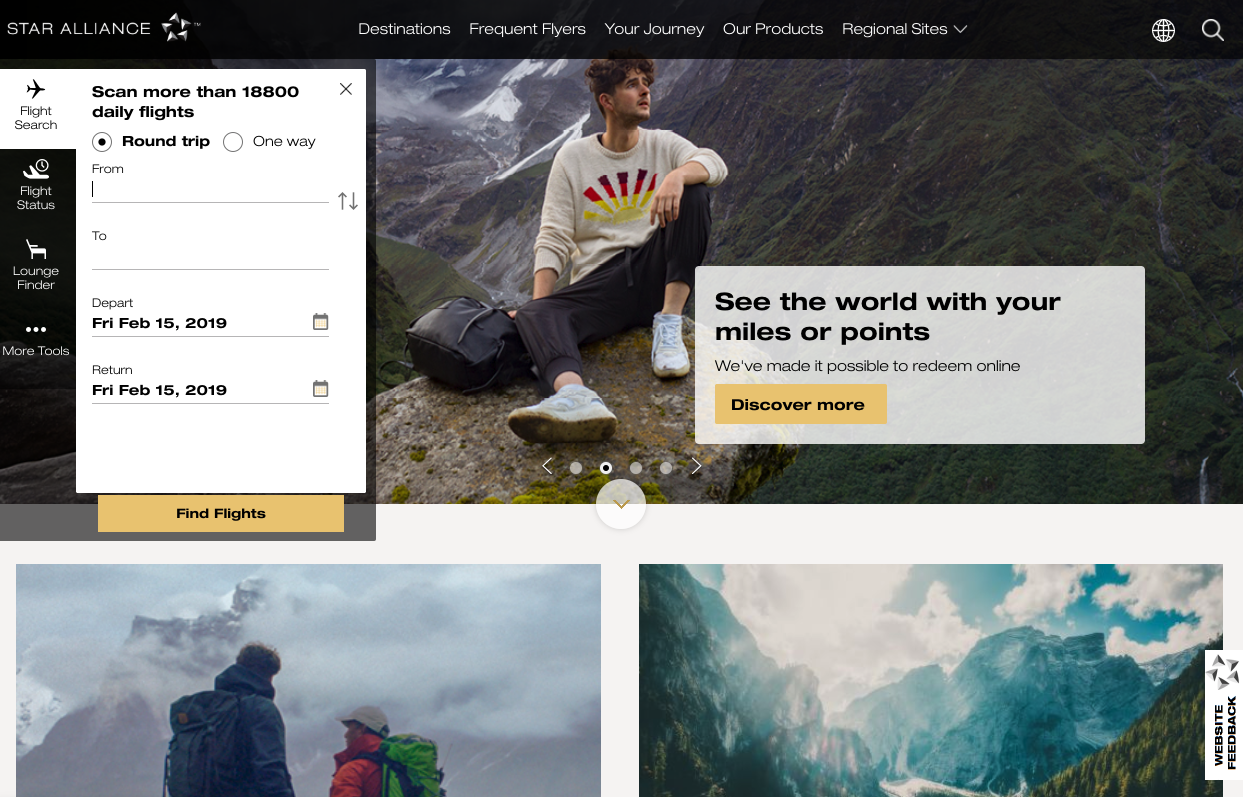
Star Alliance partners with Skyscanner on multi-carrier itineraries
Star Alliance has partnered with Skyscanner to allow travellers visiting the Star Alliance website to search for flights, view airfares and book them directly with its member airlines.
This feature, accessible alongside the lounge finder, flight status and other journey-related services, utilises Skyscanner’s fare search, linking directly to the alliance’s member carrier websites for purchase.
Star Alliance partners with Skyscanner on multi-carrier itineraries
With more than 18,800 daily flights to over 1,300 airport destinations in 193 countries, the alliance says it now offers coverage to 98 per cent of the world. The new capabilities would allow customers to more easily find global connections that meet their needs.
“By introducing the alliance carrier fare search feature, made possible through our Skyscanner partnership, we are responding to our alliance customers’ feedback, offering a service which allows our members’ frequent flyers to easily book with Star Alliance member airlines and enjoy Star Alliance benefits”, said Jeremy Drury, director digital & e-services for Star Alliance.
“Anything that is bookable on our member airlines’ websites can now be reached through our site.”
The new website search capability is one of several digital initiatives the alliance is developing with its member carriers to place capabilities in the hands of its customers. These include services such as interline baggage tracking, interline seat assignment at time of reservation, lounge and Gold Track security locations, and frequent flyer membership number validation.
Art-meets-gastronomy experience happening at Popinjays as a prelude to Art Basel event
The Murray, Hong Kong, a Niccolo Hotel, is partnering Art Basel Hong Kong for the second year running.
Scheduled to take place March 29-31, 2019 at the Hong Kong Convention and Exhibition Centre, the seventh edition of the international art fair will once again present works from regional galleries and artists, attracting media and collectors from around the globe.
Art-meets-gastronomy experience happening at Popinjays as a prelude to Art Basel event
Visitors reserving the For Art’s Sake package may enjoy special deals at hotel from March 25 to 31.
Priced from HK$5,888 (US$750), packages include a one-night stay in the N2 Grand room; entry to Art Basel for two persons on one day from March 28 (Vernissage) to 31; complimentary breakfast for two in Garden Lounge or The Tai Pan; upgrade to N3 Grand Deluxe at a special supplement of HK$1,000 per room per night; upgrade to Signature Suite at a special supplement of HK$2,112 per room per night; and shuttle services between the hotel and the fair.
As a prelude to the main event, rooftop restaurant and bar, Popinjays will host A Masquerade of Art dinner on March 22, starting at 19.00. Diners will be surrounded by artwork by American graffiti artist Kaws, while enjoying a conceptual dance, She Stirs, by Kate March and Siobhan Dumigan.
Comprising four courses, menu highlights include Foie Gras Terrine and Smoked Eel as well as Ink Risotto with Obsiblue Shrimps.
The art-meets-gastronomy experience is priced at HK$1,900 per guest. Wine pairing is available at an additional cost of HK$500 and features premium wines from Margaret River’s Leeuwin Estate.
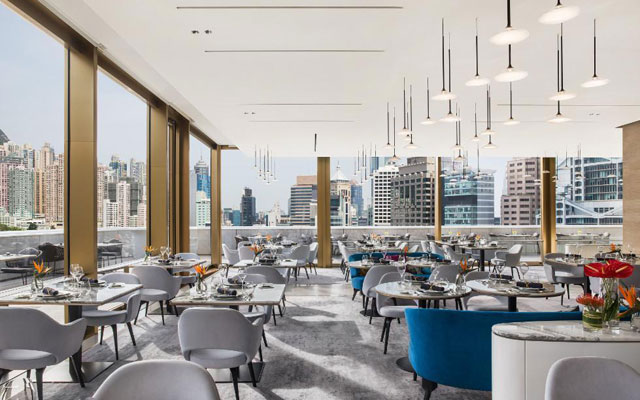
Alila SCBD Jakarta, Indonesia
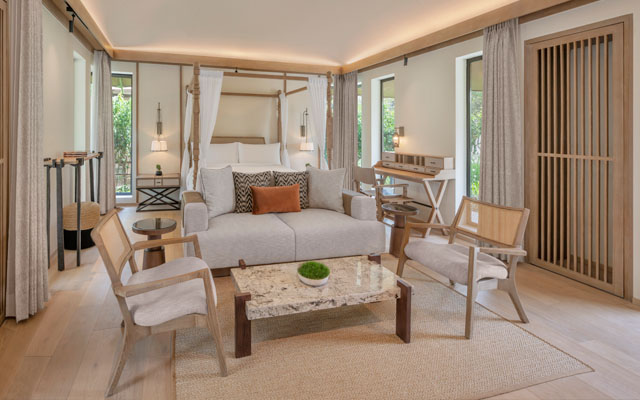
Alila’s latest outpost stands next door to the Indonesia Stock Exchange. The five-star property boasts 227 studios and suites, as well as recreational facilities such as a spa, outdoor swimming pool and gym. There are several F&B options ranging from the New-York style Vong Kitchen to 24-hour Le Burger, both by Michelin-star Jean-Georges Vongerichten and son Cedric, as well as Hakkasan specialty restaurants by the Hakkasan Group. For events and meetings, there are 13 event studios on-site as well.
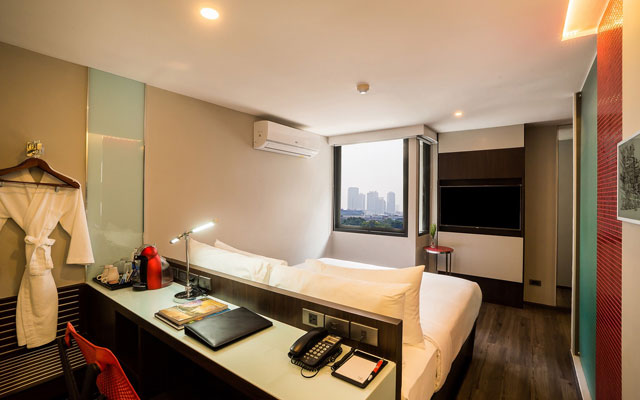
Vīb Best Western Sanam Pao Bangkok, Thailand
The first-ever Vīb Best Western hotel in Asia Pacific offers 91 contemporary rooms, all equipped with free Wi-Fi, Smart TVs and e-concierge technology, and convenient work areas. Guests can grab quick snacks from the café, work out in the 24-hour gym, unwind with a drink at Eye Bar or play in the gaming pods. The cutting-edge, tech-savvy midscale hotel stands steps away from the Sanam Pao BTS skytrain station. This is the third Vīb in operation worldwide, following existing locations in Antalya (Turkey) and Springfield, Missouri (US).
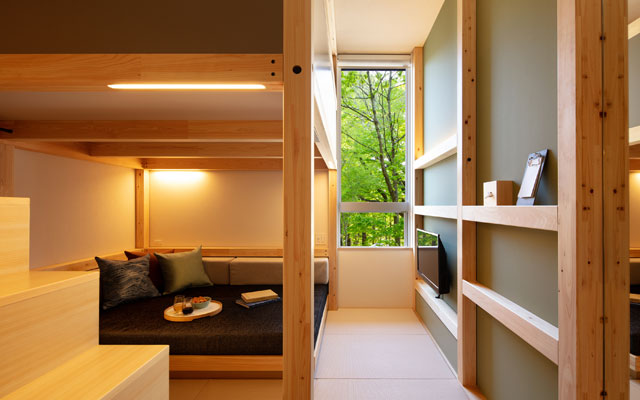
Hoshino Resorts BEB5 Karuizawa, Japan
Hoshino Resorts has opened a new property in Karuizawa, Nagano Prefecture. It offers 73 guestrooms all with tatami flooring, and bills itself as “a laid-back hotel like your best friend’s house”. Facilities include the Tamariba Lounge (a cafe and outdoor terrace rolled into one), library and a shop. Located a short distance from the hotel is the Hoshino Resorts Tombo-no-yu onsen, while other activities include eco-tours through the forest, and ice skating on a lake during autumn and winter.
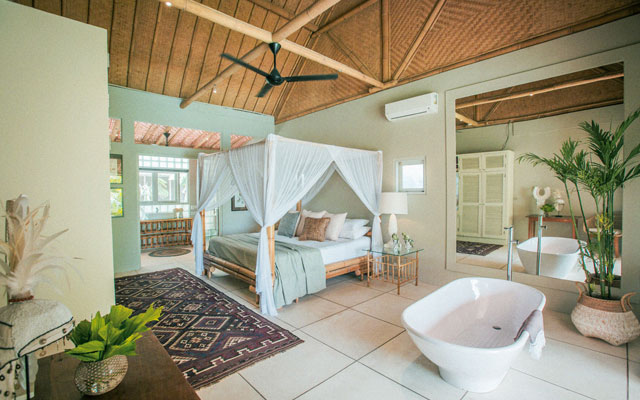
Bloomfield Bali, Indonesia
Boutique hideaway Bloomfield Bali has opened on the Island of the Gods in between Seminyak and Canggu. All of its 15 rooms offer ensuite bathrooms, Wi-Fi access and regular mod-cons such as a TV with satellite channels. There is also a separate three-bedroom villa which comes with its own infinity pool. The adult-only hotel – only guests above 14 are allowed unless the entire resort is booked out – also boasts an infinity pool, as well as a 20-seater Bloomfield Restaurant that serves vegetarian and vegan food.
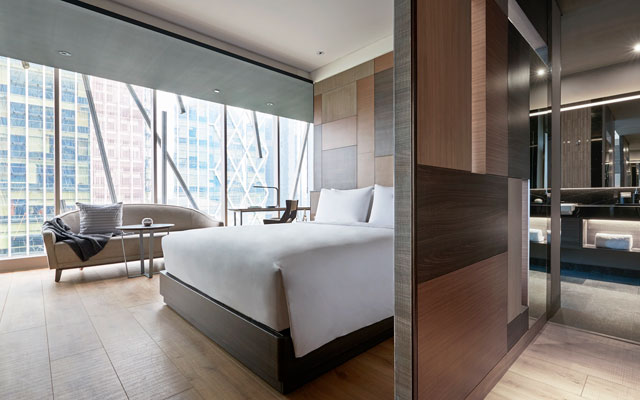
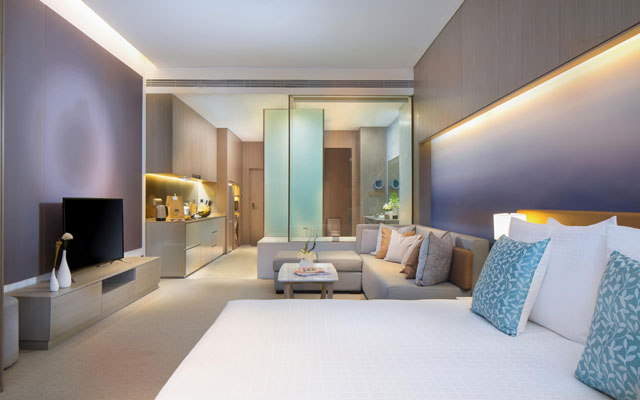
Shama Hongqiao Shanghai, China
The serviced apartment offers 132 keys offering six different configurations from studios to two-bedroom residences, all of which come furnished with a Shama Slumber bed with an extra-soft feather mattress topper, fully-equipped kitchenette, dual laundry washer and dryer, LED TV with international channels, complimentary Wi-Fi and a work desk. Amenities on-site include a gym, yoga room and breakfast outlet. The property stands in the Hongqiao Business District, a 10-minute drive away from the National Convention & Exhibition Centre.
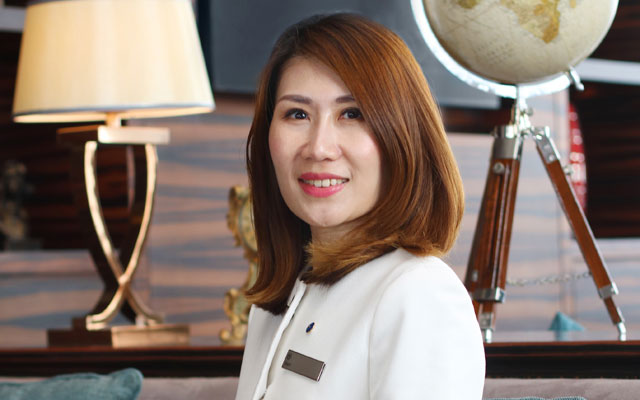
Sheraton Petaling Jaya Hotel in Malaysia has appointed Joyce Wong as director of sales & marketing.
Prior to joining Sheraton Petaling Jaya Hotel, Wong spent eight years with the Hilton group and mostly recent as commercial manager at Hilton Kuala Lumpur.
She ha over a decade of corporate sales experience in the hospitality industry, having started her career in 2002 with the finance department of Renaissance Hotel Kuala Lumpur before becoming a coordinator in corporate room sales in 2005.
Visitor arrivals (VA) in Singapore for 2018 grew 6.2 per cent to reach an all-time high of 18.5 million, with the destination seeing record performance from its top source markets, announced the Singapore Tourism Board (STB) yesterday.
China, Indonesia and India were the top three source markets. Notably, seven of the top 15 VA markets – China, India, the Philippines, the UK, the US, Vietnam and Germany – hit new highs due to increased air connectivity, Passion Made Possible brand activations and robust travel demand.
Singapore saw arrivals from markets such as China, India, Vietnam, the US hit new highs
This travel demand was largely spurred by the rise of the middle-class traveller segment and tier-two cities, said Chang Chee Pey, assistant chief executive, STB.
VA from tier-two cities in China rose by six per cent from 2017 to reach one million, and in India by 12 per cent to reach 253,000. These were driven by new flight connections to Chinese cities like Nanchang, Jinan and Nanning, as well as India’s Guwahati, Pune and Vijaywada.
In India, STB will shift its focus from family travellers to millennials, particularly young working adults, said Chang.
Another important segment is the “active silvers”, or elderly travellers who are frequent flyers. STB will in 2019 conduct more research into attracting this segment of travellers, shared Lynette Pang, assistant chief executive, marketing group, STB.
To pull in visitors from proximity markets like Indonesia and India, STB will leverage the Singapore Bicentennial celebrations this year to organise “supersized events”, revealed Chang.
He added that STB aims to woo longhaul markets like the UK and Europe with a roster of Bicentennial-themed programmes and tour products, which will be announced at a later date.
STB also announced that tourism receipts broke its previous stagnation, with a one per cent increase to S$27.1 billion (US$20 billion). Higher tourist spending was registered for Sightseeing, Entertainment and Gaming, as well as Other TR Components comprising elements such as air fares captured by local-based carriers.
Looking ahead, STB forecasted a further increase in VA from 2018 to 2019 of one to four per cent, to reach up to 19.2 million, and a further rise in tourism receipts of up to three per cent.






 Hoshino Resorts BEB5 Karuizawa, Japan
 Bloomfield Bali, Indonesia
 Shama Hongqiao Shanghai, China