After social media erupted over the discovery of cameras embedded into Singapore Airlines’ (SIA) in-flight entertainment system, the airline assured passengers that cameras have been disabled since they were installed, the Straits Times reported.
Social media users spotted the cameras and sounded the alarm over what they feared to be potential privacy violations. One user wrote that it was “very likely” that the airline was using the cameras to collect data on passenger habits.
Photo of an in-flight entertainment system from SIA’s website
The Straits Times reported that aircraft with cameras embedded in the in-flight entertainment systems include SIA’s Airbus 350-900s (medium-haul, long-haul and ultra-long-range), A380s, Boeing 777-300ERs and 787-10s.
In all, there are 84 aircraft with cameras embedded in the in-flight entertainment systems.
On Tuesday, SIA explained that the cameras were built into the hardware and provided by the equipment manufacturer, who intended to use the device for future developments.
The national carrier stressed that it has no plans to enable the cameras.
Cinnamon Hotels & Resorts is set to expand its lean luxury brand, Cinnamon Red, to Kandy in Sri Lanka.
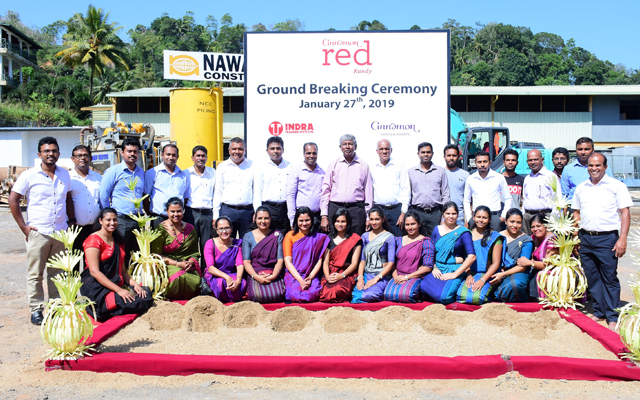
A groundbreaking ceremony was held to mark the start of the project’s construction which is scheduled for completion in two years. Cinnamon Red Kandy will be the first and only Leed Gold certified hotel in Kandy, developed at an investment of 6.5 billion Sri Lankan rupees (US$36.1 million).
Kicking off construction of Cinnamon Red Kandy
The project is a partnership between Cinnamon Hotels & Resorts and Indra Traders. Indra Traders’ investment of 60 per cent includes a 130-perch plot of land on the Katugastota Road, Kandy. A long-term management contract has been executed between the parties with Cinnamon Hotels & Resorts as the hotel managing partner.
When complete, Cinnamon Red Kandy will feature 210 rooms and public spaces, self-check-in service and a host of facilities including an expansive rooftop bar, 20 interconnecting rooms, wheelchair access throughout, a large swimming pool and a restaurant.
Krishan Balendra – chairman of John Keells Holdings, which owns Cinnamon Hotels stated: “Kandy is a popular leisure destination attracting a majority who arrive in Sri Lanka. The hotel will be strategically located in proximity to the Kandy-Colombo highway and is well-positioned to cater to the demands of the new-age traveller and millennials. Its unique selling proposition will add variety and diversity to the room classifications in Kandy delivering an outstanding lean-luxury experience to its guests.
Indra Kumara Silva – chairman Indra Hotels and Resorts Kandy, added: “Kandy is a destination with a growing leisure segment. It is also the pivotal point of all round-trips in Sri Lanka. It is the most opportune time to introduce this fresh and innovative concept to the city.”
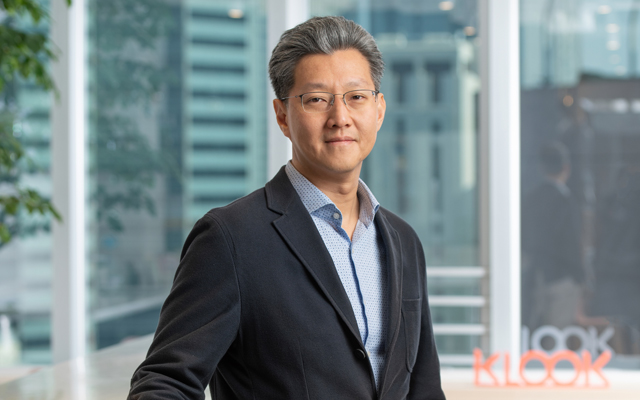
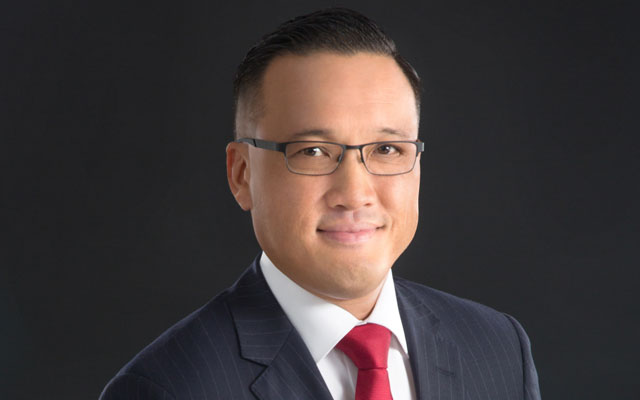
Wilfred Fan has been appointed chief commercial officer at Klook as part of the company’s mission to enhance travel destination services.
Focussing on developing destination services and providing greater support for Klook’s merchants, Fan will oversee the supply business development and operations division, as well as contribute to the overall strategy at Klook.
Wilfred Fan
Commenting on his new role, the former vice president of global partnership at Agoda said: “It’s an exciting time to be in this space. The emergence of mobile has captured traditionally offline in-destination bookings, and merchants are now more ready than ever to adopt new technology. Not only do our mobile-first services improve operations, they also fulfil an increasing demand from independent travellers.”
Wilfred, previously the vice president global partnership of Agoda, has held various senior positions in a wide range of responsibilities, from leading partnership teams to managing operations across Asia, corporate development to strategic planning.
SilkAir to launch flights between Singapore and Busan
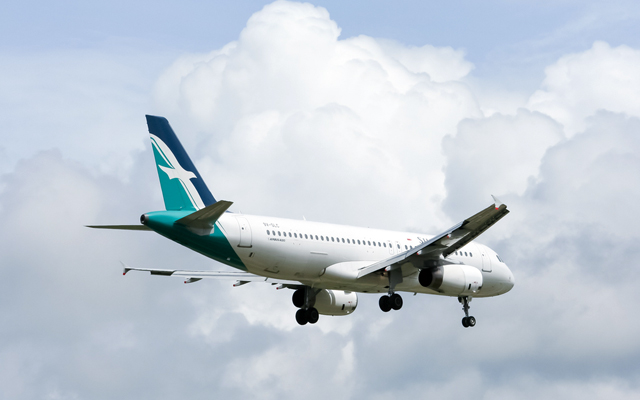
SilkAir will launch four-times-weekly flights between Singapore and Busan, the first South Korean city in its network, on May 1, 2019. Currently, no other airline operates scheduled flights between Singapore and Busan.
The new service will be operated with Boeing 737 MAX 8 aircraft, which feature both business and economy Class cabins.
Emirates to link Phnom Penh and Bangkok from Dubai
Emirates will launch a service from Dubai to Phnom Penh, via Bangkok, on June 1, 2019. Operated with an Emirates Boeing 777 aircraft, flights will depart daily from Dubai International Airport at 08.45, and arrive in Bangkok at 18.15. The same flight will then depart Bangkok at 20.00, before arriving at Phnom Penh International Airport at 21.25. On the return, flights will depart Phnom Penh at 23.20, and arrive in Bangkok at 00.40 the following day. It will then set off to Dubai at 02.25, arriving at 05.35.
Arkia flies to Goa and Kochi from Tel Aviv
Israeli airline Arkia will introduce two new routes to India’s Goa and Kochi from Tel Aviv starting from September 18, 2019, using the recently acquired Airbus A321LR. With one-way duration of seven hours, Arkia will fly once a week to Goa on Tuesdays and twice a week to Kochi on Mondays and Fridays. From October 27, 2019, the flight to Kochi will move to Sundays and Thursdays. The flights will run all year round except during the monsoon season in India. Bookings are scheduled to commence on March 24.
In addition to Arkia, El Al Israel Airlines services the direct Mumbai-Tel Aviv sector with thrice-weekly flights and Air India flies direct from New Delhi to Tel Aviv five times a week.
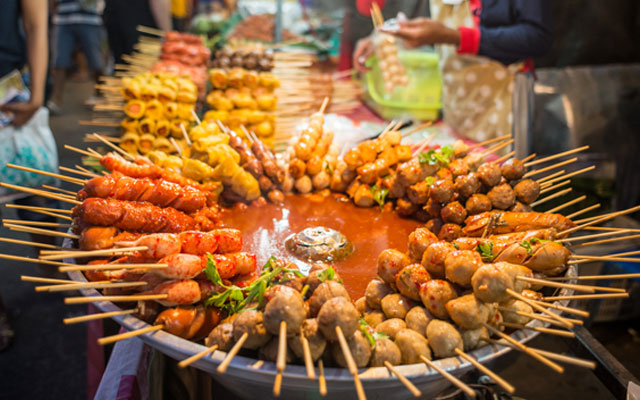
The partnership promises curated experiences such as a bespoke street food tour in Bangkok (pictured)
Mandarin Oriental Hotel Group has partnered with luxury tour operator Abercrombie & Kent to offer a variety of curated experiences for guests staying at select destinations worldwide.
Offers range from culinary tours and fashion insights to art, adventure and sport experiences. Each is designed to give guests unique access to local experiences, such as a bespoke street food tour in Bangkok, enjoying prime seats for a New York Knicks game and meeting their star players, or following in the footsteps of royalty with a private tour of the Palace of Versailles.
The partnership promises curated experiences such as a bespoke street food tour in Bangkok
Kristin Ruble, Mandarin Oriental Hotel Group’s senior vice president of brand and experience marketing, said in a statement that these unique experiences are “exclusive for Mandarin Oriental’s guests”.
“A&K and Mandarin Oriental are old friends. For decades our guests have stayed at Mandarin Oriental properties around the world – enjoying its exemplary hospitality in the best locations,” said Geoffrey Kent, CEO, chairman and founder of Abercrombie & Kent.
“This natural partnership will allow guests to experience the A&K difference – insider access that nobody else can provide, creating memories that last a lifetime.”
Just last week, Kent sealed a strategic partnership with long-time friend and business partner Manfredi Lefebvre d’Ovidio, chairman and former owner of Silversea Cruises, to jointly acquire 100 per cent of the luxury tour operator for an undisclosed amount.
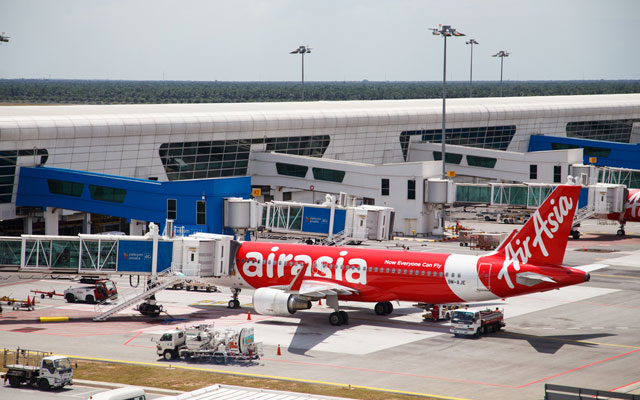
AirAsia is now making an attempt to seek out-of-court settlement with Malaysia Airports Holdings (MAHB) over an outstanding airport tax dispute, saying it prefers to “resolve (the) issue amicably”.
The latest statement from the LCC came following a meeting between AirAsia CEO Tony Fernandes with Employees’ Provident Fund’s (EPF) CEO Alizakri Alias in Kuala Lumpur, after the latter expressed his concerns that the ongoing legal spat between AirAsia and MAHB was a bad reflection of both companies as well as the country.
EPF raises concern over the ongoing spat between AirAsia and MAHB
Fernandes said: “We share EPF’s concerns that this legal battle is not good and has a negative effect on both the country and one of Malaysia’s largest revenue earners – the tourism industry.”
In response to EPF’s concerns, MAHB in a statement yesterday stated that its passenger service charge (PSC) suite against AirAsia is now being deliberated in court and should “be allowed to take its due course”.
In a statement today, the airport operator reiterated that PSC was a statutory rate fixed by the government. “PSC affects the economics of the nation’s aviation industry. It is imperative to establish clarity on the implementation of the gazetted PSC, the roles and responsibilities of the airlines and airports, as well as the rights of the parties involved,” it said.
The airport operator added that it is constantly in engagement with its key shareholders and “will be happy to address EPF’s concerns and clarify the matters with them accordingly”.
Meanwhile, Fernandes stressed that AirAsia had not initiated the suit. He said: “In fact, we proposed mediation by the Malaysian Aviation Commission (Mavcom), which is provided under the Mavcom Act 2015, but this was rejected by MAHB. Unfortunately, Mavcom has also decided to take a hands-off approach although this issue over airport tax, which is the subject of MAHB’s suit against us, is within MAVCOM’s ambit.”
Earlier this month, AirAsia served a notice to Malaysia Airports (Sepang), claiming almost RM480 million (US$117 million) for supposed losses incurred from operating at klia2.
Preferred Hotels & Resorts has launched a new loyalty platform, I Prefer Alliance Program, which allows partner hotels to extend full benefits of the I Prefer Hotel Rewards to members of their own guest reward programmes.
Featuring a straightforward points exchange structure, I Prefer Alliance allows partner hotels to incentivise their respective loyalty members by extending access to the Preferred Hotels & Resorts portfolio where they can earn and redeem points.
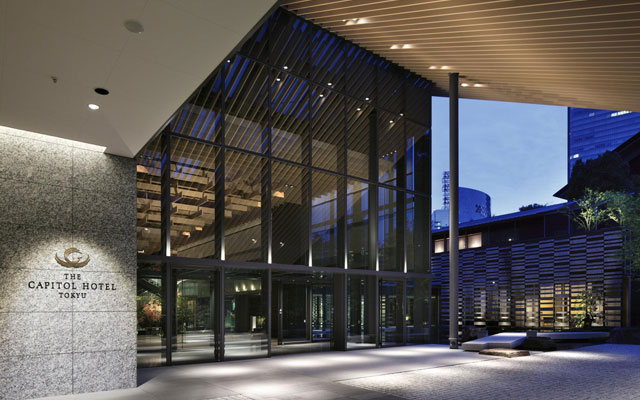
The Capitol Hotel Tokyu is a member of Preferred Hotels & Resorts
Through I Prefer Alliance, partners can extend the full benefits of I Prefer Hotel Rewards to members of their own loyalty programmes upon every eligible stay. The points exchange structure for each I Prefer Alliance partnership will be unique to the structure of each individual partner’s programme.
As inaugural partner, Tokyu Hotels’ affiliation with I Prefer Alliance will offer all Tokyu Comfort Members two Comfort Points for every US$1 spent on net room reservations when they book any hotel outside Japan. In addition, I Prefer members visiting Japan will now be able to earn 25 I Prefer points per US$1 spent on net room reservations, as well as redeem I Prefer Reward Certificates, at 19 participating Tokyu hotels, four of which are members of Preferred Hotels & Resorts: The Capitol Hotel Tokyu, Cerulean Tower Tokyu Hotel, Kyoto Tokyu Hotel, and Nagoya Tokyu Hotel.
Salazar: opportunity to further support hotel partners’ individual goals
Jeri Salazar, vice president of loyalty, Preferred Hotels & Resorts, said in a statement: “I Prefer Alliance was created to provide independent hotels with the flexibility to personalise their own programmes in a way that would help drive more loyalty from their current members, while creating more visibility for partner properties and all hotels that participate in I Prefer… We look forward to integrating more hotel partners into I Prefer Alliance globally in the months ahead.”
As of January 2019, more than three million members have enrolled in I Prefer. Benefits included points that could be exchanged for cash value, Prefer Reward Certificates, as well as elite status and additional benefits such as priority early check-in/late check-out, room upgrade based on availability, and complimentary Internet access.
In 2018, the programme produced a 24 per cent increase in reservations revenue and a 31 per cent increase in stays to participating hotels, as compared to 2017. I Prefer was first introduced as a points-based model by Preferred Hotels & Resorts in August 2013.
Update: The headline was amended to clarify that I Prefer Alliance is an extension of the company’s existing programme
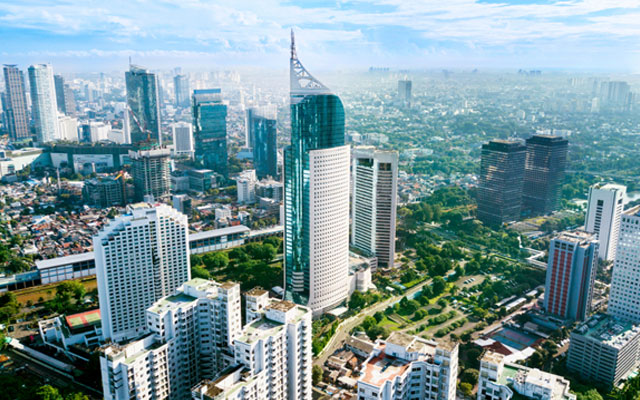
BNI 46 Tower with located in South Jakarta Central Business District
Indonesia has submitted a bid to host the 2032 Summer Olympics, Jakarta’s state news agency Antara announced yesterday.
Indonesia’s ambassador to Switzerland, Muliaman D Hadad, submitted a letter from president Joko Widodo to the International Olympic Committee (IOC) last week.
Indonesia is interested to host the Olympics in 2032; South Jakarta’s CBD pictured
The ambassador was quoted by the news agency, indicating that the IOC has acknowledged Indonesia’s hosting capabilities during last year’s Asian Games and Asian Paragames.
A senior official in the coordinating ministry for human development and culture, Gunawan, has also confirmed the bid.
If Indonesia wins the bid it would become the fourth Asian country to do so, after Japan, China and South Korea. However, this current bid could face competition from India, and a joint bid by North and South Korea.
The IOC will pick the 2032 host by 2025.
Upcoming hosts for the next few Summer Olympics are Tokyo in 2020, Paris in 2024, and Los Angeles in 2028.
Hong Kong Disneyland Resort (HKDL) has reported record high revenue and earnings before interest, taxes, depreciation and amortisation (EBITDA) for the 2018 fiscal year.
Revenue rose 18 per cent to HK$6 billion (US$765 million) for the year ending September 29, 2018, while EBITDA jumped 48 per cent to HK$1.4 billion. The growth in revenue and EBITDA was attributed to increases in occupied room nights at resort hotels, park attendance and guest spending.
Hong Kong Disneyland remains one of Hong Kong’s top draws
Annual attendance reached 6.7 million, up eight per cent over the previous year. Across-the-board growth was seen in local, mainland China and international markets, which accounted for 40 per cent, 34 per cent and 26 per cent of total attendance, respectively.
International attendance also hit a record high for the second year in a row, fuelled by strong visitation from Japan, South Korea and the Philippines. Since the park’s opening in 2005, total cumulative attendance has reached more than 77 million.
During the year, per capita spending increased six per cent, representing nine years of continuous growth. Hotel occupancy was up six percentage points to 75 per cent. Disney Explorers Lodge, which opened in April 2017, contributed to 44 per cent growth in occupied room nights.
Record revenue and EBITDA reduced net loss by HK$291 million to HK$54 million, an 84 per cent improvement from fiscal year 2017.
Stephanie Young, managing director of HKDL, attributed the increase in visitation and revenue in the past year to “innovative initiatives” such as the first-ever, large-scale outdoor concerts, and 10K Weekend running events.
The series of six outdoor concerts by popular Taiwan band Mayday was a groundbreaking initiative using the resort’s coach park to host 120,000 attendees. Tailored packages of the resort’s hotel room and park experience contributed to both hotel occupancy and park visitation.
Better connectivity has also allowed HKDL to capitalise on business potential brought about by the Hong Kong-Zhuhai-Macao Bridge and the High Speed Rail (Hong Kong Section). HKDL increased its promotions of the resort as a staycation choice, and launched tailored products in the connected markets in the Greater Bay area, as well as central and western regions of mainland China.
Ant Man and The Wasp Nano Battle! attraction will soon open
HKDL believes its momentum will continue with new attractions and expansions, such as the soon-to-open Ant-Man and The Wasp: Nano Battle! on March 31, and the Bibbidi Bobbidi Boutique opening in summer 2019.
Singapore Marriott Tang Plaza Hotel has appointed Jason Leung as general manager, joining the hotel from his most recent role as general manager of Le Meridien Singapore, Sentosa.
The hotel veteran has more than 16 years of experience under his belt, having began his career in sales and marketing in the hospitality industry in Sydney.
In 2006, he assumed the role of business development director at Four Points by Sheraton, Sydney, and was quickly promoted to director of sales. He then transferred to The Westin Resort Nusa Dua, Bali in 2009, where he held various key management roles including director of sales & marketing, executive assistant manager and hotel manager.