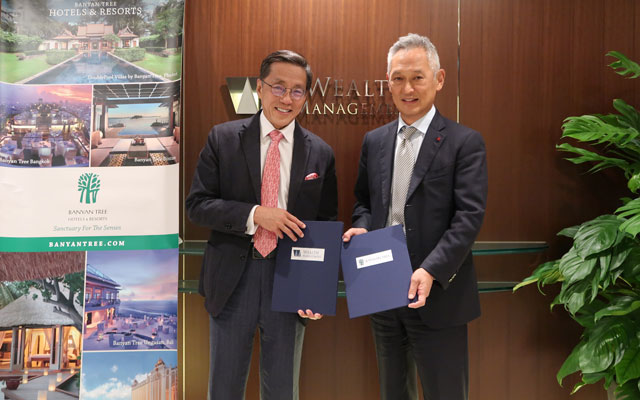
From left: Banyan Tree's Ho Kwon Ping and Wealth Management Inc's Kazutoshi Senno at the signing ceremony
Banyan Tree Hotels & Resorts and Richesse Management – a consolidated subsidiary of Wealth Management – have jointly announced the signing of a hotel management agreement to operate the first Banyan Tree hotel in Japan.
From left: Banyan Tree’s Ho Kwon Ping and Wealth Management Inc’s Kazutoshi Senno at the signing ceremony
Banyan Tree will be taking over the current Hotel Ryozen in Higashiyama-ku, Kyoto, which will cease operations come end October 2019. The company will then redevelop the property with the help of Kengo Kuma as master architect, with a targeted opening in 2022.
The 60-room luxury resort will include a speciality restaurant, bar, library, gymnasium, a Banyan Tree Spa and onsen facilities – the first and only luxury international brand onsen hotel in Kyoto.
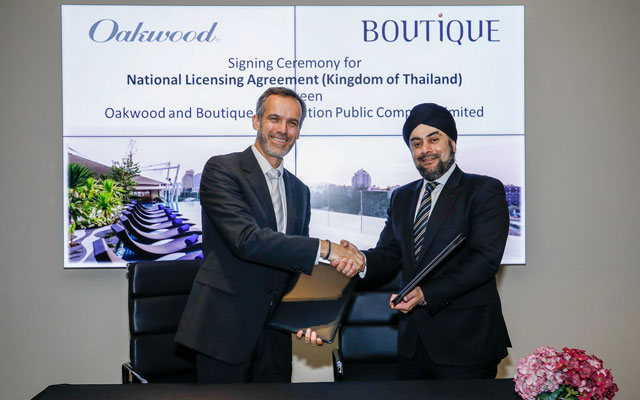
From left: Signing ceremony between Oakwood's Dean Schreiber and Boutique Corporation's Prab Thakral
Oakwood has entered into a strategic partnership agreement with Thailand-based real estate developer Boutique Corporation to develop and build new Oakwood-branded properties across key destinations in the kingdom.
Two properties will be opening in Thailand in April 2019 – a 198-room property in Phuket’s Patong and a 76-room property in central Pattaya – marking the first foray for Oakwood into resort locations.
From left: Signing ceremony between Oakwood’s Dean Schreiber and Boutique Corporation’s Prab Thakral
“We are excited to be launching Oakwood Hotels and Apartments across Thailand, a key market in Asia Pacific that continues to thrive and attract both business and leisure travellers seeking long- and short-term accommodation options,” said Dean Schreiber, managing director, Asia Pacific, Oakwood.
“As the market shifts from a more corporate-dominated demand to an increasing number of leisure travellers opting to stay in serviced apartments, I am confident that we will have a strong portfolio of properties poised to extend the Oakwood hospitality to our guests in Thailand,” added Prab Thakral, president and group CEO of Boutique Corporation.
Genting Cruise Lines has launched its first regional Cruise Voluntourism campaign in Asia through Dream Cruises, as part of the group’s year-long 25th anniversary celebration.
This initiative featuring complimentary shore experiences allows passengers to participate in a series of voluntary activities across various Asian communities in different destinations.
Cruise Voluntourism
1 of 4
The campaign first made its debut on Genting Dream during a three-night round-trip cruise (February 24-27, 2019) that departed Singapore to Penang and Phuket. It will be gradually rolled out across the Dream Cruises and Star Cruises fleet region-wide.
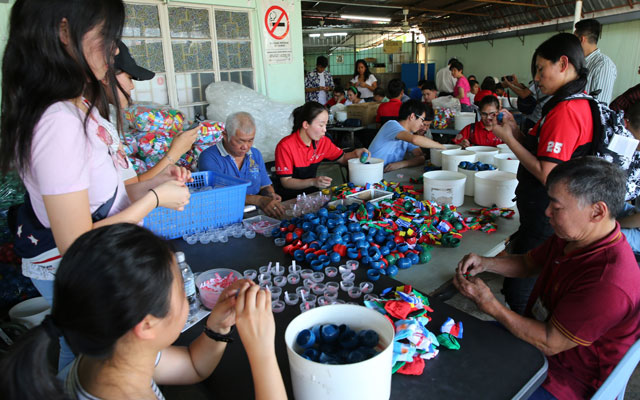
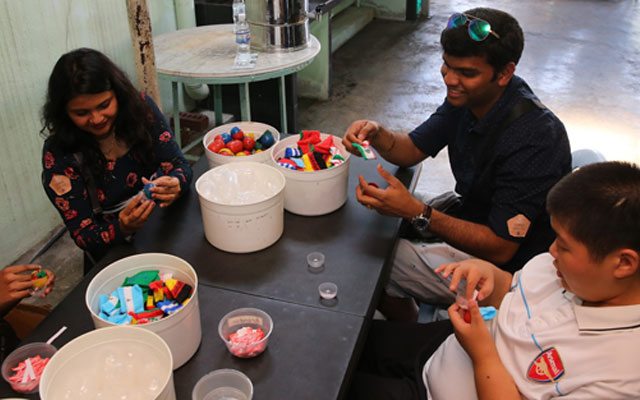
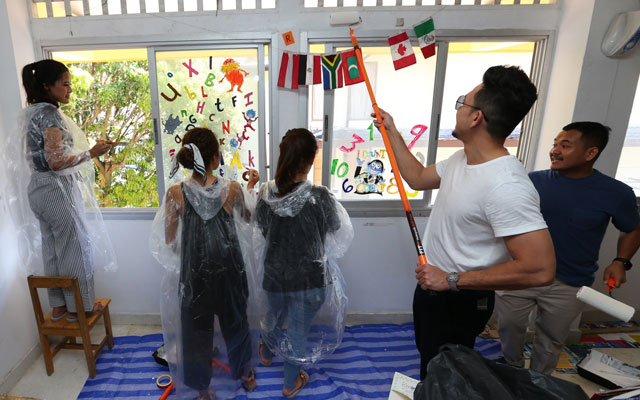
During the inaugural Cruise Voluntourism with Genting Dream, participants were invited to The Eden Handicap Service Center in Penang, where participants interacted and got to know the residents of the centre and also engaged in light maintenance around the facility, among other activities.
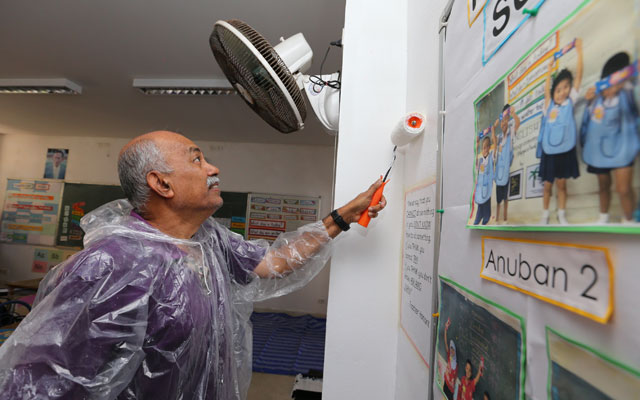
On the following day, when Genting Dream arrived at its next destination in Phuket, participants travelled to the Baan Kalim School – a school that was rebuilt when it was largely destroyed by the December 2004 tsunami. Participants had the chance to meet the students and helped to repaint the library and the meeting room, and children’s books were donated to the school’s library.
Dream Cruises and Star Cruises are offering Cruise Voluntourism options on selected departure dates, and will offer at least one voluntourism opportunity at designated destinations.
Itineraries will offer a wide variety of activities for guests to volunteer and donate their time including environmental conservation, cultural preservation, and supporting various institutions such as local schools, orphanages, seniors’ homes, handicapped centers, as well poverty relief efforts and more.
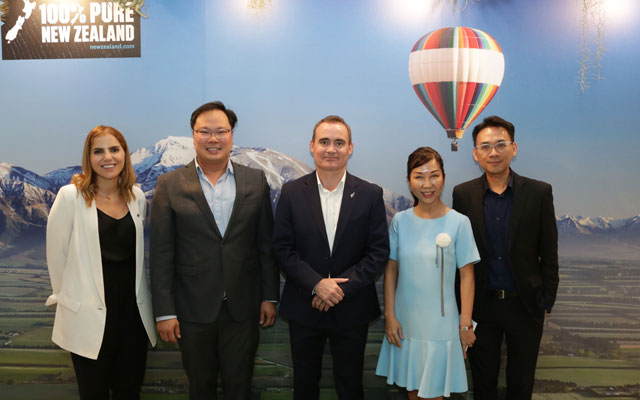
From left: Air New Zealand's Jenni Martin; Singapore Airlines' Edwin Chiang;
Tourism New Zealand's Steven Dixon; Dynasty Travel's Alicia Seah; and Chan Brothers Travel's Jeremiah Wong
Tourism New Zealand has launched a new region-specific campaign focusing on two North Island destinations (Wellington and Wairarapa) and three South Island destinations (Nelson, Marlborough and Canterbury).
This is in light of Singaporeans’ soaring interest in New Zealand as a holiday destination, where the annual number of visitors in 2018 increased to 61,464, a 30 per cent rise from 2014.
From left: Air New Zealand’s Jenni Martin; Singapore Airlines’ Edwin Chiang; Tourism New Zealand’s Steven Dixon; Dynasty Travel’s Alicia Seah; and Chan Brothers Travel’s Jeremiah Wong
Steven Dixon, regional manager South & South-east Asia, Tourism New Zealand, said: “These regions were chosen due to their connectivity, and the experiences and natural produce they offer. For example, you can shuck oysters and drink regional wines on a yacht in the Marlborough Sounds.
“Singaporeans are familiar with New Zealand’s iconic regions, but increasingly we are finding they want to branch out beyond the traditional tourist highlights. Singaporean travellers desire authentic experiences and want to ‘live like a local’ while on holiday and these new regions offer abundant opportunity to do so. With this launch, we want to encourage visitors to include the new regions into their itineraries and experience a different perspective on New Zealand.”
Calling Singapore an “incredibly valuable market”, Dixon revealed that more Singaporeans are heading to New Zealand than ever, with an increase of six per cent year-on-year. Of these, 30 to 55 per cent are repeat visitors.
This new regional focus is supported by two of Tourism New Zealand’s key airline partners, Air New Zealand and Singapore Airlines.
Jenni Martin, Air New Zealand’s head of South and South-east Asia, told TTG Asia: “To support the campaign, the airline has reduced up to 50 per cent of its fares for 41 domestic routes to 20 destinations in the country. This is the largest restructure to domestic fares Air New Zealand has made in 10 years, and is aimed at stimulating domestic tourism and regional dispersal.”
Similarly, Martin indicated that Singapore is a very important market, hence the launch of its first-ever global brand campaign in the country earlier in January.
“We want Singaporean travellers to stay longer, explore more widely, and enjoy our country in all seasons,” Martin added.
When asked about the campaign’s length, Dixon shared: “It will run for the next four months online and offline. We will then look at its performance, and explore whether there are other regions that we can look at.”
He added that this is the first time that Tourism New Zealand is promoting a market-specific strategy for Singaporean consumers as the market is “very mature”, compared to other markets like India where we “talk about New Zealand as a whole”.
Travel agency bigwigs Chan Brothers Travel and Dynasty Travel, which also participated in the panel discussion, said that New Zealand has always been a popular destination for both their customers, and the new regional focus is in line with the trend they are seeing among Singaporean travellers who are looking for more off-the-beaten-track destinations.
Alicia Seah, Dynasty Travel’s spokesperson, added: “New Zealand is a value-for-money destination, and with favourable exchange rates, Singaporeans are able to stretch their budget, and repeat travellers will definitely be interested.”
Jeremiah Wong, Chan Brothers Travel’s spokesperson, agreed: “This campaign will be very interesting for repeat travellers due to its off-the-beaten-path experiences. It’s also good for travellers looking for more immersive experiences. Wellington is a perfect location to start, as it’s a skip and hop away from the top of South Island.”
Chan Brothers Travel is hence currently developing small group tours, unique accommodation tours involving ecolodges and glasshouses, as well as photography expeditions for this campaign, all of which will be expected to launch later this year or the next, Wong told TTG Asia.
With a plan to double its portfolio to more than 130 properties by 2022, Thailand’s Centara Hotels and Resorts has revealed that expansion will involve going international and introducing a new luxury brand.
Since launching its five-year plan in late-2017, Centara has increased its 57 hotels to 68 in the last year. In 2019, it has set a goal of adding 22 properties to its swelling portfolio.
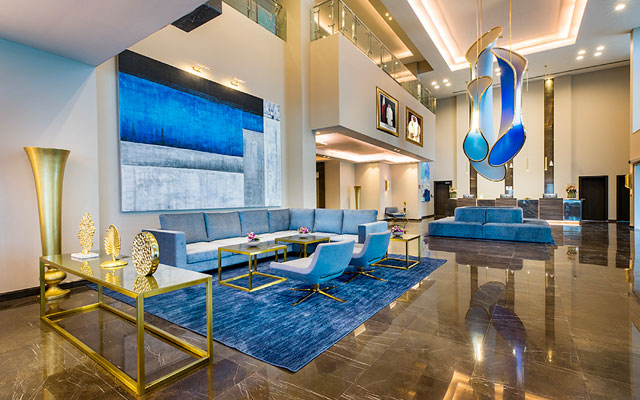
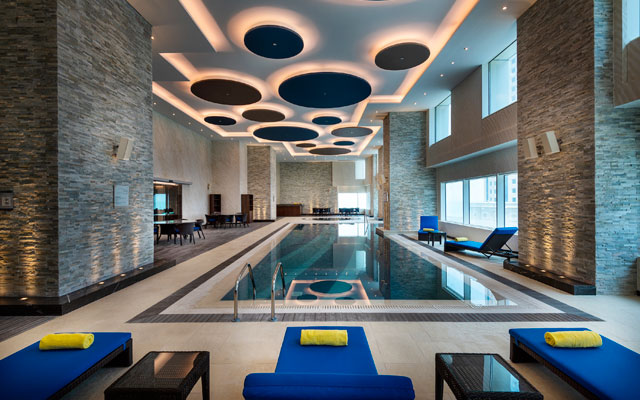
Centara West Bay Residences & Suites Doha
1 of 4
The latest to open is Centara West Bay Residences and Suites in the capital of Qatar, Doha. This marks Centara’s entry into its sixth country. A second 509-key Centara Grand property is slated to open in Doha before 1Q2020, with other projects planned or under development in Turkey, Cambodia, Indonesia and China. Four properties are slated to open in Laos by 2020.
Markland Blaiklock, Centara’s deputy chief executive, said: “Our vision is to go global and we are moving in that direction.” He added Centara is hoping to secure its first property in Japan.
As part of its expansion plans, Centara is creating a luxury line of hotels to add to its six current brands. This will feature new luxury properties while also upgrading existing hotels. Centara’s heritage property in Hua Hin will be the first hotel to be renovated and repositioned as a classic luxury property. A new wave of contemporary lifestyle luxury resorts and hotels will also be added, with the first expected to be launched in Koh Samui.
Said Blaiklock: “Some inspiration has come from what we see in (the Middle East), where we see a real opportunity to grow in the luxury area. The Hua Hin old railway hotel will be fully renovated and repositioned at a luxury level as an introduction into traditional luxury. We also plan to move into contemporary lifestyle luxury and are working on a project in Pattaya. We hope that will go ahead. If not, we will look elsewhere.”
Blaiklock said the brand concept is currently being developed.
Looking ahead, Centara plans to tap into the wellness market by developing a range of wellness products to be rolled out across the group. Centara is currently working on selecting a property to be included in the first launch list.
Said Blaiklock: “The new buzzword is wellness, and developing wellness retreats is in our plan.”
And it is looking to strengthen its presence in the Middle East, with discussions underway to open more properties in Oman. “This is a very important region with a lot of potential,” said Blaiklock.
He added the region serves as a gateway between the continents of Europe and Asia, with many of Centara’s clients using it as a stopover. Qatar will play a keyrole in Centara’s Middle East presence.
“We realise Qatar is still in early stages of development but Thailand not so many decades ago was too. It will take some time, but the elements of success are there.”
With huge growth on the horizon, this year will see Centara roll out new technology architecture across its hotels that includes new property management systems, a central reservation system and revenue management.
This year will also see Centara rebranded, with plans still being finalised before being unveiled to the public later this year. Upgraded digital platforms will also be launched in 2020.
Blaiklock said: “As we grow from 60 hotel to 130 hotels, we have to look at how we organise ourselves. It’s a very exciting time for Centara.”
Accor is launching a new lifestyle brand in the midscale segment, Tribe.
Tribe currently has one address, a 126-room property located near the botanic garden at Kings Park, Perth, Australia. Ten other openings are already scheduled to take place by 2022 in Europe and Asia-Pacific, totalling more than 1,700 rooms.
Accor expands portfolio and with launch of new lifestyle brand in the midscale segment
Gaurav Bhushan, chief development officer at Accor, said: “The pipeline of over 50 hotels currently being negotiated for the coming years leads us to believe that the Tribe brand will achieve significant growth all over the world including in gateway locations such as Paris, London, Singapore, Dubai Bangkok… It will be making its debut in 150 international destinations by 2030.”
Tribe guestrooms come with under-bed storage, smart TV, Nespresso coffee capsules and T2 teabags provided free of charge in place of a mini bar. A Grab & Go station is also available 24/7.
Properties under the new brand will also offer the Tribe Foods area – a café by day and bar by night – bicycle rental services, fitness centre and co-working areas.
In a statement, Accor said the new brand continues the “enforcement of its lifestyle ecosystem”, following Jo&Joe and partnerships with 25Hours, Mama Shelter and, more recently, sbe Entertainment.
China, South-east Asia and the tours & activities sector are strategic growth markets for the TUI Group
Travel agency Tui has entered into a strategic partnership with Ctrip, a deal that is expected to give 200 million users of the Chinese OTA giant direct access to Musement’s tours and activities in over 1,900 cities.
Tui acquired Musement in summer 2018, with the intention of expanding the Milan-based tours and activities startup into a leading digital platform for activities and excursions.
China, South-east Asia and the tours & activities sector are strategic growth markets for the TUI Group
As part of the partnership between Ctrip and Tui, there are also plans to develop exclusive excursions and one-day tours in Chinese for many destinations. Musement’s overall portfolio, which is also available to customers from China, currently comprises 150,000 products.
“The strategic partnership with Ctrip shows the immense opportunities the online business offers us in the area of tours and activities. We are convinced that this strong combination will enable us to consistently expand our online market share in the coming years,” said TUI CEO Fritz Joussen.
The Spanish subsidiary TUI Destination Experiences is one of the TUI Group’s three strategic growth pillars alongside Hotels & Resorts and Cruises. As part of the TUI 2022 strategy, business in China and South-east Asia will be significantly expanded.
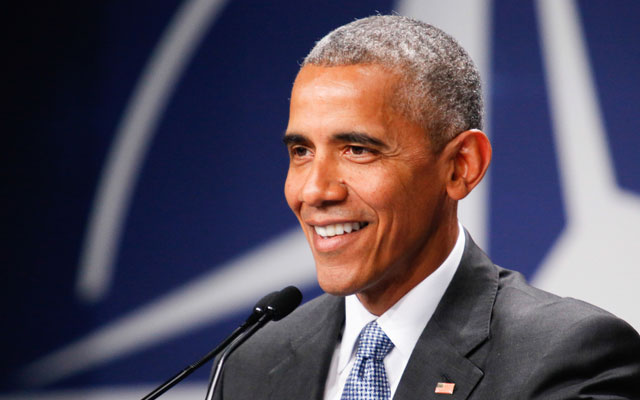
Obama is to speak at this year’s WTTC global summit
The World Travel & Tourism Council (WTTC) has announced that the 44th US president, Barack Obama, will be a guest of honour and keynote speaker at its upcoming summit in Seville, Spain.
Held from April 2-4, 2019, the summit has adopted the theme of Changemakers this year in celebration of the people and ideas defining the future of the travel sector.
Obama is to speak at this year’s WTTC global summit
Gloria Guevara, president & CEO, WTTC remarked: “We are humbled and honoured to be hosting such an important leader as president Barack Obama at our global summit this year. During his time in office he embodied the notion that travel & tourism is a driver of economic growth and creator of jobs.
“WTTC now looks ahead to April to welcome the many insights that president Obama will share with our members and delegates at our global summit. His vision will help us to shape the future of this important sector.”
Avani Hotels & Resorts has signed three new properties in Vietnam’s Vung Tau, Ho Chi Minh City and Cam Ranh.
The Avani Vung Tau Resort in the port city of Vung Tau – two hours by car from Ho Chi Minh City – is scheduled to open by the end of 2019. The property will feature 149 oceanfront and hillside rooms, and will also boast a signature oceanfront dining experience.
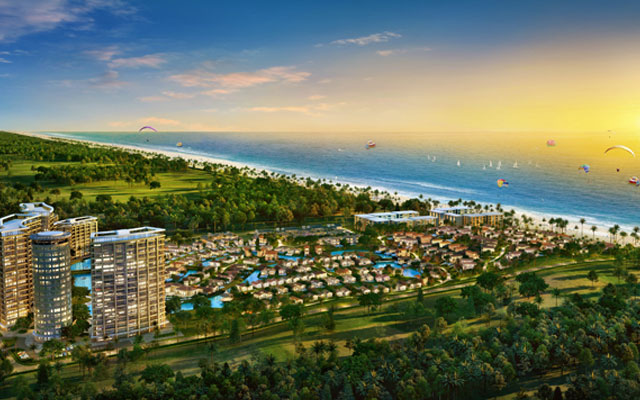
Avani Cam Ranh Resort
Set for a end-2021 opening is Avani Saigon in the historic District 1 of Ho Chi Minh City, located a 30-minute drive from Tan Son Nhat International Airport. The 217-key property will be part of a 38-storey mixed-use complex including retail shops and residences. It will feature an all-day dining restaurant and an AvaniSpa.
Avani Cam Ranh Resort & Villas, opening at the end of 2022, sits on the south-central coast of Vietnam. The resort will feature 300 rooms and suites, as well as 315 private villas, an all-day dining restaurant, a speciality bistro, and a beach club, as well as 1,200m2 of meeting and banquet space.
The trio of signings will expand Avani’s portfolio to five properties in Vietnam, in addition to the two currently open – Avani Quy Nhon Resort and Avani Hai Phong Harbour View. In total, Avani currently operates 24 hotels and resorts in 15 countries, with another 15 hotels in the pipeline.
The Travel Corporation (TTC) has appointed Yan Kit Wong as AAT Kings and Inspiring Journeys’ senior sales manager.
Based out of Singapore, Wong is in charge of driving business growth and channel distribution for the company.
Wong was most recently part of the sales team for Insight Vacations, Luxury Gold and Uniworld Boutique River Cruise Collection, three of TTC’s luxury brands, after a 22-year career with car rental company Hertz.