New agreement to open up India’s north-east frontier to Australian tourists
Australia India Travel & Tourism Council (AITTC) and Northeast India Tour Operators Association (NEITO) have signed an MoU to promote tourism to the north-eastern states of India.
According to a statement from AITTC, the two main purposes of the agreement are to enhance destination knowledge among Australians and to facilitate the establishment of a suitable ‘travel & tourism connect’ between Australia and north-east India.
Elaborating, AITTC chairman Sandip Hor said: “At present, the North East frontier of India comprising of eight states is not so well known to the majority of Australians. With this MOU in place, we are aiming to utilise the knowledge and expertise of (NEITO) tour operators to update Australians with more information about the states. This will include all tourism related information like transportation, accommodation, what to see, local culture, festivals, weather, etc.
“And while doing so a relationship will be established among India focussed outbound tour operators in Australia with inbound operators in Northeast India, thus establishing a travel and tourism connection between them.”
Citing data released by the Australian Bureau of Statistics, AITTC said India is one of the most popular destinations for Australian travellers. However, travel to the eight north-eastern states – Assam, Arunachal Pradesh, Mizoram, Manipur, Meghalaya, Nagaland, Tripura and Sikkim – remains limited.
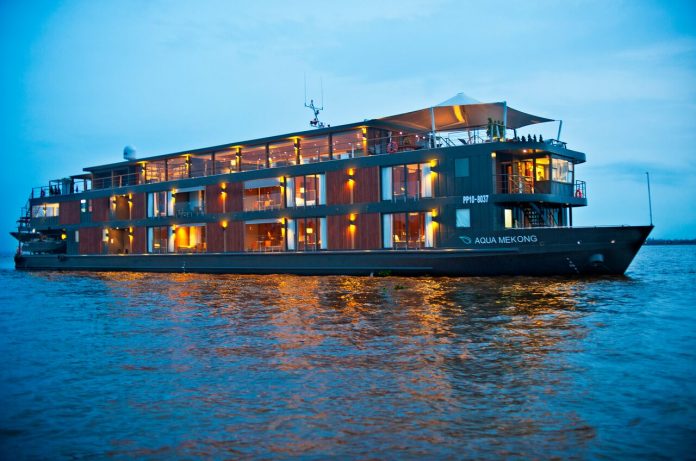
Hor said the region’s many attractions have great potential to add a new dimension to international tourism growth in India, with examples counting Assam’s Brahmaputra River Cruise, the Kaziranga National Park, Tripura’s Royal Palaces, Sikkim and its Himalayan draws and Nagaland’s Hornbill Festival.
New agreement to open up India’s north-east frontier to Australian tourists
Australia India Travel & Tourism Council (AITTC) and Northeast India Tour Operators Association (NEITO) have signed an MoU to promote tourism to the north-eastern states of India.
According to a statement from AITTC, the two main purposes of the agreement are to enhance destination knowledge among Australians and to facilitate the establishment of a suitable ‘travel & tourism connect’ between Australi
a and north-east India.
Elaborating, AITTC chairman Sandip Hor said: “At present, the North East frontier of India comprising of eight states is not so well known to the majority of Australians. With this MOU in place, we are aiming to utilise the knowledge and expertise of (NEITO) tour operators to update Australians with more information about the states. This will include all tourism related information like transportation, accommodation, what to see, local culture, festivals, weather, etc.
“And while doing so a relationship will be established among India focussed outbound tour operators in Australia with inbound operators in Northeast India, thus establishing a travel and tourism connection between them.”
Citing data released by the Australian Bureau of Statistics, AITTC said India is one of the most popular destinations for Australian travellers. However, travel to the eight north-eastern states – Assam, Arunachal Pradesh, Mizoram, Manipur, Meghalaya, Nagaland, Tripura and Sikkim – remains limited.
Hor said the region’s many attractions have great potential to add a new dimension to international tourism growth in India, with examples counting Assam’s Brahmaputra River Cruise, the Kaziranga National Park, Tripura’s Royal Palaces, Sikkim and its Himalayan draws and Nagaland’s Hornbill Festival.
Aviation roundup: Vietjet, JAL, PAL and more

Vietjet launches Hanoi-Tokyo, HCMC-Van Don
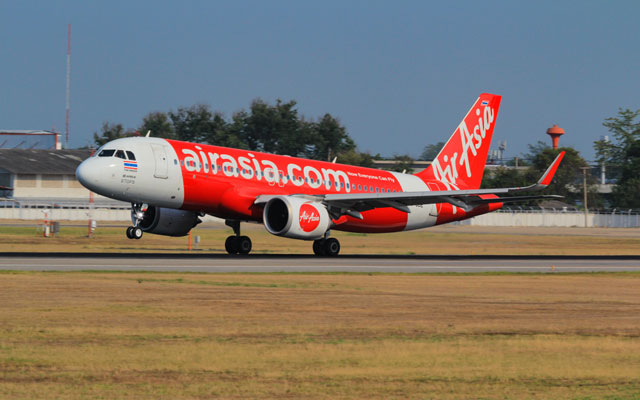
Vietjet has launched daily flights between Hanoi and Tokyo’s Narita International Airport. The flight departs from Hanoi at 12.55 and arrives in Tokyo at 08.00. The return flight takes off at 09.30 and lands in Hanoi at 14.00. This is the LCC’s third service to Japan after Hanoi-Osaka and Ho Chi Minh City (HCMC)-Osaka.
The LCC also began its first flight connecting HCMC and the new Van Don International Airport in Quang Ninh province, home to Halong Bay, on January 20. On Mondays, Wednesdays, Fridays and Sundays, the flight departs from HCMC at 07.00 am and arrives in Van Don at 09.15. The return flight takes off at 09.50 and lands in HCMC at 12.05.
JAL to fly to Bengaluru
Japan Airlines (JAL) will launch daily flights between Tokyo (Narita) and Bengaluru during the summer of 2020. Flights leave Narita at 18.25 for arrival in Bengaluru at 00.05 the next day. They then depart Bengaluru at 02.45 to arrive back at Narita at 14.55. JAL will use its Boeing 787-8 aircraft on this route.
PAL goes to Hanoi, Phnom Penh, Delhi
Philippine Airlines (PAL) has announced that it will this summer commence new routes to Hanoi, Phnom Penh and New Delhi from its Manila hub.
Flights between Manila and Hanoi will operate four times weekly (Monday, Wednesday, Friday and Sunday) starting March 31, 2019 with PR595 departing at 22.25 and arriving at Hanoi’s Noi Bai International Airport at 12:45 the following day. Return flights via PR596 leave Hanoi every Monday, Tuesday, Thursday and Saturday at 01.45 and touch down in Manila at 05.30.
Flights between Manila and Phnom Penh will operate five times weekly (Monday/Tuesday/Thursday/Friday/Saturday) starting April 1, 2019 with PR521 departing at 22.10 and arriving at Phnom Penh International Airport at 23.45. On the return, PR522 leaves Phnom Penh every Tuesday, Wednesday, Friday, Saturday and Sunday at 12:45 and touches down in Manila at 04.20.
PAL is targeting April 2019 as the start of the New Delhi service. The new route is slated to run four times weekly between Manila and New Delhi’s Indira Gandhi International Airport using brand-new Airbus A321neo aircraft.
To serve the strategic goal of strengthening the Philippines as a network hub, PAL is also increasing flight frequencies to the following destinations this summer:
• Cebu to Nagoya: from four times weekly to daily
• Manila to Osaka (nonstop): from seven to 11 weekly
• Manila to Bangkok: from 21 to 25 weekly
• Manila to Kuala Lumpur: from seven to 11 weekly
• Manila to Jakarta: from seven to 10 weekly
• Manila to Los Angeles: from 14 to 17 times weekly
• Manila to San Francisco: from 10 to 14 times weekly
• Manila to New York JFK: from five times weekly to daily
• Manila to Toronto: from five times weekly to daily
• Manila to Sydney: from seven to nine weekly
• Manila to Brisbane: from four to five weekly
• Manila to Taipei: from 10 to 14 weekly
• Manila to Doha: from four to five weekly
Hainan Airlines introduces flights from Shenzhen to Vancouver and Dublin
Hainan Airlines is launching twice weekly flights between Shenzhen and Vancouver on January 28, the first nonstop connection from the Chinese city to Canada. Operated using a Boeing 787-9 wide-body aircraft, flights depart Shenzhen on Mondays and Fridays at 12.20 for arrival in Vancouver at 08.50. On the return, flights depart Vancouver at 10.50 and arrive back in Shenzhen at 16.20 the next day.
The airline is also planning to launch flights to Dublin starting February 25. The route, with two round trip flights weekly on Mondays and Fridays, will be serviced by a Boeing 787 Dreamliner. HU755 departs Shenzhen at 01.30 to arrive in Dublin at 07.00. HU756 then leaves Dublin at 09.00 for arrival back in Shenzhen at 05.30 the following day.
Finnair opens routes to Sapporo, ups Hong Kong frequency
Finnair will operate twice-weekly flights on a new route to Sapporo, Japan for the winter 2019/2020 season, from December 15 to March 27.
Finnair will also increase flights to Hong Kong during winter 2019/2020, with double daily flights to Hong Kong continuing from the summer 2019 season throughout the winter season.
An open invitation
The idea for JoinMyWedding.com, which gives travellers the unique opportunity to join an Indian wedding as a guest, came about when Orsi Parkanyi, co-founder & president of JoinMyWedding.com heard about the great experiences her friend has had.
“I was born and grew up in Hungary. When I was in my early twenties, I moved to Australia and lived there for 11 years. I missed out on all of my friends’ weddings that happened in Hungary during those years. Three years ago, I was visiting family, and got to talk with a friend who told me about all the amazing weddings she attended that summer. She also shared about a traditional Indian wedding she once attended, and which was the most amazing experience of her life,” recalled Parkanyi.

“So the idea formed: what if there was a way for people to join authentic weddings around the world?”
She shared that since inception the response for JoinMyWedding.com has been overwhelming, with demand coming from around the world.
Through JoinMyWedding.com, travellers get to experience multiple aspects of an Indian wedding – meeting with local people, tasting local cuisine, dressing in Indian attire, enjoying the music, ambiance and entertainment, in addition to learning about the local customs and even admiring local architecture.
“The Indian culture is very rich, and weddings are a huge part of it. It was previously hidden from the travellers but JoinMyWedding has made it possible for travellers to experience Indian weddings. Our platform, being a global digital platform, is totally different from local experience providers.
“(Firstly) it is not an agency, it is a global marketplace. The variety and choices can be much bigger on such platforms, and there are no limitations,” said Parkanyi.
However, a major challenge faced in the business is the seasonality of Indian weddings, she admitted.
Another difficulty she faces is that weddings are “one-off experiences, and as such, hard to price”.
“But we are going strong and overcoming each challenge as we go ahead. We are focusing on Indian weddings for the moment, but would like to extend this globally over the coming years,” she concluded.
An open invitation
The idea for JoinMyWedding.com, which gives travellers the unique opportunity to join an Indian wedding as a guest, came about when Orsi Parkanyi, co-founder & president of JoinMyWedding.com heard about the great experiences her friend has had.
“I was born and grew up in Hungary. When I was in my early twenties, I moved to Australia and lived there for 11 years. I missed out on all of my friends’ weddings that happened in Hungary during those years. Three years ago, I was visiting family, and got to talk with a friend who told me about all the amazing weddings she attended that summer. She also shared about a traditional Indian wedding she once attended, and which was the most amazing experience of her life,” recalled Parkanyi.

“So the idea formed: what if there was a way for people to join authentic weddings around the world?”
She shared that since inception the response for JoinMyWedding.com has been overwhelming, with demand coming from around the world.
Through JoinMyWedding.com, travellers get to experience multiple aspects of an Indian wedding – meeting with local people, tasting local cuisine, dressing in Indian attire, enjoying the music, ambiance and entertainment, in addition to learning about the local customs and even admiring local architecture.
“The Indian culture is very rich, and weddings are a huge part of it. It was previously hidden from the travellers but JoinMyWedding has made it possible for travellers to experience Indian weddings. Our platform, being a global digital platform, is totally different from local experience providers.
“(Firstly) it is not an agency, it is a global marketplace. The variety and choices can be much bigger on such platforms, and there are no limitations,” said Parkanyi.
However, a major challenge faced in the business is the seasonality of Indian weddings, she admitted.
Another difficulty she faces is that weddings are “one-off experiences, and as such, hard to price”.
“But we are going strong and overcoming each challenge as we go ahead. We are focusing on Indian weddings for the moment, but would like to extend this globally over the coming years,” she concluded.
New GM takes reins at Regent Singapore
Oscar Postma has been appointed Regent Singapore’s new general manager.
In his most recent post prior to joining Regent Singapore, Postma was corporate director of rooms for Capella Hotel Group.

The industry veteran first began his career with Starwood, and has 25 years of experience in the luxury hospitality industry under his belt. Past roles include executive assistant manager rooms at The St Regis Singapore and The Ritz-Carlton, Millenia Singapore, as well as hotel manager of the Watergate Hotel in Washington DC.
Lombok tourism pushed to adapt with pent-up demand awaiting release
There is a clear pent-up demand for Lombok after tourism took a hit last year and buyers are waiting longer to actualise bookings, but destination players are working hard on realigning their focus to capture more business.
Based on the assessment of Khiri Travel Indonesia’s general manager Herman Hoven during the Christmas/New Year 2018-19 peak, around 90 per cent of tourism operations in Lombok are back in business following the devastating earthquakes of August 2018. In north-west Lombok, the island of Gili Trawangan is leading the recovery, followed by Gili Meno and Gili Air.

Yet travellers appear to still be holding back their decisions, not just due to the Lombok earthquake and tsunami, but also because of the string of natural disasters that struck Indonesia in recent months, observed sellers at ATF last week.
Iwan Sitompul, sales consultant of Kura Kura Resort and Meno Mojo Beach Resort in Gili Meno, Lombok said: “The infrastructure in Lombok is ready, the fast boats between Bali and Lombok are back to normal, some has even added frequencies. Most of the affected hotels are up and running. In fact, Meno is newly opened.
“Since I arrived (at ATF), buyers have been asking me for updates on Lombok. This shows that the interest continues to be there, but somehow the bookings are very slow. In fact, Lombok is still close-sales for (some) UK buyers,” said Iwan, suggesting the lack of updates to overseas markets as a possible reason.
Robert Koni, sales and product manager of Manumadi Tours & Travel, noted that while bookings have been slower than usual, they are starting to come in.
He is hopeful that a Turkish Airlines fam trip for travel agents from Estonia to Bali and Lombok later this month, which Manumadi Tours is handling, will lead to more bookings afterwards.
Marika Gloeckler, executive manager product & consulting of Go Vacation Indonesia, said: “January-March are quiet months anyway, so it is normal not to see (European) travellers there yet. However, bookings from April onwards look good.”
Santika Indonesia Hotels & Resorts is also upbeat about Lombok’s future. The hotel group is opening an upmarket villa resort, the Kayana Lombok, a Royal Collection category in July 2019, just in time for the European summer peak.
Shedding light on how tourism suppliers in the destination are coping differently, Hoven pointed out that Gili Trawangan was recovering well due to its reliance on the backpacker and flashpacker markets. For some hotels on Gili Meno, more reliant on the couples and honeymoon market, and Gili Air, rebuilding will take more time.

He estimated that tourism operators in the north are trying to survive with business still at 10-30 per cent of pre-earthquake levels. Tourism businesses in the south of Lombok, with its deserted beaches, were hardly impacted by the earthquakes, he said.
It was a more mixed picture around Mount Rinjani in the centre-north of the island. The summit of the famous mountain remains closed leaving many of the guides and porters out of work.
As a response to the downturn, members of the Rinjani Women’s Guide Association have had to refocus their efforts, Khiri shared in a statement. According to the DMC, the guides are now more actively promoting trips around the villages and attractions of the Senaru foothills.
Singapore tackles flailing retail spend through Orchard Road revitalisation
As Singapore’s tourism receipts plateau with declines seen in shopping and F&B spend, efforts to stimulate expenditure through reinvigorating one of the city’s traditional retail hotspots is underway.
According to latest figures from the Singapore Tourism Board (STB), tourism receipts in Singapore have plateaued, stagnating at some S$13.4 billion (US$9.9 billion) in 1H2018. The statistics, shared at the ATF in Halong Bay last week, also reflected a dip of 15 per cent in total tourist spend on shopping.

A major reason for this trend is the advent of online retail, which has become a universal bugbear, said Oliver Chong, executive director communications & marketing capability, marketing group, STB.
But hope is found in the Chinese market – Singapore’s top arrival market – which spent 13 per cent more in for 1H2018 compared to 1H2017, with shopping as the highest proportion, shared Chong.
To revitalise Singapore’s retail offerings, STB is embarking on a joint project with Enterprise Singapore and Jurong Town Council at the junction of Orchard Road and Cairnhill Road.
Design Orchard, opening on Jan 25, will showcase and support more than 60 up-and-coming Singapore designers and brands. The development comprises a retail showcase, designer incubation spaces and a rooftop events space.
Chong said: “When people go travelling, they like to buy things that are unique to the (destination) country. While we are grateful for all the global brands in Singapore, what we (also) want tourists to see and appreciate are designs that they can’t get anywhere else.
“We hope that Design Orchard will encourage more Singapore-based designers and reshape the retail perception of Orchard.”
Chong added that STB is considering other plans to “transform some of the key shopping districts in Orchard Road”, and may reveal these projects in the coming weeks.
Tourism hits 1.4 billion target ahead of forecast
International tourist arrivals grew 6% in 2018, reaching the 1.4 billion target two years ahead of forecast, according to the latest UNWTO World Tourism Barometer, although more modest growth is expected for 2019.
UNWTO estimates that worldwide international tourist arrivals (overnight) increased 6% to 1.4 billion in 2018, surpassing the 3.7% growth registered in the global economy. The Middle East (+10%), Africa (+7%), Asia-Pacific and Europe (both at +6%) led growth in 2018, while arrivals to the Americas were below the world average (+3%).

UNWTO’s long-term forecast published in 2010 predicted the 1.4 billion mark of international tourist arrivals for 2020. Yet stronger economic growth, more affordable air travel, technological changes, new businesses models and greater visa facilitation around the word have accelerated growth in recent years.
Results by region
International tourist arrivals in Europe reached 713 million in 2018, a notable 6% increase over what UNWTO says was an exceptionally strong 2017. Growth was driven by Southern and Mediterranean Europe (+7%), Central and Eastern Europe (+6%) and Western Europe (+6%). Results in Northern Europe were flat due to the weakness of arrivals to the UK.
Asia-Pacific (+6%) recorded 343 million international tourist arrivals in 2018. Arrivals in South-east Asia grew 7%, followed by North-East Asia (+6%) and South Asia (+5%). Oceania showed more moderate growth at +3%.
The Americas (+3%) welcomed 217 million international arrivals in 2018, with mixed results across destinations. Growth was led by North America (+4%), and followed by South America (+3%), while Central America and the Caribbean (both -2%) reached very mixed results, the latter reflecting the impact of the September 2017 hurricanes Irma and Maria.
Data from Africa points to a 7% increase in 2018 (North Africa at +10% and Sub-Saharan +6%), reaching an estimated 67 million arrivals.
The Middle East (+10%) showed solid results last year consolidating its 2017 recovery, with international tourist arrivals reaching 64 million.
Growth expected to return to historical trends in 2019
Based on current trends, economic prospects and the UNWTO Confidence Index, UNWTO forecasts international arrivals to grow 3% to 4% next year, more in line with historic growth trends.
As a general backdrop, the stability of fuel prices tends to translate into affordable air travel while air connectivity continues to improve in many destinations, facilitating the diversification of source markets. Trends also show strong outbound travel from emerging markets, especially India and Russia but also from smaller Asian and Arab source markets.
At the same time, the global economic slowdown, the uncertainty related to the Brexit, as well as geopolitical and trade tensions may prompt a “wait and see” attitude among investors and travellers.
Overall, 2019 is expected to see the consolidation among consumers of emerging trends such as the quest for ‘travel to change and to show’, ‘the pursuit of healthy options’ such as walking, wellness and sports tourism, ‘multigenerational travel’ as a result of demographic changes and more responsible travel.


In some ways, hotels today have hardly changed from those a hundred years ago. Guests will still walk into a lobby, check in at the reception, dine at the hotel restaurant and ask the concierge for city recommendations. Yet hidden from the guests’ view is a web of technologies that facilitate their stay from the moment they book to the moment they leave.
VR for sales presentations
One of the most interesting pieces of technology that we employ is virtual reality (VR). We use an Oculus Go VR set that essentially allows travel agents, meeting planners and guests from around the world to view our rooms and facilities almost as if they were here. While PowerPoint files and images are all very well they cannot provide the same immersive experience that true VR can.
Every hotel is unique, and all hoteliers will want to show off every nook and cranny to potential guests and agents, that is what Oculus Go allows us to do. Meeting planners and travel agents are able to travel throughout our hotel and view our facilities as if they were there. This matters because each agent will have their own requirements from the size and style of rooms, the size of the lobby, number of swimming pools to the shapes and sizes of the meeting rooms.
Equipped with this new technology, we have already seen results. We have seen an increase in the number of travel agents visiting our property after viewing it through the VR headsets, site inspections and contracting has also improved. Agents are not going to spend their time viewing a hotel that they do not think fits the needs of their guests and the Oculus Go headsets allow us to bring the hotel to them first. When they do come and visit, they feel like they are returning to a hotel they have already visited!
Training technology
Oculus Go is not the only technology that brings results. We train our staff in language and upselling skills using Boost’s mobile learning solutions. Since we started using Boost we have increased upselling revenue by five per cent and have received positive online reviews on the quality of English language skills that our employees possess.
This has also generated better relations with travel agents as they understand that our staff can speak the language of their guests – if their guests are happy then they are happy. Importantly as a leader, my employees are simply more confident and have acquired new language and upselling skills that they will take with them throughout their careers.
Revenue management
We also use LodgIQ as a revenue management tool which provides analysis of anonymous Big Data to extract revenue insights. This allows us to manage our room inventory in a much more efficient way. Importantly, it has improved our partnerships with travel agents as we are able to provide more rooms at more flexible price points.
Technology does not (and cannot) replace good service, rather it must be seen as an enabler. General managers need to be careful when choosing what technology to employ. Sometimes, technology is at its best when it is hidden.