TTG Asia
Asia/Singapore Sunday, 14th December 2025
Page 1303

Asian destinations win big amid Muslim travel boom

0

Asia is set grow its market share of global Muslim travel spend to 22% or US$34 billion by the end of the decade, with non-Muslim destinations including China, Thailand and Singapore claiming a large percentage of this inbound expenditure, according to new research.

The Global Economic Impact of Muslim Tourism and Future Growth Projection: 2017-2020 report by Salam Standard further revealed that the GDP impact of Muslim travel in Asia is forecast to hit US$33 billion by 2020, up 27% from US$26.2 billion in 2017.
There is a huge opportunity for countries to develop halal-friendly tourism as the Asian Muslim travel community is set to grow

As a region of outbound Muslim travellers, Asia is starting to generate significant Muslim travel expenditure, which reached US$21 billion in 2017, or 21% of the global share, and is forecast to hit the US$29.6 billion mark by 2020.

“Asia is one of the top regions driving the growth of the global Muslim travel market, fuelled by a young and aspirational population and an increasingly-affluent middle class who are hungry to travel the world in a faith-compatible way, whether for business or leisure,” said Faeez Fadhlillah, co-founder and CEO of Salam Standard and Muslim-friendly hotel booking portal, Tripfez.

Muslim travellers from Malaysia, Indonesia and China will lead the way, according to Salam Standard, contributing 17% of the total global outbound spend by 2020 and outpacing European countries included in the study, who will contribute just 15% between them.

While Asia is a big feeder of Muslim travellers, the report urges Asian destinations to also look outside the region to key Muslim travel source markets in order to better capitalise on global growth trends.

The GDP impact of the global Muslim travel sector is projected to reach US$183 billion by 2020, up from US$148 billion in 2017.

Notably, the Middle East generated the majority of global outbound spend (61%) at US$62.2 billion. This is expected to reach US$72 billion by 2020, with Saudi Arabia and the UAE forecast to contribute 41% of the total Muslim travel spend worldwide by that date.

“One in three people worldwide will identify as Muslim by 2060 and to disregard this trend would be foolhardy,” said Faeez.

“With the Muslim population growth at 70% compared to the global average of 32%, the Muslim travel market presents many untapped opportunities for countries and organisations that successfully address its needs – and an enormous threat for those who ignore it.”

The full Global Economic Impact of Muslim Tourism and Future Growth Projection: 2017-2020 report will be launched on Salam Standard on November 6 during WTM in London.
Big demand for small aircraft in Asia

0
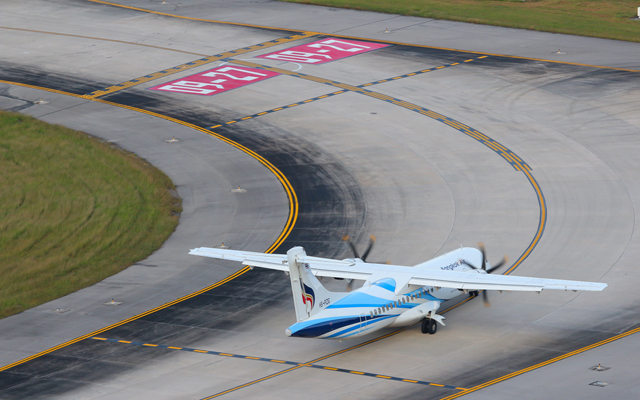
Bangkok Airways' ATR 72-600

Asia-Pacific is becoming a key driver of demand for small aircraft, with strong intra-regional travel patterns alongside the development of smaller, emerging tourist destinations.

“Asia is our biggest market and it’s in this region where we have the biggest growth,” said Jean-Daniel Kosowski, sales director of turboprop aircraft maker ATR on the sidelines of the recent 62nd Assembly of Presidents of the Association of Asia Pacific Airlines in Jeju.

Bangkok Airways’ ATR 72-600

Kosowski shared that Asia-Pacific comprises “a bit over a third” of ATR’s total market; its biggest client is Indonesia’s Lion Air with 100 ATR aircraft, followed by Malaysia with 55, Myanmar 44 and Air New Zealand 28.

TheATR 72-600has up to 78 seats and can fly for up to one hour and 15 minutes, ideal for island countries like Indonesia and the Philippines, home to developing destinations with small runways and nascent infrastructure.

The Asia-Pacific region is also seen as a fast-growing tourism region for Bombardier, according to sales director North Asia Marcel Grauer.

Early this year, Bombardier forecast that Asia-Pacific (excluding greater China) will take delivery of 2,050 small aircraft – 16 per cent of the worldwide market – by 2036, including 1,050 regional aircraft of 50 to 100 seats, and 1,000 single-aisle aircraft of 100 to 150 seats.

Grauer sees growing demand and opportunities for Bombardier aircraft in Japan, Mongolia, South Korea and the Philippines, apart from India.

The Bombardier Q400 aircraft, which has the speed of jets, has more capacity than ATR of up to 86 pax but also consumes more jet fuel.

Meanwhile, ATR ruled out speculation that a 100-seat aircraft in the works, citing the lack of demand for it at the moment. Rather than utilising bigger aircraft, it is promoting greater frequency on smaller aircraft as a way of creating capacity.

“We realise that very often there is a correlation between the number of seats in aircraft and the distance it can fly,” Kosowski explained.

“For example, you have no 56-seat aircraft that can fly 10 hours, no 400-seat aircraft designed for an hour’s flight. A 78-seat aircraft and a flying time of one hour and 15 minutes is a good combination. If you need to carry 100 pax, most of the time it is better to add a second flight,” he said.

Nadda Buranasiri takes helm as AirAsia X’s new group CEO

0
Nadda Buranasiri

AirAsia X Thailand CEO Nadda Buranasiri has assumed the role of AirAsia X Group CEO, as co-group CEOs Kamarudin Meranun and Tony Fernandes are given redesignations as non-executive directors.

Both Kamarudin and Fernandes will continue to oversee the the strategic direction of the business and its operations as directors of AirAsia X.

Nadda Buranasiri

Nadda brings a wealth of experience in a broad range of industries, including senior roles in sales, advertising, banking and the music industry – where he once was the managing director of record label MCA, which later became Universal Music Thailand.

He joined the aviation industry in January 2014 as CEO of AirAsia X Thailand, and was instrumental in helping to set up the airline’s Bangkok-based longhaul operations.

WA banks on Perth flights to kick-start pursuit of Indian tourists

0
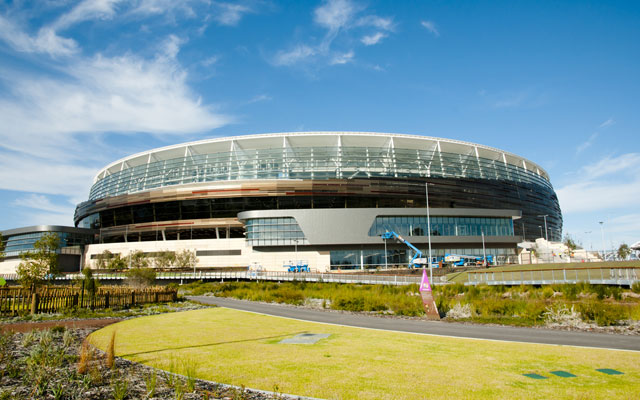
Perth's newest stadium officially opened in January this year, stadium has a capacity of over 60,000 people

The ministry of tourism in Western Australia is planning a multi-million-dollar push in India while seeking to address the lack of direct air connectivity from the country.

In the coming months, Western Australia will roll out a marketing campaign in the Indian market, investing A$300,000 (US$214,284). In the first phase, it is partnering Thomas Cook to market tour packages for the first-ever cricket test match between India and Australia taking place in the brand-new stadium in Perth in December 2018.

Perth’s newest stadium officially opened in January this year; it has has a capacity of over 60,000 people

“In the next three years, there will be a multi-million-dollar investment in the Indian market post the commencement of direct flights to Perth,” minister of tourism, Western Australia, Paul Papalia, said.

During his visit to India last week, he held discussions with airlines as well as Indian minister of state for civil aviation, Jayant Sinha, to push for direct connectivity to Perth.

Indian national carrier, Air India, has agreed to explore the business case for the route.

Papalia: substantial investment in the India to lure more outbound traffic

“We have not marketed Western Australia in India as a tourism destination in the past. Our government is committed to diversify our economy beyond the commodity market. Building the Indian tourism market is a key focus area of this outlook. We are trying for direct connectivity to Perth and project our destination as the western gateway to Australia in the Indian market,” said Papalia.

The tourism minister added that though they are keen on direct flights from key markets like New Delhi and Mumbai, they are open to connectivity from other Indian cities as well.

“We are eyeing four-times weekly flights to begin with. Most of the Indians know about destinations like Sydney, Melbourne and Gold Coast but are unaware about our offerings. We want to present Western Australia for Indian travellers who want an authentic experience,” said Papalia.

As part of its other engagements to grow the Indian market, the ministry has also appointed a specialist to represent its tourism sector at the trade commission office in Mumbai. Presently, Western Australia receives about 28,000 leisure tourists from the Indian market.

NZ urges tourists to act as guardians of its land and environment

0

New Zealand’s tourism industry has come together to launch an initiative inviting visitors to care for its land and environment.

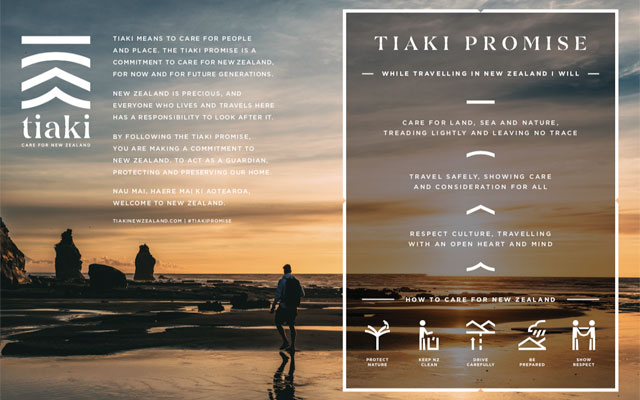
Under the banner of Tiaki – Care for New Zealand, the industry has launched the Tiaki Promise, which actively encourages all visitors to experience New Zealand in a way that keeps them safe, protects the natural environment, respects all cultures and preserves the country for future generations.

New Zealand’s tourism industry has come together to launch this major initiative targeted at inbound travellers

Tourism New Zealand’s chief executive Stephen England-Hall said: “The Tiaki Promise reminds people to travel responsibly as they enjoy what our country has to offer, making it clear what behaviours are expected from putting rubbish in the bin to driving safely and showing care and consideration for all.”

Visitors to New Zealand will learn about the Tiaki Promise before arriving and while travelling around the country. It will be promoted widely by all participating organisations and among the New Zealand tourism industry. Information will initially be available in English, Te Reo Māori, German and Chinese, with more languages to follow.

For now, the Tiaki Promise will be promoted through www.tiakinewzealand.co.nz, www.newzealand.com and on Air New Zealand’s international services. The Tiaki Promise video will also be made available to other international carriers to New Zealand, helping to spread the word to visitors as they embark on their journeys.

Social media support for the campaign will also be mobilised using the #tiakipromise hashtag.

Tiaki – Care for New Zealand is a collaboration between seven key organisations across the public and private sector – Air New Zealand, Tourism New Zealand, the Department of Conservation, Local Government New Zealand, New Zealand Māori Tourism, Tourism Holdings and Tourism Industry Aotearoa.

Tiaki means to care for people and place in New Zealand’s native language Te Reo Māori. The Tiaki Promise draws from indigenous Māori culture and tradition, and the belief that “people and land are one”, to promote responsible tourism.

According to a statement announcing the campaign, the Tiaki Promise symbol reflects the four core domains that shape New Zealand’s environment: Ranginui is the Sky Father, Tāne Mahuta is the Forest, Papatūānuku is Mother Earth and Tangaroa represents the oceans, rivers and lakes.

Black box from Lion Air flight JT610 found

0
Flight data analysis may take months

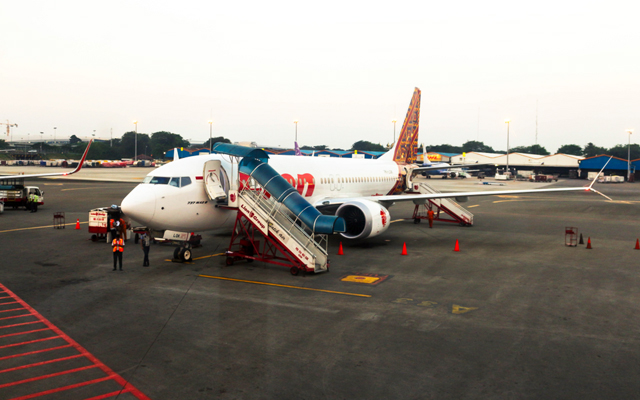
Indonesian divers yesterday found a black box from the Lion Air plane that crashed on Monday, which could be key to unravelling what caused the mishap.

The flight data recorder, recovered in waters off Tanjung Karawang, will be handed over to Indonesia’s transportation safety committee. At press time, the other black box, a cockpit voice recorder, has yet to be found.

Flight data analysis may take months

The head of Indonesia’s national transport safety committee was reported to have said that it could take up to three weeks to download data from the black boxes and up to six months to analyse it.

Flight JT610, heading for Pangkal Pinang, lost contact with ground staff 13 minutes after taking off from Jakarta on Monday.

Flight tracking data available online show what’s been described as “erratic speed and altitude changes” in the minutes prior. However, safety experts cautioned that the data must be checked for accuracy against the plane’s black boxes.

Technical faults on the aircraft were reported a day before the crash, but airline spokespersons said it was cleared to fly on Monday “according to procedure”.

Passengers on the earlier flight from Bali described similar loss in altitude, likening the experience to being “in a roller coaster” as well as what seemed like engine problems before takeoff.

Open Destinations launches Drag & Drop itinerary builder

0

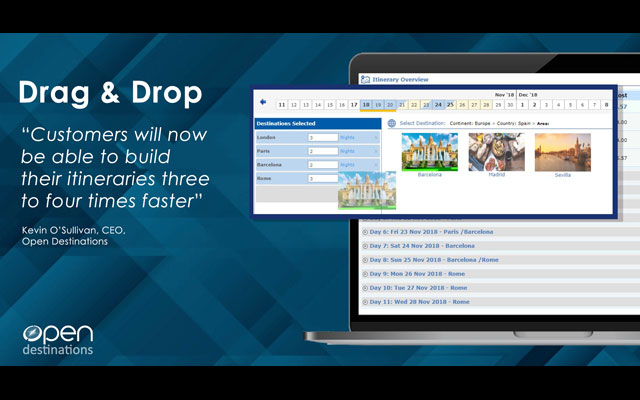
Travel technology provider Open Destinations has added the new Drag & Drop functionality to its reservations platforms, allowing users to more easily build custom itineraries.

Users of Open Destinations’ Travel Studio and Travel Builder platforms can now click, drag and input various trip elements into a template. Elements include start and end dates, flights, transfers, excursions and accommodation.

The reservation software will help users build travel itineraries faster

In addition, users can assign images to each component (e.g. destination), supplier (e.g. Avis) or product type (e.g. five-door 4×4 vehicle) and use Drag & Drop to position them accordingly.

Once a Drag & Drop itinerary has been created, the software’s Document Generator can be used to push it into a number of pre-designed templates which can be saved in various formats (PDF, HTML Word Doc) before being emailed or posted to the end customer.

“Itinerary generation is one of the most widely used processes within Travel Studio and Travel Builder so we’re delighted to introduce Drag & Drop to both speed it up and make it easier,” Open Destinations founder and CEO Kevin O’Sullivan commented.

According to O’Sullivan, this will allow customers to build itineraries “three to four times faster”.

Drag & Drop is the first in a series of itinerary build-focussed features planned for release by Open Destinations over the next six months.

New hotels: Alila Villas Koh Russey, Hong Kong Ocean Park Marriott Hotel and more

0

Hong Kong Ocean Park Marriott Hotel, Hong Kong
The first-ever city resort hotel by the Marriott brand comprises three towers – The Pier Wing, Marina Wing and Club Wing. All the 471 rooms, spread across three categories, are located in The Pier Wing and Marina Wing. The Club Wing houses the executive M Club, which is scheduled to open early next year. Amenities on-site include four restaurants and bars, a large lagoon pool that includes adjacent children’s pools, gym, Harnn Heritage Spa, and the largest pillarless ballroom, measuring 1,200m2, on Hong Kong island.

Alila Villas Koh Russey, Cambodia
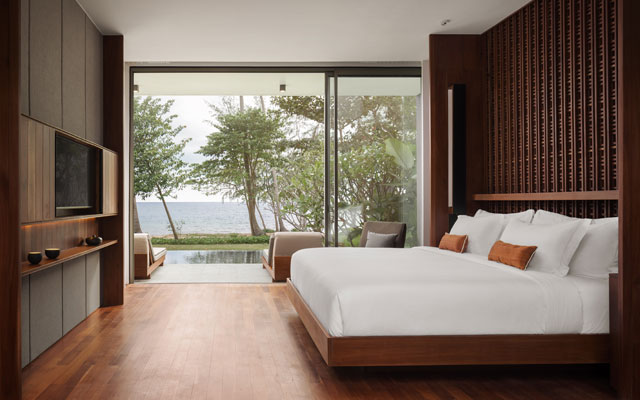
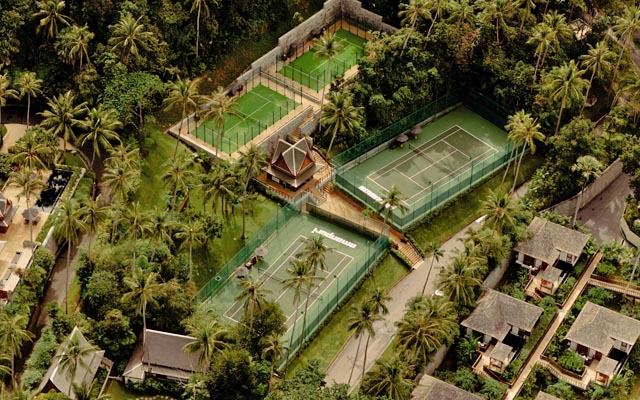
Alila Villas Koh Russey, the brand’s first resort in Cambodia, occupies its own private island in the Koh Rong archipelago with 50 pavilions and 13 villas. There are two restaurants on-site: Horizon, which serves up à la carte breakfast and dinners with an emphasis on French and French fusion fare; and the Beach Shack, offering Khmer cuisine, seafood and light dishes. Other facilities include the beachfront Spa Alila, infinity pool, fitness centre with private yoga room – where complimentary yoga and Tai Chi classes are held daily.

Mӧvenpick Resort Kuredhivaru Maldives, Maldives
Nestled on a private island in the Noonu Atoll, the resort features 72 overwater pool villas, 30 beach pool suites and three beach spa pool residences. All accommodation options include private plunge pool. There will be four restaurants on-site, as well as facilities such as a kids’ club, diving and water sports centre, gym, yoga pavilion, and the Sun Spa by Esthederm.

Hyatt Regency Xuzhou, China
The new hotel is located in the 14 uppermost levels within Xuzhou’s tallest tower, the 266m-tall International Finance Center in the heart of the CBD. There are 344 guestrooms, including 25 suites, four executive suites and a presidential suite. Rooms feature panoramic Yunlong Lake or city views, and come equipped with complimentary Wi-Fi, a coffee machine and a 65-inch Smart TV. There are four F&B options, a 25m-long indoor pool and a fitness centre. Event planners may avail the 2,445m2 of event space on the fifth floor, the largest space being the 1,100m2 Regency Ballroom, or nine meeting rooms for smaller gatherings.

Easing of Dutch travel warning stokes Myanmar’s hopes for European recovery

0
Ngapali Beach in Thandwe, a town in the Rakhine State

Hopes have been raised that European interest in Myanmar will grow after the Dutch government recently softened its safety travel advice.

On October 10, the official Dutch travel safety advice for Myanmar was downgraded to the safest level for main tourist areas, where Yangon, Naypyidaw, Mandalay, Bagan and Inle Lake now feature as green on the map.

Ngapali Beach in Thandwe, a town in the Rakhine State

This brings the country’s safety warnings over Myanmar in line with Singapore, Australia and Europe.

Travel restrictions have also been lifted on Southern Rakhine State, home to Ngapali Beach. On the map, it has shifted from red to yellow. Dutch authorities have also deemed it safe to visit Lashio and Hsipaw, as well as encouraged the use of tourist guides while trekking.

The move has prompted hopes that interest in Myanmar from the Netherlands and other European countries will be rekindled.

Edwin Briels, general manager at Khiri Travel Myanmar, said: “Generally the Dutch market, together with the UK and Scandinavian markets, are the most sensitive (when it comes to) bad publicity about human rights issues. These markets react very hastily and stop travelling (to affected locations) without realising this causes problems locally for individual people who have nothing to do with the situation.”

Sammy Samuels, managing director of Myanmar Shalom Travels, believes the downgrade will lead to an increase in Dutch travellers, while also encouraging other European countries to reinvest in the country.

Said Samuels: “We definitely hope the downgrading will help stimulate growth from other European markets, and that other European embassies based in Yangon will follow this example and actively advocate to their governments and citizens that Myanmar is safe.”

Hla Aye, Union of Myanmar Travel Association chairman, said the country’s tourism industry has suffered from huge dips in European and other longhaul markets this year. He expects it will take at least two years for the trade to recover.

The travel warnings were first put in place following the Rohingya crisis in northern Rakhine State. As of August, Dutch tourist arrivals registered a decrease of 26 per cent as compared with the previous year.

Hotelbeds axes Tourico, GTA brands as integration gets underway

0

Hotelbeds has unveiled a consolidated and refreshed identity as it combines operations under the Hotelbeds name, phasing out the GTA and Tourico Holidays brands that the company acquired last year.

Both Hotelbeds Group and its commercial bedbank brand, Hotelbeds, will both now be branded simply as Hotelbeds to underline the company’s core focus on the bedbank sector, following the sale earlier this year of its destination management division to TUI.

The refreshed Hotelbeds will reflect the core bedbank identity, while the group’s ancillary line will be named Beyond the Bed

The refreshed brand identity for Hotelbeds will be gradually introduced across all of its combined operations over the coming weeks and months, phasing out the GTA and Tourico Holidays brands.

The company has also renamed its ancillary product line, which Hotelbeds commercialises via its distribution channels, as Beyond the Bed. This includes the sourcing and distribution of transfers, activities, tickets, theme parks, car hire, travel insurance and specialist tours.

Joan Vilà, executive chairman, Hotelbeds, said: “The launch of a bold, refreshed identity for Hotelbeds under which we are combining the operations of Hotelbeds, GTA and Tourico Holidays, forms part of our clear strategy and roadmap to combine these top three leading players into one company and redefine the travel distribution landscape for the benefit of our partners.

“Much progress has already been made to integrate the three businesses at a commercial, operational and technological level, with cross-selling and technological solutions already in place,” he added.