TTG Asia
Asia/Singapore Friday, 10th April 2026
Page 1250

Hilton hotels in Singapore do good for brand’s 100th anniversary

0
Trio of Hilton hotels coming together to observe Earth Hour

To celebrate the 100th anniversary of Hilton, three hotels in Singapore managed by the US hospitality group have committed to a year of giving back to the community.

Across the span of the year, more than 260 staff from the three hotels will volunteer over 800 hours through various partnerships with non-profit organisations and volunteer communities.

Trio of Hilton hotels coming together to observe Earth Hour

Conrad Centennial Singapore, Hilton Singapore and Hilton Garden Inn Singapore Serangoon have signed on to champion the initiatives ranging from community outreach to charity fund raising, and driving awareness on caring for the environment, in line with the company’s CSR mandate to reduce the company’s environmental footprint by half and double its social impact.

Efforts included a walkathon-clean up during the recent Earth Hour 2019 in March to raise awareness and drive change for nature. The joint walk started from Hilton Garden Inn Singapore Serangoon to Hilton Singapore and ended at Conrad Centennial Singapore. In addition, all non-essential lights at the three hotels were dimmed for over 100 minutes.

Moreover, 25 team members from Hilton Singapore will conduct a full-day refresh exercise for the home of a low-income family and take part in community activities of clean-ups at parks and beaches in Singapore.

The newest addition to the Hilton family, Hilton Garden Inn Singapore Serangoon, will be celebrating its second anniversary on June 1, 2019 by engaging Krishna’s Kitchen, a local soup kitchen to cook for its team members in return for a token donation that will go towards providing meals for the needy in Singapore.

Celebrating 45 years of TTG Asia: Bringing travel and people to the fore

0

Everything that we know about travel today, from driverless cars to navigating airports with the help of humanoid robots to big data anticipating our travel needs even before we know them, is a far cry from 1974, the year the first issue of TTG Asia was published.

Travel then was hardly the way we know it today. In 1974, Paris’ Charles de Gaulle Airport had just opened as the biggest airport in Europe; air travel was glamorous and people dressed up for their flights; while Bali, Bangkok or Shanghai did not register on travel radars yet.

The ensuing four decades have brought phenomenal changes to the world we live in – technologically, socially and economically. In these 45 years, TTG Asia has also remained at the centre of chronicling industry change, growing and developing into a leading travel trade publication.

As TTG Asia marks 45 years of publication, we’re commemorating this milestone with a special anniversary issue this month. We look at what make the travel and tourism industry great, and what will make it greater, putting the spotlight on how a new generation of leaders, companies and ideas will shape the future of the industry.

But the success of TTG Asia was not built by the company alone but by a community – i.e. you, the readers, whom this magazine was created for. Many industry members, past and present, old and new, for their part in shaping and contributing to the many vital and vibrant conversations over the past 45 years. Not to mention the advertisers who supported the magazine over the years, for without them there would not be a publication at all.

Indeed, it’s been a honour and pleasure to be part of the travel fraternity in Asia, and also be part of the this 45 years of influential and authoritative journalistic effort covering the regional travel trade.

We always felt that we have a role to fill in the Asian travel trade, by bringing the hottest topics in the industry to the fore and to share views that matter. When readers give feedback that the magazine helped them secure a business connection or informed them on a topic that aid them in running the business, it gives us a deep sense of satisfaction and pride.

No one can say for certain what the next 45 years will bring, but what we do know is that the pace of change isn’t slowing. Travel is at the cusp of an exciting, uncertain and fascinating moment in history.

With international tourist arrivals reaching 1.4 billion in 2018, the opportunities and challenges we face as travel business professionals and as citizens of the world have never been more important, more laden with responsibility, more brimming with potential.
We’re excited to be your guide and partner as we chart the future together.

New GM named for Le Méridien Kota Kinabalu

0

Kanit Sangmookda has been appointed as general manager of Le Méridien Kota Kinabalu, following his most recent role as general manager for Le Méridien Jakarta.

Born in Thailand, the hospitality veteran brings with him more than 19 years of experience, having worked in international chain hotels including Marriott International, Minor Hotel Group and former Starwood Hotels and Resorts.

Kanit began his hospitality career as a reservation agent in JW Marriott Hotel Bangkok. He was then appointed as director of revenue management at Bangkok Marriott Resorts & Spa and The Westin Kuala Lumpur, as well as the regional director of revenue management for Starwood Hotels & Resorts – South-east Asia. He then moved to Sabah, where he served as general manager of Four Points by Sheraton Sandakan for nearly three years.

Sands, David Beckham unveil details on Cotai IR’s transformation

0
(L to R) Mr David Beckham, Mr Rob Goldstein and Dr. Wilfred Wong.jpeg

The Sands Cotai Central’s transformation into The Londoner Macao will add new dining and entertainment options, and see the Holiday Inn rebranded into an all-suite hotel with some of the design input of London-loving football star David Beckham.

Las Vegas Sands president and COO Robert Goldstein said: “Sands has invested heavily here because we believe wholeheartedly that Macau’s complete arrival as one of the world’s greatest tourism and business destinations is just on the horizon.”

(From left) David Beckham, Las Vegas Sands’ Rob Goldstein; and Sands China’s Wilfred Wong

Reports say the transformation of Sands Cotai Central is part of the group’s US$2.2 billion of new investment in Macau until 2021.

The new project will open progressively over 2020 and 2021, and revamp has already begun at the Holiday Inn Macao Cotai Central, which will be rebranded into The Londoner Hotel, believed to be an all-suite offer with half the inventory of its 1,200-key predecessor.

At the hotel, celebrity footballer and Sands’ China global brand ambassador David Beckham will work with the interior design team to bring his vision and style to the top floor suites, his first foray into this design field.

Beckham commented: “Interior design is a real passion for me. To be involved in the design process and help shape this project is another important step in our long-standing partnership with Sands Resorts Macao.”

There will be four hotel brands in The Londoner Macao complex: the new The Londoner Hotel, alongside existing properties Conrad Macao, Cotai Central, Sheraton Grand Macao Hotel, Cotai Central and The St Regis Macao, Cotai Central.

Reportedly, the IR’s transformation into The Londoner Cotai will also see the addition of over 15ha of space across hotel, meetings and events, food, retail and entertainment offerings.

Among the over 20 dining options, Sands confirmed in a statement that there will be several new restaurant concepts including a British style gastropub by Gordon Ramsay and a new Thai restaurant – The Mews. In addition,there will be 200 stores at Shoppes at The Londoner (previously Shoppes at Cotai Central), 34,300m2 of meeting and convention space, three spas and four health clubs.

Meanwhile, new entertainment at The Londoner Macao will include a virtual reality experience, British-themed Streetmosphere shows such as the famous Changing of the Guards, and daily retail parades featuring characters from British history, culture and literature.

When completed, the integrated resort will offer a new 6,000-seat arena versatile enough to accommodate events from live entertainment to sporting events and conferences.

The Londoner Macao will also feature recreations of classic British landmarks, such as an exterior facade modelled on the Palace of Westminster and Houses of Parliament and the 96m-tall Elizabeth Tower and clock face.

Professionalism, safety key to Philippines’ pursuit of dive tourists

0
Philippines can leverage on dive tourism, but there are professionalism and safety issues to be addressed; diver in Cebu pictured

Recent market research has outlined the Philippines’ strengths as a diving destination, although there are also professionalism and safety issues that need addressing.

“What gives us the edge in when you dive in the Philippines, you dive with the community,” said Kristoffer Li, consultant at Frost & Sullivan, which did the six-month study.

Philippines can and should leverage on dive tourism, but there are professionalism and safety issues to be addressed; diver in Cebu pictured

Another strength is the hospitality and English language proficiency of many Filipinos. “That’s not something you can (as easily) find in, say, Indonesia or Malaysia,” Li remarked on the sidelines of Messe Berlin’s Travel Meet Asia forum.

In terms of tourist perception, however, the Philippines is still lagging far behind Indonesia despite both having comparable dive sites.

A key difference is that Indonesia’s dive professionals or dive masters are more professionally trained, according to Li.

“In Indonesia, when you ask the dive guide what critters you will see, they’re very confident in their reply and will give you a checklist. Whereas in the Philippines, the dive master will say, ‘we’ll see,’” Li remarked.

Safety is also an issue due to the “institutional disconnect” between the Philippine Commission on Sports Scuba Diving (PCSSD) – which formulates rules, regulations, safety standards and operating procedures – and the local government units (LGUs) that approve the business permit.

It’s possible that operators who fail to meet the standards of PCSSD can still obtain a business permit from LGUs.

Maya Bay closure extended for another two years

0
XXXX

Thailand’s Department of National Parks, Wildlife and Plant Conservation (DNP) will extend the closure of Maya Bay for at least another two years.

The destination popularised by Hollywood movie The Beach was closed for ecological recovery last June, and is now scheduled to reopen from 2021 onwards.

Maya Bay (pictured) will be closed for at least another two years

DNP is implementing measures to minimise the environmental impact of tourism, as well as build facilities such as nature study trails, a dock for tourist boats and housing for officials.

An e-ticket system and a vessel monitoring system are also expected to improve tourist management.

The new facilities and systems would be trialed to assess their impact on the environment before authorities make a decision on whether and when to reopen Maya Bay for tourism.

Other islands in the Hat Noppharat Thara-Mu Koh Phi Phi National Park will remain open to tourists.

IHG extends footprint in Malaysia with latest Holiday Inn signing

0
A rendering of the upcoming property

InterContinental Hotels Group (IHG) has signed a management agreement with City Motors Group for a Holiday Inn in Bangsar, Kuala Lumpur.

Slated to open in 2023, Holiday Inn Kuala Lumpur Bangsar will feature 220 rooms, an outdoor swimming pool, gym and six meeting rooms – the largest of which will hold approximately 400 people. IHG also plans to incorporate the Holiday Inn Open Lobby concept, which will combine public facilities within a single, open cohesive space.

A rendering of the upcoming property

Located at Jalan Maarof and Jalan Bangsar, the hotel will stand 350m from the Bangsar LRT station, which is close to key destinations within Kuala Lumpur, including KLCC, Chinatown and Bukit Bintang.

Holiday Inn Kuala Lumpur Bangsar will be the fourth IHG property in the Malaysian capital. In total, the hospitality giant has five hotels operating across four brands in Malaysia, with a further 10 in the development pipeline.

Sabre strengthens presence in India with appointment of MD

0

Sabre Corporation has appointed Jaya Kumar K as vice president & managing director for Sabre Global Development Center in Bangalore.

In his role, Kumar will be responsible for propelling the centre’s innovation capabilities, as well as attracting key talent to deliver cutting-edge technology solutions.

Kamar joins Sabre from Walmart, where he was managing director and vice president, global technology services, where he grew Walmart Labs India significantly, and established Centers of Excellences for analytics across e-commerce and in-store technologies.

Prior to that, Jaya also co-founded and built Neta, a pioneering data mining tool.

Established in 2005, the Global Development Center in Bangalore has been driving innovation for Sabre’s global customer base of over 425,000 travel agents, 350 airline partners and 40,000 hotel properties.

New hotels: Jetwing Surf, Sri Lanka; Mason, Thailand; and more

0

Jetwing Surf, Sri Lanka
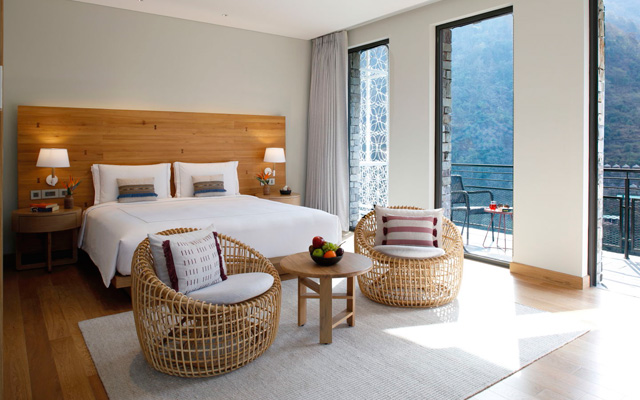
The newest addition to the Jetwing family of hotels is tucked away at Pottuvil Point along the east coast of Sri Lanka. The property comprises 20 luxurious cabanas, all of which come equipped with modern amenities such as king-sized beds, Wi-Fi, an espresso machine, and a hot and cold indoor and outdoor shower. There is also an infinity pool by the sea, a pool bar and a restaurant.

Jetwing Surf also organises twice-daily boat safaris to the Pottuvil lagoon, and occasional visits to the Uraniya river, where wildlife can be found in abundance. For more wildlife experiences, located an hour’s drive from the property are the Kumana National Park and Gal Oya National Park.

Mason, Thailand
Set on 150m of Pattaya’s Na Jomtien Beach is the recently-opened Mason, a five-star property offering only pool villas. There are 35 villas in total, across five categories from the lead-in 90m2 Garden Pool Villa to the two-bedroom, 180m2 Double Grand Pool Villa. Aside from in-villa pools, there are also two other swimming pools (one for the kids) alongside facilities such as three F&B venues, a spa, fitness studio, and a sun deck on the beach that can be accessed via a private beach entrance.

voco Kirkton Park Hunter Valley, Australia
The second voco-branded hotel in Australia has opened, following a rebranding of the 28ha Kirkton Park, one of Hunter Valley’s most prestigious estates. The hotel’s 70 rooms have undergone a voco refresh, including upgrades to luxury Aveda amenities, high speed Wi-Fi, and duvets made from recyclable plastics.

There are two F&B venues on-site – Locavore Dining and Epoche Lounge Bar provide lunch and dinner, while The Conservatory offers a high-tea experience overlooking the rose garden. Guests will also be able to enjoy other facilities including tennis courts, a billiards room, an indoor heated pool, sauna and spa, and gym.

Artotel Wahid Hasyim – Jakarta, Indonesia
The Indonesia-based Artotel Group has opened the Artotel Wahid Hasyim – Jakarta, its second property in the capital city. The hotel has 122 rooms starting from 20m2, all of which were decorated by five emerging local artists. Facilities include MeetSpace, an event space for up to 50 people; Artspace, an art gallery for the local artist community and a mandatory fixture at Artotel properties; and the 24-hour Bang Bang Restaurant & Bar.

Vision for the future 45 views

0
Alan Watts

1. Alan Watts
President, Asia-Pacific, Hilton
With today’s rapid shift towards personalisation in digital and offline spaces, consumers expect targeted, tailored products and services from brands. Digital innovation is hence vital in driving customer acquisition and brand loyalty, particularly in travel and hospitality.

Linh Le

2. Linh Le
CEO and founder, ASIA DMC
Currently, knowledge and local relationships with DMCs are taken for granted by the masses.

I would like to see more travel companies put value in their knowledge and expertise and commoditise them. Customers should be educated to understand that piecing together great itineraries is truly a craft.

Budi Tirtawisata

3.
President director, Panorama Group
Many countries of the world are already gradually easing visa restrictions and removing barriers to travel. This moves us closer to barrier-free tourism which will stimulate more travel, and positively impact economic growth and people empowerment through tourism. If we believe travel is a basic human right, there should be effortless access for everybody to experience the world.

Mamoru Kobori

4. Mamoru Kobori
Executive vice president, Japan National Tourism Organization
Japan’s potential for inbound tourism is huge, and I am excited about the Japan National Tourism Organization’s role in enticing more foreign travellers to Japan.

We are contributing to a positive and exciting future through economic growth, regional revitalisation, promoting cross-cultural understanding, and promoting the power of the Japan brand.

John O’Sullivan

5. John O’Sullivan
Managing director, Tourism Australia
I am really excited about the tourism opportunities for Australia, particularly in markets across Asia. In late 2018, we launched our new A$10 million (US$7 million) UnDiscover Australia campaign across South and South-east Asia, targeting high-value travellers and challenging their perceptions of Australia by showcasing unusual, unfamiliar and unexpected attractions and experiences.

Gerald Hendrick

6. Gerald Hendrick  
General manager, Bintan Lagoon Resort and senior vice president, Resort Venture
Being nimble and flexible are keys to enhancing productivity and guest satisfaction. The world is in a constant state of change and new competitors are on the rise, so we need to be ready and ahead of the game. We must continuously evolve to respond to customers’ needs and wants.

Edward Goh

7. Edward Goh
Vice president, commercial strategy, Hong Kong, Disneyland Resort
I am thrilled to imagine the possibilities of multi-sensory Disney experiences enhanced by innovative technology, bringing the magic of Disney’s stories and characters to life. I am excited about how the juxtaposition of cutting-edge high-tech attractions with all-time classics within the park can build a unique entertainment experience that appeals across cultures, ages and backgrounds.

Subhash Goyal

8. Subhash Goyal
Chairman, STIC Travel Group
It is difficult to imagine how travel would be in the next 45 years because so many innovations are taking place across the globe.

In the next 10 to 15 years, we may be seeing driverless cars on the roads and remote-controlled aeroplanes in the air. I can also imagine a world with more virtual travel. I hope by then, there will be space travel, and there will be tours organised to the moon and other planets.

Lindsey Ueberroth

9. Lindsey Ueberroth
CEO, Preferred Hotels & Resorts
I envision the travel market to be larger than ever before, and technology will allow us to make travel personal and seamless, although I believe there will be a boomerang back to people-driven service and experiences. I hope travel is made easier with less red tape on visas, easier airlift to more remote destinations, as well as fast and seamless security regardless of how you are travelling.

Chin Sak Hin

10. Chin Sak Hin
Assistant chief executive, Sentosa Development Corporation
With travellers becoming more digitally savvy, they will be more discerning. Travel will be even more accessible and efficient. It is therefore important we continue to develop new technologies to unlock more opportunities to connect communities around
the world.

Anthony Lim

11. Anthony Lim
Managing director, Insight Vacations, Asia
I hope the industry will start to dedicate more resources to cater to the needs of customers seeking exclusive, experience-led holidays. The increasing demand by Asian travellers for luxury holidays shows there is a growing segment of affluent customers who are willing to pay for quality holidays.

Dileep Mudadeniya

12. Dileep Mudadeniya
Vice president/head of brand marketing, Cinnamon Hotels & Resorts
The oldest millennial will be 80 years in another 45 years. Will the world be covered with war, making travel impossible? Or will it be a super peaceful place which will allow everyone to embrace the development of technology for travelling? Your guess is good as mine!

Mieke De Schepper

Mieke De Schepper
Executive vice president, online travel companies and managing director Asia-Pacific, Amadeus
As a traveller, I long for the day that travel is truly personalised – hours saved searching, queueing and sifting through different documents. Thankfully, it’s not too far away. Increasingly, travellers want a personalised experience.

Therefore, companies that want to succeed must anticipate these needs, understand previous challenges, and proactively address these challenges using data, analytics and business intelligence.

Felix Loh

14. Felix Loh
CEO, Gardens by the Bay
A new generation of travellers expects companies to demonstrate their commitment toward the environment. Sustainability beyond financial numbers should be embraced as a way of doing business – the future of the travel sector lies in companies making decisions that result in environmental and social benefits.

Musa Yusof

15. Musa Yusof
Director-general, Tourism Malaysia
Greater cooperation among industry players is vital for growth of our tourism industry and to stay ahead of competition. We hope to maximise integrated marketing and promotion campaigns with other government agencies, and to have smart partnerships with more international airlines and the private sector.

Dean Schreiber

16. Dean Schreiber
Managing director, Asia-Pacific, Oakwood
Smart home technology is increasingly being integrated into the way of people’s lives at home.

As a natural extension, incorporating smart home technology into our future residences will definitely be the way forward. And when we layer on the personal touches, such as having your favourite Netflix programmes or the resident butler coming around with a turn-down of your usual nightcap, this vision to customise the in-room guest experience becomes encompassing, because we know that every apartment is unique to the guest and not just a cookie-cutter of brand standards.

Peter Kerkar

17. Peter Kerkar
Group CEO, Cox & Kings
What excites me about the future is that people have understood there is a need to preserve the environment and travel responsibly, and this has led to an increase in sustainable tourism.

As well, the talk of technology playing an empowering role in customer satisfaction will mean greater understanding of customer needs as the industry seeks to provide travellers a seamless experience.

Agustinus Pake Seko

18. Agustinus Pake Seko
President director, Bayu Buana Travel Services
Travelling to space and diving in the deep sea will be affordable and available to the masses. Flying hours between continents will be much shorter. There will be no more brochures as all information will be available using virtual reality. Digital applications will be how we book and pay for travel, and we may not be using devices but have apps installed in our bodies!

Thatcher Brown

19. Thatcher Brown
President, Dream Cruises
I get excited that the way we interact with the world is evolving so quickly. The rapid advances in artificial intelligence and data science is mind-boggling. This requires us to constantly redesign our offerings to be more relevant and thoughtful. Delivering a better experience through new technologies and connecting people in memorable, meaningful ways inspires.

Jenni Martin

20. Jenni Martin
Head of South and South-east Asia, Air New Zealand
Technology will continue to be a huge driving force behind the travel industry. Sustainability will also be a major focus as consumers become increasingly environmentally and socially conscious, and expect companies to play their part.

Mahesh Iyer

21. Mahesh Iyer
CEO, Thomas Cook India
Today’s travellers – especially the millennials – want to experience the world in a way that none of the previous generations have before.

With the growing appetite for diverse experiences, my hope is to see “responsible tourism” coming to the fore both across individuals and organisations. As leaders, we have a clear responsibility to ensure tourism’s rich and vibrant heritage and legacy is passed on to future generations. Hence, care and empathy for our planet and its diverse ecosystem is mission critical.

Jennifer Cronin

22. Jennifer Cronin
President, Wharf Hotels
We should celebrate the pride and joy in our future hoteliers in their role as facilitators to connect and protect our global village.

Our service should not be just to the guest but to our community and a sustainable future. Sharing and enabling our guest travel experiences where they are able to explore and immerse in a myriad of cultures, so as to create a greater awareness and understanding of each other. At the same time, our global citizens must demand and commit to sustainable travel practices, so that together we can all make a positive difference.

Arthur Kiong

23. Arthur Kiong
CEO, Far East Hospitality
Technology has enhanced the travel experience and will continue to in the next 45 years. Trains, planes and ships will still exist, except they will travel faster, further and cleaner. Immigration queues at airports will remain except they are not checking for liquids but scanning data to analyse travellers’ intentions and behaviours.

However, the fundamental element of the travel industry – the human touch – will remain irreplaceable, even 45 years later. As human beings, we will still appreciate being recognised by name, and being treated with kindness and compassion by another human being.

Ho Kwon Ping

24. Ho Kwon Ping
Executive chairman, Banyan Tree Holdings
What is most exciting about the future is a long-term, sustainable trend towards what I call ‘rainbow tourism’, where people of all races, religions, languages and income levels will be travelling in numbers never thought conceivable. The hunger for new places, experiencing new cultures, food and lifestyles, and the beauty of an unspoilt world will only grow. The talents working in this industry will also no longer have gender or racial biases.

Michael Issenberg

25. Michael Issenberg
CEO Asia-Pacific, Accor
I would like to see the opening up of borders that would make it easier for people to travel internationally. Opening up borders, of course, means we have to be more mindful of security, but new technologies such as biometric identification, facial recognition software and big data are making it easier to reduce administrative barriers and share information across countries.

As millions of people in Asia reach middle-class status and look to explore the world, more liberal visa entry and investments in airports and infrastructure will ensure further growth in the tourism industry.

Jane Sun

26. Jane Sun
CEO, Ctrip.com
I am excited for the future because the potential in travel is endless, and I truly believe travel is the key to invigorating mutual understanding, peace and prosperity. The future will bring many technological advancements – at Ctrip we are focused on AI, big data and cloud computing. I believe that travel is key to mutual growth in the world and we can contribute using these various technologies.

Angie Stephen

27. Angie Stephen
Managing director for Asia-Pacific, Royal Caribbean Cruises
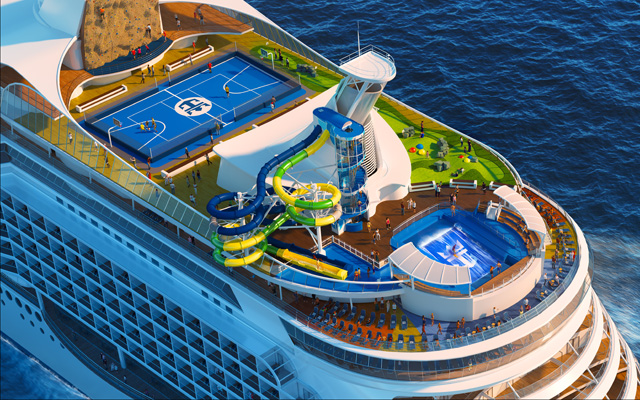
Cruising is one of the fastest growing sectors in travel, and I expect the upward trend to continue as we see smart ships, equipped with innovative features, easily rival even the finest land-based counterparts.

Sustainability of travel will continue to dominate conversations, especially with the proliferation of larger ships. Royal Caribbean has a range of initiatives to ensure that our ships operate in the most environmentally sustainable way, from the introduction of liquefied natural gas on our Icon Class ships to using advanced emissions purification systems.

Mary Wan Mering

28. Mary Wan Mering
Director corporate services, Sarawak Tourism Board
The payments industry is rapidly transforming and impacting travel. With improved technology, the payment choices have expanded to include options like MobilePay and PayPal, and many more options will come. It is just a matter of time before acceptance rates improve in all markets and the use of these new payment methods will not be limited to one’s financial status.

Mark Meehan

29. Mark Meehan
Managing director, Asia-Pacific, Middle East & Africa, Travelport
The rate of change in our industry is astonishing. I’m particularly excited about how technologies like cloud, blockchain, augmented reality and artificial intelligence, and channels like social media, will continue to transform the travel experience.

As we sit at the heart of the fourth industrial revolution, we see new examples of how advanced technologies are blurring the lines between the physical, digital, and biological spheres, and opening up powerful new possibilities capable of disrupting entire industries.

With the pace of change occurring at unprecedented levels, in 45 years I expect the way we buy, manage and experience travel to be almost unrecognisable from today.

Willem Niemeijer

30. Willem Niemeijer

Founder, Khiri and Yaana Ventures
I love that the travel industry is becoming a more responsible global citizen. The Phuket Hotel Association has banned plastic bottles from its properties; others no longer use plastic straws.

On the seas, Royal Caribbean Cruises has partnered WWF to reduce carbon emissions and support marine conservation. Increasingly, and rightly, certification by GSTC-approved environmental auditors such as Travelife, will become compulsory for DMCs and hotels serving European tour operators.

Keith Tan

31. Keith Tan
Chief executive, Singapore Tourism Board
I would love for the industry to use data in a smarter way. Do  attractions know who their key audience and visitors are? Or do hotels know the behaviours of their clients? We are not quite seeing that yet in Singapore, so we want to push this out more – the discipline of collecting and thinking hard about using data to make smarter business decisions.

Second, we want to promote a lot more sharing of insights across different parts of the tourism sector in Singapore. Attractions should ask, “can we create a twin package with another attraction?” If more attractions share insights, maybe they can create more interesting and value-added packages for visitors.

Douglas Martell

32. Douglas Martell
President & CEO, Onyx Hospitality Group
We are excited about the next few years with a lot of innovation coming up in the industry. We need to look at opportunities for personalisation which is key.

As guests become more environmentally conscious, a big part of our focus is to make sure we too become more environmentally conscious. Hotel spaces are evolving as well. Guests want to see softer designs that bring the outdoors in. While at the hotel, they want to work in a more relaxed environment, with communal workspaces provided.

Song Hoi-see

33. Song Hoi-see
Founder and CEO, Plaza Premium Group
As modern travellers’ expectations of airports continue to rise, airport experiences will increasingly be digitised. Technological advancements will provide instant access to everything travellers need. As air travel skyrockets in the next 45 years, mega air hubs and transit travel will continue to grow. Airports will become mini cities and destinations themselves. Sustainability is the future; the health and well-being of travellers and our planet will be at the heart of what we create.

KL Tan

34. KL Tan
President, The Malaysian Association of Tour and Travel Agents
In the next 45 years, the transportation system will be much more advanced and convenient.Travel between countries will be seamless, on time, comfortable, cheap and scenic. Driverless vehicles will be the norm with electric vehicles replacing conventional cars, while air travel will become much cheaper and quicker.

Tourists will also be much more passionate about environmental concerns and sustainability issues, and will want
to travel in a more responsible manner.

Olivier Berrivin

35. Olivier Berrivin
Managing director, International Operations-Asia, Best Western
The medical tourism sector has strong potential for mixed-use hotels. Global demand is shifting due to an ageing population with spending power. Asian countries like Thailand, Malaysia and Singapore are seeing increasing numbers of medical tourists, with growth rates of up to 14 per cent year-on-year.

Marketing strategies can be created to combine medical services with other local activities and attractive family leisure packages. Senior and assisted-living facilities will play an important role in promoting the sector, particularly in Thailand, which doesn’t yet have the infrastructure to cope with such demand.

Calvin Ho

36. Calvin Ho
Senior general manager, Sunway Theme Parks
Travel will be very different. Air travel will be faster, cheaper and more comfortable. Transportation will not be dependent on fossil fuel but be more “green”. Young people will go on holidays to broaden their minds and have fun at the same time. They will be more environmentally and community conscious. They will want to be associated with something good at the destination and partake in projects that can make a positive impact in the local communities. Travellers will want to travel to destinations that are green and environmentally sustainable.

Markland Blaiklock

37. Markland Blaiklock
Deputy CEO, Centara Hotels & Resorts
These significant trends will shape our business. First, travel and work life will be inseparable.

Second, robotics and artificial intelligence will impact every industry. Travellers will continue to demand a seamless and personalised experience from check-in to check-out. I envision the connected-hotel experience rooted in the Internet of Things. The future of hospitality will be an ecosystem of seamlessly integrated, digitally-connected products that are personalised and aimed at delivering emotional experiences. Connected technology and wearable devices will allow hotel staff to collaborate, operate and multi-task in real time.

Finally, delivering an emotional experience will be the ultimate goal of hotels. Even though technology plays a big part in our lives, guests will search for authenticity and human interaction.

Larry Lo

38. Larry Lo
CEO, Asia, Westminster Travel
The travel industry has evolved with technology. Information search and travel bookings are done through travel apps and price comparison websites with highly transparent information. This can be a challenge for the travel agent sector since personal service may be diminished. But we believe human interaction and innovative technology can co-exist and evolve together in the travel sector.

Steve Odell

39. Steve Odell
Senior vice president and managing director Asia-Pacific, Norwegian Cruise Line Holdings
The environmental footprint of cruise lines is something we are very conscious of are adapting to everyday. It’s the biggest responsibility and biggest challenge at the same time.

Alongside that is overtourism. How can we be friendly operators in a world that is getting more crowded? We’re looking at how we do not crowd the same places tourists are going, and do things differently.

Ohn Maung

40. Ohn Maung
Minister of hotels and tourism, Myanmar
Although Myanmar Tourism Industry has had a remarkable achievement developing all regions in Myanmar, we need sustainable tourism development to protect our natural and cultural treasures.

The introduction of e-marketing has almost instantly has changed our industry. We should now focus on the actual travel experience, look for opportunities for local communities to earn tourism income year-round, and foster mutual understanding of different cultures.

Jaime Bautista

41. Jaime Bautista
COO and president, Philippine Airlines
We need a revolution in airport infrastructure. The global shortage of airport slots and runway capacity, affecting key airports in important markets, will impede airline growth and air travel.

I believe airlines have made great progress in building networks and innovating services, but to win the future, we need more runways, more terminals and more efficient airport infrastructure.

Luis Riu

42. Luis Riu
CEO, Riu Hotels & Resorts
Riu has been in the business for over 65 years and in this time, there have been major changes in the way guests gather and share information, book and experience a destination. We have always made an effort to learn from our clients and be ahead of their wishes and needs. It is always a great challenge but also very gratifying as you can see in the face of your guests if you’ve taken the right decisions.

Cinn Tan

43. Cinn Tan,
Chief sales & marketing officer, Pan Pacific Hotels Group
The future will be characterised by highly-personalised and streamlined travel experiences powered by artificial intelligence, which will become an indispensable tool for travel. Machine learning will transform the modern traveller experience, as technology interacts with guests throughout the entire customer journey. More travellers will welcome sustainability efforts in the future and actively seek out experiences that resonate with their personal values.

Angeline Tang

44. Angeline Tang
Regional director – leisure travel & partnerships Asia, Avis Budget Group
Mobility is going through an exciting shift right now, as consumers want more on-demand services. In 45 years, I predict only sustainable vehicles on the road. Fully connected, cleaner and more intuitive mobility will enable leisure and business travellers complete control across multiple modes of transport – perhaps from a self-driving pod to a flying car.

Johanes Widjaja

45. Johanes Widjaja
President director, Santika Indonesia Hotels and Resorts
We are excited about the improvement in the national infrastructure. In Jakarta alone, mass rapid trains are operating, improving mobility for residents. Other project such as the Trans Java Highway, Trans-Sulawesi Highway and Trans-Sumatra Highway are also in progress, and these infrastructure developments enable travellers to reach new and exotic destinations across the country.