China’s online hotel reservation market continues to grow rapidly, with huge potential in the rise of online rates as compared to developed markets such as Europe, the US and Japan, according to the latest research from Trustdata’s Mobile Big Data Monitoring service.
Monthly active users reached 100 million in 2Q, while room nights reserved in 1H were up 20 per cent year-on-year, based on data from the report.
China’s online hotel reservation market continues to grow rapidly, with Meituan the forerunner in terms of room nights reserved in 1H2019
China’s per capita GDP is expected to exceed US$10,000 in 2019, accelerating the increase of new tourists and boosting the demand for hotel reservations.
The report also showed that the age composition of Chinese online hotel reservation users has changed, with post-90s and post-00s becoming the main consumers, while the potential for post-2000s are huge.
Young users born in the 1990s and 2000s, who carry less financial burdens and have strong willingness to spend online are driving the growth of online hotel reservations.
It added that young users’ needs and scenarios for online hotel reservations are becoming increasingly diversified and personalised.
Online hotel reservations have continued to penetrate in country-level markets in 1H2019, with “small town areas” registering multiple growth and 70 per cent of new users from third- and lower-tier cities.
Other performance insights from the report include:
In 1H2019, Meituan led the industry in terms of room nights reserved, accounting for 47.3 per cent of the market, more than the total share of Ctrip, Qunar and eLong combined. Coming in second place is traditional OTA Ctrip.
Meituan and Fliggy led the industry in terms of the number of young users, with post-90s and post-00s accounting for more than 50 per cent of users.
Ctrip ranked first in user retention, while Tongcheng-eLong and Meituan ranked second and third.
Qunar ranked first in terms of daily opens, followed by Tongcheng-eLong and Meituan.
OTA players around the world form a four-pole competitive landscape, and leisure travel is the key area of battle. Similar to Expedia, Ctrip has been developing for 20 years and focusing on business travel. Meituan, though young, is similar to Booking in nature, focusing mainly on the leisure and vacation market.
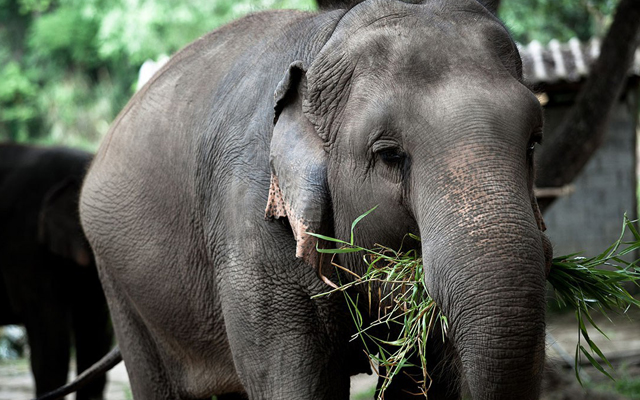
Elephant tourism in Thailand continues to undergo some disapproval and there’s been a call for all captive elephants to be released into the wild. While such suggestions may be made with the best intentions, and maybe commendable, how valid are they?
“In an ideal world, all elephants would be free in nature. However, due to human population increases and habitat destruction, the reality is there is not enough appropriate habitat to support current wild populations of Asian elephants, let alone reintroduce the existing population – upwards of 15,000 in Asia – of captive elephants.
TAT: proper measures should be taken to better handle elephant tourism in a sensible way
“Furthermore, it is a complex process to reintroduce captive elephants back into the wild. In addition to the lack of habitat, released captive born elephants can increase the human-elephant conflict, as they are used to interacting with and are not afraid of humans. Additionally, captive elephants may carry diseases that, if contact is allowed, can potentially spread to wild populations.
“Captive elements can serve as a means of maintaining important populations as ‘insurance’ against environmental or human-caused changes. Up-close and personal contact with captive elephants, especially when accompanied by educational materials, can also help inspire the public to care for elephants and their habitats.”
That’s the answer provided to the questions “Should all elephants be free?” and “Can captive elephants be reintroduced into the wild?” on the ACEWG website (www.acewg.org) in a section dedicated to FAQs on elephants in tourism.
The group was formed in 2015 by a group of elephant specialists, veterinarians, researchers, camp managers and conservationists to address the situation for elephants in the tourism industry in South-east Asia. It recognises the urgent need to create more awareness about and address both the problems and the possible solutions.
But this needs to be done with more research “to scientifically guide the development of protocols to appropriately address welfare concerns and to further improve management systems.”
Boycotting elephant tourism is not the answer, ACEWG insists and it’s not alone in this stance. This approach, it says, can often have a reverse effect and do more damage than good. It can undermine elephant camps that are behaving responsibly and providing good welfare to their mahouts and elephants.
ACEWG is behind an ambitious new audit programme that, to gain certification, requires elephant camp operators to submit to detailed, regular inspections on everything from the elephants’ diet and medical care to training and salaries for mahouts.
The group’s FAQs on elephants in tourism touches on various issues. The use of what’s called a bull hook or hook, for example. Consisting of a stick with a curved hook at the end, this is used to guide an elephant and also allows the mahout to get an elephant’s attention in an emergency or potentially dangerous situation in which the animal may panic. When elephants and humans are in a close and unrestricted contact scenario, the bull hook serves the purpose of ensuring safety for both. It is simply too dangerous to not have a bull hook present and at hand in case of an emergency.
The bull hook can, however, be misused or used purely to punish. Mahouts must be trained properly, so they are capable and confident in their ability to safely handle an elephant.
Another point that’s consistently raised is the chaining of elephants. This is an important part of managing elephants in a traditional hands-on system in South-east Asia where cement or steel structures are very expensive and financially not viable. Chains are the simplest and safest tool to keep these large animals to a specific area. They are a safe and quick way of control if needed and are also used to safely restrain an elephant during husbandry and veterinary procedures.
Again, as with the bull hook, chains must be used properly and appropriately to avoid injury. A sufficient length to a chain allows an elephant to interact with other elephants but also to find space alone should it want to. Using a long chain to tether an elephant at night rather than fencing it in means the animal can be moved more easily between fresh browse areas. Still, elephants shouldn’t be kept on chains for prolonged periods; they also need to have free movement.
Elephants are sometimes seen swaying back and forth, giving off the appearance of “dancing”. This is not necessarily a sign of distress. It is a behaviour known as stereotypy, which develops in response to conditions that restrict normal behaviour and which could include a barren environment, scheduled or restricted feedings or frustration.
On the other hand, there is also certain behaviour that can be related to happiness. Exploratory or playful behaviour is a good sign that an elephant has good welfare. Look for elephants that touch and comfort each other, engage in play during bath time, care for their calves, and vocalise a variety of greetings.
Elephant performances, if done properly using positive training techniques, are not bad for elephants. Ethical, well-managed and properly scripted animal presentations can have benefits for the animal’s health as they provide a form of exercise and mental stimulation. There are certain activities or “tricks” that elephants should not be allowed to do, such as walking on hind legs or sitting upright as this isn’t only unnatural behaviour but can negatively affect the animal’s wellbeing and physical health.
The amount of walking a wild elephant does each day depends on the quality of their habitat. Elephants in captivity are usually provided adequate food and water, and may not walk much if they don’t have to. Thus, it is important they are provided ways to exercise daily, like participating in trekking or other activities, for their physical well-being as well as to alleviate boredom and reduce aggression.
As to how much weight an elephant can carry on its back, if the working hours are limited and terrain is suitable, two people in a saddle – which is less than 10 per cent of the elephant’s body weight – will not be an undue stressor for the animal. A saddle should be properly cushioned and not apply pressure to the spine.
Common health problems of elephants are often linked to poor husbandry with injuries from poorly fitting saddles, pressure sores, arthritis and feet problems like nail cracks and wounds from the overuse or incorrect use of the bull hook being clear indicators of poor management.
The launch of The Kayana Beach Lombok last week not only ushered in a new hotel brand onto the island, it also reflected the strides the destination has made in its recovery since the devastating earthquake last year.
North Lombok regent Najmul Akhyar said the opening of the hotel was in line with the regency’s North Lombok Revives programme. “The people in North Lombok are very enthusiastic about (the island) getting back on its feet again. Tourism is the biggest potential and the top of the (economic) pyramid of the regency,” he said.
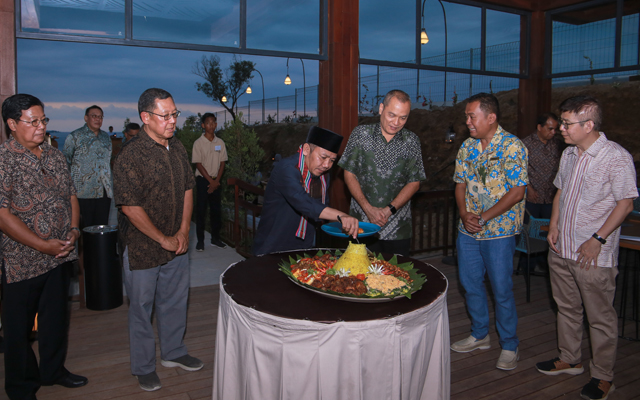
North Lombok regent Najmul Akhyar cuts a nasi tumpeng (a traditional cone-shaped rice dish with assorted side dishes) to officiate the opening of The Kayana Beach Lombok, while management from Santika Hotels & Resorts and Kompas Gramedia Group look on
“When tourism progresses, the other sectors supporting it, such as farming and fishery, will also grow,” he said, adding that the new Lombok resort is aiding the development of the island through its recruitment of locals as staff.
A boutique villa under Santika Indonesia Hotels & Resorts’ The Royal Collection category, The Kayana Beach Lombok boasts 32 one-bedroom villas, each with its own pool and sundeck.
Situated on the island’s main tourist strip Jalan Senggigi, the all-villa resort boasts stunning views of the Lombok Strait and is merely minutes away by boat from popular snorkelling spots.
The hilltop Blues Restaurant offers a good vantage point to take in sunset views of Bali’s Mount Agung and the three famous Gilis – Gili Trawangan, Meno and Air – which are a 15-minute boat ride away from the villa.
The Lombok property is second to open under The Kayana brand, after The Kayana Seminyak – Bali, and the fourth property under Santika Indonesia’s The Royal Collection, which includes The Samaya Seminyak – Bali, The Samaya Ubud – Bali and The Kayana Seminyak – Bali.
The 12th edition of Grand Prix Season Singapore (GPSS) returns from September 13 to 22 this year with exclusive race-themed lifestyle experiences that extend beyond the track.
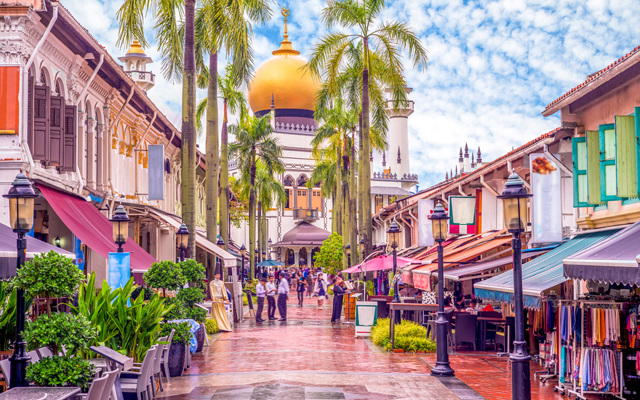
This year’s Singapore Grand Prix will feature precinct parties at four locations across the island state, including Kampong Glam (pictured)
For the first time, GPSS will include precinct parties at four locations in Singapore – Orchard Road, Clarke Quay, Kampong Glam and Jewel Changi Airport. Each precinct party will feature a curated line-up of offerings to give both locals and visitors the opportunity to experience the unique characteristics of each location.Visitors looking to soak up some local music can head to the Kampong Glam precinct to catch a showdown between Singapore’s best buskers in the Glam Voice! competition. Families can hop over to Jewel Changi Airport to indulge in kid-friendly activities that include virtual reality and remote-control racing games.
Over at Orchard Road, visitors can enjoy some Singaporean retail and dining experiences, as well as watch the shopping belt come alive with live performances on the rooftop of Design Orchard. Nightlife seekers can get their fix from an array of F1 after-parties at Clarke Quay, with many bars and clubs offering themed parties and attractive promotions.
All precinct parties will feature race-themed programming, from the chance to experience what it’s like to be an F1 race mechanic in the Red Bull Pit Stop Challenge or a McLaren race car driver in a racing simulator game, to bringing the family for a joy ride and carnival at BMWFestSG, and taking a go-kart for a spin in the heart of the city.
This year, race ticket holders can also look forward to in-circuit concert headliners such as Swedish House Mafia, Muse, Red Hot Chili Peppers, Fatboy Slim and Gwen Stefani, as well as fringe acts and performances. They are also entitled to special GPSS discounts and offers at various participating attractions, museums, dining and retail outlets, and more.
Other highlights of this year’s GPSS include a pop-up Go-Kart track in the Grange Road car park, racing simulators at the Gallery of Speed along Orchard Road and an e-sports racing simulator experience within Zouk.
Guests can also get up close and personal with three F1 world champions at the Legends Unite gala dinner held at The Capitol Kempinski Hotel.
A full listing and details of GPSS events and promotions is available here.
Why
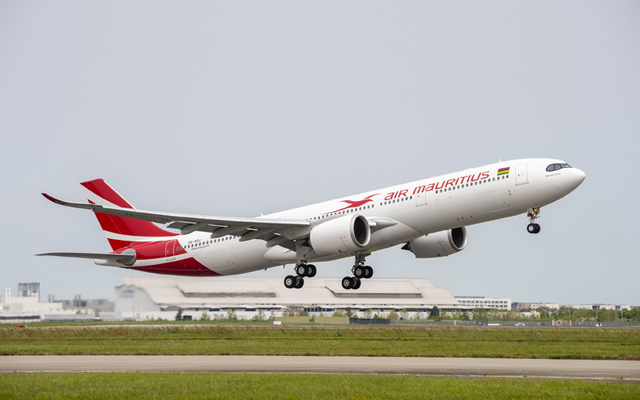
Air Mauritius took delivery of its two Airbus A330-900neo order on April 18, becoming the first operator of the new aircraft type in the Southern Hemisphere and the world’s first airline to operate a combination of both the A330neo and A350XWB.
The A330neo is powered by Rolls-Royce’s latest Trent 7000 engines and features a new wing with increased span, and new A350XWB-inspired sharklets. Air Mauritius’ A330neo is currently deployed on routes connecting Port Louis to London Heathrow, Paris, Mumbai and Singapore, among others.
Air Mauritius’ Airbus A330-900neo
1 of 2
Air Mauritius’ Airbus A330-900neo take-off
Air Mauritius’ Airbus A330-900neo economy class
What
Air Mauritius flies to Singapore thrice weekly on Tuesdays, Thursdays and Saturdays, with a fourth weekly flight to be added during peak season between November 10, 2019 and January 12, 2020.
After stopping in Singapore, the service continues to Kuala Lumpur before turning back to Singapore for the onward journey to Mauritius. The overall journey between Singapore and Port Louis span a distance of 3,261km and nearly seven hours.
How
I was excited to experience the A330neo, as Air Mauritius is one of the earliest adopters of this new aircraft type at time of flying – with other operators being TAP Air Portugal and Air Senegal with no passenger services in South-east Asia.
As I prepared to board the new plane, named Aapravasi Ghat after the UNESCO World Heritage Site near Port Louis in Mauritius, I noted the ‘sunglasses’ effect around the cockpit windows, not unlike its A350 cousin.
The A330neo plane has 260 seats in economy class with a 2-4-2 configuration and 28 seats in business class in a 1-2-1 configuration. My economy-class seat offers pretty generous legroom at 18 inches with a six-inch recline, and despite occupying a central seat I did not feel cramped during the entire journey. On my return trip to Singapore, I had an aisle seat and was even able to catch a couple of hours’ of sleep during the seven-hour flight.
The take-off and landing on the new aircraft was visibly smooth, and I could track the progress as the plane flew over the Indian Ocean on the full HD screen. The inflight entertainment also featured an interesting selection of songs and movies, with Wi-Fi on board.
The inflight meal was my first introduction to Mauritian cuisine, with options such as black lentils and fish curry. The overall flight was quiet and the LED mood lighting changed as the flight progressed, and the flight crew was friendly and professional.
Verdict
The A330neo definitely offers similar levels of comfort as the A350XWB. Safe, comfortable and professional, I definitely look forward to flying with Air Mauritius again.
Political tensions, agency closures and the advent of dynamic online booking may have impacted traveller and industry confidence in the past year, but Singapore’s travel agencies are tightening their defences by inking partnerships within and beyond the travel community.
Travel agents whom TTG spoke to at the Travel Revolution: The Event, a free consumer travel fair recently held in Singapore, expressed confidence in keeping their businesses afloat amid a volatile climate.
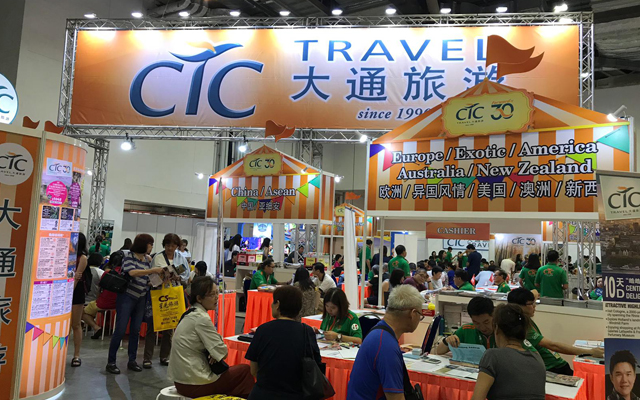
Travel agents at the Travel Revolution: The Event expressed confidence in keeping their businesses afloat through initiatives like strategic collaborations and celebrity tours
Joe Lim, consultant, Nam Ho Travel Service, said: “No matter how dangerous the world is, Singaporeans will still travel. For travel agencies to survive now, we must provide unique offerings like gourmet tours, incentive travel and even celebrity guides – things that customers cannot find online.”
To create such products, agencies are stepping out of their comfort zones to establish strategic partnerships. Earlier this month, WTS Travel signed a deal with cryptocurrency exchange GCOX to be their official tour partner, while Royal Wings Travel partnered Kochi Prefecture to develop hybrid tours, which it then distributed to other travel agencies like Pegasus Travel Management, Siam Express and JOYOJ.
Nam Ho Travel has also pushed out a collaborative effort with 10 other travel agencies across Singapore, shared Lim. This “consortium” of agencies, which includes Planet Holidays, Trans-Star and Global Holidays, involves pooling together their resources and operations for similar tour packages.
Lim explained: “In the past, if an agency couldn’t form a big enough group, we would have to cancel the tour and customers would be unhappy. With this consortium, we have compiled a booklet of tours for customers to choose from, and it’s now easier for us to form groups.”
Celebrity tours, which are led by a local TV host, actress or radio DJ, are also a burgeoning trend, said CTC Travel’s travel manager for marketing and public relations, Kelly Toh.
“We have been collaborating with these hosts for a while now. As such ‘celebrity tours’ are so popular, we’ve created one where our own managing director leads two tours a year and it’s doing very well. Last year, he brought a group of 130 to Jordan,” she said.
CTC Travel’s managing director, Chen Bin, leads tours to lesser-travelled destinations such as Okinawa and Mongolia, where participants enjoy interactive and engaging activities such as group dining and games.
These tours not only present customers with a more unique travelling experience, but also foster a sense of familiarity and friendship with the agency. Several customers have followed Chen’s tours for many years, said Toh.
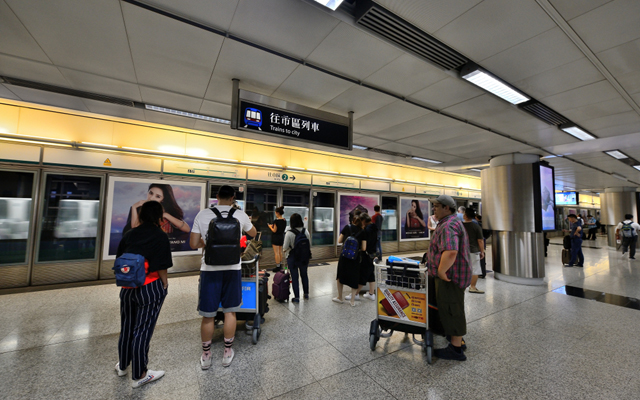
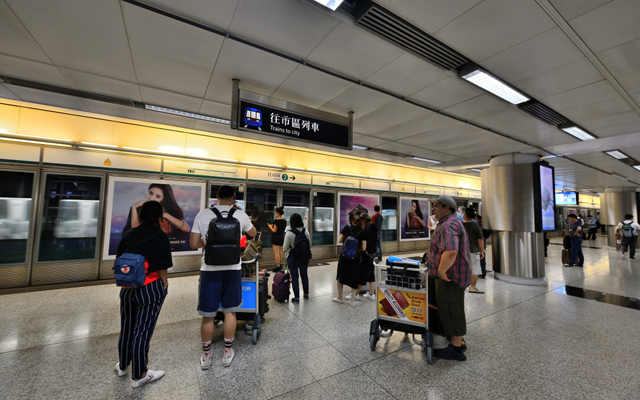
Transport to and from the Hong Kong International Airport (HKIA) descended into chaos on Sunday as anti-government protestors disrupted road and rail links to the facility, prompting the city’s subway operator to suspend its airport services.
Thousands of protestors blocked roads and entrances to the airport on Sunday afternoon, in an attempt to “stress test” the city’s transport systems to force the Hong Kong government to respond to their demands as the city entered its 13th week of sustained demonstrations, the South China Morning Post (SCMP) reported.
Airport Express suspended train services on Sunday afternoon due to clashes between protestors and riot police
Riot police were inside the airport, but protesters are banned from entering the airport and obstructing operations following the airport’s authority obtainment of an interim injunction, imposed after a shutdown in August.
The protestors did not manage to paralyse HKIA, unlike three weeks earlier, but their actions stranded many travellers as all transport links to and from the airport were cut off for hours. Media photos showed that travellers and airport staff were forced to get out and walk across a key bridge linking to the airport amid massive traffic congestion, lugging their suitcases with them.
The Airport Authority (AA) said the Airport Express service resumed at about 22.30 yesterday, which added that “traffic between the airport and the city gradually resumed to normal in early evening”.
“The AA condemns actions that blocked some entrances and exits to the terminals, obstructed traffic to the airport which affected passengers’ journeys, and damaged some airport equipment,” it said in a statement.
Singapore’s consulate-general in Hong Kong said on its Facebook page that it has deployed a consular team at the airport’s Terminal 1 arrival hall to provide travellers with advice and information, according to a Channel News Asia report.
Sunday’s protests followed a night of violence in Hong Kong after tens of thousand joined an illegal march during the day that descended into pitched battles with riot police who used tear gas and water cannons, according to the SCMP report.
Singapore Airlines (SIA) has teamed up with Singapore-based wellness brand Como Shambhala to offer specially curated wellness dishes on selected SIA flights from this September, an extension of their partnership inked earlier this year to enhance customers’ holistic well-being and travel experience.
The wellness dishes are aimed at enhancing customers’ holistic well-being and travel experience. Customers can look forward to a menu of healthy and flavourful dishes, each dish carefully tailored to nourish the body and alleviate travel-induced stresses such as fatigue. Ingredients rich in antioxidants and micronutrients, such as kiwi, yoghurt, beetroot and strawberries, come together in immune-boosting dishes that will help customers feel refreshed even after a long flight. Others aim to promote good digestion and circulation for a more comfortable journey.
SIA x Como Shambhala Wellness Menu
1 of 2
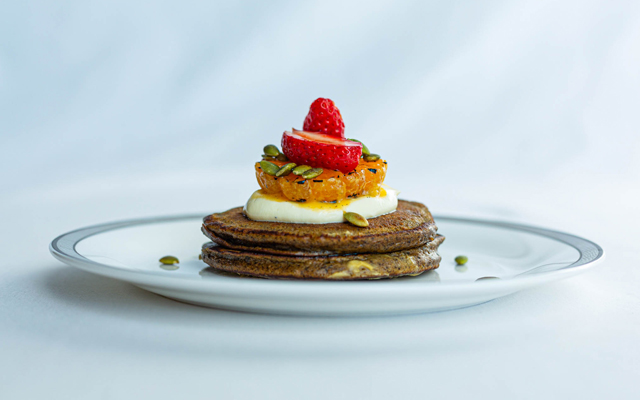
Spiced Buckwheat and Pumpkin Pancakes
Coconut Poached Fish
First class and business class customers will be able to enjoy the wellness in-flight menu on selected flights departing Singapore to Hong Kong, Frankfurt, London, Melbourne, Perth and Sydney.
The dishes will also be available for pre-ordering via SIA’s Book the Cook service for first class, business class and premium economy class customers on all routes departing Singapore.
The introduction of co-developed dishes with Como Shambhala adds to SIA’s growing roster of wellness offerings that aim to enhance customers’ comfort and well-being. SIA continues to partner with US-based wellness expert Canyon Ranch for wellness initiatives on non-stop Singapore-US flights, including the upcoming non-stop flights to Seattle from this September.
In addition to the wellness dishes, SIA’s partnership with Como Shambhala includes the provision of wellness articles designed to help travellers learn and practice well-being before, during or after the flight. The articles cover a range of topics such as meditation, breathing techniques for relaxation and body exercises suitable for periods of prolonged inactivity.
These will be launched concurrently with the co-developed wellness dishes from September 1, 2019, and will be exclusively available for download via the SIA mobile app.
Luxury Gold, a premium and luxury guided holidays provider under The Travel Corporation (TTC), has launched its eLearning programme to help increase the earning potential of travel advisors.
The Luxury Gold Masterclass programme, which is offered through TTC’s Travel Agent Academy, has been designed with an interactive suite of user-friendly modules, providing advisors the knowledge and tools to better sell its luxury guided journeys in a time-efficient manner.
Luxury Gold rolls out eLearning programme to help travel advisors increase their earning potential
Anthony Lim, Insight Vacations and Luxury Gold managing director, Asia, said that TTC’s new Luxury Gold Masterclass offers travel advisors the opportunity to become brand experts and increase their sales through updated information and in-depth knowledge of the brand’s offerings.
“Ultimately, we created the Masterclass with our loyal advisors in mind to help them sell journeys beyond the ordinary and we’re rewarding them for their commitment by offering eligibility for fam trips and opportunities to earn discounts on our journeys,” he said.
The eLearning platform is divided into three levels and travel advisors can access the first level, Sapphire, which is available now. The modules cover an introduction to the brand, the Luxury Gold difference, tools for selling the journeys and information on the brand’s Chairman’s Collection, consisting of VIP experiences personally curated by TTC’s chairman Stanley Tollman.
From today, travel advisors can register for the eLearning programme by logging onto ttc.com/agentacademy/registration and registering through the TTC Agent Academy. After which, they will receive a welcome email to sign up for and begin the Luxury Gold Masterclass.
Caesars Entertainment has announced that it will no longer pursue a license for a casino in Japan and will instead focus on its current plans and commitments, including a merger with Eldorado Resorts set to close next year, according to a Bloomberg report.
Caesars CEO Tony Rodio said in a statement that the timing of the company’s decision was driven by “sensitivity to the significant decisions Japan’s government and business partners will likely be making later this year to advance the process”.
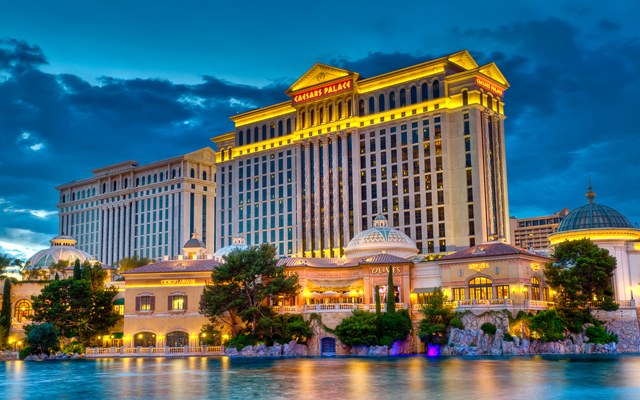
Caesars drops out of Japan casino race (pictured: Caesars Palace in Las Vegas)
Japan is preparing to grant three gaming licenses and global casino operators are vying for the chance to open integrated resorts in Japan.
Cities are formalising their bidding processes, with proposals for concepts in Osaka due next month, said the report.
While Caesars Entertainment became the first US casino giant to drop out of the casino licence race in Japan, MGM Resorts International has reaffirmed its intent to pursue a resort in Osaka, while Las Vegas Sands has shelved plans to build a casino in Osaka in favour of Tokyo and Yokohama instead. Wynn Resorts has also expressed interest in the Tokyo Bay, which could include Yokohama.
A casino in Japan is expected to cost upward of US$10 billion, with the government’s intended focus on generating tourism and convention revenue from adjacent hotels and meeting space, added the report.
The country’s gaming market has been estimated to be worth more than US$25 billion annually once the resorts open, which would make Japan the world’s second-largest gambling market, after Macau.



 Visitors looking to soak up some local music can head to the Kampong Glam precinct to catch a showdown between Singapore’s best buskers in the Glam Voice! competition. Families can hop over to Jewel Changi Airport to indulge in kid-friendly activities that include virtual reality and remote-control racing games.