Expedia Group has announced a collaboration with AI Singapore (AISG) – an inter-agency unit tasked to catalyse and grow the country’s artificial intelligence (AI) capabilities – under its flagship 100 Experiments (100E) programme to develop an AI solution to transform the online search experience for Asian travellers.
The first online travel platform to collaborate with AISG for 100E, Expedia Group will provide a team of experienced engineers, data scientists and marketers to work with the AISG’s project lead, project managers and AI apprentices to enhance travel search query understanding and improve the accuracy of search query resolution in Asian languages.
Expedia Group partners AI Singapore (AISG) to develop an AI solution to enhance online searches for Asian travellers (Pictured: Expedia Group’s Mark Okerstrom with AISG’s Laurence Liew)
Today’s search engines are efficient in understanding travel search queries and providing query resolutions in English, as English is the dominant language used online by 25 per cent of all Internet users.
However, when dealing with travel search queries conducted in Asian languages such as Japanese, Korean, simplified Chinese and traditional Chinese, the performance of the search engines declines significantly and the accuracy of query resolution dips.
For a start, the Expedia Group and AI Singapore project team will leverage natural language processing and machine learning to develop an AI-based model to enhance search query understanding and resolution in the Japanese language, before extending the model to other Asian languages to enhance online search efficiency.
When completed, the AI solution will enable Expedia Group to deepen its understanding of travel search query patterns and nuances in Asian languages, and equip the travel platform with the ability to serve the needs of Asian travellers better by improving the accuracy and efficiency of search query resolution.
Mark Okerstrom, president and CEO, Expedia Group, said: “With more than 7,000 data architects, AI experts and engineering specialists at Expedia Group, this collaboration with AISG has the potential to unlock new and industry-leading AI solutions to improve online travel, bringing the world within reach for those shopping for travel online in Asian languages.”
With online travel spending in Asia-Pacific expected to account for more than 40 per cent of global online travel sales by 2020, surpassing North America and Western Europe, Expedia Group’s senior director, product and technology Kevin Ng said the collaboration will enable the development of a viable AI solution that can not only enhances search query understanding but will also transform the online search experience for Asian travellers.
Laurence Liew, director, AI industry innovation, AI Singapore, indicated that through this collaboration, it will also help “train Singaporean AI engineers via the AI Apprenticeship Programme”.
AISG’s 100E programme matches companies which are keen to use AI to address their problem statements with local researchers. AISG is driven by a government-wide partnership comprising NRF, the Smart Nation and Digital Government Office, the Economic Development Board, the Infocomm Media Development Authority , SGInnovate and the Integrated Health Information Systems.
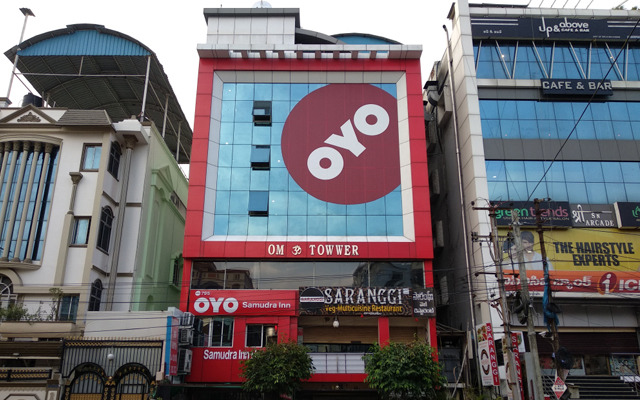
Oyo has refuted the allegations that its founder Ritesh Agarwal and several top executives had cheated a Bengaluru hotelier of more than Rp15 million (US$209,000).
In a statement, the India-based hospitality chain called those allegations “false claims” and an “exaggeration” of a regular commercial dispute, according to a report by The Economic Times (ET).
Oyo’s founder Ritesh Agarwal has been accused of cheating and criminal breach of trust by a Bengaluru hotelier
In his complaint to the Bengaluru Police, Natarajan VRS accused Agarwal and his colleagues of cheating, criminal breach of trust and misappropriation of 80 per cent of the revenue share due to his hotel from June 2017 to August 2019, said the report. Other executives named are Oyo’s COO Abhinav Sinha, CFO Abhishek Gupta, president of corporate affairs Siddhartha Dasgupta and two Bengaluru-based employees.
The report added that Natarajan, who owns the Rajguru Shelter Hotels in BEML Layout in Whitefield, claimed that he signed an agreement with Agarwal in June 2017, whereby Oyo would act as an authorised agent of the hotel and make reservations for 20 per cent of the booking amount. However, he alleged that Agarwal and his Bengaluru-based representatives had swallowed 80 per cent of the share instead.
Natarajan alleged in the complaint that Oyo’s executives conspired to commit fraud and money laundering by passing off rooms for which bookings have been cancelled as occupied, said the ET report. The hotelier further claimed that many hotels in Bengaluru ran into similar problems with Oyo.
Natarajan’s case is just the latest among a wave of protests and complaints lodged against Oyo across the country, according to industry body Federation of Hotel & Restaurant Associations of India (FHRAI), said the report.
Shetty added that despite the many complaints against Oyo, the police were not taking appropriate measures, adding that FHRAI is planning to meet police commissioners in some states to discuss the issue.
The Whitefield police booked the trio, including Agarwal, for criminal breach of trust and cheating. Investigations are ongoing, according to the chief inspector of Whitefield police station Narendra Kumar.
“Our lawyers are looking into the matter and will be taking strong legal action as these claims are incorrect and defamatory in nature,” the report quoted an Oyo spokesperson as saying. “We respect the law of the land and believe it will do the right justice.”
Tui Group is stepping up the expansion of its flagship hotel brand in Asia with its first Tui Blue property in Vietnam, which will be launched in cooperation with Vietnam-based joint venture partner TMG Group.
Slated to open in March 2020, the 318-room Tui Blue Nam Hoi An is situated in a beachfront location on the Tam Tien beach on the central coast of Vietnam. Holidaymakers can combine their stay with a visit to the coastal town and UNESCO World Cultural Heritage site Hoi An.
Tui Blue Nam Hoi An hotel
1 of 6
Tui Blue Nam Hoi An swimming pool
Tui Blue Nam Hoi An pool bar
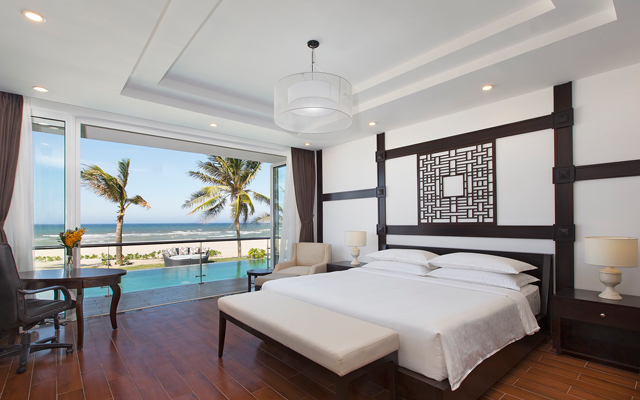
Tui Blue Nam Hoi An hotel room royal oceanfront villa king bed with beach access
Tui Blue Nam Hoi An hotel room junior suite bathroom
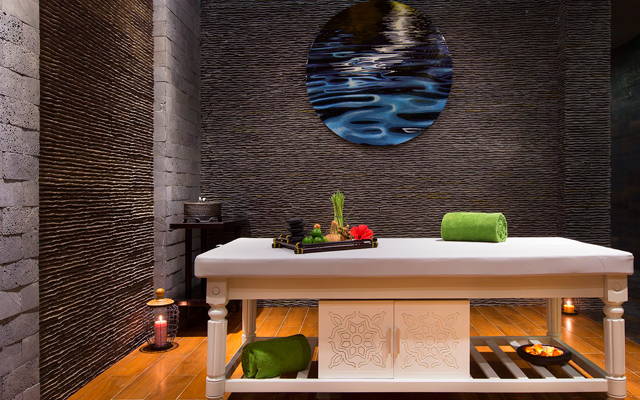
Tui Blue Nam Hoi An Scentuals Spa treatment room
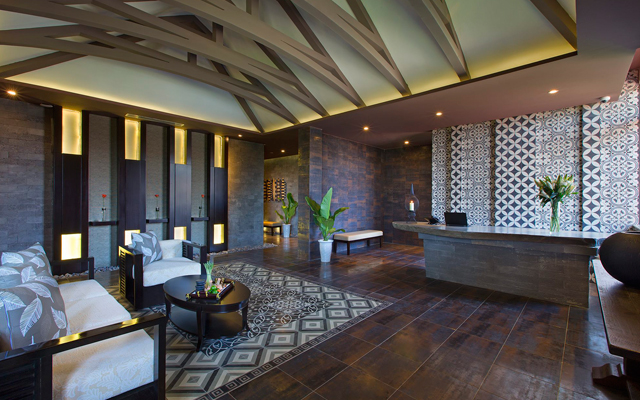
Tui Blue Nam Hoi An Scentuals Spa reception area
Tui Blue Nam Hoi An, to be converted and extended in the style of the flagship brand, is expected to expand Tui Group’s portfolio of longhaul destinations for European holidaymakers while targeting the growing number of guests from Asia.
“We see great potential for Tui Blue in Asia and have already started to pursue further growth plans. South-east Asian destinations enable us to operate our hotels all year round, reducing our seasonal swing, and to tap into new target groups,” said Sebastian Ebel, Tui group executive board member in charge of Hotels & Resorts.
Tui Group’s existing portfolio of hotels in Asia includes three Robinson Clubs in the Maldives and Thailand, as well as three Riu hotels in Sri Lanka and the Maldives. In addition, Tui operates three concept hotels in the region.
By expanding in Asia, Tui Group drives the growth roadmap for Tui Blue further ahead. The brand is set to become the world’s largest leisure hotel brand and increase its portfolio to more than 100 hotels by 2020.
Avis is expanding its regional network with a new office in Myanmar to support the country’s growing business and leisure travel demand.
“One of our key priorities includes building a vast global network and expanding our regional footprint. Myanmar is a country with great potential particularly with the development of its automotive industry and we very much look forward to being part of this growth,” said Hans Mueller, vice president global licensees – international, Avis Budget Group.
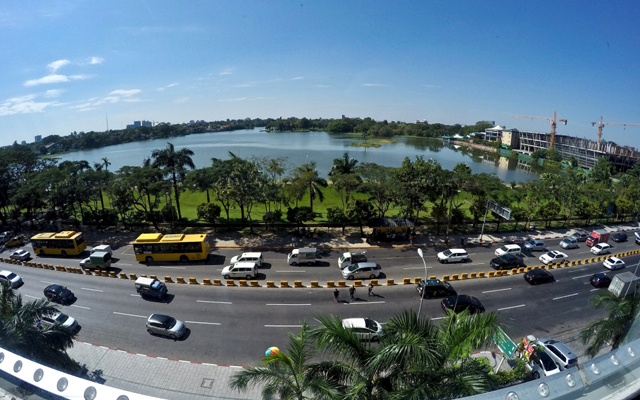
Avis opens a new head office at Inya Lake Hotel in Yangon, Myanmar
“With the opening of our Avis office in Myanmar, we will be able to offer more car-rental choices and help build the industry further. We also strive to serve our customers at their locations not only in Yangon but other cities through our expanded network in Mandalay, Nay Pyi Taw, Bagan, Taunggyi and Dawei,” added Prasoporn Tansupasiri, general manager, Avis Myanmar.
With its head office located at Inya Lake Hotel in Yangon, Avis Myanmar offers both short- and long-term car rental solutions with a fresh new fleet, ranging from sedan, SUVs, pick-up trucks, vans and people carriers.
Avis Myanmar also provides professional experienced chauffeurs on various services such as airport transfer, point-to-point transfer, hourly disposal service and event chauffeur-drive service.
For individuals, the company ensures affordable and a simple rental process, starting from US$39 per day with a 24/7-hotline, roadside assistance and premium customer service.
The Global Tourism Economic Research Centre (GTERC) continues its promotion of the eighth edition of the Global Tourism Economy Forum (GTEF) across the Guangdong-Hong Kong-Macau Greater Bay Area (GBA).
From August 30 to September 1, the GTEF took part in the 2019 China (Guangdong) International Tourism Industry Expo (CITIE 2019) in Guangzhou, introducing the GTEF 2019 and initiating contact with over 3,000 exhibitors and 30,000 professional buyers and tourism peers.
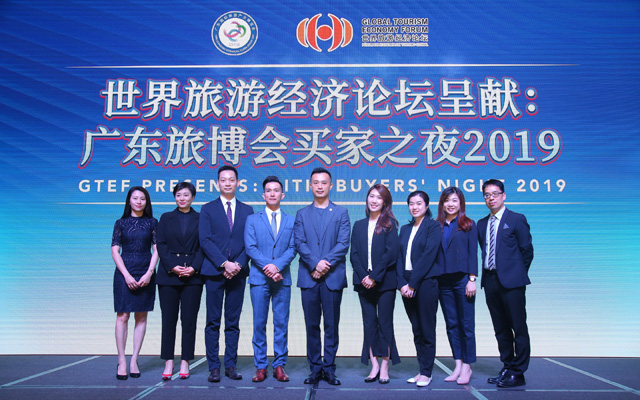
GTEF promotes the sustainable development of the global tourism industry with a specific China focus. Above: GTEF’s Jason Wang (centre) with guests at the recent CITIE Buyers’ Night in Guangzhou
With an engaging presentation at its booth, the GTEF successfully drew attention of representatives from prominent local and international tourism enterprises such as China International Travel Service, China National Travel Service (HK), tuniu.com, LY.COM, and Genting Cruise Lines.
For two consecutive years, GTEF’s roadshow at CITIE was highlighted at the networking dinner in collaboration with CITIE. Held at the InterContinental Guangzhou Exhibition Center on August 30, 180 tourism leaders, exhibitors and media representatives were invited to facilitate the exchange of ideas and to build relationships at the Global Tourism Economy Forum Presents: CITIE Buyers’ Night 2019.
Jason Wang, COO of the GTEF, emphasised the importance of seizing new opportunities in the Guangdong-Hong Kong-Macau GBA, encouraging industry peers to utilise GTEF’s well-established exchange and cooperation platform in Macau and to take advantage of the forum’s business matching offerings to expand business reach within and beyond the GBA.
Representatives from GTEF’s major sponsors and other tourism and leisure enterprises in Macao – Galaxy Entertainment Group, Studio City Macau, MGM Macau, Sands Resorts Macao, Grand Lisboa Palace Macau, Wynn Palace and Wynn Macau – also gave insights on the outlook for travel and tourism.
The GTEF is the international exchange and cooperation platform designed to promote the sustainable development of the global tourism industry with a specific focus on China. Utilising its strategic location in Macau as a bridge between China and the world, the GTEF connects people and forges partnerships in the tourism hub of the Guangdong-Hong Kong-Macao GBA. The theme of each GTEF edition is designed to guide tourism stakeholders worldwide on the vast opportunities available in the global tourism economy.
Taking place at the MGM COTAI, Macao from October 13 to 15, GTEF 2019 will present the theme “Tourism and Leisure: Roadmap to a Beautiful Life.” This edition will put Chinese president Xi Jinping’s Beautiful Life concept at the core of its discussion on the global tourism economy, showing that as more people cross-international borders every day, tourism and leisure have the potential to spur mutual understanding and enhance quality of life and happiness, ultimately creating a harmonious and beautiful life for all.
With Argentina and Brazil as partner countries and Jiangsu as featured China province, GTEF 2019 will gather ministers of sports, culture and tourism, top international corporate leaders and experts to discuss the latest tourism policies and trends. The GTEF aims to inspire delegates to think of new ideas and to come up with innovative models, to seize the immense opportunities from the exponential growth of wellness, leisure and sports tourism, and to capitalise on the potential of the China-Latin America tourism market through GTEF’s multiple-purpose platform.
Hotelbeds has appointed Forrest Zhang as managing director for China.
In this newly-created role, Zhang will work to further strengthen Hotelbeds’ position in the bedbank sector, placing a strategic focus on this key market which is currently its fourth biggest source market globally.
Zhang will be directly responsible for all the company’s activities which are focused on the Chinese market, and will report directly to Carlos Muñoz, managing director of Hotelbeds.
Prior to his new role, Zhang held the position of director of market management for mainland China at Expedia. He has a wealth of experience in general management, sales leadership and market development in different industries across mainland China, including hotels, serviced apartments, vacation rental acquisitions and account management. He was also responsible for managing relationships with Expedia’s extensive hotel portfolio, including global accounts, local chains and independent hotels on property level.
Carlos Muñoz, managing director, Hotelbeds, said that Zhang’s appointment came after the travel tech company “identified new opportunities” to tighten their grip on the bedbank sector “by powering our focus on developing the key strategic Chinese market under one single lead”.
“China is, in fact, our fourth biggest source market globally. As part of our strong commitment to investing in this region, to exploring the huge opportunities it can offer and to further developing our business there, we felt it was necessary to create a newly dedicated role to answer the specific and high demanding needs of this market,” he said.
In line with this year’s “Bold Thoughts, Bold Moves” theme, ITB Asia 2019 will deliver a series of keynote presentations to focus on sharing innovative ideas and explore practical applications for businesses to keep pace with technological developments in the travel industry.
Recognising the revolutionary impact of technology on the travel industry, speakers from leading OTAs, travel-related partners and technology companies will share their perspectives on how businesses can innovate and leverage technology as they tackle the challenges of this era.
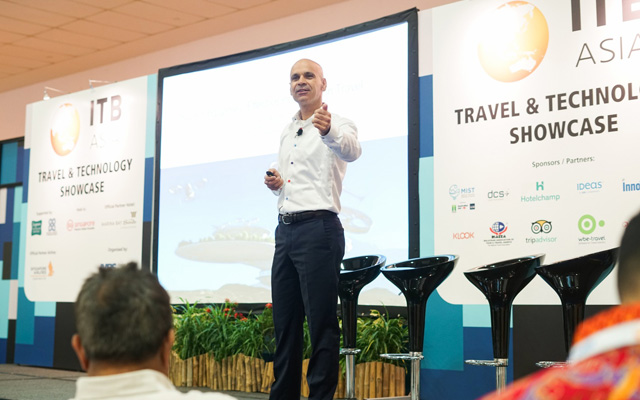
ITB Asia 2019 will focus on technological developments in the travel industry (Pictured: the travel & technology showcase at last year’s ITB)
Prominent keynoters include senior representatives from the likes of Bedbank, Hotelbeds, Booking.com, Expedia Group, IBM, Kayak, Oyo Hotels & Homes, TripAdvisor and Tujia.
The first keynote session on October 16 brings together experts from Bedbank, Hotelbeds, Booking.com and IBM, which represent three of the biggest pillars in the travel industry – accommodation, distribution and technology. Addressing the industry’s common challenges, topics will include how businesses can ready themselves for the next wave of growth, rethinking and reinventing distribution strategies, and how the travel industry can capitalise on the digital revolution to succeed.
ITB Asia 2019’s keynote panel on October 17 will identify business solutions for challenges faced by the sector during a time of uncertainty. Titled “The Future of Travel Distribution”, the discussion will be led by senior executives from Agoda, Expedia Group, Hotelbeds, Kayak and TripAdvisor. They will answer the big “Where to next?” question, as they explore the rapidly changing travel industry, new technological advancements, and the implementation of diverse distribution strategies to improve the consumer experience.
The keynote panel on October 18 will focus on the new Chinese traveller whose overseas consumption is predicted to grow as large as $120 billion as preferences evolve. Titled “The New Chinese Travellers”, industry leaders will examine the growing significance of this market. Amongst notable industry experts are speakers from Booking.com, Oyo Hotels & Homes, Thomas Cook China and Tujia, who will analyse the preference shift in the range of destinations, products and brands of interest, as well as maximising opportunities from this market.
Aside from the keynote sessions, ITB Asia 2019’s conference will also deliver a series of themed sessions, including corporate travel, destination marketing, Muslim travel and travel technology. Attendees will have the opportunity to experience over 200 sessions led by more than 260 speakers.
ITB Asia 2019, which is into its 12th edition, will share the Sands Expo and Convention Centre at the Marina Bay Sands with its inaugural co-event, MICE Show Asia, when it takes place from October 16 to 18. At MICE Show Asia, attendees will get to hear about forecasts for the global meeting and events industries in 2020, and how the industry is transforming.
For more information on ITB Asia 2019, click here.
Centara Hotels & Resorts will be pumping 650 million baht (US$21 million) into a major revamp of its flagship property, Centara Grand at CentralWorld Bangkok, beginning this month.
Slated to complete in April 2021, the 57-storey hotel will see a floor-to-ceiling renovation of all 505 guest rooms and suites – an undertaking that will happen two floors at a time to avoid disruption to the guest experience, according to Centara.
Centara Grand at CentralWorld Bangkok to undergo a US$21 million major revamp
The renovation programme, which will be undertaken by Thai design firm P49, will furnish the hotel with fully updated and refreshed guest room interiors, amenities and advanced technologies, said Thirayuth Chirathivat, Centara’s CEO.
Guestrooms, including bathrooms and furniture, will be redesigned and upgraded, with technology and connectivity installed at a standard that reflect the demands of today’s travellers.
The hotel will remain fully operational and carry out business as usual during the renovation period.
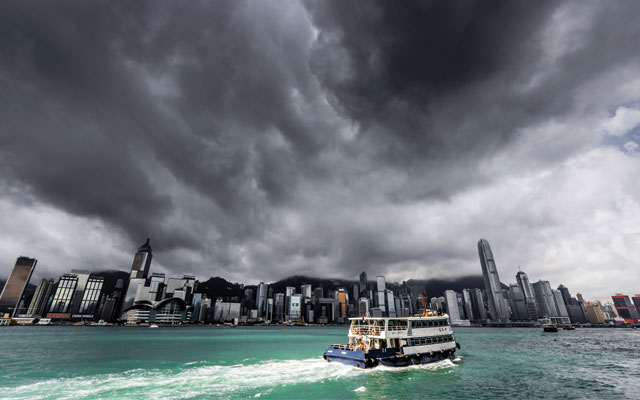
For a city that is no stranger to strong typhoons and rain storms, the unprecedented political and social turmoil currently roiling across Hong Kong is seeing no end in sight, dealing a heavy blow to a wide range of economic activities including retail and tourism.
Since June this year, the semi-autonomous Chinese city – which is ruled under a “one country, two systems” policy until 2047 – has been rocked by ongoing protests, sparked by the now-suspended extradition bill.
Ongoing protests in Hong Kong have had a knock-on effect on the country’s economy
In recent weeks, clashes between protesters and police have become more frequent and violent with heavy rounds of tear gas, and have affected tourist districts including Tsim Sha Tsui, Mongkok, Causeway Bay and Admiralty, severely undermining the image of prosperity and safety that Hong Kong is once known for.
The shutdown of Hong Kong International Airport (HKIA) on August 12 and 13 was a further setback to the city’s reputation as a travel and business hub, as protesters blocked check-in counters and prevented visitors from entering the departure hall, resulting in massive flight cancellations and service disruptions.
These destabilising protests have clearly taken a toll on tourist arrivals to Hong Kong. Preliminary government statistics showed the drop in tourist arrivals had accelerated from a significant 4.8 per cent year-on-year in July to a sharp 30 per cent in the first half of August.
Travel Industry Council’s (TIC) chairman Jason Wong. He said: “So far, cancellations have come from shorthaul markets like South Korea, Taiwan, Thailand, Japan and the Philippines as summer is their typical peak seasons, while group traffic has plunged 30-40 per cent. Even China’s robust tourist growth in the first six months of 2019 has been offset by declining and/or negative growth that started in July and August.”
It’s likely that potential visitors are now bypassing Hong Kong for other Asian destinations, so impacts on the longhaul market may only be more pronounced “in the next few months when bookings begin for 2020”, Wong told TTG Asia.
Like Wong, Buffalo Tours’ country manager for Hong Kong and China Sandy Ho also foresees more cancellations from longhaul markets in the coming months if the crisis is not contained soon. Already, some 28 countries have issued travel advisories to Hong Kong (as of mid-August), further dampening travellers’ confidence in the territory as a destination choice.
Ho explained: “As the booking lead time (for longhaul markets) is long, clients are currently looking for programmes in the next season or year. Booking traffic is slower with a 30 per cent drop recorded.”
Meanwhile, passenger traffic across the Hong Kong-Zhuhai-Macao Bridge (HZMB) plunged by a third while border crossings like Lo Wu and Lok Ma Chau also suffered a drop, according to Michael Wu, TIC honorary adviser.
Hong Kong’s hotels are struggling to cope with the drastic decline in visitor numbers in recent weeks.
Pointing to dismal performance in the hospitality sector, Wu stated: “For the second half of July, downtown hotel rates plunged 40 per cent, from HK$1,200-$1,300 (US$153-$166) to HK$700.”
Speaking to TTG Asia in mid-August, Rebecca Kwan, chairman of the 130-member Hong Kong Hotel Association (HKHA), said that occupancy and room rates in July for members near protest sites like Central and Western District saw a double-digit decrease, while overall yield fell over 10 per cent.
She estimated that hotels’ performance would worsen. “The situation for August is not promising due to a mix of unfavourable factors like widespread demonstrations, many of them of a more radical style than we are accustomed to, and additional travel advisories issued by overseas countries,” she said.
“The only silver lining for hotels is that premises near HKIA tapped more airline crew business as the crew sought to avoid downtown traffic problems caused by street demonstrations.”
If the dire situation continues, Wu fears that the current political unrest would cause more damage to Hong Kong tourism than the 2003 SARS epidemic that decimated investor confidence.
“As yet, there is no light at the end of the tunnel since nobody knows how long the protests will last,” he remarked. “To survive, I reckon large-scale agents and hotels will suspend hiring part-time employees while asking full-time staff to clear their leave before implementing no-pay leave. Freelance tour guides and coach bus drivers, specially those serving HZMB, are also at risk.”
Kwan also questioned: “Typical practices like redundancy or no-pay leave are temporary cost-saving measures, but the key to the problem is really how long will this last?”
And without an end to the crisis in sight, CTSHK Metropole International Travel Service’s deputy general manager George Kai accepts that it’s futile for the travel trade to roll out any recovery measures.
“It’s hard for the Hong Kong Tourism Board to implement any remedial actions now as nobody knows what will happen next. There is no point in wasting promotional effort and resources before the crisis is resolved,” he remarked.
For now, the uncertainty is disruptive enough, but analysts are not painting a positive picture of what might happen next.
Corporate risk consultancy Steve Vickers and Associates (SVA), in its recent update issued on August 13, wrote: “No early resolution to the unrest seems likely, not least given the absence of any visible dialogue aimed at alleviating tensions.”
SVA foresees the protests to continue over the next two months, but with a likely reduction in the numbers of protesters in September as students return to university. “The protesters’ tactics, though, may change as the numbers of demonstrators falls; the use of flash crowds, and increasing violence, can be anticipated,” it added.
But with anti-government protests entering its third month in end-August, SVA suggests that the Chinese government “is unlikely to permit the current instability to extend as far as the 70th anniversary celebrations on October 1, 2019. This date may be a ‘drop dead’ deadline.”
Even as the immediate outlook appears bleak for Hong Kong, industry members believe that the city – which has prided itself for its entrepreneurial and can-do spirit – can certainly rise again.
Aliana Ho, who led Hong Kong Disneyland Resort’s sales and distribution marketing teams in Asia-Pacific before her retirement in 2014, said: “In the past 60 odd years, Hong Kong citizens have invested significantly in building up the city’s intangible tourism equity. Coupled with our unique history, world-class infrastructure and convenient accessibility, Hong Kong has emerged as one of the top travel destinations in the world.
“There have been a few major crisis along the way, but every time Hong Kong surfaced even stronger and better than before.
“I am confident that the Hong Kong tourism industry, with its well-built global network, strong leadership, passion and resilience will be able to ride through the current crisis to re-establish Hong Kong as a safe and welcoming destination.”
The sun will always shine after a storm, and when Hong Kong is finally able to emerge from this crisis, what will its future hold? Will it regain its former standing as a thriving global business and travel hub again? And will small- and medium-sized businesses, which make up a sizeable chunk of Hong Kong’s tourism sector, be able to ride out the storm?
Santika Indonesia Hotels & Resorts has unveiled plans to progressively grow its Indonesian footprint, as part of its efforts to continue developing properties in the “10 New Balis” destinations, particularly in the Labuan Bajo, Mandalika, Borobudur and Lake Toba areas.
In Lombok – one of the “10 New Bali” spots – the Indonesian homegrown hospitality chain recently opened boutique villa The Kayana Beach Lombok.
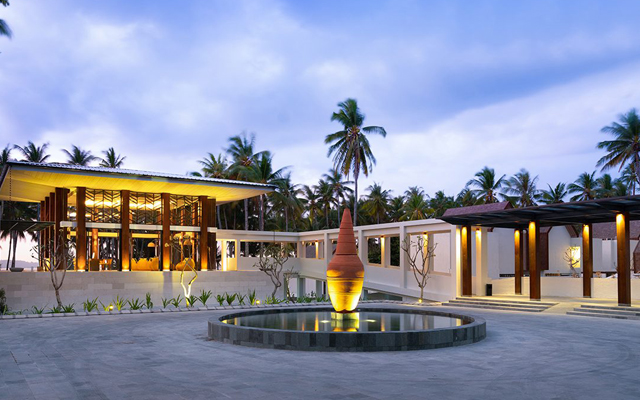
Santika’s recent opening of boutique villa The Kayana Beach Lombok (pictured) is part of the Indonesian hospitality chain’s efforts to develop properties in the “10 New Balis” destinations
Speaking to the media at the opening of The Kayana Beach Lombok last week, Santika’s general manager business development and marketing communications, Sudarsana, said: “We are looking to develop (upmarket) villas in Borobudur, Labuan Bajo and Mandalika. Currently, we are doing surveys in these areas. There are three locations (around) Tanjung Aan which we would like to consider building a five-star (boutique) property.”
The hotel group, which owns Hotel Santika Mataram, is currently building Hotel Santika Premiere on Lombok’s Senggigi Beach which is slated for a 2021 opening. It will also launch Santika Pasir Koja in Bandung and Amaris Slipi Jakarta this year.
In 2020, Santika will open eight more properties, with another eight hotels in the pipeline which are estimated to open between 2021 and 2022.
Sudarsana added that expansion plans aside, Santika is also keen on growing its new, millennial-friendly Kampi brand as well as upmarket brands – The Kayana, The Samaya and The Anvaya – as the market for these categories were steadier than the lower-end brands due to the tough market competition.
“We are currently operating our own properties in these categories and we are open to managing other investors’ properties in the future,” he said.
Meanwhile, the hotel group is also planning to redevelop its Amaris budget brand to compete with new “kids on the block” like RedDoorz and Oyo Rooms.
“With 66 Amaris in operation today, we are the biggest operator in the budget segment in Indonesia at the moment. However, the emergence of platforms like RedDoorz and Oyo Rooms are disrupting (the budget hotel market). Therefore, we need to redevelop and refresh the brand to stay ahead of the competition,” Sudarsana said.
He added that the revamp is currently underway and expected to be launched this year.
Santika Indonesia Hotels & Resorts now operates 112 hotels under four brands across Indonesia.