Celebrating Community by learning about tea making in Xishuangbanna
Banyan Tree Hotels & Resorts is marking its 25th anniversary this year with the theme Exceptional Experiences, which will see the group’s 39 hotels and resorts worldwide across four brands – Banyan Tree, Angsana, Cassia and Dhawa – crafting their own local and authentic activities.
The company is kicking off the celebration with a 25th Anniversary Celebratory Offer that includes 25 per cent savings on rooms (Best Available Rate), F&B, spa and gallery retail. All guests partaking in this offer will also be treated to the signature 25th Anniversary Cocktail – The Botanical, a concoction of bartender Kornchaphat Pichayadechapaisarn of Banyan Tree Phuket and winner of the group’s 25th anniversary cocktail contest.
Banyan Tree 25th Anniversary
1 of 4
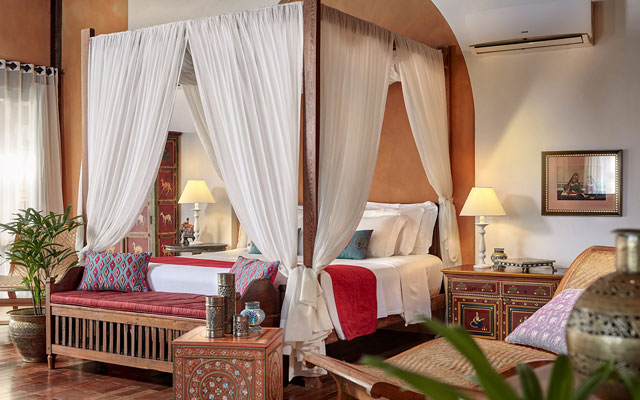
Celebrating Community by learning about tea making in Xishuangbanna
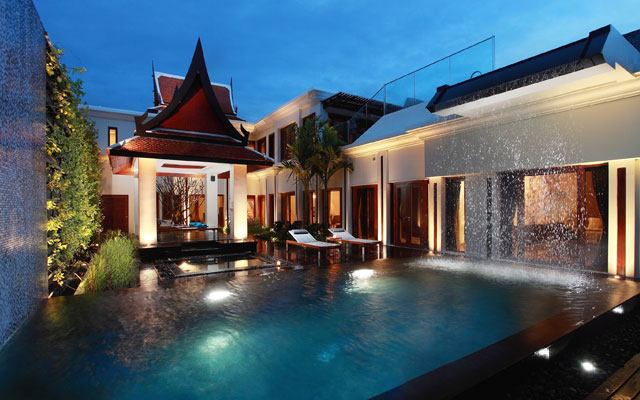
Celebrating Relationships with loved ones
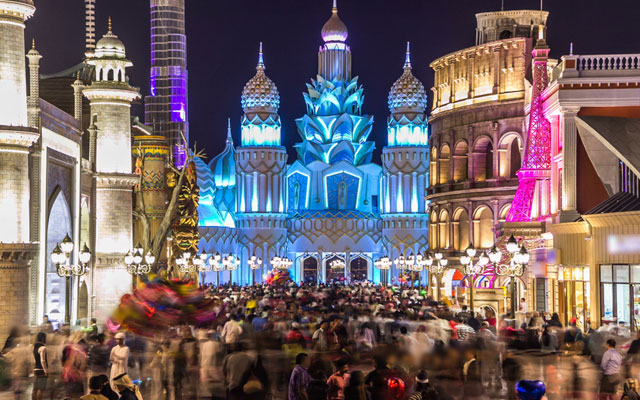
Celebrating Community with basket weaving
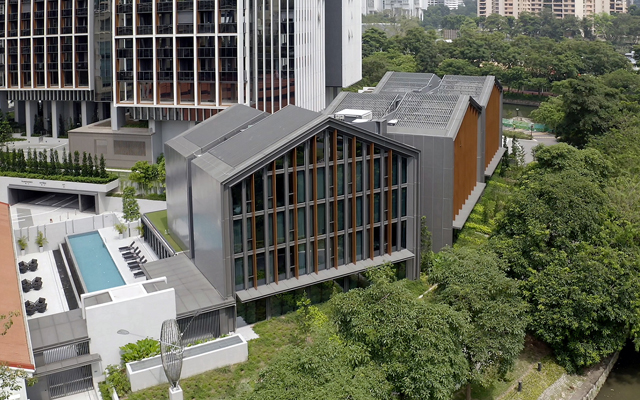
Celebrating Relationships at a Naxi Wedding Ceremony
The highlight of this offer is a complimentary Exceptional Experience for the guests from one the following three categories:
Celebrate Self – Re-centre with oneself through an individual-focused activity focused. At Banyan Tree Phuket, guests can attend a body awareness workshop conducted by accredited wellbeing hosts and gain insightful knowledge on how one’s body posture can impact overall health and wellbeing.
Celebrate Relationships – Reconnect with loved ones by partaking in an activity together. At Cassia Phuket, guests can hop on a scooter tour and explore the streets the way locals do. They can look forward to uncovering local treasures and experience the authentic way of life with their loved ones during an afternoon out in town.
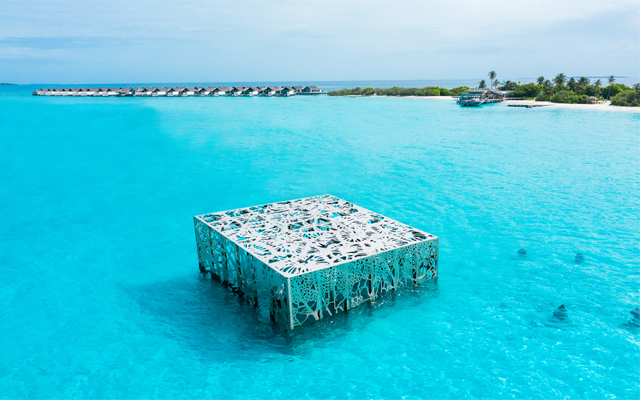
Celebrate Community – Immerse in the local culture, discover hidden gems or participate in a sustainability activity. At Angsana Xishuangbanna, where the area is known for its tea culture, guests can tour the Tea Mountains to learn more about tea leaves picking and discover local tea flavours. Guests may also learn more about marine conservation at the Marine Lab at Banyan Tree Vabbinfaru in the Maldives, embark on coral planting and explore the Ranamaari Shipwreck.
The booking period for this 25th anniversary package is from now until December 18, 2019, with the stay window from now through December 19, 2019. A minimum stay of two nights is required, and cannot be combined with any other promotion. Full payment is required about booking confirmation, and reservation dates cannot be changed. Terms and conditions apply.
resort owners and developers were looking at moving past the legacy segments of Full Moon Parties and diving, and tapping into wellness offerings and family-focused tourists
On Thailand’s Koh Pha-Ngan island, known for its marque Full Moon parties, tourism remains “mercurial” beyond the party periods, although there are still challenges in the way of it evolving past a certain “big event syndrome”, according to C9 Hotelworks.
On the heels of the big annual event, visitor numbers surpassed the one million ceiling two years ago and over a five-year period registered compound annual growth rate of 17 per cent.
Hotel owners in Koh Pha-Ngan (above) are hoping to tap into other segments to keep tourists coming all year round
While the numbers are impressive, C9 observes that the reality for resorts on the ground is one of disruptive trading. Accommodation establishments are continually being forced to deal with high occupancy that often surpasses 80 per cent in peak periods but rapidly falls off as soon as the Full Moon event tapers off.
According to C9 Hotelworks newly released Koh Pha-Ngan and Koh Tao Hotel Market Update, the two islands have over 13,000 rooms and supply growth is rising at 10 per cent. As the destination matures, the key challenge is how to diversify its market segments in order to avoid being a one-trick pony.
Commenting on tourism trends to the islands, C9 Hotelworks Bill Barnett said: “Unlike most other Thai resort areas that are being immersed in Asia-centric mass numbers, demand to the two islands in the Gulf of Thailand is focused on longhaul visitors from Europe, Australia and North America.
“The main challenge to avoid big event syndrome and a mono market is the dependence on nearby Koh Samui’s private gateway airport, which is experiencing challenging conditions due to high airfares and a broader lack of airline diversity servicing the sector. At the end of the day, you can’t stay there if you can’t get there.”
Aside from the numbers, C9’s research indicated that a growing number of resort owners and developers were looking at moving past the legacy segments of Full Moon parties and diving, and tapping into wellness offerings and family-focused tourists.
Despite the Koh Samui connection, nearby Surat Thani airport on the mainland is becoming a secondary point of transit to Koh Pha-Ngan and Koh Tao.
Summing up the “boom bust boom” impact of the Full Moon, the reality is Thailand’s smaller resort islands are grappling with the issue of mass tourism and reality of the current tourism demand that remains seasonable and disruptive.
Oyo has issued a statement confirming a deal with Airbnb, following speculations for months that the homesharing giant is investing in the Indian accommodation startup.
The Oyo investment is Airbnb’s latest effort to expand its growing hotel business after its acquisition of HotelTonight last month.
Airbnb confirms stake in India’s OYO
Maninder Gulati, global chief strategy officer at Oyo Hotels & Homes, said: “As the sixth largest hotel chain operator in the world, we are committed to offering our guests and travellers around the world, great quality living spaces. We are happy to have Airbnb as our partner in this vision.”
Neither parties confirmed the size of the deal, but the strategic partnership is expected to drive both companies to explore collaborative opportunities in a range of projects, including making Oyo accommodations available on the Airbnb platform. Further details were not available at press time.
Apart from Airbnb, Oyo is also working closely with Bookings.com and Expedia.
Adara, provider of data-driven solutions for the travel industry, has partnered two new Tokyo-based companies.
The two companies are metasearch site Travel Book, and Fast Train, which runs a network of lifestyle and travel sites for travellers and residents, including Tokyo Cheapo, Japan Cheapo and London Cheapo.
A screenshot from the Tokyo Cheapo website
According to Adara, which offers a data co-op to help brands target their marketing, the partnerships will add to the 750 million monthly unique traveller profiles it currently captures, including data on approximately 48 million monthly travellers in Japan.
Last September, Adara signed a deal with the Japan National Tourism Organization (JNTO), giving access to its proprietary destination measurement and analytics tool, Adara Impact. In preparation for the Tokyo 2020 Summer Olympics, Adara says it aims to support travel promotions and drive visitation to Japan, all while gaining additional data partners.
One Faber Group has debuted a multimedia show as part of a calendar of events celebrating the 45th anniversary of the Singapore Cable Car.
From March 30, 2019 to March 2020, the Miraculous show is performed thrice nightly – 19.30, 20.30 and 21.00 – at the Arbora restaurant on level two of Faber Peak Singapore.
The Miraculous show at Faber Peak
In the show, a heart-shaped Angsana tree comes alive in kaleidoscope lights. The brilliant tree houses two squirrel characters Mira and Mirak with a special ability to camouflage.
Seats are provided on a first come, first served basis for cable car patrons, diners and Faber License members.
In addition, Faber Peak will light up in brilliant colours, giving cable car passengers a visual treat.
Also part of the 45th celebrations is the Explorer Passport, a self-guided exploration available from April 1 to June 30 this year. After redeeming their passports with purchase of the Cable Car Sky Pass, participants are led through stations to collect stamps, discover a Merlion statue and more in the process.
There will also be food events including Satay Night Live and Mao Shan Wang Durian Feast @ Mount Faber, taking place on June 8 and August 10 respectively.
Until February 15, 2020, an exhibit showing the evolution of Singapore Cable Cars through the years, including with information on history and retro cabins for photo opportunities, will run on the Cable Car Deck on Faber Peak.
Oakwood has appointed Jean Keijdener as general manager at Oakwood Residence Saigon.
Bringing 30 years of experience in the hospitality industry to his new role, Keijdener has held senior management positions at major hotel brands including Hilton, Hyatt, Renaissance and Sedona, spanning the geographies of Bahrain, Germany, Indonesia, Ireland, Tahiti, the Netherlands, the US and Vietnam.
Prior to this, Keijdener was country general manager for The Ascott in Thailand and South Korea.
Garuda brought down airfares, but only for bookings made via its own website and OTAs, some say
By Mimi Hudoyo and Kurniawan Ulung
Indonesian travel agents do not expect domestic airfares to go down to former levels as the government has raised the price floor on tickets, although local carriers announced over the weekend that they would be dropping their fares this month.
The Indonesia Ministry of Transportation announced last Saturday that the price floor for domestic economy class was increased from 30 per cent to 35 per cent, while the ceiling price remained the same.
Garuda brought down airfares, but only for bookings made via its own website and OTAs, some say
Nur Isnin Istiartono, secretary of the directorate general of civil aviation, was quoted by detik.com as saying: “The Ministry of Transportation (understands) consumers’ needs for lower prices. However, in this case, the government also wants to protect the sustainability of airline companies.”
While the government has ordered airlines to reduce their fares, the new price regulations means that airlines can still put the same highest price tags permitted by the government the way they have done in recent months. On the other hand, the lowest price will be higher than they used to be.
The ceiling price of Jakarta-Denpasar airfare, for example, is Rp1.6 million (US$114). The floor price used to be Rp495,000 and is now Rp578,000.
The new regulation came despite the impacts on travel demand within Indonesia as a result of high domestic airfares in recent months.
Indonesian airlines responded to the industry outcry with announcements that they would drop their prices as of April 1.
Lion Air Group, comprising Lion Air, Wings Air and Batik Air, announced it would reduce its airfares on all routes.
“The reduction of air ticket prices is Lion Air Group’s answer to challenges and opportunities in the travel business, and to accommodate the demand for air travel while improving flight operations,” Lion Air spokesman Danang Mandala Prihantoro said in a press release.
Garuda Indonesia announced a 50 per cent discounts on airfares from March 31 to April 13 to mark the 21st anniversary of the state-owned Enterprise Ministry.
“Reducing airfares is Garuda’s commitment to making its five-star-service affordable for all Indonesian people,” Garuda Indonesia commerce director Pikri Ilham Kurniansyah said in a statement.
However, a number of travel executives TTG Asia contacted yesterday suggested that domestic airfares still remained high.
Pauline Suharno, the managing director of Elok Tour was disappointed because the discounted prices of Garuda Indonesia’s airfares were not available through brick-and-mortar travel companies but via only OTAs and the airline’s official website.
On Traveloka, for example, Garuda’s airfare from Jakarta to Lombok was Rp1.3 million, down 30 per cent from Rp1.9 million last week.
She said: “For us, this is unfair. This is discrimination against travel agents.”
Pauline, who is also secretary general of ASTINDO, said that according to the reports from the association members, Citilink and Lion Air Group’s members had not dropped their airfares as per April 1.
Jenny Margaretha, owner of Vanessa Tour, confirmed that the airfares offered by the two LCCs remained high.
From a check on April 1, Lion Air’s fares from Jakarta to Medan, for example, was still priced at over Rp1.5 million, she said, adding that the price the industry was used to was around Rp800,000.
Jenny, who is also the ticketing coordinator in the Jakarta branch of ASITA expressed hopes that the government would check whether the airlines were complying with new regulations.
According to her observation, Garuda’s discounted airfares are only for certain routes such as Jakarta-Lombok route. She said that the airfares from Jakarta to Medan, for example, was still expensive as it was priced at around Rp2.4 million.
“ASITA had contacted Garuda to meet one of its directors (next week) to ask for the reason,” Jenny said.
Siti Aisyah, the director of Cahaya Mega Angkasa Tour and Travel in Banjarmasin, likewise reported that the ticket prices from Banjarmasin in South Kalimantan to Jakarta and other cities remained high.
She said before the airfare hikes, Citilink price for Jakarta-Banjarmasin round trip was Rp1.6 million. Today, that is the price for a one-way ticket.
High domestic airfares are not the only problem faced by travel companies. Ng Sebastian, the owner of Incito Vacations, in Makassar, South Sulawesi said that if the basic domestic fares offered by Lion Air and Wings Air excluded check-in baggages, he was not sure if the government’s new regulations would drive domestic travel.
“The negative impact of baggage allowance (as an add-on charge) is also faced by small and medium enterprises in tourist destinations because it has made travellers reluctant to shop gifts for their friends or family members when they are holidaying,” he elaborated.
Chinese tourists outside the Grand Palace in Bangkok
Arrivals from some markets travelling to Thailand with registered tour companies significantly dropped in the first three months of the year, with businesses attributing this mainly to pollution and the stronger Thai currency.
Statistics from the Association of Thai Travel Agents (ATTA) show that tourists from the Middle East fell 45.2 per cent during the January 1 – March 20, 2019 period compared to the same months last year.
Thailand sees year-on-year decline in Chinese arrivals, but China remains its top international feeder
At the same time, the Africa market dropped 14.9 per cent, China 12.4 per cent, Europe 9.4 per cent, and Australia and New Zealand 8.7 per cent.
However, the markets of Russia and South-east Asia grew 10.1 per cent and 8.3 per cent respectively.
China remained the top international source market for ATTA’s members at 762,364, albeit down from the 870,720 recorded at the same time last year. ATTA members served nearly 3.2 million tourists from the mainland last year.
Vichit Prakobgosol, president of ATTA, said many Chinese tourists shifted to other countries as they are worried about safety after the Phuket boat incident. The stronger Thai baht and heavy smog in Thailand also led many to choose other destinations such as South Korea, Vietnam, Indonesia as well as Japan.
Overall, international visitors to Thailand remained in growth for the first quarter this year.
The Tourism Council of Thailand (TCT) last week released its tourism confidence index for the first quarter, rating at 98, lower than the standard 100 due to multiple factors including an economic slowdown, the haze problem and tough competition.
TCT’s chairman Chirat Triratanajarasporn said: “The Thai tourism industry should continue to grow in the second quarter after the general election and as the pollution problem (tapers).”
The council predicted that about 9.3 million foreigners will travel to Thailand in the second quarter, and expected nearly 40.7 million for the entire year.
A spate of large-scale mixed-use projects are taking shape in Bangkok, as developers seek to incorporate more productive use of land space in the Thai capital and capitalise the surging demand for live, work and play.
Central Bangkok is the focus of several major mixed-used projects, among which is Dusit Central Park, a 36.7 billion baht (US$1.2 billion) joint venture project from major Thai hotel development company Dusit Thani and retail and property giant Central Pattana.
Concept art of Dusit mixed-use project
Located on Bangkok’s biggest greenfield Lumpini Park at the corner of financial junction of Silom and Rama 4 roads, Dusit Central Park will comprise the 39-storey, 250-room reimagined Dusit Thani Bangkok, Dusit’s flagship hotel which just closed earlier this year; a high-end shopping complex; luxury residences and office buildings. The entire project is expected to complete in 2024.
Coming up on the same Rama 4 Road is the 120 billion baht One Bangkok, which is owned by Charoen Sirivadhanabhakdi, founder of Thai Beverage – which controls the country’s largest brewery known for its Chang brand – and chairman of Thai conglomerate TCC Group and Fraser and Neave.
Slated to launch in 2025, Bangkok One is touted to be the most expensive mix-used and real estate development in the country. The project is created for multiple uses in response the need of hotel room, office space, accommodation as well as a convention hall and theatre.
Charoen is also developing other two projects on the same road, namely Samyan Mitrtown, worth 85 billion baht, and The Praq at a cost of 20 billion baht. Both developments are expected to open in 2020.
Speaking at a press conference yesterday, Suphajee Suthumpun, group CEO of Dusit Thani, said the surge of mix-use projects in Bangkok is a response to high demand, especially business organisations and urban people living in the metropolitan.
“We consider that our project is a super core hub in Bangkok that will link with four major areas – Thonburi, Charoenkrung plus Chinatown Yaowarat, Sukhumvit and Ratchaprasong. We are getting into the right direction to become a new hub for urbanised communities,” Suphajee said.
More mix-use projects, ranging from small to large scale, can be expected to open in Bangkok, said Wutthiphon Taworntawat, managing director of Urban Hospitality Group. “Investing in mix-used can gain return of investment faster than single use and also able to draw more traffic all year round,” he said.
Nguyen Thi Huong Lien was in her third year at university and desperate to find ways to practise her English when she hit upon the idea of offering sightseeing tours to make extra money to fund her studies.
Harbouring a huge passion for her hometown of Hue, Nguyen decided a great way to achieve her aims could be done by offering sightseeing tours to the growing number of foreigners visiting the historic central Vietnamese city.
But she wanted to do things differently. Having taken part in many charity events when she was younger, Nguyen’s top priority was to run tours that benefited the local community, while offering employment and opportunities to other young women like herself.
Motorbike tours make stops at female-operated businesses
With just US$100 in her pocket, at the age of 21, Nguyen started trial runs of I Love Hue Tour. The aim was to offer insightful motorbike rides throughout the city and its outskirts, which made stops at local artisans, food stalls and businesses along the way – all operated by women.
That was in late-2014, and in less than five years Nguyen has come a long way. In 2016, I Love Hue Tour had garnered so much interest that Nguyen registered her business as a legal company.
Her social-orientated business model, coupled with her spark and passion for empowering women, led to Nguyen being crowned one of four winners of MIST (Mekong Initiative Startups in Tourism) in 2017, followed by her scooping a Wise Woman Leadership Award for her work.
Her winning pitch for MIST caught the attention of Facebook’s COO Sheryl Sandberg, who asked to meet Nguyen during a visit to Vietnam. Nguyen found herself a mentor in Sandberg, who advised her to think big.
She quickly expanded her operations to Hoi An, Hanoi, Ho Chi Minh City and Danang, launching I Love Vietnam Tour. Said Nguyen: “I was so happy because I was able to connect Vietnam together, and employ so many talented young women to be the country’s ambassadors.”
In 2018, her dreams got even bigger when she decided to expand into South-east Asia, settling on Luang Prabang, where she won the Wise Woman Leadership Award. In August, 15 female students started running tours there, marking the start of a new chapter for the company – I Love Asia Tour.
But the expansion doesn’t stop there. In August 2019, I Love Asia Tour will begin operations in Siem Reap. This will bring the total number of women working for the company to more than 150 female bikers, with 12 female employees based in the Hue head office.
Nguyen, who was short-listed in the social entrepreneur category of last month’s Women of Futures Awards Southeast Asia in Singapore, plans to spend the next five years scaling up business in the three destinations, before setting her sights on her next spot.
She added: “This has been an incredible journey for me in every way, and I couldn’t have achieved it without the support and passion of all the I Love Asia Tour women.”