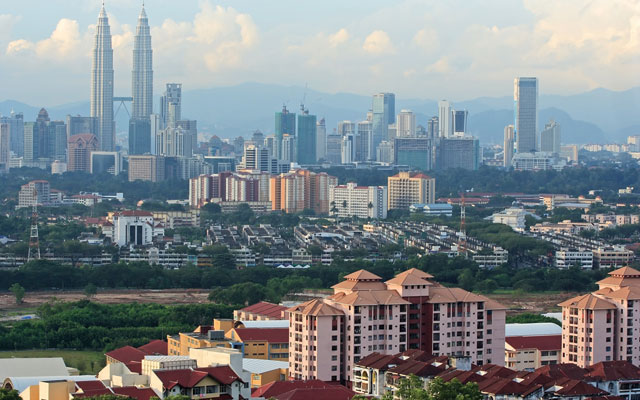
Tourism Malaysia will bring its road show held in conjunction with the Arabia Travel Mart to Sharjah (pictured) for the first time
Air Arabia’s upcoming launch of direct flights between Sharjah and Kuala Lumpur is spurring promotions in the UAE city by Malaysian tourism stakeholders, hopeful about the much-needed capacity boost during the Middle East summer season.
Air Arabia – the first LCC from the Middle East to fly direct to Malaysia – will commence the new daily service from July 1, 2019, in time for the high peak travel season for Middle Easterners from mid June to early September.
Tourism Malaysia will bring its road show held in conjunction with the Arabia Travel Mart to Sharjah (pictured) for the first time
Ally Bhoonee, executive director, World Avenues Malaysia, shared: “There is always a shortage of seats from the UAE during the super peak period. In the past, some travellers used to take Emirates or other Middle Eastern airlines to travel to Malaysia.”
Saini Vermeulen, executive director, Within Earth Holidays, added: “With additional capacity, we hope airfares will be more competitive during the super peak summer period, when high volumes of travellers can be expected. So far, bookings for summer are slow, but we expect them to pick up from mid May.”
On its part, Tourism Malaysia has for the first time included Sharjah in a roadshow held in conjunction with the upcoming Arabian Travel Mart. The roadshow, which will include participation of 14 hotels, agents and product owners, will cover Kuwait, Oman and ends with Sharjah on April 24.
Uzaidi Udanis, president, Malaysian Inbound Tourism Association, shared that the association is also in talks with the airline to host joint fam trips and product briefings for travel agents from Sharjah. He disclosed: “We are in direct communications with the airline and hope to work closely with them on (these activities).”
The UAE is among the top five highest spending tourist markets in Malaysia, with an average per diem expenditure of RM839 (US$203) in 2017 and an average length of stay of 9.2 nights.
Over half (55%) of global travellers report being more determined to make sustainable travel choices than they were a year ago, but barriers such as the lack of a recognisable standard and affordability concerns are preventing some of them from putting this into practice.
Findings from Booking.com’s annual sustainable travel report reveals that almost three quarters (72%) of travellers believe that people need to act now and make sustainable travel choices to save the planet for future generations.
While results were relatively consistent across ages, almost three-quarters (74%) of 46-55 year olds believe most strongly that this is needed, followed by millennials at 71%.
‘Zero-waste’ grocery shopping
Consistent with overall intentions to make more sustainable travel choices, sustainable stays are growing in popularity, with almost three quarters (73%) of global travelers intending to stay at least once in an eco-friendly or green accommodation when looking at the year ahead.
This is the fourth consecutive year that Booking.com research has seen this figure trend up, from 62% in 2016 to 65% in 2017, and 68% in 2018. Additionally, 70% of global travellers say they would be more likely to book an accommodation knowing it was eco-friendly, whether they were looking for a sustainable stay or not.
However, when it comes to recognising a sustainable place to stay, almost three quarters (72%) of global travellers say that they are not aware of the existence of eco-labels for vacation accommodations, while well over a third (37%) affirm that an international standard for identifying eco-friendly accommodation would help encourage them to travel more sustainably, and 62% would feel better about staying in an accommodation if they knew it had an eco-label.
In addition, 37% of respondents indicate they do not know how to make their travel more sustainable. About 34% acknowledge there are sustainable options, but find other options more appealing. Moreover, 36% say they cannot afford the extra spending that comes with sustainable travel, while 34% feel constrained by their agenda.
Booking.com finds 71% of travellers think that travel companies should offer consumers more sustainable choices. On the other hand, almost half (46%) of global travelers acknowledge that they find it harder to make sustainable choices on while on vacation than in everyday life. Almost a third (31%) of global travelers admit their vacation is a special time during which they do not want to think about sustainability.
Research results also indicated that travellers would be more encouraged to travel sustainably if there were economic incentives offered, such as tax breaks, when choosing eco-friendly options (46%). This is closely followed by online booking sites offering a sustainable or eco-friendly filter option (45%).
When it comes to in-destination experiences, over half (52%) of global travellers say they now alter behaviours to be more sustainable while traveling, such as walking, riding a bike or hiking whenever possible. Plus, 68% would like the money they spend on travel to go back into the local community.
Likewise, almost three quarters (72%) of global travellers are seeking authentic experiences that are representative of the local culture, while two in five (41%) request that travel companies offer tips on how to be more sustainable while traveling and 56% of respondents say that if there was an option to offset the carbon footprint on their vacation accommodation, they would do it.
Pepijn Rijvers, senior vice president & head of accommodation at Booking.com, shared that the company is testing different ways to surface information and support customers in their sustainable travel choices, as well as providing support and investment to foster innovation in the sustainable tourism space through our Booking Booster, Cares Fund and Cares Lab start-up programmes.
“It’s important that all those in the travel ecosystem, from established companies to start-ups, destinations, accommodation, transport and attraction providers as well as travellers themselves, come together, as it’s only through collaboration that meaningful change will continue to gain momentum.”
Luxury hotel specialist Akaryn Hotel Group will soon foray out of its Thailand home ground to plant its first overseas properties in Indonesia and Vietnam in the coming months.
In Bali, Akaryn will roll out Aleenta, its barefoot luxury brand launched in Thailand in 2004, in the island’s mountainous north, an hour’s drive from Ubud.
1 of 2
Aleenta retreat in Bali
akyra resort in Hoi An
Designed in a classical low-rise Balinese style, Aleenta Retreat Bali will offer 50 rooms, with amenities such as an extensive Ayurah Wellness centre, an outdoor yoga area, a fitness centre, and a selection of restaurants serving organic ingredients, in addition to a choice of indoor or alfresco event spaces.
Also opening its doors this year will be akyra Hoi An, a waterfront resort located midway between Hoi An’s historic town centre and China Beach. Located on the banks of the Thu Bon estuary, this low-rise boutique retreat will be accessible either by car or by boat and many of the 110 stylish rooms and pool villas will sit on the water’s edge.
At akyra Hoi An, there will be the Ayurah Wellness centre with an onsen and a fitness centre; plus other amenities like an outdoor infinity pool; kids’ club; two restaurants and a pool bar.
Akaryn Hotel Group is expected to open in more destinations across the region in the months and years ahead, the company said in a statement.
Inaugural Skift forum in Asia to feature TED-style talks and Q&A with leading minds in travel
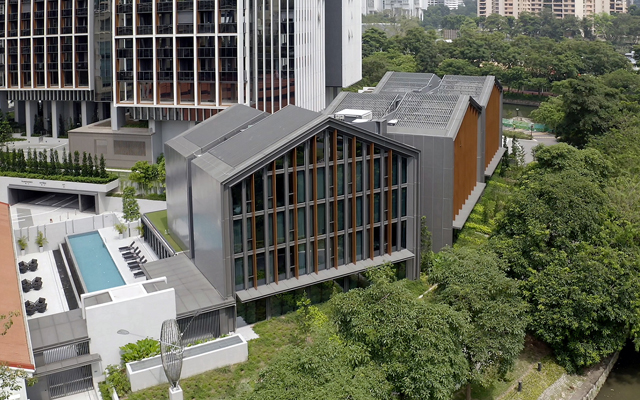
US-based business information company Skift will organise its inaugural Asia forum on May 27, 2019 in Singapore at the Equarius Hotel at Resorts World Sentosa (RWS).
Held in Equarius Hotel’s newly-refurbished ballroom, Skift Asia Forum 2019 will feature TED-style talks and Q&A with the business leaders and creative thinkers in the travel trade industry. Top-level speakers confirmed include CEO of Rosewood Hotel Group Sonia Cheng; CEO of Singapore Airlines Goh Choon Phong; Richard Holden, vice president product management, travel of Google; and CEO of Agoda John Wroughton Brown.
In addition, the day-long conference will explore strategic, marketing and technology trends emerging in and coming from Asia-Pacific countries. Skift will pay special attention to digital disruptions in communications and transportation, and how these innovations will transform customer experience globally and across every travel industry sector.
There will also be an opening reception the evening before at the floor-to-ceiling Ocean Gallery at the S.E.A. Aquarium.
At least 35 foreigners killed in Easter bombings; pictured, Colombo city
At least 35 tourists were among more than 200 people killed during ferocious terrorist attacks that rocked Sri Lanka yesterday, targeting three churches and three luxury hotels during Easter Sunday celebrations with authorities worried about its immediate impact on tourism.
TV visuals showed graphic scenes of devastation at three five-star Colombo hotels – Shangri-La, the Kingsbury and Cinnamon Grand – where Sunday Easter Brunch patrons at three restaurants were swept away by the blasts.
At least 35 foreigners killed in Easter bombings; pictured, Colombo city
Chairman of the state-owned Sri Lanka Tourism Promotion Bureau Kishu Gomes told TTG Asia that 32 tourists died from the attacks while another 20 received treatment at state hospitals. Other sources said the death toll had risen to 35 foreigners.
“Our priority right now is in attending to the needs of those affected and coordinating with the hospitals and embassies. Tomorrow it would be clearer as what needs to done in the short and long term (to restore confidence in the industry),” Gomes said.
Tourists from the UK, the US, Pakistan, India, China, Japan and Belgium were among the victims.
While Sri Lankan authorities put the pieces together, imposing a 15-hour curfew ending at 06.00 on Monday, tourism officials braced for serious repercussions on the country’s thriving tourism sector.
Sri Lanka is expecting 2.5 million tourists this year, sharply up from less than 500,000 on 2008, a year before the civil war ended. Achieving the target this year is going to be challenging with these attacks, industry officials said.
Sri Lanka Association of Inbound Tour Operators (SLAITO) president Harith Perera said that this was the first time that hotels have been directly attacked, which had not happened even during the bloody 30-year-separatist conflict which ended in May 2009.
He said Sunday’s events were likely to impact on the summer holiday season.
Sri Lanka Hotels Association president Sanath Ukwatte was also shocked by the attacks which targeted Easter celebrations and Easter Mass. Noting that this would affect tourism, he said security was being beefed up at hotels with bags being checked among these measures. No major cancellations were reported so far while a few corporate clients had postponed trips, he said.
The authorities immediately suspended domestic flights at all local airports and beefed up security at the country’s main Bandaranaike International Airport.
Civil Aviation director general HMC Nimalsiri said that while all domestic flights have been suspended for the time being the authorities have raised the level of threat to the highest to all airports in the country.
The Sri Lankan government ordered the closure of schools and state universities on Monday and Tuesday but has been cautious in naming the perpetrators of the simultaneous morning attacks on six locations. Government investigators however suspect an extremist Islamic group of involvement and the involvement of three suicide bombers in the attacks.
The three churches in Colombo, Negombo on the west coast and one in eastern Batticaloa were packed with worshippers when the attacks occurred. More than 400 people have been injured.
Rail expected to open up new tourism areas such as Kuala Klawang; Jeram Toi Waterfall in Kuala Klawang, Negeri Sembilan
Malaysia’s travel trade has welcomed the government’s move to resume the stalled East Coast Rail Link (ECRL), a multibillion-dollar project expected to boost the country’s economy and tourism sector.
Uzaidi Udanis, president, Malaysian Inbound Tourism Association, remarked that improved rail connectivity will make travel within the country’s eastern seaboard more convenient for locals and foreign tourists, while boosting rural and community-based tourism. Small towns are expected to benefit, such as Jelebu, where ecotourism potentials are yet to be tapped, as well as Kuala Klawang, with fruit farms offering agrotourism opportunities.
Rail expected to open up new tourism areas such as Kuala Klawang; Jeram Toi Waterfall in Kuala Klawang, Negeri Sembilan
He said: “Most tourists now go to the islands off Terengganu for snorkelling and water-based activities but Terengganu also offers plenty of land-based attractions which are now known mainly to locals. The ECRL will make it more convenient to travel there and in turn will create more job opportunities and economic benefits for Malaysians.”
Tourism Malaysia’s director-general, Musa Yusof said the revived ECRL project will “renew” interest in the country with several more cities made accessible.
He also told The Malaysian Reserve that state governments will have more reason to upgrade their public facilities, which will benefit both locals and tourists.
Malaysia’s prime minister Mahathir Mohamad recently announced the outcome of renegotiations with China after the project was postponed last year due to its high cost. After nine months of renegotiations, the government had successfully reduced the cost to RM44 billion (US$10.7 billion) from RM65 billion.
The new rail alignment, shortened by 40km to 648km, will see the number of stations reduced from 26 to 20. The 640km alignment will cut through five states, instead of four states which previously did not include Negri Sembilan. The five states are Selangor, Negri Sembilan, Pahang, Terengganu and Kelantan.
Arokia Das, director, Luxury Tours Malaysia, expressed relief that the new alignment will spare The Klang Gates Quartz Ridge, which is the longest pure quartz dyke in the world. He shared: “The area is also well for its soft and hard adventure products which includes jungle trekking and rock climbing.”
The ECRL project could resume as early as next month provided approvals from the relevant authorities are obtained. The completion date is December 31, 2026, two years later than the original plan.
Hong Kong’s first licensed capsule hotel, Sleeep, is targeting an over ten-fold increase in its patented smart-beds (SLPers) from the existing eight to 100, this year.
Apart from opening an 18-SLPers hotel in Hong Kong’s Central next month, it will also add another 10 in Causeway Bay in June, followed by 46 in Silom of Bangkok this September.
Hong Kong-founded capsule hotel makes its way to Bangkok
Commenting on Sleeep’s foray into Bangkok, co-founder Alex Kot said: “This marks our first overseas property and it takes up an old block of building. Out of the six floors, two will be turned into a spa with a wellness theme, our first spa concept.”
The company chose Bangkok for its “vibrancy and immense innovative spirit”. Said Kok: “I think we can easily try different ideas there (which may be) tough to do in Hong Kong.”
Sleeep was conceptualised in 2014 when Kok and his partner took part in a competition that required candidates to use design to resolve urban city issues.
The duo proposed a capsule hotel as a solution to tackle shortage of space, sleep deprivation and high population density. Against the backdrop of an under-utilisation of space and fast-paced market with round-the-clock demand, Sleeep rose as the first licensed capsule hotel inside a 34m2 unit in November 2016. For last nine months, it was operating at full occupancy, and with excess demand.
“What sets us apart from (other capsule hotels) is the branding, patented innovation and technology. For instance, we stay ahead of the game by rolling out the second generation of SLPers, which is improved with better music and airflow whereas a brand-new version of double bed is equipped with premium movie theatre experience.”
There is a strong and growing market for capsule hotels, according to Kok. “In addition to overnight stays, we also sell quality sleep experience by the minute to allow users to pay only for what they need,” Kok shared. About 70 per cent of current bookings come from OTAs, while locals who work nearby popping in for an afternoon nap.
Seeing opportunities in the global growth in transit passenger volume, LCC and red-eye flights, the startup is also eyeing international airport locations. It is currently in talks to bring Sleeep to an airport in the Southern Hemisphere.
Golfasian, a Thailand- and Vietnam-based golf tour operator, has signed a strategic partnership with Vietnam Golf Coast, a DMO made up of six of golf courses in the central area of Vietnam.
This coordinated push was created to bring golf visitors to the Central Vietnam area and build on the region’s appeal, and to leverage Golfasian’s expertise in tying golf to other regional draws such as the cuisine, heritage and shopping.
Laguna Golf Lăng Cô
“Central Vietnam is certainly one of the best golf destinations in the region,” said Mark Siegel, managing director of Golfasian. “There’s everything from traditional links-style golf to tropical garden-style layouts. Together we can showcase all these great courses as well as the compelling tourism activities available in this part of Vietnam.”
“It’s a real boost for us to have an operator as able as Golfasian on board,” said Adam Calver, director of Golf at Laguna Golf Lang Co. “It has been the leader in golf tourism throughout South-east Asia for the past two decades – including being awarded the best tour operator in Vietnam several years running. Therefore, we are delighted to announce this strategic partnership as we aim to grow the game in Central Vietnam.”
Inaugurated earlier this year, the six member golf courses are Laguna Golf Lang Co, Ba Na Hills Golf Club, BRG Da Nang Golf Club, Montgomerie Links, Vinpearl Golf Nam Hoi An and the soon-to-open Hoiana Shores.
Established in Bangkok in 1997, Golfasian boasts a membership base numbering over 160,000.
Tata Group gets controlling stake of AirAsia India as the airline comes under investigation for bribing government officials to get waiver from flying regulations
India’s Tata Group has increased its stake in AirAsia India to about 51 per cent, giving it controlling stake of its second airline, the other being Vistara, which is 49 per cent owned by Singapore Airlines.
Tata Group and its partner AirAsia Investments also injected five billion Indian rupees (US$71.9 million) to fund AirAsia India’s international growth plans, with the former putting in 51 per cent of the sum, The Economic Times of India reported.
Tata Group gets controlling stake of AirAsia India as the airline comes under investigation for bribing government officials to get waiver from flying regulations
Earlier, Tata Group and AirAsia each had 49 per cent stake, with R Venkataramanan, managing partners, Tata Trusts, and S Ramadorai, group executive, Tata Group, holding the rest.
The move comes as more than one of the country’s airlines find themselves in financial trouble. Just days after Jet Airways suspended all operations after failing to secure funding, Air India was reported to be short by around 90 billion Indian rupees to pay off debts due in the current fiscal year.
Tata Group is also upping its investment in AirAsia India at a time when the airline and AirAsia Group CEO Tony Fernandes are being investigated for allegedly bribing government officials to get a waiver in the foreign flying eligibility norms of five years and 20 aircraft.
Foreign travellers leaving Singapore will no longer need to have their passports stamped from today (April 22) onwards.
The Immigration and Checkpoints Authority (ICA) said it would stop issuing stamps of departure dates on travel documents, as part of ongoing efforts to simplify immigration processes.
Foreign travellers will no longer need to have their passports stamped; passengers at Changi Airport Terminal 3
Since September 2016, the departure stamp exemption has been in place for travellers whose fingerprints were enrolled via the BioScreen system on arrival in Singapore. These travellers have been able to use automated lanes when they leave the country.