TTG Asia
Asia/Singapore Saturday, 31st January 2026
Page 1221

New hotels: Pullman Baotou, Dusit Thani Mactan Cebu and more

0

Pullman Baotou, Inner Mongolia
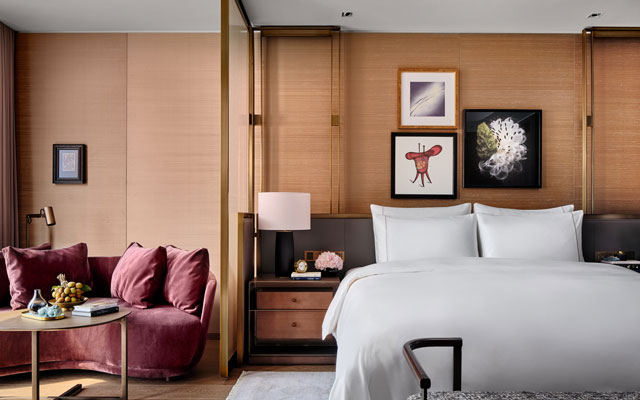
Accor has opened its inaugural Pullman property, part of a mixed-use complex in Baotou’s CBD, in North China’s Inner Mongolia Autonomous Region. Each of its 263 Mongolian-inspired guestrooms and suites proffer views of either the Saihantala Ecological Park or garden, while leisure facilities include a gym, indoor swimming pool and spa. There are several F&B options on-site – the Les Champs-Elysées Lobby Bar; Bordeaux House with its sharing dishes; Silk Pavilion with its Huaiyang and fusion cuisine; and the all-day-dining Le Fontainebleau restaurant.

Event planners may choose from Pullman Baotou’s nine meeting spaces, which includes the 1,400m2 grand ballroom that can cater to 1,200 pax theatre-style or 720 for a banquet. Adjacent to the grand ballroom is an outdoor terrace suitable for evening cocktails, or pre and post function mingles. Silk Pavilion also has 10 private rooms that can cater to business luncheons.

Dusit Thani Mactan Cebu and dusitD2 Davao, Philippines
Thailand-based Dusit International has expanded its presence in the Philippines with two new hotels in Mactan and Davao.

The five-star Dusit Thani Mactan Cebu (above) is located in a beachside location on the Punta Engaño peninsula of Mactan island, approximately 10km from Cebu City. The resort comprises 272 guestrooms, and facilities such as a 100m-long infinity pool, spa, fitness centre, four F&B options and an indoor kids zone. Event planners may avail the largest ballroom in Mactan, the 1,200m2 Dusit Ballroom, and four meeting rooms, as well as an outdoor Sky Garden for teambuilding activities or cocktail receptions.

DusitD2 Davao (above) has opened with an initial 60 rooms and suites, with another 60 slated to open later this year. Hotel facilities include a courtyard swimming pool, the Madayaw Café all-day dining restaurant, Siam Lounge, a fitness centre and the Namm Spa. Guests can also arrange for day trips to The Beach Club at Lubi Plantation Island, Managed by Dusit, a private island retreat a 30-minute boat ride off the coast of the Davao Gulf.

Sahid Serpong Hotel, Indonesia
Sahid Serpong Hotel has opened with 94 keys in Serpong, Tangerang Selatan, a satellite city of Jakarta. Categories in the three-star property – located on the upper levels of the Parkland Avenue Apartment – start from the lead-in at 22m2, all the way up to a 35m2 junior suite. Amenities on-site include a spa, fitness centre, outdoor pool, three function rooms, the Kayu Manis Cafe, a speciality restaurant and a coffee shop.

voco Dubai, UAE
The first voco-branded hotel in the Middle East stands along Dubai’s Sheikh Zayed Road, boasting 471 guestrooms with floor-to-ceiling panoramic windows that open out to downtown views. Recreational facilities include six restaurants and bars, an outdoor swimming pool, a gymnasium and Spa Zen. Corporate guests can also avail the four floors dedicated to meetings and events, offering a total of 21 meeting spaces.

Labour pains

0

The expanding hotel supply in Kuala Lumpur is compounding the perennial shortage of a qualified workforce that the hotel sector is already grappling with.

Last year, five luxury brands – Banyan Tree, W and Alila, among them – started recruitment drives in 1Q2018 ahead of their openings in 2H2018, but the hiring exercises turned out to be a human resource challenge, TTG Asia understands.

Industry leaders pointed out that local salaries are generally on the low side, which results in Malaysian hospitality professionals voting with their feet by seeking greener pastures overseas in such cities as Dubai, Macau, Singapore and Hong Kong.

Colin Rozario, director of human resources at Banyan Tree Kuala Lumpur and The Pavilion Kuala Lumpur Managed by Banyan Tree, shared: “Some (interviewees) told us they had applied to other hotels and were waiting for results; basically, they were ‘shopping’ around.”

A far cry from “two decades ago”, the current labour market is “generally an employees’ market where there is little brand loyalty”, Rozario contended.

Furthermore, with the priorisation of work-life balance and empowerment of the millennial workforce, new-gen staff typically work for a property for two years or less before seeking higher salaries and faster career advancement opportunities elsewhere, he added.

Christian Metzner, general manager, W Kuala Lumpur, commented: “Hiring rank and file staff for entry level positions is the hardest. Part of the reason is that many young people are not willing to put in the long hours required, and dealing with guests is not always easy.”

To encourage more locals to work in hospitality, Kamal Munasinghe, general manager, Alila Bangsar Kuala Lumpur, suggested that the sector “should collectively come to an agreement for better compensation of operational staff”.

Malaysian Association of Hotel Owners’ executive director Shaharuddin Saaid also sees a need to tackle the paucity of “a ready pool of capable, local manpower” through the management of hotel supply.

“There must be a programme in place to address the supply issue, otherwise hotels will continue to pinch experienced staff by offering higher salaries and better benefits, but without corresponding increase in skillsets,” he opined.

Kamal proposed: “A possible solution is to attract more international events to the city to help increase average occupancy rates, which in turn will help raise room rates.

“Once room rates increase, hotels will be able to deliver better services, as well as find the right balance between revenue versus overheads.”

GTEF delegation visits partner countries Argentina and Brazil

0

A delegation for the Global Tourism Economy Forum (GTEF) recently completed an official visit to Argentina and Brazil, official partner countries of the annual forum this year.

Led by Pansy Ho, vice chairman and secretary-general of GTEF, the delegation’s mission was to meet the heads of state and tourism ministries of Argentina and Brazil, introduce GTEF 2019 and reach out to major chambers of commerce, tourism associations and industry leaders.

Pansy Ho (left) meeting with Argentina president Mauricio Macri

The delegation also hoped to stimulate new ideas for the preparation of GTEF 2019, and eventually foster a broader tourism exchange and cooperation among the nations.

In Buenos Aires, Ho was received by Mauricio Macri, president of Argentina. The delegation also paid visit to the Ministry of Tourism of Argentina and met tourism minister José Gustavo Santos as well se Sebastián Slobayen, secretary of coordination and tourism investments. The meeting was focused on exploring China-Argentina tourism collaboration possibilities, particularly on attracting tourism investment to Argentina and facilitating respective business matching.

The delegation continued its trip at Brasilia, capital of Brazil. Wang Ping, vice chairman of GTEF and chairman of China Chamber of Tourism, was received by Hamilton Mourão, vice-president of Brazil, who said he would attend GTEF 2019 this October. There were also exchanges between various Brazilian tourism officials and leaders and the delegation on facilitating wider China-Brazil tourism cooperation .

Meanwhile, Ho travelled to Sao Paulo where she had a dialogue about the tourism economy with João Doria, governor of state of Sao Paulo and Vinicius Lummertz, secretary of tourism of state of Sao Paulo, for a dialogue around the tourism economy. The delegation later arrived at Sao Paulo an met with dignitaries and business leader to better understand one of Brazil’s major tourist destinations.

Scheduled in MGM COTAI, Macau on October 13-15, GTEF 2019 will present the theme of tourism and leisure, wellness and sports, and bring in Argentina and Brazil as partner countries and Jiangsu as featured China Province.

Expo 2020 Dubai stirs up interest in Asia

0

Expo 2020 Dubai is expected to attract scores of international visitors from Asia and bring benefits to the UAE beyond the six-month event.

The mega event, which runs from October 2020 to April 2021, will see a huge range of activities, entertainment and events take place at a 438ha purpose-built site that is expected to capture 25 million visits.

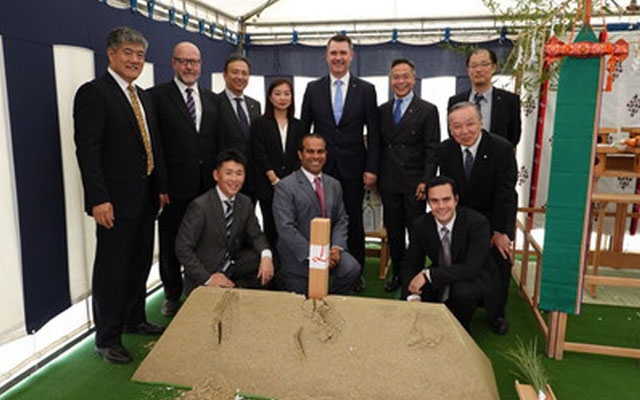
Expo 2020 is expected see more than 190 countries exhibiting, including the Philippines and Malaysia. Thailand has became the first South-east Asian country to break ground on its pavilion at the Expo.

Gillian Hamburger, senior vice president of commercial at Expo 2020 Dubai, said the mega event will create a long-term legacy, with the range of facilities creating a satellite district once the event is over. “The masterplan is to create a city that will still be there in 2030, 2040, 2050, that happens to have been built for the Expo. It’s a brilliant legacy story.”

A huge satellite city is currently under construction, housing an exhibition centre, several pavilions, gardens, parks, galleries and more than 200 F&B outlets, with Expo incorporating robotics and augmented and virtual reality into dining experiences.

Hamburger added: “We are expecting to (attract) a lot of visitors from Asia and are creating segmented programmes and dining experiences for this, as well as having good language skills on site.”

The event is expected to see draw a 70:30 mix of international to domestic attendees.

Expo teams are carrying out roadshows across Asia and working with DMCs to curate packages for specific markets, as well as inviting delegations to tour the sprawling site.

The UAE’s tourism players are already seeing an increase in international interest from visitors wanting to stop off in Dubai to experience the mega event.

John Williams, director of business development at Al Hadaf Travel & Tourism, said: “We are expecting to get a lot more traffic. We are already promoting it to many destinations in Asia and are getting strong interest from India and China.”

The Expo is also working with cruise operators, with many ships travelling from the Mediterranean to South-east Asia and vice versa repositioning their route to stop at Dubai and Abu Dhabi during the six-month event.

Yasser Moussa, deputy general manager at Al Bustan Centre and Residences, added: “We are starting to see bookings already, especially from longhaul countries, and I believe those levels will be maintained after Expo. This is a very important event.”

Expo has just revealed its 29,000m2 Sustainability Pavilion will house extensive interactive exhibition, Terra, which explores environmental issues through an innovative range of engaging activities. This is the first thematic experience to be unveiled, with Opportunity and Mobility to follow.

Tourism Malaysia wants to more than double Chinese arrivals in 2020

0
Chinese arrivals set to hit three million this year

Tourism Malaysia is aiming for a staggering eight million arrivals from China in Visit Malaysia Year 2020, more than double the 2.9 million Chinese the country received in 2018.

Overall, the NTO targets 30 million tourist arrivals for next year. This means the share of Chinese visitors would make up around 26.7 per cent attract of total arrivals, double the 13.1 per cent in 2018.

Chinese tourists pose for a photo in front of the Sultan Abdul Samad building by Kuala Lumpur’s Independence (Merdeka) square

Mohmed Razip Hasan, deputy director-general (promotion) Tourism Malaysia, is positive that Malaysia is not being over ambitious, having benchmarked the numbers against Thailand, which attracted some 10.5 million Chinese tourists last year.

To attract more Chinese, Mohmed Razip said Tourism Malaysia is planning to increase its presence in China by attending tradeshows in addition to doing more online promotions with Chinese technology providers.

He added that there will be more promotions in second tier cities and the tourism board will promote its joint international tourism development fund with Malaysia Airports to attract more charter flights from China to Kuala Lumpur as well as secondary destinations in Malaysia.

“We wish to spread Chinese arrivals, so that secondary destinations such as Penang, Melaka, Johor, Kota Kinabalu and Kuching also benefit from tourist arrivals, he explained.

According to Mohmed, Tourism Malaysia is not just interested in numbers but also yield, and hence will promote niche segments such as weddings and honeymoon, shopping, golfing, diving, birding and homestays.

He stressed: “We can’t do this alone, but with the support and collaboration from industry players such as The Malaysian Association of Tour and Travel Agents (MATTA) and various airlines.”

The NTO is also promoting ASEAN to Chinese travelers in collaboration with the Federation of ASEAN Tourism Associations (FATA).

Jimmy Thoo, vice president Inbound and domestic at MATTA, shared that MATTA is planning to organise a roadshow to Chengdu and Chongqing in September to further promote Malaysia after participating at China (Guangdong) International Tourism Industry Expo in Guangzhou from August 30 to September 1.

Recently, minister for tourism, arts and culture, Mohamaddin Ketapi said visa-on-arrival for China and India – two major inbound source markets for Malaysia – may be relaxed next year, in conjunction with Visit Malaysia Year. The decision is pending further discussions with relevant ministries and ministers.

Expansion-hungry Oyo to acquire European vacation rental group

0

Oyo Hotels & Homes is stepping up its foray into the vacation rentals sector, with its latest acquisition of Amsterdam-based vacation rental company @Leisure Group from media and technology company Axel Springer.

The acquisition is said to give the Airbnb-backed Oyo a leg up in realising its vision of becoming a global real estate brand and drive further consolidation in the vacation rental segment. Launched in 2017, Oyo Home already has over 15,000 villas and apartment units globally. The company also recently entered into Japan’s housing rental market through a joint venture with Yahoo.

Oyo Hotels & Homes’ Ritesh Agarwal, @Leisure’s Tobias Wann and Oyo Hotels & Homes’ Maninder Gulati

Commenting on the strategic rationale behind the latest deal, Oyo’s global chief strategy officer, Maninder Gulati, said: “With Europe spearheading the vacation and urban home rental trend globally, @Leisure Group is uniquely positioned to capitalise on its experience and insights aided with Oyo’s full stack approach towards building the world’s largest global vacation rentals business. If one were to look at Europe alone, there is an ever-increasing demand for vacation homes with an increasing trend of booking an entire home.”

Gulati added: “Further, in such a market of largely fragmented small and independent players, and a handful of established players, of which @Leisure Group, is one of the largest, we feel travellers will be excited with what @Leisure Group can offer.

“Through this acquisition, the size and scale of the opportunity can be immediately unlocked for Oyo’s Homes business. Today, more than 2.8 million holidaymakers from over 118 countries book their holiday every year with @Leisure Group. The combined strength of both brands can scale the opportunity multifold.”

@Leisure Group, through its Belvilla, DanCenter and Danland brands, offers more than 30,000-fully managed holiday homes across 13 countries in Europe; and through its Traum-Ferienwohnungen brand, offers a subscription-based home management service with over 85,000 homes across 50 countries. This represents a total inventory of over 300,000 rooms.

With the acquisition, @Leisure Group CEO Tobias Wann will join Oyo’s leadership group as CEO, Vacation Homes, Oyo Global.

Last year, @Leisure Group achieved a record EBITDA of more than 24 million euros (US$27 million) last year.

SriLankan Airlines hit by wave of cancellations after bomb attacks

0

As SriLankan Airlines grapples with a flood of cancellations in the wake of the Easter Sunday bombings, its chief executive is expecting a revenue loss of at least US$100 million due to an estimated drop of 30 per cent in tourist arrivals this year.

“We have been closely monitoring forward bookings for the next three months and as of today, cancellations in May is 17 per cent compared to May last year, 12 per cent in June (against June 2018) and about 18 per cent in July,” SriLankan Airlines CEO Vipula Gunatilleka told TTG Asia on Tuesday. “We expect the figures to go up.”

The airline accounts for one-third of the tourist traffic into the country. The government had set an ambitious target of three million arrivals in 2019, up from 2.3 million in 2018.

However after the Easter Sunday blasts which killed 253 including 40 tourists, the authorities estimate a 30 per cent drop following a wave of cancellations and a flow of travel advisories from countries like India, China, the UK, the US and Canada urging their nationals to postpone non-essential travel.

The airline’s new five-year business plan for 2019-2024, which was announced to the media earlier this month, would be re-visited, Gunatilleka said. A key aspect of that strategic business plan includes “developing a route network to match customer demand and market opportunities, including new destinations in Europe, Africa, the Middle East, South Asia, the Far East and Australia, as opposed to the limited point-to-point strategy”.

Noting that the worst affected routes are London and Tokyo, Gunatilleka said the airline is awaiting update from the authorities as to when the situation would return to normal. Security forces, helped by British and US intelligence, have fanned out across the country hunting for Muslim extremists, responsible for the bombings at churches and luxury hotels. Scores of arrests have been made along with weapons and explosives.

“The moment we have some clarity from the government then we can work (with the authorities) on relaxing the travel advisories. Without this clarity and assurances there is no use in targetted marketing and special promotions,” he said, adding that they would then examine how traffic could be increased from India and China, Sri Lanka’s main tourist source markets.

“We can bounce back once normalcy is restored,” he said, noting that currently travellers are not even keen to be transiting in Colombo.

New research predicts the end of standard room types

0

New research released by Amadeus and InterContinental Hotels Group (IHG) surmises standard room types with fixed inclusions are coming to an end, among the key findings published in the Drivers of Change in Hospitality report.

Study predicts the end of room types with standard inclusions, and the beginning of cult-status achievable at scale

The beginning of the end of room types
Traditional room types – single, double, twin, suite or family room – are a tried and tested format, loved by hotels and understood by guests the world over.

However, new research suggests that this will change dramatically and give way to a new trend that sees guests able to swap desks for yoga mats, stream their own content through the in-room TV, or ask for that third-floor room with their preferred view.

Hotel accommodation, which has traditionally been bought in a standard and uniform way, will need to adapt to travellers’ growing bespoke leanings. According to the study, 61% of global travellers state a preference for hotels to be priced in a way that allows them to add on bespoke options.

The study surmises will see the emergence of attribute-based booking, where guests pick and choose the individual components of their room, marking the end of traditional room types.

New selling models will become more mainstream too, with guests able to book a room for a length that suits their needs rather than a traditional overnight stay.

Achieving cult status at scale
The kind of status usually reserved for luxury or boutique hotels or consumer brands will be available for all who are able to earn loyal fans. In the competition for guest loyalty, hospitality providers need to identify how to offer value through delivering memorable, shareable experiences, the study stressed.

To do this, hotels must understand individual guest needs on each trip, and offer a host of unique and unexpected surprises. In fact, 70% of global travellers would like hotels to provide more advice and tips about unique things to do, with only 20% saying they currently get ideas from the hotel.

If done right and with the requisite technology, personal attention and personality will no be longer a characteristic of boutique brands only, the study imagines.

The rise of tech-augmented hospitality
Hospitality providers will need to serve guests in a significantly more connected way, striking the right balance between automated solutions and human interaction.

The study details how technology will be used to empower staff to deliver unprecedented levels of service at scale. It suggests that technology needs to support human interaction, not replace it, as the majority of guests (67%) say they prefer to interact with a person for the emotional interaction. For example, the deployment of real-time translation earphones and smart glasses could ensure that concierges easily interact with guests in their native tongue.

Chris K Anderson, director of Center for Hospitality Research, Cornell University, remarked: “The hospitality industry is on the cusp of a new chapter. Guests are seeking richer individual relationships and seamless experiences with their hospitality providers, and are willing to share more data and insights than ever before.”

Findings from the Drivers of Change in Hospitality were informed by over 7,500 consumers worldwide and industry experts.

Sofitel expands China footprint to Xi’an

0

Sofitel Xi’an South is slated for completion in the commercial and high technology Qujiang District in south Xi’an.

The hotel will form part of Nanfeihong Plaza, a 300,000m2 mixed-use complex that comprises a shopping mall and commercial offices owned by Shaanxi Nanfeihong Industrial. Its is 300m from Sanyao Station on Metro Line 2, 35 minutes’ drive to Xi’an North Railway Station’s high speed train, and 45 minutes’ drive to Xi’an International Airport.

Rendering of Sofitel Xi’an South

Sofitel Xi’an South will feature 280 guestrooms and suites, three restaurants, a 800m2 grand ballroom, six meeting rooms, an indoor swimming pool, gym and spa.

Sofitel currently operates more than 120 hotels globally including 23 hotels in greater China, with the recent addition of Sofitel Beijing Central.

New CEO of Qantas International announced

0

Qantas has promoted its CFO, Tino La Spina, to the post of CEO of Qantas International, following the recent resignation of previous chief, Alison Webster.

Vanessa Hudson, who is currently the group’s chief customer officer, will move to the role of CFO. A process to appoint a replacement chief customer officer will start shortly.

Tino La Spina

These changes will take effect from October 1, 2019, allowing La Spina to close out the current fiscal year through to annual reporting. From mid-May, Hudson will be CFO designate and will work closely with La Spina to ensure a smooth handover.

Narendra Kumar will remain acting Qantas International CEO until the transition is completed.

All three roles will continue to report to Qantas Group’s CEO, Alan Joyce.