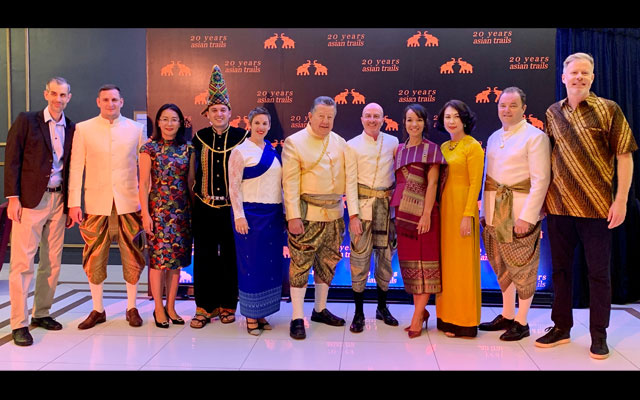
Asian Trails' complete management team, comprising (from left) Thomas Carnevale, Marcel Grifoll, Xiaolin Zhang, Emir Cherif, Virginie Kury, Luzi Matzig, Laurent Kuenzle, Laetitia Law-Lai, Thuy Tien, Stefan Bruns and Bjorn Schimanski, at the DMC's 20th anniversary big bash
Asian Trails recently celebrated its 20th anniversary with a company party at a leading resort in Hua Hin, marking the auspicious date of 9.9.99 (September 9, 1999) when the Bangkok-based DMC was born.
Luzi Matzig, today’s chairman, together with CEO Laurent Kuenzle co-founded Asian Trails, which today has expanded into 10 destinations and eight regional offices across Asia.
Asian Trails celebrates 20th anniversary
1 of 3
Asian Trails' complete management team, comprising (from left) Thomas Carnevale, Marcel Grifoll, Xiaolin Zhang, Emir Cherif, Virginie Kury, Luzi Matzig, Laurent Kuenzle, Laetitia Law-Lai, Thuy Tien, Stefan Bruns and Bjorn Schimanski, at the DMC's 20th anniversary big bash
In a blog entry on the company website entitled “20 years of ‘blazing new paths in travel'”, Kuenzle stressed that “people” remains central to what Asian Trails does. Of the almost 700 staff the company now has, some 10 per cent have been with the company since the very beginning and more than 50 per cent for over five years, he revealed.
“I still see myself as bridging people, as my love and understanding of Asia help me in putting the right people together to achieve amazing results. It is not just about monetary returns – this must be a given or we wouldn’t be here today – but it’s also about the trust, respect and understanding that my team and I have cultivated in our organisation and in all who interact with Asian Trails,” he wrote.
Much like the rapid growth seen in Apparel and Consumer Electronics, eCommerce is quickly shaking up the travel industry.
As the recent collapse of Thomas Cook, a huge global travel group operating for 178 years has shown us, rethinking marketing and business models for travel businesses should no longer be a distant priority.
Hailing from Asia’s top travel businesses, eCommerce, Digital Marketing and Customer Experience leaders are coming together at Digital Travel APAC 2020 to share their views on this emerging demographic of travellers.
Returning again for the 5th year, Digital Travel APAC will be held from 20 – 22 April, 2020, at the Resorts World Sentosa, Singapore. Growing from year to year, the event is an exclusive gathering of the world’s most innovative and disruptive travel companies. The best place to be for travel professionals to learn, network and have fun all at the same time.
Leveraging the increasingly tech savvy travellers of today, forward-looking travel businesses are already changing their strategy when interacting with their customers.
Multi-device, mobile messaging platforms (WhatsApp, WeChat, Facebook Messenger, etc), are one of the ways that many are using to reshape the customer experience.
From pre-sale enquires to flight reminders and chat assistance during their trip, agencies remain connected and contactable to their customers, bringing a level of assurance for increased satisfaction and service excellence.
The report by SITA, 2025: Air Travel for a Digital Age, shows that by 2025, 68% of all passengers will be digital travellers and will expect to manage their travel in much the same way they do every other aspect of their daily lives – using their mobile phones.
Digital Travel APAC will further explore the industry drivers of tomorrow’s travel business in a focused, interactive 2½ day conference. Key topics of discussions include:
Perfecting Personalisation – How to deliver a single view of the customer and real-time data access to deliver a hyper-personalised experience
Data-driven personalization – What are the people, process and technology requirements for rolling out a practical strategy that delivers on your customers’ individual needs from the get go?
How to understand customer needs to deliver personalised travel solutions in multiple markets
Led by a growing advisory board:
Cheryl Goh, Group VP of Marketing, Grab
Jerome Thil, VP of Digital Innovation, Singapore Airlines
Ronald Dalderup, VP of Innovation, Shangri-La
Nandor Locher, Head of Digital Direct, Qantas
Akira Mitsumasu, VP of Global Marketing, Japan Airlines
Andrew Cefai, Senior Director, Marketing & eCommerce APAC, Hilton
Piotr Jakubowski, ex-CMO, GO-JEK
Vikas Bhola, Regional Director, South Asia Pacific, com
2020 will also see the travel event hold new formats for deeper engagement and discussions:
“How to” roundtables, a highly interactive small group format that allows you to choose the topic that matters to you most while enjoying a glass of champagne.
Country Clinics, deep diving into upcoming markets like Vietnam, India, Indonesia, China
Shark Tank, Identifying “The Next Best Thing” in travel tech
Digital Travel APAC is known for its unique session format, with dedicated tracks for key topics held in smaller, intimate groups.
TripAdvisor will no longer sell tickets to, or generate revenue from, any attraction that continues to contribute to the captivity of future generations of cetaceans, referring to whales, dolphins and porpoises.
As a result, any commercial facility that breeds or imports cetaceans for public display will be banned from sale on TripAdvisor and its subsidiary Viator.
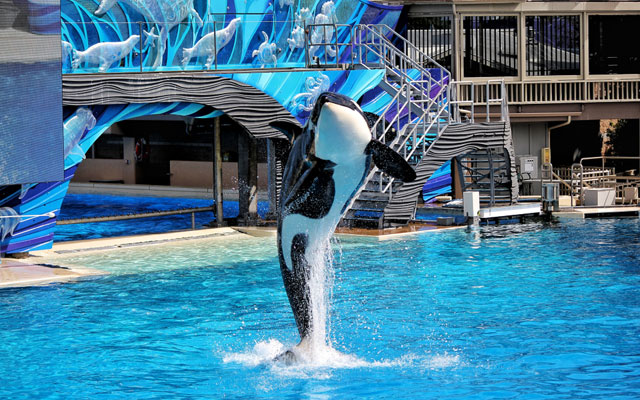
TripAdvisor’s new policy that bans ticket sales to sites that breed or import captive whales and dolphins will affect major attractions like SeaWorld parks (Pictured: Killer whale performing at Sea World in San Diego, California)
Products currently on sale and found to breach the new rules will be removed over the next few months, with the policy coming into full force by end-2019. The new policy will not apply to seaside sanctuaries that provide care to cetaceans already in captivity.
A seaside sanctuary environment is defined as a natural body of coastal water, such as a bay or a cove, that houses cetaceans in as close to a natural environment as possible while providing protection and oversight from qualified husbandry and veterinary staff, according to TripAdvisor.
Seaside sanctuaries must adhere to a strict no-breeding policy, must not train their animals to perform in any shows or performances for public display, and must prohibit all forms of physical interaction between guests and the animals, including any in-water guest experiences.
The decision follows an extensive consultation process with a range of experts, including marine biologists, zoologists and conservationists, and considered the scientific evidence and arguments presented from all sides. It continues TripAdvisor’s commitment to improving the welfare of animals globally, particularly animals in tourism.
“The extensive evidence presented to us by the experts was compelling. Whales and dolphins do not thrive in limited captive environments, and we hope to see a future where they live as they should – free and in the wild,” said Dermot Halpin, president, TripAdvisor experiences and rentals.
He added: “We believe the current generation of whales and dolphins in captivity should be the last, and we look forward to seeing this position adopted more widely throughout the travel industry.”
Conservation groups and animal welfare experts welcomed the move as an important step forward.
Naomi Rose, a marine mammal scientist with Animal Welfare Institute, said: “TripAdvisor is on the right side of history. Whales and dolphins cannot thrive in captivity and enlightened tourists no longer tolerate exploiting these intelligent and socially complex marine predators for human entertainment.”
Nick Stewart, global head of wildlife, dolphins, World Animal Protection, agreed: “This sends a clear message to other travel companies that we must end this cruel industry once and for all. Together, we can ensure this is the last generation of dolphins held captive for entertainment.”
TripAdvisor’s policy extension also takes into account that while it is possible to prevent future generations of cetaceans from a life of captivity, the situation is different for those already in captivity. For most of the current population of cetaceans, releasing them into the wild is not a realistic option. Thus, the policy also includes several stipulations aimed at protecting the needs, safety and health of cetaceans currently in captivity.
Halpin stressed: “Our aim is not only to prevent future generations of whales and dolphins from being raised in captivity, but also to encourage the industry to move towards alternative models, like seaside sanctuaries, that will better provide for the needs of the current captive population.
“Seaside sanctuaries have enormous potential, but they need more backing from the tourism industry. As long as facilities with captive whales and dolphins continue to profit from keeping these animals in smaller, cheaper and less natural living environments, then they don’t have enough incentive to adopt serious change,” he said, adding that the company hopes their latest move will help “turn the tide”.
TripAdvisor says its decision to cease selling tickets to sites that breed whales and dolphins represents the latest extension of the travel booking platform’s animal welfare policy, which first launched in 2016.
The policy already commits TripAdvisor and Viator to no longer sell tickets to experiences where travellers come into physical contact with captive wild animals, such as elephant rides and tiger petting experiences. It was further enhanced in 2018, at which point TripAdvisor also banned demeaning animal shows and performances from sale.
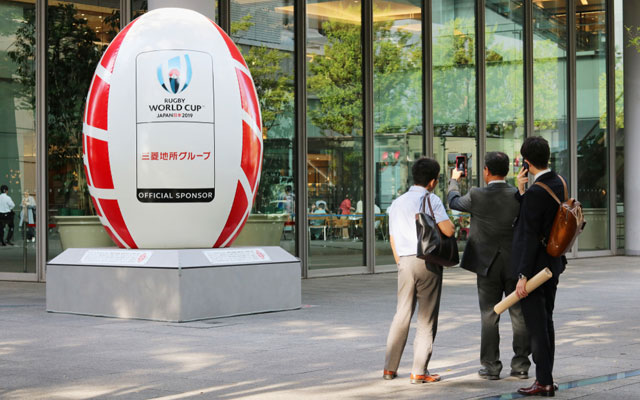
The Rugby World Cup (RWC) has fuelled a tourism boom from the competing nations, according to a study by ForwardKeys.
During the period from September 12 to November 6, which covers the tournament dates and several days before and after, flight bookings to Japan from the competing nations are currently 38.1 per cent ahead as compared to the same period last year, the study found. The highest peak is on the day before the opening ceremony, with bookings from the competing nations more than double those on the equivalent date in 2018.
Rugby World Cup has fuelled a tourism boom from the competing nations: ForwardKeys
Olivier Ponti, vice president insights, ForwardKeys, said: “When we analyse these visitors in more depth, we see that their average length of stay is 11.7 nights. That tells us that few people are coming to watch a specific game and then returning home; the majority are making a holiday of their visit.”
The RWC tourism boost is most strongly illustrated by visits from Ireland, which is not a mainstream tourism market for Japan and has no direct flight connections, according to the study.
Bookings for the period beginning September 12 to November 6 are currently 500.3 per cent ahead of where they were at this time last year. The average length of stay is 12.7 nights, which indicates that Irish visitors, having made the journey – the minimum flight time from Dublin to Tokyo is 13.5 hours – are also staying for a holiday in Japan.
There are very clear booking spikes around the dates when the Irish are playing their matches, which also happen to be the weekends.
Ponti said: “What intrigues me most is that the highest peak in bookings coincides with the quarter-finals. I’m tempted to suggest that Irish fans are confident of their team reaching that far but not necessarily any further. However, as Ireland is the world’s second ranked team, I suspect other factors are at play, such as the very limited availability of tickets for the semi-finals and final, and a strong preference of Irish rugby fans to take a two-week holiday.”
Industry players in Boracay are worried that the destination will stand to lose certain market segments following its prohibition of an upcoming beach volleyball tournament and public beach weddings on the island.
The most recent restrictions follow previous bans on other beach activities like sandcastle building, use of kerosene for fire performances, smoking and drinking.
Industry players fear Boracay’s tightening restrictions on beach activities, including the banning of an upcoming beach volleyball tournament, will affect tourism
The Boracay Beach Volleyball Open (BBVO) was notified by the general manager of the Boracay Inter-Agency Task Force (BIATF) over the phone recently that it is prohibited from holding the tournament from November 15 to 17 – three months after it made the request in June.
“We were informed that since they don’t allow beach weddings anymore, we are therefore also not allowed to have events on the beach,” a BBVO organiser said, adding that they are awaiting the official written communication from BIATF and that they couldn’t change the event’s venue on such short notice.
BBVO has been organising the volleyball open since 2011 except last year when Boracay was in the initial stage of its rehabilitation. “We usually have 200 attendees, including 150 athletes. During the last edition in 2017, we saw participants from some 15 countries,” the BBVO organiser revealed.
But a possible restriction on beach tournaments could affect sports tourism which is a key draw to the island, Viveca Hutchinson of Tribal Adventures, a Boracay-based adventure tour company specialising in kayaking, rafting and mountain biking, said: “As stakeholders of Boracay, we have not been approached (by BIATF) despite our decades of knowledge and experience of living on our beloved island. We have not been informed of the reasons behind the changes to the rules for activities held on the beach”.
“Apart from the monitoring and implementation of visitor numbers and garbage generated by events such as beach volleyball and more, we do not know of any reason how (holding the BBVO at Borocay) could affect the maintenance of the island’s ‘pristine’ condition,” Hutchinson added.
Narzalina Lim, founder of tourism and hospitality consultancy Asia Pacific Projects, calls for the BIATF to provide clarity regarding their restriction of activities on the beach. “There must be solid, defensible reasons why these activities are being restricted. The impression that I get from (BIATF) is that their decisions are based on knee-jerk reactions and not on facts,” she said.
She added that if the BBVO takes place during peak season when Boracay sees a tourism influx, and that the event takes up a lot of space over multiple days, then she agrees that it should not be held.
Lim also sees no reason to prohibit weddings, a big market for the destination. “I have been to a beach wedding in Boracay and it did not take up much space. The ceremony can be held at the beach, and the reception, at the resort,” she said.
Questioning the logic of banning sandcastle building on Boracay’s beaches, Lim remarked: “Children and adults both love building sandcastles, so why deprive them of this joy? Boracay will lose the family market if this activity is banned.
“The Department of Energy and Natural Resources should focus its attention and police powers instead on the mainland Chinese who are stealing sand from various beaches all over the Philippines and getting away with it.”
Other restrictions, like the ban on smoking and drinking on the beach and the use of kerosene for fire performances, only serve to minimise pollution and not its complete eradication, Lim stated. “What BIATF should do is focus on the powerful offenders with connections to higher-ups because that is what will have the most impact on the environment,” she said.
It’s clearly the age of Asia when it comes to passport power, as Japan and Singapore retain a firm hold at first place on the Henley Passport Index (HPI) entering the final quarter of 2019, each with a visa-free/visa-on-arrival score of 190 out of a maximum 227.
The HPI, a global ranking of countries according to the travel freedom for their citizens, is released by citizenship planning firm Henley & Partners.
Japan and Singapore retain first place on the Henley Passport Index (HPI)
For most of the 14-year history of the index, which is based on exclusive data from the IATA, the top spot has been held by a European country or by the US. However, this shifted dramatically in 2018, with Asian countries now firmly established as world leaders when it comes to both global economic activity and global mobility.
With visa-free/visa-on-arrival scores of 188, Finland, Germany, and South Korea remain in second place, while Denmark, Italy, and Luxembourg come in third, with a score of 187. Both the UK and the US remain in sixth place, with access to 184 destinations visa-free – the lowest position they have held since 2010 and a significant drop from their top ranking in 2014. Afghanistan sits at the bottom of the ranking, with access to just 25 countries without a prior visa.
Using historic data from the HPI and the Index of Economic Freedom, political science researchers Uğur Altundal and Ömer Zarpli of Syracuse University and the University of Pittsburgh, respectively, found that “countries that have higher visa scores also rank higher in economic freedom, especially in investment, financial, and business freedom”.
Christian Kaelin, chairman of Henley & Partners and the creator of the passport index concept, said: “Our ongoing research has shown that ‘passport power’ is more than simply the destinations a holder can travel to without a visa. Often, there is a strong correlation between visa freedom and other benefits such as business and investment freedom, independence of the judiciary, fiscal health, and property rights.”
While Brexit is – in theory, at least – only weeks away, the focus is firmly on how it will affect migration policy to and from the UK. Madeleine Sumption from The Migration Observatory at Oxford University noted: “Unlike trade policy, the future of immigration policy in the UK does not depend fundamentally on whether or not the UK leaves the EU with a deal. In either scenario, there will be a ‘transitional period’ until at least December 2020, in which free movement of EU citizens to the UK will continue more or less as it operates today. After that however, long-term settlement is likely to be much more difficult for EU citizens. And UK citizens who want to move to EU countries after Brexit will also face more restrictive immigration regimes.”
The biggest climber on the index over the past quarter has been the UAE, up five places to rank 15th. Lorraine Charles at Cambridge University’s Centre for Business Research said: “While the UAE may not be able to compete with Saudi Arabia – the regional hegemon – in terms of military strength and economic power, the projection of its soft power is uncontested in the GCC.”
As they have done throughout the index’s long history, countries offering investment migration programs continue to perform strongly. Moving up from the 16th-place position it held last quarter, Cyprus now holds 14th place, with Cypriot citizens able to access 173 destinations visa-free. Malta retains its strong seventh-place position with a visa-free/visa-on-arrival score of 183, while Antigua and Barbuda has risen to 28th place with a score of 149 after gaining access to Russia.
Commercial real estate information provider CoStar Group has entered into an agreement to acquire STR, one of the world’s biggest hospitality data and intelligence firm.
The acquisition comprises the entire STR portfolio, including STR, Inc, headquartered in Hendersonville, Tennessee; STR Global, the company’s international business headquartered in London; Hotel News Now, the company’s digital media arm based in Cleveland; and the Hotel Data Conference, hosted each year in Nashville since 2009.
CoStar Group signs deal to acquire STR for US$450 million
The transaction, valued at US$450 million in cash, is expected to close in 4Q2019, subject to customary closing conditions.
“The STR team has built an extraordinary company that partners with the hotel industry to create benchmarks and analytics that are the primary tools hotel management and investors rely on to optimise and improve their assets,” said Andrew Florance, founder and CEO of CoStar Group.
He added: “STR brings an unrivalled reputation within the global hospitality industry for their data integrity, reliability and strict confidentiality, and we look forward to continuing to build on these core values in the next chapter of STR’s growth.”
STR, Inc has been a private, family-owned company since its 1985 founding as then-Smith Travel Research by Randy and Carolyn Smith. The Smith family also maintained majority ownership in STR’s international entity. Overall, STR employs 370 team members in 15 countries.
“CoStar brings leading technologies, as well as complementary data, analytics and sales capabilities that we believe will enable STR to accelerate growth and increase the value and insights we provide to our hospitality clients,” said Amanda Hite, STR’s president and CEO.
The hotel industry has been the cornerstone of STR’s business from its founding. Today, the company processes, analyses and reports on data from 66,000 hotels representing 8.9 million rooms in 180 countries.
Cruise Lines International Association (CLIA) has launched its annual Cruise Month, a month-long campaign that promotes cruising as the preferred holiday style.
Running through October, Cruise Month aims to raise awareness about cruising and reinforce the benefits of booking through CLIA-accredited travel agents, telling consumers about the additional skills and education that dedicated cruise specialists have invested in, said the association in a statement.
Consumers can search for knowledgeable and experienced cruise agents based in Asia and accredited by CLIA with the CLIA travel agent search tool on the CLIA Asia website.
CLIA members can access new resources available in CLIA’s Cruise Month toolkit, which offers travel agents a wealth of downloadable materials that can be used in their own marketing and social media efforts.
Cruise Month will also celebrate the world’s wider cruise community as part of CLIA’s #WeAreCruise campaign, highlighting some of the many social and economic benefits that cruising brings to communities globally.
Travel agents with a keen interest in cruise are invited to join CLIA and its cruise line members at ITB Asia on October 18, 2019 to hear the latest trends and tips in increasing cruise profits.
Centara Hotels & Resorts has signed a landmark agreement with Taisei Corporation and Kanden Realty & Development to bring the Centara brand to Japan.
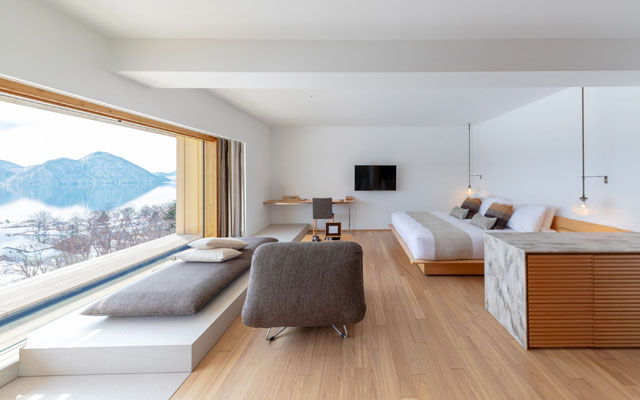
Scheduled to open in mid-2023, the 515-key Centara Grand Hotel Osaka will occupy a 34-storey tower in Osaka’s Namba district.
Centara Grand Hotel Osaka, the brand’s first property in Japan, is slated to open in mid-2023
Facilities include a lounge with customisable space for meetings and events, a rooftop restaurant sky bar, Spa Cenvaree, a fitness centre, as well as a diverse selection of restaurants and banquet facilities.
The addition of its first property in Japan is part of Centara’s expansion strategy, which calls for doubling the number of properties under its management by 2022.
Avis has joined hands with Travel Wander, a Singapore-based travel agency that specialises in active holidays, including cycling, hiking, running, conservation and culture.
The partnership aims to inspire more people to explore the unique and adventurous bike-drive itineraries offered in New Zealand.
Avis partners Singapore-based Travel Wander to promote bike-drive holidays in New Zealand (Pictured: Hawke’s Bay Trails North Island Ride, one of the bike itineraries offered by the companies)
With some of the world’s grandest mountain landscapes, Nga Haerenga, or the New Zealand Cycle Trail, offers an alternative way to soak up the beauty of the country. The bike path network, covering 2,500km of New Zealand’s countryside in both North and South Islands, has over 20 biking routes known as Great Rides for bikers of every age and ability.
Having access to a rental vehicle will give travellers the freedom to explore the country, and drive from one biking experience to the next whilst seeing the beautiful sights in New Zealand along the way, said Avis in a statement.
Angeline Tang, regional director – leisure travel & partnerships, Asia, Avis Budget Group, said: “Travel Wander is already a partner with Avis Singapore for New Zealand car rentals in the FIT segment… With trips being self-guided, our partnership with Travel Wander will provide travellers greater convenience and allows them the freedom to get from one ‘Great Ride’ to another in a car of their preference.”
Avis has one of New Zealand’s most comprehensive rental fleets, offering a wide range of vehicles from compact economic rental cars to luxurious soft top Cabriolets, 4-wheel drives, SUVs, eco-friendly hybrids, commercial vans and trucks. Last year, two additional hybrid models were introduced to the New Zealand fleet.
Avis New Zealand operates in almost 40 locations across the North and South Islands. Bicycle roof racks are also available for rental from Avis’ outlets at Auckland Airport and Christchurch Airport for travellers who are bringing their own bicycles for the Great Rides.
Here are some examples of the bike-drive itineraries:
Hawke’s Bay Trails North Island Ride
Meandering between the twin cities of Napier and Hastings, Hawke’s Bay Trails boasts 200km of cycle trails that are generally flat with a river and coastal network of pathways stretching over the Heretaunga Plains.
Tasman’s Great Taste Trail South Island Ride
Tasman’s Great Taste Trail starts from Nelson Airport and stretches across panoramic coastal and mountain views over Tasman Bay, Waimea Estuary and the Western Ranges, with many stops for fine food and relaxation in between.
The Queenstown Trail South Island Ride
The Queenstown Trail unveils close to 120km of spectacular cycling trail in Otago’s Wakatipu Basin.
West Coast Wilderness South Island Ride
In the middle of the Southern Alps on the West Coast lies a series of tracks carved by pioneering goldminers. Today these old tracks, together with extensive water races, logging tramways and historic railway lines, form the West Coast Wilderness Trail.