Australian coach tour company AAT Kings, owned by parent company The Travel Corporation (TTC), is establishing a team based in Singapore on the back of its expansion into the Asian market.
Led by YK Wong, senior sales manager wholesale, Asia, AAT Kings will promote its bespoke tours and services to Asian travellers, who are becoming increasingly “discerning”, said Wong at a trade outreach session in Singapore last week on July 18.
Aside from day tours, AAT Kings also organises multi-day itineraries, that the Asian market may not be too familiar about; Uluru in Australia pictured
Wong explained that a majority of the Asian market are familiar with AAT Kings’ day tours, but not much is known about its longer and multi-destination itineraries.
As such, the new team aims to raise awareness in Asia of such products, as well as their ability to execute highly customised and luxury tours. Besides a 20-seater coach with leather-bound seats, AAT King’s tours offer experiences such as visiting Aboriginal villages and dining at Uluru.
TTC’s managing director Asia Nicholas Lim told TTG Asia: “AAT Kings has always been known for its day tours, but we want to show the trade that we can do much more, especially for travellers who want to spend a few more days (on the road).”
Lim shared that the company will now focus on building brand awareness in this region, which will ride on other already-known TTC brands such as Contiki and Trafalgar. For example, a booking made on Trafalgar could be tied in and fulfilled through AAT Kings’ services.
Lim also expressed that the coach tour operator has been “buoyed” by an “encouraging” year-on-year growth of 36 per cent, as well as Asia’s market potential.
After Singapore, AATKings will conduct a similar trade outreach session in Manila, before returning to Singapore to participate in the NATAS Holiday Fair on August 2-4.
Tourists milling about an outdoor market in Bangkok
Thailand’s new tourism and sports minister Pipat Ratchakitprakan, who replaced Weerasak Kowsurat, has prioritised the setting of safety standards to regain the confidence of foreign tourists to the country, according to a Bangkok Post report.
Speaking in his new capacity when he assumed his role last week, Pipat said the ministry would launch an initiative later this year to engage volunteer police in communities to supervise visitors in each tourism area.
Tourists milling about an outdoor market in Bangkok
The new tourism chief also plans to promote medical marijuana tourism, especially Thai traditional medicine and message, reported Bangkok Post.
Tourists from Europe and the US, who have a positive perception about medical marijuana, would be key targets for these marijuana tourism packages.
The report added that Yuthasak Supasorn, governor of the Tourism Authority of Thailand, is ready to implement medical marijuana tourism promotion to build quality tourism because the target segment tends to spend more than average tourists.
Pipat is a key Bhumjaithai Party leader, who party campaign promises included the liberalisation of marijuana cultivation for medicinal purposes as well as the legalisation of ride-hailing and home-sharing apps and sites.
The Tourism and Sports Ministry is expected to work with the Transport Ministry to legalise ride-sharing services, following the presentation of the party’s policies to the prime minister.
In light of the strong Thai baht which has made the country more expensive for foreigners, Pipat also intends to talk to the Finance Ministry and the Bank of Thailand about reducing the currency strength.
According to the Bangkok Post report, Pipat also plans to talk to the private sector about enhancing tourism attractions in all provinces, and pushing local tourism to the forefront as well.
Attracting big sporting events and tournaments to Thailand would be encouraged too, said Pipat.
Kiong: there will always be a market for serviced residences despite homesharing enroachment
Home-sharing platforms have been steadily gaining traction since its commencement as an affordable “couch-surfing” accommodation option. It has become one of the preferred ways for the “I want to live like a local” traveller demographic – the group of travellers who wish to experience how the people of the destination live, and become one of the locals.
However, governments and the hospitality industry were unprepared for this rapid growth in home-sharing platforms. Rules had to be enforced, but how and what to put in place was a concern. Existing residents were raising complaints against strangers entering their residences. And most importantly, security has been an ongoing issue for the guests. In fact, a recent report by Investment Property Exchange Services found that one out of 10 home-sharing guests have found a hidden camera during their stay.
From licensing to the minimum-stay period for rentals – countries in South-east Asia have been setting strict regulations on home-sharing platforms. But hospitality industries need to work in tandem with the governments as well.
The need for hospitality players to step up As hospitality players, it is important for us to understand travellers’ psychographics and preferences. Knowing and catering to guests’ needs is one of the key driving factors of industry growth.
Today, people travel for work, for leisure or for memorable family staycations – the reasons vary. And hotels need to recognise these different profiles in order to stay relevant.
Take, for instance, a family of six travelling for two-weeks in Singapore. Chances are, a standard hotel room will be too small, and an extra room will be costly. But this doesn’t mean that this family needs to turn to a home-sharing platform. Instead, they can consider a serviced residence.
Changing the perception of serviced residences Many view serviced residences to be for business or relocating travellers, but they aren’t limited to just these profiles.
They can be for anyone who prefer more space, less amenities that they do not need, and a bit more privacy than from hotels.
By 2030, it is predicted that travellers will travel to experience life as a local for a unique and personalised trip. A growing number of travellers prefer an accommodation that makes them feel at home while having the comfort of a hotel.
Serviced residences are one growing accommodation option that can provide guests the “home-away-from-home” sentiment. Simply put, they offer guests the chance to live like a local, with more freedom to stay as they would at home. They have the room to cook, do laundry, personalise the space as if they are continuing on with their daily routine, all with security as a standard.
Serviced residences are also unique in the sense that it serves different target markets and opens up new expansion opportunities for the industry. They can be catered towards modern travellers and offer contemporary living spaces. Or, for travellers who are conscious of their wellness, there are serviced residences that provide amenities such as fitness centres, tennis courts and swimming pools for use.
“Better safe than sorry” Countries like the US, Canada, France, England may be more welcoming to home-sharing platforms because they have the space to host. However, home-sharing platforms bring about an immense challenge in Asia, largely because there is an uneven playing field.
Asia has strict property regulations due to our environment. There is limited land to build residential areas, and owning property is scarce and viewed as a privilege. As such, these nations often have strict minimum rental periods – not just for tourists, but for citizens as well.
So, for anyone planning a trip to Asia any time soon, remember this – no one has the answer to how long home-sharing platforms will be regulated. But we do know that our industry is, and always will be, legal.
Agarwal: excited about the potential impact that Oyo's continued expansion will bring
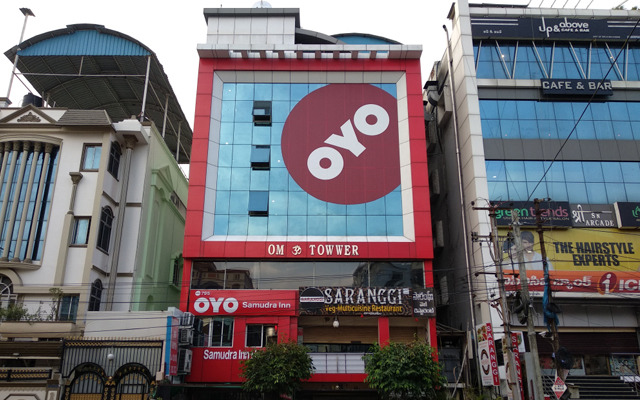
Oyo Hotels and Homes’ founder and CEO Ritesh Agarwal will be investing US$2 billion, through the entity RA Hospitality Holdings (Cayman), to increase his stake in the startup he founded.
Agarwal will be buying shares from existing investors Lightspeed Venture Partners and Sequoia India, which will remain backers of the startup, the company said in a statement.
Agarwal: building a brand that is focused on bringing a better lifestyle for the common man
The deal is currently remains subject to shareholder and regulatory approvals.
Agarwal said in a statement: “It is a very exciting time for Oyo right now as we make great living spaces come alive across all corners of the world from Texas to Tokyo. Our endeavour continues to be to become the most loved hospitality brand in the coming years.”
Both Lightspeed India Partners Advisors and Sequoia Capital have voiced their support for the move, and have indicated they remain committed to supporting Agarwal and his company.
This year, the India-based company has seen a 4.4 times year-on-year growth in revenue in June 2019 (vs June 2018), with one million rooms under management across hotels and homes; with over 200,000 rooms in India.
Earlier this month, Oyo published a statement hailing itself the world’s third largest hotel chain by room count as of June 2019, where its portfolio comprises more than 23,000 hotels and 46,000 vacation homes.
AirAsia and AirAsia X will appeal against the High Court ruling on July 18, 2019 to pay the outstanding passenger service charges (PSC) to Malaysia Airports (Sepang) (MASSB).
In a statement issued last Friday, AirAsia founders Tony Fernandes and Kamarudin Meranun have indicated that they will be appealing the court’s decision, and apply for a stay of execution to “challenge MASSB’s and its parent Malaysia Airports Holdings (MAHB’s) actions”.
AirAsia planes at klia2
The monies being claimed against AirAsia by MAHB were to be collected from the passengers. AirAsia has said it did not collect the differential amount or withhold its payment to MAHB.
MAHB had imposed a new PSC of RM73 (US$17.80) for passengers using klia2 to destinations out of South-east Asia effective July 2018. This amount is RM23 higher than the previous rate of RM50 that AirAsia has continued to collect from passengers.
“AirAsia has since the beginning opposed this increase in PSC arguing that passengers using the inferior klia2 cannot be forced to pay the same charges as that of the better-equipped and more luxurious KLIA. On that principle, AirAsia has not collected the extra charges imposed by MAHB,” they said.
Both founders also stated that they have sought help from the Malaysian Aviation Commission (Mavcom), but Mavcom “refused to intervene”, insisting that this “goes against the provisions of the Mavcom Act”.
AirAsia X’s CEO Benyamin Ismail said: “MAHB is painting an inaccurate picture to the Malaysian public by suggesting that klia2 and KLIA are on par in terms of quality and service. Anyone who has used both terminals knows that this is an untruth and an attempt to justify higher earnings for MAHB, whose profits have been growing considerably because of such arbitrary decisions.
“AirAsia has also been facing numerous operational issues with klia2, including frequent unplanned runway closures, uneven aprons and taxiways, and a poor airport design that requires long walks to gates causing passengers to be delayed or lose their way,” Ismail added.
“We would like to reiterate that these legal challenges are not simply a matter between AirAsia and MAHB. In the event we lose in the highest courts of appeal, it is passengers especially Malaysian travellers who will have to pay the differential MAHB is charging. We believe that the people of Malaysia should have the right to a fair deal,” Fernandes and Meranun stressed.
InterContinental Hotels Group (IHG) has signed a management agreement with Warisan City Development – part of the Kienta Group of Companies – for a Holiday Inn within the Kuala Lumpur International Airport (KLIA) vicinity.
Slated to open in 2021, Holiday Inn Sepang will feature 250 rooms, alongside facilities such as a cafe, restaurant, lounge-cum-cocktail bar, pool, restaurant, gym and business corner.
A rendering of the upcoming Holiday Inn
The hotel’s “substantial” events capabilities will include four state-of-the-art meeting rooms, including a ballroom that can host banquets of up to 400 people. The property will also feature an event space that opens out to the hotel’s pool area where receptions can be held.
The new-build will be located in Kota Warisan, a 15-minute drive from the airport’s main terminal. Also in the vicinity is the Xiamen University Malaysia, Mitsui Outlet Park KLIA and the Sepang International Circuit. In 2020, E-commerce giant Alibaba will also be launching the Digital Free Trade Zone within the airport compound, serving as a regional logistics hub for SMEs.
IHG has five hotels operating across three brands in Malaysia, including: InterContinental, Holiday Inn, and Holiday Inn Express, with a further 10 in the development pipeline due to open within the next five years.
Tan Kok Liang of Borneo Trails Tours & Travel was re-elected as the president of the Malaysian Association of Tour and Travel Agents (MATTA) for the second consecutive term (2019 – 2021), following the association’s 44th annual general meeting on July 13.
Tan has voiced his intention to continue his work in creating more opportunities and fighting for better regulatory and business conditions for MATTA members. This will involve leveraging technology to help members maintain a competitive edge in an increasingly disruptive business environment.
Priorities for the next two years include development of the MATTA Tourism Industry Distribution and Booking Platform, leveraging e-hailing platforms, collaborating with Petronas for members incentives and combating illegal travel agents in collaboration with Radio Televisyen Malaysia.
The newly elected executive council for the 2019-2021 term will be stepping up engagement with all major industry principals and stakeholders at both national and state level to up-scale the standard and delivery of travel and tourism services in Malaysia.
Council members include:
Deputy president – Akil Bin Mohd Yusof (Triways Travel Centre)
Honorary treasurer – Mohammad Faeez Bin Mohamad Fadhlilah (Tripfez Travel)
Vice president inbound & domestic – Jimmy Thoo Choy (Pearl Holiday (M) Travel & Tour)
Vice president outbound – Cynthia Tan Bee Sim (Roystar Travel & Tour)
Vice president air transportation – Shazli Affuat Bin Ghazali (Legend Vacations)
Vice president land rransportation – Subramanian A/L Kandasamy (SC Southern Tours & Travel)
Vice president Umrah & Hajj – Azri Bin Abd Razak (Al-Hijjrah Vacation)
Vice president education & training – Kong Chun Yen Christina (Sensational Holidays (Borneo))
Vice president research & technology – Mohd Hizzat Bin Mohd Shah (Al Furqan Travel & Tours)
Kedah/Perlis chapter chairman – Mohd Yusin Bin Mohd Yatim (Tropical Charter)
Perak chapter chairman – Chong Yu Ken (Global Net Travel)
Selangor chapter chairman – Gopalan Mariappan (Sanubary Travel)
Dream Cruises’ Genting Dream last week made its maiden call at the Brunei Muara Port with around 3,000 international passengers.
The call was the third stop of a five-night round-trip cruise from Singapore to Kota Kinabalu, Malaysia and Muara in Brunei.
Brunei’s deputy permanent secretary, Awang Wardi bin Mohammad Ali at the Ministry of Primary Resources and Tourism hosted a welcome reception for those arriving.
Earlier this year, the Tourism Development Department at the Ministry of Primary Resources and Tourism launched the Discover Muara package, as part of its efforts to introduce more attractions in Muara Town and near to the Cruise Ship Centre and Ferry Terminals to create more offerings and options for the tourists arriving into Muara Port.
On average, 15 cruise ships sail into Brunei Muara Port every year, bringing about 400 to 3,000 passengers with each call.
From left to right: FSS Sayuri Kawase; Ms Reiko Fujita, Executive Director Overseas Promotion Department, JNTO; Mr Akira Ninagawa, Executive Vice President, JNTO; Mr Campbell Wilson, Senior Vice President Sales & Marketing, SIA; Mr Ranjan Jha, Senior Manager Brand & Marketing, SIA; FSS Mandy Ng
Japan National Tourism Organization (JNTO) and Singapore Airlines (SIA) yesterday signed a Memorandum of Cooperation (MOC) to further promote travel and tourism to Japan from five key markets in the region – Singapore, Australia, India, Indonesia and Malaysia.
As part of the partnership, JNTO and SIA will roll out joint promotional activities such as fam trips and marketing activities. The two-year agreement has been pegged at ¥48 million (US$445,536) for the first year, with the second year of funding currently undecided.
From left: JNTO’s Reiko Fujita and Akira Ninagawa; SIA’s Campbell Wilson and Ranjan Jha
This collaboration also marks the first time JNTO is partnering with an airline, coming at a time as Japan works towards its goal of 40 million inbound visitors by 2020.
“Inbound passenger traffic from South-east Asia and the neighbouring region have been growing steadily, and these regions are some of the most important markets for Japan. Through this partnership with SIA, we hope to boost the number of visitors to Japan not only from Singapore but from all over South-east Asia and the other regions including those who transit in Singapore,” said JNTO executive vice president Akira Ninagawa.
The number of tourists to Japan from Singapore increased 2.3 times over the past five years. In 2018 alone, traveller numbers from Singapore climbed 8.2% year- on-year to 437,280. Similarly, there was a 14.7% year-on-year jump in tourists from India to Japan, 11.6% from Australia, 6.5% from Malaysia and 12.7% from Indonesia.
SIA senior vice president sales & marketing, Campbell Wilson, elaborated: “This part of the world may not be our largest contributing market for Japan tourism… but this agreement was initiated by SIA because we felt that there was more opportunity. Looking at the key markets covered by this MoC, all of them have grown by double-digit rates so far this year.”
He further revealed that more than 70 per cent of Singaporeans have already been to Japan more than once, a figure significantly higher than other markets covered under the MoC. For instance, 56 per cent of Indians have only travelled once to Japan; while 48 per cent of Indonesians and 45 per cent of Australians have never been to Japan, so there’s “definitely plenty of opportunities”.
But as the Japanese government charges towards its target of 40 million inbound tourist arrivals by 2020, wouldn’t overtourism become a greater challenge for already-popular destinations such as Kyoto, asked TTG Asia.
Ninagawa remarked: “Actually, (the number of) tourists who head to the northern part of Kyoto, are not that great yet. There are also a lot of hidden places there, which is what we’re trying to promote. We’re also trying to get temples to open for longer hours to the public, so that they can be visited at different times in the day (to spread out the visitor traffic).”
To help combat overtourism in popular locations, Ninagawa revealed that a brand-new travel brochure, 100 Experiences in Japan, was launched last month to feature lesser-known experiences, such as training with a mountain mystic in Yamagata Prefecture and spending a night in a funaya boathouse in Gifu Prefecture.
When asked if SIA is planning to fly to more Japanese cities, especially to lesser-known areas to help disperse tourism, Campbell told TTG Asia: “We currently fly to seven cities in Japan (across the SIA group). For the moment we feel like we’ve geographically covered north to south, so there are no immediate plans to add new cities.”
Instead, SIA will be adding flights, such as a third daily flight to Osaka and a fourth daily flight to Tokyo Haneda; as well as upgrading the sizes of its aircraft to Nagoya and Fukuoka; so there’s “plenty of additional capacity”.
“Given Japan’s fantastic land transport network, any of those gateways can get you to anywhere in Japan pretty easily,” Campbell noted.
Travellers around the world are increasingly paying for their travel with alternative payment methods such as e-wallets and bank transfers, more often than cards and cash combined, a new report jointly commissioned by Amadeus and cross-border payment specialist PPRO revealed.
According to The Travel Payments Guide report, this growth is occurring across the world with e-Wallets now twice as popular as cards in China, accounting for 49% of the country’s US$155 billion digital travel spend. In the US, e-wallets may replace cards as the most popular way to pay by 2025, having gained an additional 4% share of the market in the last 12 months.
Alternative payment methods such as scanning QR codes with a smartphone are becoming an increasingly convenient way to pay while travelling
Data from the report also showed that Asia leads the way in alternative payments, accounting for 58% of the region’s spend, closely followed by Europe where alternative payments represent 53% of spend. In North America, cards remain the most popular way to pay, representing 58% of all e-commerce spend, although that share has fallen from 62% just 12 months earlier.
James Booth, PPRO’s vice president – head of partnerships (EMEA), said in a statement: “Travel has always been at the forefront of e-commerce and our data shows it commands a significant share of the pie. Some of the largest markets in the world are seeing alternative, local payments take more than 7% market share in a single year so travel merchants really do need to move quickly now.”
Bart Tompkins, managing director, payments, Amadeus, commented: “This data highlights how quickly the payments landscape is changing and the increasing complexity facing travel merchants.
“It should be noted that despite less travellers paying with cards directly, many do rely on the card networks in the background. So, cards will continue to be essential payments infrastructure for our industry,” he noted.
There are now more than 300 different ways to pay for travel around the world, according to the Amadeus PPRO Travel Payments Guide which analysed e-commerce and digital travel spend across 40 of the world’s largest markets.
The report relied on a range of data sources including central banks, national e-commerce associations, IATA, PYMNTS.com and globally-recognised publicly available databases.