Archipelago International has signed three new hotel deals just before the end of 2019.
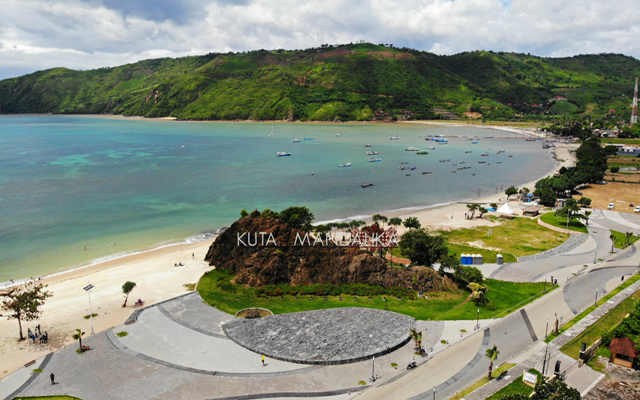
Debuting in 2021 is the 226-key Harper Hotel Mandalika Kuta Lombok, located right on Lombok’s Kuta Beach and within easy access to the Moto GP Lombok. The hotel will feature three meeting rooms, the signature Rustik Bistro & Bar, and Lombok’s very first beach club.
Archipelago closes 2019 by signing a trio of hotel deals, including one on Lombok’s Kuta Beach
Opening its doors in Sumatra’s city of Padang will be the 312-room Aston Minangkabau, which will feature a number of event spaces, as well as dining and wellness facilities.
Archipelago’s eighth presence in Yogyakarta will be marked by the arrival of the 150-key Royal Malioboro by Aston, located just a stone’s throw from the famed Malioboro street.
What started as a travel community created with friends and family in 2017, soon blossomed into a full-fledged boutique travel agency Beyond Expeditions for Singaporean millennial Scott Tay.
The Singapore-headquartered boutique agency specialises in small group tours limited to six participants to off-the-beaten-track destinations in Mongolia, Kazakhstan and Ladakh.
Beyond Expeditions' founder Scott Tay's travels
1 of 3
When asked why he picked Mongolia as part of the tour itinerary, Tay told TTG Asia: “I was tired of working and took a long break, and one of the places I visited was Mongolia. What I liked about the country was the sense of freedom out in the countryside. I felt liberated, and there was nothing to distract me from living in the moment. Everything was so crisp, clear, and I swear I could even hear the birds chirping louder. This is precisely why I want to introduce more people to Mongolia.”
Tay added that he saw a way of bridging the geographical distance between Mongolia and Singapore by helping to fill the logistics gaps, given that he has visited the East Asian country countless times since founding his company in 2017.
Additionally, online information surrounding Mongolia is not readily available, while local operators typically sold similar packaged tours visiting the same tourist attractions.
A typical winter itinerary for Mongolia, for instance, may include a 30-minute husky ride for a group with a large travel agency. For Tay who hopes to give his travellers the unique experience of a nomadic life, he puts them on a three-day husky sledding expedition that includes bonding with the dogs and camping in the wild, on top of mushing through the snow.
To spread the word about Beyond Expeditions, Tay has hosted sharing sessions at Travel Revolution, as well as run numerous ads on Facebook and Instagram – the latter targeted at millennials. Business has been growing year after year, with Beyond Expeditions having served over 300 clients to date.
Besides millennials, Tay shared that some of his travellers are in their late 30s and 40s, with more of those in their 40s dropping him enquiries in recent times. His largest group of clients, however, are solo female travellers, which account for a whopping 98 per cent.
“There are many Singaporean ladies who are very curious about travelling to these off-the-beaten-track destinations, (and would like a group to travel with to err on the side of caution),” explained Tay.
While Tay is currently contented with Beyond Expeditions’ portfolio, his future goal is to have a repertoire of five countries, which will evoke a strong sense of adventure and bring about unique experiences.
“We are positioning ourselves as travel specialists. If I were doing, say, more than five countries, I don’t think I’d be a specialist anymore,” he said.
Echoing the sentiments of other tourism industry leaders, Tay believes that experiential travel will continue to grow in popularity, and there will be a shift away from “typical Singaporean holidays like shopping trips to Bangkok”.
“People are starting to tire of the conventional way of travelling. They crave for more experiences that will leave an imprint in their hearts,” Tay opined.
Alongside regularly scheduled group trips, Tay also runs charity expeditions in collaboration with local NPOs such as Singapore Cancer Society and Down Syndrome Association.
He elaborated: “We don’t embark on these tours for our own leisure, and we try to get our friends and family to support us in the cause by donating money directly to the organisation while we put in the effort in walking – or kayaking – for the expedition. The journey is usually harsh, for example, (trekking through) Mongolia (during winter lows of) minus 50 degrees celsius together with other cancer survivors.”
Beyond collecting donations, Tay and his expedition crew aim to inspire others in similar situations through these voyages, as well as send a strong message to cancer survivors and patients that there is life after cancer.
“For me, it’s about having a purpose. And I’m always up for trying and learning new things every day. That is what excites me and keeps me going,” Tay concluded.
Single apps for all travel needs, passport free travel, and mobile app check-in are the top three new travel norms expected by travellers in the 2020s, according to new research by Agoda.
With the continued advancement of technology, revolutionary travel apps, and better connectivity, people expect a lot more from their travel experience in the next decade, said the OTA in a statement.
Asian travellers expect technology developments to simplify travel in the 2020s: Agoda
Specifically, South-east Asians expect these technological advances to simplify travel, according to the survey which polled over 16,000 adults between December 12, 2019 and December 18, 2019. Half of all respondents in Indonesia (56 per cent), Singapore (54 per cent), Malaysia (53 per cent), Taiwan (50 per cent), the Philippines (48 per cent) and Thailand (48 per cent) consider this to be the norm in the next decade, compared to only a third of people in the UK and the US (33 per cent).
One in two South-east Asians also view mobile app check in, which allows guests to skip the registration queue, download their room access key and go straight to their rooms, as the norm in the 2020s, with Singaporeans (54%), Filipinos (53%), Malaysians (58%) and Thais (49%) most expectant of this trend.
Meanwhile, Singapore (50 per cent), Vietnam (47 per cent), the Philippines (45 per cent), China (44 per cent) and Australia (41 per cent) are the top five origins most likely to see a future with passport-free travel. In the UK and the US, they are less expectant of this advancement, with only one in five respondents expecting it to be the norm within the next decade.
Timothy Hughes, vice president of corporate development at Agoda, said that “the 2020s will be defined by the power of data and machine learning. This will enable companies like Agoda to provide personalised, more relevant recommendations to make booking travel even easier”.
He added: “Asian travellers, in particular, are enthused by, and expectant of, technology developments that enhance and simplify their travel experience. Asian-based companies are now leading the world in technology adoption and development to achieve this. I expect to see Asia press ahead with that lead in the 2020s – especially in areas such as video and augmented reality, improved mobile services with more chat and voice solutions, and payments to help bring the ‘unbanked’ online”.
Universally, people want to increase the amount of travel they undertake in the 2020s, with 40 per cent of respondents globally wanting to explore more of their own country, while 35 per cent is keen on international travel.
There is also a growing trend in responsible tourism, with more than a quarter of respondents desiring eco-friendlier travel choices in the next decade.
Travellers from Singapore, Thailand, and Indonesia are most keen to make eco-friendlier choices, perhaps in light of the recent closure of Maya Bay in Thailand, and the Boracay rehabilitation programme in the Philippines.
Travellers in the 35-44 and 55+ age groups are most likely to want to explore their own countries and territories more (40 per cent and 42 per cent respectively), with those from China, Indonesia, Japan, Malaysia, the Philippines, Taiwan, Thailand, the US and Vietnam choosing domestic destinations as their top three wishlist destinations for the coming decade.
Meanwhile, South Korean and Japanese travellers see themselves taking more solo trips in the next decade, while Taiwanese and Indonesians would prefer taking a sabbatical or gap year.
Asian destinations dominate the global travel wishlists for the next decade, as travellers from both Asia and the West showcase a growing curiosity for Asian countries, with Kyoto emerging as the world’s most desired destination to visit in the 2020s, followed by Bangkok and Bali.
Travellers in the Philippines, Thailand, Taiwan, Vietnam and Malaysia want to cross off their own capital cities from their travel lists. Meanwhile, only travellers from South Korea, the UK, and Australia didn’t choose a domestic destination on their travel wishlists for the next decade.
American and British travellers alike are most excited about visiting New York in the coming decade, with New York also a top three choice for travellers from Australia, Japan and South Korea. Both Malaysian and Indonesian travellers would like to visit Makkah by 2030.
Travel loyalty programmes holds immense potential in Singapore, with 43% of Singaporean travellers using travel loyalty programmes and 83% of those enjoy using it, according to a study by Criteo to uncover latest insights on loyalty programmes.
Criteo’s Why We Book study, which are based on responses received from May to July 2019 from 1,027 residents in Singapore that had travelled abroad for leisure in the past six months, also found that loyalty programmes encouraged travellers to be loyal to a specific brand (77%) and like the brand more (76%).
Loyalty programmes spur 77 per cent of Singaporean travellers to be loyal to a specific brand: study
Travel loyalty programmes are popular in Singapore, with 43% surveyed being members of at least one travel loyalty programme, found the study. Singapore occupies the highest share in Asia-Pacific and second globally after the US (47%). The popularity of such programmes is low in Europe, with Italy and Spain tied at the lowest share at 20%.
“Travel is a competitive and complex space with great growth potential in Asia-Pacific. The region’s rising middle class and growth in the digital economy are enabling more Singaporeans to look for different travelling options. This has contributed to an increase in travel loyalty programmes that are enjoyed especially among the older travellers such as Millennials, Gen X and Boomers and Silent,” said Pauline Lemaire, director of large accounts, Southeast Asia at Criteo.
Targeted travel loyalty programmes and user friendliness drive loyalty
Among all responses, the study found that travellers prioritise a simplified booking experience. When it comes to their reasons for booking directly with an airline or hotel, travellers remarked that “it is easier to change or amend my booking” and “I am used to booking this way”. As such, travel operators should aim to provide a seamless experience to retain customers to encourage repeat visits and purchase.
To do so, travel operators should serve highly relevant ads, so travellers complete their bookings quickly. In fact, a separate customer loyalty study by Criteo titled Why We Buy, which polled 1,000 residents in Singapore in July 2019, revealed that Singaporeans are open to receiving targeted advertising.
Some 62% reported having a positive experience with online ads when they help with product discovery and 58% enjoy it when a personalised discount is offered. This finding complements the demand for a smooth and personalised travel booking experience. Thus, travel operators should consider developing personalised loyalty programmes with rewards and benefits that appeal to individual travellers.
Travel loyalty programmes get lost on Gen Zs
Travel presents a huge opportunity among Gen Zs in Singapore, with 55% expecting to spend more on travel in 2019. However, this segment is not motivated by travel loyalty programmes and few utilise them. As Gen Zs are less engaged with loyalty programmes, they use it less often and 52% of Gen Zs even forget that they have signed up for one.
The shares for members of at least one travel loyalty programme by age group are as such: Gen Z (25%); Millennials (46%); Gen X (41%); as well as Boomers and Silent (48%).
“As Singaporean travellers are open to receiving relevant ads, travel operators should look to develop more dynamic loyalty programmes and offer different types of rewards to various customer segments. Those who can make the travel experience and booking process easier will earn traveller loyalty. To truly understand what each traveller desires, it is important to understand the full customer journey from browsing to purchase with the help of a strong full-funnel solutions provider,” said Lemaire.
Travellers perceive that airlines and OTAs provide the best prices
In Singapore, different types of travel loyalty programmes come with varying levels of engagement. Travellers who choose to book directly with hotels do so out of habit (38%) and not necessarily because they are members of the hotel’s loyalty programme (24%).
The top reason travellers book directly with airlines and OTAs is to find the best prices. Some 39% of travellers surveyed believe that OTAs typically offer the best prices, while 32% find that booking directly with airlines gets them the best prices.
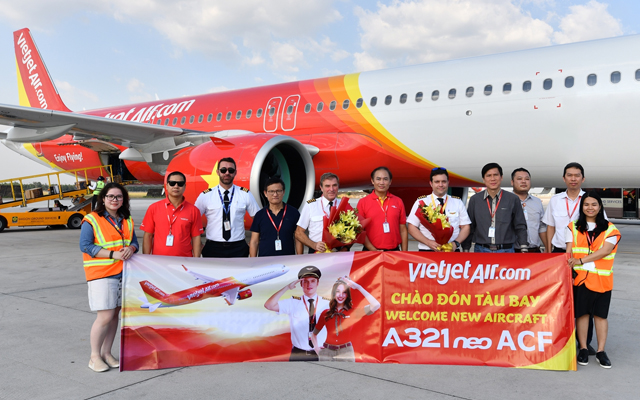
Vietjet welcomed two new Airbus A321 aircraft at Tan Son Nhat International Airport, bringing its total fleet count to 80.
The arrival of new aircraft, registered as VN-A521 and VN-A542, on December 31, 2019 is in time to serve the peak travel demand during the Lunar New Year festive season as well as fulfil fleet expansion plans for 2020.
Vietjet receives two new Airbus A321 aircraft at Tan Son Nhat International Airport
VN-A521 is the third 240-seat A321neo ACF (Airbus Cabin Flex) aircraft to be used in the world.
The new aircraft features leather seats and premium interior decoration. Additionally, VN-A521 boasts an innovative cabin structure and adopts the advantages of the most modern Airbus aircraft, including comfortable seat zone, fuel consumption savings by a minimum of 16 per cent, noise reduction up to 75 per cent, and emission reduction up to 50 per cent.
Vietjet currently owns one of the world’s newest and most modern fleet with an average age of only 2.7 years, operating at “the highest quality and safety (standards)”, said the company in a statement.
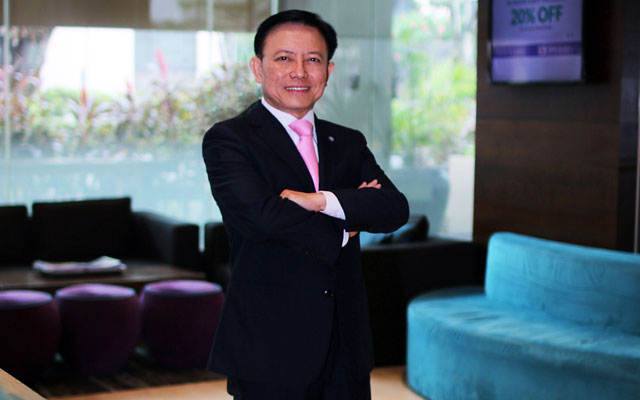
Henry Lim has been appointed general manager of Park Regis Singapore.
In his new role, Lim will be responsible for overseeing the hotel’s business performance and spearheading key initiatives.
The hospitality veteran brings with him over three decades of experience in hotel and apartment operations, product innovation, portfolio expansion, talent development and owner relations.
His previous stints include roles at several international hotel chains including Sheraton, Hilton, Regent, Shangri-La, Crowne Plaza; and serviced apartment brands such as the Ascott and Oakwood; in countries like China, Japan, South Korea, Myanmar, the Philippines, Thailand and Singapore.
Going on a holiday with the family is always a tricky balancing act — especially if you have children with you. Too much of the cultural stuff and the kids will be bored to tears; on the other hand, you can’t spend all your time at an amusement park. The adults will get bored, and yes, possibly the kids too!
The trick is to mix it up and find things that everyone would like to do. Discovering new things is also a great way to spend the holidays. Mauritius is a great choice to spend family holidays. From outdoor fun like snorkeling or playing on the beach, to fishing to whale- and dolphin-watching to cultural excursions exploring the island’s rich history and shopping, we’ve got you covered.
Surrounded by beautiful beaches, Mauritius is the perfect getaway for families who love the water. We recommend Trou aux Biches, which is clear, shallow and calm — perfect for swimming with little ones who may not be experienced swimmers yet. It’s also a great beach to introduce the kids to snorkeling. Feeling peckish? Along the coast road are food stands that serve delicious local food as well as a cafes and restaurants to tickle your tastebuds.
Nature trekking
Tired of swimming? Ile aux Cerfs has many activities to occupy the kids. One of the most popular ones is the Treetop Adventure Park, which has obstacles suitable for kids and adults — great for building up kids’ confidence and skills.
For a more adventure-packed vacation, head to Le Domaine de l’Etoile. This 1,200-ha former sugar plantation has every adventure you could dream of. Native forests, lush valleys, and dense vegetation make for an exciting place to explore. Try the longest zipline in the world, if you dare! Choose from seven ziplines, with the longest a breathtaking ride 3,500 metres above stunning views. If driving through stunning landscapes and lush vegetation is more your speed, try quad biking, to observe deer, exotic birds and boar or ride a buggy in the evening with the whole family, to see animals in the wild. Le Domaine de l’Etoile also has horseback-riding, hiking, archery and a host of other fun activities.
Go quad biking, trekking, Segway or a 4×4 discovery tour in Frederica Nature Reserve, which is Mauritius’ own little Garden of Eden. The reserve covers 1,300 ha of picturesque views and pristine vegetation just begging to be explored. For conservationists, the reserve is protected under the Mauritian Wildlife Foundation, which ensures that sustainability and eco-efforts are practiced in the resort.
For a truly unique and unforgettable experience for the whole family, you can book a helicopter sight-seeing tour to enjoy a bird’s eye view of Mauritius.
You can try the Mauritius Helicopter Ltd where you can book tours ranging from 15 minutes to one hour and they can even customise a tour for you.
For the tour, you’ll be taking off in Bell Jet Ranger helicopters equipped with 4 passenger seats — perfect for a small family! You’ll get to see amazing landscapes, lush forests, beautiful beaches as well as many other spectacular views.
For a one-stop shop of adventures, try Casela World of Adventures, the most visited attraction in Mauritius. Casela is situated atop sugarcane fields, with the Rempart Mountain as the backdrop. The park has many wholesome family-centric adventures that you and the kids will love — from an African Safari, encounters with big cats, riding dry toboggans and to scenic ziplines. It’s the perfect place to swim with dolphins in the morning, ride a camel at noon and walk with lions in the afternoon
Located in a small village, the Mauritius Aquarium is home to over 200 species of fish, invertebrates, live coral and sponges, all of which come from the waters around the country. But what’s unique about the museum is the ocean floor walk, where you can observe the island’s rich marine life up close. Some of the species you will get to see include the crown squirrelfish, the Devil Firefish as well as thrillingly, several species of sharks!
Mauritius is home to two UNESCO World Heritage Sites. One is the La Morne Cultural Landscape, which includes the distinctively shaped Le Morne Brabant, a mountain where runaway slaves known as “maroons” used to escape for shelter during the 18th and 19th centuries, forming small settlements near the summit and caves. The mountain is a potent symbol of the country’s past and how the slaves fought for their freedom. Today, the area is more known as a tourist destination because of its beauty. It is also known as the only place where the country’s national flower, the Trochetia Boutoniana, can be found.
Did you know that Mauritius was the first British colony to receive indentured labourers when slavery was abolished? This period in history can be found in the Aapravasi Ghat, the original immigration depot from where modern indentured labourers were processed. Following the abolition of slavery, the British government began the “Great Experiment” of having indentured labour, and Mauritius was the first colony where this was implemented. Half a million immigrants arrived on the island between the mid-19th to early 20th century to work in the sugar plantations. These labourers come from many parts of the British Empire and most Mauritians can trace their ancestry from this diaspora. Today, less than half of the original site can be seen, but what exists — kitchens, lavatories, a hospital block and housing shacks — shed an important light into Mauritian history.
However, for a slice of local life, nothing beats going to Port Louis’ Central Market in the early morning, when the action is. The market was — and is — an important part of locals’ lives. Back in the day, this was where folk gathered to buy their daily necessities, trade, and find out what the news (i.e., gossip) was. Today, it is still a focal point of life in the capital, Port Louis. Head to the first floor, where the craft market is. This is where you can buy colourful textiles, artisanal sculptures and various fruit preserves. Want to sample a local drink? Then this is the place to go. Various blends of local rums are sold in the market. The market’s food court is also a great place to sample Mauritian cuisine. The scent of frying noodles, fritters, roti, various curries and dumplings will tempt you to sample all that’s on offer. Chase it all down with a refreshing alouda, an ice-cold milk-based drink served with agar-agar and psyllium grains (a natural laxative).
Taking place every Thursdays and Sundays in the daytime, the Quatre Bornes flea market is where locals shop. The claim is that here, you can find anything and everything — from Indian saris, to the latest in sunglasses to souvenirs. Don’t be afraid to haggle for the best price.
LET’S PLAY GOLF! With its lush scenery, great weather and luxe accommodations, Mauritius is a dream golfers vacation. Here are our picks. For a slice… Read More
KALEIDOSCOPE WORLD Nature photographers will be mesmerised by the vibrant colours, fabulous views and greenery of Mauritius. Here’s where to go on this picturesque island… Read More
Last word
Though by no means definitive, this guide to where to go in Mauritius with your family should provide you with a great start to explore this beautiful island.
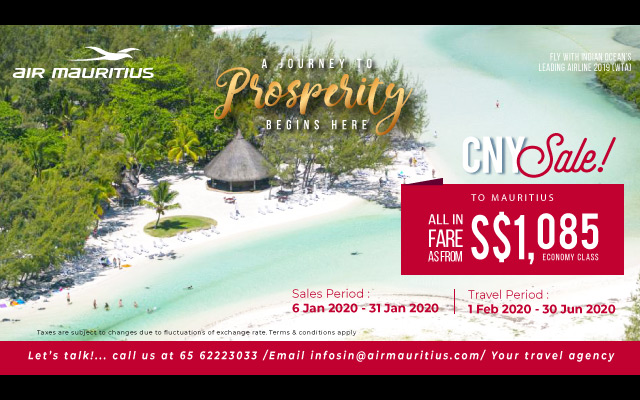
Air Mauritius is the National Airline and operates three direct flights weekly. The seven hour flight from Changi to SSR International airport is done using the all new Airbus A330-900 NEO which features state of the art technology in safety and comfort.
Japan’s thriving whale watching industry faces upset following the country’s resumption of commercial whaling after a 31-year ban, according to tour group operators.
Tokyo withdrew from the International Whaling Commission and began whaling in its coastal waters (up to 22km from land) on July 1, in a controversial move that has sparked criticism from activists and anti-whaling countries.
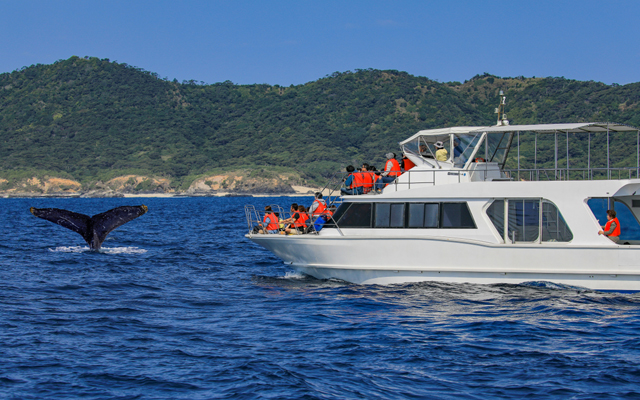
Japan’s return to commercial whaling comes at a time when the whale-watching business is gaining traction; whale-watching in Okinawa pictured
The move is at odds with Japan’s whale-watching industry, which is estimated to have grown 20 per cent annually since it began in the 1980s, according to the International Fund for Animal Welfare (IFAW). In 2015, whale watching across the country generated US$8 million, of which 20 per cent came from overseas visitors, including corporate incentive groups.
Tour operators fear that Japan’s resumption of commercial whaling threatens not only the whale watching industry but also wider tourism in departure ports.
Tomoyo Yamada of South to South in Okinawa’s Urasoe City told TTG Asia that any drop in group numbers would adversely impact tourism in the city.
“Whale watching is a winter activity so marine tourism operators here rely on it during the off season,” he said.
Similarly, tour operators in Rausu, a fishing village on the island of Hokkaido, fear that the move will hurt business, at a time when the whale watching business is beginning to gain traction and business from overseas groups for the town’s five operators is growing year on year.
Masato Hasegawa, captain of Shiretoko Nature Cruise, told TTG Asia that 10 per cent of his bookings hail from overseas groups from Singapore, Hong Kong, the Philippines, Hawaii and Germany, but he fears for the future.
“I am worried about the reaction of customers who are sensitive to whaling. We expect that the number of reservations from current groups will fall, particularly those from Europe and the US,” Hasegawa said.
He added that it is “necessary to train English-speaking staff to respond effectively to questions about Japan’s commercial whaling from overseas customers in the future”.
Patrick Ramage, IFAW’s director of marine conservation, said: “Coastal whaling threatens to kill the geese that literally lay the golden eggs. (Japan’s commercial whaling) puts Japanese whalers on a collision course with their country’s economic interests and committed businesspeople in coastal communities who are benefiting from this new relationship with whales.”
Blockchain is disrupting the travel ecosystem and helping to streamline processes and solve major pain points in an often fragmented industry.
Pilot initiatives such as the blockchain-based travel app, Known Traveller Digital Identity (KTDI), will create a more seamless passenger journey at immigration points, while consumer services such as Tripio are harnessing blockchain technology to restructure hotel booking protocol.
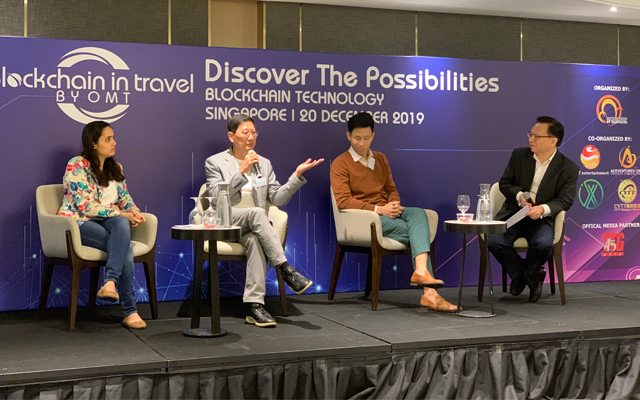
From left: Blockchain Centre Singapore’s Shruti Dwivedi, Asia Tourism Consulting’s Wong Soon-Hwa, and Tembusu Partners’ Lau Wen Loong discuss the application of blockchain in travel and tourism at the Blockchain in Travel: Discover the Possibilities seminar organised by OMT Group, Chang You Travel Alliance and IXX.com
That, and more, was the common refrain among industry experts at the Blockchain in Travel: Discover the Possibilities seminar held in Singapore on December 20, which spotlighted the potential applications of blockchain to benefit the travel industry.
The event was organised by OMT Group, one of South-east Asia’s largest tourism groups, in collaboration with Chang You Travel Alliance, a data-sharing platform employing blockchain technology, and IXX.com, the world’s first digital asset trading community.
For instance, Shruti Dwivedi, general manager, Blockchain Centre Singapore, cited two case studies – KrisPay and Tripio – that leverage blockchain to transform customer engagement.
KrisPay, Singapore Airlines’ (SIA) blockchain-based digital wallet, allows KrisFlyer frequent flyer programme members to convert air miles into digital currency. This can then be used to pay for items almost immediately at SIA’s merchants in Singapore, including gas stations, beauty product retailers, and F&B outlets. The blockchain is privately-owned by SIA and only network partners can transact on it.
Wong Soon-Hwa, founder and CEO of Asia Tourism Consulting, noted: “This is one way how SIA can convert under utilised points into value for itself and its partners, which would also help improve bottom lines for companies as middlemen are not required.”
Wong pointed out that blockchain isn’t really a product, and is perhaps better described as a service, or “piping hidden behind the walls”. But simple as the process may sound, a “huge mindset shift is also needed to make use of blockchain”.
Elsewhere, three-year-old Tripio is the first blockchain-based travel booking marketplace which has 450,000 hotels on its platform. With blockchain in play, Tripio helps hotels to avoid the problems of high commission fees charged by OTAs, false reviews, and inaccurate updates on room status which may cause problems for the traveller upon check-in.
“By using blockchain, the money paid by the customer gets logged into a smart contract (a self-executing contract with the terms of the agreement between buyer and seller being directly written into lines of code). When the services are rendered – depending on the outcome of the service – the money will then be transferred to the service provider,” said Dwivedi. In the event of disputes, the money goes into dispute resolution.
On the backend, blockchain can also be used for more efficient payments between service providers such as airlines and rental car companies, boosting operational efficiency as well as baggage handling; while governments may also be able to use it for KTDI.
In terms of baggage tracking, companies will now be able to track the origin of an asset, all the way to its end point. Blockchain makes it easier to trace a piece of baggage, as it has a decentralised database, which makes it easy to share data across several parties.
Meanwhile, KTDI is a joint initiative by the World Economic Forum, Accenture, the Canadian and Dutch governments, and Marriott International, that aims to create a more seamless experience for travellers by using blockchain to solve the exchange of identities and verification.
“What KTDI does is that it enables partners to have links to travellers’ identities on the blockchain, as opposed to direct identities (such as passports). This makes data privacy and security stronger, and allows real-time sharing of data on a very secure network with encryption, hence the data is impossible to hack,” Dwivedi said.
Aside from allowing travellers to decide who they want to share the data with and how it’s going to be used, KTDI will enable its partners to access verifiable claims of a traveller’s identify to access their credibility and optimise processing through security channels.
“Once I have been approved by multiple countries that I’m a fairly safe or decent traveller, these attestations can become my reputation, which would make my travel experience smoother,” thereby, translating to lesser visa applications and paperwork, Dwivedi noted.
She added: “What blockchain can really offer is the improvement of customer service. It can be done in different ways, but at the end of the day, it helps to make the life of a traveller much more convenient, and their overall experience, a lot more pleasant.”
“Will blockchain succeed (in the travel industry)? A resounding yes. I’m not sure how long it will take, but many are increasingly embracing it in the travel and tourism industry. While its final form or shape may differ, blockchain is here to stay,” concluded Wong.
This year’s FHA-HoReCa, a specialist industry show for hotel, restaurant and cafe suppliers, will debut the Hospitality 4.0 pavilion, a platform for solution providers and start-ups to demonstrate innovative technologies, and visitors to learn best practices from subject experts.
Conceptualised by WY-TO, the Hospitality 4.0 pavilion will be a human-centric, sustainable vision of how disruptive technologies, robotics, VR, and AI will be seamlessly integrated to enhance the personal experience.
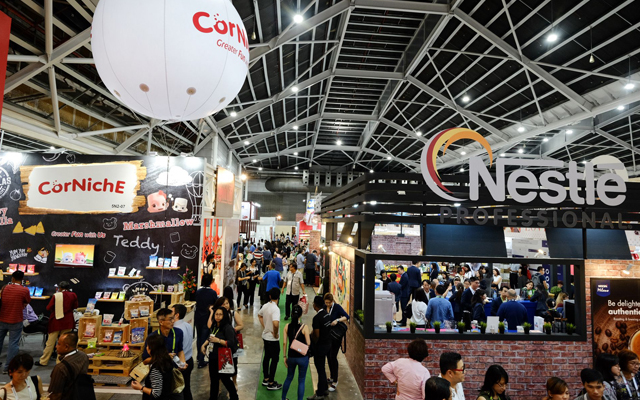
This year’s FHA-HoReCa will debut the Hospitality 4.0 pavilion where guests can experience innovative technologies catering to the hospitality industry
Featuring biophilic and futuristic design inspired from nature, the pavilion offers a range of diverse spaces and experiences:
• Start-up Village – a community of creators and innovative businesses displaying new solutions such as 3D food printing, self-service equipment, waste management systems and more within the HoReCa sector
• Showcase areas – product and service demonstrations such as service robots, AR menus to remote controlled kitchens within the hotel, kitchen and restaurant segments
• Dreamcatcher Theatre – industry thought leaders will share insights on topics ranging from design to new technologies, sustainability to market opportunities and trends
Another new highlight at the event is the Hotel Innovation Challenge Asia 2020, organised by FHA and the Singapore Hotel Association (SHA), with strong support from the Singapore Tourism Board. Start-ups and entrepreneurs will get to pitch their proposed solutions to potential adopters on the show floor. The challenge seeks to solve perennial issues such as housekeeping, manpower crunch, service delivery and sustainability faced by the hotel sector through innovation.
Margaret Heng, executive director, SHA, hopes the challenge will birth “many new and exciting ideas and solutions that the industry can adopt to enhance guest experience and help hotels meet the manpower shortage”.