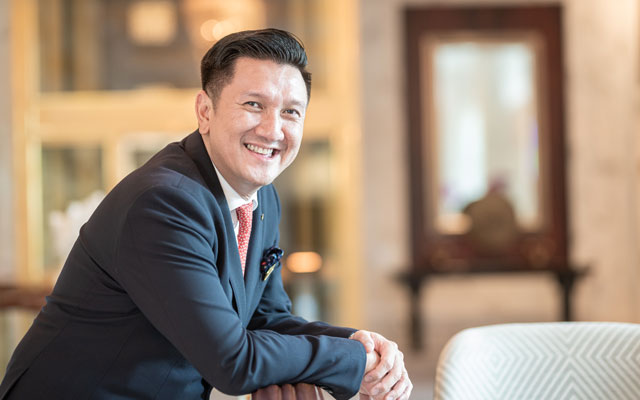
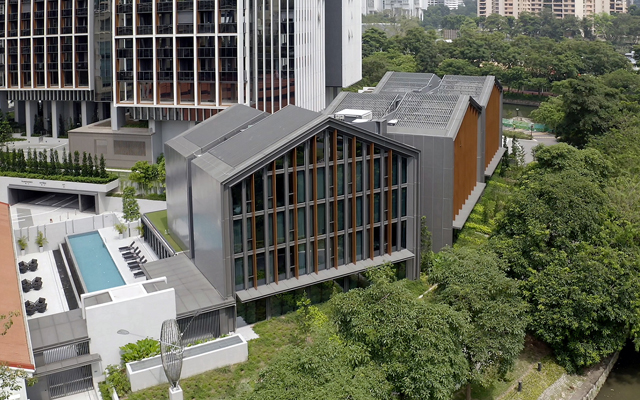
Shangri-La Hotels and Resorts has recently welcomed Allen Khoo as resident manager of Shangri-La Hotel, Singapore.
In his new role, he will support general manager Tane Picken in the group’s first Shangri-La hotel. As resident manager, Khoo will be responsible for overseeing the operations and driving optimal guest experiences across Shangri-La Hotel, Singapore, Shangri-La Apartments and Shangri-La Residences.
Khoo joins the flagship hotel with more than 13 years of hotel leadership and hospitality management experience in Shangri-La Hotels and Resorts across Malaysia, China and Taiwan.
Prior to his move to Singapore, he was the resident manager in Shangri-La’s Tanjung Aru Resort & Spa, Kota Kinabalu, from May 2017.
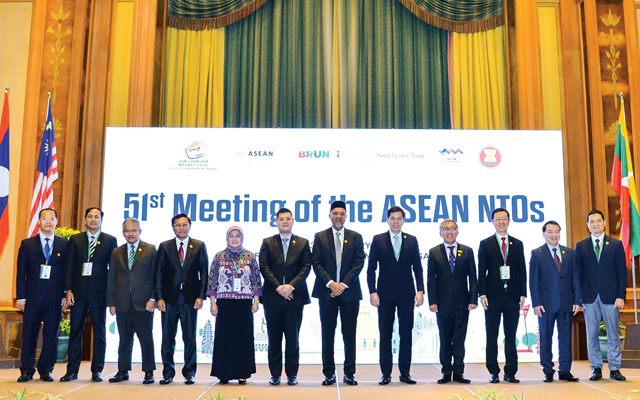
ASEAN NTOs have agreed to recommend a mid-term review of the ASEAN Tourism Strategic Plan (ATSP) 2016-2025 to their tourism ministers during their meetings today (January 15) and tomorrow.
Benito Bengzon Jr, undersecretary, Philippines Department of Tourism, said the Philippines has offered to take the lead in organising what will be a combination of a retreat and planning session, planned for September this year, subject to ministerial approval.
ASEAN NTOs first met on January 12 in Brunei, and meetings will continue today and tomorrow
Bengzon Jr said the mid-term review is vital to evaluate the performance of ATSP and determine the future course of action for the next five years.
He said: “(The review) will set the overall direction and vision for tourism in South-east Asia, and more specifically, it will identify what strategic concerns need to be looked into. Currently, the ATSP basically talks about two main strategic directions, which are increasing the competitiveness of the region as a collective destination, and ensuring sustainability and inclusivity for the stakeholders.”
The review will also look at the existing committee and evaluate whether alterations are needed to achieve the goals.
Thong Rathanak, director general of Cambodia’s Tourism Development and International Cooperation and vice chair of the ASEAN NTO Meeting at ATF 2020, noted that with changes in the general and tourism landscape taking place so rapidly, NTO representatives were proposing a review every six months.
Thong remarked: “Changes may take place not even in months, but in days. For example, events happening in Australia and Iran may impact South-east Asia or our industry, so it will not be productive to conduct a review only once a year.”
He emphasised that there is a need to determine what “needs to be changed, and what needs to be our top priority”.
When asked what Philippine representatives would like to see happen through the review, Bengzon, Jr said member states needed “to rethink marketing and promotion initiatives” to take into account the market shift towards digital platforms, and to pay greater attention to delivering authentic destination experiences.
Rizki Handayani, head of the delegation from the Indonesia Ministry of Tourism and Creative Economy, identified the trend of multi-generational travel as well as the development of marine and island products as focal points.
For Noor Zari bin Hammat, secretary general, Malaysia Ministry of Tourism, Arts and Culture, an effective balance between competitiveness and sustainability should be achieved.
ASEAN Tourism Association (ASEANTA) has presented its proposal to ASEAN NTOs to offer its support in organising TRAVEX from 2022 onwards on the grounds of combating current weaknesses in the system and improving the quality of the B2B component in the coming years.
ASEANTA president, Mingkwan Metmowlee, told TTG Asia that the proposal has been accepted in principle by the NTOs.
Mingkwan: ASENTA has ideas in place to bring about a better TRAVEX show once proposal is accepted
Another presentation will be made to ASEAN tourism ministers on Wednesday to get their approval, before a legal framework between ASEANTA and ASEAN NTOs can be drawn up in 1H2020. With these completed, ASEANTA will then be able to start preparing for TRAVEX 2022 in Indonesia.
Mingkwan sees this move as a natural progression for ASEANTA, as the organisation “has grown to become a tourism association of influence within the South-east Asian tourism landscape, playing an integral role in shaping tourism development growth and policies in the region”.
She added: “In the current set-up, where the host and organising committee changes with each ATF event, there is no central registry data of ATF buyers and sellers. As a result, there is no continuity in identifying good buyers and sellers.
“At times, we get bad buyers who do not perform and as a result, the quality of TRAVEX goes down. Also, some TRAVEX shows are more successful than others, due to the unequal level of development of tourism in ASEAN member countries.”
By having ASEANTA take the lead in TRAVEX organisation, Mingkwan believes that “a higher standard of TRAVEX” will be set, which will in turn “benefit the promotions of ASEAN destinations as a whole”.
Mingkwan explained that the plan is for the local members of the Federation of ASEAN Travel Associations (FATA) to take on event organisation duties when TRAVEX rotates, by alphabetical order, to their country.
FATA is one of the membership components of ASEANTA, with the others being the ASEAN Hotel & Restaurant Association, the National Tourism Organisations, and the ASEAN Airline Association.
In ASEAN Tourism Research Association’s (ATRA) meeting with regional NTOs on Monday, recommendations have been made to prioritise the well-being of local communities in tourism policies impacting community-based tourism (CBT) and to diversify tourism across more destinations to resolve the scourge of overtourism.
ATRA’s honorary treasurer, Puvaneswaran Kunasekaran, told TTG Asia that recommendations relating to CBT included capacity training for local communities so they become self-reliant, and creation of niche segments such as gastronomy tours that are initiated by the communities themselves.
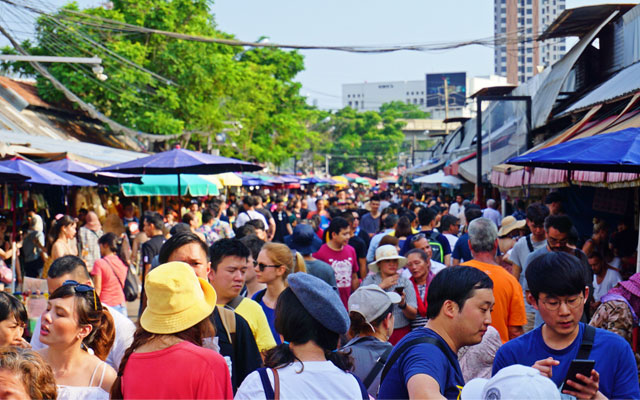
Bangkok is one of the destinations in Asia-Pacific suffering from overtourism Chatuchak Weekend Market crowded with tourists pictured
Citing examples of successful CBT projects in the region, Puvaneswaran said that some of the aboriginal Mah Meri women on Carey Island in Selangor, Malaysia have formed a collective known as Tompoq Tompoh, and have been selling their handcrafted items online and at the Mah Meri Cultural Village.
He said: “They are the most successful aboriginal group practicing community-based tourism in Peninsular Malaysia.”
Another example exists in eastern Sabah where an eco-tourism cooperative of the Batu Puteh community in Lower Kinabatangan River was able to reduce the poverty rate of the locals, enhance local community participation and protect the natural environment.
On the flip side, Puvaneswaran, who is also a senior lecturer at the School of Hospitality, Tourism & Events at Taylor’s University Malaysia, warned that poorly managed CBT projects can limit benefits to the very communities they are meant to support.
Illustrating his point, he referenced Mabul Island in Sabah, Malaysia which is a popular dive destination. While local travel suppliers are thriving, the local population remains poor.
Overtourism is the other matter that warranted immediate attention, he noted, pointing to Bali, Bangkok, Phuket and Langkawi as destinations suffering the affliction.
Puvaneswaran said authorities must promote other destinations so as to disperse tourists to other parts of the country, a move that would also spread commercial benefits to more locals.
He said overtourism in a destination must first be declared by the local authorities before action can be taken.
“But there are (congested) places that are undeclared, such as Cameron Highlands in Malaysia during the school holidays. It takes about two hours to travel a distance of 6km from Brinchang to Blue Valley due to traffic jams caused by the many small shops selling souvenirs, flowers and vegetables along the road. The local population that is not involved in the businesses are inconvenienced as a result,” he said.
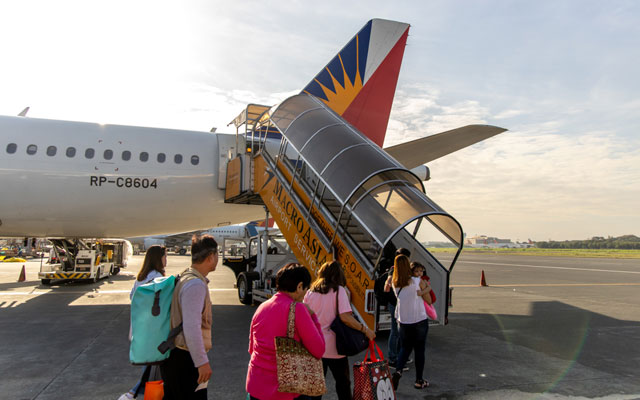
Passengers boarding the plane at Manila International Airport
Filipinos’ passion for travel has not been doused by the current tumultuous situations around the globe, in particular, the US-Iran tensions, protests in Hong Kong, bushfires in Australia, and safety issues in other destinations.
“There will always be trouble but people are tired of being scared. Something untoward can happen even in one’s home. So the mentality (among Filipinos) is to travel while they can, are still strong and have the means to do so,” Golden Sky Travel and Tours president Dolly Santos said.
Passengers boarding a PAL plane at Manila International Airport
“We don’t have cancellations to the Holy Land (despite the rising tensions in Iran) and you’d be surprised that Hong Kong is coming back (as an attractive destination despite the ongoing protests there),” he added.
Bullish on outbound prospects this year, Philippine Travel Agencies Association (PTAA) president Ritchie Tuano likened the Filipinos’ insatiable appetite for travelling to “a raging river wherein if there’s a dead-end spout, it will always look for a hole to go somewhere”.
“Filipinos would find destinations to tick off their bucket list as they have more disposable income now and are really saving to travel,” Tuano said.
He said this explains why the upcoming PTAA TravelTour Expo, the biggest of its kind in the Philippines, boasts a long list of tour operators from across Europe and Central Asia like Georgia and Azerbaijan, Bhutan, and even traditional destinations like Israel and India, that are looking at growing outbound from the country.
Manila-based Golden Eagle Travel and Tours president Michelle Victoria observed a growing appetite among Filipinos for new destinations like Turkey, European countries for viewing the aurora borealis, and exotic destinations in Central Asia.
Given that Middle East destinations are popular among Filipinos, Tuano hopes to assure customers that travel to the region is safe.
He cited an advisory from Israel’s Ministry of Tourism stating that everything is business as usual and that there’s no immediate threat, alluding to the tensions in Iran.
Tuano also received a communication from the United Arab Emirates highlighting that the tensions are concentrated in Iran and Iraq, and that the Middle East is a big region and not all of it is affected.
Erhan Balaban, general manager of Turkish Airlines in the Philippines, noted that Turkey –being close to the Middle East region – have implemented safety measures, including avoiding flying into the airspace over Iran.
“Our priority is to maintain security. We have all the safety measures in place,” Balaban said.
A line-up of speakers, including executives from technology giants Grab, Line, Facebook and Google Travel, will be sharing their hotel marketing, revenue and distribution expertise at the Direct Booking Summit: Bangkok on February 19-20.
Summit delegates will also be hearing from hotels of all sizes, including Oyo, Onyx Hospitality Group, JPark Island & Resort, Discovery Hospitality, and Jumeirah Hotels & Resorts, on how they drive their direct bookings.
First row, from left: Oyo’s Rotsen Quispe; Grab’s Shawn Heng; and Google’s Malte Jess. Second row, from left: Line’s Pruthisith Prateepavanich; Discovery Hospitality’s Blessy Townes; and Chroma Hospitality’s Sunish Sadasivan
Looking forward at future opportunities hotels may have in their digital marketing will be a key theme of this year’s Direct Booking Summit, epitomised by a session on super apps, led by Shawn Heng, regional head of business development and Grab for Business, Grab; and Pruthisith Prateepavanich, head of technology innovation, Line Corporation.
In an engaging debate, the duo will assess the impact of WeChat, Grab, Line and Traveloka on hotel distribution; and share how attendees can leverage those platforms to drive more direct bookings.
Revenue managers will be able to benefit from key discussions at the Summit, including a debate on the benefits and consequences of OTA’s discount schemes and short-term rate manipulation. Ratchaya Termsilkanok, vice president, revenue and e-commerce, Cross Hotels & Resorts; Sunish Sadasivan, vice president, e-commerce and revenue management, Chroma Hospitality; Michael Belanger, vice president revenue and distribution, GCP Hospitality; and Nicolas Durand, senior director of global distribution, Jumeirah Hotels & Resorts, will shed light on quick wins in revenue and discuss ways to create a lasting strategy.
In her keynote talk, Blessy Townes, vice president & head of digital, Discovery Hospitality, will share how to easily adapt a data-led approach to one of the most effective direct booking strategies – content marketing. From tracking your ROI to learning the secrets to success on social media platforms, Townes will help hotels of all sizes to build a content strategy that drives conversion.
As well, Rotsen Quispe, vice president product marketing and growth, Oyo, speak on the company’s disruption of the hotel landscape in Asia-Pacific.
Furthermore, Malte Jess, business manager & regional product lead, Travel Vertical Search APAC, Google, will run an interactive session for hoteliers getting started on the platform, while Rabin Gupta, corporate general manager, digital marketing, Compass Hospitality, will lead a deep-dive that can help hoteliers boost their properties’ performance on metasearch.
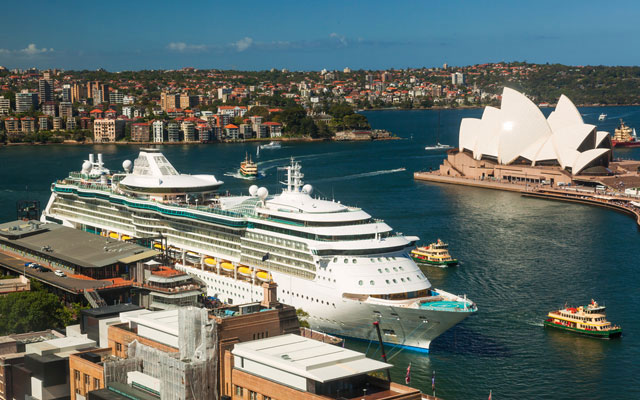
Australia’s cruise industry continues to operate at full capacity and has united with other tourism sectors in recovery projects for communities impacted by bushfires, according to a statement by Cruise Lines International Association (CLIA).
CLIA Australasia has confirmed all major cruise lines in the region are currently operating as scheduled and that most Australian cruise destinations are unaffected by the fires.
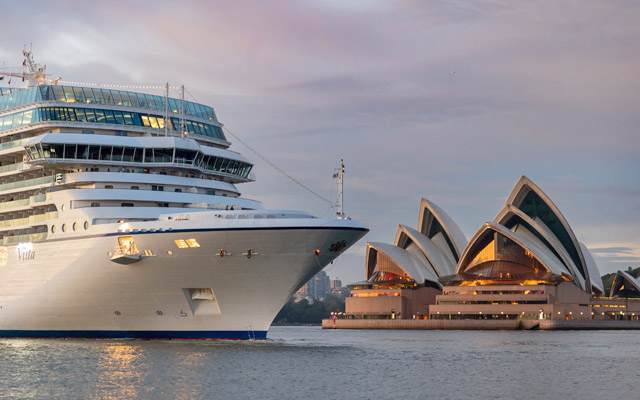
A cruise ship in Sydney’s Circular Quay
“Cruise lines are monitoring the situation in Australia closely, and if required, can adjust itineraries to avoid areas affected by fire,” said CLIA Australasia managing director Joel Katz.
“The safety of guests is always paramount. Cruise lines will also consider whether itinerary changes are necessary to avoid placing pressure on regions dealing with emergencies.”
To date, five cruise itineraries have had minor adjustments to avoid ports in areas that have been impacted by fire, said CLIA. Of approximately 50 cruise ports in Australia, only two regional destinations have been affected, though it is expected they will be accessible again soon, it added.
“Cruise lines have made clear they want to return to these ports as soon as possible to help support local businesses and assist in their recovery. Tourism is vital in these parts of Australia and the passion of local communities has made them popular destinations,” Katz said.
Major cities such as Sydney and Melbourne are unaffected by fires (other than periods of smoke haze), as are most other cruise ports around Australia.
Katz also stressed that Australia is a vast country and that most places are still open for business and welcoming visitors, adding that Tourism Australia has provided details on places in the country that are open and accessible on australia.com.
CLIA has joined forces with other Australian tourism organisations to aid in the recovery efforts for destinations hit by fires, according to Katz.
“We’re in close contact with tourism leaders nationally to ensure a united response to the bushfire situation. Cruise tourism is worth A$5.2 billion (US$3.5 billion) a year to the Australian economy and we know it will play an important part in the economic recovery of key locations,” he said.
Several cruise lines have also provided assistance to affected communities, including significant donations to recovery funds.
John Elieson has joined Travelport as its new chief operating officer, based in the company’s global headquarters in Langley, Berkshire, UK.
In his new role, Elieson will have strategic oversight of Travelport’s growth strategy, sales organisation and M&A agenda.
Before joining Travelport, Elieson was president and CEO of Radixx International, a company that provides technology solutions to the airline industry and which was recently acquired by Sabre.
Prior to that, he had a distinguished 30-year career with Sabre and its former parent company American Airlines, assuming roles as the leader of global sales for Sabre Airline Solutions, and Sabre Travel Network’s leader of global accounts and traveller experience.
Marriott International has made several changes and promotions to its Asia Pacific leadership team, with immediate effect.
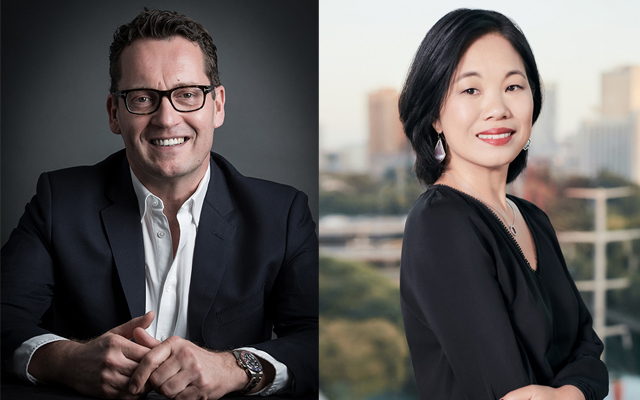
First up is Bart Buiring, who now assumes the post of chief sales and marketing officer, and is based in Hong Kong. He was previously the company’s chief operations services officer, Asia-Pacific.
From left: Bart Buiring and Peggy Fang Roe
In his new role, Buiring will oversee the Asia-Pacific consumer strategy to Marriott International’s core hotel business and brands. This includes brand management, marketing, sales & distribution, revenue management, loyalty, customer experience, digital and communications. He has been tasked with the building of the Asia-Pacific customer base, adapting Marriott Bonvoy to the local market, while also leading the sales organisation and driving Marriott International’s Asia Pacific distribution and pricing strategy.
Meanwhile, Peggy Fang Roe, previously the chief sales and marketing officer for Marriott International Asia Pacific, will transition to the newly-established role of global officer, customer experience, loyalty and new ventures at company’s headquarters in Bethesda, Maryland, US.
Roe will be responsible for orchestrating the end-to-end guest experience and the development of new ventures to accelerate customer engagement, including the continued growth of Marriott Bonvoy globally.
In addition, Rajeev Menon has been promoted to president, Asia Pacific (excluding Greater China); and Henry Lee to president, Greater China.
IBTM Asia Pacific provides a gateway to the APAC meetings, incentives, conferences and events market.
Meet with a curated mix of industry suppliers and pre-qualified hosted buyers and be inspired by content that will elevate your events.
Knowledge Programme
Gain insights and inspiration for your next event from our leading sector experts who will be delivering the latest industry updates.
The renowned Singapore MICE Forum (SMF) comes to IBTM Asia Pacific this April. This will include a combination of dynamic talks, campfire sessions and case studies from event experts across the world.
The Forum will be structured around five key themes; Innovation, technology design, sustainability and event trends
Don’t miss the latest updates in your own language, with the introduction of Interprefy, a real-time interpreting service.
Industry Suppliers
Discover the latest and greatest products and services in events all under one roof.
Meet with leading event suppliers such as: New Zealand, Australia, Malaysia, South Korea, Japan, Dubai, Cuba, Netherlands, Portugal and many more.
Supplier Types:
Airlines & Cruise Line
Hotels, Resorts & Spas
Attractions & Entertainment
Conference & Meeting Venues
Convention & Visitor Bureau
Destination Management Services
Event Support Services
National Tourist Organisations
Technology Providers
Networking Events
Join a number of exclusive networking events around your business appointments, where you will have the opportunity to engage with new prospects and catch up with industry peers.
Monday 6th of April 2020
To celebrate the launch of IBTM APAC we invite you to a party at the Mandarin Oriental pool with stunning 360 degree views of the iconic Marina Bay.
Wednesday 8th of April 2020
To end the party in style we invite you onto the Genting Cruise Ship, Dream. Taking place at the Zouk Beach Club
Create, Connect and Inspire at IBTM Asia Pacific.
Click here to register now Click here to find out more about our Hosted Buyer programme