TTG Asia
Asia/Singapore Monday, 26th January 2026
Page 1139

Global air traffic growth in July slows; APAC registers lowest growth since 2013: IATA

0

The global passenger demand growth has slackened in July due to tariffs, trade tensions and uncertainty surrounding Brexit, according to the IATA.

Total revenue passenger kilometres (RPKs) rose 3.6 per cent, compared to the same month in 2018, but down from the 5.1 per cent annual growth recorded in June. All regions posted traffic increases. Monthly capacity increased by 3.2 per cent and load factor rose 0.3 percentage point to 85.7 per cent, which is a new high for any month.

IATA: Global passenger demand growth has slowed down in July, down from the 5.1 per cent annual growth recorded in June

“July’s performance marked a soft start to the peak passenger demand season. Tariffs, trade wars, and uncertainty over Brexit are contributing to a weaker demand environment than we saw in 2018. At the same time, the trend of moderate capacity increases is helping to achieve record load factors,” said Alexandre Juniac, IATA’s director general and CEO.

This July, international passenger demand rose 2.7 per cent compared to July 2018, which was a deceleration compared to the 5.3 per cent growth recorded in June. Capacity climbed 2.4 per cent, and load factor edged upward 0.2 percentage point to 85.3 per cent. All regions reported growth, led by airlines in Latin America.

Asia-Pacific airlines’ July traffic rose 2.7 per cent over the year-ago period, a slowdown compared to June growth of 3.9 per cent and their weakest performance since early 2013. Capacity increased 2.4 per cent and load factor rose 0.2 percentage point to 82.6 per cent.

US-China and Japan-South Korea trade tensions as well as political tensions in Hong Kong have all weighed on business confidence, said IATA.

European carriers registered a modest 3.3 per cent annual growth in July, down from a 5.6 per cent year-over-year increase in June. This was the slowest rate of growth since mid-2016. According to IATA, continuing uncertainty over Brexit and slowing German exports and manufacturing activity contributed to a weakening in business and consumer confidence. Capacity rose 3.2 per cent, and load factor climbed 0.1 percentage point to 89.0 per cent – highest among the regions.

Middle East carriers had a 1.6 per cent increase in demand for July, well down on the 8.3 per cent growth recorded for June, after the end of Ramadan. Weakness in global trade, volatile oil prices and heightened geopolitical tensions have been negative factors for the region, said IATA. July capacity climbed 1.0 per cent compared to a year ago and load factor rose 0.4 percentage point to 81.3 per cent.

North American airlines’ traffic climbed 1.5 per cent compared to July a year ago. This was down from 3.5 per cent growth in June, reflecting the slowdown in the US and Canadian economies and the trade disputes. July capacity rose 0.7 per cent with the result that load factor climbed 0.7 percentage point to 87.9 per cent – second highest among the regions.

Latin American airlines experienced a 4.1 per cent rise in traffic in July, which was the strongest growth among the regions but a decline from 5.8 per cent year-over-year growth in June. It occurred amid continued disruption following the demise of Avianca Brasil and more challenging business conditions in some key regional economies. Capacity rose 2.7 per cent and load factor climbed 1.1 percentage points to 85.6 per cent.

African airlines’ July traffic rose 3.6 per cent – a significant decline from the 9.8 per cent growth recorded in June, as weakening business confidence in South Africa offset solid economic conditions elsewhere on the continent. Capacity rose 6.1 per cent, and load factor slipped 1.7 percentage points to 72.9 per cent.

Domestic travel demand outperformed international growth in July, as RPKs rose 5.2 per cent in markets tracked by IATA, up from the 4.7 per cent growth in June. Domestic capacity climbed 4.7 per cent, and load factor rose 0.4 percentage point to 86.5 per cent.

China’s domestic traffic rose 11.7 per cent in July – an acceleration over the 8.9 per cent growth recorded in June and the strongest domestic performance. Growth is benefitting from lower fares and more connections.

Japan’s domestic traffic climbed 4.7 per cent in July, up from 2.6 per cent in June. Business confidence and economic growth are relatively positive at the moment.

APAC fuels greatest demand for commercial airline personnel

0

Asia-Pacific continues to drive global demand for commercial pilots, technicians and cabin crew, according to a new Boeing report.

The 2019 Boeing Pilot & Technician Outlook stated that the region will account for more than one-third of anticipated global demand, or 816,000 total new commercial aviation personnel, over the next 20 years.

Boeing: APAC fuels greatest demand for commercial pilots, technicians and cabin crew

The forecast projects that the Asia-Pacific region will need 244,000 new commercial pilots, or 38 per cent, of the total number of pilots needed around the globe. This demand, stemming from a mix of anticipated fleet growth, retirements and attrition, will be most significant in China – the country is expected to need 124,000 pilots, which is more than half of the total needed in the region. South-east Asia and South Asia follow, accounting for 20 per cent and 17 per cent of the demand, respectively.

Asia-Pacific is also expected to lead global demand for maintenance technicians (249,000, or 39 per cent of global demand) and cabin crew (323,000, or 37 per cent of global demand), with China leading demand for both (124,000 maintenance technicians and 150,000 cabin crew).

Over the next 20 years, airlines around the world will need 44,000 new airplanes, with more than 17,000, or 39 per cent, of those airplanes delivered to the Asia-Pacific region.

The 2019 Boeing Pilot & Technician Outlook is an industry forecast of new aviation personnel demand. It is closely tied to projections for new airplane deliveries around the globe, and also takes into account annual aircraft utilisation rates, crewing requirements by region and regulatory requirements.

The full Pilot & Technician Outlook report can be read here.

European brand Tivoli to enter Asia with China debut in 4Q

0
Tivoli Chengdu main entrance

Portuguese hospitality brand Tivoli Hotels & Resorts will be diversifying its portfolio by introducing the brand into the Chinese market in Chengdu, the capital of Sichuan Province.

Tivoli Chengdu, built in partnership with Chengdu Qingyang Urban and Rural Construction Development, will sit on the south-western edge of the International Intangible Cultural Heritage Exhibition Park. Located in the western part of Chengdu, the property will be in close proximity to the Nancaoping Ecology Park and the Tianfu Golf Club.

Slated to open in 4Q2019, Tivoli Chengdu will be located together with Oaks Chengdu, adding 400 keys in categories ranging from deluxe rooms to suites and serviced apartments.

The dual properties will offer eight F&B options, including all-day dining, Chinese cuisine, specialty dining, coffee shops, as well as a lounge and bar area. Guests will also have access to spa and fitness facilities, a children’s club and banqueting and meeting facilities.

Hello Kitty Land Tokyo rolls out Kawaii Masquerade for Halloween

0
Puro Halloween Party: Kawaii Masquerade

Indoor theme park Hello Kitty Land Tokyo, also known as Sanrio Puroland, has pushed out a scarily cute programme for this year’s Halloween, in collaboration with Japanese horror production company Obaken.

The Puro Halloween Party, Kawaii Masquerade, which will take place from September 13 to October 31, will follow in the tradition of previous editions where visitors can choose from two separate events: The Kawaii Masquerade at daytime or a scarier night-time version.

During daytime, Lady Kitty House morphs into a beautiful doll house with special photo spots. At the Wisdom tree, visitors can meet and greet some of their favourite Sanrio characters dressed in Halloween costumes. They may even score a big hug with the characters during Hug Time.

In conjunction with the event, a new Halloween menu has been launched offering a wide variety of black- and purple-coloured dishes, such as Cinnamon’s black Halloween ramen or PomPomPurin’s masquerade donuts with pumpkin cream.

In the afternoon, the Halloween event changes to a scarier night-time setting. At the Halloween parade, visitors can snap photos with Hello Kitty Land characters, including Hello Kitty, Cinnamoroll, My Melody, Kuromi, Wish Me Mell and PomPomPurin, who will dance and parade in Halloween outfits. On weekends, an hour before closing time, the Lady Kitty House will turn into the Horror Doll House.

Marketed as the most spine-chilling part of the event, the Ghost Pierrot Masquerade at the Discovery Theatre will feature a play created in collaboration with Obaken. Visitors will be able to actively participate in the event which promises many unexpected and creepy turns. The minimum age limit for entry to this event is 10.

Bedsonline pilots automated loyalty programme for South Korea agents

0

Hotelbeds has launched a fully automated loyalty platform for retail travel agent clients in South Korea.

Touted to be a “vastly improved” loyalty scheme for retail agents, the Star Rewards programme offers a faster, automated and more user-friendly interface to drive bookings in exchange for vouchers which can be redeemed online for a wide range of products and services from various brands.

Hotelbeds rolls out fully automated loyalty platform for retail travel agent clients in South Korea

Replacing its predecessor G-Shop which was used by legacy GTA clients, the new platform offers points to retail customers for every booking made through the Bedsonline booking platform. Clients can accumulate points in return for vouchers that can be spent on a wide range of goods and services via a user-friendly online interface.

Following extensive consultation with customers, the GTA retail brand in the South Korean market will progressively rebrand under Bedsonline, the retail travel agency brand of parent group Hotelbeds.

As part of this change, the combination of the GTA retail brand’s content with the existing Bedonline hotel offering will increase the number of hotels available to customers from 55,000 to 180,000.

Victoria Fernandez, retention marketing manager at Hotelbeds, said: “Now that we have moved all legacy GTA clients to the new platform, we need to go a step further and test the scheme with more clients who were not previously members of any of our loyalty schemes.

“The benefits of Star Rewards are three-fold. We have connected the business intelligence database, where all the bookings are stored, with the incentives platform. This means that clients can see how many points they have earned on a daily basis and convert them into vouchers,” she added.

“We have also signed single catalogue agreements with just a handful of providers for different regions offering access to a wider range of products and services than ever before, including household brands such as Amazon, Nike or Apple. New vendors are automatically added to the new catalogue which is being updated all the time. Last but not least, all the vouchers can be redeemed online which means the client can receive their product or service without any intervention from Hotelbeds.”

Giny Jin-Young Jun, regional sales manager, South-east Asia and Korea at Bedsonline, said: “Star Rewards marks a step change in the way we offer incentives to clients, moving towards an increasingly automated model. We are confident that Star Rewards will incentivise our existing clients to place more bookings with us and help us to increase our competitive position in this market. We will monitor client behaviour on the platform and adapt their strategy where necessary and incentivise clients through targeted campaigns in order to drive bookings and further growth for the business.”

Four Seasons welcomes new Mumbai GM

0
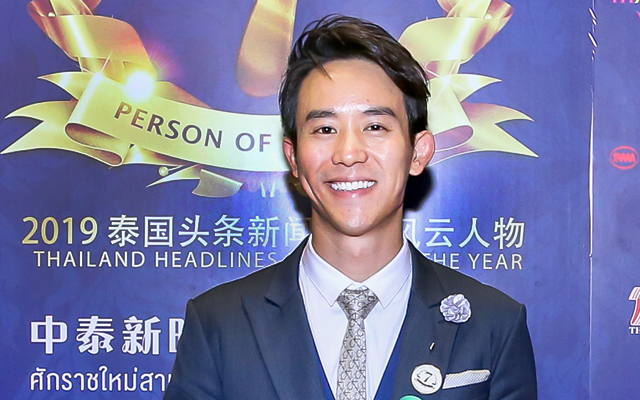
Sunil Narang - General Manager, Four Seasons Hotel Mumbai

Sunil Narang has been appointed general manager of Four Seasons Hotel Mumbai.

With a career in hotels spanning over 20 years, Narang first started out as a front desk receptionist at Four Seasons in Boston before moving through various departments within the rooms division.

Sunil Narang

Narang’s career has taken him to Four Seasons in Maldives, Toronto and subsequently, Scottsdale, where he was promoted to director of rooms. In the same role, he relocated to Maui before a promotion to hotel manager took him to Four Seasons Hotel Las Vegas.

Previously, Narang has also taken up the mantle of hotel manager in Singapore and a leading role in the region’s rooms council, as well as general manager of Four Seasons Hotel Shenzhen.

Expedia, AI Singapore join forces on AI to improve online searches for Asian travellers

0

Expedia Group has announced a collaboration with AI Singapore (AISG) – an inter-agency unit tasked to catalyse and grow the country’s artificial intelligence (AI) capabilities – under its flagship 100 Experiments (100E) programme to develop an AI solution to transform the online search experience for Asian travellers.

The first online travel platform to collaborate with AISG for 100E, Expedia Group will provide a team of experienced engineers, data scientists and marketers to work with the AISG’s project lead, project managers and AI apprentices to enhance travel search query understanding and improve the accuracy of search query resolution in Asian languages.

Expedia Group partners AI Singapore (AISG) to develop an AI solution to enhance online searches for Asian travellers (Pictured: Expedia Group’s Mark Okerstrom with AISG’s Laurence Liew)

Today’s search engines are efficient in understanding travel search queries and providing query resolutions in English, as English is the dominant language used online by 25 per cent of all Internet users.

However, when dealing with travel search queries conducted in Asian languages such as Japanese, Korean, simplified Chinese and traditional Chinese, the performance of the search engines declines significantly and the accuracy of query resolution dips.

For a start, the Expedia Group and AI Singapore project team will leverage natural language processing and machine learning to develop an AI-based model to enhance search query understanding and resolution in the Japanese language, before extending the model to other Asian languages to enhance online search efficiency.

When completed, the AI solution will enable Expedia Group to deepen its understanding of travel search query patterns and nuances in Asian languages, and equip the travel platform with the ability to serve the needs of Asian travellers better by improving the accuracy and efficiency of search query resolution.

Mark Okerstrom, president and CEO, Expedia Group, said: “With more than 7,000 data architects, AI experts and engineering specialists at Expedia Group, this collaboration with AISG has the potential to unlock new and industry-leading AI solutions to improve online travel, bringing the world within reach for those shopping for travel online in Asian languages.”

With online travel spending in Asia-Pacific expected to account for more than 40 per cent of global online travel sales by 2020, surpassing North America and Western Europe, Expedia Group’s senior director, product and technology Kevin Ng said the collaboration will enable the development of a viable AI solution that can not only enhances search query understanding but will also transform the online search experience for Asian travellers.

Laurence Liew, director, AI industry innovation, AI Singapore, indicated that through this collaboration, it will also help “train Singaporean AI engineers via the AI Apprenticeship Programme”.

AISG’s 100E programme matches companies which are keen to use AI to address their problem statements with local researchers. AISG is driven by a government-wide partnership comprising NRF, the Smart Nation and Digital Government Office, the Economic Development Board, the Infocomm Media Development Authority , SGInnovate and the Integrated Health Information Systems.

Oyo denies cheating charges against founder

0

Oyo has refuted the allegations that its founder Ritesh Agarwal and several top executives had cheated a Bengaluru hotelier of more than Rp15 million (US$209,000).

In a statement, the India-based hospitality chain called those allegations “false claims” and an “exaggeration” of a regular commercial dispute, according to a report by The Economic Times (ET).

Oyo’s founder Ritesh Agarwal has been accused of cheating and criminal breach of trust by a Bengaluru hotelier

In his complaint to the Bengaluru Police, Natarajan VRS accused Agarwal and his colleagues of cheating, criminal breach of trust and misappropriation of 80 per cent of the revenue share due to his hotel from June 2017 to August 2019, said the report. Other executives named are Oyo’s COO Abhinav Sinha, CFO Abhishek Gupta, president of corporate affairs Siddhartha Dasgupta and two Bengaluru-based employees.

The report added that Natarajan, who owns the Rajguru Shelter Hotels in BEML Layout in Whitefield, claimed that he signed an agreement with Agarwal in June 2017, whereby Oyo would act as an authorised agent of the hotel and make reservations for 20 per cent of the booking amount. However, he alleged that Agarwal and his Bengaluru-based representatives had swallowed 80 per cent of the share instead.

Natarajan alleged in the complaint that Oyo’s executives conspired to commit fraud and money laundering by passing off rooms for which bookings have been cancelled as occupied, said the ET report. The hotelier further claimed that many hotels in Bengaluru ran into similar problems with Oyo.

Natarajan’s case is just the latest among a wave of protests and complaints lodged against Oyo across the country, according to industry body Federation of Hotel & Restaurant Associations of India (FHRAI), said the report.

Shetty added that despite the many complaints against Oyo, the police were not taking appropriate measures, adding that FHRAI is planning to meet police commissioners in some states to discuss the issue.

The Whitefield police booked the trio, including Agarwal, for criminal breach of trust and cheating. Investigations are ongoing, according to the chief inspector of Whitefield police station Narendra Kumar.

“Our lawyers are looking into the matter and will be taking strong legal action as these claims are incorrect and defamatory in nature,” the report quoted an Oyo spokesperson as saying. “We respect the law of the land and believe it will do the right justice.”

Tui Blue to debut in Vietnam come 2020

0
Tui Blue Nam Hoi An swimming pool

Tui Group is stepping up the expansion of its flagship hotel brand in Asia with its first Tui Blue property in Vietnam, which will be launched in cooperation with Vietnam-based joint venture partner TMG Group.

Slated to open in March 2020, the 318-room Tui Blue Nam Hoi An is situated in a beachfront location on the Tam Tien beach on the central coast of Vietnam. Holidaymakers can combine their stay with a visit to the coastal town and UNESCO World Cultural Heritage site Hoi An.

Tui Blue Nam Hoi An, to be converted and extended in the style of the flagship brand, is expected to expand Tui Group’s portfolio of longhaul destinations for European holidaymakers while targeting the growing number of guests from Asia.

“We see great potential for Tui Blue in Asia and have already started to pursue further growth plans. South-east Asian destinations enable us to operate our hotels all year round, reducing our seasonal swing, and to tap into new target groups,” said Sebastian Ebel, Tui group executive board member in charge of Hotels & Resorts.

Tui Group’s existing portfolio of hotels in Asia includes three Robinson Clubs in the Maldives and Thailand, as well as three Riu hotels in Sri Lanka and the Maldives. In addition, Tui operates three concept hotels in the region.

By expanding in Asia, Tui Group drives the growth roadmap for Tui Blue further ahead. The brand is set to become the world’s largest leisure hotel brand and increase its portfolio to more than 100 hotels by 2020.

Avis drives into Myanmar

0

Avis is expanding its regional network with a new office in Myanmar to support the country’s growing business and leisure travel demand.

“One of our key priorities includes building a vast global network and expanding our regional footprint. Myanmar is a country with great potential particularly with the development of its automotive industry and we very much look forward to being part of this growth,” said Hans Mueller, vice president global licensees – international, Avis Budget Group.

Avis opens a new head office at Inya Lake Hotel in Yangon, Myanmar

“With the opening of our Avis office in Myanmar, we will be able to offer more car-rental choices and help build the industry further. We also strive to serve our customers at their locations not only in Yangon but other cities through our expanded network in Mandalay, Nay Pyi Taw, Bagan, Taunggyi and Dawei,” added Prasoporn Tansupasiri, general manager, Avis Myanmar.

With its head office located at Inya Lake Hotel in Yangon, Avis Myanmar offers both short- and long-term car rental solutions with a fresh new fleet, ranging from sedan, SUVs, pick-up trucks, vans and people carriers.

Avis Myanmar also provides professional experienced chauffeurs on various services such as airport transfer, point-to-point transfer, hourly disposal service and event chauffeur-drive service.

For individuals, the company ensures affordable and a simple rental process, starting from US$39 per day with a 24/7-hotline, roadside assistance and premium customer service.