TTG Asia
Asia/Singapore Tuesday, 16th December 2025
Page 1084

Bali tops expanding villa rental market in APAC

0

The overall villa rental market in the Asia-Pacific region grew by 12% in the past two years, reaching a value of US$440 million, with an increase in villa supply across various destinations, a recent study has found.

According to the Asia Pacific Villa Rental Market Research 2019 report by Villa Finder, Bali remains the biggest market with over 4,000 villas, and has grown by 18% since 2017, reaching US$162.5 million. The Bali market is also getting increasingly competitive with a 34% increase in the number of villas being built, despite an oversaturated market. Consequently, the average price for a villa stay in Bali decreased by 10% to US$220/night.

Asia-Pacific’s villa rental market grew by 12% in the past two years, with Bali remaining the biggest market; luxurious villa in Ubud, Bali pictured

China (23%) forms the top inbound market for Bali, overtaking Australia (19%), which the study boils down to a weak Australian dollar and the property market crisis in the country. Other main markets for vacation villas are Europe, Singapore and Hong Kong.

The study also noted that every single market in its study has more villas from two years ago as more investors look to tap into the ever-growing vacation rental market.

Meanwhile, villa rentals in Goa saw a growth of 23%, and is expected to continue growing till early 2020. With more villas on the market, the competition is higher, with occupancy rates at 60% to 70%, with Europeans and Americans making up the bulk of customers.

Australia’s villa rental market is also developing, with a rise in the number of villas in Byron Bay (30%) and Sydney (33%). While villa renters are mostly families, there has been an increase in Gen Z customers (aged 18-24) and corporate clients. However, the average occupancy in these destinations has dipped due to an oversupplied market.

Over in Sri Lanka, the number of villas rose by 25%, and the market grew by 20%, reaching US$4.6 million. However, occupancy rates went down. following the terrorist attacks in April.

Besides Goa, Australia, and Sri Lanka, other up and coming markets are Japan, New Zealand, Vietnam, and Malaysia.

Demand in Thailand’s villa rental markets have gone down, despite growing supply. The villa occupancy rate went down across various destinations, including Hua Hin (-54%), Pattaya (-21%), Phuket (-18%) and Samui (-11.5%).

The Phuket boat accident in July 2018, which affected Chinese arrivals, as well as a weak exchange rate against a strong baht and the impending world recession have contributed to the shrinking of the tourism market. The villa market in Hua Hin went down by 38%, Samui by 15%, Pattaya by 1.5% and Phuket by 2%.

New hotels: Park Hyatt Kyoto, Pullman Melbourne and more

0
Park Hyatt Kyoto, Japan

Park Hyatt Kyoto, Japan
Hyatt Hotels Corporation has launched Park Hyatt Kyoto, the second Park Hyatt hotel in Japan. The luxury hotel features 70 guestrooms, including nine suites. There are four F&B options: Kyoto Bistro, a street-side café serving international and Japanese comfort food; The Living Room which offers an authentic Japanese breakfast; Yasaka which specialises in teppanyaki dishes, and Kohaku bar which features rare and craft spirits. Other facilities include a spa, wellness centre, a ballroom offering 200m2 of event space and multi-functional meeting facilities, a show kitchen, and foyer.

Pullman Melbourne, Australia
The Pullman Melbourne on Swanston has launched, following a complete rebuild and rebrand of the property formerly known as The Swanston Hotel Grand Mercure. The hotel, which comprises 204 guestrooms and suites, sits on Swanston Street at the gateway to the Little Bourke Street shopping and dining precinct. Hotel facilities include the Eva’s Restaurant & Bar which offers all-day dining and drinks; and the exclusive Club Lounge, a Pullman brand signature.

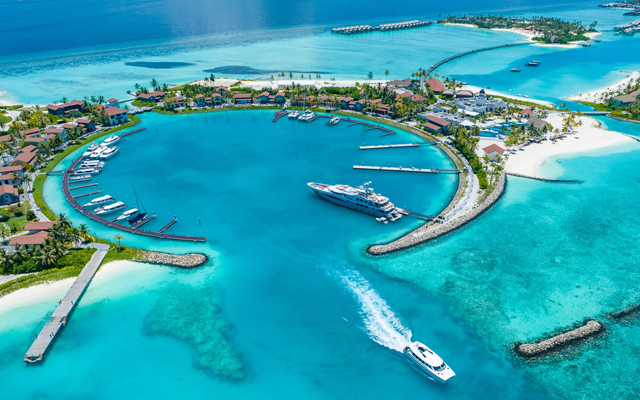
JW Marriott Maldives Resort & Spa
Situated on the island of Vagaru in the secluded Shaviyani Atoll, JW Marriott Maldives Resort & Spa features 60 villas, which include private pools and wooden sunbathing decks. There are four villa categories to choose from: Duplex Overwater Pool Villas, Overwater Pool Villas, Beach Pool Villas and Duplex Beach Pool Villa.

Facilities include an overwater gym, open-air pavilion, daily workout classes, and yoga sessions, a spa, a kid’s club, an adults-only infinity pool, as well as a clubhouse complete with a cigar room, shisha room and billiards table. The resort’s five restaurants offer an array of fine-dining choices, including classic Maldivian seafood, Thai cuisine, wood-fired pizzas and Japanese teppanyaki. Guests also have the option of dining at one of the three full-service bars, or enjoy 24-hour in-villa dining services.

Ibis Styles Jakarta Tanah Abang, Indonesia
The 201-key hotel houses a restaurant and bar, eight meeting rooms, and a fitness centre. The property is located within walking distance to Pasar Tanah Abang, the biggest textile market in South-east Asia. It also offers easy access to the Sudirman Thamrin CBD, Grand Indonesia and Plaza Indonesia shopping malls, Gambir train station, Monas, Istiqlal Mosque as well as the culinary district of Jalan Sabang.

Hilton Haikou, China
Hilton has opened 224 full-service residences in Hilton Haikou, part of a 630-room hotel that provides easy access to the city’s downtown recreational and cultural attractions. All studios and apartments come with facilities like a microwave, washing machine, refrigerator, and a dining table.

As part of the standard room offerings, all residences are outfitted with Hilton Serenity beds, a desk, wireless Internet access, a 48″ LCD TV with international channels, a bathroom with a separate shower and bathtub, as well as Crabtree & Evelyn toiletries.

Hilton Haikou offers five F&B options, including Yuxi Chinese Restaurant serving Cantonese and Hainan cuisine; Senses, an all-day-dining restaurant, Grill@33 Restaurant specialising in Western-style seafood; Blu Bar which serves craft rum and whiskey; and Cha Tea Lounge which offers a selection of Chinese teas or Hilton’s signature afternoon tea.

The hotel also features a total of 2,000m2 of meeting space, including 15 meeting rooms and a pillar-less, Grand Ballroom, spanning 814m2. Other facilities include a 24-hour fitness centre, as well as a heated indoor pool and Jacuzzi.

Thailand’s Unicorn Hospitality steps up expansion plans

0

Thai hotel management company Unicorn Hospitality is planning a significant expansion of its global portfolio, with the aim of tripling its collection from four to 12 operating hotels and resorts by early 2021.

At present, the group operates a series of hotels and resorts in Thailand and Vietnam, including The Silver Palm Rama 9 in Bangkok, Zazz Urban Bangkok, Zazz Urban Ho Chi Minh and The Cove Phi Phi.

More Asian hoteliers seeking personal connections which boutique or smaller operators can provide: Gouriou

Most recently in October 2019, the 53-room Daraya Boutique Hotel opened its doors in Bangkok, kickstarting a period of rapid expansion for Unicorn Hospitality.

Villa De Pranakorn will open its doors in mid-December 2019, providing 47 rooms and suites on Mahachai Road in Bangkok’s old city, while the 44-key Hangout By Kly Phuket will also start welcoming guests in December when it opens on Patong Beach.

In 2020, The Chandler, a 55-key artisan hotel will open in the province of Pranburi, while the 80-room Hotel Casa 17 will launch in mid-March in the historic district of Bangkok Noi. Also in 2Q2020, Unicorn Hospitality’s largest project to-date, Live by Kly, will add 373 rooms and residences to Kamala, on Phuket’s west coast.

Going into early 2021, Unicorn Hospitality will make its debut in the Maldives with the Zazz Escapes Maldives Resort which is currently under construction.

The company said in a statement that its growth is being driven by an increasing appetite among hotel owners, especially in Asia, to move away from the large international chains and work with a local hospitality provider who understands their culture and can more accurately help them deliver their vision. Unicorn Hospitality also seeks to cater to the growing segment of customers who are “seeking more intimate experiences that reflect the essence of their destination”.

“For many Asian hoteliers, partnerships with big chains can be fraught with difficulties. Management contracts are often extremely rigid, making ‘divorces’ almost impossible or very expensive. Many owners we have spoken to complain that their relationships lack the personal warmth and intuition that a boutique or smaller operator can provide. Moreover, guests feel that these ‘cookie cutter’ brands don’t have a strong connection with their locale,” said Yann Gouriou, founder and CEO of Unicorn Hospitality.

“Big chains compensate for this by promising extensive global sales and distribution, but with more direct channels available than ever before, independent and small-chain hotels can now compete on a more equal footing. Unicorn Hospitality enables Asian hoteliers to enjoy professional and fully bespoke management services, and importantly, retain a product that matches their original vision and demonstrates a unique charm and personality,” he added.

Unicorn Hospitality currently operates six brands and white label management concepts: Unicorn Hotels & Resorts, Kly Hotels & Resorts, Hangout By Kly, Live By Kly, Zazz Hotels and The Unchained Collection.

Qantas to cut carbon emissions

0

Qantas Airways has vowed to cut its carbon emissions to net zero by 2050, amid growing eco-consciousness among travellers and increasing scrutiny of airline companies’ carbon footprint.

Starting from November 11, 2019, the national carrier will immediately double the number of flights being offset, and cap net emissions from 2020 onwards.

Qantas pledges to reach net zero emissions by 2050

Qantas is the only airline group to commit to capping its net emissions at 2020 levels, and the second after IAG to commit to net zero emissions by 2050.

The group said that Qantas, Jetstar, QantasLink and Qantas Freight will offset all growth in emissions from domestic and international operations from 2020.

This includes offsetting all net emissions from Project Sunrise, the carrier’s plan to operate non-stop flights from the east coast of Australia to London and New York, should the project proceed. This will also extend to domestic flying, meaning that growth on key routes like Melbourne-Sydney will be carbon neutral.

From November 11, Qantas and Jetstar will double the number of flights offset by matching every dollar spent by customers who tick the box to fly carbon neutral.

Qantas claims that it currently operates the largest carbon offset program in the aviation industry, with around 10 per cent of customers booking flights on Qantas.com choosing to offset their flights.

This additional investment will see Qantas Future Planet, the airline’s website which allows travellers to buy carbon offsets, support more conservation and environmental projects in Australia and around the world.

Existing projects include protecting the Great Barrier Reef, working with Indigenous communities to reduce wildfires in Western Australia and securing over 7000ha of native Tasmanian forest.

Qantas said that it will also invest A$50 million (US$36 million) over the next 10 years to help develop a sustainable aviation fuel industry.

Sustainable aviation fuel can reduce carbon emissions by 80 per cent compared to traditional jet fuel, but are currently almost double the price, said the airline.

Qantas said that it will work with governments and private sector partners to support the development of sustainable aviation fuel in Australia and overseas “to make it more viable and increase demand throughout the industry”.

The airline will also continue to reduce its emissions through continued investment in more fuel efficient aircraft, more efficient operations such as single-engine taxiing, and smarter flight planning to reduce fuel burn.

Qantas will replace its Boeing 747 fleet by end 2020 with the Boeing 787 Dreamliners, which burn 20 per cent less fuel than a similar-sized aircraft. Jetstar’s A321neo LR aircraft, which begin arriving next year, use 15 per cent less fuel than the aircraft they are replacing.

Qantas Group’s CEO Alan Joyce said: “We’re doing this because it’s the responsible thing”, adding that these commitments are “ambitious, but achievable”.

“Concerns about emissions and climate change are real, but we can’t lose sight of the contribution that air travel makes to society and the economy. The industry has already come a long way in cutting its footprint and the solution from here isn’t to simply ‘fly less’ but to make it more sustainable.”

Beyond the shiny surface

0
Potato Head Folk resides within a heritage building on Keong Saik Road in Chinatown

As the red-hot craze for immersive travel gains ground, tourism proponents in Singapore are getting creative by whipping up experiential and value-added activities for intrepid travellers.

Kicking off industry-wide efforts was the Tour Design Challenge launched last year by the Singapore Tourism Board (STB), which selected tour operators for a programme comprising industry workshops, site visits, pitching and grant support for selected applicants to pilot these new tours.

Potato Head Folk resides within a heritage building on Keong Saik Road in Chinatown

The challenge helped launch innovative tours such as Singapore 1920s: Trails of Ah Huat by Let’s Go Singapore and the back-of-house Silicon Valley of Singapore Insider tour by UBE Singapore.

Furthermore, under this year’s Marketing Innovation Programme, STB awarded seven businesses up to S$1.3 million (US$933,428) for marketing proposals that introduced a new dimension to storytelling about Singapore. One of the winning businesses, local e-commerce company Carousell, will launch a campaign – Embark on Your Great Singapore Treasure Trail – inviting Indonesian users to explore Singapore by planning their own ‘treasure trail’ itinerary using the Carousell app.

The need for innovative visitor experiences is not lost on the local hospitality sector. The young Six Senses Maxwell has paired with Jane’s Singapore Tours to bring guests through locales such as MacRitchie Reservoir Park, Botanic Gardens and the Civic District.

Capella Singapore, under the Capella Curates programme, has launched the Qi & The City experience that whizzes guests around the city in vintage sidecars, while providing commentary about the fengshui principles reflected in the local architecture along the way.

Murray Aitken, general manager, Six Senses Singapore, expressed: “We want to be an intrinsic part of the local fabric and culture, and if this calls for a deeper exploration of community partners who can bring about a layered approach to help our guests reconnect with themselves and experience the community, then we will continue to innovate, look for experiences that are always unique – often unexpected, sometimes unusual – and partner with leading experts.”

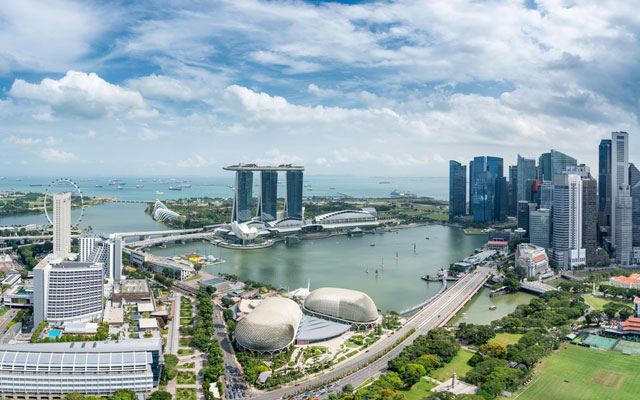
The trend has spilled over even to Singapore’s two integrated resorts, which are building on the traditional resort model to provide more experiential offerings. As part of a suite of massive expansion plans, Resorts World Sentosa (RWS) will increase its gross floor area by about 50 per cent to usher in new attractions, while Marina Bay Sands (MBS) will welcome a fourth tower and a 15,000-seat indoor entertainment arena.

Putting a greater focus on immersive products and services, RWS will first open a pirate-themed “adventure dining playhouse” in end-2020 to replace the Resorts World Theatre. Arriving in phases through to 2025 will be a public seafront attraction with free evening light shows and a new waterfront lifestyle complex helmed by two new hotels.

Additionally, Universal Studios Singapore will unveil two new themed sections – Minion Park and Super Nintendo World – and S.E.A. Aquarium will more than triple in size and be rebranded as the proposed Singapore Oceanarium. The transformed resort, which will be backed by a S$4.5 billion investment, is touted to “create a new wave of tourism growth for the next decade”.

Tan Hee Teck, CEO of RWS, said: “RWS will form an integral part of the future Greater Southern Waterfront and become a centrepiece of the transformative journey to enliven the southern corridor.”

Meanwhile, MBS has already begun flexing its creative muscle in the lead-up to its expansion. Where celebrity chef restaurants and Michelin-star dining were once all the rage, consumers are now hungry for an experience beyond the meal.

Mike Lee, vice president of sales, MBS, explained: “Guests now want to be entertained while they dine, and be simulated by visual and aural senses. Think DJs taking centrestage in a restaurant, theatrical show kitchens and a playlist that sets the mood of a venue and the ensuing conversations of its guests.”

That mentality is distilled in the resort’s fresh F&B concepts recently opened with TAO Group that have “morphed entertainment and food” together, shared Lee, referring to rooftop restaurant Lavo, inventive nightclub Marquee, and Japanese restaurant and sushi bar Koma.

MBS has also taken the visitor experience to the next experiential level with the Wonderland trail, an adventure and food tour inspired by the ArtScience Museum’s Wonderland exhibition. The trail brackets a visit to the exhibition with a specially concocted Wonderland Crazyshake at Black Tap and Wonderland-themed high tea at the signature Renku Bar & Lounge.

Singapore to introduce fingerprints and facial immigration clearance by 2025

0

Come 2025, travellers visiting Singapore will have to clear security at automated border checkpoints with their fingerprints, and facial and iris scans, according to an article from the Straits Times.

As per the same article, border security is one of the five key national artificial intelligence (AI) projects that was announced by deputy prime minister Heng Swee Keat on November 13, and is part of Singapore’s greater strategy to harness AI to deliver social and economic benefits.

Singapore to introduce fingerprints and facial immigration clearance by 2025

With the help of AI, travellers will be able to clear immigration checks quicker and more seamlessly at Singapore borders, while the process will also reduce human error and allow immigration officers to focus on other visitors who may require another look.

A fully automated system – which uses a facial recognition system – currently in place at Changi Airport, was said to achieve manpower and efficiency savings of up to 20 per cent, stated the Straits Times report.

Apart from border security, the other AI four projects are in logistics, healthcare, education and estate management, said the Smart Nation and Digital Government Office. A new National AI Office has also been created under the Smart Nation and Digital Government Office to set priorities and help to build a pipeline of AI talent.

Medan bombing prompts tightened security, but North Sumatra travel unaffected

0

A suicide bombing on Wednesday morning at the Medan police headquarters killed the perpetrator and injured six people including a civilian and police officers, but local business leaders believe that North Sumatra tourism will remain unaffected after authorities beefed up security measures in the city.

Robert Lam, owner of Medan-based Horas Tour, said that the incident did not trigger any of his inbound guests to cancel or postpone upcoming trips as the incident was “a small-scale bombing attack” that took place away from the city’s main tourist spots.

A suicide bombing prompts authorities in North Sumatra to step up security measures in the Indonesian province’s airports, including Kualanamu International Airport

Lam has yet to receive concerned enquiries from travellers planning to visit North Sumatra in the upcoming days, and he added that he is constantly in contact with his business partners in South-east Asia and Europe to ensure them that the situation in North Sumatra remains safe.

Denny Wardhana, chairman of Indonesian Hotel and Restaurant Association (PHRI) North Sumatra chapter, said that “the situation is still conducive” and that the bombing had yet to adversely impact hotel occupancy rates.

To assess the condition, he had called general managers of hotels in the city, including Grand Mercure Medan Angkasa located 270m from the Medan police headquarters. They all told him that business operations ran as per normal without any cancellations and that none of the guests checked out immediately after the bombing.

However, Denny had urged his association members to remain alert, as well as to tighten security at their respective hotels and to continue to monitor the situation.

Among extra security measures that the members of PHRI North Sumatra had taken to guarantee the safety of their clients was increasing the number of security personnel at the hotel entrances.

Following the bombing, state-owned airport operator Angkasa Pura II also tightened security in its 19 airports, including Kualanamu International Airport in Medan and Sisingamangaraja XII International Airport in Siborong-Borong in North Sumatra.

In an official statement, Angkasa Pura II’s president director Muhammad Awaluddin said that security measures have been stepped up with a walking metal detector and an X-ray area. He had also instructed the general managers of all airports to increase random checks of vehicles entering the airport’s compounds as well as passengers and their luggage.

Angkasa Pura I also implemented similar measures across its 14 airports.

“We have increased the frequency of doing random checks of passengers and their belongings at security posts and to intensify patrols from every two hours to every hour at airport perimeters with random routes and unscheduled timings to ensure that perimeters remain safe,” Faik Fahmi, president director of Angkasa Pura I, said in an official statement.

“We have also increased the frequency of walking patrols inside airport terminals and started using CCTV to monitor boarding access,” he added.

He said that the airport has also increased coordination with the National Police and Indonesian Military.

Both Faik and Muhammad said that airports under their supervision ran as per normal and that the bombing did not disrupt its operations.

US luggage tracking service takes off in Asia market

0

New York-based luggage protection company, Blue Ribbon Bags (BRB), is stepping up on efforts to grow its presence in Asia, particularly in the South-east Asia region, Japan and China.

Founded in 2011, the company promises that for a US$5 service fee, it will track and return a client’s lost luggage by the airline within 96 hours of the flight landing or pay them a minimum of US$1,000 per bag. BRB utilises its own proprietary system to track bags and does not use GPS trackers.

Blue Ribbon Bags has successfully expanded into Asian markets, despite challenges: Levine

BRB’s president and co-founder Daniel Levine said: “China presents a great opportunity with the exponential growth rate of air travel in the country. With regards to expanding our sales in Asia, our GSA partners in China, Japan, Malaysia and Indonesia have been instrumental in creating awareness of Blue Ribbon Bags and expanding into new Asian markets”.

A marketing representative appointed in Malaysia early this year has also been tasked with developing other South-east Asian markets, particularly Singapore, Indonesia, Vietnam, Thailand and the Philippines.

Levine shared: “So far, we’ve seen great success in launching our product with OTAs in Singapore as well as with travel management companies in Malaysia. We’ve also been able to rapidly expand in Beijing, Tokyo and Seoul due to the market’s ability to quickly integrate our service.”

Expansion into Asia comes with its own set of challenges. Levine explained: “Due to our business being volume-based, the South-east Asia market presents some difficulties as the online market there is less developed than other parts of the world. It has been our experience that consumers culturally prefer to purchase travel services through offline channels such as traditional agencies or travel fairs.

“To accommodate these types of customers, we customise our product offerings, making it simple to integrate into any offline channel such as a call centre or internal booking platform. Language barriers can delay integration into new markets. We’ve hired local brand managers across the region to help break through that barrier.”

Blue Ribbon Bags looks to grow its presence in Asia, Japan and China

Besides targeting air travel in Asia, the company is also looking at expanding into the Asian cruise industry. Levine shared: “The greatest concern for cruise ship passengers is that their luggage is with them on the ship. When a passenger’s piece of luggage is mishandled by an airline, we’re the best in getting the luggage to the cruise’s next port of call.”

Levine is confident that the service saves customers “time and effort of having to liaise with the airline directly while on a business trip or holiday. We locate 99 per cent of bags that are reported as mishandled”.

He added: “We pay the customer US$1,000 per bag in the event that we are not able to provide the service we promised, without requiring proof of the bag’s contents. We consider this satisfaction-guaranteed payments.”

Wirex rolls out multi-currency Visa Travelcard in APAC

0

Borderless payment platform Wirex has unveiled a new multi-currency Wirex Visa Travelcard that will allow customers across the Asia-Pacific region to “seamlessly spend multiple crypto and fiat currencies, and earn crypto rewards wherever they travel”.

All cryptocurrency exchanges to legal tender fiat currency takes place before users transact on the Visa network.

Wirex launches multi-currency Wirex Visa Travelcard for the Asia-Pacific region

The card, which is compatible with more than 150 currencies, and enables holders to link multiple fiat currencies without extra fees, is accepted at 54 million outlets around the world where Visa is accepted.

It also pays customers up to 1.5 per cent back in Bitcoin on all in-store purchases through its Cryptoback programme.

Pavel Matveev, Wirex’s co-founder and CEO, said: “We have witnessed an explosion in demand for hybrid fiat and crypto-enabled banking alternatives in Asia-Pacific, where people need payments redesigned for the future, allowing them to unlock the value of their different currencies.”

He added: “The evolution of Wirex’s offering in Asia-Pacific represents more than just the next stage in the platform’s growth strategy; it is a tangible example of our mission to provide a genuine alternative to conventional financial services by connecting traditional and digital ecosystems on one borderless payment platform.”

To allow as many people as possible to experience the Wirex Visa Travelcard, Wirex is removing fees, including account management and traditional currency exchange fees, for a limited period.

Agoda launches enhanced API service for B2B2C partners

0

Agoda has released a suite of enhanced products and technology to help businesses looking to capitalise on the growing travel sector.

The company’s enhanced API allows partners, from distributors to corporate travel agents, convenient and quick access to its inventory of over 2.5 million properties in over 200 countries and territories. Their customers will be able to choose from different accommodation options such as hotels, resorts, villas, ryokans, guesthouses and vacation rentals.

Agoda’s enhanced API will give its partners quick access to its inventory of over 2.5 million properties

Agoda has already signed deals with three GDSs so that corporate partners can connect to its extensive inventory and search for the best rates for their clients.

Additionally, partners who wish to expand their travel offerings beyond accommodation can now enjoy competitive rates on Agoda’s growing Flights inventory, said the company in a statement.

For partners that need access to inventory and best-in-class rates but want to maintain the look and feel of their brand, Agoda’s latest white label platform is a fully-loaded “turn-key” solution that allows them to provide their customers an online experience that they are used to, from customisable colours, URL to product selection.

Partners with their own inventory also have the option of using a white label extranet where they can seamlessly manage their supply along with Agoda’s.

Mike Saslow, head of strategic partnerships, North America, said: “Our partners tell us that access to Agoda’s best-in-class rates and the ability to offer a familiar brand experience to their customers are key features companies look for in a partner to help them drive conversion and customer loyalty.“

Agoda has developed a single sign-on solution that will improve travellers’ overall booking experience as they can automatically login from the partner’s site to Agoda’s platform, making the process more seamless. Single sign-on will also allow travellers to participate in the partner’s loyalty or reward program, while taking advantage of Agoda’s member rates, hence reducing friction and improving conversion for partners.