Online travel guide Trip101 reported a recent increase in the average number of nights per booking for vacation rentals in the US, Japan, Canada, and other major countries – from approximately three nights to eight nights – amid a global shutdown to stem the spread of Covid-19.
The trend emerged around the second week of March, in the thick of heightening response from governments around the world, and ahead of state of emergency declarations in the US (March 13) and major cities in Japan (April 7), according to Trip101.
Vacation rentals have seen a surge in bookings amid the pandemic, says Trip101
The findings are in line with a recent increase in long-term bookings reported by vacation rental platforms, said Trip101. According to these platforms, there have been more hosts offering longer-term stays and dangling discounts to people seeking accommodation since the Covid-19 outbreak.
Kei Shibata, CEO and co-founder of Venture Republic, which owns Trip101 and Travel.jp, said: “The surge could be related to the number of individuals needing to self-quarantine and tourists who have been stranded under strict travel restrictions.’
Homebound holidaymakers can still reap the psychological benefits of travel, and find relief from vacation deprivation, by tapping into cherished memories of holidays past, amid this unprecedented time of travel restrictions, according to Expedia’s latest Vacation Deprivation Study.
Conducted by Northstar Research Partners on behalf of Expedia, the study, which surveyed 11,000 individuals across 19 markets, found that a large majority (93 per cent) of Singaporean working adults indicated that taking regular vacations is important for general health and well-being.
Relieving happy holiday memories can boost one’s mental health: Expedia
Additionally, 88 per cent said they feel rejuvenated and have a better outlook on life after vacations, while a significant 82 per cent indicated that they regularly take vacations to improve mental wellness.
The company has termed the positive psychological effects of travel, as affirmed by the study’s findings, the Vacation State of Mind.
While travel plans are clouded with uncertainty at the moment, the online travel giant believes that the yearning for that much-needed getaway can be lessened with techniques that prolong this state of mind.
One way is to tap into vacation memories when feeling stressed at work. Some 79 per cent of the 1,000 Singaporean residents polled between March 4 and 27 indicated that they had done so in order to relax during such stressful times.
Approximately two-thirds (74 per cent) also looked at photos from holidays on their phones when feeling overwhelmed, while a slightly lesser number (71 per cent) took the step of surrounding themselves with pictures, mementos and souvenirs from their vacation.
Expedia found that these methods — which they termed vacation top-up techniques — were more commonly adopted by millennial parents.
This group shared that speaking with their family, including their children, proved just as effective as the use of social media in reconnecting with happy holiday memories.
Based on the study findings, Expedia recommended five ways for Singaporeans to prolong their Vacation State of Mind:
Speak with friends or family who you’ve been on trips with about your past vacations over video call platforms
Look at pictures of past vacations on social media
Plan for your next vacation, save favourite flight and hotel itineraries as you go along
Wear the clothes that were bought on past vacations while working from home, have themed outfit days
Look at souvenirs from past trips
Across the Asia-Pacific region, the most effective vacation top-up techniques were engaging in dialogue with others on vacation experiences. Speaking with family (52 per cent), travel companions (50 per cent) and friends (47 per cent) triggered happy memories for many respondents in the region.
In India and Thailand, a preference for listening to music from the vacation was found among 69 per cent and 57 per cent of respondents, respectively. Meanwhile, 63 per cent of the respondents from Malaysia and 56 per cent of those from South Korea said they enjoy browsing through printed photos from their trips.
Lavinia Rajaram, APAC head of communications, Expedia, said: “Fostering a Vacation State of Mind can provide relief from the growing feeling of vacation deprivation and encourage family connections as well as positive emotional responses.”
Filipino hoteliers are looking to renegotiate the commission of OTAs for a period of six months to one year so they can recoup certain losses from Covid-19, but the idea has been met with resistance by online agencies.
Hotel Sales and Marketing Association (HSMA) president Christine Urbanozo-Ibarreta said OTAs “stand by their commission rates” which run as high as 25 per cent, even though HSMA requested for a temporary reduction to at least a maximum of 15 per cent “as (our members) are also trying to get back the clients”.
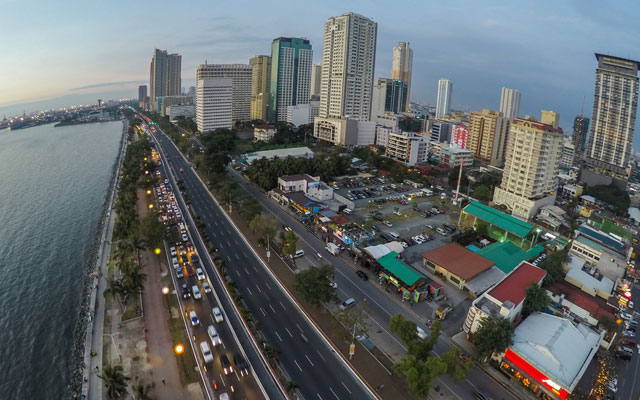
Hotels in the Philippines aim to cut commission of OTAs; Roxas Boulevard in Manila pictured
As part of the lockdown in the Philippines, all hotels and resorts have been closed since mid-March, except for certain properties having existing long-stay guests and those who were approved to host medical frontliners and returning overseas Filipino workers on quarantine at minimum rates.
Urbanozo-Ibarreta said HSMA, which represents over 120 hotels and resorts, has started the negotiations with selected OTAs “who will cooperate and work (with us) during the recovery stage”.
She noted that OTAs are affected by the fortunes of hotels, as the agencies receive commission fees from the hotels they sell via their platform.
OTA themselves determine the commission that they get from hotels and resorts. They have a wider scope of selling hotel keys and promoting the hotels to targeted markets, and typically spend five to 10 per cent of the fund on marketing activities.
In contrast, traditional travel agencies get a 10 per cent commission, but they have contracted rates with hotels. For example, a rack rate of 7,500 pesos (roughly $150) per room is extended to traditional travel agencies for 3,600 pesos for FITs, and 3,200 pesos for groups of 10 rooms or more.
There are a handful of hotels and resorts that don’t work with OTAs which Urbanozo-Ibarreta said is a business decision made by management, but she said that OTAs “are useful for lean dates on which they pick up bookings for us hoteliers and they market to a wider audience”.
Some hoteliers in China are bracing for a spike in domestic activity during China’s week-long May Day holiday, which takes place from May 1-5, with Ctrip predicting that the period is expected to see 90 million domestic trips.
The projection may be a steep decline from the number of domestic trips taken during the annual holiday in 2019 (195 million), but signals the start of recovery for China’s tourism sector ravaged by the coronavirus.
China hotels brace for May Day uptick, with Cordis Dongqian Lake Ningbo (pictured) to see high occupancy over the week-long holidays
The expected rebound comes despite limitations imposed – students are requested to stay within their own city for 14 days, while attractions have to ensure daily visitation is below 30 per cent of maximum capacity.
William Hall, an independent hotelier and former general manager of Crowne Plaza Chengdu City Center, believes there are green shoots as the recent Qing Ming holiday showed a surge in demand in some tourist areas.
Some 43 million domestic trips were recorded during the recent Qing Ming Festival in China, according to data from the China Tourism Academy.
Hall predicted that domestic tourism would be “good” during the May Day holiday, while Chinese travellers will still hold a “wait and see” mindset towards overseas travel. “Everyone is eager to travel, but in a safe and secure manner,” he said.
Sor Hoon Lim, regional vice president for sales and marketing, Asia Pacific, Langham Hospitality Group, shared that bookings for the May holidays in China are promising and its resorts are doing well.
“Our hotels in Haikou and the city are expected to be busy during this holiday period. Our resort Cordis Dongqian Lake Ningbo, in particular, will be running high occupancy over the May Day holidays. In China, more people are starting to travel domestically, within the surrounds of the province or inter-city self-drives in China,” she said.
“People are seeking holidays where they can be close to nature, or resorts where they have more space, are popular. Business in Shanghai is gradually improving and F&B business in the city is definitely picking up, as more people are dining out (while still practicing social distancing).”
In south-west China, hotel business is picking up too. Niccolo Chengdu general manager Michael Ganster said that he is starting to see green shoots appear in the popular tourist destination.
“We experienced 100 per cent occupancy for the first three days of the May Day holiday period in 2019, but forecast an occupancy of about 65 per cent (this year),” he said.
“Leisure travellers are mainly from surrounding cities. Long-distance travel across provinces is still not high due to government restrictions, with the exception of the more popular leisure destinations such as Sanya and Yunnan.”
Niccolo Chongqing’s general manager, Giorgio Olivotti, shared that the hotel enjoyed 80 per cent occupancy for the May Day holiday last year. This year, it forecasted an occupancy of 55 per cent.
He said that his current guests mostly hail from the surrounding cities such as Sichuan as “people like travelling a distance”, adding that at present, guests favour travel by car over train or air.
“For cities like Beijing, Shanghai, and Guangdong, as well as Jiangsu and Zhejiang provinces, which are also our key sources with limited volume now, we expect recovery may be in 4Q2020, but we will need to monitor the progress of Covid-19.
“People appear to prefer to stay in hotels in the suburbs and outskirts, rather than hotels located in the city centre. They are also beginning to focus on health and well-being, like the quality of air, food, and water.”
However, not all stakeholders will get to cash in on the upcoming Golden Holiday. In Beijing, Taishan Hotel Beijing has temporarily shuttered since last week due to a lack of revenue and to ensure safety.
However, its general manger Chris Duncan told TTG Asia that the company’s other properties are open and those in Shandong Province are doing quite well.
He called Ctrip’s prediction of 90 million domestic trips for this year’s May break “very optimistic”, based on comments he received from other hotels, and the current travel restrictions for Beijing.
“It could be the case for rural holiday destinations, but my personal feeling is that the general population is still very cautious to travel outside their hometowns over the May holiday period,” he said.
He added that Beijing is currently not seeing any green shoots, with regulations changing regularly and the tight restrictions on both FITs and corporate travellers to the city.
“Prior to (Taishan Hotel Beijing’s) closure last week, we saw no forward bookings, but this could be due to the tight restrictions in Beijing, coupled with the requirement that all arrivals into Beijing, except from the Tianjin and Hubei provinces, need to have a hospital clearance certificate.”
However, Duncan is hopeful that when travel restrictions are lifted, there will be an influx of corporate travellers, although he noted that there will be fewer attendees for events. “Travellers will be very cautious, but I believe people will return through necessity, and will travel in coming months to build relationships again and improve their bottom lines.”
On the other hand, it may take a longer time for travel agents to rebuild their business. According to Century Holiday Travel Group general manager, Creamy Chen, the company is still in “hibernation mode”, with no concrete plans for resumption of operations.
“Currently, I understand only Beijing announced that agents may organise city tours. Moreover, agents (are not benefitting from) the surge in domestic travel as travellers only opt for self-drive holidays around the areas they reside,” she said.
BCD Travel’s managing director for Greater China, Jonathan Kao, said that changing traveller preferences may mean lesser earning opportunities for tourism providers.
He explained: “For the May holidays, the popular belief is that travel will come back to life due to pent-up demand, with everyone staying home for so long. But it is also expected to be the worst holidays in the past five to six years, based on price.
“Travellers are looking more for wilderness and places they can drive to that are not too crowded; and maybe opting for individual villas or accommodation. They are also seeking out mainly outdoor activities, so it is a bit different from their requirements in the past.”
Unable to provide buffet dine-ins during the Ramadan period, two hotels in Kuala Lumpur have switched to offering food takeaways and delivery options for the breaking of fast.
Sheraton Imperial Kuala Lumpur Hotel, for instance, offers a wide selection of a la carte dishes, as well as set menus suitable for four to five people, all created by the hotel’s executive sous chef Hazif Ramli and his team.
Guests may not be able to dine in at Sheraton Imperial Kuala Lumpur, but they can still enjoy the hotel’s culinary dishes via delivery this Ramadan
Mel Hamid, manager, digital & marketing communications at Sheraton Imperial Kuala Lumpur, shared: “The dishes are specially crafted by our top chefs, using only premium ingredients and we have reduced the prices to reach more customers. With delivery and pick-up services, we are bringing convenience to our guests who are not able to visit their favourite restaurants.”
The property has also forecasted a reduced F&B revenue for this Ramadan, as compared to the previous Ramadan, when revenue was 20 per cent above projection.
Another five-star property in the city, Le Meridien Kuala Lumpur, offers six curated set menus by executive sous chef Budiman and his team of culinary experts. Delivery and pick-up are also available.
Traditionally, Ramadan buffets make up 30 per cent of the property’s F&B revenues.
However, Le Meridien Kuala Lumpur’s general manager, Michael Delargy, said: “The situation is so unique, hence, there are no real revenue expectations, but a desire to allow our chefs to demonstrate their skills, and allow our guests to enjoy their Buka Puasa (breaking of fast).”
“The expectation this year is really about doing our best to allow guests at home to sample the quality and style of dishes that they usually would expect at the hotel,” he added.
Malaysia is still under a strict movement control order (MCO) and there are no dine-ins at least until May 12. It also remains to be seen if the MCO will end as scheduled, or be extended for a fourth time.
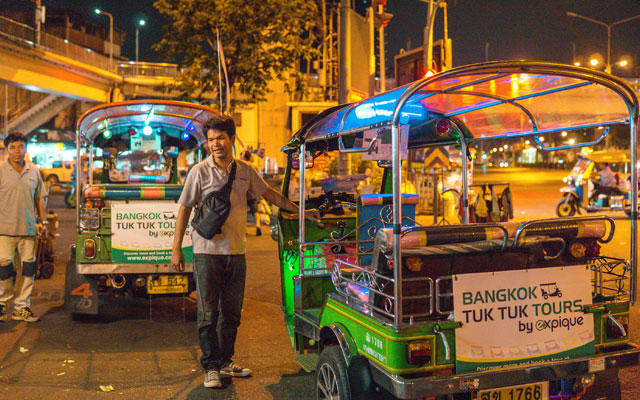
Expique's tuk tuk drivers have returned to their hometowns to farm as there are no tourists
Thailand’s community-based tourism (CBT) operators and beneficiaries are proving their resilience as tourism grinds to a halt amid the coronavirus, with affected communities returning to their main economic activity of agriculture or diversifying to food delivery to sustain livelihoods.
“For these communities, the money that they gain from community-based tourism is still a secondary source of income,” explained Somsak Boonkam, founder and CEO of Local Alike.
Expique’s tuk tuk drivers return to their hometowns to farm as there are no tourists
“They still maintain their core business of agricultural production. But, the latter has also been impacted because they have fewer customers, and face logistical challenges in moving products due to the government restrictions at the moment.”
Somsak helped spearhead the CBT movement in Thailand when founding his award-winning company seven years ago. Local Alike now works with more than 100 local communities in 46 provinces and has generated over 54 million baht (US$1.6 million) to benefit local communities since its inception.
Somsak: exploring numerous revenue streams to help CBT communities in this trying period
Asked if the loss of tourism income worries communities, and how they plan to adapt, Somsak stated that most communities are using the downtime to prepare for the rebound.
The Local Alike team is also trying to help communities create other streams of income. Last August, Somsak founded the Local Aroi community fine-dining initiative, which they turned into a food delivery service since this April.
“We have to work harder on this (initiative). We haven’t reached our targets with the food delivery because the fixed costs are high. We’re also experimenting with e-commerce for local community products on our social media channels,” he said.
Another segment of the industry affected are freelance guides from local communities. “All our 20 guides are freelancers and about 50 per cent rely almost exclusively on guiding for their income. Most of them have been severely impacted – a few are venturing into new businesses,” said Simon Philippe, founder of Expique tuk tuk tours in Bangkok.
“As a result, half of our drivers have returned to their hometowns (mainly in Isaan) either to save costs or because they have other opportunities to earn there – normally agriculture.”
He added: “I think it is safe to say our drivers have lost at least 70 per cent of their income. Some applied for the 5000 baht from Social Security. A few received it but most did not hear back or got rejected.”
Expique is partnering with Food for Fighters, a non-profit food delivery service for medical personnel, to create alternative income for its drivers.
However, he added, they are “slightly cautious” about investing too much effort and resources into their food delivery venture as they do not see long-term prospects in the sector.
The World Elephant Foundation (WEF) has launched the Save the Asian Elephant campaign to raise funds and awareness of the mammals’ plight amid lockdowns, as elephants in shelters and parks throughout Thailand, Myanmar, Cambodia and Laos face starvation as tourism dries up.
The crux of the matter lies in the fact that the elephant shelters and parks rely on tourism for revenue. WEF intends to set up a registry for rescue organisations and sanctuaries to indicate their numbers and needs. This will allow the organisation to embark on a coordinated approach to help the animals across the Greater Mekong region.
WEF launches campaign to save Thai elephants from starvation as tourism collapses
In a press statement, Nudplee Hamundee, director, WEF, called on those concerned for the welfare of the animals to sponsor an individual elephant. He explained that no government support is provided for the mammals, who may then be “sold for illegal logging or hard labour” or have no option but to starve to death. Pregnant female elephants may also be smuggled.
He added that the situation has been made more dire as it is the dry season and there is a lack of jungle remaining. Instead of giving the animals fresh plants or vegetation, elephant carers have had to purchase food from farms. However, they are running out of cash, said Hamundee.
Hamundee expressed hope that concerned tourists who have visited the region will show solidarity by contributing to the campaign’s initiatives.
The plight of the elephants is the latest warning sign of the risks faced by tourism-reliant economies and communities. As visitor arrivals began to fall in mid-January, the elephant owners and herders were not spared from the financial distress that gripped most individuals and businesses in the tourism sector, said Hamundee in the statement.
Besides being used to feed the animals, funds raised at elephant camps and sanctuaries were also used to “further animal welfare, combat smuggling and encourage conservation and habitat restoration”, he added.
The livelihoods of Kui hill tribes in Surin, Thailand as well as Cambodia and Laos have been severely impacted as they have been breeding elephants to be sold to sanctuaries so tourists could interact with the mammals.
Temporarily-shuttered Indonesian zoos are struggling to afford animal feed, as well as ensure business continuity, as the coronavirus lockdown keeps visitors away.
For now, Jawa Timur Park Group in East Java is still able to continue feeding their animals at three spots – Batu Secret Zoo, Eco Green Park, and Predator Fun Park – according to its marketing & PR manager, Titik Ariyanto.
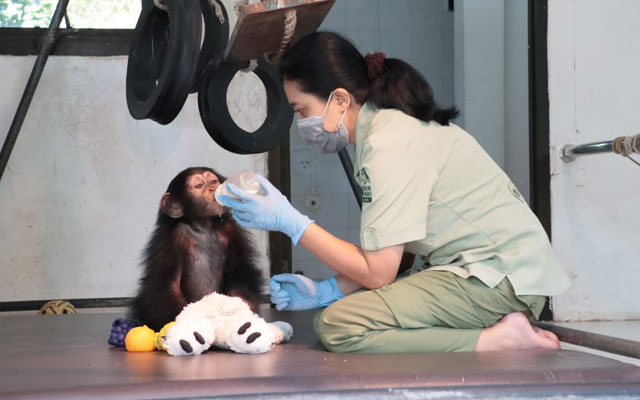
A zookeeper feeds a monkey at Taman Safari Park, which is among several zoos in Indonesia facing depleting food supplies
However, she said, such capacity might last only until June. After which, the zoo would face difficulty feeding their animals, without the income generated from visitors since its closure on March 20.
“Batu Secret Zoo poses the hardest challenge because just for feeding wild animals alone, we have to prepare at least 500 million rupiah (US$32,600) a month. In total, we need nearly one billion rupiah a month (to feed all the animals in the zoo),” Titik said.
To ensure that the animals continue getting fed during this crisis, Jawa Timur Park Group has resorted to layoffs and pay cuts.
Titik said that her office had sent letters to the Health Care and Social Security Agency to defer insurance premium payments, as well as to the state-owned electricity firm PLN to get a discount for their electricity bills.
“Although we are closed, we still use electricity to maintain our rides and fun attractions. We are afraid that they will break down if we don’t turn them on (during the closure),” she said.
The Indonesian Zoo Association (PKBSI), which represents 57 conservation bodies that take care of a combined 4,912 species and 68,933 animals, has sent a letter to president Joko Widodo last week to ask for financial assistance from the government, ranging from tax relaxation to cash transfer from state budget or city budget, according to its chairman, Rahmat Shah.
The cash transfer that PKBSI proposed amounts to 38.5 billion rupiah a month, comprising 23 billion for zoo workers, 14.5 billion for animal feed, and nearly one billion for animal medication, in addition to temporary exemptions from paying salary taxes, as well as land and building taxes.
“Although all zoos have shut down, we cannot stop feeding animals (during the closure). All animals in the conservation bodies are owned by the state and we (conservation institutions) are like day-care centres. So we have to get the government’s permission if we want to transfer or exchange animals,” Rahmat said.
Amid this crisis, he said, conservation bodies show varying degrees of financial strengths. Some 23.7 per cent stated that they have no financial capacity at all; while 23 per cent can survive less than one month; 34 per cent, one to three months; and 18.4 per cent, more than three months.
Zoos lacking the financial capability are now being helped by other members of PKBSI to feed their animals, according to Rahmat. “So far, all animals in conservation bodies across Indonesia are safe,” he added.
Both Ketut Widarsana, spokesperson of Ragunan Zoo in Jakarta, and Yulius Suprihardo, spokesperson of Taman Safari Indonesia in Bogor, West Java, said that their zookeepers are still working as per normal and they were doing their best to provide company and nurture for animals, but they now wear masks, gloves and other protective gear to prevent virus transmission from humans to animals.
Although the two sites have closed their doors to the public, animal care, cleaning and feeding continues, according to Ketut and Yulius. The sites and cages are also disinfected regularly to keep the animals safe.
PKBSI hopes that the government will provide immediate aid to zoos across the country as the sector employs 22,000 workers, attracts more than 50 million visitors annually, and contributes 500 billion rupiah a year to the country’s GDP.
The Malaysia Budget Hotel Association (MyBHA) has called on the government to draft an act to protect hoteliers amid the pandemic.
Its national deputy president, Sri Ganesh Michiel, said in a statement that the association had received negative feedback from its members that the Special Relief Fund (SRF) rolled out by the government was “not friendly” to the industry.
Malaysia Budget Hotel Association urge government to pass law to protect hoteliers; a budget hotel in Penang pictured
“The banking and financial institutions (have been) avoiding the hotel industry as they misunderstood (it to be) a high-risk industry,” he said.
The government has set aside RM5 billion (US$1.1 billion) under the SRF to provide financial relief for SMEs affected by Covid-19.
Sri Ganesh, who is also MyBHA’s national legal and information and communications technology bureau chairman, said: “Most of the hotels are on a rented property where the government had announced that all the property owners shall give a discount for the rental of their properties.”
However, he alleged that the property owners were taking advantage of the situation by refusing or being reluctant to waive or reduce rent for their tenants who had invested in converting the property into a hotel.
He also noted that the owners are currently enjoying the moratorium periods in their property loan facility, adding that it wasn’t fair to its members who are making losses. He opined that tenants risked losing possession of their hotels, as they were unable to pay rent to the landlord.
Sri Ganesh added that this situation could result in hotel closures, and the rise of legal cases, as well as bankruptcies and retrenchments.