TTG Asia
Asia/Singapore Wednesday, 21st January 2026
Page 1081

Big data, technology drive Expedia and HomeAway’s growth in APAC

0

As the digital transformation wave sweeps across the tourism industry, travel retailers are waking up to the need to leverage technology to unlock insights from big data and optimise inbound travel flows.

Riding the technology boom to expand its reach in Asia-Pacific, Expedia has been working with governments and tourism boards in Singapore, Thailand, Malaysia, Japan and Indonesia to help them leverage existing travel and search data to promote inbound tourism, while expanding tourism to second-tier cities.
From left: Expedia’s Lavinia Rajaram, HomeAway’s Judith Davidson, and Expedia’s Gabriel Garcia discuss how technology has unlocked opportunities for their businesses in the Asia-Pacific region

In the case of Thailand, Expedia teamed up with Tourism Authority of Thailand (TAT) to promote the country’s secondary destinations on its platform, shared Lavinia Rajaram, regional head of communications (APAC), Expedia, at a recent media roundtable organised by Expedia and its vacation rentals arm HomeAway to discuss the trends that have shaped travel in the last decade.

“When (TAT) was looking to promote secondary cities, it first started off as a co-branded marketing campaign. We were working with our media solutions team to develop digital campaigns and also looking at countries that Thailand was looking to boost inbound arrivals,” she said.

Marketing campaigns aside, Rajaram shared that Expedia was also looking at upscaling the hoteliers in these secondary destinations, so that users get that authentic experience that they are searching for outside of big cities like Bangkok.

“Working with our lodging team, we brought these hoteliers onto our platform, and trained them on how to use revenue management. We also conducted training sessions for these hoteliers to ensure that they have the right experiences. We also helped local tour operators to obtain proper licenses so we can bring them onto our platform, and give travellers that all-rounded experience,” she said.

AI also plays a big part in Expedia’s aim to grow its footprint in the region as well as improve the consumer experience for Asian travellers. In Singapore, AI is being used to enhance travel search query understanding and improve the accuracy of search query resolution in Asian languages.

Earlier this year, Expedia Group inked a collaboration with AI Singapore under its 100 Experiments programme to leverage natural language processing and machine learning to develop an AI-based model to enhance search query understanding in the Japanese language and other Asian languages. On the customer front, AI is being integrated into the Expedia Line chat app to improve customer experience.

Gabriel Garcia, Expedia’s global head of mobile marketing and app ecosystems, told TTG Asia: “AI and the utilisation of technology are powering our growth globally, and a big part of that growth comes from the Asia-Pacific region. There are things that have emerged in this region before anywhere else. For example, the (emergence) of AI and chatbots, and messaging apps like Line in Japan, was within this region.”

Globally, more than 50 per cent of traffic arrive on Expedia Group sites via mobile, with much of that mobile centricity concentrated in the Asia-Pacific region, according to Garcia.

With mobile being a big force for travel, Garcia said that speed is king when delivering those mobile experiences. “The way that we approach travel today is on an end-to-end basis because the mobile device allows us to serve our customer from when they are at the inspiration phase to during their trip. We got to take not a mobile-first, but mobile-only approach, as the younger generations are very likely not going to interact with a platform that is not mobile,” he said.

Driven by the big data and technology boom, travellers are increasingly expecting personalised services from travel providers.

That push for personalisation has also led to HomeAway launching Virtual Tours in Bali this August, a new proprietary product that harnesses virtual technology to offer 360-degree walk-throughs of the site’s properties. First launched in the US last November, Bali is the second market outside of the US and the first market in Asia-Pacific to offer virtual tours.

Judith Davidson, region director for Asia, HomeAway, told TTG Asia that Virtual Tours help build that layer of trust, especially in the Asia-Pacific market, where staying in vacation homes is still not the norm.

“Our number one priority (in Asian markets) is building trust because (holiday homes) are a relatively new way to stay in Asia. It’s pretty common in the US, Europe, Australia and New Zealand, but it’s still relatively new for Asian families to think about staying this way. So it’s critical for us to build that trust with them,” said Davidson.

“Our focus is really on families and groups. One of the things we found is that for family trips, the ones doing the bookings are often the mums who will be thinking about all the practical things. So Virtual Tours was a way for us to help give her peace of mind. It’s adding that layer of trust because what you see is what you get. And we have seen an increase in engagement, and therefore, an increase in conversion for those properties with Virtual Tours.”

Another tech-centric product rolled out by HomeAway this year is Trip Boards, a group planning feature for travellers to save their favourite properties, while enabling them to discuss and plan their trips in collaboration with their travel party.

Central Java sees influx of Chinese visitors despite lack of direct connectivity

0

Despite the lack of direct services, Indonesia’s Central Java Province in recent years is seeing healthy growth from China as a visitor source market.

Central Java received some 667,320 international arrivals in 2018, of which China contributed around 80,000 arrivals – 10 per cent more than the previous year – to make up about 12 per cent of the inbound market.

Indonesia’s Central Java seeing surge in Chinese tourists to the province; pictured: Dragon dance is practised by young Muslims in Lasem city as an acculturation process between Chinese and the locals

The last two years clearly saw a significant jump in Chinese arrival numbers to Central Java, compared to 2016 when arrivals from China were barely five per cent of international visitors to the province, according to Sinoeng Rachmadi, head of the Department of Youth, Sports and Tourism in Central Java.

Sinoeng commented: “We have been collaborating with agents in Malaysia and Singapore on joint marketing campaigns to promote Central Java’s attractions including heritage, cuisine and nature, as well as supporting them with promotional materials.”

China’s growing investment in Central Java is also, in part, driving stronger interest from Chinese travellers to the destination, be it through direct services via Kuala Lumpur, Singapore or Jakarta.

Calling China an “incredibly valuable market”, Sinoeng revealed that Central Java has set its sights on attracting Chinese visitors by conducting regular sales missions, attending tradeshows as well as organising fam trips for both agents and media to build this key source market.

Central Java is aiming to grow the Chinese inbound market to 90,000 arrivals this year, contributing nearly 15 per cent market share. Overall, the provincial government targets 800,000 international arrivals.

To attract more Chinese travellers, Sinoeng said that the provincial government is planning to expand the joint marketing campaign with travel agents in the Philippines and Sarawak in Malaysia.

Joko Suratno, chairman of the Association of the Indonesian Tours and Travel Agencies (ASITA) Central Java Chapter opined that the destination has a lot of potential to attract the Chinese market, but the lack of direct services had hampered faster growth rate.

Joko said: “Having more international connections – especially direct flights from China – will solve the challenge. So far, travellers who want to visit Central Java need to go through Jakarta or Yogyakarta.

“We cannot speed up the growth (even more) as there is no direct connection between China and Central Java.”

But Joko believes there is strong interest from China in Indonesia, citing the example of the recent Citilink chartered service between Kunming and Solo which enjoyed high occupancy rates. He estimated that this recent service, which operated between September and November, could increase arrivals by around 20 per cent.

Meanwhile, the regional government has been maximising the only regional direct services from Singapore and Malaysia by AirAsia.

Apart from access, Santi Aparamita, director Sun Tours and Travel opined that the travel trade needs to create new products and show more innovation in itinerary creation to fan interest in Central Java from China.

On her part, Santi has begun to include attractions such as heritage tours to Lasem, Cheng Ho Temple, or Old Town in her Central Java programmes.

She added: “I have seen demand for Lasem tours rising over the last few months, as most of the Chinese travellers are interested to see Chinese heritage on Java mainland.”

Apart from Borobudur and Prambanan Temples, Central Java has many places of interest like the Sam Pho Kong Temple in Semarang, Dieng Plateu in Wonosobo, and Solo Palace, among others.

Off-the-beaten-track destinations gain popularity among Singaporean travellers

0

A greater number of Singaporeans are heading to off-the-beaten-track destinations and seeking more unique travel experiences, according to a survey conducted by YouTrip, Singapore’s first multi-currency travel wallet.

The Singapore Overseas Spending Study 2019, which analysed the travel and overseas spending habits of 100,000 Singaporean travellers between September 2018 to August 2019, found that YouTrip users transacted in 112 currencies and visited 161 out of a total of 195 countries (83 per cent) in the world.

More Singaporean travellers venturing off the beaten path

Singaporean travellers are becoming increasingly adventurous, and taking their YouTrip cards to more exotic destinations, said Caecilia Chu, co-founder and CEO of YouTrip.

The top destinations among Singaporean travellers in 2019 are Malaysia, Japan and Australia. Notably, the study also revealed that off-the-beaten-track destinations are gaining popularity among travellers.

With an average 76 per cent growth in the number of unique YouTrip visitors, Chile, Romania, and Mongolia will be the preferred picks for an off-the-beaten-track holiday in 2020, predicts YouTrip. This is in comparison to an average 42 per cent growth of other off-the-beaten-track destinations.

There is also a shifting preference towards using multi-currency travel wallets for overseas payment, according to the study, citing a ten-fold growth in transactions processed by YouTrip in the last half of the year.

Since its launch in August 2018, over 10 million transactions have been processed, the company said in a statement.

Multi-currency travel wallets like YouTrip provides travellers access to multiple currencies, including niche currencies such as Chilean Peso, Romanian Leu, and Mongolian tögrög, YouTrip said. This access to niche currencies could also have fuelled the growing popularity of off-the-beaten-track destinations like Chile, Romania, and Mongolia, it added.

Another reason exotic destinations are preferred could be due to Singaporean travellers’ growing appetite for adventure. According to a 2019 survey by Skyscanner, 82 per cent of respondents said that they are planning to visit destinations they have not been to, citing “off the beaten-track destinations like Ethiopia, Guatemala, Iran and Yemen”.

YouTrip’s study also revealed that Gen Y travellers covered close to 20 per cent more destinations than Gen X in 2019, preferring off-the-beaten-track destinations such as Luxembourg, Peru, and Saudi Arabia.

While Central Asia remains one of the top regions for Gen X travellers to visit, Mexico, Slovakia and Montenegro are fast gaining popularity as off-the-beaten-track destinations among Gen X travellers, found the study.

Overall, Singaporean travellers spend almost 33 per cent of their total travel budget on food, the study also found. Even in off-the-beaten-track destinations observed in 2019, YouTrip is used mainly on dining expenditure.

Based on the average YouTrip user spend in each destination, travellers may expect to spend a daily estimate of S$107 (US$78) in Chile, S$76 in Romania and S$85 in Mongolia, mainly on food and transport expenditure.

In comparison to the top three popular travel destinations, travellers to Malaysia, Japan and Australia spend an average of S$116, S$195 and S$115 per day, respectively.

Singaporean travellers also tend to seek familiar food when in non-Asian countries, with cuisines such as Chinese, Japanese, and Thai falling within the top five most frequented F&B outlets, according to the study.

In the top three most popular travel destinations, YouTrip users spend an average of S$67 in Japan, followed by S$40 in Malaysia, and lastly, S$30 in Australia, in a single dining receipt.

TAT, ASEANTA join forces to promote tourism in SE Asia

0

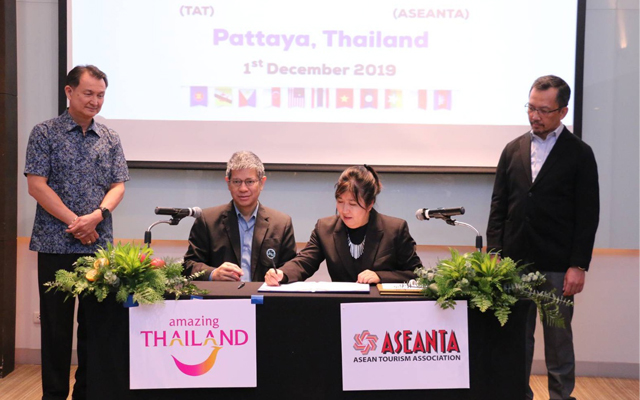
The Tourism Authority of Thailand (TAT) have signed an MoU with ASEAN Tourism Association (ASEANTA) to develop tourism in South-east Asian countries, including Thailand.

Under the deal, both parties will work to raise awareness and promote better understanding of the tourism industry among their members and network, as well as develop personnel capabilities and destination marketing strategies to promote Thailand and South-east Asia.

TAT inks deal with ASEANTA to promote tourism in South-east Asian nations

TAT and ASEANTA will also work to boost the competitiveness of Thailand’s and South-east Asia’s tourism industry by developing the standards of both personnel and organisations in this region, as well as educating and advocating implementation in tourism organisations, including the promotion of Thailand and other South-east Asia destinations.

As well, both parties will exchange both domestic and international intelligence, which has potential to boost the reputation of South-east Asia’s tourism industry in the global market. The agreement will also give members of both associations access to each others’ courses and events.

UNWTO urges deeper collaboration to curb carbon emissions from tourism

0

Transport-related emissions from tourism are expected to account for 5.3 per cent of all man-made carbon dioxide emissions by 2030, up from 5 per cent in 2016, according to a new report from the World Tourism Organization (UNWTO) and the International Transport Forum (ITF).

At the same time, as tourist numbers rise and the sector makes progress in achieving low-carbon travel, emissions per passenger kilometre aInternational Transport Forumre expected to decline over the coming decade.

UNWTO urges tourism industry to take climate action at the UN climate change conference in Madrid

Against this backdrop, UNWTO is calling for enhanced cooperation between the transport and tourism sectors to effectively transform tourism for climate action.

Launched at an official side-event of the One Planet Sustainable Tourism Programme during the UN Climate Summit, COP25 in Madrid, the Transport Related CO2 Emissions of the Tourism Secto report presents the emissions produced by the different modes of tourism transport.

As the number of both international and domestic tourists continues to rise, this data is presented alongside the predicted growth in emissions to 2030 and is set against the ‘current ambition’ for the decarbonisation of transport.

“This comprehensive study analyses the environmental impact of the different modes of transport within the tourism sector. It is now for the tourism sector, especially tourism policy makers, to use data effectively and ensure the sector plays a leading role in addressing the climate emergency,” UNWTO executive director Manuel Butler said at the event.

Ovais Sarmad, the deputy executive secretary of the UN Framework Convention on Climate Change, added: “While tourism is mentioned in many Nationally Determined Contributions as a big concern, not enough has yet been done. Industry must do more, but governments must align their policies, so that at the international level, we can collectively work to increase ambition. The One Planet Sustainable Tourism Programme is a vital ongoing mechanism to promote sustainable tourism around the world.”

Some of the main findings from the study are:

  • Transport-related CO2 emissions from tourism are predicted to increase by 25 per cent, from 1,597 million tonnes to 1,998 million tonnes between 2016 and 2030.
  • During the same period, international and domestic arrivals are expected to increase from 20 billion to 37 billion, mainly driven by domestic tourism, followed by international arrivals.
  • Transport-related emissions from tourism represented 5 per cent of all man-made emissions in 2016 and will increase to 5.3 per cent by 2030.
  • Tourism-related transport emissions represented 22 per cent of all transport emissions in 2016, and will continue doing so in 2030.

Tourism’s transport-related CO2 emissions remain a major challenge and require tourism to work closely with transport in order to support its commitment to accelerate the decarbonisation process.

In addition, the tourism industry must determine its own high ambition scenario, complementing the efforts of the transport sector, such as by significantly decoupling growth from emissions, allowing expansion within the international climate targets.

Former Ebay executive joins Hilton as marketing & e-commerce VP in APAC

0

Hilton has named Julie Nestor as vice president, marketing & e-commerce in Asia Pacific (APAC).

In her new role, Nestor will drive the marketing and e-commerce strategy for the region, enticing new customers to Hilton’s portfolio of brands and driving growth in direct bookings.

Nestor was most recently the chief marketing officer for eBay Australia, where she was responsible for retaining eBay’s position as the top online marketplace in the country and launching eBay’s first paid membership program – eBay Plus.

She has also spent more than a decade at American Express, where she was responsible for launching the first Apple Pay service in Australia, establishing loyalty programmes with airline companies and upmarket retail brands, and developing tailor-made experience programmes for cardmembers.

Sunlover Reef Cruises appoints new GM

0

Greg Erwin has taken the helm as general manager of Great Barrier Reef tour operator Sunlover Reef Cruises and its heritage listed, 100-room property in the CBD, Hides Hotel Cairns.

Erwin brings with him 20 years’ tourism and hospitality industry experience.

His career began with international hotel group Accor, where he spent 15 years in managerial roles in New South Wales before taking up a general manager position at the Novotel Oasis Resort in Cairns.

Previously, Erwin also led the strategy and transformation of two visitor attractions in Tropical North Queensland – Mossman Gorge Centre and Tjapukai Aboriginal Cultural Park.

Akio Izumi joins Novotel Okinawa Naha as DOSM

0

The Novotel Okinawa Naha has appointed Akio Izumi as the hotel’s director of sales & marketing.

In this recently expanded position, Izumi has been made responsible for the hotel’s overall sales and marketing activities including its numerous Asia Pacific MICE initiatives.

Izumi is a seasoned hotelier with over 20 years of industry experience. Prior to Novotel, he also worked in the same capacity at the Okinawa Marriott Resort & Spa.

Garuda Indonesia’s CEO fired over smuggling of Harley Davidson on jet

0

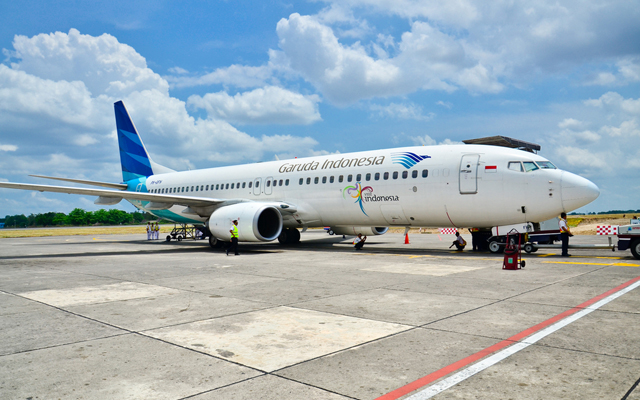
The Indonesian government will be dismissing Garuda Indonesia’s CEO I Gusti Ngurah Askhara Danadiputra (Ari Askhara) for allegedly evading tax on a Harley Davidson motorcycle and two Brompton foldable bicycles.

The Harley Davidson parts, worth 800 million rupiah (US$57,000), were reportedly carried onboard a brand-new Airbus A330-900 on its delivery from Toulouse, France on November 16, with custom officers finding them on its arrival at Soekarno-Hatta, Jakarta, reported Reuters. A number of Garuda executives including Ari was onboard the flight.

Indonesian government to fire Garuda CEO for smuggling of motorbike on plane

In a press conference in Jakarta yesterday, minister of state enterprises Erick Tohir said the motorcycle was allegedly found to belong to Ari Askhara, who made use of the state-owned company for his personal means.

“I will fire Garuda President and CEO. However, as (the airline) is a public company, there are a number of procedures to follow. We will also (investigate) others who are involved in this case,” he said.

The airline did not respond to requests for comment.

Hotels seek to build customer loyalty through memorable brands

0

At a time when retaining loyalty among guests is becoming a harder task than before, hotel chains and companies are clamouring to roll out more unique hospitality brands in order to grow and solidify their customer bases, of which millennials are now a significant portion.

“Consumers are now far more confident individuals. The most important brand is who they are as a person, and they go out in search for products that fit this personal brand. Hotels now need to create this whole range of lifestyle (products) to fit this fragmentation of individual brands,” explained Jeannette Ho, vice-president Raffles brand and strategic relationships, AccorHotels.

Industry leaders discuss how hoteliers can build brand loyalty at the recent SHATEC Hospitality Conference 2019

Ho, who was speaking at the Singapore Hotel Association’s International Hotel & Tourism School Singapore (SHATEC) Hospitality Conference 2019 on Wednesday, added that “brand love brings tremendous value” and it is no longer enough for customers to just know the brand. Instead, it must “connect to consumers emotionally, so they would be willing to pay a premium”.

To capture the hearts of today’s travellers, Raffles has invested in smart technology that runs text analytics on online reviews to identify what guests love about the brand. For instance, keywords like “garden”, “greenery” and “natural material” rank highest, hence such elements are now built into the design of Raffles properties, shared Ho.

On the other hand, Frasers Hospitality is placing a new focus on integrating its loyalty programme into the travel planning and booking journey. Its vice president and head of global branding and communication Jastina Balen revealed that the group is currently working on enhancing the functionalities of the Frasers app to encompass both long- and short-stay guests.

“Finding a happy medium between our long- and short-stay branding has been very, very difficult, but we have arrived at a sweet spot and are testing something now. I believe there is a place for loyalty programmes, especially with General Data Protection Regulation in place, as we can reach out to and engage our guests through a proper channel,” said Balen.

In the years ahead, countries in Asia-Pacific can expect to see more hospitality brands coming ashore. STR reported an average of 41 per cent branded hotels in the region, presenting a large opportunity for groups who may make their moves here through more mergers and acquisitions, opined Frank Trampert, managing director & chief commercial officer, EMEA & APAC, Sabre Hospitality Solutions.

Hotel groups will also continue to proliferate the market through brand partnerships and extensions beyond accommodation into home furnishings, dining, entertainment and high-end residences, stated Ho and Balen.