TTG Asia
Asia/Singapore Tuesday, 16th December 2025
Page 1076

Philippine tourism experts step in to solve SEA Games chaos

0

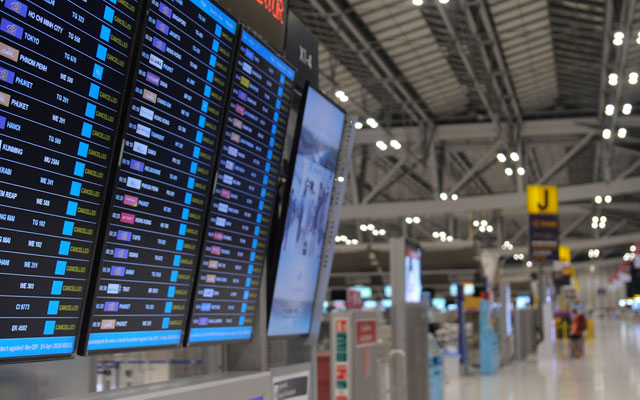
Philippine tourism stakeholders have taken it upon themselves to troubleshoot the logistical nightmare that plagues this year’s South-east Asian (SEA) Games, with reports of athletes having to grapple with airport delays, lengthy transfer services, insufficient food, and subpar accommodation.

These logistical chaos ahead of the 30th SEA Games, which will officially open on November 30, ensued in an emergency meeting convened yesterday by the Philippine Department of Tourism (DoT), where the Tourism Congress of the Philippines (TCP), Philippine Hotel Owners Association (PHOAI), Hotel Sales and Marketing Association (HSMA), and Philippine Association of Convention/Exhibition Organizers and Suppliers (PACEOS) were in attendance to pledge their unbridled support to assist with the SEA Games.

The emergency meeting held on November 27 served as a platform for tourism stakeholders to raise questions and suggestions in accommodating SEA Games delegates

To smoothen out the transport, accommodation, and food related problems, the DoT has assigned a focal person in each of the four clusters – Manila, Southern Luzon and La Union, Clark, and Subic – where delegates are staying from November 19 to December 19.

Initially intended for Philippine tourism destination promotions, existing information desks at the lobbies of participating hotels are now disseminating SEA Games-related information from the Philippine SEA Games Organizing Committee (PHISGOC) and assisting with concerns, which will be forwarded to PHISGOC for proper handling.

The DoT is also reaching out to hotels in Clark, Calabarzon, and La Union to ensure quality and consistent services throughout.

Orly Ballesteros, board member of both the TCP and PACEOS, speaking to TTG Asia on the sidelines of the 7th Summit of the Philippine Council of Associations and Association Executives (PACEOS) yesterday, said: “Planning is essential. We had three years to prepare (for the SEA Games). Logistics like transport and accommodation are small things (which should have been planned for).”

Having the right people, such as roping in the correct suppliers and partners to aid with the logistics planning, should already have been thought of from the onset, Ballesteros opined,.

“You need MICE professionals because an event organiser or a production company is only an expert in one particular core competency of an event. If you have (the help of a MICE professional), you will get an overall view of what elements are needed,” he elaborated.

Philippine Council of Associations and Association Executives’ founder and CEO Octavio Peralta agreed that the logistics should have been handled by professional event organisers.

“We have many expert PCOs and DMCs (who can help out with the planning). The DoT should have been allowed (by the SEA Games organising committee) to get involved, (and leave) the logistics and organisation to the experts,” Peralta lamented.

Against the public backlash the country has received due to ill preparation, Ballesteros believes that now with tourism experts joining the fray, it will help “government officials handling this event to avoid further embarrassment and errors”.

Believing that Filipino hospitality will eventually shine through, Peralta added: “Asians are always polite. (After) the initial knee-jerk reaction, I don’t think they will harp on it. They will forgive and forget. We have a good image and relationships with our neighbours.”

Tourist numbers, revenue up for Malaysia in first nine months

0

Malaysia’s tourism industry performance showed a 3.7 per cent growth to 20.1 million tourists for January to September this year, as compared to the same period in 2018.

The country’s top 10 source markets were Singapore, Indonesia, China, Thailand, Brunei, India, South Korea, Vietnam, Japan and the Philippines.

Malaysia’s tourism sector records 3.7% growth in first nine months; Skytropolis Funland at Genting Highlands in Malaysia pictured

Of these 10 countries, only Brunei saw a negative growth in arrivals. Musa Yusof, director-general of Tourism Malaysia, said that the 11.9 per cent drop to 929,789 tourists in inbound arrivals from Brunei was because Bruneians were travelling farther, due to their strong currency.

India registered the biggest growth of 23.2 per cent to 539,167 tourists, from 437,736 tourists in the corresponding period in 2018. China also saw a positive growth of 5.7 per cent and Musa expected the China market to continue performing well, despite the ongoing US-China trade war.

He said that contributing factors driving the growth in China arrivals were Malaysian tour packages that were competitively priced, unlike those from neighbouring countries that were pegged to the US dollar. Tourism Malaysia will also work with more OTAs to attract more FIT tourists.

Meanwhile, tourism expenditure from January to September 2019 grew by 6.9 per cent to RM66.1 billion (US$15.8 billion), up from RM61.9 billion from the same period in 2018. The top five markets for tourism receipts were Singapore (RM16.3 billion), China (RM12.8 billion), Indonesia (RM8.8 billion), Thailand (RM2.8 billion) and India (RM2.5 billion).

Per capita expenditure for the period of January to September 2019 also grew by 3.1 per cent to RM3,289, from RM3,191 during the same period last year. Countries with the biggest per capita expenditure were Saudi Arabia (RM11,394), China (RM5,302), the UK (RM5,246), Canada (RM4,8340) and Taiwan (RM4,761).

The average length of stay rose 0.1 nights to 7.4 nights, from 7.3 nights. Shorthaul markets retained its position as the largest contributor of tourists to Malaysia with a 68.7 per cent share, followed by mediumhaul markets at 21.6 per cent, while the longhaul markets accounted for 9.7 per cent of tourist arrivals.

Trip.com drives into car rental partnership with Kayak

0

Trip.com Group has partnered travel search engine Kayak Asia Pacific to offer car rentals on the Kayak platform in the Asia-Pacific region.

Bruce Wang, head of Trip.com Group car rental business, noted that the partnership would play an important role in extending the reach of the OTA’s car rental services overseas.

Trip.com partners Kayak Asia Pacific to offer car rentals on the Kayak platform in the Asia-Pacific region

“Since launching overseas car rentals in 2016, and on our Trip.com platform in 2018, we’ve seen annual growth of over 300 per cent, and reached a coverage of approximately 200 countries and regions,” he said.

Kayak’s partnership with Trip.com Group will enrich the choices of its users amid increasing demand for overseas car rentals, said Kayak’s Greater China director Joseph Xiao.

The joint partnership announcement was made by Kayak’s Xiao and Trip.com Group’s overseas car rental business head of product management Jommas Xu during a visit to Trip.com’s headquarters by a Kayak delegation.

During the visit, the partners also initiated discussions for closer collaboration in the Asia-Pacific region, and the launch of Trip.com Group’s car rental services in the US and Europe.

Trip.com Group has launched car rental products on its Trip.com platform in English, traditional Chinese, Korean and Japanese.

Trip.com car rental services will be available for searching in Greater China, Singapore, South Korea and other destinations on Kayak, among other search engines.

Oyo expects losses in India, China until 2022: report

0

SoftBank-backed Oyo Hotels and Homes may not make a profit in India and China until 2022 based on internal projections, Reuters reported.

The India-based hotel chain revealed that it incurred a six-fold rise in losses during fiscal year 2019, while its revenue more than quadrupled over the same period, said the report.

Oyo projects losses in India and China until 2022

The losses come amid the company’s aggressive expansion into overseas markets, particularly in China, the US and the UK, among other markets.

Projections show that Oyo’s India business will likely make losses until 2021, after which it could report a net profit of US$45.2 million in 2022, which could expand by nearly 13 times to US$586.9 million in two years, according to the report.

In January to March 2019, Oyo reported a net loss of Rs23.9 billion (US$332 million), compared with a loss of Rs3.6 billion last year, the valuation report showed. On the other hand, revenue rose to Rs64.6 billion from Rs14.13 billion in 2018.

“These are not the final audited financials, and the same will be issued later by the company along with the annual report that we issue every year,” Oyo said in a statement.

The valuer who prepared the report told Reuters that the financials for the year to March 2019 were unaudited and provided by Oyo’s management.

The projections also showed that Oyo’s China unit could post a US$394.9 million profit in 2022, which could then grow to US$1.65 billion by 2024, representing a four-fold jump in net profit in two years.

Oyo’s growing losses comes as its major investor SoftBank struggles to raise funding for a second investment fund following its failed public offering of office-rental company WeWork and Uber’s losses.

This month, SoftBank, which has invested nearly US$1 billion in Oyo through its Vision Fund, reported its first quarterly loss in 14 years.

Philippines inks deal with South Korea to bolster tourism ties

0

The Philippines has signed an agreement with South Korea to strengthen tourism ties between the two countries.

The agreement was signed by the Philippine Department of Tourism (DOT) secretary Bernadette Romulo-Puyat and South Korean minister of culture, sports and tourism Park Yang Woo at a ceremony earlier this week at the Westin Chosun Hotel in Busan.

The Philippine Department of Tourism secretary Bernadette Romulo-Puyat and South Korean minister of culture, sports and tourism Park Yang Woo sign deal to boost tourism ties between both countries at a recent ceremony

“With this renewed pledge on tourism cooperation between the Philippines and (South) Korea, we are hopeful we can sustain and intensify the already-strong ties with (South) Korea that we enjoy,” said Puyat.

The programme, valid from 2019 to 2024 or five years from the date of signing, aims to introduce joint programmes and activities that will bolster two-way tourism promotion and align tourism efforts between the Philippines and South Korea, facilitate deeper and meaningful interactions between Filipinos and South Koreans, and strengthen overall cooperation of the two countries on matters concerning tourist safety, security and quality assurance.

South Korea has been the top source market of the Philippines for nine consecutive years, according to Romulo-Puyat. In 2018, the Philippine DOT recorded 1.6 million arrivals from South Korea, or a 22.8 per cent share of the total 7.1 million arrivals that year.

“To sustain the momentum, the DOT will embark on a more aggressive marketing campaign to continue capturing a bigger chunk of the (South) Korean market. The DOT office in South Korea will be undertaking activities that will support the marketing efforts and collaborate with the travel trade on developing new thematic tour products for specific market segments,” Puyat said.

She added: “Also in the pipeline are product training programmes for sub-agents in Busan and Daegu. On top of this, we will encourage more airlines to fly direct to international gateways other than Manila from key cities in (South) Korea.”

According to the January and September 2019 report of the DOT, South Korea remains the biggest source of visitors for the Philippines, reaching 1.4 million arrivals – a 21 per cent growth from the same period last year. South Korean tourists make up 23.6 per cent of the current total arrivals.

Puyat attributed the growth to the improved air connectivity between the two markets, noting the creation of 14 additional flights to the Philippines from South Korea. These flights include new routes such as Daegu-Kalibu-Daegu, Incheon-Bohol-Incheon, and Muan-Clark-Muan.

She added that aside from sun and beach tourism, South Koreans come to the Philippines mostly for education tourism portfolio or English as a second language.

Dusit deepens foray into the Philippines with new Princess Boracay hotel in pipeline

0

Thailand’s Dusit International has signed a hotel management agreement with International Builders Corporation, a construction company in the Philippines, to operate a new beachfront hotel on the west coast of Boracay.

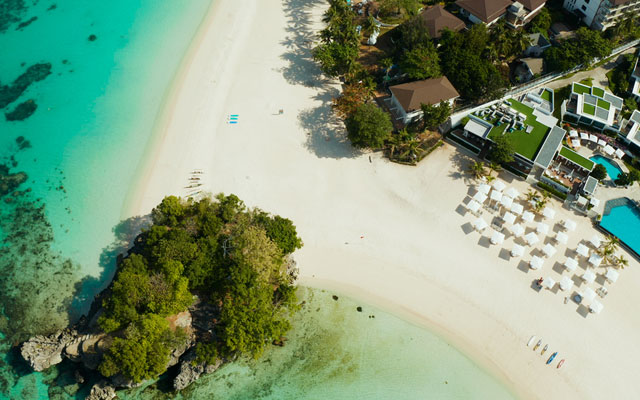
Slated to open in early 2021 in the Station 1 area of the island’s White Beach, the 120-key Dusit Princess Boracay will feature a swimming pool, a gym, an all-day dining restaurant, a local speciality restaurant, and function rooms for social and business events.

Dusit Princess Boracay is slated to open in early 2021 on the west coast of Boracay; Willy’s Rock in Boracay Island pictured

Dusit Princess Boracay is located a 15-minute drive from Cagban Jetty Port, which links by ferry to Caticlan Airport.

Dusit International currently operates five properties in the Philippines, including Dusit Thani Manila; dusitD2 Davao; Dusit Thani Residence Davao; The Beach Club at Lubi Plantation Island, Managed by Dusit; and Dusit Thani Mactan Cebu.

Dusit also has 11 properties across four brands – Dusit Thani, dusitD2, Dusit Princess, and ASAI Hotels – in the pipeline in the Philippines.

The majority of these properties are set to open within the next three years, positioning Dusit as “one of the largest international hotel operators in the Philippines”, said the company.

The company also recently opened the Dusit Hospitality Management College, which offers short courses and degree programmes designed to create talented hospitality professionals for the industry at large.

Amadeus offers artificial intelligence APIs to travel industry

0

Amadeus is launching a new set of artificial intelligence (AI) Application Programming Interfaces (APIs) as part of the Amadeus for Developers programme, which the global travel technology firm claims will help in “empowering startups and independent developers to gain an edge”.

These APIs will allow developers to build solutions that can predict travel intent, traveller behaviour, and flight delays, among others – without needing any prior background in AI or data.

Amadeus offers artificial intelligence Application Programming Interfaces to travel industry

Amadeus claimed that it is the first time in the travel industry that AI capabilities are made available to startups and independent developers via open APIs. The firm is providing ready-to-implement predictive models based on insights and functionalities fed by its sources of travel data.

These APIs enable travel innovators to create AI-based apps with brand new features and disruptive business models that can transform the travel experience, said the company. The insights are offered under Amadeus’ Self-Service API catalog for partners, and any developer can start testing the APIs in less than three minutes.

Fran Romero, head of open innovation programs at Amadeus, said: “AI-based technology is going to transform the way we receive offers, how we customise trips, our airport experience, and much more. Yet while travel brands are seeing vast operational improvements, more personalised experiences and increased customer engagement with AI, for startups and smaller innovators in the travel space, it’s harder to access historical data to train their models. With Amadeus Artificial Intelligence APIs, we’re changing that. We’re democratising AI in travel.”

AI systems are set to provide a US$14 trillion boost to the global economy by 2035, according to predictions by consulting giant Accenture. In the travel industry, this technology has the potential to produce US$400 billion of value, more than double the value achievable through traditional analytical methods, said Amadeus.

In today’s fourth industrial revolution economy, AI is becoming indispensable for travel players to better understand and inspire travellers, create tailored experiences and compete for more savvy, demanding customers as they move between devices and channels, it added.

The Kayana Beach Lombok, Indonesia

0

Location
Situated a few kilometres north of Lombok’s famous tourist belt of Senggigi, The Kayana Beach Lombok is nestled in a secluded bay on Kecinan Beach, with some of the island’s popular diving and snorkelling spots just off its beachfront. From the resort, it is merely a 15-minute boat ride to the three Gilis – Trawangan, Meno and Air.

On clear days, guests will be treated to unparalleled views of the sun setting against the backdrop of Bali’s Mount Agung.

Rooms
The villas are divided into four types: deluxe, duplex, hillside and beachfront. Though varying in amenities and set-ups, all 32 villas comprise one bedroom.

The beachfront villa where I stayed is arguably the cream of the crop, as it offered uninterrupted views of the beach. I could soak in the sight of local fishermens’ early morning bustle not only from my private veranda or the pool-side gazebo, but also while ensconced in my four-poster, king-sized bed, thanks to the floor-to-ceiling doors and windows.

The 205m² villa, which houses a private swimming pool, a garden and balcony, is ultra-spacious yet inviting. A modern interpretation of traditional Sasak architectural design, the room is decked out with traditional Lombok and Indonesian décor and furniture that lend a touch of rusticness to the otherwise contemporary interior design.

The equally spacious bathroom is fitted with a free-standing bathtub, a semi outdoor rain shower, a vanity area and a hand-carved wooden door which opens to the swimming pool.

F&B
The Blues Restaurant & Bar, the villa’s only F&B outlet, is perched atop a hill overlooking the beach. It offers a choice of traditional Lombok dishes, Indonesian cuisine, and international favourites. I had the beef rendang which was full of flavours, the savoury nasi bakar (grilled rice wrapped in banana leaves) and crispy duck with chilli sauce – all of which had me abandon my diet.

Breakfast at the dining outlet is served to order. I was first offered a choice of fruits or juices, followed by a plate of assorted homemade bread and Indonesian or American mains, paired with tea or coffee.

Facilities
The Blues Restaurant & Bar, with its indoor and alfresco dining areas, is one of North Lombok’s best spots for sunset watching, as it offers sweeping vistas of the Bali Sea, the three Gilis and the majestic Mount Agung. The restaurant also features an outdoor private terrace that can be transformed into a unique corporate function venue.

Located on the same level is a fitness centre and the Saxum Spa, with five treatment rooms. Plus, there’s also a common swimming pool near the lobby.

Buggies are available at the lobby to transport guests from their villa to the hilltop restaurant and spa.

Service
Service at the hotel was generally fast and efficient. My requests for laundry pick-up, buggy service and extra water bottles were attended to swiftly.

A thoughtful gesture by the hotel staff were the coconut-related turndown gifts, which included a bottle of coconut-based massage oil blended with traditional herbs like ginger, cloves and lemongrass. After applying it on my shoulders, neck, legs and feet, the soothing scent lured me into a deep sleep.

A few hours before my departure, the frontline staff rang me to ensure I was well-informed about the arrangements. He also had my boarding pass ready when I checked out.

The only glitch during my stay was the weak stream that resembled a drizzle, instead of a powerful jet, when I turned on the tap for a rejuvenating shower. But that issue was promptly fixed by the hotel’s staff after I reported the problem.

Verdict
A peaceful oasis that makes for an idyllic getaway for couples or singles who value their privacy. The resort’s close proximity to the buzzing tourist belt and party island also makes it an ideal choice for island-hopping junkies.

Rates From Rp3.5 million (US$247) per night

Contact
Tel: (62) 370 61 9900
Email: lombok@thekayana.com

Eddy Ram takes on MD role at Sangha Retreat by Octave Institute

0

Sangha Retreat by Octave Institute has promoted Eddy Ram to managing director of hospitality and The Village operations.

His promotion from general manager of Sangha Retreat to managing director involves overseeing At One Suites; At One Villas; Thought For Food Restaurant; and The Village, a live-work-learn community with spaces for communal learning, executive retreats, conferences, summits and festivals including Thought For Food Market, The Sanctuary meditative space, Fellow Traveller group learning space, and Sangha Residence apartment suites.

Prior to joining Sangha Retreat, Ram was vice president hotel operations at Imperial Pacific International. In total, he brings more than 28 years of international experience in the hospitality, aviation, wellness, and entertainment industries to the table.

Other positions he has held include chief operating officer at GWH-Mayar Group; assistant vice president and F&B manager at Resorts World Genting; director of F&B at Island Hideaway Spa Resort and Marina; commercial director at First Cambodia Airlines; and director of sales and marketing cum director of F&B at Sunway Hotel Phnom Penh.

Raffles Hotel Singapore celebrates relaunch with red carpet soiree

0
ALL PHOTOS: Caleb Richard Lai

Last night, the movers and shakers of Singapore’s travel industry thronged the red carpet relaunch gala of Raffles Hotel Singapore.

VIP guests, travel industry leaders and local celebrities gathered at the hotel’s new Raffles Jubilee Ballroom to celebrate its relaunch at a red carpet soiree.

Accor’s chairman & CEO Michael Issenberg, and chairman & deputy global CEO Chris Cahill, alongside Raffles hotel owners from around the world, were in attendance at the event.

Also at the gala event were Oxley Group’s Eric Low See Ching; Lian Huat Group’s Patrick Kho; French ambassador to Singapore Marc Abensour; British high commissioner to Singapore Kara Owen; Australian high commissioner to Singapore Bruce Gosper; Singapore Tourist Board’s Lynnette Pang; and TTG Asia Media’s Darren Ng.