


Qatar Airways records “bumper day of flight resumptions”
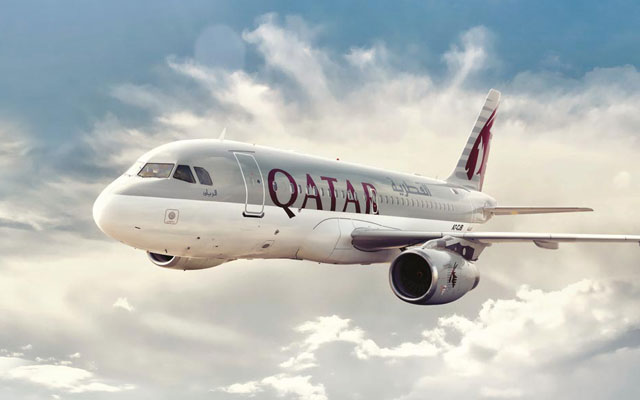
Qatar Airways resumed flights to 11 more destinations worldwide on Wednesday, in its largest single day of restarts, as it works to rebuild its network devastated by the pandemic.
The destinations are Bali Denpasar, Beirut, Belgrade, Berlin, Boston, Edinburgh, Larnaca, Los Angeles, Prague, Washington DC, and Zagreb.
The airline said that it intends to expand its network to more than 430 weekly flights to over 65 destinations by mid-July. Planned additions include Toronto (July 4), Ankara (July 9), Zanzibar (July 11), Kilimanjaro (July 13), as well as Bucharest, Sofia and Venice (July 15).
Qatar Airways said in a statement that it “continues to work closely with governments around the world to resume commercial flights in line with entry restrictions”.
The carrier said that it plans to resume almost two-thirds of its pre-Covid-19 network by the end of the month. The airline expects its number of flights to almost double in July with close to 3,500 flights scheduled, compared to just under 2,100 in June.
Qatar has extended its booking policies to allow greater flexibility, including unlimited date changes. Passengers can also change their destination as often as needed, provided it is within 5,000 miles of the original destination. The airline will not charge fare differences for travel completed before December 31, 2020. All tickets booked for travel up to December 31, 2020 will be valid for two years from the date of issuance.
Japan expands entry ban to 18 more nations
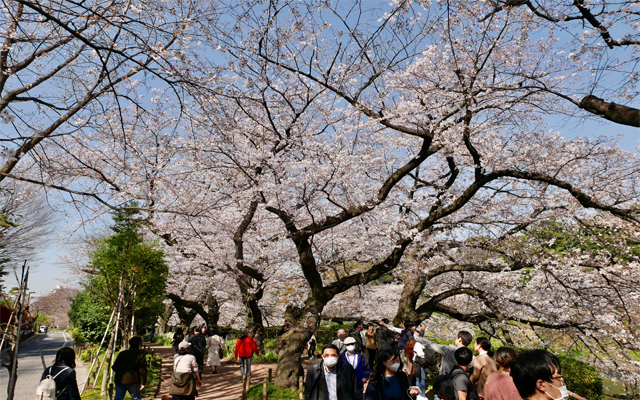
Japan will add another 18 countries to its growing entry ban list, bringing the total number of affected nations and regions to 129, as part of the country’s measures to stem the spread of Covid-19.
Starting July 1, Japan will deny entry to foreign nationals arriving from Algeria, Cuba, Iraq, Cameroon, the Central African Republic, Costa Rica, Eswatini, Georgia, Grenada, Guatemala, Guyana, Haiti, Jamaica, Lebanon, Mauritania, Nicaragua, Saint Vincent and the Grenadines, and Senegal.
Japan will also extend the suspension of visa issuance in the listed countries and regions until the end of July, said the Foreign Ministry.
The country has lifted the state of emergency imposed to curb the virus spread, but remains cautious about a second wave of infections. Already, the city in Fukuoka Prefecture is in the grips of a second wave.
Meanwhile, the government is contemplating loosening travel restrictions on countries that have successfully contained the coronavirus. Last week, a chartered flight carrying business travellers took off from Japan to Vietnam, marking the resumption of travel between the two countries.
Human-tech hybrid approach key to sell travel in the Covid era: Amadeus

While technology has infiltrated the tourism industry, human interaction remains equally crucial to attract and retain travellers, according to a new report by Amadeus.
The report, titled From Human Touch to Human Tech, showed that more than 40 per cent of the travel sellers surveyed ranked human interaction as a top factor for success. The figure is higher for agencies specialising in business travel, where deep knowledge of customer preferences and strong relationships are key.
Amadeus has outlined four key pointers from the study to aid travel sellers in the path to recovery:
1. Human interaction is key to a great customer experience
In a highly competitive and often commoditised environment such as travel, human touch can be a powerful differentiator. People are the face of an organisation and this can be even more important in times of crisis such as the Covid-19 pandemic.
Travellers demand a higher level of personalisation, reassurance and empathy, and expect their agents to solve their problems. The guidance, information and support that agents can provide during these times will have lasting impact on a traveller’s trust and loyalty.
Travel sellers need to communicate the most updated information to travellers, including the health status at their destination, travel rules or conditions, and key information on hygiene standards at their hotel. This will be important to reassure them that travel is safe and help them navigate the new world of travel.
2. The future of travel is AI-powered
Artificial Intelligence (AI) continues to infiltrate and influence the traveller journey. From simple chatbots that support customers with basic service queries, to more sophisticated and complex machine learning technologies that deliver highly personalised content – the technological developments in this field are evolving quickly.
The research indicates that travel agencies want to be at the forefront of this change – automation and dynamic pricing are key areas of investment for the companies. AI is inextricably linked to these areas and travel agencies are planning to invest in it. Many travel agencies have described it as the foundation for all their future technological advancements.
AI-powered solutions can help manage spikes in demand, deliver smooth and best-in-class service and also be used to compile data from multiple sources and provide the most updated information to help ease uncertainties in challenging times.
3. What does human touch mean?
Travel agencies often think of human interaction as crucial to attract and retain travellers. However, data from Amadeus’ survey suggests that human contact in and of itself might not be as important as travel agents think.
Friendliness, availability, and accessibility over the phone were all more important to travellers than in-person relationships. This stood in contrast with what most travel agents believed their customers valued.
The importance of phone contact is not reserved for the older generation, with 63 per cent of Gen Z and Millennials surveyed saying that they place value in a phone call, especially in times of disruption, like Covid-19.
Travellers are increasingly seeking “humanness” in the delivery of the customer experience; and the ability for travel agents to communicate in a friendly manner tops the list of traveller priorities.
4. Covid-19 is changing the behaviour of both travellers and travel sellers
As travellers become increasingly conscious about health risks, they will seek travel sellers who can ensure that proper sanitation measures and health services will be provided during their journey. To inspire traveller confidence, travel sellers will need to provide the very latest health and hygiene information, health guarantees, or a commitment to respond to unpredictable situations with excellent customer service.
As a result, travel agencies that can combine human interaction with technology to deliver high quality and timely customer service will have a competitive advantage in gaining traveller confidence.
AI will radically alter how work is done, but it won’t replace humans. Success lies in understanding how humans can most effectively augment technology, how technology can enhance what humans do, and in designing business processes that support both.
Of course, there are still challenges in pursuing a hybrid approach. The research shows that AI can deter some travellers. When presented with a scenario in which AI would be providing customer support or that a hotel may predict what kind of drinks they may like in the minibar, a third of travellers reacted negatively. Some were worried about job security for humans and others expressed concern of their data privacy being at risk.
There may always be outright rejecters, so businesses will need to position its usage carefully. But a business that can use people’s skills and technology in harmony will be more prepared to play in this new world of travel.
From Human Touch to Human Tech is Amadeus’s first report of the series called Insights for the New World of Travel. The findings come from a combination of desk research and interviews, surveys and focus groups discussions with both travel sellers and travellers, prior to and during Covid-19.
Arduous battle for small domestic pie
• Discounts and attractively-priced packages flood the market in Singapore, Hong Kong and Macau
• New business approach needed for survival
• Domestic market a new, unfamiliar territory for some players
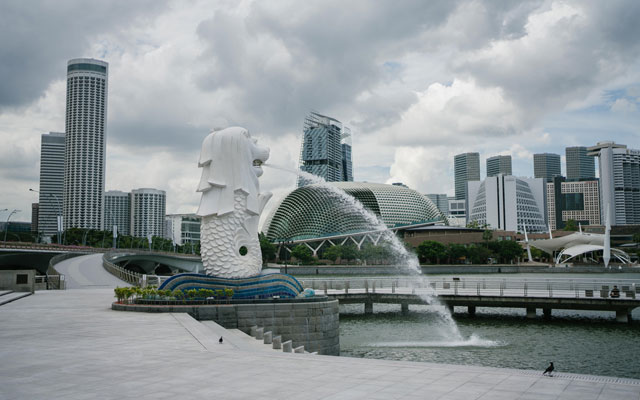
Singapore, Hong Kong and Macau, once popular tourist destinations for a global market, are now finding themselves relying on a domestic audience for survival as extensive pandemic-induced travel restrictions remain even as local infection cases are down.
In Hong Kong and Macau, the tourism authorities are taking the lead in supporting their communities’ efforts to win over locals.
Hong Kong Tourism Board announced in May its HK$40 million (US$5.2 million) Hello Hong Kong campaign to encourage locals to travel around their hometown and explore the city from new perspectives. The campaign highlights unbeatable offers and unique tour experiences.
Across the border, the Macao Government Tourism Office is spearheading the Macao Ready Go! Local Tours project, in hopes of achieving progressive resumption of tourism activities in the destination. The project provides a subsidy worth 280 patacas (US$35) to every Macau resident who participates in one of 15 itineraries across two categories: Community-based Tours (six options) and Leisure Tours (nine options). Each resident is entitled to a maximum subsidy of 560 patacas.
Promotions galore
Many hotels, attractions and tour operators in Hong Kong, Macau and Singapore have come up with special offers to stimulate domestic interest.
Several F&B tenants of Singapore’s Sentosa Development Corporation are offering one-for-one meals and mains to entice visitors back to the island, where selected offerings have reopened from June 19. These include Sentosa’s beaches and nature trails, as well as the Fort Siloso Skywalk.
The Fullerton Hotels and Resorts, which has two properties in Singapore, is launching gift vouchers on its brand website as well as attractive discounts on luxury stays and dining to encourage advanced purchases.
Since reopening on May 8, Hong Kong’s sky100 indoor observation deck has been running its ninth anniversary promotion, offering Hong Kong residents free tickets with purchases as well as seasonal afternoon tea sets and a new Twilight Dinner Package at HK$399 per person.
Cash-strapped Ocean Park is offering exclusive deals for residents from June 13 to August 31, and waiving entrance fees for children aged 11 and below. A new animal exhibit, Little Meerkat & Giant Tortoise Adventure, is scheduled for launch this month.
Hotels across Hong Kong have also been whetting staycation appetites with appealing promotions. JW Marriott Hotel Hong Kong, for example, has created a summer family staycation package to make the most of the approaching holidays. Priced from HK$2,700 for two rooms per night, the package includes a 30-hour stay in a pair of connecting rooms, dining credits and free parking.
The Venetian Macao has seen success in welcoming back local residents with its latest attraction, teamLab SuperNature Macao, which soft-opened in mid-June. In addition, Sands Resorts Macao, which The Venetian Macao is part of, is dangling 30 per cent dining discounts as well as a Summer Fun Hotel Package for residents and non-resident worker ID cardholders that comprises free admission to four top attractions, dining vouchers, and other perks.
Over in Taipa Village, merchants are driving a promotion entitled Taipa Village e-Voucher Dining Bonanza, which ends July 31. Eight selected restaurants have developed special deals to encourage locals to eat out.
A different approach
Private Peranakan museum The Intan in Singapore has chosen to go down a different avenue to secure revenue. Owner Alvin Yapp said: “We have remained very active online with regular postings, including a tongue-in-cheek interpretation of how the Peranakan culture can fight Covid-19. We found a new way of reaching out to customers via merchandising and F&B – over the past two months, we sold more than 100 sets of Peranakan Batik masks and more than 4,000 Peranakan Chinese dumplings. This has helped us find a new customer base.”
Yapp shared that The Intan has found new distribution partners such as The Raffles Arcade mall to carry unique gifts and souvenirs, including a new curated range of merchandise that was created for The Raffles.
The Intan is now exploring the creation of an online Peranakan cooking game and masterclasses, as well as kicking off a one-for-one promotion from July 26.
Hong Kong’s Gray Line Tours, which has built its business on showcasing the best of Hong Kong to overseas visitors, is now looking to design two to three local tours for locals.
Executive director Ronald Wu acknowledges that this approach is a “new trial” for the company, and hopes to stand out through quality sightseeing routes that are not accessible by public transport. The tours would be rolled out in mid-July, for about 30 participants per group, and would be promoted to local contacts in Gray Line Tours’ database as well as clients seeking corporate outings.
In April, Grand Lapa Macau and Grand Coloane Resort, both managed by Artyzen Hospitality Group (AHG), converted their facilities into Medical Observation hotels for a month, catering to Macanese returnees who must serve quarantine notices. Since clearing of this responsibility, the hotels have diverted their sales and marketing attention to the only market available at the moment: the local market.

Not an easy switch
Tourism suppliers new to domestic travel are realising that the switch comes with challenges.
Gray Line Tours’ Wu sees difficulties due to “the absence of local market connection and brand awareness”. “Domestic tourism is just a short-term strategy, and ultimately, we hope shorthaul markets will start to move in 4Q2020. We also hope that a travel bubble happens soon for the Greater Bay Area and its surroundings,” he said.
Although staycation demand has become a lifeline for hospitality players in other destinations dependent on domestic tourists, Singapore’s hotel operators have not had the same fortune, as the government’s anti-Covid-19 guidelines have put hotel reservations on hold.
Tony Cousens, general manager at the Ramada and Days Hotels by Wyndham Singapore at Zhongshan Park, told TTG Asia: “Our bookings are mainly from corporate companies housing their Malaysian staff affected by the movement control order. Our occupancy rate has fallen compared to the previous year.”
Furthermore, tourism sellers in Singapore, Hong Kong and Macau are today tackling a small local population compared to a global audience that they were once used to.
A spokesperson with Hong Kong’s sky100 said that while local visitorship this year has doubled that of 2019’s, it is “still far from the visitor numbers and revenue generated by overseas visitors”.
“The challenge (we face) is that locals are of a finite number. Besides offering value-for-money deals, we have to keep on adding new content to… drive repeat visits. And we will have to do that with a tight budget,” added the spokesperson.
That said, the spokesperson admitted that domestic business can “help us alleviate our financial stress”.
China Travel Service (Macao), which specialises in outbound traffic and handles only a small percentage of inbound or local tours, now has to grapple with intense competition for the small number of Macau residents.
Pun Cheng Man, the agency’s travel department sales and marketing manager, said: “The tour prices (for Macao Ready Go! Local Tours) are fixed by the government and all routes (are sold by agents). What sets us apart from other agencies are our well-established brand, word-of-mouth service assurance, and strong corporate/association database.”
Despite busy weekends from staycation bookings, Grand Lapa Macau and Grand Coloane Resort are struggling with weekday business. According to AHG vice president of Macau operations and general manager of Grand Lapa Macau, Rutger Verschuren, the properties are still far from breaking even.
“Price sensitivity and the fact that many hotels are now promoting to this limited market (of 650,000 residents) make it challenging,” said Verschuren. – Additional reporting by Pamela Chow
Preferred adds bonus commission in new campaign

Preferred Hotels & Resorts is offering a three per cent bonus commission to travel agents for bookings made under its new global campaign, Loving Local, which champions local and regional hotel stays across 21 markets.
The three per cent bonus is on top of the standard 10 per cent agency commission for Loving Local bookings made through the GDS or direct channels with a qualifying IATA/TIDS number.
Loving Local must be booked by July 31, 2020 for stays through December 31, 2020, with a minimum two-night stay required. It is made available at more than 200 participating hotels and resorts worldwide.
Travellers who book Loving Local will receive the best available rate, daily breakfast options for two, and a stay credit ranging from US$25-$70 that can be used for on-site expenditures. The offer is subject to availability and blackout dates may apply.
In addition, they will also benefit from an immediate fast track to Elite status in the brand’s loyalty programme, I Prefer Hotel Rewards, which features a VIP amenity, next category room upgrade, 2,500 bonus points, and complimentary internet.
To receive the I Prefer benefits, guests must enroll and activate I Prefer membership prior to arrival or upon check-in at the hotel. I Prefer Elite benefits and points awards are only available at participating properties.
Upon confirmation, all Loving Local bookings will also unlock access to special benefits from partner brands including Avis (for car rentals in Asia), and Travel Curious (for curated tours of one’s chosen destination).
Participating hotels in Asia and Australasia include Azur in Queenstown, New Zealand; Bungaraya Island Resort in Sabah, Malaysia; Discovery Suites Manila Philippines in Manila, Philippines; Lancaster Bangkok in Bangkok, Thailand; One Farrer Hotel in Singapore; The Fullerton Hotel Sydney in Sydney, Australia; The Imperial New Delhi in New Delhi, India; The Leela Palace Udaipur in Udaipur, India; The Sanchaya in Bintan Island, Indonesia; and The Siam in Bangkok, Thailand.
Cape Fahn Hotel offers 1-for-1 deal
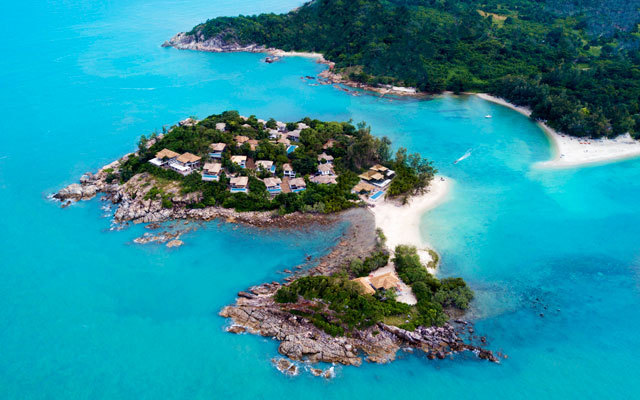
Cape Fahn Hotel, a private island luxury resort in Koh Samui, is marking its reopening with a buy-one-get-one-free offer for stays from now till September 30, 2020.
The offer starts at 26,000 baht (US$840) net per villa per night for a Tropical Pool Villa, including breakfast for two. Each guest can book up to six villas per night.
Perks include round-trip airport transfers, minibar (excluding alcohol), afternoon snacks, seasonal local fruits, complimentary jars of assorted sweets and savouries, and non-motorised water sports.
Avis car rental unveils subscription service

Avis has launched a car rental subscription service called Avis Flex in Singapore, providing users with flexible, longer-term rental solutions.
The service allows customers to rent a car for a minimum of 28 days up to a maximum of 11 months. Customers are not required to pay any upfront costs nor sign any long-term agreements, and can swap cars thrice over the 11-month loan period.
The monthly fee covers all running costs like maintenance, servicing and replacement of tyres. Included also is basic coverage, such as basic collision damage waiver and theft protection, along with 24/7 mechanical breakdown assistance.
Tom Mooney, managing director, Pacific, Avis Budget Group, said: “From Avis Budget Group’s future of mobility research in 2019, we found that 73 per cent of residents in Singapore would consider giving up car ownership and rely on long-term car rental if it was convenient and easy for them, ranking second among 16 countries in Europe and Asia surveyed.
“Now with the uncertainty from the coronavirus, we are expecting even more people to look into rental solutions as a private and flexible transport alternative.”
New bespoke travel brand launches in India

A Travel Circle, a bespoke luxury travel brand offering curated experiences, has debuted in India.
Apart from customised travel itineraries, guests can also avail of the brand’s curated collection of private villas or small boutique hotels for buyouts.
In India, A Travel Circle has partnered a number of luxury hospitality brands, including Four Seasons Hotels and Resorts, Marriott International, Shangri-La Hotels & Resorts, and Rosewood Hotels & Resorts. The agency is also part of the Traveller Made network and have access to some of the most prestigious travel shows worldwide.
Pritish Shah, its founder and CEO, said: “A Travel Circle is the newest addition to our experiential travel brands. During the past 10 years of successfully curating travel journeys for couples, we frequently received requests from numerous guests wanting tailor-made experiences for their varied holiday requirements.
“We conducted a comprehensive market research to better understand the evolving preferences of this ultra-wealthy segment. Spending quality time in a fabulous setting, and more importantly, to be able to bond with loved ones, emerged as the most prominent trends.
“This pandemic has fast-tracked us to launch A Travel Circle, as the changing travel expectations in the new normal world align very well with our product offerings – private villas for social distancing, private jets to avoid commercial airports, highest standards in safety with our carefully selected hospitality partners and other service vendors.”
Shah is also the founder behind two other specialised brands: A Travel Duet, an experiential travel brand targeting honeymooners; and A Travel Quest, catering to travellers seeking immersive and engaging experiences.
TakeMeTour takes Thai farms online to ride out tourism downturn

Peer-to-peer online activity marketplace TakeMeTour has established an online retail platform to help Thai farmers and gardeners, once dependent on tourist dollars, to better survive the current tourism crisis.
The LocalFarm online platform presently features agricultural products, such as seasonal vegetables and processed fruits, from more than 50 sellers across Thailand, with some of them being past Local Experts listed on TakeMeTour.
Taro Amornched, co-founder of TakeMeTour, explained that the other sellers on LocalFarm are those affected by declining tourism activities and have been unable to sell or export their products, or are no longer able to welcome visitors.
“We promoted LocalFarm through Facebook and other social media networks (and) proactively reached out to some of them that we see a fit,” added Taro.
TakeMeTour charges these suppliers no fees or commissions to access the LocalFarm platform. And the assistance goes even farther; the suppliers can avail to photography services for their products, banner design expertise, copywriting help as well as advertising and marketing activities – with all costs shouldered by TakeMeTour.
“We help to onboard them but do not micromanage their account unless they want us to do so,” shared Taro, who added that the LocalFarm platform was designed to be easy to use, even for non-tech savvy individuals.
In turn, TakeMeTour’s work on LocalFarm is financially supported by the Asian Development Bank’s impact investment platform, ADB Ventures, and the Tourism Authority of Thailand (TAT). A seed grant of US$150,000 helps LocalFarm with product development and regional market validation.
ADB and TAT have supported TakeMeTour through technical assistance since 2017.
ADB Ventures senior investment specialist, Dominic Mellor, commented that “it is impressive to see how quickly and efficiently TakeMeTour has developed an innovative online platform to help frontline tourism workers earn alternative income streams” during what he described as an “unprecedented crisis”.
Just two weeks old at press time, LocalFarm has gained more than 100 transactions from across Thailand.
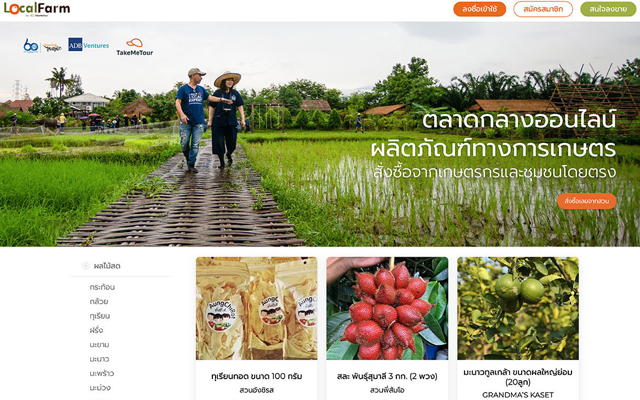
In the initial phase, LocalFarm targets only Thai residents due to logistical restrictions. However, translations are underway to prepare the website for the expatriate community and future travellers to Thailand.
Taro is working towards two plans: one, to facilitate orders by tourists during tour bookings and have the purchases delivered to their hotel; two, to curate a selection of farms that are ready for agritourism activities, such as fruit pickings and farm visits.
When asked if LocalFarm could be expanded to help local farmers in the Greater Mekong Subregion, where TakeMeTour is also present and supporting more than 25,000 local experts, Taro said: “Although this is possible technically, we want to focus on our largest coverage location, which is Thailand, at the moment. However, we are open to partnerships or software licensing if anyone is interested.”








The Travel Corporation’s Trafalgar and sister brand Costsaver is offering private trips in Europe for groups of 12 or more, to ease travel anxiety amid the pandemic.
Available on all Autumn, Winter and Spring itineraries, this new initiative is designed to give enhanced peace of mind for families and friends who prefer to travel as their own private group.
They will be accompanied by a dedicated on-road team trained in enhanced social distancing and hygiene protocols while travelling on luxury coaches during the private tours.
Surcharge for private group tours is based on group size. For groups of 12 to 15, there will be a 30 per cent surcharge tacked on to the advertised price; for groups of 16 to 19, 20 per cent; and for groups of 20 to 25, 10 per cent. For 26 guests or more, there will be no additional surcharge.