AAT Kings has rolled out a selection of not-for-profit day tours and short breaks across New South Wales, Victoria and South Australia, designed to provide immediate support to tourism communities that have been affected by recent bushfires.
Launched in collaboration with Empty Esky and regional tourism businesses in Australia, the Bushfires Relief Giveback Experiences have been developed respectfully and in conjunction with local communities, and all trips are 100 per cent not-for-profit for AAT Kings.
AAT Kings has rolled out a collection of trips to assist communities most affected by the bushfires; Hampden Bridge in Kangaroo Valley pictured
During the trips, AAT Kings will bring guests and their empty Eskies – an Australian brand of portable coolers – to visit local markets, cafes and stores, where they will have free time to wander through the town, chat with the local shopkeepers and fill their Eskies with locally-made products.
The itinerary includes a trip to Kangaroo Valley and morning tea at a local café, before heading to Nowra Farmers Market, where guests can taste and buy local produce and fill up their #emptyesky, with every cent going directly to the farmers.
Guests will also get to meet some of the locals who will tell stories of recovery post-bushfires, and share firsthand how best to help these destinations.
Matthew Cameron-Smith, managing director for AAT Kings, said: “We’ve worked with local businesses to bring much-needed benefit through the tourism economy directly back to restaurants, cafes, farmers’ markets and local stores, to start providing immediate support to the regions that need it the most.”
Erin Boutros, co-founder of Empty Esky, commented: “Since the Empty Esky campaign launched, we have witnessed first-hand how powerful the Australian spirit is. The ‘Empty Esky’ trips will lead the way in effectively supporting bushfire affected towns as they recover.”
More trips and short breaks will be announced in the coming weeks, said the company in a statement.
Currently, bookings can be made at aatkings.com/bushfire-recovery, or via a local travel agent.
The Ministry of Culture and Tourism of the People’s Republic of China has issued an urgent order on Friday to tour companies across the country to suspend sales of group tours, hotel accommodation and flights in order to curb the spread of novel coronavirus.
China’s latest suspension of tours and sale of hotel accommodation and flights join the government’s lock-down of Wuhan and 11 neighbouring cities in Hubei province
According to the notice, which was shared with TTG Asia by AceVentures (OMT) Travels Consultancy, a specialist in global travel products and services for both the leisure and MICE markets, tours that are in progress are allowed to complete as planned, and the Ministry has advised tour operators to be alert to the health conditions of their travellers.
It isn’t clear from the notice, written in Mandarin, if the stop-sale applies to both inbound and outbound tours and travel products.
James Yeow, group chairman of OMT Group of Companies, told TTG Asia that overseas agencies are still allowed to sell group and FIT products into China, but he doubted there would be takers as fears of infection mount.
China’s National Health Commission announced today that there are now 1,287 confirmed cases of patients infected with the coronavirus, while the death toll from the virus has risen to 41.
Yeow has declined to reveal the number of group and FIT cancellations his company has received for China inbound and outbound movements, saying only that there has been “a lot”.
The stop-sale follows the Chinese government’s ongoing lock-down on Wuhan and 11 neighbouring cities in Hubei province to stem the spread of the virus.
As Asian inbound markets settle into maturity for Japan, the country is now looking farther afield to plump up arrival volumes from the US, Europe and Australia – western markets primed for opportunity, thanks to publicity from the 2019 Rugby World Cup and the approaching Tokyo Olympics and Paralympic Games in May.
These longhaul markets have also been identified for their high expenditure potential. According to a 2018 case study conducted by the Japan National Tourism Organization (JNTO), Australian visitors spent approximately 7.6 per cent more per head compared to Chinese visitors, with the bulk of expenditure – 39 per cent – allocated to accommodation. These trends are representative of the overall difference between the western and Asian markets, said Michinori Yamasaki, executive vice president, JNTO.
Nara Park is home to hundreds of free-roaming deer
“We are seeing a relatively low rate of business from the western markets now, and visitors from these markets have high spending (power). If we boost the number of visitors from the western market alongside the Asian market, we will be able to achieve our goals of raising our total visitor numbers and expenditure,” Yamasaki affirmed.
Currently, Japan’s inbound numbers are on track to meet the country’s 2020 goal of 40 million international visitors, with the period of January to October 2019 registering almost 27 million arrivals. Of these, Asia held the lion’s share of Japan’s inbound traffic, with 85 per cent coming from China, South Korea and Taiwan.
Hence, JNTO has begun its efforts on the longhaul front, launching the Enjoy My Japan campaign in 2018 to target travellers from the US, Europe and Australia, which Yamasaki identified as “markets with high potential in boosting visitor numbers”.
The campaign features enhanced digital marketing efforts that directs consumers to regional government tourism websites, in order to diffuse tourism throughout the lesser-known prefectures of the country.
Moreover, JNTO is also expanding its global presence. Opening soon is an office in Mexico City, with plans to establish offices in other cities, revealed Yamasaki.
More recently, JNTO worked with local prefectural governments and suppliers to launch the 100 Experiences in Japan book detailing hidden gems and obscure activities that are now open to international guests, signalling the increasing receptiveness of Japan’s smaller towns and cities to foreign visitors.
In Nara Prefecture, Kansai Nara Treasure Travel is one such DMC that is broadcasting the destination’s lesser-known activities to its trade partners, many of whom hail from the western markets.
Seiho Fukui, the DMC’s assistant sales manager, explained: “When visitors think of Nara, many only know the deer park and Todaichi Temple. They don’t know about all the other things they can see and do. We want to explain more about this prefecture to travel agencies around the world, through tradeshows like Visit Japan Travel Mart and on our website.”
Travel company Arttrav is also expanding its business beyond publishing travel guides, and is now diving into organising wellness group tours for international visitors. Its co-founder Yucaco Kimura told TTG Asia that Arttrav is working closely with DMCs and hotels around Japan to open up their secluded natural attractions and luxury resorts to small group tours.
However, as the Tokyo Olympics and Paralympic Games approach and Japan braces for a spike in activity in the city, concerns are surfacing that tourists may be put off by sky-high hotel prices and overcrowding.
Tadashi Kaneko, executive vice president, JNTO, explained: “The number of visitors we are expecting during the Olympics and Paralympics (period) will create a crowding-out effect. There will be a visitor spike in a concentrated area during this period, and hotel prices will rise. People will hesitate to visit Japan – we have already observed such an impact on longhaul travellers, who tend to plan early.”
Kaneko also voiced his worry that tourists may also continue to avoid Japan even after the Olympics and choose other destinations.
To mitigate this, JNTO is rolling out a slate of measures over the coming months, focusing on three areas: lodging, location and period of travel. To promote a shift in lodging away from Tokyo, JNTO is working to raise awareness of the availability of convenient accommodation options in the suburbs an hour from the city centre.
Additionally, JNTO will focus on promoting local gems in outlying regions, which are expected to be even less crowded as local tourists flock to Tokyo for the Games.
Kaneko expressed confidence that this option will be “especially attractive for repeat visitors”. Currently, repeat travellers make up 60 per cent of all incoming traffic, and 80 per cent of these come from Asian countries.
Thirdly, he said JNTO will “strongly suggest travellers avoid the period of the Tokyo Olympics and visit Japan in a different season”. JNTO will also launch a “strong final push” this year to encourage visitors during the rest of the year beyond the Olympics.
Responding to the ongoing outbreak of novel coronavirus, Trip.com has moved to offer free cancellations for bookings to and from Wuhan up until January 31, and customers whose itineraries are affected by the Chinese government’s suspension of outbound transport from Wuhan.
Trip.com eases concerned customers’ worries around the flu outbreak with free cancellations of affected trips
In a statement issued today, Trip.com detailed the measures it will be taking:
Travellers who have been diagnosed with the coronavirus pneumonia, quarantined by the authorities for further assessment, express symptoms of fever within one week of travel, or have been in close contact with the above-mentioned groups may make refundable cancellations on all products and services booked through Trip.com
All domestic and international flights bookings to and from Wuhan until January 31 may be cancelled free of charge
Trip.com will offer free cancellation guarantees on Wuhan-bound hotel reservations, attraction passes and car bookings until January 31
Trip.com will do its utmost to co-ordinate with railway operators, working with customers who have booked train tickets to Wuhan to minimise any costs incurred by cancellations, wherever possible
The company will continue to monitor developments around the virus outbreak.
Chinese authorities have closed off the Chinese city of Wuhan, which is home to more than 11 million people, as it struggles to contain the deadly coronavirus outbreak, according to a report by The New York Times (NYT).
From Thursday, all public transport, including trains, buses and ferries, in Wuhan have been shut down, while all flights and trains leaving the city has been stopped.
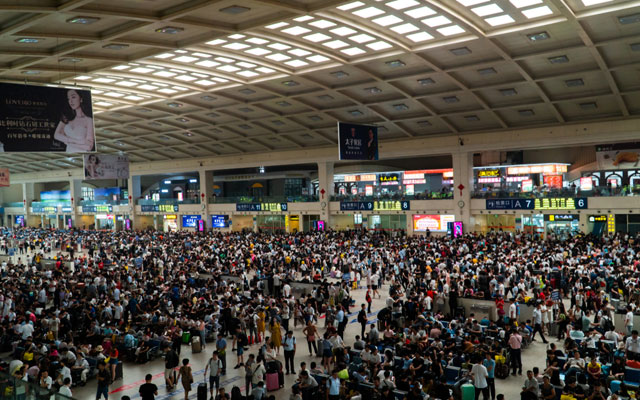
Authorities in China have shut down all public transport in the central city of Wuhan as part of efforts to contain a deadly coronavirus outbreak, a train station in Wuhan pictured
The sudden restrictions, which was announced on Chinese state media hours prior to it being implemented, comes as the virus’ death toll reaches 17, with nearly 600 confirmed cases across China, as well as in Taiwan, Japan, Thailand, South Korea and the US, according to China’s National Health Commission.
All the fatalities have been in Hubei, the province around Wuhan.
The report quoted the Chinese authorities as saying that the measures in Wuhan were needed to “effectively cut off the transmission of the virus, resolutely curb the spread of the epidemic, and ensure the safety and health of the people”.
They further said that an end date to the restrictions would be announced at a later time, added the report.
The fast-spreading virus, which first emerged at the end of December, has stoked fears that it would burgeon to the scale of the SARS epidemic, which broke out in China in 2002 and 2003, and spread rapidly, resulting in more than 800 deaths worldwide.
As the number of victims grow, governments around the world have implemented entry screening measures at ports of entry, and the World Health Organization is weighing the declaration of a global emergency over the new virus, said the report. Similarly, immigration and health authorities are on high alert and taking precautionary measures.
Given the massive scale of the shutdown in Wuhan, medical experts have voiced concerns over the potential fallout, the NYT reported.
Tom Inglesby, director of the Johns Hopkins Center for Health Security, was quoted by the report as saying that a city the size of Wuhan has “tens of thousands of connections with the outside world that are coming and going all the time, bringing food and medicine” and that “the complexity and downside cost of (the lockdown) will be potentially very high”.
The shutdown occurs at a time when millions of Chinese citizens travel within China and beyond its borders for the Lunar New Year holidays.
An estimated 30,000 people fly out of Wuhan on an average day, according to air traffic data. The city is the hub of industry and commerce in central China, home to the region’s biggest airport and deepwater port.
Louis T Collection has appointed Shane Lee as hotel manager to lead its first Taiwan property, CESVI.
Lee joins the team this month in preparation for the March opening of the 28-room boutique hotel – made entirely of shipping containers in Taiwan’s port city of Kaohsiung.
Having spent most of her hospitality career between Bali and Taiwan, Lee was most recently the executive assistant manager to the general manager at Westin Yilan Resort in Taiwan. Prior to that, she was the general manager at Bali Graha Asia, where she ran the company’s two different private villa properties in Canggu, a popular beachtown area on the island.
She has also served at various properties including W Hotel Taipei, Silks Place Taroko Resort, in Taiwan’s Taroko National Park, and ClubMed Bali.
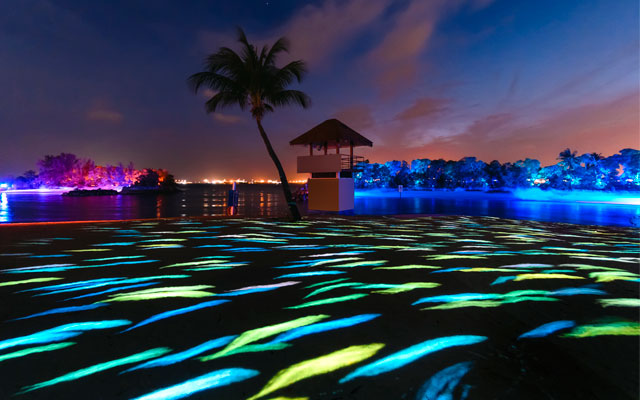
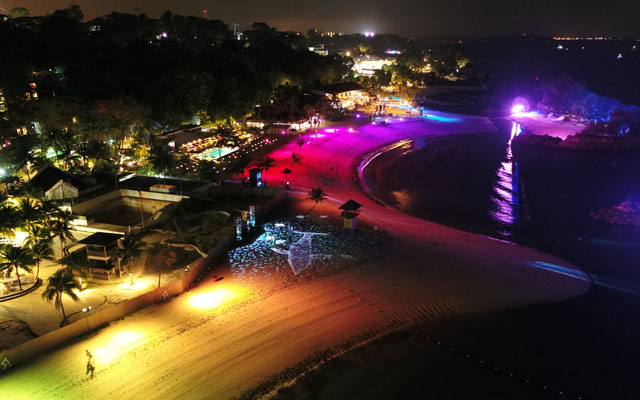
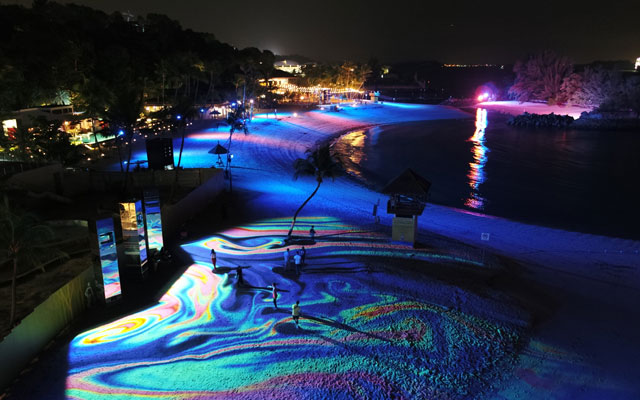
Sentosa’s guests will soon discover Siloso Beach in a whole new light when it transforms into the year-round light and sound extravaganza Magical Shores at Siloso every night, starting January 23, 2020.
Comprising four acts, Magical Shores at Siloso is Singapore’s first multi-sensory, interactive beach light art attraction.
Magical Shores at Siloso
1 of 3
Featuring vivid light, sound, and mist effects across a 400m stretch of Siloso Beach, Magical Shores at Siloso will bring two islets across the waters to life as they get bathed in lights, fog and music.
The attraction also includes two novel interactive areas where guests can immerse themselves in soothing sounds of the island and interact with light art on the sands, which are inspired by diverse elements ranging from water flow to marine creatures.
As well, guests will be treated to a three-minute flourish of multi-coloured projections lighting up the night sky every 15 minutes.
Magical Shores at Siloso is the latest night offering launched as part of Sentosa Development Corporation’s multi-pronged approach to strengthen the island’s position as a night destination through more novel, after-dusk leisure experiences for locals and tourists.
Magical Shores at Siloso will run from 19.30 to 22.30 all year round, in 15-minute cycles.
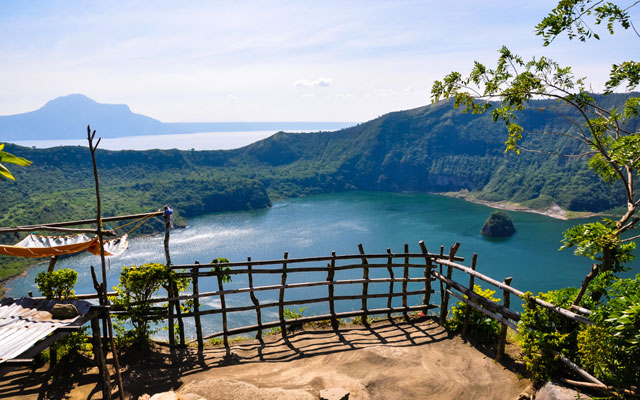
Leisure tourism in parts of the Philippines are affected due to the Taal Volcano; its observation deck with Crater Lake pictured
Leisure tourism in affected areas has taken a hit
Industry players stress need for tourist businesses in the area to proceed cautiously
Recovery will come and affected areas may benefit from CSR-related tourism activities
Leisure tourism in parts of the Philippines are affected due to the Taal Volcano; its observation deck with Crater Lake pictured
Tourism in Tagaytay and other portions of Cavite, as well as parts of Batangas and Laguna – some of the most sought-after destinations in the southern outskirts of Manila – have taken a severe setback as a major eruption of Taal Volcano looms large.
Tourists are shunning these areas best known for boasting breathtaking views of the volcano nestled in a lake, organic farms, heritage houses, pilgrimage churches, spas and wellness centres, as well as quaint hotels and resorts – some of which have been damaged to varying degrees by eruptions that started on January 12.
Despite the dismal picture, the trade is optimistic that tourism in the region will rise from the volcanic ashes with good planning and governance.
Ramon Marinas, president of the Association of Travel and Tour Agencies (ATTA) in the Calabarzon region covering provinces such as Cavite, Laguna and Batangas, said the heritage houses and churches “are structurally standing still” including the Saint Martin de Tours Basilica in Taal.
“However, cleaning of the ashes has not yet been undertaken due to the Alert Level 4 status of the volcano (the second highest volcano alert level, signifying that a hazardous eruption could happen in hours or days) and the locking down of the area,” he said.
Marinas also told TTG Asia that agricultural crops “have been immensely affected” and the continuous sulfur dioxide and ash particles emitted by the volcano constitute as a health risk to the population.
“While (tourism) takes time to recover, we are positive that the people are resilient and will rise from this,” he said. As of press time, a million residents have been evacuated from the danger zone.
Calabarzon registers the most number of same-day tourists in the country, with the bulk of the visitors going to Tagaytay and the nearby towns of Batangas (Talisay, Taal and San Nicolas), according to Marinas.
Rajah Travel’s president Aileen Clemente, in an interview with ANC television, said that even as leisure travel in the affected areas takes a hit, there will emerge other types of tourism including corporate social responsibility (CSR) as people rally to provide social and financial aid to the victims of the volcano eruption.
Narzalina Lim, former tourism secretary and founder of tourism consultancy Asia Pacific Projects, said: “In the short term, until Alert Level 4 is lowered and the toxic ashfall subsides, there will be few foreign and domestic tourists visiting Cavite, Batangas, and parts of Laguna. There may be day visitors who are curious to see the volcano and take photos, dine and then leave. But these types of visitors do not contribute much to the local economy.”
“In the long term, maybe two years, when the volcano quiets down and the fertile soil makes Tagaytay, Amadeo, Alfonso, Indang in Cavite and Batangas lush and green again, the place will become a beautiful destination. It can be everything it (once was) and more, with proper planning and good governance,” Lim shared.
Mount Mayon in Albay Province, Mount Pinatubo in Central Luzon, and Mount Agung in Bali, are some examples of attractive destinations which have bounced back from violent volcanic eruptions, Lim pointed out.
While the Philippine Institute of Volcanology and Seismology (PHIVOLCS) warns of a possible major eruption and the Department of Tourism advises businesses to shutter, a number of hotels, restaurants and related businesses in Tagaytay have reopened as the Department of Interior and Local Government (DILG) has declared that the site is not considered a high-risk area due to its high elevation, despite being within the 14-km danger zone.
However, industry players stressed the need to tread with caution even as businesses operate as normal, due to the persistent threat posed by Taal.
Marinas said: “While I understand the need to provide jobs, recover losses and bring back normalcy to all businesses, all these will happen as soon as the alert status is lifted. DILG is clear with its orders that only eight barangays (or villages) are required to do mandatory evacuation, while the rest can open for business. Having said that, everyone should also be cautious that the alert status has not been lifted.”
Lim, however, argued that it is not “prudent” to reopen tourist establishments in Tagaytay while Alert Level 4 remains in place. “Although the PHIVOLCS said that Tagaytay is too high to be affected by pyroclastic flows and volcanic tsunamis should a big eruption occur, the ash in the air is toxic and can affect one’s health severely,” she said.
“Even with masks, people can still suffer asthma and other respiratory diseases, skin diseases, allergies, etc. Additionally, water supply and distribution in Tagaytay is erratic (even without the eruption). Until now, several areas in the city have no water supply as they were only able to fix the main water source of Tagaytay on January 19, one week after the eruption.
“If I were the local government unit, I would heed PHIVOLCS when it said that it will wait another two weeks before deciding whether or not to lower the alert level. Then, perhaps the tourist establishments can reopen at that time. Psychologically, it is also good for life to go back to normal after a few weeks.”
Not many know that activities like riding a hot air balloon can be done in Goa
Goa is looking to promote its rich and diversified tourism products and offerings beyond beach holidays, as the Indian state seeks to stem the continued haemorrhage of visitors in the wake of the collapse of Thomas Cook UK which used to bring around 50,000 tourists to the destination.
The UK is the second-largest source market for Goa, after Russia.
Not many know that activities like riding a hot air balloon can be done in Goa
As part of its marketing efforts, the Goa Tourism Development Corporation (GTDC) recently organised a fam trip for inbound tour operators across the globe to showcase the state’s various tourism offerings beyond beaches.
The GTDC also plans to launch a marketing campaign spotlighting its diverse offerings, on top of participating in domestic and international trade shows to promote Goa as a destination for adventure, eco-tourism, MICE, heritage, and medical tourism activities.
“Goa has been a preferred destination for domestic and international tourists. However, some tourists have the perception that Goa is just about the sun, sea, and sand. We want to dispel such notions and assert that Goa has much more to offer than beaches,” said Nikhil Desai, managing director, GTDC.
“Goa has a lot to offer for adventure tourism, like hot air ballooning, bungy jumping, and scuba diving. One can also enjoy white water rafting during the monsoon season. We are also strengthening our offerings on the wellness and MICE front.”
A new promotional video showcasing the diversity of tourism products in Goa was launched on the sidelines of the three-day Goa International Travel Mart 2019 that took place in October last year.
As well, the state will be developing an Ayurveda cum Yoga centre in Farmagudi under the public-private partnership model. A tender in this regard seeking expressions of interest from private players has already been floated. To cater to corporate travellers, discussions are ongoing for a new state-of-the-art convention centre in Dona Paula.
“We are also looking to introduce heli tourism in the state. We will be organising media fam trips and utilising social media platforms to create awareness about the richness and diversity of tourism experiences in Goa. Our focus is on attracting high-quality visitors to Goa,” said Desai.
A diminishing Chinese interest in Hong Kong holidays following prolonged democratic protests in the financial city has somehow kept concerns about novel coronavirus infections at bay, opined destination suppliers who have seen a plunge in Chinese inbound business.
Timothy Chui Ting-pong, executive director of Hong Kong Tourism Association, told TTG Asia that there are barely any Chinese tour groups in Hong Kong now, as group visitorship had fallen by more than 95 per cent since November 2019.
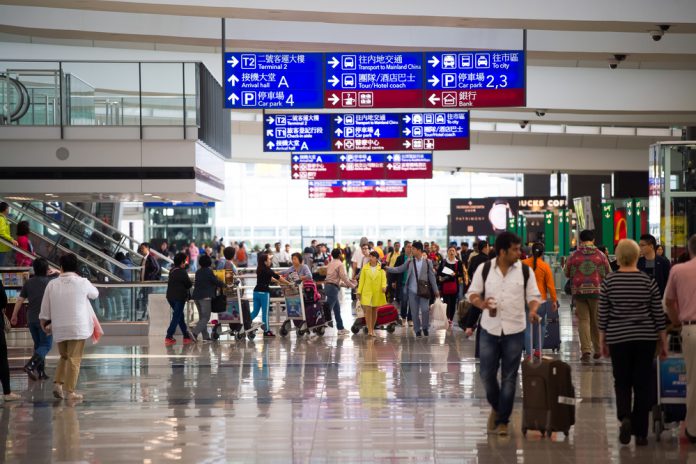
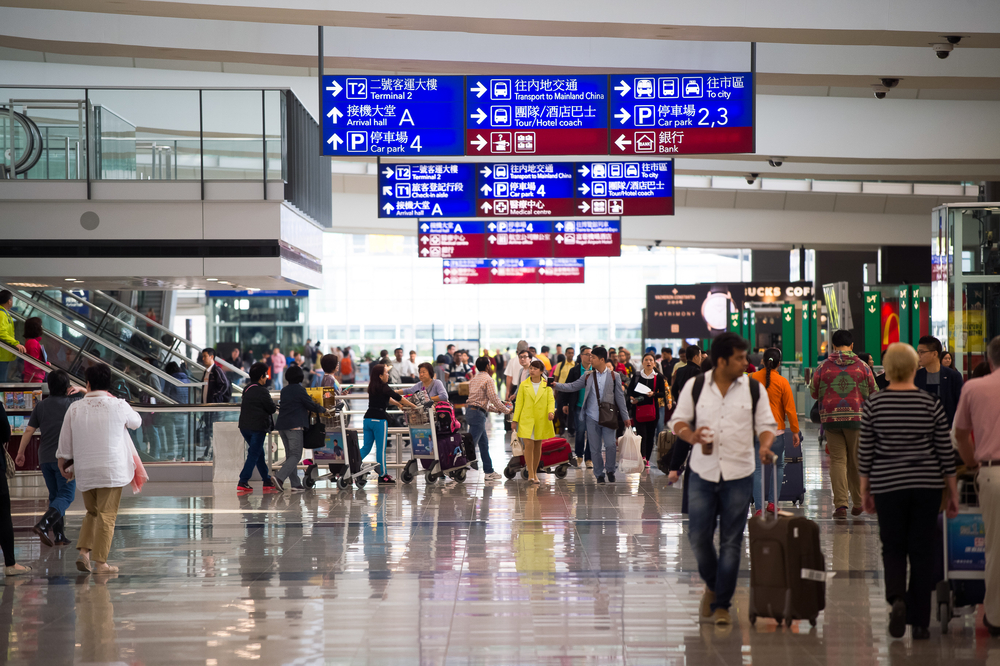
Hong Kong on alert but not overly concerned about Wuhan flu yet as Chinese inbound currently low; travellers in Hong Kong airport pictured
“Meanwhile, Chinese business travellers are now off work for at least two weeks over the Chinese New Year period, so flu concerns are not affecting this segment either,” added Chui.
PC Tours and Travel’s general manager, Cary Chiu, said: “New enquiries on Hong Kong are still coming in for March, and no client has brought up this issue yet. But (as news coverage on the flu issue intensifies), I believe people may start to ask more about it.”
Chiu added that most of the enquiries are for programmes that twin China and Hong Kong, starting in April, and expressed concerns that demand for both destinations would be affected if infections were to spread over the Chinese New Year period.
Travel Industry Council, executive director, Alice Chan, brushed off concerns. She said: “I don’t think the mystery flu in Wuhan will have any significant impact on inbound travel to Hong Kong because Chinese arrival numbers are very low.”
She shared that for the first 12 days of January 2020, Hong Kong received only 10 groups a day from China – and none were from Wuhan, where the first flu cases were reported.
“Furthermore, there are no confirmed cases in Hong Kong so far, plus the Hong Kong government has put in place measures at the border checkpoints to guard against the spread of the disease,” Chan added.
***
Update, January 23, 23:02: Hong Kong has confirmed its first positive case of novel coronavirus – a 39-year-old tourist from Wuhan who arrived in Hong Kong on Tuesday via high-speed rail from Shenzhen and was detected having fever at the border. He has been quarantined in an isolation ward at Princess Margaret Hospital, reported Reuters.