TTG Asia
Asia/Singapore Thursday, 9th April 2026
Page 1038

WTTC lays out health protocols to regain traveller confidence

0

As part of WTTC’s efforts to restore consumer confidence in travel, the council has released standardised protocols for hospitality and retail operations worldwide to be adhered to presently as well as post-Covid-19.

Drawn up using existing medical evidence and World Health Organisation (WHO) and Centre for Disease Control and Prevention (CDC) recommendations, the protocols were designed to “provide consistency” for destinations, countries, travel providers, and travellers themselves, shared WTTC in a press statement.

WTTC wants its health and safety protocols to be adopted by governments to enable a coordinated approach to recovering travel and tourism; tourists exploring Wat Phra Kaew, Bangkok

Measures laid out for the hospitality and retail sectors include retraining staff in infection control and new policies, employing technology to reduce contact (such as making digital menus compulsory, using digital maps and queue management to advise guests on areas to avoid in retail) and removing unnecessary items from hotels.

WTTC said similar standards for aviation and cruise sectors are being developed and will be released in due course.

Guidelines for each sector will be categorised across five pillars: restarting operations; ensuring the traveller experience is safe and secure; rebuilding trust and confidence; innovation; and implementing enabling policies, including advocating for financial aid.

Gloria Guevara, president and CEO, WTTC, said: “We have learnt from the past… where the lack of coordination among governments and with the private sector caused long-lasting travel disruption, higher costs and a longer recovery time.”

According to Guevara, the “global private sector has aligned (themselves with)” the new protocols, and the ball is now in the governments’ courts to adopt them. While awaiting governments’ action, WTTC is engaging in ongoing discussions with key private sector stakeholders to promote maximum buy-in and guide practical implementation.

WTTC had previously shared that it was developing these protocols in consultation with global and regional travel bodies, such as the International Air Transport Association, Cruise Lines International Association. The intention was to put forth the protocols to governments worldwide, so that the standards can be translated into public policies that would allow travel to restart even before a vaccine is widely available.

Sri Lanka ponders opening of borders in July

0

Sri Lanka – similar to Maldives – is considering reopening its air and sea borders in July to foreign tourists.

However, Sri Lanka Tourism’s chairperson Kimarli Fernando said arrivals would be mostly overseas Sri Lankans returning to visit relatives and friends. In anticipation of this, the government is planning to aggressively promote domestic tourism in nine provinces to help fill hotels and resorts.

Sri Lanka Association of Inbound Tour Operators has issued a set of guidelines for DMCs to follow once tourism gets underway; coast of Colombo pictured

She was speaking at a webinar on Monday hosted by the Cinnamon group of hotels, titled Charting a course for Sri Lanka’s tourism future, in conjunction with several other tourism stakeholders.

To reassure travellers, Fernando shared that hotels will have to go through a new certification process to ensure their properties are compliant with globally accepted health and safety standards. Also in the works is the Visit Sri Lanka Year campaign in 2022.

Another positive sign Fernando shared was that several airlines have expressed an interest in resuming flights to Colombo, and were actively seeking partnerships with tourism authorities.

Anita Mendiratta, UNWTO’s special advisor to the secretary-general, shared that according to latest projections, there will be a 60 per cent drop in global tourism travel, yet Asia will be the first region to recover. Business travel and people travelling to meet their loved ones overseas would be the first to take off.

Dillip Rajakarier, CEO, Minor Hotels Group, believes that tourism will take 12 to 18 months for a full recovery.

“We are looking at cash flows and how to sustain during this period,” he said, adding that in light of the situation, buffet-type meals will also not be offered for a long time to maintain social distancing.

Meanwhile, the Sri Lanka Association of Inbound Tour Operators has issued a set of guidelines for DMCs to follow once tourism gets underway. For instance, group photographs will be discouraged, while local guides on the tour bus will have to speak from behind a screen.

Second TTG Conversations webinar to seek clarity around the return of offline business events

0

The future format of physical business events as life returns to a new normal will be debated at the second edition of the TTG Conversations webinar series, to be held on May 21 from 15.00 to 16.00.

Titled, Setting the stage for a return in business events, the hour-long session will feature panellists: Ian Cummings, global vice president, commercial, CWT Meetings & Events; Kerry Healy, vice president sales Asia Pacific, ACCOR; and Vincent Yap, director, integrated marketing solutions, Pico Art International.

Cummings, Healy and Yap will share their views on how offline business events will evolve

Panellists will paint a picture of the state of recovery in meetings and tradeshows, discuss how new necessities – from heightened awareness of personal and public hygiene to physical distancing – will impact the way business events are conducted in time to come, and share what the new considerations will mean for event suppliers and specialists.

The session will be moderated by Karen Yue, group editor of TTG Asia Media.

Registration for TTG Conversations: Setting the stage for a return in business events is now open. Capacity is limited and registrations are on a first come, first served basis.

TTG Conversations joins the company’s stable of widely-read and established trade titles, such as TTG Asia, as well as the many knowledge sessions of IT&CM Events and CTW Events that take place several times a year.

The debut session was held on April 29, focusing on the value of virtual meetings and considerations needed in transitioning physical events online. A recording can be viewed here.

Making memories: familial interactions during trips matter

0

Singapore has been in what I call a tender lockdown since April 7. The government has ordered suspension of most business operations and closure of workplaces and schools. People are asked to stay home to break the chain of Covid-19 transmissions. They have stopped short of making it a crime for us to leave home.


This is a strange period. Streets are empty and silent by 20.00. Never have I stayed home for such long stretches, leaving only for a quick grocery run, knowing I have to be back within an hour.

Even stranger is the absence of travel, not just for work but for leisure as well. My last work trip was to Berlin in March this year, while my last family vacation was to Perth in – gasp – October 2018!

Last year was extremely busy for me and with hindsight, I made the poor choice of postponing our holidays multiple times.

My firstborn, who is now five years old, went on his first holiday with us when he was 10 months old. We flew to Bali and spent several wonderful days at the serene Kamandalu Ubud.

From then on, he became our travel buddy and joined us twice every year somewhere in Asia-Pacific.

I never realised how much he appreciated travel until one day, during the second week of our movement restriction, he asked wistfully: “When Covid-19 is over, can we take an airplane to go somewhere?”

He reminded me how much travel is a part of our life, and how no pandemic will dull the wanderlust in our heart.

As I typically travel for work once a month and for a week on average each time, family vacations are an invaluable opportunity for me to spend waking moments making up for all the lost time with my loved ones.

The value of family time must surely be amplified now, as we find ourselves with more time on hand to reflect on how we had neglected the ones closest to us during the good and crazy, busy times. I know I have, and I intend to maintain the lost connections I have rekindled in the past month. If anything should change in my travel behaviour post-Covid-19, it would be to plan more travels with the extended family.

My firstborn’s wish to resume travels soon certainly overturns the common belief that children never remember and appreciate vacations, and that money is better spent on other things. He remembers how we tried to stop curious deers in Nara from nibbling at his pants, the poop-inspired cartoon character we posed for a photo with at an indoor playground in Seoul, the colourful sprinkles on the chocolate discs I got for him at the Fremantle Markets, and the instant noodles his grandpa made for him at Uncle Alan’s house (the jolly owner of the Airbnb apartment we rented in Perth).

His memories clearly show that it is the interactions with family members on a trip that leave the deepest imprint.

Travels will not resume swiftly, with countries battling the pandemic at different paces. Some travel restrictions are likely to remain. So, it is unlikely I can fulfil my firstborn’s wish any time soon. But once the Singapore government lifts the movement restrictions, I will be glad to resume a different kind of travel – first by exploring my own backyard and supporting local tourism players. There will be plenty for us to do together.

This time, we will have our youngest to join us in making new discoveries. I wonder what memories will stick for him?

Marco Polo Davao to close amid virus crisis

0

The 22-year-old Marco Polo Davao, the first and only five-star hotel in Mindanao, will cease operations on June 15, as it becomes the latest casualty of the Covid-19 pandemic.

The closure of the Davao City hotel is a big blow to the Hong Kong-based Marco Polo Hotels, as its Philippine presence will be restricted to two eponymous hotels in Ortigas in metro Manila, and in Cebu.

Marco Polo Davao shuts down amid virus pressure

Pearl Peralta-Maclang, Marco Polo Davao director of sales and marketing, explained that the decision to cease operations “goes beyond the financial losses and the uncertainties surrounding the future of the hotel industry”.

She added: “The welfare of the associates played a major factor. It is fortunate that the company has the capabilities to take care of its 270 employees – their separation pay are based on the retirement policy of the company and the rest in accordance with the law.”

The writing on the wall tells of an uncertain future for the hotel industry since Davao City was put on lockdown two months ago. Most hotels and resorts shut down, borders were closed, and an executive order was issued limiting social gatherings to a maximum of 25 pax until December.

Amid the lockdown, Marco Polo Davao remains open to cater to business process outsourcing (BPO) workers, but BPOs in Davao are fewer than those in metro Manila and the hotel has no foreign market to rely on.

Peralta-Maclang said that with “indefinite cessation” of business, the hotel might reopen if the market signals are positive.

Virtual tours open new doors for Indonesia’s tourism sector

0

A raft of Indonesian travel companies are making strides in reaching new demographics by investing in virtual tours, a concept which has flourished as coronavirus-related lockdowns confine people to their homes.

Wisata Kreatif Jakarta (WKJ – the Jakarta Creative Tour), for example, is offering virtual travel experiences of two Indonesian destinations, Jakarta and Yogyakarta, as well as overseas destinations like Paris, Amsterdam, Brussels, Rome, Seoul, and Mecca.

Travellers around the globe can now sojourn to Badung to view local attractions like the iconic Gedung Sate (above), thanks to virtual tours rolled out by the city’s tour operators

Similarly, Jakarta Good Guide (JGG) in April launched the Jakarta City Center virtual package, a series of webinars where hosts take guests on a virtual walking tour around Menteng, Hotel Indonesia Circle, and National Monument, through tech tools like Zoom, Google Maps and Google Earth. The guide also displays photos, videos, and audio related to the places.

Huans Sholehan, marketing manager of JGG, said that its inaugural virtual tour received a surprisingly positive response, which inspired the company to create a new package, the Cikini route. Now, JGG already has 27 routes.

He said that there are at least 20 participants joining the company’s tours daily, with higher numbers on weekends.

Seeing the keen interest in virtual tours, JGG is expanding its online travel menu, with different themes such as coffee, monuments, ramadan, and mosques. The firm is also in the midst of crafting a special route for corporations to take their employees on virtual tours.

Also elbowing its way into the e-action is Bandung Good Guide (BGG), which currently offers over 15 virtual experiences. The agency is now promoting a new exclusive tour dubbed Urban Legend Route, which traces the history and myths surrounding Bandung.

Fitria Nur, co-founder of BGG, said the virtual tours have helped them reach new markets. “Previously, most of our tour participants were from Jakarta and Bandung. With virtual tours, we get guests from Bali, Semarang, and Yogyakarta,” she added.

Bandung Good Guide’s virtual tours bring homebound travellers to explore the Indonesian city

Likewise, Jaya Wisata is also attracting a new demographic with the launch of its Cirebon virtual tours in May.

Its director, Imas Kurniawati, shared that compared to clients of its physical tours who are usually above 35 years old or in their 40s, most participants of its virtual tours are in the age group of 20-35 years. “They are mostly young people from big cities like Jakarta, Bandung, and Surabaya, who are still hungry for new things and are curious,” Imas said.

To attract more younger fans, Imas will be launching several new virtual tour packages featuring West Java’s lesser-known destinations, such as Kuningan, Majalengka, and Indramayu.

Imas said that although the income raked in from virtual tours pales in comparison to that from physical tours, it helps to keep the revenue flowing nonetheless and ensure the survival of travel businesses.

She elaborated: “We don’t know how long this crisis will last, or the extent of the damage to the industry and the wider economy. But these virtual tours are giving us hope that there is still a light – as long as we stay positive, creative, and willing to learn.”

IHG signs Crowne Plaza hotel in India

0

InterContinental Hotels Group (IHG) has inked a deal to bring the Crowne Plaza brand to the northern Indian city of Lucknow, underscoring confidence in the industry despite challenging times.

Slated to open in late 2024, the 110-key Crowne Plaza Lucknow Sultanpur Road will feature a gym, an outdoor pool, an all-day dining restaurant, a bar, a club lounge, as well as 1,765m2 of meeting and banquet space.

IHG plants Crowne Plaza flag in India with new Lucknow signing 

Sudeep Jain, managing director, South West Asia, IHG, said: “Lucknow is emerging as a key destination for both corporate and leisure travellers with its excellent transport connections and an expanding business and tourism landscape.”

He added that the signing “is a really encouraging sign of confidence in IHG and our brands in India, where we remain committed to growing our footprint, with a particular focus on primary and secondary markets”.

Currently, IHG has 36 hotels in India, and 42 in the pipeline.

Seoul travel agencies snag US$4m gov’t cash injection

0

Seoul Metropolitan Government (SMG) has joined forces with Seoul Tourism Organization (STO) to inject US$4 million into the capital’s coronavirus-hit travel agencies to help buoy them amid the crisis.

The initiative, Seoul Travel Industry Crisis Overcoming Project, has earmarked roughly US$4,000 each to a total of 1,000 travel agencies.

Strugging tour operators in Seoul get lift from government; Bukchon Hanok Village in Seoul pictured

The first round of fund allocations has been completed, with 685 out of 935 tour agencies that applied selected after the government reviewed their documents and business contingency plans, according to the SMG.

The second round of applications was launched on May 6, where SMG and STO will pick an additional 315 travel agencies to support. The application period ends May 15, with the final announcement to be made on May 27.

Out of all the companies which applied that saw its sales take a hit this February and March owing to the pandemic, priority will go to firms that saw a relatively higher percentage of decrease.

A spokesperson from VIP Travel, one of the first few grant recipients, said that the bailout “will greatly help travel agencies in Seoul to recover its vitality”.

Joo Yong-tae, director of the Tourism and Sports Bureau under the SMG, said that the project was launched to provide direct aid to the travel industry, which has been hit hardest by the virus.

“We will gradually expand the scope of support from travel to MICE and hotel businesses to protect the vulnerable tourism ecosystem,” he added.

No other municipality governments in the country has initiated a similar project to date.

Sentosa offers virtual escape to the island

0

Singapore’s Sentosa Island is planting a flag in Animal Crossing: New Horizons, a popular Nintendo Switch video game that has sold 13.41 million copies since its launch in March 2020.

Homebound players of the game craving an island getaway can ‘visit’ Sentosa Crossing, a digital re-imagination of the holiday island launched by Sentosa Development Corporation (SDC).

Sentosa launches virtual island getaway on Animal Crossing

In the game, Sentosa Crossing will feature a recreation of Sentosa’s iconic attractions and offerings, including Skyline Luge Sentosa, Capella Singapore, beach bars, nature trails and movies by the beach.

Players can register for one of the 36 free slots available each day to visit Sentosa Crossing. Each visit will be limited to 30 minutes, with each session having four visitors on the virtual island.

Lynette Ang, CMO, SDC, said: “We would like to encourage everyone to make time for an ‘island getaway’ during these challenging times. In addition, while exploring these leisure experiences, guests can also be inspired with ideas for future outings to Sentosa. We are planning to offer more novel leisure options for our guests.”

Sentosa Crossing is part of a series of free online leisure offerings by SDC, which has also rolled out other Sentosa Stayhomecation activities such as Sentosa Beats Party, Sentosa Cocktail Club and Virtual Yoga by the Beach.

Thailand’s tourism to get clean stamp of approval

0

Thailand authorities are drawing up a stringent set of health and safety certifications to be adapted by tourism players to lead the country into recovery.

At the latest meeting of the Mekong Tourism Advisory Group, Chattan Kunjara Na Ayudhya, deputy governor for international marketing at Tourism Authority of Thailand (TAT), unveiled plans for security and health administration certification to bolster confidence among tourists.

Thailand’s tourism authorities to propose new sanitation standards for tourism businesses; Thai hotel receptionist greeting guest with the wai, a Thai customary greeting, as an alternative to handshake to combat virus

Chattan said that TAT has outlined a set of hygiene protocols for tourism businesses to adhere to. “We want to create a standard where both proprietors and tourists can become more confident using tourism facilities and services,” he said.

He added that the board has identified 10 business groups, namely, restaurants and eateries; accommodation; amusement and recreation parks; transportation; travel agents and tour operators; spas, wellness resorts and retreats; department stores and shops; golf courses and driving ranges; theatres and cinemas; and souvenir shops.

The certification includes a raft of measures, such as availability of hand sanitiser in public areas, adequate soap in restrooms, high maintenance of cleanliness in every area of businesses, and sufficient ventilation.

Chattan added the proposal is currently in the preliminary stages and that TAT is working with relevant ministries and the private sector to develop the framework.

He added: “This is one of the most revolutionary moves we can make at this time. It’s a positive step, not only in creating confidence but in really protecting people who depend on the tourism industry, work in the industry and who visit us. Eventually, every country should have one.”

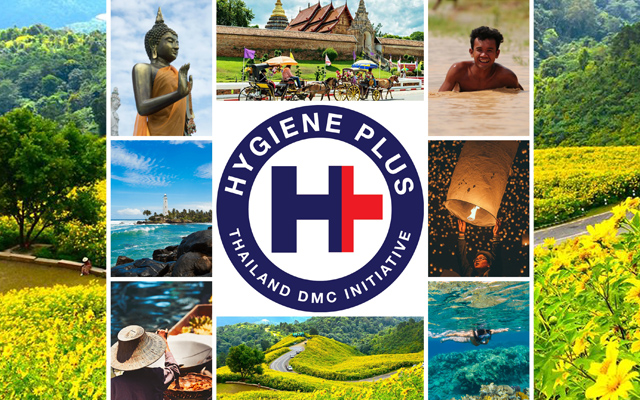
Thailand’s tourism players are also seeking to position Thailand as a safe and healthy country to visit once travel resumes. Daniel Fraser, CEO of Smiling Albino, is proposing Hygiene Plus. The campaign will see DMCs and other tourism players commit to a set of hygiene standards approved by a medical body.

He said: “We want to see Thailand emerge as a hygiene-friendly destination. We want to be able to (set out certain) standards and launch a series of commitments from when the guests leave the hotel to everything that happens in between until they come back to the hotel.”