TTG Asia
Asia/Singapore Tuesday, 10th February 2026
Page 1017

IATA signals slow recovery for aviation sector

0

The IATA is calling for governments to work with the industry on confidence-boosting measures in the face of an anticipated slow recovery in demand for air travel.

“Passenger confidence will suffer a double whammy even after the pandemic is contained – hit by personal economic concerns in the face of a looming recession on top of lingering concerns about the safety of travel. Governments and industry must be quick and coordinated with confidence-boosting measures,” said Alexandre de Juniac, IATA’s director general and CEO.

IATA urges governments to boost consumer confidence in the face of slow recovery; a woman cuts a lone figure in a Bangkok airport as the pandemic empty airports around the world

An IATA-commissioned survey of recent travellers found that 60 per cent anticipate a return to travel within one to two months of containment of the pandemic, but 40 per cent indicate that they could wait six months or more. Additionally, 69 per cent indicated that they could delay a return to travel until their personal financial situation stabilises.

Early indications of this cautious return-to-travel behaviour are seen in the domestic markets of China and Australia, where new coronavirus infection rates have fallen to very low levels.

In China, domestic demand began to recover when new infections fell to single digits and rapidly headed towards zero. While there was an early upswing from mid-February into the first week of March, the number of domestic flights plateaued at just over 40 per cent of pre-Covid-19 levels, according to IATA.

Actual demand is expected to be significantly weaker as load factors on these flights are reported to be low, it added. China accounts for some 24 per cent of all domestic passengers.

Over in Australia, domestic demand continued to deteriorate even after new infections fell to single digits, which triggered an initial recovery in the Chinese domestic market.

IATA stated that there is still no sign of recovery, with total domestic flights at 10 per cent of pre-Covid-19 levels, even as new infections near zero. Australia accounts for three per cent of all domestic travellers.

Domestic market behaviour is a critical indicator as the post-pandemic recovery is expected to be led by domestic travel, followed by regional and then intercontinental as governments progressively remove restrictions.

“In some economies, the spread of Covid-19 has slowed to the point where governments are planning to lift the most severe elements of social distancing restrictions. But an immediate rebound from the catastrophic fall in passenger demand appears unlikely,” said de Juniac.

“People still want to travel. But they are telling us that they want clarity on the economic situation and will likely wait for at least a few months after any ‘all clear’ before returning to the skies. As countries lift restrictions, confidence boosting measures will be critical to re-start travel and stimulate economies.”

Last week, IATA conducted regional summits with governments and industry partners to begin planning for an eventual re-start of the air transport industry.

“The passenger business came to a halt with unilateral government actions to stop the spread of the virus. The industry re-start, however, must be built with trust and collaboration. And it must be guided by the best science we have available,” said de Juniac.

“Time is of the essence. We must start building a framework for a global approach that will give people the confidence that they need to travel once again. And, of course, this will need to be shored up by economic stimulus measures to combat the impact of a recession.”

In addition to confidence-building and stimulus measures, the anticipated slow recovery also adds urgency to the need for emergency financial relief measures, said IATA.

IATA estimates that some 25 million jobs in aviation and its related value-chains, including the tourism sector, are at risk in the current crisis. Passenger revenues are expected to be US$314 billion below 2019 – a drop of 55 per cent – and airlines will burn through about US$61 billion in liquidity in 2Q alone as demand plummets by 80 per cent or more.

“This is an emergency. Airlines around the world are struggling to survive. Virgin Australia which entered voluntary administration demonstrates that this risk is not theoretical. Governments will need financially viable airlines to lead the economic recovery. Many of them won’t be around to do that if they have run out of cash,” said de Juniac.

“The number of governments recognising that relief measures are needed is growing. But the crisis is also deepening. We thank the governments that have committed to provide the industry a lifeline and look forward to quick implementation. For the others, each day matters. Millions of jobs are at stake and relief cannot come fast enough.”

Covid-19 wipes out 100 million tourism jobs: WTTC

0

The travel and tourism sector faces a staggering 100 million job losses due to the pandemic, a more than 30 per cent jump from last month’s forecast, according to the World Travel & Tourism Council (WTTC).

The WTTC said that it has alerted G20 Tourism Ministers to the extent of the crisis, as they gathered by virtual conference last week. Of the 100.8 million jobs at risk, almost 75 million of them are in G20 countries.

Over 100 million travel, tourism jobs are on the line, says WTTC; flight attendants wearing masks walking in departure hall of Suvarnabhumi Airport, Bangkok, this February, pictured

WTTC analysis also shows a sharp escalation in the economic loss to the world economy, up to US$2.7 trillion of GDP, from US$2.1 trillion just a month ago.

The punishing impact of the Covid-19 crisis has led to over one million jobs already being lost every day.

Gloria Guevara, WTTC president & CEO, said: “This is a staggering and deeply worrying change in such a short time. In just the last month alone, our research shows an increase of 25 million in the number of job losses in travel and tourism. The whole cycle of tourism is being wiped out by the pandemic.

“We have alerted the G20 Tourism Ministers… to the extent of the crisis and advised on how governments need to step in swiftly to support and protect our sector.

“Travel and tourism is the backbone of the global economy. Without it, global economies will struggle to recover in any meaningful way, and hundreds of millions of people will suffer enormous financial and mental damage for years to come.”

Travel and tourism contributes 10.3 per cent of global GDP, is responsible for generating one in four of the world’s new jobs, and for nine successive years, has outpaced the growth of the global economy.

China will take time to bounce back from Covid-19: GlobalData

0

China’s inbound tourism market will take a long time to recover from the coronavirus as the country must work on repairing its brand image, which has been marred due to negative narrative in international media as well as its close ties to the virus outbreak, according to GlobalData.

Pre Covid-19, China was predicted a steady CAGR of two per cent between 2016 and 2020, reaching 63.9 million international arrivals, found the study.

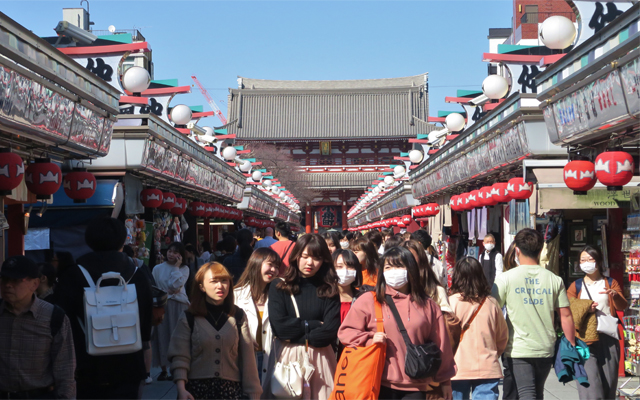
China needs to work on repairing its brand image and assuring tourists that the country is a safe destination: GlobalData; tourists wearing medical masks in Yu Garden, Shanghai this April pictured

However, the fallout from the global pandemic which originated in China has severely impacted China as a tourism destination as well as Chinese travellers.

China outbound tourism is a significant contributor to the global tourism industry, accounting for 159 million global outbound travellers in 2019, according to GlobalData.

Moreover, the Chinese outbound market had the second-highest spending last year, with an expenditure of US$275 billion. As such, the introduction of travel restrictions impacted not only China as a tourism destination, but also many other destinations that rely on high-yielding Chinese visitors.

Amber Barnes, travel and tourism analyst at GlobalData, said: “China as a tourist destination will not be able to rebound quickly and it is uncertain how long it will take the tourism industry to recover. Additionally, the brand image of China as a destination may be damaged. This is due to the virus starting in China which means tourists may have fear of the destination.”

GlobalData’s latest report, Case Study: Impact of Covid-19 on Destinations, revealed that the predicted forecast of 64 million international arrivals in 2020 will be impacted due to Covid-19. International arrivals were predicted to increase from the 62.6 million international arrivals which China received in 2019.

Barnes continued: “This steady increase will change to reflect a slowdown in 2020. The uncertainty of Covid-19 indicates tourism destinations will take time to recover and travellers will have doubts and fears about travelling in the future.

“Tourism organisations and authorities must promote and reassure tourists that China is a safe tourism destination to attract tourists once Covid-19 is controlled.

“China does have the potential to recover as a destination. The country previously has shown robustness to recover from a pandemic. This was severe acute respiratory syndrome (SARS) which originated in China and quickly spread globally in 2002. This emphasises that although a lengthy process, the brand image and tourism destination can be restored, provided the relevant DMOs engage travellers with effective campaigns.”

Indonesian gov’t urged to launch publicity blitz to raise awareness of the country’s crisis response

0

Indonesia’s travel trade is calling on the government to step up publicity around the country’s disaster recovery efforts and latest developments of tourist attractions amid the pandemic so that travel planners can keep up destination promotions in hopes of a quick market rebound.

Speaking at the webinar titled Facing the Impact of Covid-19 and a Glimmer of Hope for the Tourism Industry recently, Budi Tirtawisata, CEO of Panorama Group, said: “Tourism has been a big darling in the last few years. Everybody was talking about tourism. (It was considered) a low-hanging fruit, a quick win. (Now), suddenly there is no good news about tourism.

A dearth of information regarding Indonesia’s tourism recovery hinders destination marketers’ promotion efforts; a warning banner with the words “stay at home” guards the entrance gate to the Kuta Beach in Bali which has been closed to prevent spread of coronavirus

“We need a good spokesperson for the industry and having good leadership will make it easier for us in the industry to get through this. I think the leadership of the Ministry of Tourism and Creative Economy is very important here.”

Monas Tjahjono, managing director of Monas Tours & Travel Surabaya, said on a separate occasion that while the government provided regular updates on the number of Covid-19 cases, the world needed to know also the developments surrounding the tourist destinations and attractions.

Agreeing, Yulhendry Sulhatris, director of Synergy Ravelindo Tours & Travel Medan, said that his European tour operator partners still wanted to promote Indonesian tourism on their websites and social media despite the crisis, but updated information on national parks, temples, and other tourist sites were lacking.

He also bemoaned the dearth of promotional materials about the country that is available in English, citing the example of Wonderful Danau Toba’s Facebook page that is in Bahasa Indonesia. “Indonesia has VITOs (Visit Indonesia Tourism Officers) overseas, and they need us to feed them with information in English,” he said.

Noting that the Ministry of Tourism and Creative Economy (MTCE) had tweaked its slogan from Wonderful Indonesia to Thoughtful Indonesia in a bid to show Indonesia’s empathy towards the current situation, Yulhendry expressed hopes that its stance will be backed up with actions.

He opined that the Ministry needed to step up its global dissemination of accurate and timely information on the safety precautions and measures Indonesia was taking to ensure that the destination is safe to travel.

Eka Chandra Winata, country manager VITO France, said that such information is vital so they can feed the media with up-to-date information in order to bolster travellers’ confidence.

Ng Sebastian, managing director of Incito Vacations, lamented that the strict measures put into place by the Indonesian communities were not given sufficient coverage in national media, let alone internationally.

He said: “Even the people in the most remote villages in East Nusa Tenggara are diligently practising social distancing. The people of Latung Village in Flores, East Nusa Tenggara organised the traditional ritual of Keppe Banggang (gate closing) because of the (pandemic), where they not only closed road access to the village, but also the port.”

More people in villages across the archipelago were getting more aware of the pandemic and called on their family members working in the cities in the red zones not to go home during the Hari Raya holidays or they will be put under a 14-day quarantine, according to Sebastian, who added that such moves made by citizens were not heard by the international audience.

Individually, hotels and travel companies continue to engage with their clients and business partners through their own social media platforms and websites.

Monas Tours & Travel, for example, encourages its Instagram followers to take part in story-telling and quizzes, among other forms of engagement.

Norberto Rodriguez, co-founder of Come2Indonesia, a Bali-based travel company specialising in Spanish-speaking markets, said that as soon as the pandemic is over, the tour operators in Europe would be eager to sell, so the agency has been continuing promotions through social media and influencers to ensure that Indonesia remains top of mind for travellers.

WTTC urges G20 tourism ministers to steer Covid-19 recovery

0

The World Travel & Tourism Council (WTTC) has called upon G20 tourism ministers to lead a united and coordinated recovery for the travel and tourism sector out of the Covid-19 crisis.

The UN body said that only the G20 has “the power to influence and drive forward a coordinated recovery effort needed to preserve the sector”.

Only the G20 can drive forward a coordinated recovery response to the Covid-19 crisis: WTTC

The Tourism Ministers meeting, due to take place on April 24, is set to discuss how to combat the crisis crippling the entire travel and tourism sector.

The Covid-19 outbreak is threatening the jobs of 75 million people around the world, with one million jobs being lost daily, according to WTTC data.

Ahead of the meeting, WTTC has praised the G20 for freezing the debt of the world’s poorest countries as a major step towards enabling them to bolster their health systems, to save lives and combat Covid-19.

Gloria Guevara, WTTC president & CEO, said: “The G20’s proven record, which powered the recovery following the financial crisis in 2008, and the recent decisive action to freeze debt proves this forum is the best platform with the speed and agility needed to drive forward the urgent actions required to set the pace and save the global travel and tourism sector, and enable it to survive and thrive.”

As such, Guevara said that WTTC proposed for the tourism ministers participating in the meeting to fully jointly commit with the private sector to four key principles to enable a faster recovery.

“This would include a seamless traveller journey with enhanced health security standards enabled through technology, developing joint public-private and G20-wide health protocols, as well as ongoing support packages for the tourism sector beyond lifting of lockdowns and into the recovery,” she said.

In detail, WTTC’s four principles to ensure swift recovery for the travel and tourism sector and the global economy following the end of the Covid-19 outbreak, are:

  • A joint public-private coordinated approach to re-establish effective operations, remove travel barriers and reopen borders. This would ensure the efficient resumption of flights, movement of people and wide-scale travel essential to re-build confidence in travel and tourism.
  • Enhance seamless traveller journey experience, combining the latest technology and protocols to increase health standards.
  • Work with the private sector and health experts to define global standards for the new normal, which is grounded in science and can be easily adopted by businesses of every size across all travel industries globally.
  • Continue providing support to the travel and tourism sector during the recovery phase, including financial aid for workers and businesses to promote a swift recovery.

Following these four principles will “reduce the recovery timeframe of the global economy and offer reassurance to travellers that the time is right once more to explore and visit”, said WTTC.

The economic importance of the travel and tourism sector to the G20 is demonstrated by the latest WTTC 2020 Economic Impact report, which shows it supported more than 211 million jobs, or 9.5 per cent of the G20’s total workforce.

The G20 includes some of the key source markets to the majority of regions around the world, with travel and tourism across the G20 representing 76 per cent of global travel and tourism GDP in 2019.

The sector also generated US$6.7 trillion to the GDP, or 9 per cent to the total G20 economy, growing by 3.7 per cent from the previous year. The comprehensive report shows this growth outperformed the overall G20 GDP growth in 2019 of 2.6 per cent in the same year.

Indonesian hotels shun layoffs with pay cuts, reduced hours

0

With falling occupancy rates and the closure of more hotels as tourism dries up, a number of hoteliers in Indonesia are trying to preserve jobs by resorting to reduced work weeks and pay cuts, as well as reshuffling employees’ job duties, amid the pandemic.

One general manager at a hotel in Malioboro, Yogyakarta, who requested anonymity, told TTG Asia that during the shutdown, his staff has been focusing on general cleaning.

101 Yogyakarta Tugu hotel introduced shorter work hours to prevent layoffs amid epidemic

“With this system, the management not only avoids layoffs, but also ensures that the hotel stays clean, sanitised, and well-maintained,” he said.

Should the pandemic drag on, he has prepared a mutual cooperation scheme to get employees with higher pay to funnel part of their salaries to support those earning a minimum wage.

On the other hand, Wahyu Wikan Trispratiwi, general manager at 101 Yogyakarta Tugu, said that the hotel avoids layoffs by reducing the work week for employees.

Wikan added: “We also send staff for training during the lull and shorten hours for services such as in-room dining, as every staff member needs to take on additional duties for now. The housekeeping team, for example, has to wash uniforms, which was previously outsourced to external suppliers.”

A number of members from Indonesian Hotel General Managers (IHGM) Yogyakarta chapter recently gathered to discuss how the industry can avoid job losses and pay cuts, which could pose a long-term risk to the country’s tourism sector.

Kukuh Wibawanto, IHGM’s Yogyakarta chapter chairman, elaborated: “The impact (of Covid-19) has been deemed worse than the 1998 financial crisis, while we noticed that there are some young general managers who are nervous about having to deal with the situation. “

A lack of experience has left these young general managers at a loss as to how to negotiate with the owners to stay open, which in turn, forces them to shutter their hotels and lay off employees, Kukuh said, adding that the ability to negotiate with the owner plays an important role in ensuring business continuity.

“The general manager has to convince the owner that what needs to be considered is not just survival during the pandemic, but more importantly, how we can rebound when the pandemic is over. It will be much difficult to fight back with a new team,” he elaborated.

Kukuh cited the case of two general managers who successfully made the call to temporarily suspend operations without laying off staff, saying that their success has prompted IHGM to start online training courses to assist hoteliers faced with the difficult decision of a hotel closure.

Tackling the issue of how to cut costs without cutting staff, Kukuh advised hotels to completely turn off electricity from the outlet, including elevators and air conditioners. The management needs to cut off the TV cable and modify or terminate the order with suppliers to suit their current operating needs, as well as negotiate credit terms or payment reductions, he added.

“This energy efficiency saves expenses by more than 50 per cent, while reducing employees only cut costs by less than 20 per cent,” Kukuh said.

During closure, rankings are thrown out the window, with all employees taking on housekeeping and general cleaning duties. Employees’ workspaces are closed and moved to restaurants, with limited equipment.

Kukuh shared that high-ranking executives have to settle for less pay, while all employees are not paid service charges.

Singapore’s tourism sector gets fresh boost

0
Landscape of Singapore city in day morning time

To further support tourism businesses during the circuit breaker and to give them a headstart for recovery, the Singapore Tourism Board (STB) has rolled out several new initiatives, including aid to ease cash flow concerns for travel agents.

The new relief measures complement the government’s allocation of more than S$60 billion (US$43 billion) to tide businesses and individuals through the pandemic.

Singapore Tourism Board rolls out initiatives to provide further relief to tourism businesses and workers

As part of the efforts, STB has launched a S$20 million Marketing Partnership Programme to help tourism businesses maintain their international presence, and build demand for when the market recovers.

Under the programme, STB will support part of the marketing costs, and award additional funding boosters to companies that collaborate with other tourism stakeholders to create value-added experiences.

Following the launch of Phase 1 of the programme for hotels on April 1, 2020, STB will be increasing support from 50 per cent to 70 per cent of qualified marketing costs, and will extend the programme to attractions, inbound travel agents, and the corporate sector in Phase 2. Applications for Phase 2 will open in early May, and interested applicants can email MPP@stb.gov.sg.

In addition, STB has launched the SG Stories Content Fund to encourage and support local and international content creators to create compelling stories of strength, resilience, solidarity and unity in Singapore.

The S$2 million fund for digital video content will cover the costs of creative development and conceptualisation, production and execution, as well as marketing and distribution. The fund will support 90 per cent of qualifying costs, capped at S$150,000 per project.

This complements funding support from the National Arts Council and the Infocomm Media Development Authority, as part of STB’s overall collective efforts to support the creative community.

Applications will open from May 1 to 31, 2020. All filming activities must adhere to prevailing safe distancing measures, said STB. As such, during the current circuit breaker period, all outdoor filming is prohibited and all content must be produced from home, it added.

In light of how Covid-19 is changing consumer behaviour and will have a lasting impact on travel, STB has developed a set of tools under a three-step framework to accelerate the tourism sector’s digital transformation.

Firstly, to help businesses understand their current state of transformation, STB will be launching the Tourism Transformation Index in 2Q2020. It is a self-diagnostic tool for companies to assess their strengths, identify areas of opportunity and provide recommendations on next steps to take in their digital transformation journey. Companies can indicate their interest to participate at go.gov.sg/interest4txi.

Secondly, STB will open the Three House, a dedicated innovation space located on STB’s premises for companies to collaborate and test new ideas and solutions. More details will be announced at a later date.

Lastly, STB has created a suite of smart services that allow businesses to tap shared data and content to drive innovation and guide their business decisions.

This includes the Singapore Tourism Analytics Network, or Stan, which is being made available to the industry for the first time. Through Stan, industry stakeholders can access updated tourism statistics, and exchange data, to plan for recovery. More information can be found at stan.stb.gov.sg/portal.

Furthermore, to help affected businesses rethink their strategies and prepare for recovery, STB Marketing College – a learning and development programme tailored for travel and tourism marketers – has partnered key digital players such as Facebook, Google and LinkedIn to develop web-based training for the tourism industry.

Facebook Singapore, for example, has produced a webinar series that targets businesses in the travel, hospitality, retail, and corporate sectors. In this series, experts will share business insights and best practices to engage customers and help businesses adapt during these challenging times. The first episode will be streamed on April 30, 2020. To register for the free sessions, visit digitalupskillingsg.splashthat.com.

STB is also supporting Google and UOB in their redesign of the SME Leadership Academy programme to focus on SMEs in retail and tourism. The online programme will cover topics including digital marketing, online collaboration tools to support remote working and overseas market expansion efforts. More information can be found at leadershipacademy.withgoogle.com.

In addition, STB will partner LinkedIn to develop another online training programme, with more details to be announced at a later date.

As well, STB will be rolling out additional assistance for travel agents, who have seen a significant drop in the volume of sales and bookings since the start of the Covid-19 outbreak.

In order to free up cash flow during this period, STB has reviewed the legislative framework to identify areas where the cost of regulatory compliance could be reduced, following careful assessment that the risk to consumers is significantly lower during this period.

As such, the minimum financial requirement for travel agents will be reduced by 90 per cent from April 8, 2020 to December 31, 2020. All travel agents may also submit auditor-certified accounts in lieu of audited statement of accounts for the financial year ending on or after March 1, 2020.

STB CEO Keith Tan said: “The Government has set aside more than S$60 billion to help businesses and Singaporeans through Covid-19, and STB’s additional measures aim to complement that. This is the toughest period that Singapore tourism has ever faced, but we will stand together with the industry to get through this, and prepare for the eventual recovery.”

Olympics delay spell lower returns for Tokyo hotels

0

The Summer Olympics’ performance gains for Tokyo hotels are projected to be lower now that the sporting event has been pushed back by a year, according to the latest data from STR and Tourism Economics.

“We are projecting less overall demand when compared with our initial forecast for 2020, and while double-digit RevPAR growth is expected, it will come from a much lower base,” said Robin Rossmann, STR’s managing director.

Tokyo hotels projected to post lower gains from Olympics delay

“Lower absolute demand levels would be linked with traveller perception based on the timeline of the Covid-19 pandemic, as well as financial challenges of a potential global recession. The still high level of demand combined with ADR growth should drive RevPAR upward, similar to the growth percentage we saw during last year’s Rugby World Cup in the market.”

Tokyo is expected to see double-digit increases in RevPAR in both July 2021 (+22.1 per cent to 16,968 yen; US$160) and August 2021 (+27.2 per cent to 17,995 yen).

While growth levels are similar to the previous forecast, absolute levels will be much lower. Additionally, as a result of the event date change, the same months in 2020 are forecasted for double-digit RevPAR declines.

Indonesia suspends all passenger flights

0

The Indonesian government has temporarily suspended all commercial and chartered flights, following the decision to ban people from travelling to their hometowns during the Ramadan and Eid-ul-Fitr holidays, in a bid to curb further spread of the coronavirus.

The ban will take effect from April 24 to June 1, and might be extended depending on the situation, said Novie Riyanto, director general of air transportation, Ministry of Transportation, at a press conference on Thursday.

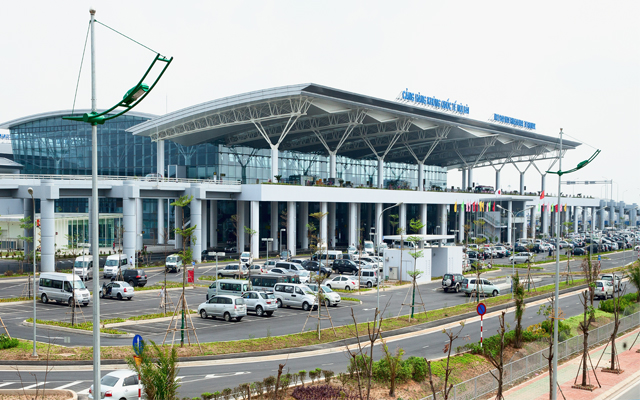
Indonesia bans passengers flights to stop Ramadan exodus; airport terminal in Jakarta pictured

However, Novie said that airports and navigation space remain open for five exceptions, including flights for leaders of state institutions and state guests, representatives of international organisations, repatriation of Indonesian citizens and foreigners, law enforcement operations, cargo or passenger planes used to transport necessary goods such as medical and food supplies, and other flight operations that support Covid-19 containment efforts.

Under the new regulation, Novie said that airlines would be mandated to give full refunds to passengers, in cash or voucher. For the latter, the voucher must be valid for at least one year with a one-time extension.

The government has also suspended inter-city transport by train and buses during this period.

Malaysia extends lockdown for third time until May 12

0

Malaysia’s nationwide movement control order (MCO) has been extended once again by another two weeks, until May 12, with the possibility of a further extension, announced prime minister Muhyiddin Yassin in a televised broadcast on April 23.

This marks the third extension of the MCO, which kicked in on March 18 to stem the spread of Covid-19.

Malaysia extends movement curbs for a third time till May 12; members of the public lining up to do a Covid-19 mass test in Kuala Lumpur pictured

The prime minister said that that if the number of new infections continue to slow, the government will consider relaxing the MCO regulations in stages to allow more sectors to operate, subject to strict conditions.

On April 23, the country’s health director-general Dr Noor Hisham Abdullah said border control measures had reduced the number of imported Covid-19 cases and should be further continued.

In light of the increasing number of Covid-19 cases in more than 180 countries, he said: “Lifting the MCO does not mean we will lift border controls. In fact, we need to strengthen it further.”

The number of Covid-19 cases in Malaysia as of March 23 totalled 5,603, of which 3,542 had recovered, and the death toll is 95.