Airlines are resuming some flights in the region but these are not enough to lift the beleaguered travel and tourism industry out of the woods, opines Subhas Menon, director general of Association of Asia-Pacific Airlines.
In this debut episode of TTG Conversations: Five questions video series, Subhas talks about how the resumption of flights will look in the near future, progress on the airline industry’s advocacy for evidence-based health and safety measures to support travel resumption, and why travel bubbles are so difficult to establish.
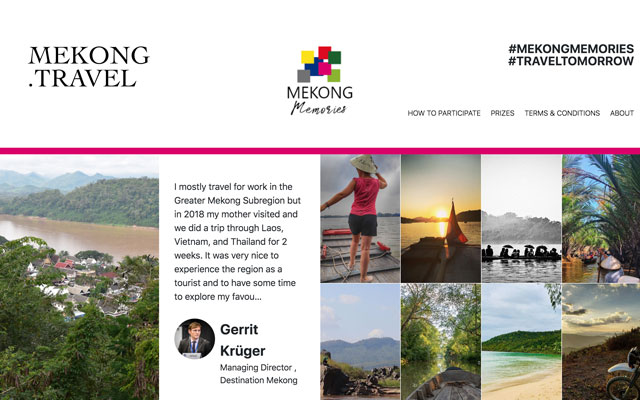
To breathe life into Mekong’s battered tourism industry, Destination Mekong has rolled out two new platforms, Mekong Memories and Mekong Deals, designed for travel trade players to engage with travellers and to ensure that the destination stays top of mind among tourists.
The Mekong Memories platform allows travel providers across Mekong to connect with their past guests and invite them to share photos and stories of their past travel experiences, so as to inspire travel to the destination post-Covid, according to Jens Thraenhart, executive director of Mekong Tourism Coordinating Office, which endorses Destination Mekong.
“It is a collaborative and inclusive campaign where everyone can join and work together. On one hand, they promote the region together, and on the other hand, they create revenue for businesses, especially small businesses struggling to survive right now,” he said at the Virtual Destination Mekong Summit on August 25.
Photos on the Mekong Memories platform are linked to the Mekong Deals website, where Mekong trade players offer special deals to woo tourists.
A Three Lakes Trekking tour package, for instance, is priced at US$447, a discount of 25 per cent from the original price. Offered through December 15, 2021, the four-day trekking package lures tourists to explore the three lakes of the Shan state by boat and on foot, visit tribes and villages along the way, and enjoy an intimate homestay experience in the Pa-Oh village.
The website is still in its initial stages, and more tourism players are set to come on board with special deals and promotions.
Citing an example, Jens shared that if a user browsing the Mekong Memories website were to click on a photo of Sofitel Bangkok shared by another user, and the hotel has an ongoing promotion, the user would be able to view the deal. “It is basically combining storytelling and relevant deals to get money directly to the businesses,” he said.
Willem Niemeijer, chairman of Yaana Ventures/Khiri Travel, hailed the new platforms for showcasing not just big brand hotels, but also SME operators, across the entire Mekong region.
Believing that travel is a shared experience, Ianic Menard, Accor’s vice president of sales, marketing and distribution for Upper Southeast Asia, is also in favour of an inclusive, user-generated platform like Mekong Memories.
“Peer-to-peer content was a strategy before the pandemic, but it is even more important today because it is typically viewed as more trustworthy and relevant,” he said.
Ianic said that the platforms are not only a great way for travellers to discover new experiences in the Mekong region, such as unique shops or off-the-beaten-path tours, but also encourages greater collaboration within the community.
He said: “Collaboration has always been important, but probably even more so with the pandemic situation… (There are) two areas where collaboration is key: content creation and destination marketing… By collaborating deliberately, we are able to create content effectively and quickly… and make sure that there is a consistent message going quickly across the market, whether it is domestic or international.”
In a bid to attract international travellers back to Malaysia’s shores amid the ongoing pandemic, the Ministry of Tourism, Arts and Culture (MOTAC) is looking to tap into niche tourism activities in the country’s green zone destinations.
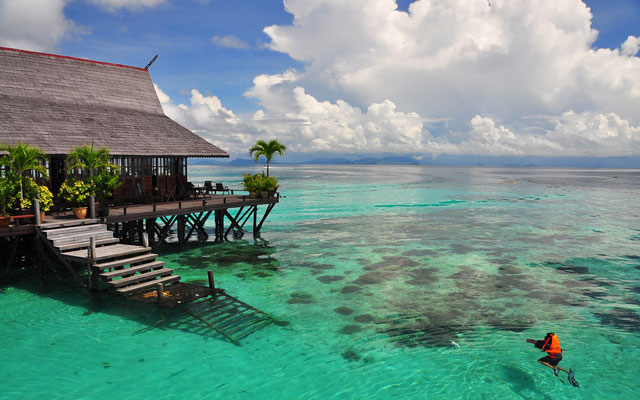
Its minister, Nancy Shukri, said the ministry is working on a concept paper to promote niche tourism activities such as golfing, snorkelling and diving on the country’s islands marked as green zones.
Malaysia keen to tap into niche tourism activities such as golfing, snorkelling and diving for travel bubbles
However, reciprocal green lanes or travel bubbles with other like-minded countries need to be established before Malaysia reopens its green zone destinations to foreign travellers.
“We need to be creative and find new ways of looking at the travel bubbles,” she said, while stressing that there needs to be mutual agreement between governments and standard operating procedures (SOPs) in place for the niche tourism activities identified to ensure the safety of tourists.
The concept paper currently being prepared by the MOTAC will be presented to relevant ministries and government agencies including the Health Ministry, the National Security Council, and the National Disaster Management Agency within the next two weeks.
Welcoming the move, Yap Sook Ling, managing director at Asian Overland Services Tours & Travel, opined that promoting diving and golfing activities would attract high-value travellers to the country.
But at the same time, she stressed, the government should make it compulsory for foreign tourists entering the country to employ the services of registered travel agents to ensure compliance to the SOPs set by the government and strict adherence to the tour itinerary.
Laguna Golf Lang Co’s family of water buffalo greenskeepers have helped the club reap a record rice harvest: the fruits of which are going towards feeding members of the local community in Central Vietnam.
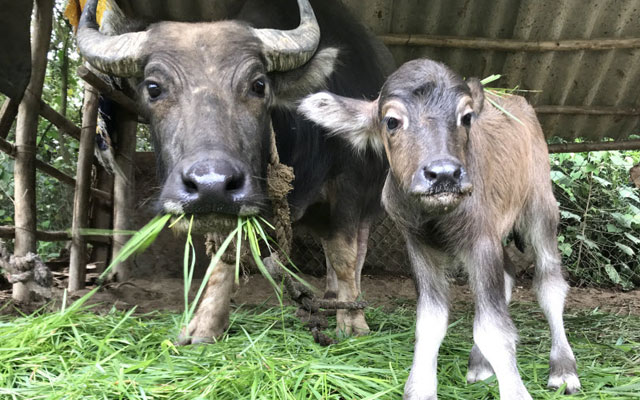
The bovine brood has been bolstered by the birth of Lulu, a new baby daughter, who joins fellow recent arrival Luna, eldest calf Bao, and father and mother Tu Phat and Chi Chi in the workforce.
Baby Lulu (right) is the latest addition to the now five-strong family of water buffalos at Laguna Golf Lang Co
And the extra sets of hooves have dramatically boosted productivity, with the club gathering 28 tonnes of rice from the seven hectares of fields right in the middle of the Sir Nick Faldo Signature layout – a record harvest-time haul.
The buffalo “bio-mowers” have been vital in helping to maintain the elevated status of the layout, which winds its way through tropical jungle, ocean sand dunes and ancient rice paddies.
They help to manage the seven hectares of rice fields located right in the middle of the course by eating excess weeds, crops while tilling the soil in the area that would otherwise require machinery and additional manpower to maintain.
The rice-fields, though, are not just for show. Harvested twice a year, they have previously yielded up to 20 tons of rice that are used to support the organic farm at Laguna Lang Co and donated to families and seniors in the area who are in need of extra support.
This winter’s record haul, however, surpassed previous harvests by some way. Additionally, the bumper crop could not have come at a timely juncture, with Vietnam’s economy taking a hit on tourism as the international borders remain closed to combat the spread of the global pandemic.
Adam Calver, director of golf at Laguna Lang Co, said: “The communities that have limited economic means have been hit the hardest by the economic downturn that has resulted from the global pandemic. The fact that we are able to donate even more rice to locals who need it most this year was a really positive outcome for our edible golf course.”
Property management system specialist Hotelogix, distribution company AxisRooms, and guest experience management platform RepUp have merged to become Hotelogix PTE, headquartered in Singapore.
Under this three-way merger, hospitality solutions will be reimagined and delivered by this integrated platform covering operations, distribution, reputation, marketing automation, and guest-facing technologies.
The merger has given Hotelogix PTE an aggregate customer base spanning more than 100 countries, powering over 10,000 hospitality businesses ranging from hotels, resorts, boutique hotels, hostels to aparthotels, campsites, villas, vacation rentals, independents, and chains.
With more than 200 employees, the new entity has emerged as one of the largest SaaS providers for the hospitality sector in the Asia-Pacific market and aims at aggregating over 20,000 customers in the next three years.
Hotels today use multiple systems through a guest’s lifecycle, from pre-booking to post-checkout stages, which then require integration of various systems leading to high costs, broken experience, delayed implementation, and fragmented support, said Hotelogix PTE in a statement.
As such, the core objective of the merger is to “harness the power of data across operations, distribution and customer experience systems to deliver exceptional value and seamless experience to its clients’ customers”.
Aditya Sanghi, who will continue to be the CEO at Hotelogix, said: “With this merger, we will have a wide range of solutions to offer which will give superior value to our customers and increase our share of wallet. This definitely gives us a huge competitive edge against our competitors at a global level.”
Anil Kumar Prasanna, CEO at AxisRooms, added: “The future of hotel technology needs to be open and accessible to every hotel partner or technology provider. If hotels want the full range of services or just a part of the stack, we want the technology to integrate as seamlessly as possible and be available to all partners with this merger.”
Accel Partners, Vertex Ventures, Saama Capital and Seedfund are among existing investors of the companies which are backing this merger.
Radisson Hotel Group is set to open a serviced apartment property in the Pakistani capital Islamabad, in what the group has touted is the “first internationally branded serviced apartments in the country”.
Radisson signs Pakistan’s first internationally branded serviced apartments
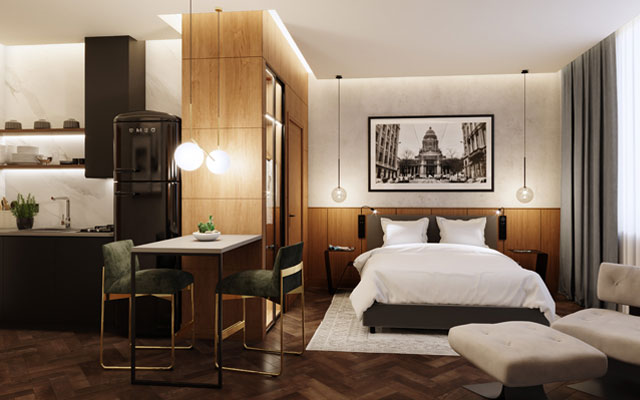
Scheduled to open by 2Q2023, the Radisson Blu Serviced Apartments, Islamabad will form part of a mixed-use development, which includes offices and a retail mall. The new-build hotel will feature 224 upscale apartments, varying between 51 to 84m2; an all-day dining restaurant; spa; fitness centre; sports courts; and swimming pool.
The Islamabad property marks the group’s second hotel in Pakistan, accelerating its ambition to have 10 hotels and 2,000 rooms in operation and under development across the country by 2025.
More Thai travellers are opting for non-urban stays and coastal getaways, and holidaying closer to home, with privacy being top of mind for travellers.
Those are the post-pandemic travel trends reported by Airbnb. With travel opening up in Thailand, Airbnb is seeing significant growth in domestic bookings as Thais reignite their passion to travel and their desire to explore nearby neighbourhoods.
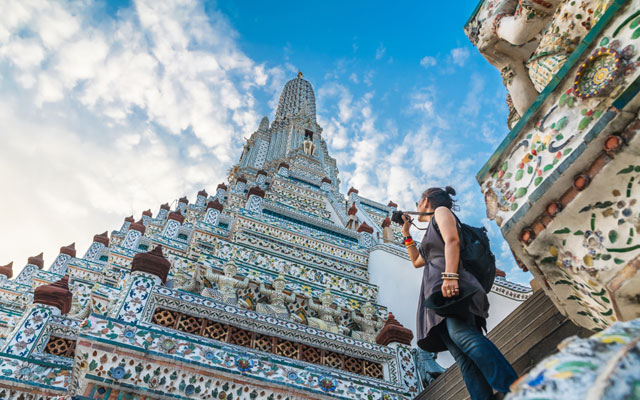
Thai domestic travellers favouring nearby destinations; Wat Arun temple in Bangkok, Thailand pictured
Destinations are trending to the near as Thais are travelling closer to home during this time – more than 40 per cent of Airbnb bookings are within 300 miles. Non-urban destinations are also proving to be popular, with more than 45 per cent of Airbnb travellers having booked stays in non-urban destinations in Thailand.
Beach destinations are having a moment, with Pattaya tying with Hua Hin as the most booked domestic resort destinations in Thailand on the accommodation platform.
With travel trending domestic and to destinations close to home, Airbnb are seeing guests opting for privacy in their choice of stays. Pools and kitchens are the top searched amenities, underscoring the desire for travellers to have more control over their immediate surroundings. Meanwhile, stays that are pet-friendly are ranking high with “allow pets” being in the top five most searched for amenities in Thailand.
Thailand-based Dusit International will expand its footprint across India, with a plan to open at least two Dusit-branded hotels in the country each year beginning 2021.
The expansion will target tier one and tier two cities, such as Mumbai, Delhi and Bangalore; as well as key leisure destinations throughout the country.
Dusit Princess Serviced Suites Kolkata is slated to open in 2Q2022
Already, the hotel group has signed Dusit Princess Serviced Suites Kolkata, under a franchise agreement with the Kolkata-based real estate developer Jain Group.
Slated to open in 2Q2022 as part of Jain Group’s high-end residential development project, Dream One, Dusit Princess Serviced Suites Kolkata will occupy a prime location near the green expanse of Eco Park.
Comprising 42 three-bedroom units, the new property will feature a swimming pool, an all-day dining restaurant, a speciality restaurant, and a fitness and wellness centre. Banqueting and meeting facilities will also be available for small and midscale events.
Currently, Dusit is in talks with other potential owners and is on course to conclude at least four more signings within the next 12 months.
“While Covid-19 has brought immense challenges for tourism and hospitality worldwide, we remain confident that our resilient industry can and will bounce back, and we expect India to be a key player in international and domestic tourism in the brighter days ahead,” said Suphajee Suthumpun, group CEO, Dusit International.
India is one of the top seven source markets for Dusit Hotels and Resorts worldwide.
With India’s fast-growing middle class expected to reach 583 million people – or 41 per cent of India’s projected population – by 2025, Dusit also sees huge potential for its upscale and midscale brands in this burgeoning market.
Langham Hospitality Group has appointed Bob van den Oord as COO, a newly created position to support the company’s hotel operations and core business functions that are spread over four continents. He will report directly to CEO Stefan Leser.
In his new role, van den Oord will oversee the regional vice presidents, hotel managing directors and general managers of the group’s properties in North America, Europe, Asia-Pacific and the Middle East.
tAt the corporate level, he will steer the food and beverage, spa, rooms and quality divisions to ensure that the hotels around the world meet or exceed operational, guest service, strategic, branding and fiscal plans, while maintaining the highest standards of regulatory compliance.
Van den Oord brings over two decades of experience to his new role based at the corporate office in Hong Kong. He was most recently managing director at The Langham, London as well as regional vice president, operations (Europe, Middle East and the US.)
Prior to his tenure in London, he was managing director at The Langham, Hong Kong. During that time, van den Oord also concurrently took on the corporate role as vice president, brands at Langham Hospitality Group and played an integral part in shaping the brand guidelines for both The Langham Hotels and Resorts and Cordis Hotels and Resorts.
He first joined the group in 1999 as resident manager of Le Meridien Boston (now The Langham, Boston.)
• Growing trend of tourism and hospitality stakeholders collaborating to chase the local tourist dollar
• Exclusive add-ons, complimentary tours part of hotel deals
• Value-aligned partnerships stir sales and attract new breed of experiential travellers
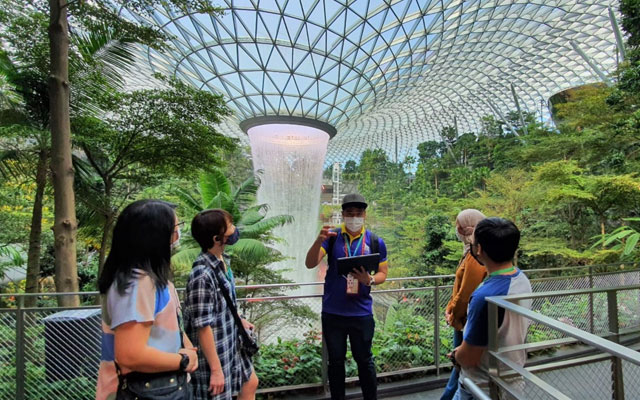
A guide from Monster Day Tours bringing guests on a two-hour walking tour around Changi Airport and Jewel, as part of the agency’s collaboration with the airport (Photo Credit: Changi Airport Group)
There is strength in unity, as the old adage goes. And that saying has never rang truer than for a tourism industry fighting to rise from the pandemic’s ashes.
With international tourism stuck in limbo, local players are scrambling to put all their eggs in the domestic tourism basket. Against that backdrop, a culture of collaboration is fast taking root, as more industry stakeholders pair up to craft unique and indelible experiences.
By collaborating with different stakeholders, companies can tap a pool of diverse talent. Such value-aligned partnerships can also prove a lifeline for businesses by unlocking new revenue streams amid the current headwinds posed by Covid-19.
Banding together in times of crisis
Following the government’s approval for staycations to resume last month, as well as for attractions to reopen and tours to resume, local travel players are creatively upping the ante to attract staycationers and locals to explore their own backyards.
At a time when bonus dining credits and late check-outs have become par for the course with staycation packages, many hoteliers are finding creative ways to sweeten the deal.
For some, they have formed alliances with tour operators to bundle hotel stays with tailor-made tours. Raffles Hotel Singapore, for instance, has partnered with two tour operators to offer immersive heritage experiences as an exclusive add-on to its staycation packages.
A Raffles Bicycle Trail with Tan Ah Huat, in collaboration with Let’s Go Tour Singapore, takes guests on a two-hour private bicycle tour (S$180++/US$131 for two pax) through the civic district enveloping Raffles Singapore.
An adaptation of the agency’s highly-rated heritage tour, the journey centres on the crafted story of fictional immigrant Tan Ah Huat who came to Singapore in the 1920s.
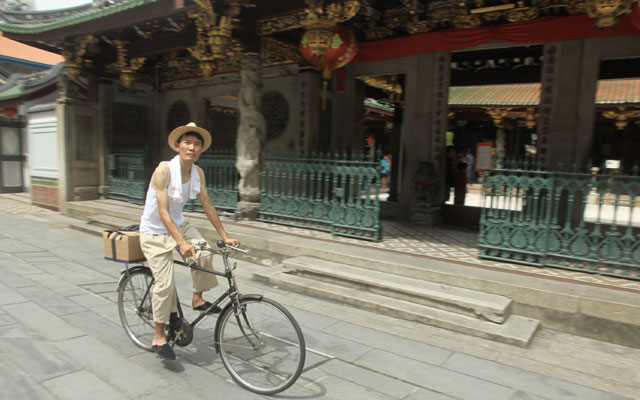
Let’s Go Tour’s Robin Loh has adapted his highly-raved bicycle tour revolving around fictional immigrant Tan Ah Huat for the Raffles Hotel Singapore’s staycation packages
Robin Loh, founder, Let’s Go Tour Singapore, who curated a custom route for the hotel’s guests, said that the tie-up with Raffles Singapore seemed like a natural move as his original bike trail features the hotel as one of the stopovers. Another commonality between the pair, according to Loh, is the heritage narrative, as the grand dame is part of Singapore’s colonial history.
Since its August 1 launch, the bike tour has received bookings for seven persons to date – all expats, Loh shared, adding that the tie-up is “a long-term partnership”.
As well, Raffles Singapore has struck up a deal with private Peranakan museum The Intan to offer personally guided tours by owner and curator Alvin Yapp. The museum visit is part of a four-hour heritage tour, dubbed The Intricacies of the Peranakan Culture (S$580++ for two pax), which also includes a trip to the Joo Chiat precinct.
Yapp said the partnership “was two organisations coming together at the right time and at the right space” amid Covid-19. Both companies, he added, shared the same positioning – offering niche, premiere, exclusive visits.
“For me, it was a case of being able to curate the experience just for the Raffles Singapore’s guests, so that it feels like an extension of the Raffles experience… For example, the plating, the dishes, the kueh that we serve, and ending the visit with an impromptu song on the piano – these are all very much curated just for the Raffles’ guests,” Yapp shared.
The tour also considers the interests of each individual. Said Yapp: “The Raffles’ guests have very niche interests; some could be very interested in, say, embroidery, while others could be very focused on jewellery, which we can’t dwell on too much during regular visits because different people have different interests. So, I try to know as much as I can about their personalities, so that I can curate the visit to their taste.”
Christian Westbeld, general manager, Raffles Hotel Singapore, said that both partnerships were formed in line with the nine-month SingapoRediscovers campaign, launched last month by the Singapore Tourism Board to give a leg-up to tourism. Some 40 businesses have come on board to push out promotions for tours, hotels, and attractions under the S$45 million campaign.
Last week, the government followed up with another S$320 million worth of tourism vouchers under the campaign to encourage locals to play tourist in their own city.
Far East Hospitality is offering a variety of ways for domestic travellers to do just that, having rolled out a suite of experiential staycation packages to enhance the guest experience, while supporting local SMEs at the same time.
The wellness-conscious can enjoy complimentary aqua exercises and yoga led by local trainers of Aquaspin and Freedom Yoga when they book the Weekend TWOgether package (from S$888++ for a 3D2N stay in the Club room) at Oasia Hotel Downtown.
Elsewhere, urban explorers can fish for their own lunch and enjoy fresh seafood at the homegrown aquaculture farm and floating restaurant, Smith Marine Kelong, under the Rediscover Our Village package (from $500++ for a 2D1N stay in the Deluxe room) at Village Hotel Bugis.
A complimentary one-hour photoshoot at the Singapore Botanic Garden by local photography studio StudioPlay is available to lovebirds who book the Picnic Rendezvous package (from S$488++ for a 2D1N stay in the Club room), which also includes a snack basket and a picnic mat, at the Orchard Rendezvous Hotel.
Staycationers at The Barracks Hotel can set sail on a three-hour private yacht trip, under the Breakfast Sail with Ximula (S$800++), available as an exclusive add-on to the Sea Breeze and Champagne Staycation package (from $559++ per room per night) that also comes with a picnic basket, thanks to a tie-up with local yacht charter group Ximula Sail.
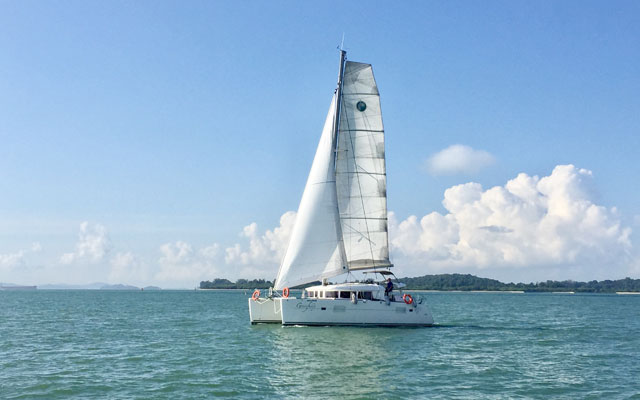
Staycationers at The Barracks Hotel Sentosa can opt to embark on a private yacht trip led by Ximula Sail
On the group’s move to step up partnerships with local brands, Arthur Kiong, CEO of Far East Hospitality, told TTG Asia: “Staycationers value unique and highly enjoyable hotel experiences that they otherwise cannot get at home. In other words, they do not seek the standard room and breakfast.”
Kiong’s view was echoed by Singapore Hotels Association’s president, Kwee Wei-Lin. “Our industry is undergoing a redefining moment right now. Apart from redesigning traditional jobs, guest services and space planning, the hotel experience needs to be upgraded to offer beyond a clean, comfortable room,” she said.
“Recent travel trends suggest that discerning travellers seek meaningful local immersion and community engagements. This is the perfect time for hotels to be creative in augmenting their existing facilities and guest experiences to cater to these changing expectations. Beyond Covid-19, this will enhance Singapore’s position as an appealing destination for both business and leisure travellers.”
Room for growth
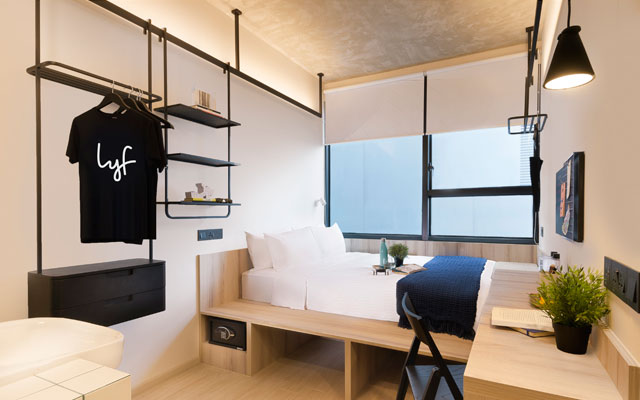
For some hotels, dangling complimentary tours as an additional perk to their staycation packages has significantly boosted occupancy rates. One such example is lyf Funan Singapore which has hooked up with two tour agencies to weave free curated tours into its staycation experience.
A private SG55 walking tour led by Monster Day Tours through August brings five guests on the hotel’s Staycation Adventure package (S$350++ per night) to unearth hidden gems on home soil, while the Perfect Instacation package (S$190++ per night) available through rest of 2020 includes a guided photography tour for two helmed by Tribe Tours.
These travel agency tie-ups are part of lyf Funan Singapore’s signature #lyfgoeslocal programme, where guests get to experience the neighbourhood’s local and authentic elements, shared Ervin Yeo, managing director for Southeast Asia, The Ascott.
“Since the launch of the joint offerings on August 1, 2020, we have seen an increase in enquiries and reservations on our staycation promotions, especially during the recent long weekends. lyf Funan Singapore was operating at near 100 per cent occupancy across the Hari Raya Haji and National Day long weekends,” he added. In comparison, the hotel was running at 85 per cent average occupancy rate from April to June 2020.
lyf Funan Singapore has seen a spike in demand since launching its staycation packages which bundle tailored tours, as part of the hotel’s efforts to bring hyperlocal experiences to guests
It isn’t just hotels that are waking up to the power of partnerships. Changi Airport is also hopping onto the collaboration bandwagon to boost footfall and brick-and-mortar sales. For the month of August, the airport is collaborating with Monster Day Tours to offer a two-hour Changi Airport & The Jewel Connection walking tour diving into fun facts about Singapore’s gateway to the world.
Priced at S$55 for a group of five, the tour includes discount vouchers and Changi gift cards worth S$20 that can be used at all participating outlets at Changi Airport.
Such initiatives help to build Singaporeans’ understanding of the airport’s history, while supporting local tour guides and the travel industry amid the pandemic, shared Peh Ke-Wei, vice president, passenger development, Changi Airport Group.
Multiple partnerships, multiple synergies
When it comes to partnerships, for some tourism players, it’s a case of the more, the merrier.
For Loh, the net has been cast wide. Since end-July, Let’s Go Tour has been offering two-hour boat tours (S$450 per session for a max of five pax) that explores kelongs, or floating fish farms, off the coast of Pulau Ubin on board a half cabin cruiser.
Alongside this new kelong tour, Loh has cosied up to fellow travel agency Singapore Sidecars to offer bundled packages marrying both experiences.
He said that the partnership was sealed as both tours “are on the slightly pricier side” and appeal to the same customer type – “people who appreciate our experiences and are willing to pay for them”. Loh shared that both agencies are co-crafting a bundled package for the upcoming Mid-Autumn Festival.
Furthermore, he said that the agency is exploring tie-ups with other tour operators, DMCs and hotels to roll out more deals and tailored programmes. “In fact, quite a few hotels have reached out to us, and we are working out different tours for different hotels,” he said, but stressed that none of these partnerships have been cast in concrete.
Likewise, The Intan has roped in several business partners to ride on the e-commerce boom. The museum’s online shop, launched during Singapore’s circuit breaker, hawks the merchandise of several homegrown brands. Offerings include Peranakan-inspired earphones, in partnership with audio electronics outfit Morph; as well as local-inspired cookies with flavours like bak kut teh (pork bone broth) and goreng pisang (fried bananas) as a tie-up with bakery Old Seng Choong. Plus, a potential partnership with KrisShop is in the pipeline, Yapp said.
Better together: the power of partnerships
If there’s one silver lining behind the Covid-19 cloud, it’s how it is fueling creativity and collaboration.
“Survival is the priority for many SMEs today amid the economic fallout from Covid-19 and many businesses have stepped up to help them weather the pandemic. As we continue to wrestle with the pandemic, we must not only worry about our own business survival but those of our key partners as well,” Kiong said in a press statement.
“Hospitality is a part of the tourism ecosystem and we must do all possible to help each other preserve core capabilities. If there is one takeaway from this crisis, it is – we will survive only when we consider others.”
Such collaborations can be a lifeline, especially for SMEs. Loh said partnerships help raise awareness among Singaporeans about domestic tours.
“Generally, I think that tours are not the top (consideration) on Singaporeans’ minds. Every tour agency is trying to market tours to locals, but locals are probably not searching for tours. So, it’s collaborations like (bundling tours with hotel stays) that will bring awareness to tours, and encourage locals to go on tours,” he said.
As his agency’s curated tour for Raffles Singapore has only attracted the interest of the expatriate community so far, Loh is doing more tie-ups with other players in the tourism ecosystem in hopes of courting local residents.
Private Peranakan museum The Intan offers tailored tours for Raffles Hotel Singapore’s guests
The Intan’s Yapp said that industry collaborations help cater to customers who are now seeking curated, instead of a la carte, experiences.
He elaborated: “(Collaborative partnerships) lend a different angle to what we usually do. For example, if I didn’t work with Raffles Singapore, those other creative elements would not have come in. I think visitors today…want to be able to see that the whole staycation experience – the dining, the shopping, and the attraction – is seamless.”
Citing an example, Yapp said hotel guests could visit The Intan, stroll down Joo Chiat Road and end the day with a shopping experience at The Intan Atelier shop at the Raffles Boutique.
Kwee agreed that industry collaborations birth opportunities for all.
“I am a strong advocate of collaboration over competition, especially during an unprecedented crisis. Until Singapore’s border reopens in a safe manner, the tourism industry is facing the same challenges. Our objective is the same: to ensure the commercial success of our industry long after this crisis is over,” she said.
“Given the same constraint on resources and market conditions, we can only benefit from the synergy of collaboration. The end result is a win-win-win situation for Singapore as a destination, the tourism industry and individual travellers.”













Property management system specialist Hotelogix, distribution company AxisRooms, and guest experience management platform RepUp have merged to become Hotelogix PTE, headquartered in Singapore.
Under this three-way merger, hospitality solutions will be reimagined and delivered by this integrated platform covering operations, distribution, reputation, marketing automation, and guest-facing technologies.
The merger has given Hotelogix PTE an aggregate customer base spanning more than 100 countries, powering over 10,000 hospitality businesses ranging from hotels, resorts, boutique hotels, hostels to aparthotels, campsites, villas, vacation rentals, independents, and chains.
With more than 200 employees, the new entity has emerged as one of the largest SaaS providers for the hospitality sector in the Asia-Pacific market and aims at aggregating over 20,000 customers in the next three years.
Hotels today use multiple systems through a guest’s lifecycle, from pre-booking to post-checkout stages, which then require integration of various systems leading to high costs, broken experience, delayed implementation, and fragmented support, said Hotelogix PTE in a statement.
As such, the core objective of the merger is to “harness the power of data across operations, distribution and customer experience systems to deliver exceptional value and seamless experience to its clients’ customers”.
Aditya Sanghi, who will continue to be the CEO at Hotelogix, said: “With this merger, we will have a wide range of solutions to offer which will give superior value to our customers and increase our share of wallet. This definitely gives us a huge competitive edge against our competitors at a global level.”
Anil Kumar Prasanna, CEO at AxisRooms, added: “The future of hotel technology needs to be open and accessible to every hotel partner or technology provider. If hotels want the full range of services or just a part of the stack, we want the technology to integrate as seamlessly as possible and be available to all partners with this merger.”
Accel Partners, Vertex Ventures, Saama Capital and Seedfund are among existing investors of the companies which are backing this merger.