TTG Asia
Asia/Singapore Thursday, 15th January 2026
Page 1001

Struggling tourism companies pivot to crowdfunding as virus bites

0
  • Covid-19 sees proliferation of crowdfunding calls helping cash-crunched tourism companies to foot bills, keep staff on payroll
  • Some initiatives hinge on goodwill, while others dangle incentives
  • Crowdfunding craze catches on among tourism providers in the West, but Asian players slow to come on board

It is March 2019. In the mountainous Sapa town of Vietnam’s northwest region, along the Chinese border, popular sights from ethnic markets to a stone church bustle with tourists and locals alike, amid the constant rumble of ongoing construction work.

Fast forward a year later. The coronavirus has quietened the streets of the tourism-reliant town. Almost all businesses are shut, many for good. Construction work in the city has also ground to a halt. Ethnic minorities from neighbouring villages who usually flock to Sapa to sell handicrafts, work as guides or hotel staff have retreated to their hometowns.
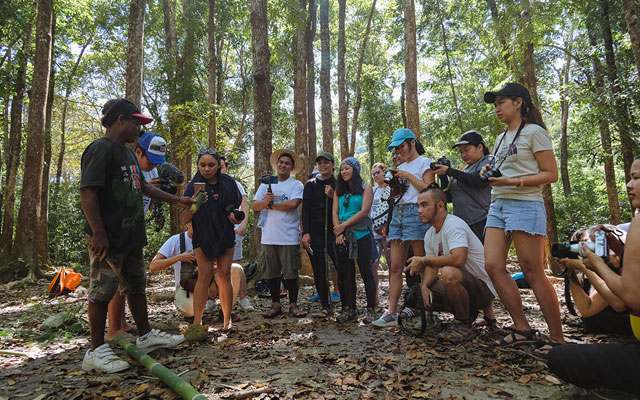
Philippine-based eco-tour operator MAD Travel is among the handful of Asian travel players who have turned to crowdfunding to tide through Covid-19; guests learning about indigenous culture from one of the local community members during the agency’s Forests and Folklore tour in the Bataan Forest in the Philippines pictured

Such is the footprint of the pandemic on tourism. Vacation hot spots have turned into ghost towns. Worldwide, tour agencies and hotels report unprecedented declines in bookings. Government-mandated shutdowns hit pause on travel, sounding the final death knell for many tourism providers. For survivors, a hemorrhage of jobs and revenue losses haunt.

For Sapa Sisters, an all-girl trek guiding company, which employs 50 staff, their offices in Hanoi and Sapa and breakfast restaurant, once a hive of activity during the peak spring season, have temporarily shuttered. The company’s homestay in Tan Van village, usually packed with tourists out on multi-day treks at this time, is also now closed. The guides, once busy herding hikers on their treks, now spend their days plowing their family’s rice fields.

Ylva Landoff Lindberg, director at Sapa Sisters Trekking Adventures, said: “Very soon after the corona outbreak in China, Vietnam closed off the border between the countries. Already during the Chinese New Year period, we started getting less bookings and more cancellations. In mid-March, we had to temporarily close down our trekking company due to Covid-19-related precautions.

“As springtime is usually our high season, we quickly got a worrying economic situation, as the global ramifications of the virus hit the travel industry in Vietnam.”

Crowdfunding the tourism scene

Against this bleak backdrop, Sapa Sisters is among a handful of Asian travel players who have turned to crowdfunding to tide through the dry tourism spell, with some incentivising their fund drives by promising hotel stays, private tours and merchandise in return.

On her decision to run a crowdfunding call, Ylva said: “We have run crowdfunding campaigns for different purposes a few times before – and with good results.”

Crowdfunding has gained traction, emerging as a financing alternative to a traditional bank loan, in part due to the economic fallout from the coronavirus. Ylva said she had been looking at taking out a private loan before pivoting to crowdfunding. Already, Sapa Sisters’ crowdfunding call on the GoGetFunding platform has received a groundswell of support, having raised over US$31,400, surpassing its US$20,000 target, with over 900 backers.

Sapa Sisters’ guides May and Chinh posing with tourists during a trek

Crediting the campaign’s success to Sapa Sisters’ supporters worldwide, Ylva said that maintaining a personal touch with clients has always been central to its business – an approach which has turned into a lifeline during these troubled times.

She elaborated: “We customise our tours to fit the travellers’ wishes and all our treks are private. We don’t do group tours. This creates a real relationship between the guide and their guests, and many keep in contact after their treks.

“We are fortunate to have a long list of previous customers that we sent our campaign to via email. We also shared the campaign on our Facebook and Instagram pages. Many of our guides and staff also helped spread the word to their contacts and friends.

“Our biggest donation came from a family who had trekked with us on several occasions. They had to cancel their booking this spring, and instead, they generously gave us a donation of US$5,000.”

Ylva said that the monies raised will cover fixed costs, including rent for offices and homestay, miscellaneous bills, and staff wages. “We will try to stretch the funds as far as possible to stay afloat until our business can open again,” she added.

Sweetening the deal

While some tour operators like Sapa Sisters are banking on goodwill to drive their crowdfunding campaign, others are sweetening the deal by offering incentives to donors.

Over in the Philippines, when Luzon entered enhanced community quarantine (ECQ) due to the pandemic, Make a Difference (MAD) Travel’s co-founder Rafael Dionisio decided to start a fund drive dubbed Feed the Farmers Today & Fund Tomorrow’s Forest on GoGetFunding.

Funds raised by the eco-tour operator, which works with marginalised communities to create authentic experiences, will cover their partner communities, who have lost their income and face a dwindling food supply due to the pause in tourism activity.

The initiative invites people to purchase trees which the communities are paid to plant so they can continue earning a dignified income. At the same time, the trees they plant contribute to their long-term goal of food security through agroforestry.

In return for their tree purchase, funders can receive online courses, tour vouchers, co-founder Thomas Graham’s book The Genius of the Poor, or hand-crafted items by the communities. Thus far, the campaign has reaped nearly 200,000 pesos (US$4,000), with 47 backers.

Dionisio shared: “We decided to run the campaign because we realised the (immediate) impact that the ECQ would have on our sustainable adventures, and consequently, the marginalised communities we work with. We needed a swift response that was simple to execute, true to our core values, and engaging enough to keep going.

“The money is not a donation to the tribe; it is a contract for hiring them to grow fruit and forest trees to address the bigger, more long-term issues of food security and climate change, which we will still face.”

Dionisio said that their campaign’s donors come from all across the Philippines, Europe and the US, ranging from family, friends, past tour guests to even complete strangers.

In the same vein, crowdfunders who give to Japan Localized, a walking tour company in Japan, can get a slice of Kyoto sent to them.

Monies raised in the company’s campaign, also on the GoGetFunding site, will be used to buy traditional Japanese paper from a local shop in Kyoto. The company’s guides will use the paper to write thank-you letters to donors, thus creating work for them. Remaining funds will go towards rent. As well, the company is gifting donors walking tour vouchers for future use.

Japan Localized founder Dai Miyamoto leading a pack of tourists on a walking tour around Tokyo during rosier times

Dai Miyamoto, owner of Japan Localized, said: “Some of our local tour guides are doing this job full-time, and they are struggling to find a temporary job during this pandemic. Local shops, especially souvenir shops for tourists, are struggling too.”

He added that his company has seen a drop of 79 per cent in bookings year-on-year in March, with zero bookings for April, following the suspension of operations.

To date, his crowdfunding plea has raked in about 270,000 yen (US$2,500) – more than half of his 500,000 yen target, from 80 backers. Dai said that he is in the midst of making a short YouTube video to publicise his campaign, and will leverage social media to spread the word.

Turning to the West

While Covid-19-related crowdfunding calls have been popping up by the dozen across the West, with a host of tour operators and hoteliers joining the fray, there are only a handful of such Asian initiatives.

Miyamoto said that crowdfunding is a way to reach out to Western markets, which make up the bulk of his client base, as the notion of giving is not ingrained in Asian mindsets.

“Asia does not have a big culture of donating. Also, in Japan, the notion of asking money from others is not popular. Crowdfunding on a global platform is one way we can reach out to a large audience,” he said, adding that the majority of his crowdfunders hail from the US.

Dionisio added: “Many parts of Asia are just about emerging economies, and crowdfunding might still be a Western or new concept.”

A tribe woman planting seedlings in the agroforest that MAD Travel is helping the tribe grow

Despite the benefits of crowdfunding, Dioniso cautioned against tourism players hopping onto the already-crowded bandwagon for the sake of doing so.

“Crowdfunding might not be for everyone. You need to crowdfund for the right reason, and you also need the right supporter base. If, like us, you have partner communities who were made even more vulnerable and marginalised by the pandemic and lockdown restrictions, and a crowdfunding campaign would swiftly meet their needs, then do so.

“Another thing you need to consider is this – if you want to reach an international audience, you have to make sure the campaign has a clear message and is impactful enough to stand out, because there is currently a lot of fundraising campaigns globally.”

SiteMinder unfurls tool to help hoteliers forecast demand

0

Hotel guest acquisition platform SiteMinder has released its proprietary data on the momentum of hotel bookings around the world, offering insights into when guests are likely to return to hotels post-pandemic, so users can anticipate demand and act swiftly to the first signs of recovery.

Sourced from the bookings of SiteMinder’s 35,000 customers, through more than 400 booking channels globally, the SiteMinder World Hotel Index shows how current hotel booking volumes in all major tourist destinations are changing when compared to the previous year.

SiteMinder’s new tool helps prepare hotels for the rebound in travel demand

Data is available at a global, country and city level to provide insight into both macro and local trends, and cater for the market-specific intelligence that hoteliers, hotel investors and travel professionals need as governments stagger travel restrictions internationally.

Mike Ford, founder and managing director at SiteMinder, said: “A lot of data exists around travel bookings, but nothing is available around hotel booking momentum specifically, and at the speed and scale that SiteMinder is uniquely positioned to provide.

“In this period of huge uncertainty, our customers are seeking a light at the end of this very dark tunnel and we know it will come at different times, as cities and nations begin to lift travel restrictions. The traditional performance indicators around hotel performance have no relevance in a world where hotels have minimal business coming in, if at all.

“Accommodation providers have always stood as the lifeblood of the travel and hospitality industries, and they will resume that role again once the Covid-19 crisis has passed. The World Hotel Index gives them the chance to prepare for their future guests by anticipating when that time will come and looking to other markets as guides in the meantime.”

Asia to drive early visitor recovery in 2021: PATA

0

Asia is predicted to spearhead a return to visitor growth across Asia-Pacific in 2021, according to newly updated forecasts from PATA.

Taking into account the impacts of the Covid-19 pandemic, PATA projects the volume of arrivals to return to more than 610 million in 2021. This initial recovery is expected to see growth of around three percent above 2019 levels and herald a return to the initial forecast levels shortly thereafter.

Asia is expected to see a rebound in arrival numbers in 2021, with intra-Asia travel a dominant driving force for growth in the region

This growth in international visitor arrivals (IVAs) is likely to vary by source regions, with Asia expected to rebound with the fastest growth rates relative to 2019, as shown below. The Americas, which is expected to show the lowest contraction in its rate of growth in 2020, is forecast to continue with much weaker growth rates over the years to 2024.

During the expected recovery phase in 2021, Asia is expected to generate significantly improved arrival numbers, rebounding from a loss of almost 104 million visitors between 2019 and 2020 to growth of 5.6 per cent in 2021 relative to 2019, seeing over 18 million more arrivals over that period.

Arrivals into the Americas are expected to be relatively strong in 2021, with a net increase of 2.9 million visitors, compared to 2019 figures. This is expected to be driven largely by intra-regional flows which, after a decline of 4.3 million arrivals between 2019 and 2020, are expected to rebound and generate more than 2.5 million arrivals into the Americas relative to 2019.

By the end of 2021, total IVAs into the Americas are projected to be close to three percent above the volume received in 2019. Central America is clearly the strongest generator of arrivals between 2019 and 2021, with more than three-quarters of the additional IVAs coming from that source sub-region alone.

The top five source sub-regions for the Americas between 2019 and 2021 generate a sufficient volume of arrivals into the region to offset continued losses from other source sub-regions and markets.

Into and across Asia, the largest volume increases between 2019 and 2021 are also predicted to be intra-regional for the most part, with a rebound from a loss of almost 98 million arrivals between 2019 and 2020 to an increase of over 17 million between 2019 and 2021.

All the source regions of Asia are projected to show growth between 2019 and 2021, with Europe and the Americas in particular, adding increases in arrivals of 2.5 million and 1.7 million, respectively over that period. By the end of 2021, Asia is predicted to have visitor arrivals numbering five per cent more than in 2019.

The strongest growth in visitor arrivals into Asia is largely out of the Asian source sub-regions, with strong assistance from Central America and East Europe. Together, these top five source sub-regions are predicted to account for 84 per cent of the overall growth in arrivals into Asia between 2019 and 2021. Over three-quarters of that growth volume is projected to come from three of the five Asian source sub-regions.

The Pacific, as a destination region, is likely to have more subdued growth between 2019 and 2021, almost reaching the same volume of IVAs into the region as in 2019. However, it is not expected to return to growth beyond that until 2022 when visitor arrivals are expected to increase by 10.5 per cent above those of 2019.

While arrivals out of Asia are expected to be substantial in 2021 relative to 2019, they are not expected to be substantial enough to offset losses from other source regions, especially the Americas. In 2022, however, all source regions are predicted to deliver substantial growth in IVAs, adding an aggregate increase of a little under three million over the volume received in 2019. At that time, Asia will be the primary source region, delivering 32 per cent of the expected 30.7 million visitor arrivals into the region.

While North America is expected to deliver the most IVAs into the Pacific in 2022, the strongest incremental growth in arrivals between 2019 and 2022 is predicted to come from North-east Asia, followed by South-east Asia and then Oceania. The top five source sub-regions into the Pacific in 2022 are expected to deliver close to 83 per cent of the additional IVAs over that period.

PATA CEO Mario Hardy said: “While we can expect to see severely reduced visitor arrivals into Asia-Pacific this year, and for some through 2021 as well, there is hope going forward. The travel and tourism sector as we have seen during past calamities, is nothing if not resilient, and we expect to see growth beginning in 2021 and continuing on thereafter. That makes the assumption of course that this pandemic and its associated negative effects are contained and over by then.

“As we rebuild the travel and tourism sector into the future, it is worth considering whether we want it to be ‘business as usual’ or whether we can initiate new policies, procedures and practices that will enable us to see beyond the vision of growth at all costs. Perhaps now, we can give real meaning to the oft-quoted mantra of ‘people before profit’ and create a sector that generates employment and business opportunities first that can then deliver memorable experiences to visitors across Asia-Pacific and indeed the world.”

Thailand looks to court Malaysian market once travel ban lifts

0

Tourism Authority of Thailand (TAT) has intensified its efforts on social media to stay connected with Malaysians – its second largest inbound market after China – in hopes that the destination will be the preferred choice for Malaysian holidaymakers once travel restrictions are lifted.

Malaysians have been under the movement control order (MCO) since March 18, and health authorities have indicated that travel bans may continue to be enforced even after the MCO is lifted.

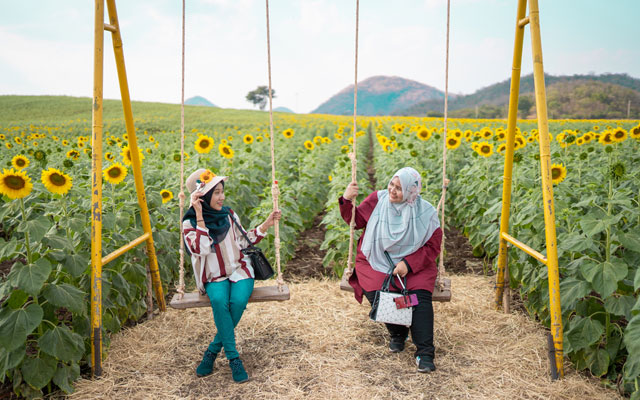
Thailand eyes Malaysian tourists once travel restrictions are lifted; travellers at the Saraburi Sunflower Field in Khao Yai, Thailand pictured

Nongyao Jirundorn, TAT director for Malaysia, said that the tourism board has uploaded many videos on Thai cuisine, as well as attractions and activities across Thailand, on their social media platforms since March.

“We have chefs giving lessons on how to make mango sticky rice and other Thai favourites, as well as VR videos on selected destinations and attractions, offering travellers ideas on where to holiday after the pandemic ends and when people start travelling again,” she said.

Nongyao added they are also conducting webinars for Malaysian partners to keep them updated on its latest products and to stay in touch with them.

According to a survey conducted by TAT, most leisure tourists visit Thailand primarily for its food, shopping, wellness and spa, followed by attractions and activities.

Last year, Thailand recorded some 4.166 million Malaysian tourists, of which around 70 per cent were repeat visitors.

Trip101 reports rise in vacation rentals

0

Online travel guide Trip101 reported a recent increase in the average number of nights per booking for vacation rentals in the US, Japan, Canada, and other major countries – from approximately three nights to eight nights – amid a global shutdown to stem the spread of Covid-19.

The trend emerged around the second week of March, in the thick of heightening response from governments around the world, and ahead of state of emergency declarations in the US (March 13) and major cities in Japan (April 7), according to Trip101.

Vacation rentals have seen a surge in bookings amid the pandemic, says Trip101

The findings are in line with a recent increase in long-term bookings reported by vacation rental platforms, said Trip101. According to these platforms, there have been more hosts offering longer-term stays and dangling discounts to people seeking accommodation since the Covid-19 outbreak.

Kei Shibata, CEO and co-founder of Venture Republic, which owns Trip101 and Travel.jp, said: “The surge could be related to the number of individuals needing to self-quarantine and tourists who have been stranded under strict travel restrictions.’

8 in 10 Singaporeans tap into vacation memories to relieve work stress: Expedia

0

Homebound holidaymakers can still reap the psychological benefits of travel, and find relief from vacation deprivation, by tapping into cherished memories of holidays past, amid this unprecedented time of travel restrictions, according to Expedia’s latest Vacation Deprivation Study.

Conducted by Northstar Research Partners on behalf of Expedia, the study, which surveyed 11,000 individuals across 19 markets, found that a large majority (93 per cent) of Singaporean working adults indicated that taking regular vacations is important for general health and well-being.

Relieving happy holiday memories can boost one’s mental health: Expedia

Additionally, 88 per cent said they feel rejuvenated and have a better outlook on life after vacations, while a significant 82 per cent indicated that they regularly take vacations to improve mental wellness.

The company has termed the positive psychological effects of travel, as affirmed by the study’s findings, the Vacation State of Mind.

While travel plans are clouded with uncertainty at the moment, the online travel giant believes that the yearning for that much-needed getaway can be lessened with techniques that prolong this state of mind.

One way is to tap into vacation memories when feeling stressed at work. Some 79 per cent of the 1,000 Singaporean residents polled between March 4 and 27 indicated that they had done so in order to relax during such stressful times.

Approximately two-thirds (74 per cent) also looked at photos from holidays on their phones when feeling overwhelmed, while a slightly lesser number (71 per cent) took the step of surrounding themselves with pictures, mementos and souvenirs from their vacation.

Expedia found that these methods — which they termed vacation top-up techniques — were more commonly adopted by millennial parents.

This group shared that speaking with their family, including their children, proved just as effective as the use of social media in reconnecting with happy holiday memories.

Based on the study findings, Expedia recommended five ways for Singaporeans to prolong their Vacation State of Mind:

  • Speak with friends or family who you’ve been on trips with about your past vacations over video call platforms
  • Look at pictures of past vacations on social media
  • Plan for your next vacation, save favourite flight and hotel itineraries as you go along
  • Wear the clothes that were bought on past vacations while working from home, have themed outfit days
  • Look at souvenirs from past trips

Across the Asia-Pacific region, the most effective vacation top-up techniques were engaging in dialogue with others on vacation experiences. Speaking with family (52 per cent), travel companions (50 per cent) and friends (47 per cent) triggered happy memories for many respondents in the region.

In India and Thailand, a preference for listening to music from the vacation was found among 69 per cent and 57 per cent of respondents, respectively. Meanwhile, 63 per cent of the respondents from Malaysia and 56 per cent of those from South Korea said they enjoy browsing through printed photos from their trips.

Lavinia Rajaram, APAC head of communications, Expedia, said: “Fostering a Vacation State of Mind can provide relief from the growing feeling of vacation deprivation and encourage family connections as well as positive emotional responses.”

Philippine hotels work to cut OTA commissions

0

Filipino hoteliers are looking to renegotiate the commission of OTAs for a period of six months to one year so they can recoup certain losses from Covid-19, but the idea has been met with resistance by online agencies.

Hotel Sales and Marketing Association (HSMA) president Christine Urbanozo-Ibarreta said OTAs “stand by their commission rates” which run as high as 25 per cent, even though HSMA requested for a temporary reduction to at least a maximum of 15 per cent “as (our members) are also trying to get back the clients”.

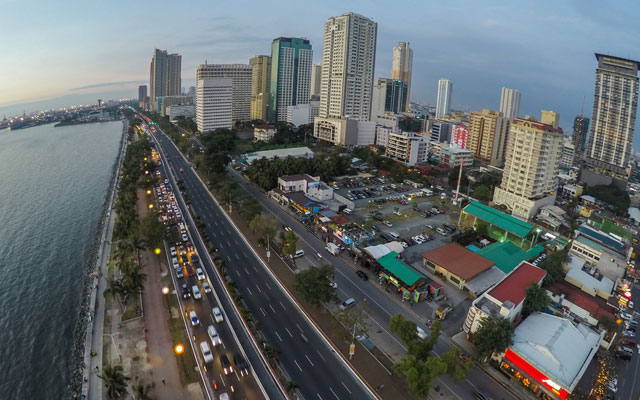
Hotels in the Philippines aim to cut commission of OTAs; Roxas Boulevard in Manila pictured

As part of the lockdown in the Philippines, all hotels and resorts have been closed since mid-March, except for certain properties having existing long-stay guests and those who were approved to host medical frontliners and returning overseas Filipino workers on quarantine at minimum rates.

Urbanozo-Ibarreta said HSMA, which represents over 120 hotels and resorts, has started the negotiations with selected OTAs “who will cooperate and work (with us) during the recovery stage”.

She noted that OTAs are affected by the fortunes of hotels, as the agencies receive commission fees from the hotels they sell via their platform.

OTA themselves determine the commission that they get from hotels and resorts. They have a wider scope of selling hotel keys and promoting the hotels to targeted markets, and typically spend five to 10 per cent of the fund on marketing activities.

In contrast, traditional travel agencies get a 10 per cent commission, but they have contracted rates with hotels. For example, a rack rate of 7,500 pesos (roughly $150) per room is extended to traditional travel agencies for 3,600 pesos for FITs, and 3,200 pesos for groups of 10 rooms or more.

There are a handful of hotels and resorts that don’t work with OTAs which Urbanozo-Ibarreta said is a business decision made by management, but she said that OTAs “are useful for lean dates on which they pick up bookings for us hoteliers and they market to a wider audience”.

China hotels see uptick in demand over May Day holiday

0

Some hoteliers in China are bracing for a spike in domestic activity during China’s week-long May Day holiday, which takes place from May 1-5, with Ctrip predicting that the period is expected to see 90 million domestic trips.

The projection may be a steep decline from the number of domestic trips taken during the annual holiday in 2019 (195 million), but signals the start of recovery for China’s tourism sector ravaged by the coronavirus.

China hotels brace for May Day uptick, with Cordis Dongqian Lake Ningbo (pictured) to see high occupancy over the week-long holidays

The expected rebound comes despite limitations imposed – students are requested to stay within their own city for 14 days, while attractions have to ensure daily visitation is below 30 per cent of maximum capacity.

William Hall, an independent hotelier and former general manager of Crowne Plaza Chengdu City Center, believes there are green shoots as the recent Qing Ming holiday showed a surge in demand in some tourist areas.

Some 43 million domestic trips were recorded during the recent Qing Ming Festival in China, according to data from the China Tourism Academy.

Hall predicted that domestic tourism would be “good” during the May Day holiday, while Chinese travellers will still hold a “wait and see” mindset towards overseas travel. “Everyone is eager to travel, but in a safe and secure manner,” he said.

Sor Hoon Lim, regional vice president for sales and marketing, Asia Pacific, Langham Hospitality Group, shared that bookings for the May holidays in China are promising and its resorts are doing well.

“Our hotels in Haikou and the city are expected to be busy during this holiday period. Our resort Cordis Dongqian Lake Ningbo, in particular, will be running high occupancy over the May Day holidays. In China, more people are starting to travel domestically, within the surrounds of the province or inter-city self-drives in China,” she said.

“People are seeking holidays where they can be close to nature, or resorts where they have more space, are popular. Business in Shanghai is gradually improving and F&B business in the city is definitely picking up, as more people are dining out (while still practicing social distancing).”

In south-west China, hotel business is picking up too. Niccolo Chengdu general manager Michael Ganster said that he is starting to see green shoots appear in the popular tourist destination.

“We experienced 100 per cent occupancy for the first three days of the May Day holiday period in 2019, but forecast an occupancy of about 65 per cent (this year),” he said.

“Leisure travellers are mainly from surrounding cities. Long-distance travel across provinces is still not high due to government restrictions, with the exception of the more popular leisure destinations such as Sanya and Yunnan.”

Niccolo Chongqing’s general manager, Giorgio Olivotti, shared that the hotel enjoyed 80 per cent occupancy for the May Day holiday last year. This year, it forecasted an occupancy of 55 per cent.

He said that his current guests mostly hail from the surrounding cities such as Sichuan as “people like travelling a distance”, adding that at present, guests favour travel by car over train or air.

“For cities like Beijing, Shanghai, and Guangdong, as well as Jiangsu and Zhejiang provinces, which are also our key sources with limited volume now, we expect recovery may be in 4Q2020, but we will need to monitor the progress of Covid-19.

“People appear to prefer to stay in hotels in the suburbs and outskirts, rather than hotels located in the city centre. They are also beginning to focus on health and well-being, like the quality of air, food, and water.”

However, not all stakeholders will get to cash in on the upcoming Golden Holiday. In Beijing, Taishan Hotel Beijing has temporarily shuttered since last week due to a lack of revenue and to ensure safety.

However, its general manger Chris Duncan told TTG Asia that the company’s other properties are open and those in Shandong Province are doing quite well.

He called Ctrip’s prediction of 90 million domestic trips for this year’s May break “very optimistic”, based on comments he received from other hotels, and the current travel restrictions for Beijing.

“It could be the case for rural holiday destinations, but my personal feeling is that the general population is still very cautious to travel outside their hometowns over the May holiday period,” he said.

He added that Beijing is currently not seeing any green shoots, with regulations changing regularly and the tight restrictions on both FITs and corporate travellers to the city.

“Prior to (Taishan Hotel Beijing’s) closure last week, we saw no forward bookings, but this could be due to the tight restrictions in Beijing, coupled with the requirement that all arrivals into Beijing, except from the Tianjin and Hubei provinces, need to have a hospital clearance certificate.”

However, Duncan is hopeful that when travel restrictions are lifted, there will be an influx of corporate travellers, although he noted that there will be fewer attendees for events. “Travellers will be very cautious, but I believe people will return through necessity, and will travel in coming months to build relationships again and improve their bottom lines.”

On the other hand, it may take a longer time for travel agents to rebuild their business. According to Century Holiday Travel Group general manager, Creamy Chen, the company is still in “hibernation mode”, with no concrete plans for resumption of operations.

“Currently, I understand only Beijing announced that agents may organise city tours. Moreover, agents (are not benefitting from) the surge in domestic travel as travellers only opt for self-drive holidays around the areas they reside,” she said.

BCD Travel’s managing director for Greater China, Jonathan Kao, said that changing traveller preferences may mean lesser earning opportunities for tourism providers.

He explained: “For the May holidays, the popular belief is that travel will come back to life due to pent-up demand, with everyone staying home for so long. But it is also expected to be the worst holidays in the past five to six years, based on price.

“Travellers are looking more for wilderness and places they can drive to that are not too crowded; and maybe opting for individual villas or accommodation. They are also seeking out mainly outdoor activities, so it is a bit different from their requirements in the past.”

Two KL properties offer alternatives to Ramadan buffets

0

Unable to provide buffet dine-ins during the Ramadan period, two hotels in Kuala Lumpur have switched to offering food takeaways and delivery options for the breaking of fast.

Sheraton Imperial Kuala Lumpur Hotel, for instance, offers a wide selection of a la carte dishes, as well as set menus suitable for four to five people, all created by the hotel’s executive sous chef Hazif Ramli and his team.

Guests may not be able to dine in at Sheraton Imperial Kuala Lumpur, but they can still enjoy the hotel’s culinary dishes via delivery this Ramadan

Mel Hamid, manager, digital & marketing communications at Sheraton Imperial Kuala Lumpur, shared: “The dishes are specially crafted by our top chefs, using only premium ingredients and we have reduced the prices to reach more customers. With delivery and pick-up services, we are bringing convenience to our guests who are not able to visit their favourite restaurants.”

The property has also forecasted a reduced F&B revenue for this Ramadan, as compared to the previous Ramadan, when revenue was 20 per cent above projection.

Another five-star property in the city, Le Meridien Kuala Lumpur, offers six curated set menus by executive sous chef Budiman and his team of culinary experts. Delivery and pick-up are also available.

Traditionally, Ramadan buffets make up 30 per cent of the property’s F&B revenues.

However, Le Meridien Kuala Lumpur’s general manager, Michael Delargy, said: “The situation is so unique, hence, there are no real revenue expectations, but a desire to allow our chefs to demonstrate their skills, and allow our guests to enjoy their Buka Puasa (breaking of fast).”

“The expectation this year is really about doing our best to allow guests at home to sample the quality and style of dishes that they usually would expect at the hotel,” he added.

Malaysia is still under a strict movement control order (MCO) and there are no dine-ins at least until May 12. It also remains to be seen if the MCO will end as scheduled, or be extended for a fourth time.

Thailand’s tourism operators turn to agriculture, food deliveries

0
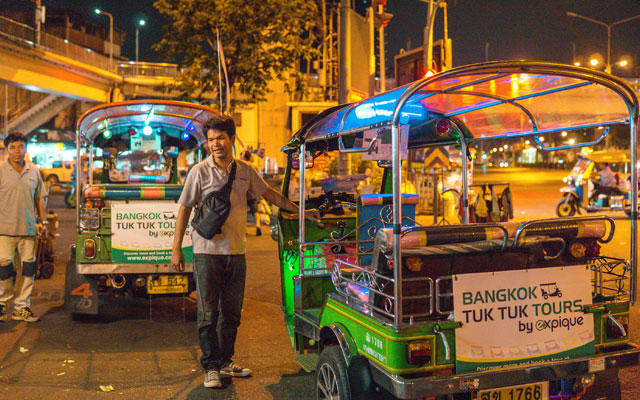
Expique's tuk tuk drivers have returned to their hometowns to farm as there are no tourists

Thailand’s community-based tourism (CBT) operators and beneficiaries are proving their resilience as tourism grinds to a halt amid the coronavirus, with affected communities returning to their main economic activity of agriculture or diversifying to food delivery to sustain livelihoods.

“For these communities, the money that they gain from community-based tourism is still a secondary source of income,” explained Somsak Boonkam, founder and CEO of Local Alike.

Expique’s tuk tuk drivers return to their hometowns to farm as there are no tourists

“They still maintain their core business of agricultural production. But, the latter has also been impacted because they have fewer customers, and face logistical challenges in moving products due to the government restrictions at the moment.”

Somsak helped spearhead the CBT movement in Thailand when founding his award-winning company seven years ago. Local Alike now works with more than 100 local communities in 46 provinces and has generated over 54 million baht (US$1.6 million) to benefit local communities since its inception.

Somsak: exploring numerous revenue streams to help CBT communities in this trying period

Asked if the loss of tourism income worries communities, and how they plan to adapt, Somsak stated that most communities are using the downtime to prepare for the rebound.

The Local Alike team is also trying to help communities create other streams of income. Last August, Somsak founded the Local Aroi community fine-dining initiative, which they turned into a food delivery service since this April.

“We have to work harder on this (initiative). We haven’t reached our targets with the food delivery because the fixed costs are high. We’re also experimenting with e-commerce for local community products on our social media channels,” he said.

Another segment of the industry affected are freelance guides from local communities. “All our 20 guides are freelancers and about 50 per cent rely almost exclusively on guiding for their income. Most of them have been severely impacted – a few are venturing into new businesses,” said Simon Philippe, founder of Expique tuk tuk tours in Bangkok.

“As a result, half of our drivers have returned to their hometowns (mainly in Isaan) either to save costs or because they have other opportunities to earn there – normally agriculture.”

He added: “I think it is safe to say our drivers have lost at least 70 per cent of their income. Some applied for the 5000 baht from Social Security. A few received it but most did not hear back or got rejected.”

Expique is partnering with Food for Fighters, a non-profit food delivery service for medical personnel, to create alternative income for its drivers.

However, he added, they are “slightly cautious” about investing too much effort and resources into their food delivery venture as they do not see long-term prospects in the sector.