TTG Asia
Asia/Singapore Sunday, 12th April 2026
Page 968

First person: Playing tourist in my own backyard

0

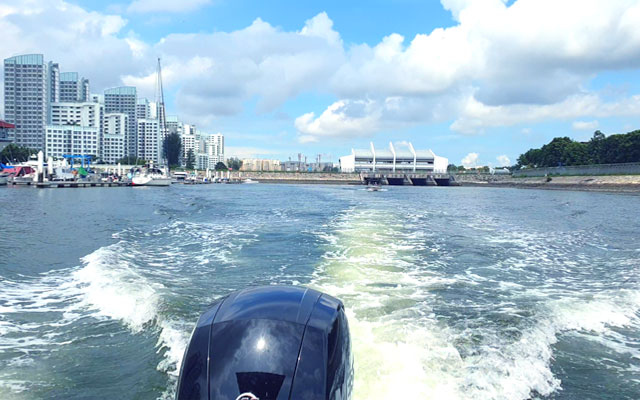
We are on board a half-cabin cruiser, in the midst of the water border that Singapore shares with Malaysia, skimming past kelongs, mangrove swamps and wild boars scavenging for food on deserted beaches. Overhead, we spot a white-bellied sea eagle gliding through the air every now and then, and a low-flying Emirates aircraft – a rare sight these days – cruising past the skyline. This is home, truly… like nothing that we’ve seen before.

Bringing us on this joyride exploring kelongs, or floating fish farms, in the north-eastern banks of Singapore is Robin Loh, founder of Let’s Go Tour Singapore. Priced at S$450 (US$330) for a maximum of five persons, the two-hour Let’s Go Kelong Tour was a breeze to put together for Loh, who has spent over 20 years fishing for leisure in this coastal area.
Kelong outings hosted by Let’s Go Tour Singapore let residents see a different side of the island city

On this balmy Friday afternoon, our tour starts with a few Covid safety measures. We are given a contact tracing form to fill out. According to Loh, the names are compiled and sent to the Singapore Tourism Board on a weekly basis. Masks have to be kept on throughout the tour – for both the guide and guests.

Temperature checks are also part of the drill. We cleared a temperature check at the entrance of the Marina Country Club, where Loh’s boat is parked, and checked in via SafeEntry. As part of further safety measures, Loh said boat seats are wiped down using disinfectant at the end of each day.

The boat tour is part of the agency’s This Is Home series, a collection of educational and interactive tours made for locals. Loh turned to domestic tourism to keep his tour business afloat amid the travel slump. Now, it seems the tides are turning for Loh, with the kelong tour reaping a harvest, netting about 30 bookings within less than two months of its launch.

In this Covid era, privately-hosted boat tours that promise ultimate safety have proven an attractive lure, especially with family groups, as people are “very scared” of contracting the virus. When international tourists start to trickle back, Loh said, this new collection of products could be marketed to them as “whatever is suitable for locals would be a hit with foreign tourists”.

Let’s Go Kelong Tours are all led by Loh, as he’s the only one in the agency who knows how to drive a boat

Today’s tour brings us on a journey to see sights beyond the picture postcard image of the island city. Notable sightings along the way include the Singapore offshore islands of Pulau Ubin and Pulau Tekong, cluster of kelongs, a high-tech fish farm, and the now-infamous S11 dormitories, aka Singapore’s largest Covid-19 cluster. From our vantage point, we espy the cramped conditions of the dorms, fringed by double barbed wire fences, not unlike that of a prison or detention camp. Just across, blocks of government-commissioned flats stand tall, unfenced. I’m guessing this is what inequality looks like.

Along the tour, we learn fascinating nuggets about kelongs and why traditional fish farming is a “risky” business. Loh regales us with riveting anecdotes of his sightings at sea from two decades ago, involving smuggling and high-speed boat chases. Unlike bigger group tours, where dialogue is usually a one-way street, we get to fire away our burning questions at the chatty and affable Loh, who expertly fields all our queries.

A snapshot of what Loh called the “last full kelong in Singapore”, a favourite parking spot for birds

Our trip concludes with a stopover at what Loh called the “last full kelong in Singapore”. Unlike other kelongs, this one has two long rows of wooden stilts built in a V-shaped structure to herd fish into the lift net hoisted at the centre where the kelong stands. These small fishes are then fed to farm fishes, which are harvested for sale. When we floated the idea of incorporating a land visit to one of the kelongs for a more immersive experience, as opposed to just viewing from afar, Loh said the concept is not feasible now as there is no dock on the site, but added that they are exploring the idea.

For those craving to return to the days of yore, or those curious about what Singapore circa 1960s looked like, the tour harkens back to the city-state’s humble beginnings as a Malay fishing village. As engaging as it is educational, the boat tour makes a nice change of scenery from the usual land tours, while spotlighting a slice of Singapore’s history forgotten amid the march of rapid urbanisation.

When we finally return to shore, the whole vibe around the jetty, not to mention the old-school, non-airconditioned F&B venues within the compound, makes us feel like we are still stuck in a time warp. But as we make our way out of the premises, we are stopped at the entrance by the security guard who gestured towards the designated exit, prompting us to check out via SafeEntry, and reminding us once again that this is 2020.
Sala Hospitality jumps aboard private cruises trend

0

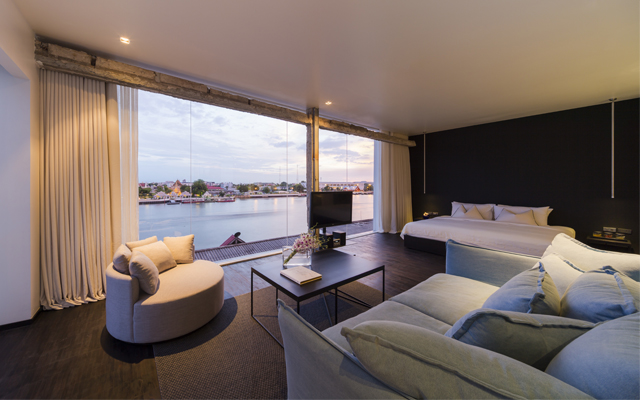
Thailand’s Sala Hospitality Group has partnered boat rental company True Leasing to create private cruise packages that pair stay and dining experiences with a sightseeing trip along the Chao Phraya River in Bangkok.

The cruise aboard a classic mahogany Hacker-Craft boat will sail past the city’s landmarks such as the Grand Palace, Wat Pho and Wat Arun. Escorted by a boat captain, all boats offer seating for up to five guests – ideal for couples, families and groups of friends.

Sala Hospitality Group partners with True Leasing to offer private tours aboard a classic mahogany boat 

Guests can choose from two curated packages that combine cruises and a five-course menu crafted by the chefs at the sala rattanakosin Bangkok’s Eatery and Bar, with one also including overnight stays at the hotel.

Lunch or dinner for two, along with a private 30-minute Chao Phraya classic boat cruise is priced at 9,100++ baht/US$290++ (down from the standard rate of 12,900++ baht). Alternatively, guests can combine their meal and a 30-minute cruise with an overnight stay in a wat arun river view suite, including breakfast for two the following morning for 16,999++ baht (reduced from the standard rate of 24,400++ baht).

Bangkok to get second Centra by Centara hotel

0
Senior management teams from Centara Hotels & Resorts and and Amorn Patana Asset ink deal for a second Centra by Centara hotel in Bangkok at a signing ceremony held at Centara Grand & Bangkok Convention Centre at CentralWorld

Thailand’s Centara Hotels & Resorts and Amorn Patana Asset have signed a hotel management agreement for Centra by Centara Hotel Bangkok Phra Nakhon, slated to open in July 2022.

The ongoing project comprises the renovation of an existing building in parallel with the construction of a new building next to it to form an inner courtyard.

Senior management teams from Centara Hotels & Resorts and and Amorn Patana Asset ink deal for a second Centra by Centara hotel in Bangkok at a signing ceremony held at Centara Grand & Bangkok Convention Centre at CentralWorld

The 170-key hotel will be housed in two low-rise buildings, with accommodation ranging from 21m2 rooms to 44m2 for the largest Junior Suites. Facilities include a lobby lounge, restaurant, outdoor swimming pool in the courtyard, fitness centre, banquet and meeting facilities.

Centra by Centara Hotel Bangkok Phra Nakhon is the eighth Centra by Centara-flagged property in Thailand, and the second in Bangkok, after the Centra by Centara Government Complex Hotel & Convention Centre Chaweng Watthana.

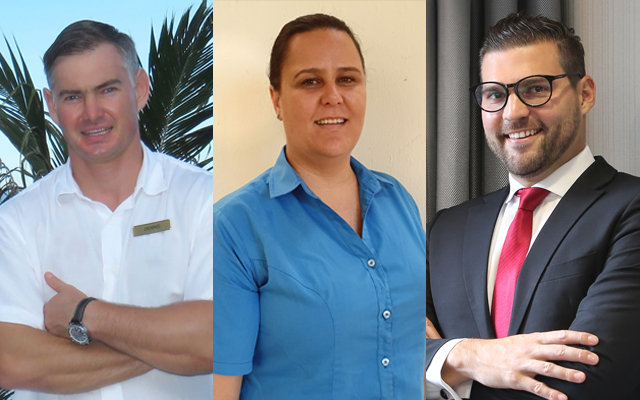
Avani makes six GM appointments

0

Last-minute bookings buoy APAC travel market

0
Teen Asian women standing with luggage or suitcase at the window watching aircraft taking off in the international airports in Thailand. Asian girl at International Airport.

The Covid-19 pandemic has shrunk flight booking lead times across the Asia-Pacific region since March 2020, with the last-minute booking trend led by India and Thailand, new data by Amadeus has shown.

According to Amadeus’ first Covid-19 Travel Insights bulletin, flight bookings across the region have been made 17 days later on average during the pandemic, compared to the same period in 2018 and 2019.

Asia-Pacific records a region-wide drop in booking lead times, led by India and Thailand: Amadeus

Indian travellers appear to be the most last-minute in the region when it comes to booking flights – making flight bookings on average only 10 days before their departure date between March-July 2020. This is followed by Thai and Singaporean travellers, who have been making bookings on average 21 and 25 days prior to departure during the pandemic.

The Amadeus bulletin also found that overall booking lead times for international and domestic flights combined have decreased during the Covid-19 pandemic across all ten of the Asia-Pacific countries that were studied, except Malaysia where there has been no noticeable change.

India, Australia, Thailand and New Zealand have seen the most significant changes in traveller behaviour, with decreases of 68 per cent, 54 per cent, 53 per cent and 51 per cent respectively in flight booking lead times compared to pre-Covid-19 levels. Even in Japan – where booking lead times have remained the longest in the region at 53 days – the booking window has contracted by 14 per cent compared to before the pandemic.

Cyril Tetaz, executive vice president, airlines, Amadeus Asia Pacific, said: “We expected that a greater number of passengers would prefer to book last-minute in light of the uncertainties and changing travel restrictions imposed by the Covid-19 pandemic, and this has been borne out by our flight booking data across Asia-Pacific.

“This has significant ramifications for our industry as it looks to rebuild. For a start, airlines, hotels and tour operators now have a much shorter window of opportunity to engage travellers, and urgently need to adapt their marketing and business strategies to cater to the nuances of the last-minute market more than ever before.

“The old methods of using historical data to predict demand and income are no longer effective in the Covid-19 era, either; with so many bookings now left to the last minute, travel businesses will need to increasingly rely on reliable real-time data instead, and build flexibility into every aspect of their day-to-day operations, so that resources, systems and services can be seamlessly scaled up and down as demand fluctuates at short notice, without having any impact on the traveller’s experience.”

Amadeus’ Covid-19 Travel Insights bulletin also looked into the impact that the pandemic has had specifically on domestic flight bookings. Whilst most markets in the region followed a similar pattern of condensed lead times for domestic flights in the Covid-19 era, travellers in Malaysia and the Philippines have so far bucked this trend.

In recent months, Malaysian travellers in particular have been making domestic flight bookings much further ahead than they were typically doing before the pandemic hit – booking domestic flights, on average, 51 days ahead of their departure date between March-July 2020, compared to the country’s average booking lead time of 28 days for domestic flights prior to the Covid-19 outbreak.

According to Amadeus’ anonymised data, the same is true of Filipino travellers too, whose average booking lead time has increased by 22 per cent for domestic flights during the pandemic.

“Whilst in general we have seen the same pattern of much shorter lead times on domestic flight routes in Asia-Pacific, Malaysia and the Philippines are two important exceptions where travellers are actually booking domestic flights further ahead than they previously would have done. This could, in part, reflect particularly strong concerns from Malaysian and Filipino travellers about the safety of travel and the security of domestic bookings,” said Tetaz.

“Whatever the reason, travel companies in these markets will clearly need to go the extra mile to lure back hesitant domestic travellers, which is going to be a critical part of every country’s recovery, especially in the short-term.”

Nepal set to welcome foreign tourists from October

0

Oakwood turns residences into workspaces

0
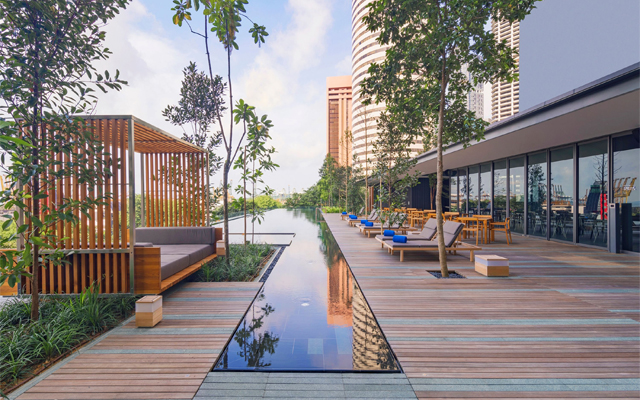
Oakwood Premier AMTD Singapore - Outdoor Infinity Pool

As the remote working trend gains pace, Oakwood is now offering a day-use room package across 17 properties in Asia-Pacific.

The Work from Oakwood package caters for guests who seek personal space and residential comfort, alongside conducive work areas and amenities. Guests can avail a well-equipped private kitchenette, as well as each property’s recreational facilities, such as the fitness centre and pool, where available.

Remote workers seeking a change of scenery will soon be able to book a day-use package at the Oakwood Premier AMTD Singapore

Available from 07:00 to 19:00 daily, each package is inclusive of complimentary Wi-Fi, complimentary morning and afternoon snacks alongside all-day coffee and tea; black and white printing of up to 30 sheets of documents daily (cumulative); 20 per cent off colour printing; and 20 per cent discount at the property’s owned restaurants, if any.

Participating properties are: Oakwood Hotel & Apartments Brisbane (Australia), Oakwood Residence Shanghai (China), Oakwood Apartments Sanya (China), Oakwood Premier Prestige Bangalore (India), Oakwood Residence Whitefield Bangalore (India), Oakwood Premier Cozmo Jakarta (Indonesia), Oakwood Apartments PIK Jakarta (Indonesia), Oakwood Hotel & Residence Surabaya (Indonesia), Oakwood Residence Cikarang (Indonesia), Oakwood Hotel & Residence Kuala Lumpur (Malaysia), Oakwood Hotel & Residence Sri Racha (Thailand), Oakwood Residence Sukhumvit Thonglor Bangkok (Thailand), Oakwood Suites Bangkok (Thailand), Oakwood Residence Sukhumvit 24 Bangkok (Thailand), Oakwood Residence Hanoi (Vietnam).

In Singapore, a package will be launched soon at the Oakwood Premier AMTD Singapore, while a day-use option at the Oakwood Studios Singapore comes with a minimum booking of seven days.

MATTA Fair 2020 goes virtual route

0

The Malaysian Association of Tour and Travel Agents (MATTA) will hold its first-ever online B2C travel fair, from September 23-30, as part of a bid to kickstart the country’s tourism recovery from the impact of Covid-19.

The MATTA Fair Online will feature mainly domestic travel packages by about 100 participating exhibitors from across the country. The focus of the online fair is on domestic travel, with a tagline Buy Now Travel Later.

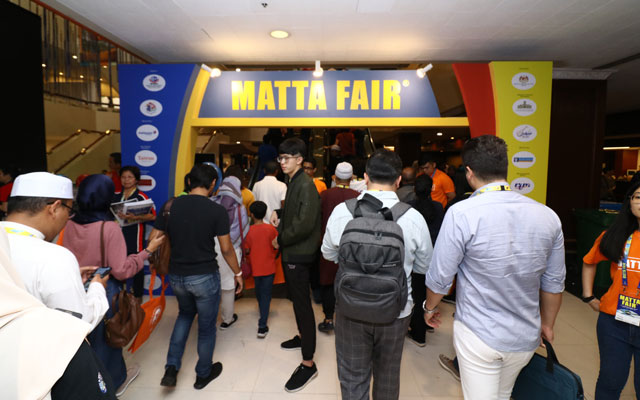
MATTA Fair will take place in a virtual format for the first time this year; a previous MATTA Fair pictured 

MATTA secretary-general, Nigel Wong, shared that MATTA had chosen an online format this year for the annual fair, which traditionally has been held physically, to provide greater convenience to the growing segment of tech-savvy domestic travellers. He foresees rising demand for online travel bookings when borders reopen to leisure international travellers.

Plans for a two-day physical B2C MATTA Fair in Kuala Lumpur this November is also underway.

As part of its next phase of recovery, MATTA has recently developed a B2B platform to connect its members to international buyers. “At the moment, we are onboarding suppliers including product owners and tour operator packages,” said Wong, adding that they hope to launch the platform sometime next year.

PATA offers free online tourism training

0

PATA has launched an e-learning platform for travel agents, tourism professionals, and destination marketers who want to refresh their knowledge, learn new skills and stay relevant.

The destination platform is developed and promoted within the OTT agent training platform, which is accessed by over 150,000 travel professionals worldwide.

The free online courses allow participants the opportunity to watch videos, complete assignments and earn a certificate while learning from travel professionals and experts. Current coursework is available for Palau, Kenya, the Marianas, Tahiti, Bangladesh, Guam, Kiribati and Macau, China.

PATA CEO Mario Hardy said: “The current pandemic has allowed many tourism professionals to take this opportunity to increase their knowledge and education, thus improving their careers and products. Furthermore, destinations are struggling during these unprecedented times to find meaningful avenues to engage with various stakeholders.

“Participating in the PATA eLearning Platform is the perfect opportunity for travel professionals to furthermore develop insights into various destinations, while destinations can effectively engage with travel professionals in a meaningful manner.”

As part of the launch, PATA government members have the opportunity to participate on the eLearning Platform by uploading free training courses onto the platform until March 2021. Courses can be up to 10 pages of informative insights for travel agents and tourism professionals. At the end of the course, participants will be asked to complete a short quiz to test their knowledge and receive a certificate of completion.

PATA government members who wish to keep their course on the training site after March 2021 can do so by paying an annual fee of £1,750 (US$2,240).

KidZania KL inks exclusive deal with Klook

0
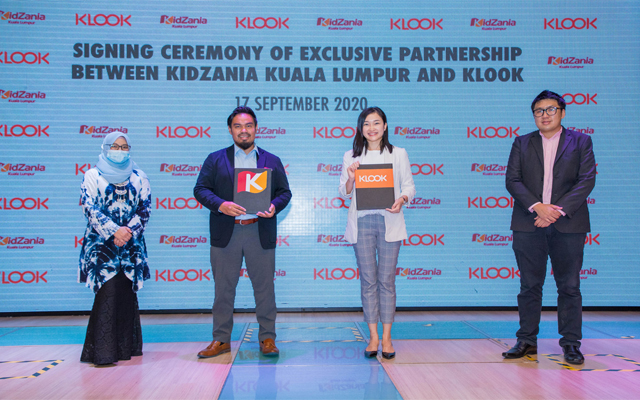
Kidzania KL X Klook Signing Ceremony

KidZania Kuala Lumpur (KL) has signed an exclusive online travel agent (OTA) partnership with Klook to co-invest in initiatives to enhance and refresh the visitor experience at the indoor children’s theme park as well as curate marketing and promotional activities.

In support of KidZania KL’s mission to provide interactive and inspirational role-playing experiences for kids aged four to 14, Klook will also develop an interactive experience zone that would encourage kids to explore and be inspired by the journey of building a tech start-up.

From left: Tourism Malaysia’s Zurina Abd Samad, KidZania KL’s Shahrul Nizar Ahmad, Klook Malaysia’s Emily Tan, and KidZania KL’s Marco See at the signing of the exclusive partnership between KidZania KL and Klook

Shahrul Nizar Ahmad, mayor of Kidzania KL, said: “This partnership allows us to tap into Klook’s current user base in Malaysia, as well as its strengths in the inbound tourism market when international borders reopen.”

He added that more Malaysians are also booking their tickets online to reduce contact, and the company’s partnership with Klook “will result in a better customer experience overall by speeding up the entry process, especially with additional safety measures that we are taking such as temperature checking of every guest.”

Chuan Sheng Soong, general manager for Southeast Asia, Klook, shared that the partnership with KidZania KL will “help drive visitorship to the centre as well as enhance guests’ overall experience through Klook’s suite of merchant solutions”.

He added that both sides will be working together “to refresh and develop tech-centric experiences within the edutainment centre as well as curate marketing campaigns to meet joint business objectives and market needs”.

“Klook is also looking to work closely with government organisations such as Tourism Malaysia and open to teaming up with other industry partners to boost the recovery of the domestic tourism market,” he said.

Tourism Malaysia will lend its support to further promote this partnership via its marketing channels.