


Tourism Australia lures international visitors with 8D audio escapes
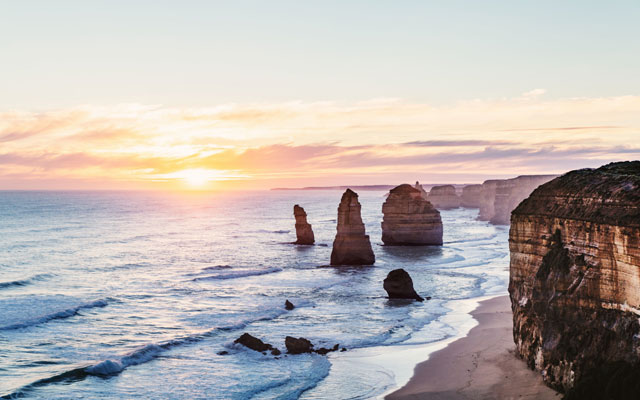
A series of new immersive videos will transport viewers from around the world into the heart of some of Australia’s most iconic landscapes, as part of efforts by the country’s tourism board to inspire future holiday plans.
Harnessing 8D audio technology, the six videos take viewers on a sensory journey, immersing them in the sights, sounds and textures of destinations such as Uluru, Sydney Opera House, Fraser Island and the Daintree.
8D audio is a sound engineering treatment that, when the viewer wears headphones, gives the music and sounds a three-dimensional effect for an immersive experience. This marks the first time a tourism body has utilised this technology for a video series.
The videos have each been themed by colour – blue, red, magenta, green, black and white – to evoke a range of feelings and emotions, and showcase the visual diversity and vibrancy found in Australia.
Tourism Australia managing director Phillipa Harrison said the videos would give travellers around the world a taste of Australia from the comfort of home.
“Many people have had to put their travel plans on hold this year, but reassuringly, the demand for Australian holiday experiences hasn’t waned, with many still dreaming about travelling here in the future,” she said.
“Although the current border restrictions mean that international travellers can’t visit right now, we need to continue to keep Australia top of mind through bold and engaging initiatives, and remind them of the exceptional experiences that await them when they can travel here again.
The videos are part of Tourism Australia’s renewed international content marketing programme to drive traffic and engagement to its channels, and can be viewed on Australia.com/8DEscapes and Tourism Australia’s YouTube channel. They are supported by a series of articles on Australia.com providing information on the highlighted experiences and destinations.
Inter-district travel banned in Sabah as Covid cases spike
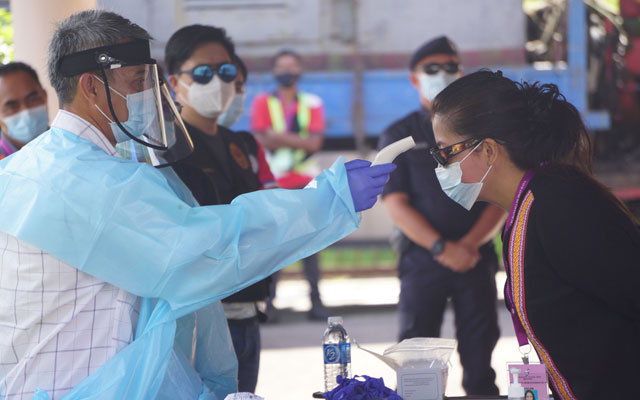
The Sabah state government has banned inter-district travel in Sabah from October 3-16, after Malaysia reported 260 new coronavirus cases on Thursday (October 1), its second-highest daily jump since the start of the outbreak, with majority of the new cases originating from Sabah.
The spike in cases came after a surge in travel to and from Sabah for the state elections. Of the 260 tally, Sabah accounted for 118 cases. Thirty-one of the new cases in other states involved Sabah returnees.
The latest virus surge is also Malaysia’s biggest daily jump in infections since June 4, when the country recorded 277 cases involving a cluster at a Selangor immigration detention centre.
Under the inter-district travel ban, all businesses are allowed to operate as usual as long as it does not require travelling out of the district.
Elsewhere, the Sarawak state government has temporarily banned the entry of non-residents from Sabah and Labuan from October 4-18. Sarawakians in Sabah and Labuan will be allowed to return home, but they will have to undergo a 14-day quarantine at designated facilities upon arrival, and take two Covid-19 tests during that period.
Earlier, four districts in Sabah – Lahad Datu, Tawau, Kunak and Semporna – had been placed under the targeted enhanced movement control order from September 29 to October 12.
Meanwhile, Malaysian Association of Tour and Travel Agents, Tan Kok Liang, has advised Malaysians to defer their holiday plans to Sabah till after mid-October.
Onyx Hospitality hires new China head
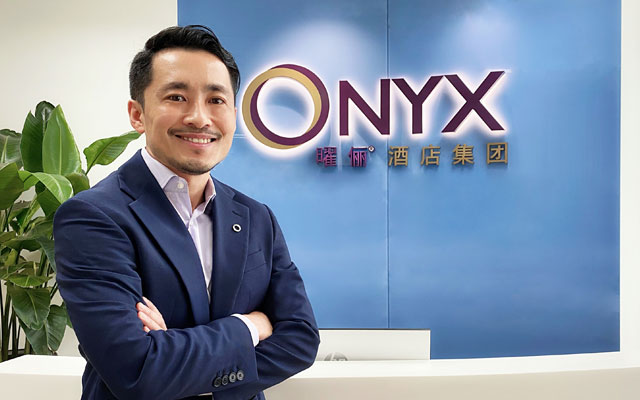
Onyx Hospitality Group has appointed Ethan Cai as senior vice president and head of China, as part of its long-term commitment towards the China market.
Based in the Shanghai regional office and reporting to Craig Bond, executive vice president, operations, Onyx Hospitality Group, Cai will lead the operations and development of the company’s portfolio of hotels and serviced apartments in China. He will be in charge of exploring new businesses and project deals, while overseeing the group’s ongoing expansion and pre-openings, including the upcoming Shama Hub New City Changchun and Shama Hub West Coast Haikou.
tCai brings over 20 years of experience to his new role. Prior to joining Onyx, he co-founded a start-up company pioneering the use of robots for the hospitality business.
He started his hospitality career with Hyatt, where he was the pre-opening team member of Grand Hyatt Shanghai. His other roles include general manager of the hotel division of China Jin Mao Group, as well as various senior positions at Morgan Stanley within the real estate investment and property divisions.
Cai also spent time with PVCP Group, a European leader in development and operation of tourism residences, as one of the core founding members of its China JV, where he led the business development team in signing 11 different development projects over a period of 18 months.
Stringent rules for staycations in GCQ areas draw flak from Philippine hoteliers
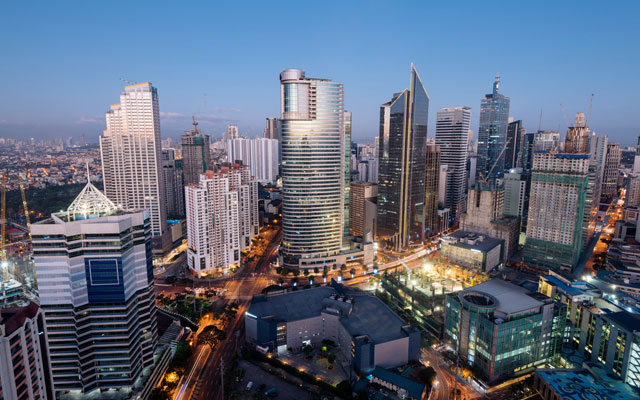
Philippine hoteliers are baulking at the stringent staycation guidelines for properties located in metro Manila and other destinations under general community quarantine (GCQ), including restricting accommodations to four- and five-star hotels, limiting guests to those residing within the destination, and mandatory antigen testing for all guests.
Chroma Hospitality country manager, James Montenegro, questioned the point of subjecting every family member living in one household to antigen testing.
He also pointed out that while families are required to take antigen tests in GCQ hotels, masses are allowed to roam freely without Covid testing in malls, where the transmission risk is higher, especially on weekends when thousands throng the malls.
Montenegro said four- and five-star hotels have strict implementation of health and hygiene protocols that are similar to those in hospitals.
While he welcomed the authorities’ move to allow the resumption of staycations in GCQ areas, Montenegro also saw the need “to strike a balance” between public health measures and economic recovery, noting that hotels have been closed for at least six months now.
Cyndy Tan Jarabata, president of Tajara Leisure and Hospitality Group, and co-organiser of the Hotel Owners for Tomorrow, an action group made up of independent and MSME hotel owners and operators, agreed that certain staycation restrictions “don’t make sense to hotel owners, much less staycationers”.
Noting how families make up a key segment for the staycation market, she cited the example of how the costs of antigen tests for a family of four booking a staycation may amount to the same as the promotional room rate, deterring domestic travellers from taking staycations. Another problem, she added, is the limitation on the number of occupants, based on the room size.
“It’s too much hassle for a staycation in the city where we have been stuck since March. The domestic market would prefer to have some breathing space outside of the metro,” Jarabata explained.
As per other staycation requirements laid down by the Department of Tourism, all accommodation establishments in GCQ areas must also first secure a DoT Certificate of Authority to Operate for Staycations before accommodating any guests for a staycation. They are also required to have contactless booking and payment systems in place.
As well, the maximum number of guests allowed per room will be determined by the floor area – for example, a 49m2 room will be allowed to house a maximum of four guests. Accommodations which were previously used as quarantine or isolation facilities or had Covid-19 positive guests are also required to present a proof of sanitation and disinfection of their facilities.
New hotels: Mövenpick Resort Khao Yai, Capella Bangkok, and more

Mövenpick Resort Khao Yai, Thailand
Located less than a three-hour drive from Bangkok on the fringes of the Khao Yai National Park, the 112-key resort offers guests a European castle-esque experience surrounded by a mountainous landscape. There are 62 guestrooms, ranging from the 45m2 Deluxe Room to the three-bedroom Penthouse, alongside 50 villas. Onsite amenities include a swimming pool, a spa, an events hall, and an 18-hole golf course. F&B options include the all-day dining Flavours of Khao Yai, and farm-to-table Castleton Cafe. Children can be entertained at the My Ozone Animal Club, where they have the opportunity to get up close with a variety of farm animals, including ponies, horses, chickens, and goats.
Capella Bangkok, Thailand
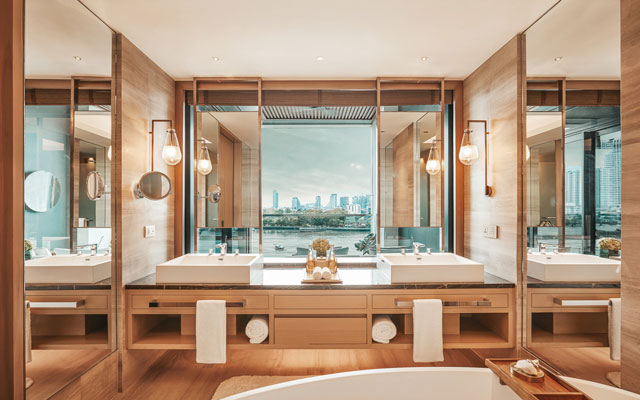
Capella Hotels and Resorts’ first property in Thailand boasts 101 guestrooms, suites and villas, ranging from the 61m2 lead-ins to the 595m2 villas. Each accommodation has been fitted with floor-to-ceiling windows and a balcony or verandah that opens out to Thailand’s Chao Phraya river. Facilities include a 24-hour fitness centre, a spa, and seven versatile event spaces. There are also four culinary options, including Thai restaurant Phra Nakhon, and Côte by three-Michelin-star chef Mauro Colagreco which serves traditional recipes from the French and Italian Riviera.
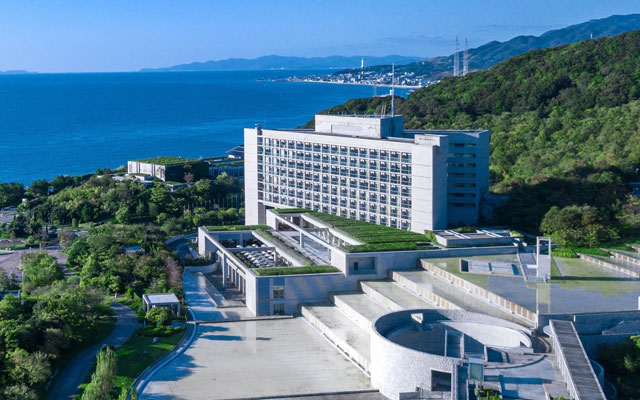
Grand Nikko Awaji, Japan
Following its rebranding, The Westin Awaji Island Resort & Conference Center has reopened as the Grand Nikko Awaji, and will be managed by Okura Nikko Hotel Management. Previously, the hotel was managed by Yumebutai Co. and Marriott International for 20 years. Located on the northern tip of Awaji Island, the rebranded Grand Nikko Awaji offers 201 guestrooms, each with a standard area of about 42m2, overlooking Osaka Bay and the Akashi Kaikyo National Government Park. It features four restaurants, a lounge, seven banquet halls, wedding chapel, a spa and fitness centre with indoor and outdoor pools, and tennis courts.

Holiday Inn & Suites Shin Osaka, Japan
Holiday Inn & Suites Shin Osaka is the first Holiday Inn in Japan to offer a suites product, with 126 of its 185 rooms featuring an apartment-style kitchen, dining room and laundry room. Each guest suite ranges from 30-45m2 in size, making it ideal for long-term business stays, as well as for families and groups; while standard rooms cater for shorter stays for one to two guests. The hotel offers all-day dining, meeting spaces, fitness facilities and ample parking.
Snag a staycation with TTG’s 10.10 deals

TTG Asia Media will be holding its inaugural Great Staycation sale on October 10, as part of this year’s eGSS (Great Singapore Sale), organised by the Singapore Retailers Association.
With borders closed, staycations are the next best thing for travel-deprived locals looking for a getaway. So set your calendars and get ready to pick up some fantastic promotions to help you escape your bedroom.
Our livestream will be hosted on GoSpree’s Facebook page from 21.00 to 22.00, as part of a three-hour-long segment.
Participants will also have the opportunity to enter a lucky draw and contests to win a variety of prizes such as vouchers and staycation packages. Participating properties include Parkroyal Collection Pickering, InterContinental Singapore, and One Farrer Hotel.
More details will be revealed next week, so stay tuned!
Fairfield by Marriott steps up expansion in Japan
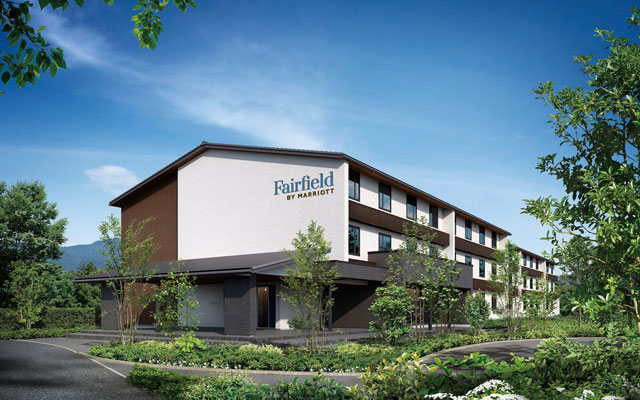
Marriott International has signed an agreement with Japanese real estate developer, Sekisui House, to open 11 new Fairfield by Marriott hotels across five Japanese prefectures – Hokkaido, Hyogo, Okayama, Hiroshima and Kagoshima.
The agreement expands the collaboration with Sekisui House for the Michi-no-Eki project, adding on to the 15 Fairfield by Marriott hotels signed in 2018. All properties are anticipated to open by late 2022.
Ranging in size from around 50 to 100 guestrooms, each Fairfield by Marriott hotel will boast public areas serving as a flexible social space for guests to connect with other travellers or simply to relax.
Three hotels are expected to open by early 2022: Fairfield by Marriott Hokkaido Eniwa with 101 rooms, the 72-key Fairfield by Marriott Hokkaido Naganuma, and Fairfield by Marriott Hokkaido Minamifurano with 72 rooms.
The 78-key Fairfield by Marriott Hiroshima Sera will open by mid-2022, while the 96-room Fairfield by Marriott Kagoshima Tarumizu and the Fairfield by Marriott Kagoshima Osumi with 51 rooms are slated to open by late 2022.
Over in Okayama, two hotels are set to open by late 2022: Fairfield by Marriott Okayama Hiruzen with 96 rooms, and Fairfield by Marriott Okayama Tsuyama with 75 rooms.
Hyogo will welcome three of the brand’s hotels by late 2022: the 99-key Fairfield by Marriott Hyogo Minamiawaji, Fairfield by Marriott Hyogo Kannabe with 73 rooms, and the Fairfield by Marriott Hyogo Yabu with 87 rooms.
“Cruises to nowhere” from Singapore poised to resume

Cruise companies may soon be allowed to launch “cruise to nowhere” trips from Singapore, as the Singapore Tourism Board (STB) is developing a health and safety framework to restart these sailings.
If the plan goes ahead, this will mark the first sailing from Singapore since March 13, when cruise ships were barred from calling at the port.

According to a tender document by STB, for the first three months when sailings resume, ships will be allowed a maximum capacity of 50 per cent of the usual capacity, reported The Straits Times. The tender did not specify a date or timeline for this resumption.
On September 23, STB had appointed classification society DNV GL Singapore to create a cruise compliance audit and certification programme, which will be benchmarked against global health, safety and hygiene standards, according to the report.
Under this programme, DNV GL will establish a set of health and safety protocols, conduct compliance audits, certify cruise ships that meet the requirements, as well as develop a penalty framework for non-compliance.
Cruise companies that wish to embark on sailings must be audited and certified by this programme. For the first three months, inspectors will also conduct onboard checks for each sailing.
Annie Chang, director, cruise, STB, said: “Singapore is monitoring the Covid-19 situation and in discussions with cruise lines on putting in place appropriate measures that will enable cruises to resume in a safe manner. Cruise lines that pass the compliance audit will be given a certification, which serves as a quality mark to assure consumers that the cruise has met these required standards. More details on the cruise certification will be released at a later date.”
Chang told the Straits Times that the SingapoRediscovers domestic tourism vouchers, which will be issued to all adult Singaporeans in December, will not be redeemable for cruise tickets, as they are valid only on hotel stays, attraction tickets and approved tours.
The report also stated that Chan Brothers Travel will be partnering Dream Cruises to market and sell “cruises to nowhere” from Singapore.
Dream Cruises’ Explorer Dream had previously received certification under DNV GL’s programme in infection prevention for the maritime industry, which was developed in June. The vessel has been operating island-hopping cruises in Taiwan since July.
Singapore to allow visitors from Australia, Vietnam
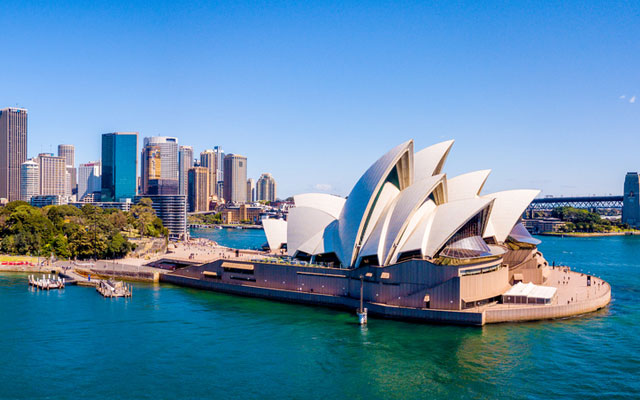
Singapore will lift border restrictions for visitors from Australia – excluding Victoria state – and Vietnam, from October 8.
Both countries have comprehensive public health surveillance systems and have successfully controlled the spread of Covid-19, said the Civil Aviation Authority of Singapore (CAAS) on Wednesday (September 30).
The risk of importation from these countries is low, said CAAS, noting that over the last 28 days, Vietnam had zero local Covid-19 cases, while Australia – excluding Victoria state – had a virus incidence rate of 0.02 cases per 100,000 people.
From October 1, visitors from Australia and Vietnam can apply for an Air Travel Pass (ATP) for entry into Singapore. They will be allowed to set foot in Singapore from October 8.
Applicants must have remained in either Australia or Vietnam in the last consecutive 14 days prior to their entry. They will be required to undergo a Covid-19 test upon arrival at the airport and will be allowed to proceed with their activities in Singapore if they test negative, without a need to serve a Stay-Home Notice (SHN).
Singapore will also update the travel advisory to allow travel to Australia, excluding Victoria state, and Vietnam, CAAS said. Travellers are advised to check the entry requirements imposed by these countries and take the necessary precautionary measures.
The move follows the city-state’s lifting of border restrictions for visitors from Brunei and New Zealand last month.
CAAS said that as of September 30, 17:00, it has approved 331 applications from the two countries to enter Singapore. Of the 136 visitors who have arrived so far, none of them tested positive for Covid-19 upon arrival, it added.
All visitors entering under the ATP must travel to Singapore on direct flights without transit.
Upon arrival in Singapore, visitors must undergo a Covid-19 swab test at the airport. The test results will be out within 48 hours, and typically within 12 hours. After taking the Covid-19 swab test, visitors are to take private transportation, taxi, or private hire car from the airport to their declared place of accommodation, where they must remain in isolation accommodation until the test result is confirmed to be negative. After which, they will be allowed to go about their activities in Singapore.
Visitors must also use the contact tracing app TraceTogether for the duration of their stay here. While in Singapore, they will be responsible for their medical bills related to Covid-19, including costs related to tests and isolation should they be suspected of being infected with the virus.
Application for a single-entry ATP can be made at no charge between seven and 30 days prior to one’s intended date of entry into Singapore.
From October 2, Singapore citizens, permanent residents and long-term pass holders returning from Australia, excluding Victoria state, and Vietnam will similarly undergo a Covid-19 test upon arrival, in lieu of a seven-day SHN with a Covid-19 test administered before the end of the period.







Slated to open in 2023, Hotel Nikko Changshu will mark the fifth property of Okura Nikko Hotel Management in Jiangsu Province, further boosting the Japan-based company’s presence in China.
Hotel Nikko Changshu will be located at Changshu National New & Hi-Tech Zone in Changshu city, one of the county-level cities in the Suzhou of southeastern Jiangsu Province.
The company has contracted with Changshu Kuncheng Development Investment to manage the new property through its joint venture BTG Nikko International Hotel Management.
Hotel Nikko Changshu will offer 288 guestrooms, each with a standard area of about 40m2, including 14 suite rooms. Onsite facilities will include a Japanese teppanyaki restaurant, a Chinese restaurant, all-day dining, lobby lounge, a fitness centre and indoor pool, alongside a banquet hall and five conference rooms.