


Centara commits to sustainability

Thailand’s Centara Hotels & Resorts has renewed its commitment to environmental sustainability with new long-term goals to meet climate-related targets.
The 10-year roadmap includes measurable goals for four key initiatives, including a 20 per cent reduction in energy and water usage, greenhouse gas emissions, and the amount of waste sent to landfills.
To achieve these goals, the group is implementing solar power projects, and installing sub-metering systems for water and electrical management. Energy conservation measures and heating system upgrades are being implemented wherever possible and embedded into daily operations.
The plan also entails ensuring that the waste management policy is being strictly followed by the individual property, especially keeping food waste reduction in focus.
By 2025, Centara aims to have all of its properties certified to an international sustainability standard, as well as eliminate single-use plastic items in the entire guest journey.
“By adopting sustainable, green practices, we are actively choosing to be more aware of our environmental impact. This not only protects the natural surroundings that enhance the guest experience in so many of the locations where we operate, (but) also creates long-term benefits for the company, our customers and our employees,” said Thirayuth Chirathivat, CEO of Centara Hotels & Resorts.
“Setting long-term sustainability goals allows us (to) incorporate green practices into our identity and ensures that all our stakeholders are aligned with Centara’s values and vision for a more mindful, ecologically conscious future.”
Travel trade leverages downtime to upskill staff, develop tours as Malaysia extends MCO 3.0
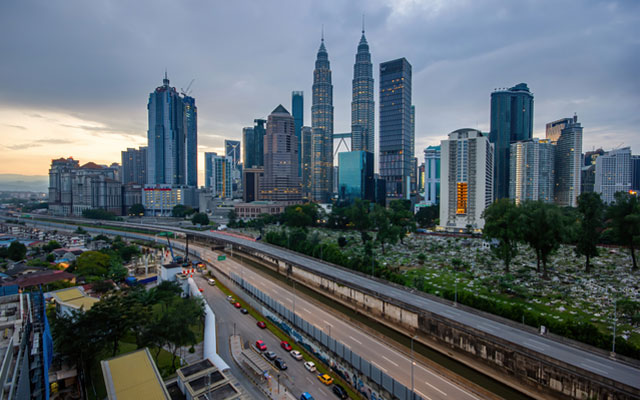
Tour operators in Malaysia are keeping busy preparing for the reopening of borders, even as authorities extend the country’s third movement control order (MCO) which should have ended yesterday (June 14) by a fortnight until June 28.
The extension of the nationwide lockdown, based on recommendations from the health ministry, was deemed necessary as the number of new Covid-19 cases remain high.
On Friday, when the government made its announcement to extend the lockdown, the health ministry reported 6,849 new cases that day, the highest single-day rise in new cases recorded last week, with a record 912 patients warded in intensive care units.
As bans on inter-district and interstate travel remain under the extended lockdown, the Malaysian Inbound Tourism Association (MITA) has postponed its eTravel Fair to August 15-19. The eTravel Fair, featuring domestic travel packages, was originally scheduled from June 17-21.
While domestic travel has temporarily come to a standstill, Adam Kamal, secretary-general at MITA, shared that the association is currently disseminating information to its members on all the financial assistance that various government agencies has made available to the travel trade.
Tourism players whom TTG Asia spoke to predicted that the lifting of domestic travel is unlikely to happen anytime soon, and some were using the downtime to upskill their staff and invest in product development.
Mint Leong, managing director, Sunflower Holidays, projected that interstate travel will only be allowed to resume this year-end, and that only those vaccinated will be allowed to cross state borders.
In the meantime, her staff are keeping themselves occupied by watching webinars, documentaries and online programmes on destination marketing while working from home.
Leong shared that she herself has been keeping busy by watching online cruising videos uploaded by various cruise companies. She will also be attending the upcoming virtual IT&CM China as a trade buyer to engage with Chinese sellers on product updates as well as to listen to the online presentations during the show.
Yap Sook Ling, managing director, Asian Overland Services Tours & Travel, shared that the company is using the downtime to prepare more tour packages in anticipation of the reopening of the country’s borders which she hoped would happen sometime next year.
The company is also leveraging its online B2B system to sell to their overseas partners rooms, tickets and tours to destinations that have already opened up. Furthermore, the agency is also providing training programmes in critical thinking, reservations and sales for its staff.
Yap stressed that at the end of the day, achieving herd immunity quickly is vital for the survival of the local tourism sector, and that the government’s move to ramp up the national Covid-19 immunisation programme is a step in the right direction.
Four Seasons adds Osaka hotel to Japan portfolio

A 175-key Four Seasons hotel will be opening in Japan’s third-largest city of Osaka come 2024.
Four Seasons Hotel Osaka will be part of the One Dojima Project, a high-rise mixed-use tower that will also feature residences by Brillia, as well as a meeting hall that serves as a base for tourism and business. Located in the Kinki region of Osaka, the building will be approximately 195m high, with a total floor area of approximately 85,000m².
The One Dojima Project, which began construction on August 1, 2020, is a collaboration between Four Seasons Hotels and Resorts, Japanese developer Tokyo Tatemono Co. and Singapore-based real estate company Hotel Properties Limited.
Indonesia’s domestic market ripe for Bali tourism stakeholders’ picking

Bali tourism stakeholders are being encouraged to take proactive action to attract domestic travellers while international travel remains largely restricted amid the threat of Covid-19.
Speaking at the seventh edition of the Bali and Beyond Travel Fair (BBTF) held last week, Sutrisno, head of Bank Indonesia (BI) Bali Provincial Representative Office, cited BI statistics showing that the Indonesian outbound traffic pre-pandemic reached 11 million trips, with a total spend of US$11 billion.
In the meantime, the national third-party funds in 1Q2021 rose by 9.3 per cent, and in April alone, the growth was 12 per cent compared to the same period in 2020. Meanwhile, Bali’s third-party funds declined by 3.8 per cent in 1Q2021 as people withdraw their savings and sold their assets due to declining businesses.
Sutrisno said: “This means that people are saving. Those people (living in big cities like Jakarta, Surabaya, and Medan), who usually travel overseas, are saving on travel expenditure because of the closed borders. This domestic market presents a big potential for Bali (tourism players) to tap.”
Rizki Handayani, deputy of tourism products and MICE, Ministry of Tourism and Creative Economy (MoTCE), urged Bali tourism stakeholders to take proactive steps to attract domestic visitors by conducting sales and marketing activities in major cities like Jakarta, promoting health and wellness tourism.
“Sustainable, health and wellness tourism are trending and they are priority programmes (for the MOTCE) to develop,” she said, adding that Bali has what it takes to tap this booming trend, with its spa and wellness offerings, natural and cultural attractions, and myriad of healthy food options.
“On the medical tourism side, we have lost markets to (neighbouring and overseas) destinations,” she said, adding that Indonesians have been going abroad to seek not just treatments for illnesses, but also aesthetic procedures.
Bali, with its clinics and nature-filled environment, has the capacity to meet that demand, Rizki stressed.
“International markets remain important, but instead of just waiting for these markets to come back, let’s work this huge domestic potential,” she said, adding that Jakarta is a market that presents big opportunities.
Rizki encouraged the trade to create new thematic wellness programmes, as well as tap the youth with voluntourism, related to environment and social development.
After being canned in 2020, BBTF 2021 was held from June 10-11, connecting 145 sellers from 14 provinces in Indonesia with 132 Indonesian buyers offline and 57 international buyers from 20 countries online.
Cruise services startup ropes in European veteran to develop Asia’s cruise industry

Singapore-based cruise services startup NaviAsia is partnering with European Cruise Service (ECS) to drive the development of Asia as a cruise and leisure destination.
Started in January this year, NaviAsia specialises in offering cruise services such as shore excursions, ship agency, ground handling, destination management and in-house training programmes.
The organisation is helmed by two industry veterans with more than 40 years of management-level experience – managing director, Julieanne Yee and general manager, Adrian Wong.
ECS has been the main provider of cruise services for foreign cruise ships calling at Norwegian ports and fjords for over 160 years and is the market leader in shore excursion operations and ships agency services rendered to cruise ships calling upon ports in Northern Europe.
The collaboration will see NaviAsia drive the partnership’s business throughout Asia, with ECS providing support with their experience, expertise, best practices, contacts and systems for accelerating growth.
Speaking to TTG Asia, Yee said that NaviAsia is currently working on preparation for cruise resumption based on the potential requirements from each of the cruise brands and exploring potential new islets declared as “Green Zone”, which can be of interest to cruise clients in the event that borders remain closed for the key destinations.
According to Yee, cruise clients are finding it difficult to grapple with the varying protocols required in the different countries. “With the cruise resumption already started in Europe, the partnership enables us to adapt best practices across continents and prepares us for cruise journeying to Asian waters,” she said.
However, another hurdle looms – as the source markets for most international cruise brands comprise of mainly non-Asians, recovery may take longer than expected as it is challenging for them to travel longhaul to Asia to join the cruises.
Despite the concerns, Yee remains optimistic about the industry in Asia. “Singapore has been, and will continue to be, an important cruise hub for cruise liners deploying in South-east Asia. Apart from Singapore, the opening of borders within the neighbouring countries is equally important for a successful Asia cruise deployment.”
Unite to conquer: how travel, tourism and hospitality players can help pandemic recovery

Hope can sometimes be so fragile. In April this year, we’d been eagerly anticipating a travel bubble between Singapore and Hong Kong set to commence end-May. Singapore’s Minister for Transport had also caused ripples of excitement following his comments about looking to forge similar agreements with neighbouring countries like Australia, New Zealand, Taiwan and Brunei.
Fast forward a month, and a sudden uptick in the number of Covid-19 community cases suddenly sent Singapore back into Phase 2 (Heightened Alert) from May 14 to June 13. Within the span of a few weeks, hospitality industry optimism had been replaced with sadness and frustration. And to add to the misery, the World Economic Forum also announced the cancellation of its annual meeting, scheduled for August in Singapore.
What’s next for the battered tourism, hospitality and events industries? What can our business associations and governments do to help in times of uncertainty?
“You can never cross the ocean unless you have the courage to lose sight of the shore,” said Christopher Columbus. While the obstacles we currently face may be large, we need some bold and brave moves to help us reach a better place. Here are some ways I believe will kickstart that process:
Collaborate on vaccine support strategies
The speed of vaccine rollouts in Asia has been comparatively slower than the US and the UK. While Singapore is ahead of the region with nearly a third of its population fully vaccinated, the rest of South-east Asia has been lagging with less than four per cent of adults receiving both doses.

As one of the hardest-hit industries during the pandemic, tourism, hospitality and event companies must collaborate rapidly and meaningfully with each other and their local business associations to present a united, supportive strategy in their respective countries.
Hotels, for example, can offer their premises as public vaccination centres. Vaccine storage requires refrigeration facilities – if your restaurant has spare refrigeration equipment, consider loaning it out to the relevant healthcare authorities.
Companies can also take a proactive stance in setting up parallel vaccination drives for their employees. For instance, Europe’s largest hotel chain Accor secured its own supplies to vaccinate its teams across the world, while South-east Asia’s super app Grab delivered much needed vocal and operational support for vaccination initiatives. Smaller enterprises can always consider incentives to encourage their staff to take the vaccine.
The industry can play a much bigger role on a second important battlefront – vaccine education. Business leaders can leverage their public profile by taking the lead in getting vaccinated and distributing accurate, up-to-date information on the vaccines among their employees.
The quicker we’re able to achieve herd immunity, the less time we’re giving the virus to mutate into dangerous new variants.
Clear business solutions for contact tracing
While the vaccine is being rolled out, the region’s industry players can adopt strict protocols for contact tracing. This was a common practice among businesses in South Korea, Singapore and Taiwan, where the first outbreaks of the pandemic last year were most effectively contained.
Installing watertight measures like employee and visitor check-ins and check-outs empowers your business to quickly conduct contact tracing in the unfortunate event a Covid-19 case is suspected or confirmed.
Adopting technology-based solutions such as mobile apps also boosts the accuracy of contact tracing to isolate community spreading.
These measures are only effective if widely adopted. They require the cooperation of all industry players across entire cities, states or even countries. While these moves require allocation of resources, ultimately, it’s an investment to ensure the industry’s future and will speed up the pace of recovery.
Offer regular workplace testing
Human contact is an essential aspect of the tourism and hospitality sector, so regular Covid-19 testing of your employees can help detect asymptomatic cases early. This also reduces any potential negative impact on your business and operations, as well as contributing to the containment of community cases.
Antigen Rapid Test (ART) kits have already been used for pre-event testing – these only require a quick nose swab and offer results within the same day. A more comfortable breathalyser test has recently been rolled out at Singapore-Malaysia border checkpoints. If this works well, it would be an efficient solution for our industry, too.
If your country is distributing test kits to businesses to carry out their own Covid-19 testing, sign up for it immediately. Alternatively, work with local business organisations to obtain tests to enable you to roll out your own industry programme.
As I said at the beginning, hope can be a delicate thing. But when positive action is matched with united efforts across industry and governments, we can build something much more substantial. So let’s start, today.
And finally, let’s not forget that the greatest steps forward out of this pandemic begin at home. After all, the best weapon against Covid-19 is a healthy immune system. So each of us should remember to eat healthily, get good sleep, drink less alcohol, do some regular exercise, and get out for a dose of fresh air and a little sun each day to boost our vitamin D.
Accor embarks on massive recruitment drive
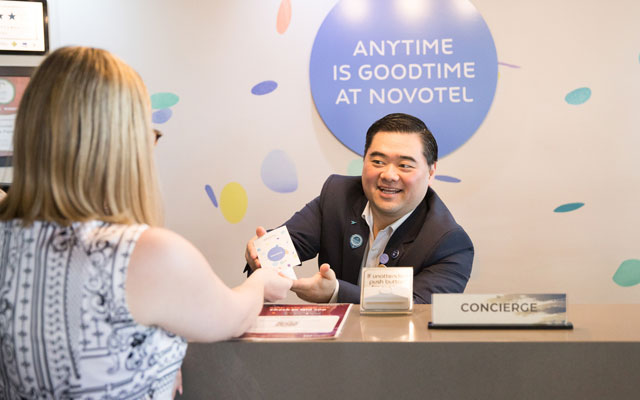
Accor is recruiting for over 1,000 new career opportunities at almost all of its 400 hotels in Australia and New Zealand, in a bid to fill vacant positions as travel demand returns.
Accor Pacific CEO, Simon McGrath, said: “This is a rapidly returning sector and we are now recruiting for roles at most of our hotels, apartments and resorts across the Pacific.”
In a brand new recruitment initiative – the Accor Internship Program – Accor is working with 22 hospitality institutions across Australia and New Zealand to provide on-the-job training for 100 students.
These roles, which are primarily applied for via hospitality, travel and tourism higher education institutions, will be fully-paid internships, with travel allowances. Recruits will have the opportunity to broaden their skills and experience across operations, administration, and F&B.
McGrath said: “We believe that we have a responsibility to identify, inspire and train people to become the next generation of hoteliers. We will use this opportunity to advance our commitment to diversity and inclusion, by bringing people into our industry with a wide range of interests, backgrounds and experiences.”
Princess Cruises ups service ante with on-demand feature
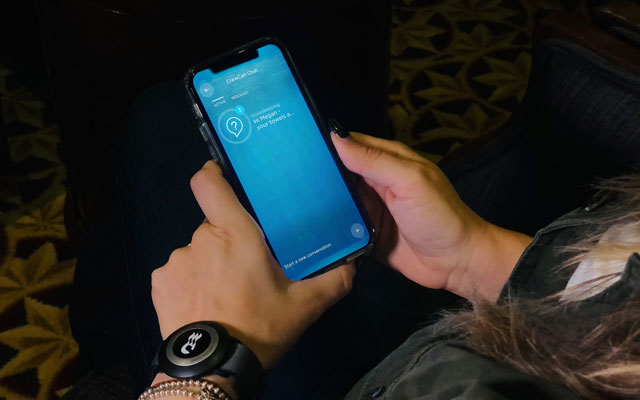
Princess Cruises is introducing a new on-demand service that allows guests to call a crew member to their exact location to make an in-person request for assistance.
CrewCall service on demand will be available on stateroom TVs as well as the MedallionClass app and leverages the OceanMedallion wearable to guide a crew member to a guest’s exact location upon request.
The corresponding CrewCall Chat feature lets guests text their specific question or request using a smart device to be answered or actioned virtually by crew.
Jan Swartz, president of Princess Cruises, said in a statement that CrewCall allows the cruise line “to deliver high-touch, personalised service” and “minimises wait time at our guest services desk while simultaneously improving our responsiveness”.
Both CrewCall features expand the OceanNow digital experience guests use to place food, beverage, retail and amenity orders for delivery directly to their location.
CrewCall will be available to guests when Princess returns to sailing starting July 25 aboard Majestic Princess in Alaska, and aboard Regal Princess and Sky Princess with “seacations” in the UK starting July 31.
Courtyard by Marriott to make Sri Lanka debut in Colombo
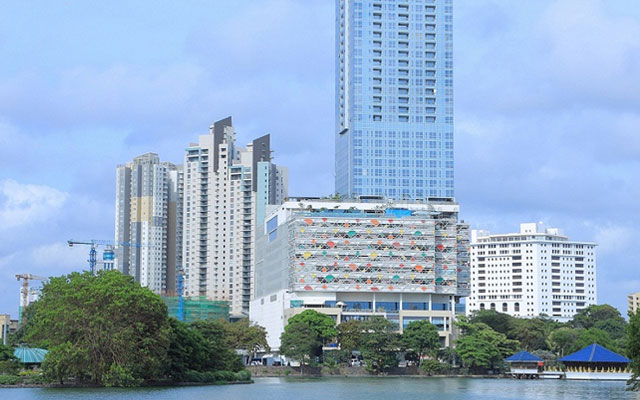
Marriott International has signed an agreement with Colombo City Centre Partners, part of the Abans Group, to debut the Courtyard by Marriott brand in Sri Lanka come late 2021.
Set in the heart of Colombo city adjacent to the Beira Lake, the Courtyard by Marriott Colombo will offer 164 guest rooms and suites, each featuring a work area, smart amenities, and high-speed internet access.
The hotel is set to feature two dining venues – an all-day dining restaurant as well as an adjoining Lobby Lounge decked with a full-service bar and a quick-bites menu. Other facilities will include a 24-hour fitness centre, an outdoor swimming pool and three meeting rooms.







A new travel training company has launched, offering a range of e-learning courses designed to help industry players upskill in preparation for the post-pandemic rebound.
Progressive Travel Training (PTT) is spearheaded by three travel professionals specialising in training and recruitment – Fi Morrison-Arnthal, Tony Macdonald and James Roberts – who also run Progressive Travel Recruitment.
Initially, PTT is offering agents a programme of 12 e-learning courses, co-authored by senior travel industry experts and PTT co-founder Fi.
Three of the modules are available for free, including a stress management course designed to support travel professionals tackling tough working conditions during the pandemic. The other two free courses are migrating to remote travel home working and blog writing to boost travel business.
Delivered in bite-sized chunks, the flexible training e-courses allow professionals to visit and return to the learning at any time.
Starting from INR3,097 (US$42), the paid courses are as follows: how to sell travel and achieve sales success, managing travel consultants to sales success, complaint resolution and great travel customer service, increase your travel enquiries using Facebook, time management (working smarter not harder), presentation skills in travel, get noticed and get the travel job, and successful corporate travel account management.
By providing training that is either free or 90 per cent cheaper than traditional one-day courses, PTT’s founding vision is that travel professionals who might now be responsible for their own learning costs after being made redundant or going self-employed during the pandemic are still able to pursue their career development, and that employers who want to invest in their teams but have faced tough trading conditions over the last 12 months can still do so, the company said in a press release.
Fi said: “It’s apparent that formal training and in-house trainers are a luxury many travel businesses and agents cannot currently afford and, while there is plenty of online training available covering destinations, product and GDS skills, travel industry employees are frustrated about the limited soft skills available. We have launched Progressive Travel Training to address that need, and to give back to the industry we love – sharing everything we know with a community that is ready to progress and come back post-Covid thriving.”
The full suite of online learning courses can be accessed here.