Booking.com’s latest global Travel Predictions study has shown an intense desire among consumers to relax and recharge with travel come 2022, but conflicts in respondents’ travel desires and realities have also surfaced, notes the company’s managing director & vice president of Asia Pacific, Laura Houldsworth.
In the final episode of TTG Conversations: Five Questions video series for 2021, Houldsworth discusses key findings and surprises from the Travel Predictions study and shares her views on how economic woes will impact travel and tourism rebound.
Trip.com has teamed up with Mitsubishi Estate, one of Japan’s biggest property developers, to help regional tourism in Japan recover from the impact of the Covid-19 pandemic.
The Chinese OTA and the Tokyo-based company will work together to support the areas served by Mitsubishi Estate-owned airports in Japan. Under a joint agreement, efforts will include publishing, developing new travel products and encouraging new airlines to use the airports.
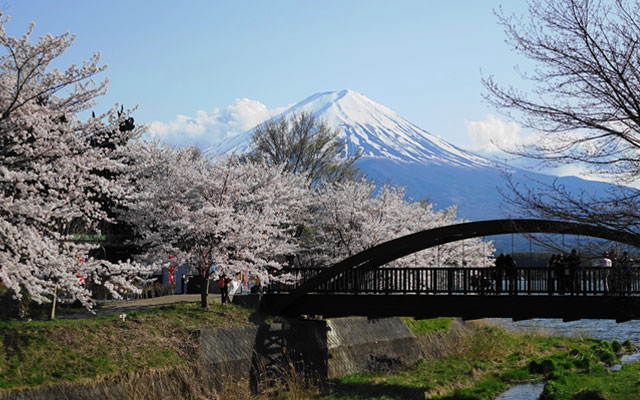
Trip.com to promote areas in and around airports operated by Mitsubishi Estate, including Mount Fuji
Since its launch of airport operations in 2018, Mitsubishi Estate has expanded its portfolio to run 10 airports. These include Mt Fuji Shizuoka Airport in Shizuoka Prefecture; Miyako Shimojishima Airport in Okinawa Prefecture; Takamatsu Airport in Kagawa Prefecture (on Shikoku); and seven airports in Hokkaido (New Chitose, Obihiro, Asashikawa, Memanbetsu, Hakodate, Wakkanai and Kushiro).
Trip.com Group’s online platforms will feature information on special promotions and sightseeing spots in and around those areas, which include Mount Fuji and the scenic Fuji Five Lakes; the famous Ritsurin Park, one of Japan’s finest gardens; the “art islands” in the Seto Inland Sea; the sandy beaches and water sports of Miyakojima; as well as some of the wildest, most untouched parts of Hokkaido, including Akan Mashu National Park and Daisetsuzan National Park.
Mitsubishi Estate, meanwhile, will use digital signage at its facilities to outline and promote the various services of the Trip.com Group.
Both companies are also exploring the possibility of a cross-border e-commerce service selling the specialty products of the regions concerned on Trip.com Group’s e-commerce sites. They are also considering how to develop travel products, such as tours, to attract inbound tourists to Mitsubishi Estate-related regions of Japan.
More than two hundred vaccinated international tourists arrived in Vietnam’s resort island of Phu Quoc on Saturday (November 20), the first batch of visitors to the country after nearly two years of border closure caused by the Covid-19 pandemic.
A Vietjet Air flight brought 204 South Korean tourists to Phu Quoc to experience a five-day, four-night vacation at Phu Quoc United Center.
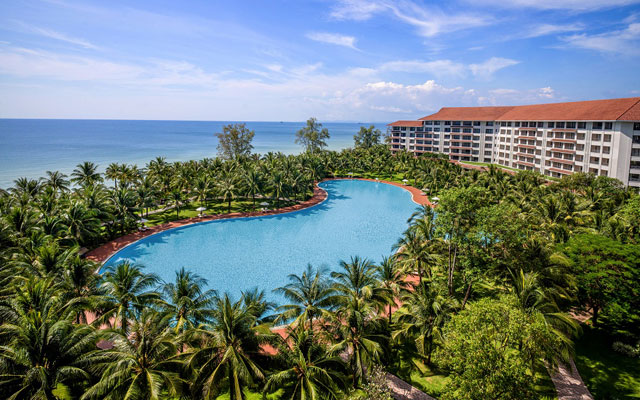
All tourists entering Vietnam will stay at Vinpearl Resort & Spa Phu Quoc (above)
A welcome ceremony was held at Phu Quoc International Airport, attended by Nguyen Trung Khanh, chairman of Vietnam National Administration of Tourism (VNAT); Vo Huy Cuong, deputy director of Vietnam Civil Aviation Department; leaders of Kien Giang Province and ministries; as well as representatives of Vietjet Air, Vinpearl Joint Stock Company and Marketing Highland Travel Company.
Passengers aboard the flight were welcomed with a special performance showcasing Ao Dai, Vietnam’s traditional dress; as well as a water salute cannon upon their arrival at the airport.
Speaking at the event, Khanh said the inaugural flight to Phu Quoc marked “an advance in the country’s efforts to revive its tourism industry while reopening and developing the economy step by step under a new normalcy context”.
He added that the country’s Covid-19 safety measures coupled with its high-quality tourism products “will again affirm Vietnam’s attractiveness and abilities to meet high-class tourism demand” post-Covid.
Vaccinated tourists will not have to undergo quarantine, but are subject to Covid-19 testing on the first and last day of their vacation. They are also required to spend their entire stay within the Phu Quoc United Center, a 1,044ha mega complex housing attractions like Vinpearl Golf, VinWonders theme park, Vinpearl Safari, Corona Casino and the Grand World Phu Quoc.
All tourists will stay at Vinpearl Resort & Spa Phu Quoc, which has been allowed to welcome international guests in separated zones.
Wild wild wet
Centara Mirage Resort Mui Ne is the second location of Centara Hotels & Resorts’ family-themed resort brand, after Thailand. Located a few hours’ drive from Ho Chi Minh City, the Spanish Mediterranean-themed waterpark resort has 984 keys across rooms and villas. The 603 standalone villas are ideal for groups and multigenerational holidays. The resort’s waterpark features a lazy river, water slides, splash pad, cliff jumping pool and kids’ pool. Other facilities include diverse dining, a 100m observation deck, sports club, indoor entertainment centre, teenager zone, family lounge, spa, and the kid-focused Spa Candy.
Luxury meets nature
Avana Retreat in Vietnam boasts forty-one bungalows, suites and private pool villas perched on the mountainside, backdropped by terraced rice fields, dense forest and a waterfall. Spanning 15ha, the luxury retreat also features a spa and four heated infinity pools. Each living space opens to a mountain landscape, and has been designed to ensure privacy. Inspired by ethnic stilt houses, the villas boast rattan ceilings, earth walls and thatched roofs. The 229m2 Hilltop Pool Villa, which sleeps up to eight guests, features two separate bedrooms, each with an ensuite bathroom; a lounge and deck; and a two-level infinity pool – the first and only private heated pool in Vietnam. F&B venues Green Chili Restaurant and Cloud Pool Bar source local, seasonal produce to create one-of-a-kind menus.
Fun for the whole family
Located on the Fari Islands, an archipelago on the north-eastern tip of North Malé Atoll, The Ritz-Carlton Maldives, Fari Islands features 100 one- to three-bedroom villas, each offering spacious living spaces, and a sun deck with a private infinity pool. Seven culinary venues are on offer, ranging from high-end dining to wellness-centered menus; in addition to a spa, salon and boutique. Ideal for guests seeking a holiday of discovery or exploration for the whole family, the property offers an array of culturally immersive activities, including a family cooking class, a bike safari around the resort, and a Wonders of Water ocean mystery programme facilitated by a resident naturalist.
Beach paradise
Nestled on the Bang Muang Beach, north of Phang Nga province, Pullman Khao Lak Resort features 253 rooms, suites and villas, all of which boast high-speed Wi-Fi, a sofa bed, balcony and an oversized shower. The Family Suites come complete with bunk beds, while the Beachfront Pool Villas feature private plunge pools. Resort facilities include four F&B outlets, a beach club, spa, 24-hour fitness centre, kids club, and a lagoon-style swimming pool. Beachfront platforms can be used for outdoor activities such as yoga, while cycling trails allow guests to explore their surroundings. For teambuilding activities, social soirées and weddings, the resort also has a 260m2 ballroom and two breakout rooms.
Buy out an entire hotel floor
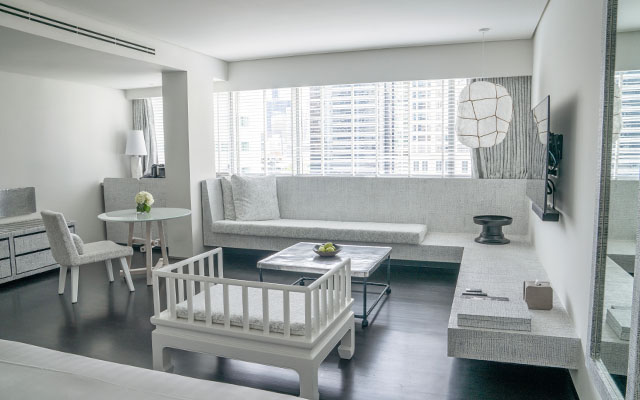
As part of Preferred Hotels & Resorts’ Where Next? global campaign promoting hotel buyout experiences, the 288-key Hotel Metropolitan Premier Taipei is offering a full-floor buyout option where guests can book all accommodations on a specific level of the property. Centrally located in Taiwan’s capital, the hotel offers seven F&B options, including all-day dining, a Japanese restaurant, a cigar bar and patisserie. Other facilities are a spa, fitness centre, indoor pool, hot tub and sauna.
As travel begins to resume, data from travel technology company Amadeus has shown substantial increases in searches for trips to once-in-a-lifetime destinations as people begin to release their pent-up passion for travel.
Some interesting new search and flight locations are emerging: from flight searches up by one third to Tanzania, a country famous for safaris; to flights doubling to cities close to the home of the Incas, Machu Picchu, Amadeus is seeing a boom in demand for statement tourism.
From friendcations to active eco-tourism, travel is returning and back on the agenda
The Amadeus 2022 Travel Trends identify six new developments which will shape the future of the market.
Travellers will look to make that trip of a lifetime, with Amadeus seeing substantial increases in searches for travel to epic destinations or experiences. Searches for Tanzania – where travellers can see the Big Five in the wild – are up by 36 per cent. Bookings to the Peruvian cities of Lima and Cusco, near Machu Picchu, are up by nearly 50 per cent, and flights to Petra in Jordan – of Indiana Jones fame – are up by 22 per cent.
According to Amadeus, 2022 will be the year of grand reunions, with friendcations and group holidays to see loved ones on the rise.
Amadeus data showed that searches for travel to Cancun, Mexico, and Cartagena, Colombia – both popular destination for groups of friends – have more than doubled year-on-year, and Hawaii has seen a similar spike in interest. Meanwhile, searches for Las Vegas trips are up 61 per cent; and in Europe, Barcelona and Ibiza have seen healthy double-digit increases.
Active ecotourism is another rising trend. Today’s travellers are interested in taking action, with a growing demand for trips supporting diverse global communities.
A recent Amadeus-commissioned survey found that two-thirds of consumers consider sustainable travel a priority, and 37 per cent of respondents think opportunities for travellers to be involved in the preservation of tourist destinations will help the industry to become more sustainable in the long-term.
According to data from the company, searches for travel from the US to the eco-paradise of Costa Rica are up by 234 per cent year-on-year; and in Europe, visitors to carbon-neutral Iceland are up by a healthy 11 per cent.
Business travel is set to return in 2022, with Amadeus data showing that 72 per cent of business travellers are eager to travel in the next year. Changes are on the way for the business sector, with technology ushering in expense-free mobile travel payments, according to the company.
Wanderlust streaming is another growing trend, as travellers dream of going to new destinations, inspired by their viewing habits. Meanwhile, technology is transforming these dreams into real-life transactions, noted Amadeus.
Finally, the return of supersonic flights and hyperloop travel links, leveraging vacuum technology, will make lightning-quick travel accessible to an increasing number of people.
Dan Batchelor, vice president, global corporate communications & social responsibility, Amadeus, said: “As the travel sector recovers, we are seeing some truly exciting trends emerge that will shape the industry. Imagine a world where you finish watching an amazing Netflix series and your smart speaker immediately recommends a trip to visit those locations in real life. That technology is available now.
“Not only are the new industry technologies exciting, but they also give us the power to travel in a sustainable way, revolutionise the way we travel for business, and travel long distances in lightning-quick time. Supersonic flights are going to happen, almost two decades after Concorde dropped its nose for the final time. It is an incredibly exciting time for the industry.”
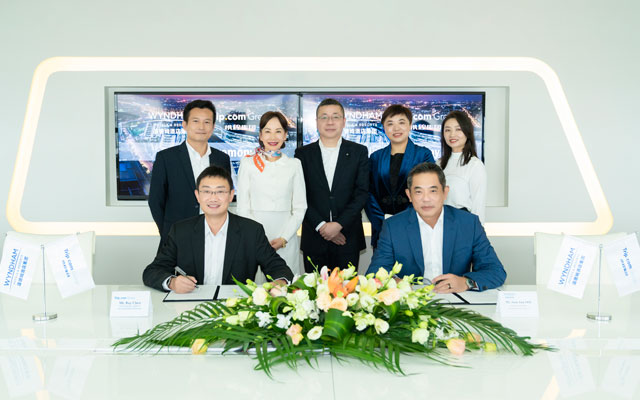
Trip.com Group has signed a strategic global agreement with Wyndham Hotels & Resorts, a move that will see the hotel group’s portfolio of over 9,000 hotels listed on the OTA’s platforms, boosting global distribution and leveraging innovative live-streaming capabilities for specific markets.
The agreement builds upon the two companies’ long-standing relationship through corporate travel partnerships as well as a host of distribution campaigns.
Trip.com, Wyndham further strengthen alliance to continue driving hotel performance and bookings
Through the expanded agreement, both companies will increase their collaboration on travel marketing initiatives and an array of tactical campaigns, such as 618 Sales, Ctrip Member Day, 99 Hotel Festival and 1028 Trip.com Group Anniversary. Data insights from Trip.com Group’s transaction platforms will also further optimise the booking experience for Chinese travellers.
In addition, hotels can leverage the Trip.com Group network and interactive live-streaming capabilities. A series of marketing activities will also be made available on Trip.com Group’s new travel marketing hub, Star Hub, that will enable hotels to utilise its channel traffic management toolkit to drive traffic to their products and content offerings.
Joon Aun Ooi, president, Asia Pacific of Wyndham Hotels & Resorts, said the partnership “will enable our hotels to expand their global distribution capabilities, and provide them with innovative and interactive solutions to drive bookings”.
Ray Chen, CEO of accommodation business at Trip.com Group, added: “This agreement will enrich our accommodation inventory for travellers and ensure that we remain their go-to travel companion as regional and global travel recovers. Wyndham Hotels & Resorts has an extensive portfolio of hotels in key destinations that overlap with Trip.com Group’s key markets in Asia-Pacific and beyond.”
The agreement will strengthen Trip.com Group and Wyndham Hotels & Resorts’ alliance in Greater China to support the increasing demands from Chinese guests booking inbound, outbound and domestically, as the travel industry makes monumental steps towards recovery and reopening.
Affinidi Travel, the travel division of Singapore-based technology company Affinidi, is working with authorities in Singapore on an ongoing pilot programme to digitally verify the validity of overseas vaccination certificates of travellers entering the country via the vaccinated travel lanes (VTLs).
Under the VTLs, travelers will be allowed to enter Singapore without the need to serve stay-home notice if they are fully vaccinated. Short-term visitors and long-term pass holders arriving from the countries utilising the VTL will need to apply for a vaccinated travel pass and get their vaccination status checked prior to entry into Singapore.
Affinidi Travel’s verification solution will help to detect fraudulent health credentials
Affinidi Travel’s verification solution, Unifier, has been integrated into the government-designated website through a pilot programme to ensure that vaccination certificates issued by the VTL countries and presented for entry to Singapore by VTL travellers are authentic, and that only travellers who meet the VTL criteria are allowed into Singapore.
The Unifier leverages privacy-preserving and interoperable technology to digitally verify various requirements and standards to determine the validity of overseas vaccination certificates. With Unifier in place, authorities can verify health credentials efficiently, while guarding against fraudulent certificates. Unifier is well-positioned to verify certificates from other countries in future, as and when the VTL is expanded.
Gina Chiang, vice president and general manager, health and travel, Affinidi, said: “As Singapore reopens its borders to more travellers, strong safeguards are needed to ensure that public health is not compromised, especially while the Covid-19 situation remains volatile due to changing restrictions, and stakeholders are dealing with high volumes of travellers’ data on a daily basis.
“This is why we remain committed to working closely with Singapore authorities to enable the verification of health certifications in a seamless, secure and privacy-preserving manner that is essential to facilitating safe travels around the world.”
The Philippine government has approved a plan to allow entry for fully vaccinated travellers from low-risk countries, the Department of Tourism (DOT) announced on Friday (November 19).
Tourism secretary Bernadette Romulo-Puyat said the coronavirus task force, under DOT’s recommendation, “has approved in principle the entry of fully vaccinated tourists” from countries under the green list, with guidelines to be finalised and approved.
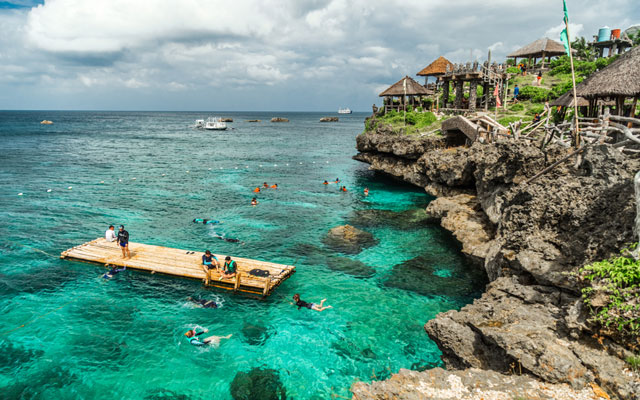
Philippines’ borders have been closed to foreigners since March 2020 due to Covid; tourists snorkelling at Crystal Cove Island near Boracay pictured
“Allowing tourists from green countries or territories that have the majority of its population vaccinated and with low infection rate, will greatly help in our recovery efforts – increasing tourist arrivals and receipts, among others,” Romulo-Puyat said.
“This move will likewise aid in bolstering consumer confidence, which is a large contributor to our gross domestic product or GDP growth.”
Romulo-Puyat said that the proposal to open leisure travel from “green countries”, or those classified by the Department of Health as low-risk countries, will be based on strict conditions.
Only fully vaccinated individuals with vaccines recognised by the country’s Food and Drug Administration under an Emergency Use Authorization or those authorised by the WHO will be allowed entry to the country.
Romulo-Puyat noted that this is a welcome development as other countries have already reopened their borders to international leisure travellers.
“Our (South-east Asian) neighbours like Thailand, Vietnam, and Cambodia also did the same. We believe that it is also time for us to reopen our borders for inbound tourism as a way towards full recovery,” she said.
An inter-agency Special Technical Working Group on Travel has been tasked to come up with guidelines for the country’s reopening to international tourists, subject to the approval of the coronavirus task force.
Separately, the DOT will also be working on another proposal with the Small Technical Working Group on Travel on the possibility of establishing vaccinated travel lanes or bubbles to allow entry for vaccinated tourists from yellow list countries.
Malaysia aims to become a hub for Hepatitis C treatment in the region by offering a combination of ravidasvir and sofosbuvir to treat Hepatitis C at affordable prices.
Being the first country in the world to be given conditional approval for combining ravidasvir with sofosbuvir to treat Hepatitis C, Malaysia is poised to offer access to an affordable and efficacious treatment solution for those infected with the virus.
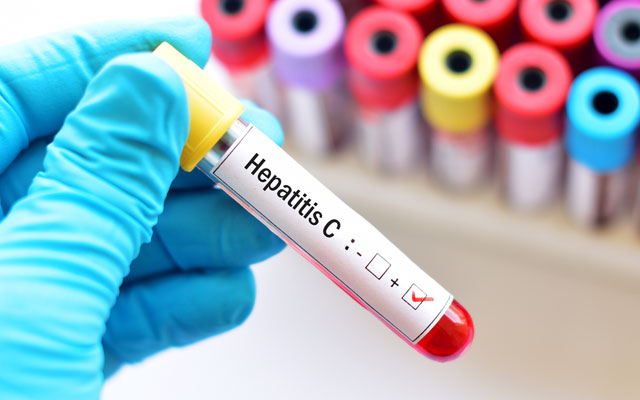
Malaysia will market its Hepatitis C treatment abroad to attract health travellers to the country
Speaking at the launch of Malaysia as the Hepatitis C Treatment Hub of Asia on Tuesday (November 16), health minister Khairy Jamaluddin said: “In response to the World Hepatitis Day 2021 theme, Hepatitis Can’t Wait, Malaysia is ready and raring to move forward with a treatment solution for those infected with the disease.
“This is in line with WHO’s mission to reduce new viral hepatitis infections by 90 per cent and reduce deaths by viral hepatitis by 65 per cent by 2030. Malaysia is offering Hepatitis C patients a treatment with a cure rate of 97 per cent and cost reduction of 95 per cent.”
The Ministry of Health will identify hospitals to carry out the treatment, which will be marketed abroad to attract health travellers to Malaysia.
This year, the government is targeting RM520 million (US$125 million) in revenue from health tourism, a huge drop from RM1.7 billion in 2019. For 2022, the target is RM800 million, and a recovery to pre-pandemic level is only expected in 2025.
The recovery of Asia-Pacific’s travel and tourism sector has soared ahead of many regions in the world with a year-on-year growth of more than 36 per cent, according to new research from the World Travel & Tourism Council (WTTC).
Before the pandemic struck, Asia-Pacific’s travel and tourism sector’s contribution to GDP represented more than US$3 trillion, or 9.9 per cent of the region’s economy.
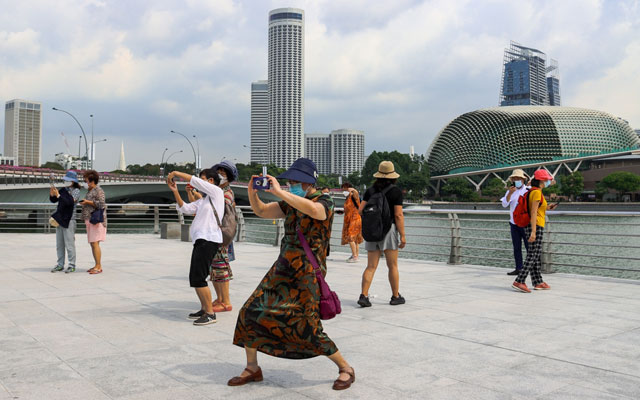
Asia-Pacific’s tourism sector’s contribution to GDP could see a year-on-year increase of 36.3 per cent this year, says WTTC; tourists visiting Singapore’s Merlion Park under the vaccinated travel lane scheme pictured
After the pandemic brought international travel to an almost complete standstill, in 2020, Asia-Pacific saw a hit of almost 54 per cent, halving the contribution of the travel and tourism sector to the region’s economy.
However, according to the research, and based on the current rate of recovery, the sector’s contribution to the region’s GDP could see a year-on-year increase of 36.3 per cent this year, ahead of the global average of 30.7 per cent, which represents an increase of US$515 billion.
The data also revealed travel and tourism’s contribution to the Asia-Pacific economy could see a similar year-on-year rise of 35.8 per cent in 2022, representing an increase of US$692 billion.
Domestic spend is expected to grow by 49 per cent by the end of this year and experience a year-on-year rise of more than a quarter (25.5 per cent) in 2022.
WTTC’s research goes on to show that while international spend is predicted to drop by nearly 25 per cent on 2020 figures, one of the worst years on record for the travel and tourism sector, 2022 is looking more positive.
Next year, international spend growth is set to rise by US$156 billion (148 per cent), providing a massive boost to the region’s economy.
In terms of employment, in 2019, the Asia-Pacific travel and tourism sector supported more than 185 million jobs.
After a loss of over 34 million jobs last year, when travel restrictions brought international mobility to an almost complete standstill, employment growth is set to rise by a marginal 0.4 per cent in 2021.
However, employment growth could experience a 19.8 per cent year-on-year increase, reaching more than 181 million jobs in 2022.
Julia Simpson, WTTC president & CEO, said: “Our research clearly shows that while the global travel and tourism sector is beginning to recover, Asia-Pacific is doing so at a much faster rate.
“Many countries in the Asia-Pacific region, such as the Philippines, host to our prestigious annual Global Summit next March, are not only ramping up their entire vaccination programme, but also focusing on speeding up the vaccination rollout in key tourism destinations and (among) frontline tourism sector workers in order to reboot their travel and tourism sectors.
“With high vaccination rates around the region, and a predicted rise in international and domestic spend next year, the outlook for both jobs and GDP is looking much more positive for next year.”
According to the research, the sector’s contribution to the region’s GDP and the rise in jobs could be more positive this year and next, if five vital measures are met by governments around the world.
These measures include allowing fully vaccinated travellers to move freely, irrespective of their origin or eventual destination. Secondly, the implementation of digital solutions which enable all travellers to easily prove their Covid status, in turn speeding up the process at borders around the world.
Thirdly, for safe international travel to fully restart, governments must recognise all vaccines authorised by WHO. Fourthly, continued support of the COVAX/UNICEF initiative to ensure equitable distribution of vaccines around the world.
Finally, the continued implementation of enhanced health and safety protocols, which will underpin customer confidence.















More than two hundred vaccinated international tourists arrived in Vietnam’s resort island of Phu Quoc on Saturday (November 20), the first batch of visitors to the country after nearly two years of border closure caused by the Covid-19 pandemic.
A Vietjet Air flight brought 204 South Korean tourists to Phu Quoc to experience a five-day, four-night vacation at Phu Quoc United Center.
A welcome ceremony was held at Phu Quoc International Airport, attended by Nguyen Trung Khanh, chairman of Vietnam National Administration of Tourism (VNAT); Vo Huy Cuong, deputy director of Vietnam Civil Aviation Department; leaders of Kien Giang Province and ministries; as well as representatives of Vietjet Air, Vinpearl Joint Stock Company and Marketing Highland Travel Company.
Passengers aboard the flight were welcomed with a special performance showcasing Ao Dai, Vietnam’s traditional dress; as well as a water salute cannon upon their arrival at the airport.
Speaking at the event, Khanh said the inaugural flight to Phu Quoc marked “an advance in the country’s efforts to revive its tourism industry while reopening and developing the economy step by step under a new normalcy context”.
He added that the country’s Covid-19 safety measures coupled with its high-quality tourism products “will again affirm Vietnam’s attractiveness and abilities to meet high-class tourism demand” post-Covid.
Vaccinated tourists will not have to undergo quarantine, but are subject to Covid-19 testing on the first and last day of their vacation. They are also required to spend their entire stay within the Phu Quoc United Center, a 1,044ha mega complex housing attractions like Vinpearl Golf, VinWonders theme park, Vinpearl Safari, Corona Casino and the Grand World Phu Quoc.
All tourists will stay at Vinpearl Resort & Spa Phu Quoc, which has been allowed to welcome international guests in separated zones.