

Tourism Malaysia to skip WTM, focus on sales mission instead

Tourism Malaysia will not be participating at the upcoming World Travel Market (WTM) London in November due to budget constraints.
Instead, Tourism Malaysia will lead a focused B2B sales mission to Paris, Frankfurt, and London, commencing on September 30. This initiative will align with their efforts to promote the Visit Malaysia 2026 campaign.

In a written response to a question raised by member of the National Assembly, Hisamudin Yahaya, the Ministry of Tourism, Arts, and Culture (MOTAC) confirmed the decision.
MOTAC elaborated that the sales mission would feature business-matching sessions and networking opportunities with prominent travel agencies from France, Germany, and the UK. Additionally, the roadshow will highlight Malaysian cuisine and cultural performances to engage with the public.
Despite these efforts, KL Tan, president, Malaysian Tourism Federation, expressed concern over Malaysia’s absence at WTM.
He told TTG Asia: “MOTAC should seriously reconsider its decision as the absence of the Malaysia Pavilion could potentially result in loss of visibility in the global tourism market.
“The Malaysian Tourism Federation is willing to take up the challenge to lead the private sector participation with a government grant of 400,000 ringgit (US$91,765) to save the day.
Tan urged MOTAC to adopt a revised strategy to offset Malaysia’s absence from the WTM, highlighting the UK’s importance as a high-yield market for Malaysia, while at the same time, developing the Chinese and Indian tourism markets.
He also praised the state tourism boards of Sabah and Sarawak for stepping up to represent their respective state tourism players.
However, other industry players appeared more supportive of Tourism Malaysia’s alternative approach.
Shah Azam Khan, senior vice president, hospitality Division, AnCasa Hotels & Resorts, explained that the roadshow would provide a more targeted experience.
He noted that the B2B networking events would allow Malaysian industry players to spend more time fostering relationships with European agents genuinely interested in promoting Malaysia.
Anthony Wong, managing director of The Frangipani Langkawi Resort and Spa, opined that if Tourism Malaysia is skipping WTM, it becomes essential for the organisation to ensure a significant presence at ITB Berlin, an even larger trade show. He noted that many European buyers attending WTM would also be present at ITB, making it a crucial event for maintaining Malaysia’s presence in the European tourism market.
DidaTravel hosts B2B events to boost Chinese outbound demand for Thailand, Malaysia
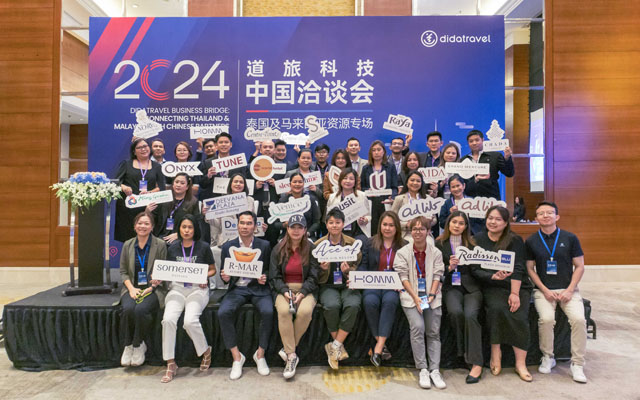
DidaTravel has revealed substantial growth in booking demand for Thailand and Malaysia, fuelled by a surge from the Chinese source market, and in response, hosted a series of B2B business matchmaking and networking events in China last week.
In 1H2024, hotel bookings from Chinese travellers visiting Thailand rose by 340 per cent compared to the same period the previous year. Likewise, hotel bookings from Chinese source market travellers visiting Malaysia surged by 780 per cent during the first six months of this year. These numbers underscore the rising interest and confidence among Chinese travellers in these South-east Asian destinations.
In Thailand, Chinese visitors are showing a strong preference for popular destinations such as Bangkok, Pattaya, Phuket, Karon, Patong, Chiang Mai, Krabi, Koh Samui, Bang Phli, and Hat Yai. In Malaysia, the most sought-after destinations include Kuala Lumpur, Kota Kinabalu, Penang, Johor Bahru, Semporna, Langkawi, Malacca, Petaling Jaya, Sepang, and Ipoh.
DidaTravel showed its support by organising B2B business matchmaking and networking events, held in Beijing on September 3 and in Shanghai on September 5. These events brought together major Chinese travel agencies experiencing outbound travel demand with hotel representatives from Thailand and Malaysia. The goal was to strengthen DidaTravel’s role as a bridge between Chinese travel agencies and South-east Asian hotel partners, actively addressing the rapid growth of China’s outbound travel market and further enhancing the influence of international hotel brands in the Chinese source market.
“The surge in bookings to Thailand and Malaysia highlights the growing enthusiasm of Chinese source market travellers in these destinations. Our events in Beijing and Shanghai reflected our commitment to fostering strong, lasting relationships between travel agencies and hoteliers. By enabling direct communication and collaboration, we aim to help our partners deliver exceptional, customised experiences that meet the evolving needs of today’s travellers,” commented Snow Xiao, senior director – hotel direct contracting, global at DidaTravel.
Virgin Australia, Amadeus enhance partnership
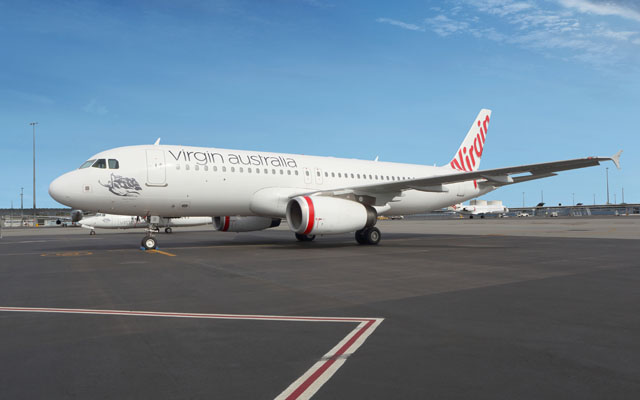
Amadeus has renewed and expanded its distribution agreement with Virgin Australia, which will see the airline make its offering available to connected travel sellers around the world through EDIFACT and in the future, NDC channels.
The expanded partnership will see the Australian airline collaborating with Amadeus across a suite of solutions for airlines and airports as well as loyalty and distribution.
Content from Virgin Australia will be fully integrated into travel sellers’ preferred booking environments which can include Amadeus Selling Platform Connect, Amadeus Travel API, or the Amadeus self-booking tool for corporations, Cytric Easy.
Sandra Da Cruz-Brits, general manager distribution, Virgin Australia, said: “Over the past decade, we have expanded our partnership and now look forward to deepening it further as Virgin Australia accelerates its transition to the world of modern airline retailing.”
Lance Batty, regional director airlines, South Pacific, Amadeus, added: “We welcome the opportunity to work with the airline to improve its travel retailing offering, with a relationship that now encompasses IT solutions, loyalty, distribution and more.”
Hilton leads as Asia’s top hospitality workplace for eighth year running
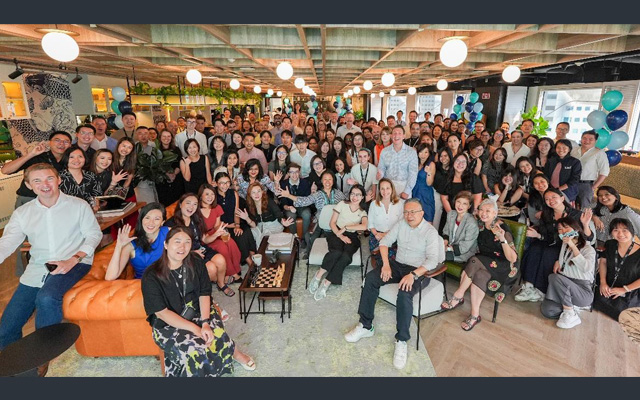
Hilton has once again been recognised as the highest-ranking hospitality company on Great Place to Work’s Best Workplaces in Asia list for the eighth consecutive year, placing at number two among the top 100 companies across all industries in the multinational category.
This latest recognition validates Hilton’s commitment to offering a best-in-class employee experience reflective of its signature hospitality – driven by humanity and focused on inclusion, wellness, growth and purpose. Through its programme and global employer proposition, Thrive@Hilton, the company empowers its team members across Asia-Pacific to thrive, regardless of their background, role, or location.
This latest win reinforces the steps that Hilton has taken to transform the hotel work experience and better align with the changing priorities of today’s workforce, such as streamlining its recruitment and on-boarding processes, adopting new approaches to hotel staffing that prioritise flexibility and efficiency, and reducing time spent on transactional tasks. For instance, Hilton successfully rolled out a GIG model in China and Japan, becoming the first international hotel company to offer flexible employment to over 17,000 gig workers across over 100 cities in these markets, resulting in over 240,000 shifts completed to date.
Globally, Hilton was named #1 World’s Best Workplace by Fortune and Great Place to Work in 2023, the first and only hospitality company to ever receive this accolade.
“The hospitality landscape is rapidly evolving, and it remains Hilton’s priority to distinguish itself as an employer of choice, and strengthen a culture that values inclusion, growth and innovation. As we write our next growth chapter, this presents a huge engine of opportunity for our 62,000 team members, the driving force behind Hilton’s success,” said Alan Watts, president, Asia Pacific, Hilton.
Patsy Ng, vice president, human resources, Asia Pacific, Hilton, added: “A best-in-class culture attracts the best talents, and the best work experience brings out the very best in our team members to deliver the best stays for our guests. As we celebrate our eighth consecutive year as Asia’s leading hospitality workplace, we are more committed than ever to fostering a future-ready workplace that delivers a truly human experience for all.”
Dagmar Lyons joins Raffles Hotel Le Royal as GM
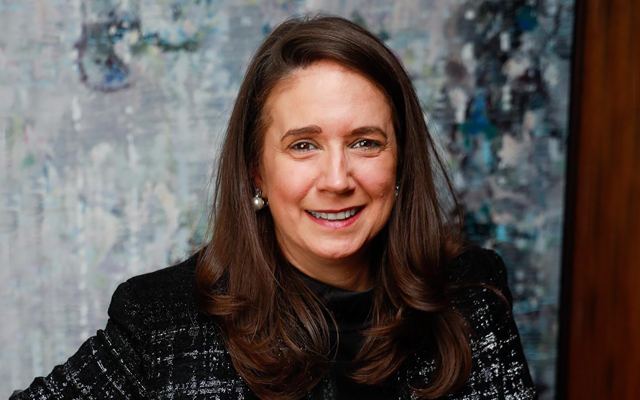
Raffles Hotel Le Royal, the 95-year-old luxury heritage hotel in Phnom Penh, Cambodia, has appointed Dagmar Lyons as its new general manager.
She joins Raffles Hotels from Fairmont Pacific Rim in Vancouver, Canada, where she served as hotel manager for the past two years.
 Her hospitality career has included postings at numerous luxury hotels and resorts around the world, including in North America, Asia, the Middle East and Europe.
Khao Lak Marriott Beach Resort & Spa names new GM
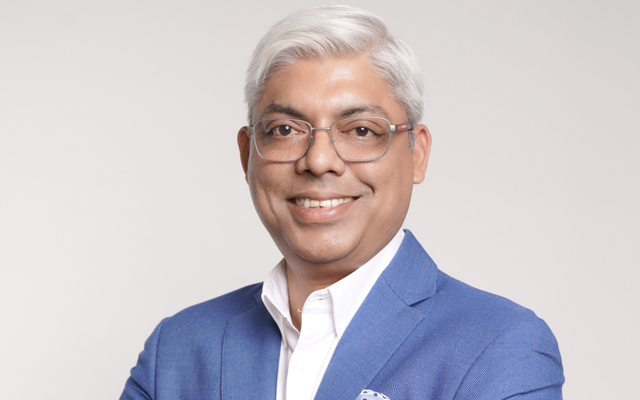
Marriott International has appointed Debdyuti Dasgupta as general manager of Khao Lak Marriott Beach Resort & Spa, which is set to open its doors in 4Q2024.
With 20 years of experience, he will lead Khao Lak Marriott Beach Resort & Spa through its opening phase.
 He joins the new resort from Courtyard by Marriott Bangkok where he served as general manager.
Rising demand for the US stifled by long visa wait times

Outbound travel demand from India to the US is experiencing overwhelming growth. However, extended waiting times for visa appointments are hindering this momentum, according to industry stakeholders.
“As a DMC, we have been organising roadshows in different Indian cities including tier-II and tier-III markets. The outbound demand for the US from segments like families, students and MICE groups is growing across the country but visa appointments are not readily available. So, we are also noticing travel plans getting postponed to next year,” shared Veena Robinson, vice president – India sales, Discover Destinations.

Harvinder Singh, director Middle East & India, United Airlines said that three key segments of air travel – business, students and leisure – are leading the demand.
“We are also noticing that a lot of small and medium-sized enterprises from non-metro Indian cities are travelling to the US to explore business opportunities,” added Singh.
According to some Indian travel agents, visa appointment wait-times currently range from a minimum of six months to a year. These lengthy delays have also led some agents to resort to unfair practices to secure appointments for their clients. An agent, speaking on condition of anonymity, revealed that their company collaborates with a B2B partner who provides quicker visa appointments in exchange for a fee. “We are able to secure visa appointments for our clients in as little as a week. Clients are willing to shell out money for the ‘convenience’,” the agent remarked.
Rajesh Magow, co-founder and group CEO of MakeMyTrip, believes that to address visa challenges, innovations like the introduction of short-term tourist visas is needed.
“The demand for the US is only going to rise so there is a strong business case of increasing capacity and offering more and more visas. Short-term tourist visas could be an innovation to address the challenge,” added Magow.
Robinson also agreed that introducing short-term, tourist-centric visas could help companies like hers avoid losing business.
In 2023, the US Embassy and Consulates in India processed a record 1.4 million US visas. Presently, the US offers Indian travellers visas valid for 10 years.
Malaysia Airlines to say bonjour again in 2025

Malaysia Airlines is set to resume direct flights between Kuala Lumpur International Airport and Paris, starting March 22, 2025, making another notch in its European expansion plans.
The service will begin with four weekly services, increasing to daily a week later from March 29, 2025. The new route, operated by Airbus A350-900 aircraft, will mark the airline’s 68th destination and its second European route after the UK.

Malaysia Aviation Group’s group managing director, Izham Ismail, described this expansion as a significant milestone for the airline.
He shared: “With the arrival of additional widebody aircraft starting in the fourth quarter of 2024, we are excited to reintroduce Paris to our network. While the European market is highly competitive, we see tremendous potential for this route to attract key travellers not only from Malaysia but also from South-east Asia, Australia, and New Zealand.”
On the return leg from Paris to Kuala Lumpur, Malaysia Airlines aims to draw passengers not only from France but also from North Africa, Eastern and Northern Europe, and the US.
The airline had previously operated the Kuala Lumpur-Paris route from 1981 to 2016, before suspending it due to a network restructuring.
Looking ahead to 2025, Malaysia Airlines plans to focus on expanding its network further in Australia and India by increasing flight frequencies and launching services to new cities.
Agoda, Sands China to boost tourism to Macau
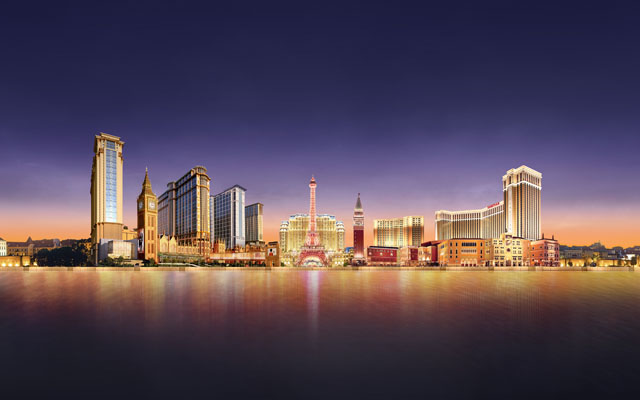
Agoda and Sands China have signed a memorandum of understanding (MoU) to jointly promote Macau as a prime destination for both leisure and business travellers.
The partnership aims to elevate Macau’s status as a premium destination by showcasing its iconic UNESCO World Heritage sites, diverse attractions, and landmarks.
The MoU also involves launching joint marketing campaigns and creating customised products to attract high-value international guests, with both organisations exploring additional ways to combine their strengths to draw more visitors to Macau.
Sands China operates five integrated resorts in Macau, including the European-themed resort city on the Cotai Strip. The Venetian Macao, The Parisian Macao, The Londoner Macao, and Four Seasons Macao are all interconnected, offering an array of facilities including 10 international hotel brands, 12,500 hotel rooms and suites, over 150 dining options, over 150,000m² of MICE spaces, around 850 stores, and six entertainment venues including the 15,000-seat Cotai Arena and the 6,000-seat The Londoner Arena.
Andrew Smith, senior vice president of supply at Agoda, said: “We are excited that, through this partnership, we can provide visitors to Sands China’s properties the opportunity to experience the unique attractions of Macau and see the world for less.”
Kris Kaminsky, senior vice president of hotel operations, Sands China, added: “We believe with this partnership with Agoda, we can make a positive impact on Macau’s tourism economy and further demonstrate Sands China’s commitment to supporting the various tourism initiatives and increasing diversification of visitor source markets.”
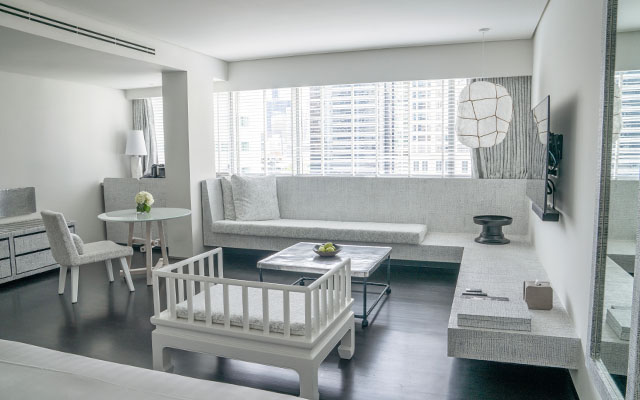







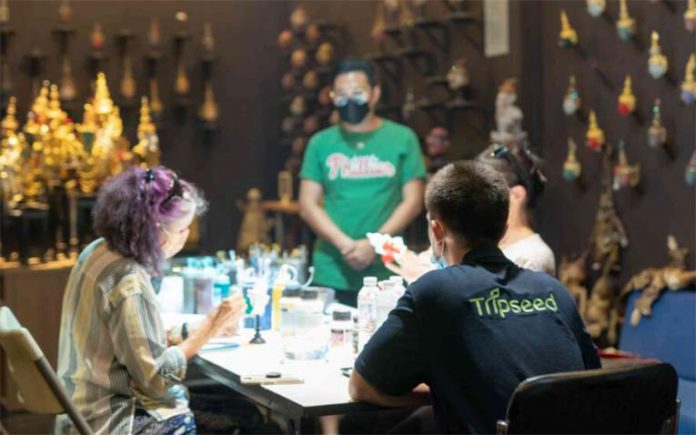
Thailand-based DMC Tripseed has launched the first phase of its Economic Distribution Disclosure Initiative, a project that aims to map and label the economic benefit distribution of its Thailand operations.
To date, over 80 day tours and half-day tours have been labelled on the Tripseed website, identifying where the economic benefit from each tour goes geographically.
This initiative is said to be the first in the touring industry.
Tripseed defines economic leakage as the phenomenon where money spent by tourists does not remain in the local economy, but instead flows out to other regions or countries. This often occurs when tourism-related businesses are owned by foreign entities and individuals, or when goods and services are imported rather than sourced locally.
Measuring and reporting on leakage transparently is crucial to creating a more sustainable and positively impactful tourism industry. By addressing these imbalances, the tourism sector can lead efforts to create fairer economic opportunities, ensuring that tourism benefits genuinely reach locals.
Reducing leakage benefits destinations by ensuring more revenue remains within destinations and local communities, and goes hand-in-hand with ethical tax conduct towards fostering sustainable development and providing funds for improving public services and infrastructure.
Tripseed’s methodology for calculating leakage reveals insights into revenue distribution. This first phase introduces a labelling system that highlights the geographical beneficiaries of touring activities. Secondary and tertiary phases will disclose further details about the genuine economic beneficiaries of tours, while a complete company-wide disclosure will detail how much of Tripseed’s cost base goes toward local individuals and businesses versus leaks overseas to foreign-owned businesses and multinational corporations.
Ewan Cluckie, co-founder and director of growth at Tripseed, said: “We ensure that all our revenue and profits attributable to Thailand products and services are recorded in Thailand, where we also pay our taxes. Although this might appear minor, profit shifting to foreign countries is a significant issue in the DMC sector, diverting essential income away from local economies. This practice often prioritises maximising profitability over truly investing in the sustainable development of the destinations where they operate.”
“By refining our methodology, we strive to uncover genuine socio-economic contributions to local communities and foster a tourism model prioritising ethical practices over profits.”