


The Eve Hotel Sydney names new GM
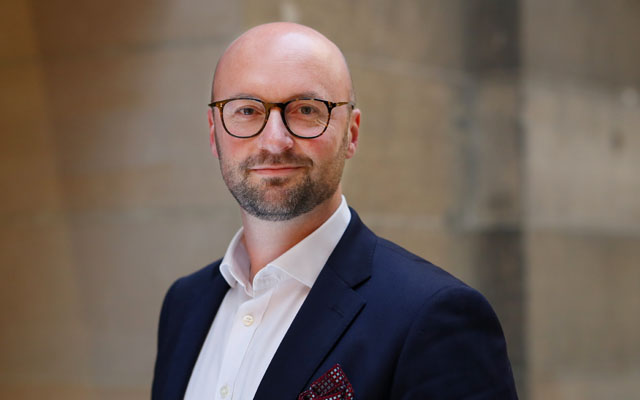
The Eve Hotel Sydney welcomed Ben Mellor as general manager ahead of the boutique luxury hotel’s summer debut in Sydney’s new Wunderlich Lane precinct.
 With more than two decades of experience in luxury hospitality, he brings a wealth of leadership and expertise to his new role. He has held senior management positions at Sydney’s top five-star hotels, including Sofitel Sydney Wentworth, Fairmont Resort Blue Mountains and, most recently, as general manager of InterContinental Sydney Double Bay.
Massimo Brancaleoni joins Kempinski Hotels as chief commercial officer

Kempinski Hotels has named Massimo Brancaleoni as its chief commercial officer with effect from November 1.
Having worked in destinations such as Paris, Genoa, Hong Kong, Madrid, Miami and Monaco, he brings over 25 years of commercial experience to his new role.
 Prior to joining Kempinski Hotels, he served as the senior vice president sales and revenues at Silversea Cruises.
More details emerge on Bali’s proposed hotel development freeze, industry players urge strict policing

Bali’s proposed moratorium to temporarily halt the construction of new hotels and villas in the Sarbagita region will ultimately improve Bali’s spatial planning for the long term, and will come with policies guiding hotel development and tourism management that are in accordance with cultural values and sustainability.
Sandiaga Uno, Indonesia’s tourism and creative economy minister, said: “We are concerned that many tourism accommodation facilities, such as newly-built hotels and villas, are not making adequate considerations for the environment and long-term sustainability.”

He shared that the government would thoroughly analyse Bali’s southern region, specifically Sarbagita, to identify areas that need attention.
“Not all of South Bali is the same; maybe Badung is different from Tabanan. We will formulate (the policy) later,” Sandiaga added.
Speaking at the recent International Quality Tourism Conference, Luhut Binsar Pandjaitan, coordinating minister for maritime affairs and investment, highlighted the large number of agricultural lands in Bali that have been converted into villas and hotels.
He said the new policies would ensure better control over the conversion of agricultural land for commercial use, and mandate greater sustainability focus in tourism development.
He said the moratorium could cover a period of to 10 years.
I Gusti Ngurah Rai Suryawijaya, vice chairman of the Indonesia Hotel & Restaurant Association Bali Chapter, said the moratorium must be supported by other integrated and sustainable policies for effectiveness. Implementation must come with clear regulations related to spatial planning and land use.
“The key to the success of the moratorium is strict law enforcement and regulations. Severe sanctions need to be imposed on parties that violate the rules. The government must also commit to implementing the principles of sustainable tourism. Otherwise, the moratorium will only delay the damage, instead of solving the existing problems,” emphasised Rai.
Eduard Rudolf Pangkerego, COO, Artotel Group, agrees, adding that community involvement in monitoring and reporting violations of the new rules would be crucial, as would good coordination between the central government, local governments, and other related agencies.
Eduard said details and implementation should not come at the last minute, as doing so would impact the business climate in Bali.
“Bali could follow the example of Yogyakarta, which successfully re-planned its tourism (development) through a moratorium,” he concluded.
Sharjah targets high-end Indian travellers with niche properties
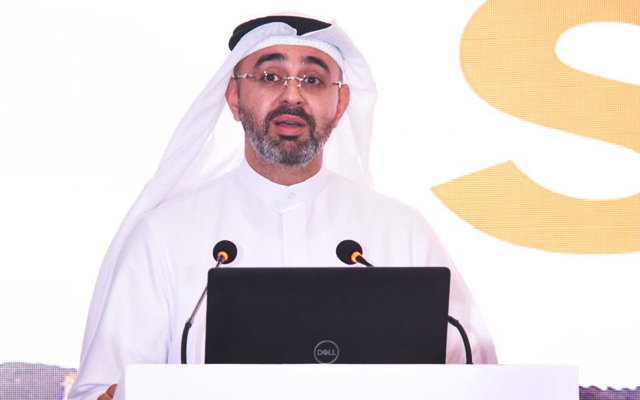
The Sharjah Commerce & Tourism Development Authority (SCTDA) is ramping up efforts to attract high-end travellers from India by promoting a range of ‘niche’ properties that offer authentic, immersive and diverse experiences in the emirate.
As part of its efforts, SCTDA organised a series of roadshows in New Delhi, Mumbai, and Chennai from September 5 to 9 to create awareness about these unique properties among travel trade partners.
Some of these properties include The Chedi Al Bait, Sharjah – a GHM hotel, Al Faya Retreat by Sharjah Collection and Kingfisher Retreat by Sharjah Collection.
“Brands like Sheraton, Pullman and DoubleTree by Hilton have already established a presence in Sharjah. We now have a strong portfolio of niche properties that offer unique experiences to visitors which we want to promote in India,” said Khalid Jasim Al Midfa, chairman of SCTDA, during a media briefing at the New Delhi roadshow. He further announced that two additional luxury properties, Lux*Al Jabal and Lux* Al-Bridi, are expected to become operational in the near future.
Giving an example of the experiential nature of these products, Midfa said Al Faya Retreat located in the heart of the desert has an inventory of five rooms and guests can engage in activities like dune bashing or stargazing. The retreat is ideally positioned to explore the Mleiha region, a UNESCO World Heritage Site.
The emirate has also been improving infrastructure, such as in the east coast where some of these properties like Kingfisher Retreat are located.
“Earlier, it used to take about two hours to reach the east coast from Sharjah city. However, this time has been reduced to about 50 minutes because of infrastructure developments like roads and tunnels,” said Al Midfa.
Sharjah welcomed 165,000 hotel guests from India last year and is expecting a 10 per cent growth in the numbers by the end of the current fiscal year.
Agora Hospitalities, Dorsett Hospitality to debut new Dorsett by Agora brand in Osaka

Agora Hospitalities Co. and Dorsett Hospitality International are introducing a new brand, Dorsett by Agora, and will launch the first property in Osaka, Japan.
Scheduled to open in Spring 2025, Dorsett by Agora Osaka Sakai will offer 321 rooms and suites, with facilities such as a restaurant, seaside terrace, lobby lounge, and conference rooms.

Located just a 10-minute train ride from the heart of Osaka’s Minami district, Namba, the hotel is surrounded by Osaka’s only World Heritage site, the Mozu-Furuichi Kofun Group, as well as areas rich in the history and culture of Sakai. Within Sakai City, visitors can explore traditional townscapes from the Edo period, historic commercial districts, and ancient shrines, offering a close encounter with Japan’s deep history and culture.
The hotel also provides access to Osaka City, with popular areas like Minami and Kita easily reachable. A five-minute walk from Sakai Station on the Nankai Main Line, guests can also get to Kansai Airport in just about 37 minutes by train.
SingaPour Drink Tour


Think a pub crawl, but a sober one, whereby at the end of it, you will still be able to walk steadily, and not wake up with a raging hangover the next day.
That is what the SingaPour Drink Tour offers. Organised by tour operator VegThisCity Singapore, it is currently the first-of-its-kind in the country to focus exclusively on zero-alcohol cocktails and alternative beverages.
That is not to say the drinks were any less potent or tasty. As Eiktha Khemlani, the founder of the company puts it, the tour aims to highlight the sustainable and health-forward culture at Singapore bars.
On this three-hour walking tour, participants will visit three very different bars, speakeasies or hidden hotspots, and have at least one drink and a bar snack at each venue.
The bars on each tour will be different and participants will not know where they are going until the actual day, to keep the element of surprise.
My tour began at The Coup, a cosy bar in the basement of historic Ann Siang Hill. Here, my group had the opportunity to try a curated selection of kombucha-based concoctions by a local brewer, Boujee Botanicals. With names like Relax Ribena Kombucha, Cognitive Elixir, Jamu Immunity Shot, it is clear that each drink was carefully selected to nourish the body.
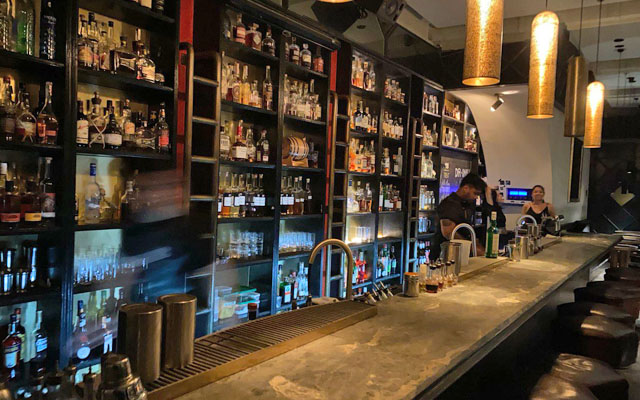
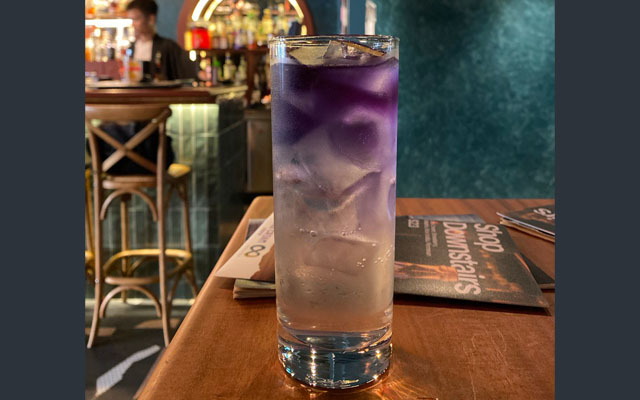
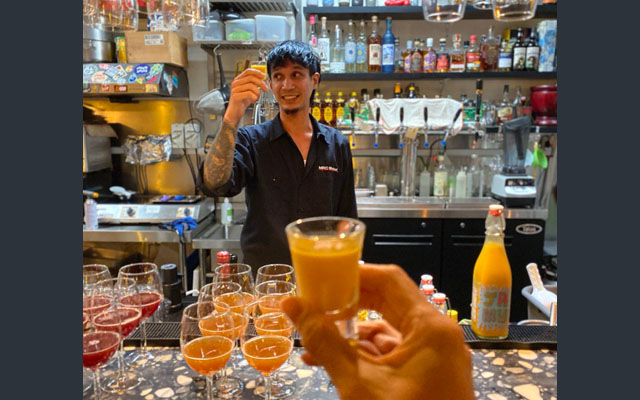
Hydrated and feeling marginally healthier, we moved on to the next stop, Spectre, a mental wellness-themed bar with a vintage apothecary-inspired interior. The drinks crafted are inspired by traditional Chinese medicine and the three non-alcoholic drinks were conceived in the same vein, one designed to aid digestion, another to sleep better.
The last stop was 28 HongKong Street, which has consistently been on the list of Asia’s best bars for years. Here, the ingredients used in some drinks are sourced locally or from the region, while the spirits used contain naturally sourced ingredients.
What stood out was getting the chance to interact with the bartenders, which was not something that you would get to experience on a regular visit to a bar. Throughout the tour as well, participants will also get to learn little nuggets of history and culture of the bars and the area they are at, great for those new to Singapore.
Each tour will be led by an expert guide familiar with the local nightlife scene. The group size is also kept small, not more than 10, to maximise interaction among participants. They also get to skip any queues and special access into bars and hotspots.
Private tours can also be customised to participants’ preferences and suitable for corporate groups too.
Verdict
It was impressive to hear from the bartenders and brewers themselves about the thought process and well-intentioned meaning that went into the creation of each drink. As someone who has been teetotal for a few months, I left well-hydrated, with a greater appreciation for Singapore’s bar scene and glad that I still had my wits about me.
Rate
S$129 (US$99) per person
Contact details
Website: https://vegthiscity.com/product/singapour-drink-tour-copy/
New hotels: Dusit Thani Bangkok, Best Western Adelaide Airport and more


Dusit Thani Bangkok, Thailand
At the Dusit Thani Bangkok hotel, a singular corridor floor plan ensures that every room faces the verdant expanse of Lumpini Park, providing guests with uninterrupted scenic views through expansive floor-to-ceiling windows.
The hotel has been reconstructed to offer an opulent accommodation experience, with fewer rooms (257 versus the original’s 517), banqueting and meeting facilities spanning over 5,000m², dining outlets, spa, and even a multi-level rooftop bar.
Best Western Adelaide Airport, Australia
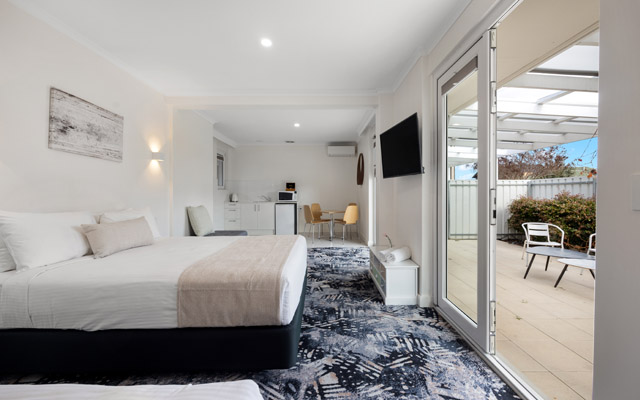
Best Western Adelaide Airport has been transformed, featuring guestrooms with double-glazed windows and soundproof doors to ensure a restful night’s sleep, a restaurant and bar, EV charging facilities, airport shuttle service and other amenities.
Situated directly across from Adelaide Airport, and a short drive from Adelaide city centre, the newly-renovated hotel is also nearby some of South Australia’s prime attractions and beaches like West Beach, Henley Beach, and Glenelg.
Wafaifo Resort Hoi An, Vietnam
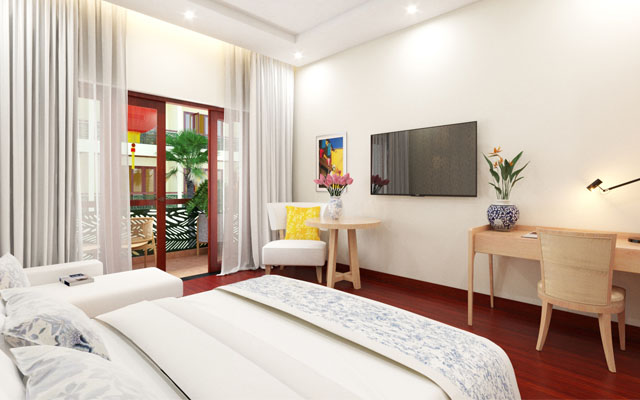
Wafaifo Resort Hoi An will give visitors to Hoi An and the greater Danang area access to a range of wellness and spa services at the new 134-room and suite lifestyle resort.
The facility comprises a detailed health diagnostic report using epigenetic testing, hair follicle analysis, AirPod hyperbaric chamber sessions, infrared saunas, and ice baths will also reduce blood pressure, improve circulation, flush toxins and reduce inflammation and swelling. Guests can also benefit from a Nu Calm sleep and restoration experience in their room.
The resort also has an advanced gym with personal fitness consultants, and will roll out more health and wellness services in the later phases.
Lanson Place Parliament Gardens, Australia
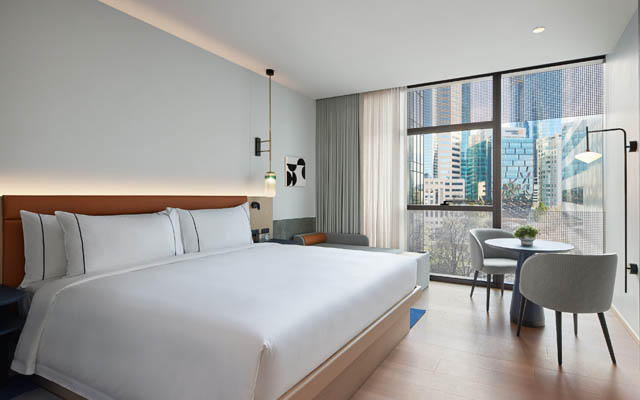
Lanson Place Parliament Gardens is housed within the historic walls of the former Salvation Army printing press, located opposite the picturesque Parliament Gardens in Melbourne. The property features 137 rooms, studio apartments, one- and two-bedroom apartments, and two penthouses with panoramic views over the city.
Facilities comprise a wellness centre, swimming pool, fitness centre, and a restaurant and bar.
Club Med Bintan empowers families with new planet conservation programme

Club Med has joined hands with Mandai X, the growth and impact venture-building arm of Singapore’s Mandai Wildlife Group, to bring the Ranger Buddies programme to Club Med Bintan from November 16, 2024 to January 5, 2025.
The programme features a series of missions and activities that blend augmented reality with real-life exploration to nurture the next generation of conservation heroes.

Designed with children and families in mind, the Ranger Buddies Missions make learning about sustainability a fun and engaging part of their holiday experience while encouraging participants to care for the planet.
Families and children can embark on a mission to help Coco the tortoise save the threatened habitats of her ocean cousins. Guests can tackle various missions through the Mini Club Med+ programme, enjoy dedicated family activities, or explore the Magic Valley app, a digital storytelling app where children have fun with interactive and personalised stories.
The programme integrates the C.O.U.R.A.G.E. framework, a research-backed approach designed by pedagogical experts – the framework helps children thrive by fostering essential life skills such as creativity, courage, and cooperation.
Participants can also join Club Med’s Amazing Family programme, which offers curated family activities designed to strengthen bonds while learning about sustainability.
In addition, children can become Ranger Buddies certified by Mandai X, and families can take home a personalised digital story about sea turtles to preserve memories of their adventure.
For more information, visit Club Med Bintan.
Further East returns to Bali for fifth year
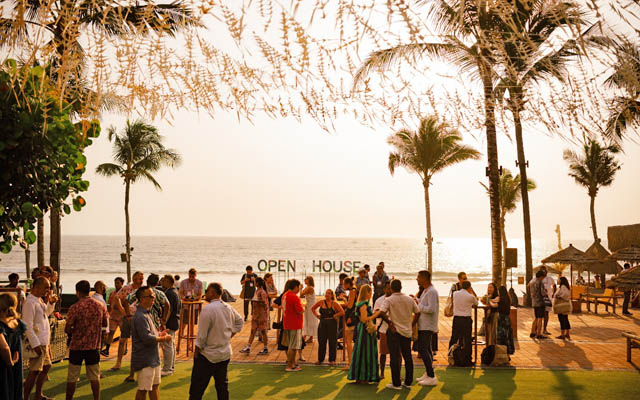
Further East, Asia-Pacific’s only region-specific industry networking event, returns this year on November 4 in Bali, Indonesia.
The fifth edition of Asia-Pacific’s definitive gathering of buyers, exhibitors and media sharing their thoughts on the future of high-end travel will be hosted by Desa Potato Head over four days where attendees can look forward to immersive meetings, show floor activations and informal connections, as well as two evening parties.
In August, Further East revealed the names of each stage and what attendees can expect there. The main stage, Amplify, will feature some of the region’s buyers, exhibitors and media leaders speaking about industry topics. The name reflects Further East’s tagline this year, Asia-Pacific amplified, which encapsulates the event’s mission to introduce more Asia-Pacific experiences to the global travel market.
Second stage Masterclass provides more intimate workshop-style sessions, while the third, titled The Circle, opens debate between delegates, speakers and moderators. Each space represents ‘business done differently’ – a thought leadership festival that is more casual, relaxed and Asia-Pacific-centric than any other in B2B networking.
“We’ve worked very closely with Desa Potato Head since Further East’s first event in 2018,” said Sophia Asghar, associate event director. “This year, we’re growing that partnership. Not only will they play host to Open House, but also our opening party, where our delegates will mingle and enjoy drinks, a DJ and a special theme we’re yet to reveal.”
As the region continues to draw more international travellers, Asghar and her team believe this is a pivotal time for Asia-Pacific brands to meet and collaborate with global buyers. “People want to widen their perception of luxury, and we know the Asia-Pacific region can lead the industry. That’s why we create the perfect environment to collect and inspire travel leaders… to break open their real potential here,” she added.
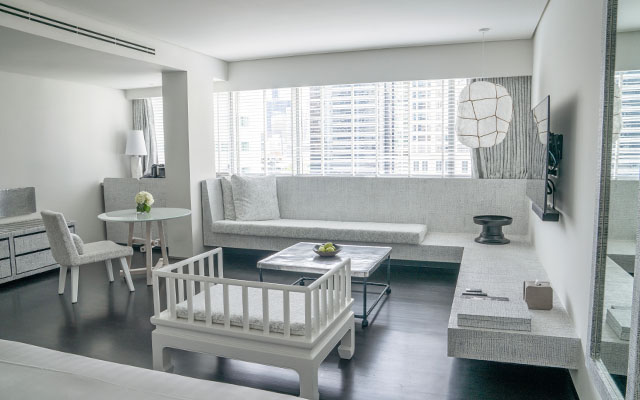







The Robertson House has appointed Kris Wong as its new general manager, where she is set to enhance the hotel’s offerings by creating unique, personalised experiences that connect guests with Singapore’s culture and history.
With a career spanning over 20 years in the hospitality industry, she brings a wealth of experience and a commitment to excellence to her new role.