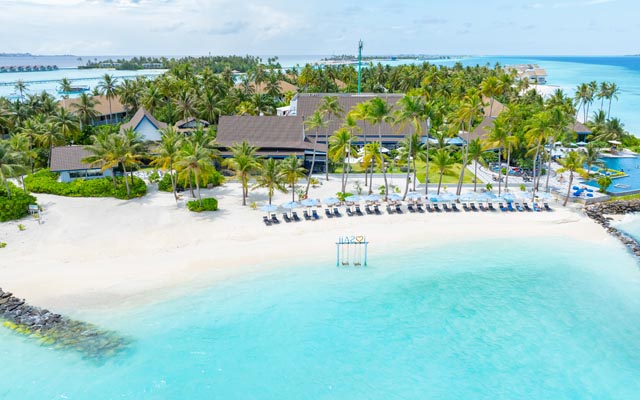
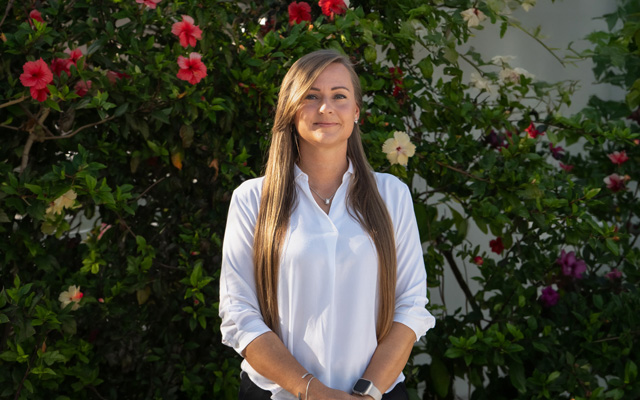
Kuda Villingili Resort Maldives has promoted Krisztina Vaszjunyina to resort manager.
She has been with the resort since 2021, joining as director of rooms and later serving as director of operations, where she oversaw daily operations and multiple departments.
She has more than 15 years of experience, including roles at Cheval Blanc Randheli and Anassa Hotel.
The escalating events surrounding the Middle East have disrupted fuel supply chains across the globe. This is particularly challenging for the travel industry, which is extremely reliant on fuel to power transport modes, supply food and sustenance, and employee mobility.
Indeed, these operational issues were already identified in TTG Asia earlier this week, leaving various stakeholders and governments scrambling to identify optimal solutions to minimise disruptions to everyday lives.
At present, different countries have adopted a range of strategies to mitigate the oil crisis. These include reducing flights or taxis, as in the case of Vietnam and Thailand, respectively. Other nations, such as Cambodia and Malaysia, are warning tourists to brace themselves for higher prices as fuel surcharges continue to rise in aviation.
These scenarios are a lose-lose situation for operators and tourists alike, as demand and supply will likely be reduced soon, unless the oil crisis finds an amicable solution.
Nevertheless, this crisis opens much-needed conversations around how better organised supply chains, or even post-oil futures, can be conceived for the tourism industry.
Given the ongoing fuel price increases, there may be a stronger case for buying local to reduce the impact of lengthy food miles to feed locals and tourists in densely populated destinations.
There would also be stronger calls for the push towards clean electricity sources and electric forms of mobility – ferries and tuk-tuks, among others, in moving towards post-oil futures. After all, oil crises could occur again in the future and present an ongoing challenge for the tourism industry. Ideas such as virtual tours and online events may not be suitable for all destinations, as we are an industry that is founded on people-to-people experiences.
This is the time to push ahead towards post-oil futures and take actionable steps towards SDG7 (affordable and clean energy), SDG9 (industry, innovation and infrastructure), and SDG13 (climate action).
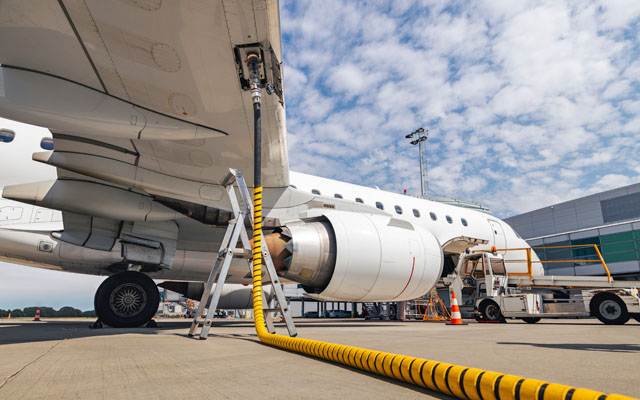
Airlines across Asia are adjusting fuel surcharges and fares as jet fuel prices rise sharply following the escalation of conflict in the Middle East, increasing cost pressure across the sector.
Singapore Airlines and its low-cost subsidiary Scoot have raised fares across their networks, while Cathay Pacific will increase fuel surcharges by 34 per cent from April 1 and review them every two weeks. The Hong Kong carrier said fuel accounted for about 30 per cent of operating costs in 2025 and warned that “if the steep increase of fuel costs cannot be effectively mitigated, we would not be able to sustain the effective operations of our network”.
Airlines in Asia are raising fuel surcharges and fares as jet fuel prices approach US$200 per barrel following disruptions to oil supply routes
The rise in surcharges reflects a wider industry response. According to IATA data, jet fuel prices reached US$197 per barrel in the week ending March 20, 2026, up from below US$100 a month earlier. Analysts note that aviation fuel has risen faster than crude oil due to tighter refining capacity and limited storage flexibility.
Budget carriers have also adjusted pricing. Cebu Pacific has increased fares by 20 to 26 per cent through May, while AirAsia X described its fare changes as temporary. Thai Airways has implemented increases of 10 to 15 per cent.
Airlines typically use fuel surcharges as an initial measure to recover costs before adjusting base fares.
The Indonesian National Air Carriers Association has called for a 15 per cent increase in fuel surcharges and a revision of domestic fare caps, citing higher fuel prices and currency weakness, reported The Jakarta Post today. Secretary general Bayu Sutanto said the situation has “significantly (contributed) to rising operational costs for national airlines”, with around 70 per cent of expenses denominated in US dollars.
The reliance on Middle East oil supplies has left Asia-Pacific carriers exposed. The Strait of Hormuz, which carries around 20 per cent of global oil supply, remains a key risk point, with most shipments bound for Asia.
While some airlines continue to hedge fuel costs, these programmes only partially offset price increases and often exclude refining costs. As a result, carriers are relying more heavily on surcharges to manage volatility while maintaining network operations, with further adjustments dependent on how fuel prices and supply conditions evolve.
StarDream Cruises is heading into 2026 with momentum. At its Brand Showcase in Singapore, president Michael Goh outlined a year of expanded reach and elevated entertainment, and struck a notably confident note on the industry headwinds that have kept competitors cautious.
“We are committed to bringing multiple destinations within reach… enabling guests to experience different countries and cultures, while supporting the local economies and tourism growth of the ports we visit,” Goh said.
StarDream Cruises sets out its 2026 plans in Singapore, highlighting expanded regional itineraries, new onboard entertainment and a measured approach to fuel cost pressures
That portfolio now spans more than 50 destinations across South-east and East Asia, with itineraries of two to five nights operating across three ships: the luxury flagship GentingDream under Dream Cruises, and Star Navigator and Star Voyager under the more accessible StarCruises brand.
Dream Cruises’ 10th anniversary is the headline celebration of the year. Guests can look forward to K-pop group KIIRAS, Physical: 100 contestant Amotti, and Culinary Class Wars Season 2 chef Tommie Lee (better known as French Papa) joining the onboard entertainment line-up. In June, Forever Broadway, conceived in partnership with Broadway Asia International, will make its debut on Genting Dream.
Beyond entertainment, the cruise line is broadening its dining accessibility, positioning itself as among the first in Asia to offer certified halal and vegetarian/Jain options fleetwide. Cruisers looking for more premium experiences can opt into The Palace – a ship-within-a-ship concept offering butler service, private spaces and suite-category accommodation across both brands.
Goh was measured but optimistic on the broader operating environment. On the question of fuel supply pressures and how they may affect the line’s pricing and itinerary strategy going forward, StarDream indicated it has a considered approach in place, and will implement surcharges when necessary.
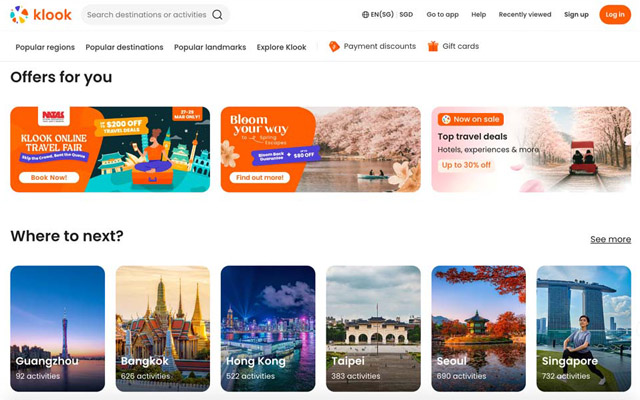
Experiences platform, Klook, kicks off a 72-hour Online Travel Fair today, and expects geopolitical tensions to have little impact on the travel appetite of the event’s target audience: Singapore residents.
Sarah Wan, general manager, Singapore, Indonesia, Malaysia, and Thailand at Klook, cited findings from Klook’s Travel Pulse 2026, released in February: “Ninety per cent of Singaporeans plan to maintain or increase their travel budgets this year. This signals that demand for leisure travel remains resilient even against a backdrop of global uncertainty. The underlying driver appears to be a fundamental shift in how travellers, particularly millennials and Gen Zs, assign value: rather than pulling back on travel altogether, they are prioritising experiences and seeking smarter ways to stretch their budgets.”
Klook rolls out a 72-hour Online Travel Fair in Singapore, with deals across Asia-Pacific as travel demand remains resilient despite global uncertainty
The Online Travel Fair rides on this travel confidence to offer products to consumers actively seeking deals, Wan added.
The 72-hour campaign offers a wide range of promotions across Asia-Pacific, such as 50 per cent off China tours, cruise deals, heavy discounts off travel essentials such as car rentals, travel insurance, and Klook eSIMs, as well as timed flash deals on popular attractions and travel services.
Wan told TTG Asia that the Klook Online Travel Fair is designed with Singapore-based users in mind.
When asked what motivated the Asia-Pacific focus on sale content, Wan said decisions were led by trending favourites among Singapore-based customers.
She elaborated: “China is seeing strong momentum among Singapore travellers. Cities such as Shanghai and Beijing remain crowd favourites, reflected in the strong line-up of deals across these destinations. Alongside this, interest is also strong in cities like Guangzhou, Chongqing and Shenzhen, pointing to a broader mix of travel preferences across cultural and seasonal experiences.
“In response, we have placed a stronger emphasis on China within the travel fair, with more tour products, bundled experiences and sitewide deals, alongside value-driven buy-one-get-one offers for popular attractions including Shanghai Disneyland, Universal Studios Beijing and Chimelong International Circus in Guangzhou.
“Cruises are also a headline category this year, reflecting growing interest among Singapore travellers, driven in part by the launch of Disney Adventure, with a range of deals across cruise experiences.”
Wan concluded that “Klook is about making travel more accessible, enjoyable and seamless, giving travellers more ways to discover and experience the world with confidence”.
The Klook Online Travel Fair coincides with the NATAS Travel Fair, which is taking place at the Singapore Expo.
Akaryn Hotel Group has launched The akyra Bangkok 11 as of mid-March 2026. Located on Sukhumvit Soi 11, the 100-room property targets wellness-minded urban travellers and medical tourists. The hotel treats sleep as a core service, with inventory featuring hypoallergenic rooms and circadian lighting, supported by a dedicated Sleep Concierge who offers targeted evening rituals and 30-minute foot massages.
To strengthen its health positioning, the property formed an alliance with the VitalLife Scientific Wellness Center at Bumrungrad International Hospital, located just 650 metres away on Sukhumvit Soi 3. The property offers a complimentary shuttle to both the hospital and the BTS Skytrain.
The akyra Bangkok 11 integrates recovery into the urban guest experience with hypoallergenic rooms, circadian lighting, customisable wellness minibars and a dedicated Sleep Concierge; photo by The akyra Bangkok 11
The opening package includes a 500 baht wellness voucher and preferential rates on longevity check-ups. Guests also gain access to IV drip therapy options.
Polakit Teekakiriul, CEO of VitalLife & Esperance and chief science officer of Bumrungrad International Hospital, outlined the operational dynamic.
“I would say it’s a strategic partnership. Clients of the hotel can enjoy VitalLife services,” Polakit said.
The collaboration equips the independent hotel with clinical support to execute its wellness programming.
The property positions itself as a practical stopover for guests recovering from treatments before transferring to the group’s other retreats across Thailand, which include the Aleenta Phuket-Phang Nga, Aleenta Hua Hin-Pranburi, and Aleenta Retreat Chiang Mai.
Onsite facilities include E/R/N, an all-day restaurant serving recovery-friendly food refined by medical specialists.
Anchalika Kijkanakorn, founder and managing director of Akaryn Hotel Group, emphasised the hotel’s foundational purpose.
“The akyra Bangkok 11 is born from the belief that even in the heart of the city, travellers deserve spaces that nurture both body and mind. We designed it as a place where people can connect with each other and with themselves while still enjoying the pulse and possibilities of Bangkok,” Anchalika stated.
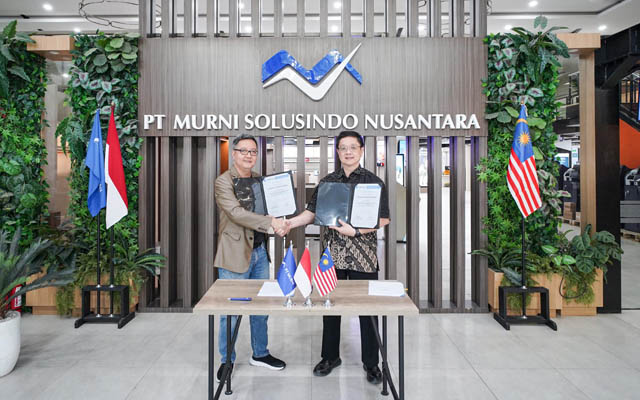
Malaysia-based hospitality solutions provider Vendfun has recently appointed Murni Solusindo Nusantara, a certified solutions provider headquartered in Jakarta, as its exclusive master distributor for Indonesia. This is Vendfun’s first distributorship market outside Malaysia. It also has a presence in Singapore, which is managed directly by the company.
Under the partnership, Murni will oversee the distribution of Vendfun’s solutions across the Indonesian market, including marketing, promotions, exhibitions, lead generation, sales closing, installation and technical support. Murni will also manage Vendfun’s entire Indonesian distribution network and lead a reseller programme to expand market reach in the country.
The partnership will see Vendfun’s self-check-in kiosks introduced to budget and boutique hotels across Indonesia
The partnership focuses on Indonesia’s hospitality sector, with Vendfun introducing its Smart Mini Kiosk solutions to automate hotel self-check-in and check-out processes for budget and boutique hotels, Airbnbs and hostels.
Daryl Lau, chief strategy officer of Vendfun, said: “Indonesia has more than 30,000 budget hotels. Therefore, a distributorship model is an ideal approach for expansion through Murni’s extensive coverage, particularly given the country’s geographically dispersed market.
“With Murni’s strong presence of seven offices and more than 100 service centres across the country, and technical capabilities in the Indonesian market, we believe this partnership will accelerate the adoption of self-service technology in the hospitality industry.”
In Indonesia, Vendfun’s kiosk solutions are designed to address two key challenges faced by hoteliers: rising manpower costs and increasing incidents of front desk fraud. With growing concerns over guest impersonation and credit card scams, traditional manual check-in processes are becoming more vulnerable.
Anton Ng, director of Murni, added: “We are excited to bring Vendfun’s self-check-in kiosk solutions to the Indonesian market. The demand for automated hospitality solutions is real and growing, and Vendfun’s technology directly addresses the challenges that hotels face today. We look forward to working closely with Vendfun to make self-service check-in the new standard for budget and boutique hotels across Indonesia.”
Vendfun already has two recent hotel clients in Indonesia, and these customers will be transitioned to Murni for ongoing support and maintenance, reflecting the new partnership.
Founded to support the hospitality industry’s digital transformation, Vendfun has deployed more than 150 kiosks across 12 Malaysian states, as well as in Singapore, Australia and the US.
The appointment of Murni forms part of Vendfun’s broader strategy to grow its presence across South-east Asia.
Looking ahead, Vendfun is set to complete its first installation in Thailand in April. It also has plans to establish a presence in the Philippines and Vietnam.
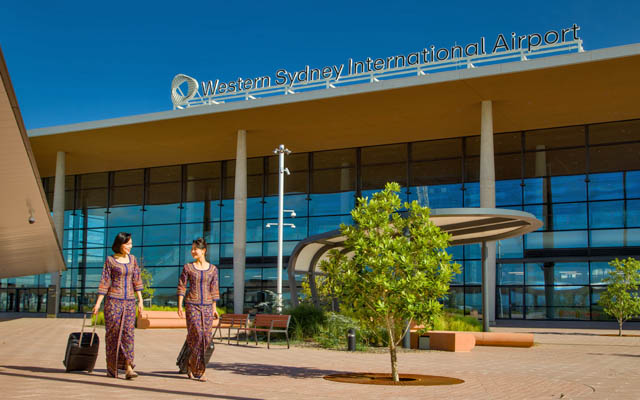
Singapore Airlines will commence operations from Western Sydney International Airport from November 23, 2026
Singapore Airlinesexpands network with new Australia and China routes
Singapore Airlines will commence new routes to Western Sydney and Hangzhou, expanding its network in Australia and China.
Daily flights between Singapore and Western Sydney International Airport will begin on November 23, 2026, marking the airline’s entry into the new airport. This will bring its total operations to Sydney to five daily services, including four flights to Sydney Kingsford Smith Airport. With the addition, Singapore Airlines will serve eight destinations in Australia.
The airline will also launch daily flights between Singapore and Hangzhou from June 1, 2026. The new route becomes its ninth destination in mainland China and will complement existing services by Scoot on the same sector.
Both routes will be operated using Airbus A350-900 aircraft configured with 303 seats in Business and Economy cabins.
Air Canada
Air Canada adds second daily Delhi-Toronto frequency
Air Canada has expanded its Delhi–Toronto service to twice daily through April 2026, responding to demand on routes between India and North America.
The increase comes as airspace restrictions across parts of the Middle East continue to affect capacity on alternative routings. The additional frequencies are intended to support passenger demand between India and Canada.
Vietjet
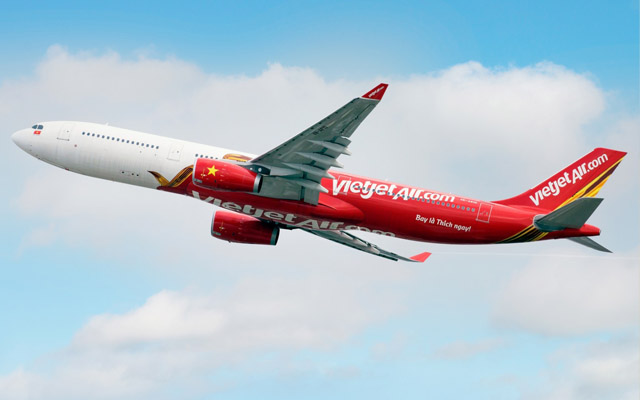
Vietjet broadens regional network with Indonesia and Singapore links
Vietjet will introduce two new international routes connecting Danang with Jakarta and Nha Trang with Singapore, expanding its South-east Asia network.
The Danang-Jakarta service will start on April 29, 2026, operating five times per week. This will be the only non-stop connection between the two cities and brings Vietjet’s total routes between Vietnam and Indonesia to five.
The Nha Trang-Singapore route will launch on June 1, 2026, with four weekly frequencies. The addition increases Vietjet’s network between Vietnam and Singapore to five routes, alongside existing services from Ho Chi Minh City, Hanoi, Phu Quoc and Danang.
TransNusa
TransNusa boosts Singapore frequencies from Jakarta and Bali
TransNusa will add flights between Jakarta and Singapore and between Bali and Singapore, expanding capacity on key regional routes.
An additional Jakarta-Singapore frequency will begin on April 17, 2026, bringing the airline’s operations on the route to three daily flights. A new Bali-Singapore service will follow from May 2, 2026, adding further capacity between Indonesia and Singapore.
Both routes will be operated using Airbus A320 aircraft. The increase in frequencies supports demand on high traffic corridors linking Indonesia and Singapore.
A massive spike in travel searches followed hot on the heels of the announcement of South Korean boy band BTS’s world tour destinations and dates, with Booking.com noting a 7,000 per cent increase in searches for Kaohsiung, Taiwan alone.
In this episode of TTG Conversations: Five Questions, Laura Houldsworth, managing director for Asia Pacific at Booking.com, details the impact big-name musicians, music festivals and regional acts have on travel and tourism, the factors needed for concerts to truly contribute significantly to the host destination, and what Booking.com has been doing with industry partners to stimulate fan travel.
Amid escalating tensions in the Middle East, Malaysia is positioning itself to capture a surge in intra-regional travel, with industry leaders seeing an opportunity to draw visitors from within Asia.
At the policy level, the Tourism, Arts and Culture Ministry is recalibrating its strategy for Visit Malaysia 2026 to focus more on markets less affected by Middle East airspace disruptions, such as Asia and South-east Asia, while alternative transit options that bypass the Middle East are also being explored, said the ministry’s deputy secretary-general, Chua Choon Hwa.
Malaysia steps up regional marketing and rerouting strategies to capture travel demand shifting away from the Middle East
He added that the ministry is reviewing its approach to attracting European travellers who typically transit through the Middle East. Efforts are underway to identify alternative routing options, including the use of selected airlines that allow travellers to bypass Middle Eastern transit points.
Nigel Wong, president of the Malaysia Association of Tour and Travel Agents, said the association is stepping up efforts to promote Malaysia across key source markets including South-east Asia, China and India. Initiatives include expanded sales missions, participation in trade shows and industry events, as well as direct engagement with overseas counterparts.
Early shifts in travel patterns are already emerging, as the war in the Middle East has prompted travellers to reconsider itineraries involving the region, opting instead for destinations perceived as safer.
Arokia Das Anthony, executive director of The Essence of Asia Tours & Travel, said that two Indian groups originally planning holidays in Dubai this month have redirected their trips to Malaysia.
He added that six more leisure groups from India are confirmed to visit Malaysia between April and June, all of whom had initially intended to travel to the UAE.
He said: “Malaysia is attractive because of its value for money proposition, easy availability of Indian food and strong direct air connectivity, making it an easy switch for Indian travellers.
“We are running promotions with our Indian counterparts. While this means working with thinner margins, we are banking on higher volumes to drive overall returns.”


 She has more than 15 years of experience, including roles at Cheval Blanc Randheli and Anassa Hotel.
 The escalating events surrounding the Middle East have disrupted fuel supply chains across the globe. This is particularly challenging for the travel industry, which is extremely reliant on fuel to power transport modes, supply food and sustenance, and employee mobility.