ANTI:DOTE at Fairmont Singapore will host Gabriel Carlos, co-founder of The Basement Cebu, for a one-night guest shift on July 16, showcasing cocktail flavours inspired by Cebu’s produce and culinary traditions.
The collaboration brings together Carlos and ANTI:DOTE Head Mixologist Adonis Endozo Reyes, two Filipino bartenders whose careers began in Singapore before taking different paths. Carlos returned to Cebu to establish The Basement, where he focuses on reinterpreting classic cocktails using local ingredients.
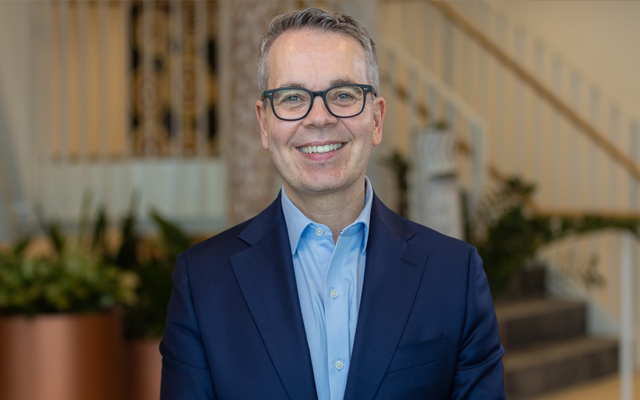
Gabriel Carlos of The Basement Cebu returns to Singapore for a one-night guest shift at ANTI:DOTE on July 16
Guests can choose from four cocktails (S$24++/US$18++ each) created with Código 1530 Tequila and mezcal. The menu includes Carbon, inspired by Cebu’s Carbon Market; Cariñosa, featuring Señorita banana; Ensalada, a savoury take on the Margarita using green mango and tomato; and Lato, an Old Fashioned-inspired cocktail incorporating sea grapes, miso and umami bitters.
The guest shift is accompanied by a menu of Filipino-inspired bar bites including lumpia, lechon kawali, corned beef pandesal and turon fritters.
The event takes place from 19.00 at ANTI:DOTE, Fairmont Singapore, with music by DJ Mad Jester.
Once dominated by elephant rides, tiger selfies and close-up wildlife encounters, South-east Asia’s animal tourism sector is facing mounting pressure to redefine what comprises an acceptable animal experience.
Animal tourism remains a major draw across destinations such as Thailand, Indonesia and Vietnam, but industry players say consumer expectations are rapidly changing, forcing suppliers, DMCs and operators to take more responsibility for what they sell.
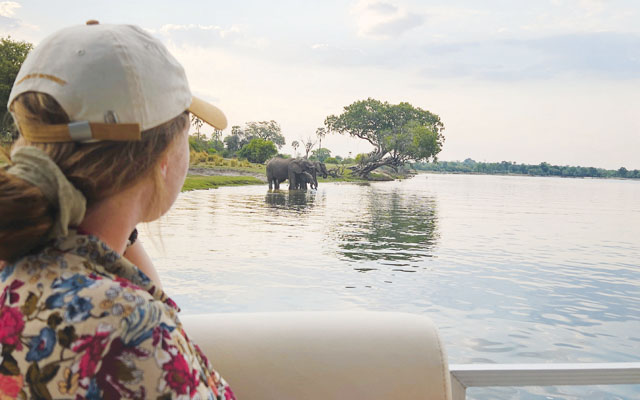
Elephant camps remain highly contested, with responsible tourism players urging facilities to be independently audited
“We’re seeing a real shift in guests’ attitudes and expectations. Where they used to ask ‘how close can we get?’, they’re now asking ‘what’s the best way to observe them?’ or ‘how can we see their natural behaviour?’,” said Charlie Darlington, sustainability and nature positive tourism lead at Scott Dunn.
Darlington said the shift is being fuelled by travellers asking “harder questions”, such as where the animals come from, why they are docile, and their living conditions.
“There was an inherent trust that sanctuary meant genuine care, that rescue centre meant ethical practice, and that if an experience was being offered, it must be acceptable,” she said.
“However, with increased visibility of animal mistreatment through social media – where a single video can expose the reality behind the façade – and impactful campaigning by animal rights groups, we’re learning to be much more discerning and critical with a more educated eye.”
Darlington noted that increased awareness among Scott Dunn’s clients and industry players is creating mounting pressure from multiple directions.
“The result is that people providing animal experiences on the ground are having to raise their standards, because travellers are no longer simply accepting what they’re told,” she said.
“It’s become a positive feedback loop – the more we educate travellers, the more they demand better and the more the industry has to respond. We’re not where we need to be yet, but the direction of travel is encouraging.”
Willem Niemeijer, CEO of Yaana Ventures, said in the past few decades, South-east Asia has witnessed a surge in visitors, with many seeking wildlife experiences. During the same time, he has seen a shift in both traveller and supplier attitudes towards animal tourism.
“Had nothing changed in the approach to animals in tourism, the situation would undoubtedly be far worse. One clear conclusion is that the industry increasingly understands the sustainability expectations of the modern traveller,” he told TTG Asia.
However, despite noted progress, Niemeijer pointed to “significant shortcomings” that remain, noting that problematic practices, such as taking photos with tiger and lion cubs, continue to take place.
This has led to some DMCs transitioning towards an “observation-only” model – the “most ethical approach” to wildlife tourism, according to Darlington. “We believe removing interaction as a blanket rule is the right solution,” she said.
Niemeijer excludes experiences involving wild animals from all programmes, selling only responsible viewing of animals from a safe distance in their natural habitat.
“We follow expert guidelines – for example, in dolphin- and whale-watching – and support and raise awareness for conservation initiatives such as sea turtle nest protection. Photo opportunities with primates or reptiles are strictly off-limits, and our guides are trained to explain why, as guests are not always aware of the impact,” he said.
Darlington noted that tourists’ attitudes are changing, as they realise the “privilege” of being able to watch animals from a distance in their natural habitat.
“This deeper engagement creates far more memorable and meaningful experiences than simply touching an animal ever could. Local guides are truly the unsung heroes of this whole process; their knowledge is invaluable,” she said.
Despite broader consensus on many practices, captive elephants in tourism remain highly contested, with Niemeijer referring to it as the “most debated area”, particularly in Thailand. Yaana Ventures works with Asian Captive Elephant Standards (ACES) to encourage elephant camps to undergo independent audits by qualified experts and veterinarians.
“Our view is that tourism plays a critical role in funding the care of the roughly 3,000 captive elephants that would not survive in the wild – even if sufficient habitat existed, which it does not,” he added.
Scott Dunn also recommends elephant sanctuaries that have worked with World Animal Protection or gained ACES certification, such as ChangChill and Phuket Elephant Nature Reserve.
While acknowledging travellers’ responsibility, Carlos Martin-Rios, assistant professor of management at Singapore’s EHL Hospitality Business School, said industry players are “not neutral actors”. He pointed to online platforms that shape demand through visibility and ranking, with many online travel agencies selling packages that feature unethical “sanctuaries”.
“Choice is heavily mediated by what the industry makes visible. If unethical options dominate search results or packages, behaviour reflects curation, not pure preference,” he said, adding that tourist behaviour is often shaped by factors such as availability, pricing, visibility and convenience.
“They (tourists) rarely conduct deep ethical investigations at checkout. What looks like free choice is often structured selection. If the system changes what is visible, behaviour will follow,” he added.
Darlington said tour operators have a responsibility to scrutinise the ethics of experiences and partners, and Scott Dunn’s tough stance on animal welfare has been well-received by guests.
To further strengthen animal welfare in the tourism sector, Martin-Rios said a multi-stakeholder approach is key, from hotels, tour operators and destinations, to events, food service and transport.
Looking ahead, Niemeijer called for stronger local legislation surrounding animal protection and the classification of species. “While responsible operators apply best practices and often adhere to the standards of their source markets, real change requires clear and enforceable local laws. Without this, and with continued growth in tourism and new source markets, problematic practices will continue to emerge.”
I spent a good part of May at PATA Annual Summit in Gyeongju, South Korea and IMEX in Frankfurt, Germany. One covers the broader travel and tourism landscape while the other centres on business events, and both presented overlapping takeaways for me.
One: Responsible tourism development continues to dominate conversations on stage and off, and the focus is now far more than just meeting the expectations of an increasingly discerning customer base. Industry professionals across the travel, tourism and business events industry are increasingly directed by national policy to ensure developments benefit local communities into the distant future. At the same time, there is growing understanding among destination managers and professionals that good tourism happens when the host community buys into the concept, contributes to ideation, encourages generations of people to be educated professionals supporting the industry, and wants to be part of the welcome.
Two: An ESG system does not only satisfy regulations, it creates a structure for destinations and businesses to nimbly respond to challenges posed by the macroenvironment.
Three: The good that tourism and business events achieve must be communicated more loudly to the public. It is easy to see tourists jostling for the best shot of springtime blooms or event attendees disrupting traffic as they arrive en masse, and then be annoyed with them for straining public services. But it is harder to see the sustenance of traditional craft, job creation, expansion of knowledge and trade exchange, improved living conditions of underdeveloped communities, and more.
I see the movement towards responsible tourism as a sound solution for the tourism and business events industry’s pressing need for young talents. If the younger generation is increasingly seeking meaningful work, then tourism as a vehicle for good – made possible by proper governance, destination management, and focus on resilience – will speak to their hearts and encourage more of them to be part of the industry.
Tourism Australia has spoken about the need to win both “in the hearts of consumers and with machines”. What does that look like in practice as AI reshapes how travellers discover and choose destinations?
Great destination marketing connects emotionally from a place where people make decisions from the heart. Our research highlights that when visitors to Australia have an incredible experience, they share this with their friends and family back home, inspiring new visitors to travel to Australia and create lasting memories of their own. This is the creative inspiration behind Tourism Australia’s current Come and Say G’Day campaign.
At the same time, we also recognise the growing role of algorithms, search engines, booking platforms and AI in the consumer decision-making process. To be successful, it is critical that we are addressing how these technologies influence travel planning and ensuring Australia remains visible and compelling in those environments.
Asia continues to be one of Australia’s strongest growth regions. Which markets excite you most right now, and how are traveller behaviours evolving?
Australia’s tourism landscape is being reshaped by demand from Asia. In the year ending April 2026, seven of our top 10 international source markets came from the region. They include China, Singapore, India, Japan, South Korea, Hong Kong and Indonesia.
Singapore is our most mature market in the region, with high repeat visitation and sophisticated travellers. Earlier this year it surpassed 2019 visitation levels for the first time, with arrivals increasing 35 per cent year on year. Because it is such a mature market, we now have the opportunity to encourage visitors to explore beyond Australia’s gateway cities and discover regional gems, particularly around food and wine.
Vietnam is another market we’re watching closely, and this is where we’ve seen the biggest shift from a market perspective. Historically, travel has been driven by visiting friends and relatives, but we’re now seeing strong interest from a growing young, tech-savvy middle class. Visitor expenditure has doubled since 2019, reflecting increasing demand for Australian holidays.
Australia has identified luxury as a major opportunity over the next decade. What differentiates Australia’s luxury tourism offering?
Australia’s luxury offering is distinctive because it combines premium experiences with authentic connections to nature, culture and place.
Luxury can be found both in our cities and in some of the world’s most remote natural environments. Our landscapes, wildlife, First Nations cultures, food and wine, coastal journeys or luxury lodges deliver experiences that feel immersive, exclusive and restorative.
Our Signature Experiences of Australia collection, which includes Luxury Lodges of Australia, Ultimate Winery Experiences, Great Walks of Australia, Australian Wildlife Journeys and Discover Aboriginal Experiences, helps showcase this diversity.
As Australia pursues higher-yield tourism growth, how do you balance increasing visitation with protecting communities, culture and the environment?
Australia remains focused on attracting high-yield visitors who stay longer, spend more and engage more deeply with our destinations and experiences, including experiences that give back.
We also encourage visitors to travel respectfully and help protect the places and communities that make Australia special.
Earlier this year, we launched our Green is Our Gold initiative to encourage responsible travel behaviours and rally the tourism industry around a shared commitment to protecting Australia’s natural environments, cultures and local communities for future generations.
Where do you think Australia still has room to improve as a destination?
Australia already enjoys a strong reputation for its natural beauty, wildlife and as a safe, welcoming destination.
One area where we can continue improving is delivering more tailored experiences that reflect the diversity of our visitors. Whether through multilingual guides, translated digital content or culturally specific visitor services, these enhancements can make travel more accessible and enjoyable.
Our recently launched Muslim-friendly travel guides are one example of how we’re tailoring experiences to better meet international visitor needs.
Finally, what’s one thing the global tourism industry may still underestimate about Australia?
Many people still underestimate just how diverse Australia really is.
Few countries offer such diversity: from Tasmania’s snow-capped mountains and Australia’s alpine regions to the Red Centre’s desert landscapes and the tropical north’s coral reefs, rainforests and exceptional food and wine experiences.
Because of that breadth, planning an Australian holiday can be more complex than people realise, especially where self-drive itineraries are concerned. That’s where our network of more than 40,000 Aussie Specialist travel agents and industry partners plays such an important role in helping visitors design an itinerary that truly showcases everything Australia has to offer.
Twenty-four outstanding individuals and organisations were honoured for their exceptional contributions to experience excellence and enterprise innovation in Singapore at the Singapore Tourism Awards 2026 yesterday evening.
Singapore Tourism Board’s chief executive Melissa Ow said this year’s recipients and finalists “exemplify dedication, bold thinking and a genuine desire to create the best possible experience for our visitors to enjoy”.
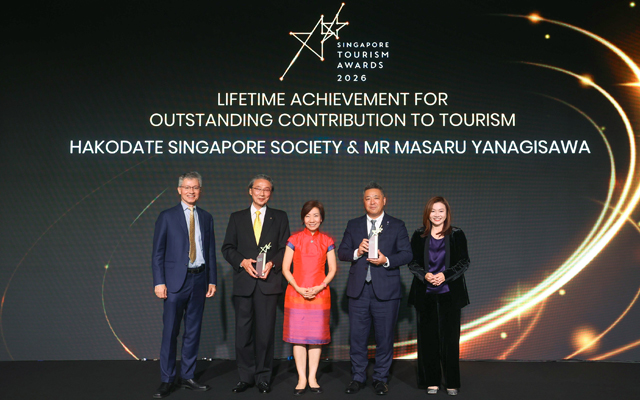
The Hakodate Singapore Society and the late Masaru Yanagisawa received the Singapore Tourism Awards’ highest honour, the Lifetime Achievement for Outstanding Contribution to Tourism
She credited them for elevating Singapore’s tourism industry and strengthening the country’s reputation as a world-class destination.
The Singapore Tourism Awards’ paramount recognition, the Top Awards, honoured seven recipients who were instrumental in Singapore’s pursuit of quality tourism towards 2040.
The Hakodate Singapore Society and the late Masaru Yanagisawa were conferred the Awards’ highest accolade, the Lifetime Achievement for Outstanding Contribution to Tourism, in recognition of over three decades of dedication to strengthening ties between Singapore and Hakodate, Japan.
Suen Tat Yam and Byron Jevan Koh were presented with the Outstanding Tourism Entrepreneur award for transforming Woopa Group from a start-up into one of Singapore’s leading experience-based tourism operators over the past decade. Early adopters of technology-driven innovation, they introduced Singapore’s first digitally gamified tour and championed the use of AI and immersive storytelling to elevate visitor experiences, shifting perceptions of tour operators from traditional service providers to experience innovators.
ArtScience Museum at Marina Bay Sands took home the Special Recognition award, in recognition of its pivotal role in strengthening Singapore’s cultural and experiential landscape as a leading institution at the intersection of art, science, technology and culture.
Mandai Wildlife Group (MWG) earned the Outstanding Employer award in recognition of its exemplary approach to workforce development across its world-renowned wildlife parks and nature-themed attractions. With over 1,000 employees, MWG has cultivated an employee-centric workplace through progressive practices including competency-based pay, clear career pathways, and cross-departmental initiatives to enhance productivity.
The Singapore Tourism Awards also recognised three organisations under the Enterprise Excellence category, applauding them for their bold marketing campaigns, innovative thinking and commitment to sustainability. The winners were Marina Bay Sands (Outstanding Business Innovation), MWG’s Rainforest Wild Adventure (Outstanding Marketing Idea), and Sentosa Development Corporation (Outstanding Achievement in Sustainability).
Five customer service professionals were recognised for delivering distinctive and compelling customer experiences as well as nine businesses for reimagining the customer experience and delivering service excellence in innovative ways across the Leisure and MICE industries.
Hyatt Hotels Corporation will debut its Alila brand to Japan with the opening of Alila Sengokuhara Hakone in 2028, developed in partnership with Fujita Corporation.
Located in Sengokuhara within Fuji-Hakone-Izu National Park, the property will offer 60 guestrooms, including 11 suites, each with a private natural hot spring bath.
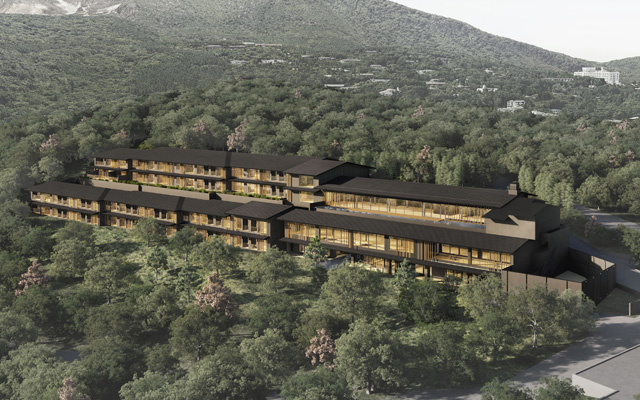
Hyatt’s Alila brand will debut in Japan with Alila Sengokuhara Hakone, a Kengo Kuma–designed resort opening in 2028
Designed by Kengo Kuma and Associates, the resort will incorporate the site’s natural terrain and surrounding landscape. Hyatt said the project will emphasise architecture, wellness and local experiences inspired by Hakone’s onsen culture and natural environment.
Facilities will include a restaurant and bar showcasing seasonal local produce, a spa, a yoga deck and a range of destination-based activities designed to connect guests with Hakone’s landscapes, culture and traditions.
Situated near attractions including the Kyoto Imperial Palace and Nijo Castle, Sengokuhara is known for its hot springs, museums, grasslands and views of Mount Kintoki. The area is also recognised for its seasonal pampas grass fields.
The project forms part of Hyatt’s wider expansion strategy in Japan. Hyatt currently operates 22 hotels across nine brands in the country, with Alila becoming its 10th brand in the market.
David Udell, group president, Asia-Pacific, Hyatt, said: “The debut of the Alila brand in Japan will expand travel choices for both domestic and international guests, offering experiences that reflect the brand’s deep connection to culture and the environment.”
Yoji Okumura, president of Fujita Corporation, added: “We are deeply honoured to have the opportunity to welcome Hyatt’s luxury brand, Alila, to Sengokuhara in Hakone, marking the Alila brand’s debut in Japan.”
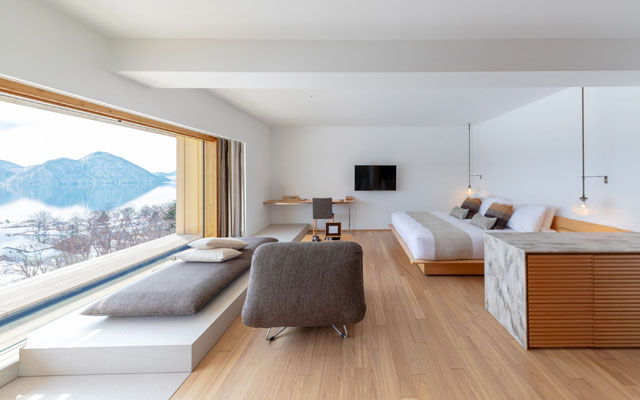
WE Hotel Toya, Dusit Collection, Japan
WE Hotel Toya, Dusit Collection has opened on the shores of Lake Tōya in Hokkaido, becoming the first Dusit Collection property in Japan.
The resort comprises 55 guestrooms and three two-storey villas. Each guestroom features a private open-air bath overlooking the lake, while the property also offers a communal bath with panoramic views.
Dining venues include Ezo Cuisine, The Noodle Bar, Taru Bar and Toya Bar, showcasing Hokkaido produce alongside Thai-inspired dishes and beverages.
Located within the Toya-Usu UNESCO Global Geopark, the hotel is around 100 minutes by car from New Chitose Airport. Guests have access to the area’s hot springs, hiking and outdoor activities, as well as Lake Tōya’s seasonal scenery.
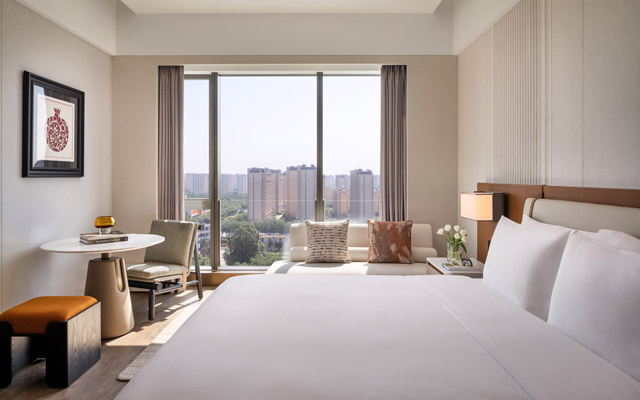
Cordis, Xi’an
Cordis, Xi’an, China
Located in Airport New City, adjacent to the new Terminal 5 at Xi’an Xianyang International Airport, Cordis, Xi’an is a 252-room hotel with interiors inspired by the Tang Dynasty.
Facilities include Ming Court restaurant serving Cantonese and Shaanxi cuisine, wellness amenities, and a pillarless ballroom for meetings and events.
The hotel provides convenient access to Xi’an Xianyang International Airport as well as the city’s commercial districts. It is also well placed for visits to major attractions including the Terracotta Warriors, the Ancient City Wall and the Giant Wild Goose Pagoda.
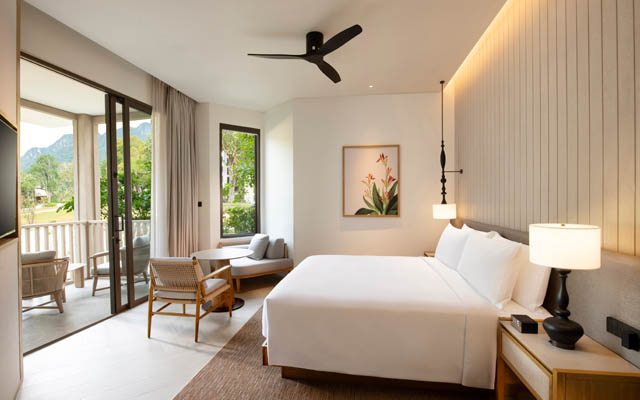
Hilton Burau Bay Langkawi Resort
Hilton Burau Bay Langkawi Resort, Malaysia
The 251-key Hilton Burau Bay Langkawi Resort is set between the rainforest and the Andaman Sea on Langkawi. Accommodation ranges from Terrace and Deluxe Rooms to Executive Suites, with all rooms featuring a private terrace or balcony overlooking the rainforest, mountains or sea.
Facilities include four restaurants, three swimming pools, spa, fitness centre, kids’ club, tennis, pickleball and basketball courts, as well as more than 500m² of indoor and outdoor event space. Guests can also join guided rainforest walks through the resort’s nature centre.
The resort is located on Burau Bay, close to Mount Mat Cincang and the Langkawi Cable Car, providing access to the island’s beaches, rainforest and outdoor attractions.
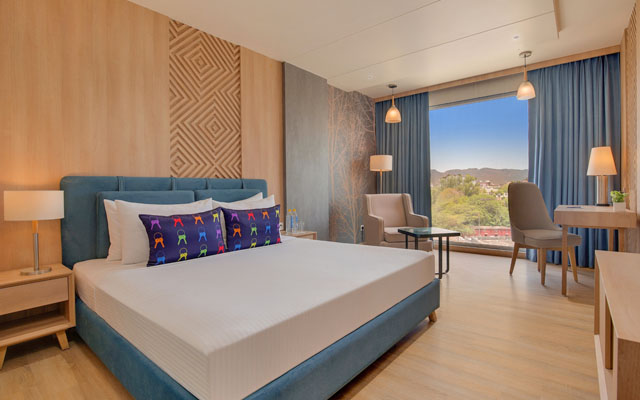
Keys Lite by Lemon Tree Hotels, Ajmer
Keys Lite by Lemon Tree Hotels, Ajmer, India
Keys Lite by Lemon Tree Hotels, Ajmer is a 31-room hotel located opposite the city’s main bus terminal, with 24 rooms opening initially and the remaining seven to be introduced in a second phase. Accommodation includes Deluxe Rooms, Executive Rooms and Executive Suites.
Facilities include an all-day dining restaurant, rooftop café, bar and a conference room for meetings and events.
The hotel is approximately two kilometres from Ajmer Railway Station and 24km from Kishangarh Airport. Nearby attractions include Dargah Ajmer Sharif, Ana Sagar Lake, Ajmer Museum and the Brahma Temple in nearby Pushkar.
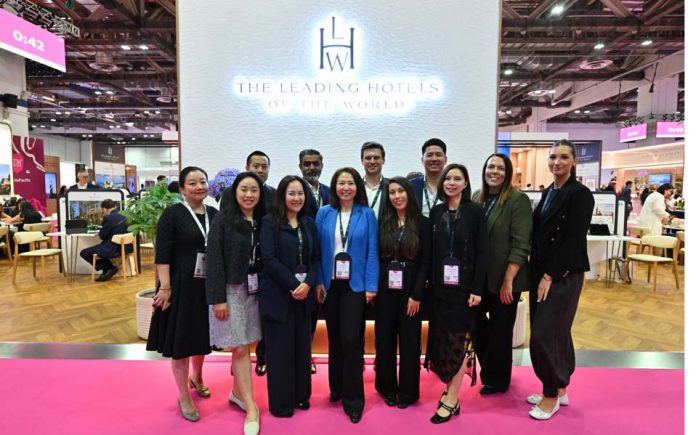
The Leading Hotels of the World (LHW) led its largest-ever property showcase at the recent ILTM Asia Pacific in Singapore, with 40 member hotels and 55 hoteliers from around the world – all drawn to the hearty travel appetite of affluent markets in the region.
Fiza Han, managing director, APAC sales at The Leading Hotels of the World, said source markets across Asia-Pacific – specifically Singapore, Japan, Australia and India – are showing strong growth potential, and many affluent travellers in the region are keen to explore destinations both near and far.
The Leading Hotels of the World leads 40 member hotels and 55 hoteliers from around the world to ILTM Asia Pacific 2026 – its largest ever presence at the tradeshow
And with luxury travel advisors contributing a large share of bookings for LHW member hotels, ILTM Asia Pacific is regarded as “a cost-effective platform for our member hotels to meet all the important luxury travel buyers from across Asia-Pacific,” stated Han.
Representation at the tradeshow this year is diverse, with properties spanning China to South Africa.
Han noted that buyers demonstrated interest in connecting with hoteliers from around the world.
“There was a time when travel buyers would come to us and be keen on meeting hoteliers from the big cities of New York and Paris. Now, they want to connect with hoteliers from niche destinations so that they can get information on authentic activities and experiences that cannot be easily found online,” she said.
There is also a greater interest in independent hotels, as travellers regard such accommodation options as being more unique and representative of the destination, according to Han.
With more than 450 hotels in the LHW network globally, the company is working on an enhanced system that will make it easier for travel advisors to access information on all member hotels and to identify the best options for their clients.
Improved access to hotel information will also enable travel advisors to research and book several properties at once for a single itinerary. According to Han, multi-destination trips are becoming more common among luxury travellers, who are now taking longer holidays that allow them to dive deeper into destinations.
Han shared with TTG Asia that AI capabilities will be built into the next-phase Travel Advisor Experience online portal.
“We want our travel advisor partners to research with confidence and to empower them with the tools and information they need. By the end of this year, the enhanced portal will also have booking functionality.”
Han added that LHW is also working on another new initiative that would provide even greater support to travel advisor partners.
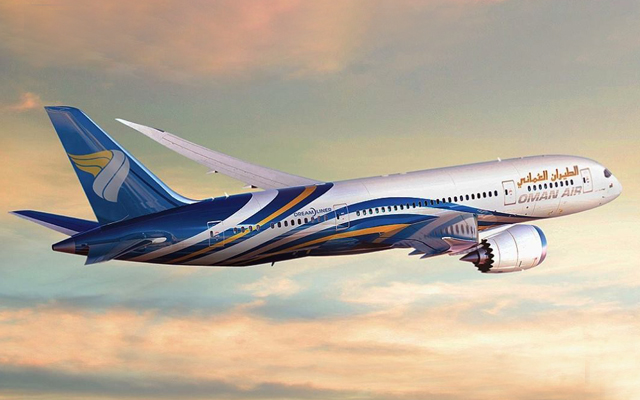
The Ministry of Heritage and Tourism has strengthened Oman’s tourism presence in Singapore following the launch of Oman Air’s new direct service between Muscat and Singapore.
The non-stop route, which began operating on July 2, 2026, is expected to improve tourism, business and cultural links between the two countries while providing travellers from Singapore with direct access to Oman.
The launch of Oman Air’s new direct Muscat-Singapore service supports closer tourism and business links between the two countries; photo by Oman Air
The ministry said the new service supports its strategy to diversify tourism source markets, increase international arrivals and advance sustainable tourism growth under Oman Vision 2040.
Singapore has been identified as a key source market for Oman, with the new air link expected to create additional opportunities for both leisure and business travel across South-east Asia.
Oman and Singapore have maintained bilateral relations for more than four decades, with cooperation spanning trade, maritime affairs and economic development. The introduction of direct flights marks the latest step in strengthening those ties.
The ministry has appointed Pacific World Travel as its market representative across Singapore, Malaysia, Thailand and Indonesia to support destination marketing and trade engagement in the region.
Yousuf Al Mujaizi, assistant director of business development, Ministry of Heritage and Tourism, said: “This new connection enhances Oman’s accessibility for travellers from South-east Asia. Singapore is a valuable source market, and the direct flight will create new opportunities for tourism and business while enabling more visitors to experience Oman’s rich heritage and renowned hospitality.”
Ameer Al Balushi, sales manager, Oman Air, added: “This route offers greater convenience and enhanced connectivity between two vibrant destinations, while giving travellers a true taste of Oman from the moment they step on board. We are proud to support, alongside the Ministry of Heritage and Tourism, the promotion and growth of inbound tourism to Oman.”
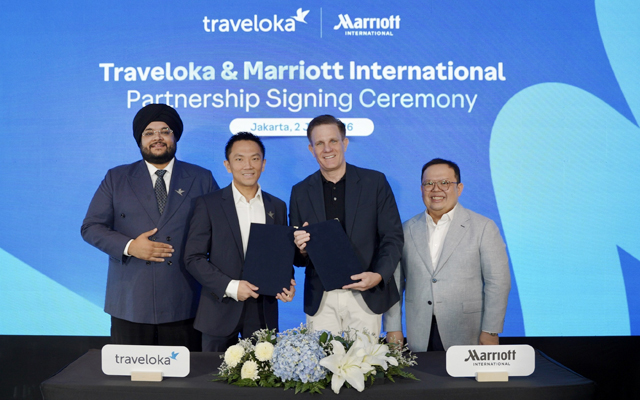
Marriott International has appointed Traveloka as its Certified Online Travel Partner, providing travellers across Indonesia and South-east Asia with direct access to the group’s hotel inventory through the platform.
The agreement establishes direct connectivity between Marriott’s reservation system and Traveloka, providing users with real-time pricing and availability across Marriott’s portfolio of more than 10,000 properties in 146 countries and territories.
Representatives from Traveloka and Marriott International mark the signing of a partnership to expand access to Marriott’s portfolio across South-east Asia
Travellers will be able to book Marriott brands ranging from luxury properties such as JW Marriott and W Hotels to premium brands including Westin and Sheraton, as well as select-service brands such as Moxy and Aloft.
The partnership comes as South-east Asia continues to record strong tourism growth. According to the companies, demand for Marriott properties on Traveloka has increased in recent months, with Indonesia among the strongest-performing markets. Popular bookings include Four Points hotels in Makassar, Surabaya, Medan and Bandung, alongside Sheraton and Marriott Hotels properties.
Marriott currently operates nearly 90 properties in Indonesia and continues to expand its presence through a development pipeline that also includes Vietnam, Thailand and Malaysia.
John Toomey, chief commercial officer, Asia-Pacific excluding China, Marriott International, said: “Our collaboration with Traveloka strengthens our ability to engage travellers at every stage of their journey, making discovery and booking more seamless than ever.”
Yady Guitana, chief financial officer of Traveloka, added: “When a hospitality company of Marriott’s standing chooses to expand access to its portfolio through our all-in-one travel platform, it reflects the trust the world’s leading travel brands place in Traveloka’s reach and traveller insight across South-east Asia.”