TTG Asia
Asia/Singapore Thursday, 2nd April 2026
Page 1695

Staying lean will be Marco Polo Hotels’ growth strategy

0

Philip_Schaetz,_Frank_Reichenbach,_Dr__Jennifer_Cronin,_Philippe_Caretti___
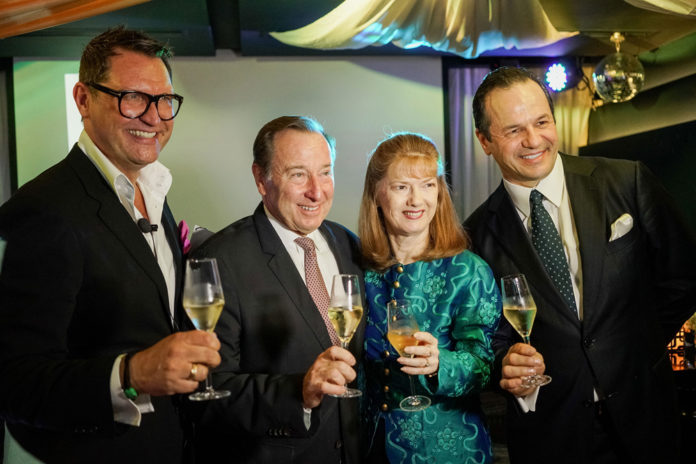
(From left) Schaetz, Marco Polo Ortiga’s Frank Reichenbach, Cronin, Marco Polo’s Caretti 

Eschewing the consolidation tide currently surging through the global hospitality sector, Marco Polo Hotels has opted to adopt a lean and nimble strategy with expansion limited to Asia and just its existing brands.

President Jennifer Cronin foresees no more than 15 hotels to be added to its stable of 12 Marco Polo and Niccolo hotels in Hong Kong, China and the Philippines in the next five years.

The company does not see the need to expand beyond these two upmarket brands, said Cronin in Manila Wednesday during the introduction of Niccolo Hotels and its flagship property, The Murray, a Niccolo Hotel, Hong Kong, which will open in October. The first Niccolo hotel debuted in Chengdu in 2015, while upcoming Niccolo hotels will open in Chongqing this August, Changsha in 2018 and Suzhou in 2019.

“We punch above our weight. We’re small but the brand is well-known,” she said. “We make sure we give good returns and (the properties we manage) become iconic hotels.

“When a company gets big, you get lost. The small operating groups are going to be more attractive to owners who want the personal touch, and we want to grow the business together with strong partners,” Cronin added.

Marco Polo’s lean and mean strategy is working, emphasised Philip Schaetz, vice president for sales and marketing, as its hotel performance in January was better than 2016.

Schaetz said the first three quarters of 2016 were “very tough” due to the less-than-favourable international business climate but the company’s performance started improving in 4Q2016 and is projected to continue this year.

Cronin said Marco Polo Ortigas in the Philippines will be “the benchmark” for Marco Polo Hotels as the company undergoes a restructuring that includes a widening its global sales network and the appointment of key executives in HR and purchasing roles for the group.

Apart from adding three hotels in the Philippines, the company also has its expansion sights on South Korea and Vietnam, she told TTG Asia.
APAC carriers will lead the third golden age of aviation

0

apac airlines

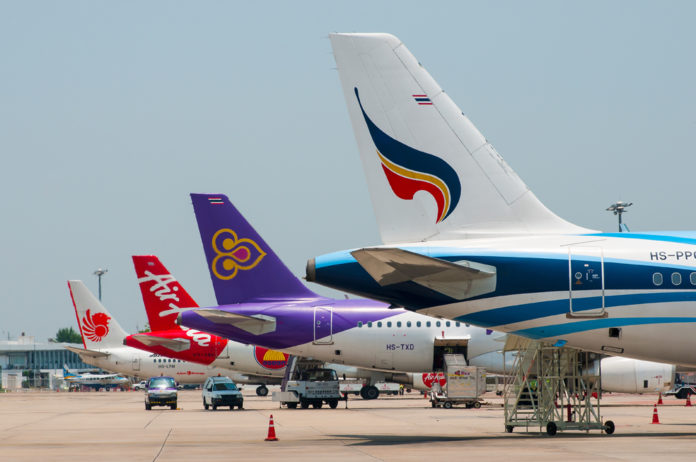
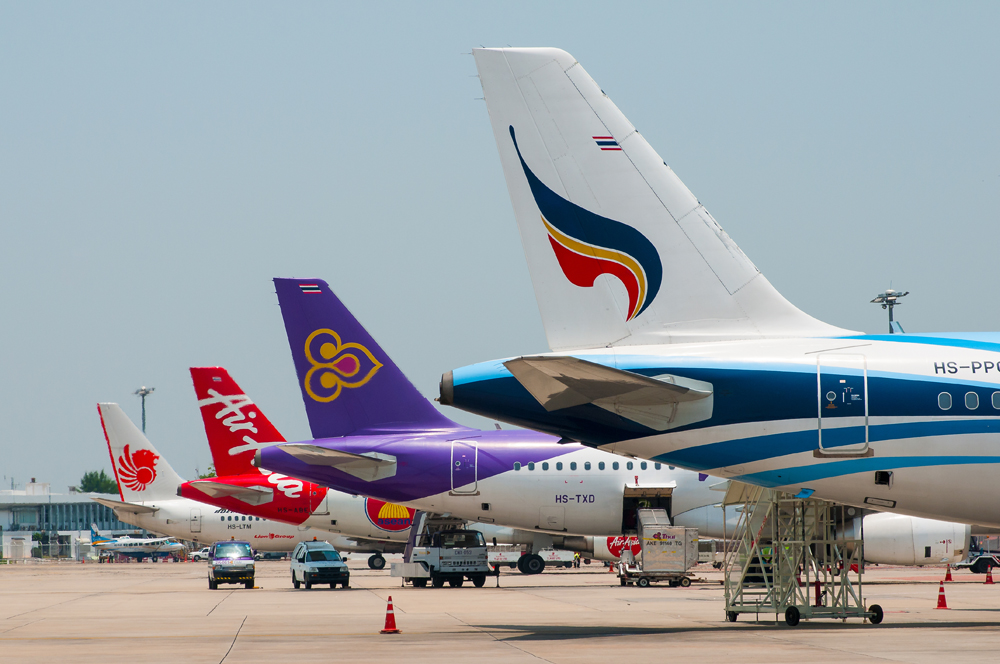
North American carriers are enjoying a golden age right now but the future will be in Asia-Pacific, according to IATA regional vice president Asia-Pacific, Conrad Clifford.

Clifford described the present times as the second golden age (after the PanAm era in the 1960s) led by North America where prices are at their lowest; efficiency is better than ever; airlines are re-fleeted, re-consolidated and re-structured; and there is convergence with the emergence of new airline models incorporating the strengths and removing the weaknesses of both the full-service carriers (FSCs) and LCCs.

But he expects a third golden age of aviation where Asia-Pacific carriers will lead the world.

“The market has recognised the turnaround and North American airlines are becoming investment-grade vehicles: this is unprecedented and that’s why I am calling it the second golden age,” said Clifford in his opening remarks on the second day of Aviation Festival Asia in Singapore on Wednesday.

“The top four net profits in 2015 were all North American (airlines): American Airlines made a net profit of US$6 billion in 2015, United Airlines US$4 billion, Delta Air Lines US$4 billion and Southwest Airlines US$2 billion. These four North American carriers accounted for 45 per cent of the total global industry profit for 2015 (US$35.3 billion). And 2016 was estimated to be an even better year than 2015. And 2017 will still be good and deliver real returns to shareholders.

“Of course we may be cynical and say that it’s only due to the low fuel prices…but I would like to say this is not just about the fuel price.”

He said it is about the magic three C’s: capacity discipline, consolidation and charging for everything.

In 15 years’ time, all the world’s most profitable airlines – FSCs, LCCs and hybrids – will all be based in the Asia-Pacific region, with growth fuelled by the region’s demographics, Clifford projected.

“North America may be the largest aviation market in the world today but more than half of mankind is within a 5.5-hour flight time – that’s the profitable payload range on the latest Boeing’s and Airbus’ narrowbody 737 max, A321neo – from us all sitting in this room in Singapore.

“China will be the largest market in the world in less than 20 years, India will be number three, Indonesia number five and Japan number seven. And right now India has the fastest growing domestic market on the planet,” said Clifford.

Presently, the future looks likely to be dominated by LCCs in this part of the world, he said, pointing out that the region with the biggest LCC penetration in the world is South-east Asia, while China is growing fast since last year.

But Clifford believed the future is going to be those airlines “that capture the best of FSCs and LCCs, eliminate the parts of those models that don’t suit our Asia-Pacific markets, and keep on changing and growing”.

Ascott gets new ‘lyf’ out of millennials

0

lyf_smu_the_park_social_area

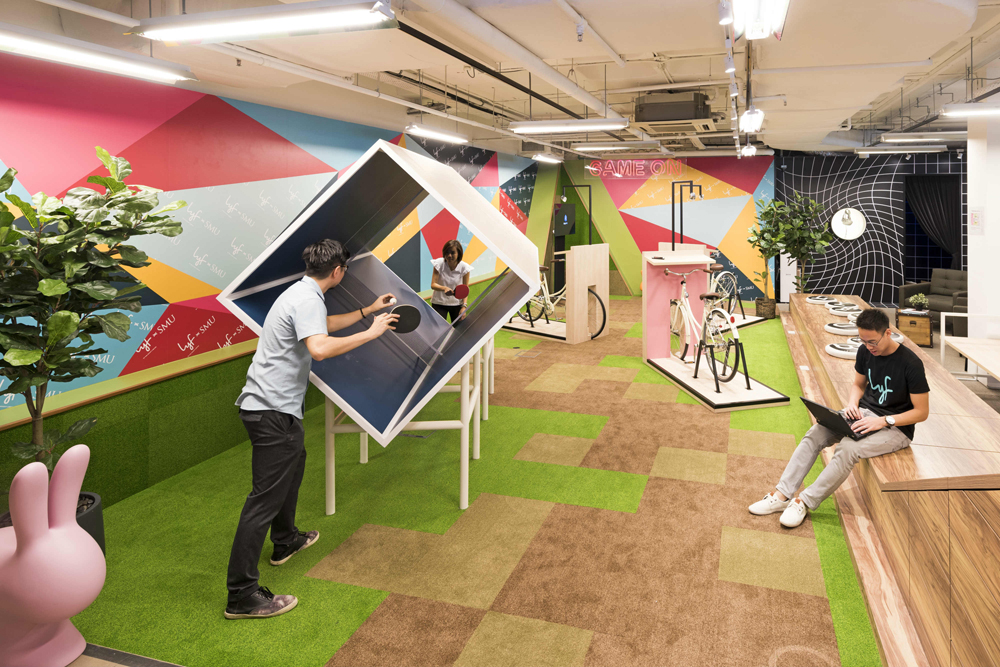
Ascott launched its first living lab to field test its new co-living brand, lyf, in partnership with the Singapore Management University (SMU).

Ascott will carry out product simulations at the lyf@SMU lab, open 24/7 for all SMU students from February 27, 2017. Through their participation, students will be able to experience the products and provide feedback to shape upcoming spaces under the brand, which Ascott says “is designed for and managed by millennials”.

The 2,973m2, three-storey lab houses co-working lounges with modular furniture, large communal tables at the social pantry with interactive voting boards, multimedia rooms, days beds and napping pods.

Students can rock out in the soundproof jamming studio, pedal up a sweat on the bike to power up their mobile phones or have a game of foosball or table tennis.

SuperStar Virgo to spend more nights in Japan

0

superstar-virgo
Superstar Virgo

Star Cruises will increase the length of SuperStar Virgo‘s Shanghai homeport cruises to 8D/7N voyages when the new cruise season begins.

From July 6 until November 30, the 8D/7N Golden Sea Route will depart Shanghai every Thursday aboard SuperStar Virgo, visiting ports of calls including Tokyo, Mount Fuji, Osaka (with land tour options to include Kyoto) and Kagoshima.

In addition, Star Cruise guests can also opt for a 4D/3N Sea-Land-Air holiday that departs from Shanghai. Upon disembarkation in Tokyo, guests can enjoy the city at their leisure and return to Shanghai by air. Alternatively, guests can also fly to Tokyo for a 5D/4N cruise to Mount Fuji and Kagoshima, with disembarkation in Shanghai.

“The average cruise length from China tends to be short, at four to five nights, with calls to secondary port cities. The cruise ship itself is the primary attraction,” said Ang Moo Lim, president of Star Cruises.

“Star Cruises’ new 8D/7N cruises will provide a step-change forward in the Chinese cruise experience with calls to four famous ports and bringing the cruise length to international standards where more than 50 per cent of cruises are of seven-night duration. The extension of our itinerary to 8D/7N will bolster its appeal to the overseas market, which we believe will attract more International cruise travellers to Shanghai.”

Prices for the 8D/7N cruise start from US$4,999 per person based on twin occupancy.

itinerary_superstar-virgo
Source: Star Cruises

LCC alliance makes progress on cross-selling, upselling

0

value-alliance
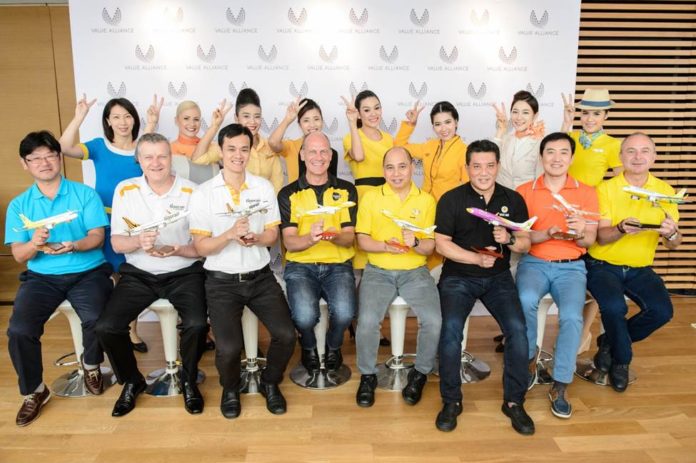
CEOs and stewardesses of Value Alliance members

Four of the eight LCC members of Value Alliance are now interlined, enabling passengers to view, select and book flights, as well as pick ancillaries such as meals, extra luggage and seats, in a single transaction.

The four are Scoot, NokAir, NokScoot and Vanilla Air. The other four – Cebu Pacific, Jeju Air, Tigerair Singapore and Tigerair Australia – will be interconnected by the first quarter, according to Mildred Cheong, general manager, ABB Asia-Pacific, a technology provider for the multi-carrier interlining and booking system.

This progress is key to the success of the fledgling alliance initiatives led by LCCs in Asia-Pacific. Unlike legacy carriers where an airline seat is all-inclusive, LCCs’ inherent model of unbundling seats, meals, extra luggage, travel insurance and other ancillaries have made it a complex task to interline them.

U-Fly Alliance became the world’s first LCC alliance when it debuted in January last year with five members, Seoul’s Eastar Jet, HK Express, Yunnan’s Lucky Air, Urumqi Air and Chongqing’s West Air, followed by Value Alliance a few months later in May.

A chief reason for these groupings is the need for the airlines to grow without losing their independence, said Steven Greenway, deputy CEO of U-Fly Alliance, who spoke at the two-day Aviation Festival Asia in Singapore which ended yesterday.

Any LCC with below 100 aircraft and are confined to a certain country are classified as ‘suboptimal’ in size, he said, citing Cebu Pacific as an example of being predominantly a Philippine domestic carrier with some international service.

“But Cebu Pacific is not going to break out and set up shop in Europe, Australia or Hong Kong. And while 10 years ago you had LCCs setting up subsidiaries in certain countries, for example Jetstar Asia in Singapore or Thai AirAsia, all of that is slowing down now, in some cases, going into the reverse,” said Greenway.

“Jetstar Hong Kong got rejected by local authorities who claimed that it was run out of Melbourne, which is true to a certain extent, while AirAsia had a close call in India (over whether it’s an Indian-controlled airline). You see all these barriers coming out.

“So if you’re suboptimal and are stuck in a geographic fix, what do you do? There is only so much domestic market you can stimulate, indeed none if you are in Singapore. How do you grow? That’s through partnerships,” he added.

Combined, U-Fly members has a fleet of 111 aircraft serving 106 destinations and 206 city pairs in North Asia.

But Greenway said the major breakthrough for U-Fly in the past year was in cost synergies, which small LCCs on their own could never enjoy.

Zecha back in hotels with affordable luxury brand Azerai

0

azerai_lp_reception_lrg
Azerai Hotel reception

Amanresorts’ founder Adrian Zecha, who lost the defining brand to Russian billionaire Vladislav Doronin, is back in hotels, this time attempting to redefine the affordable luxury space with a new brand called Azerai.

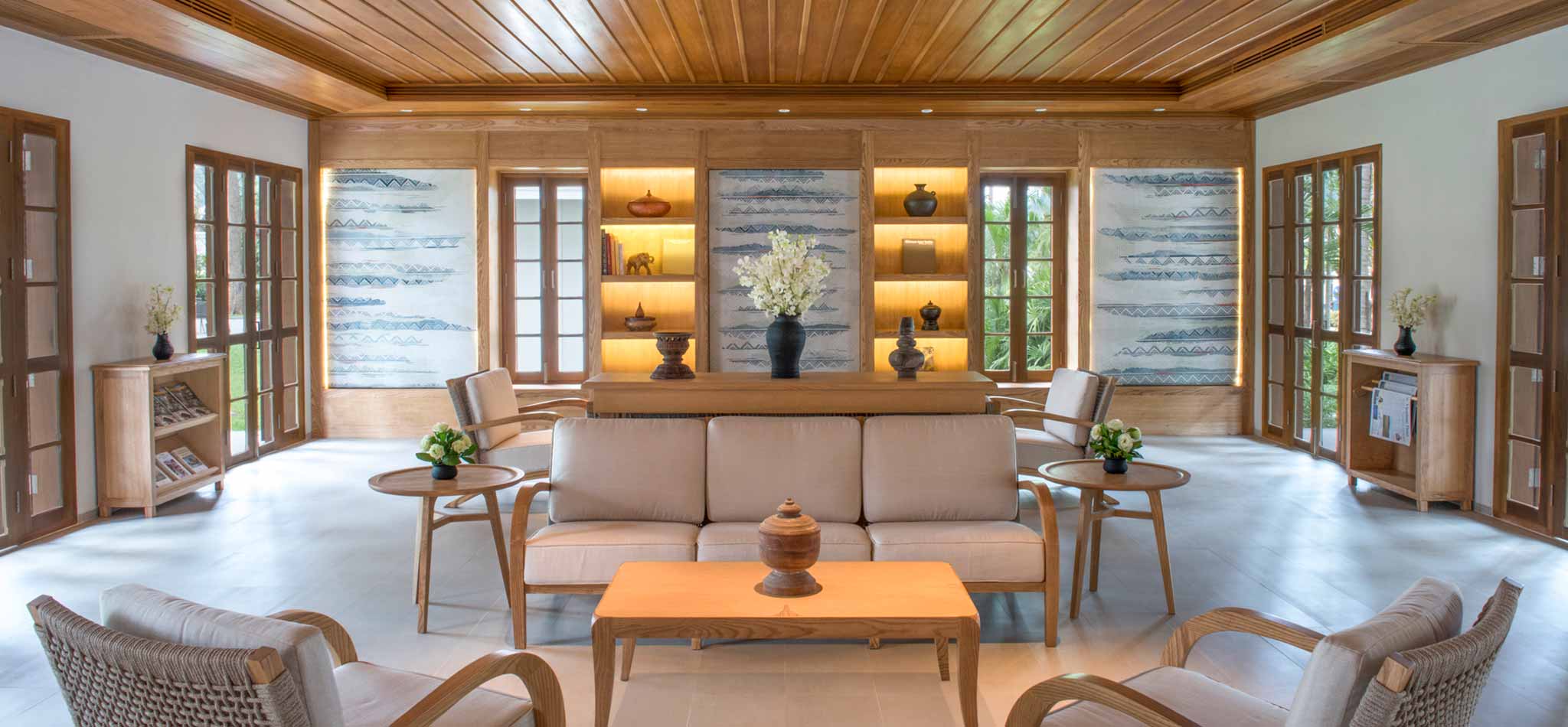
The first Azerai has opened in Luang Prabang. Its website said the hotel is “the first chapter of a new story and brand of hotels that offers guests simple elegance, refined design, discreet and attentive service in places of unique beauty and cultural interest”.

It targets “experienced urbane individuals, couples and families looking for distinction, quality and comfort at affordable prices”.

The name Azerai is influenced by Adrian Zecha’s initials and a Persian word, caravanserai, a resting place with a central courtyard for travellers.

Azerai Luang Prabang has its roots as French officer’s quarters. It became the Phousi Hotel in 1961 until it closed in 2014 whereupon work on Azerai began.

The new hotel has 53 rooms between 35-85m2, and rates starting from US$250++.

This isn’t the first time Zecha has his eyes now peeled on the affordable luxury hotel space. At GHM, which he co-founded and is a director of, the mid-tier brand Tin Hotels was launched recently, with the first hotels opening in Dubai and Oman in the next few years.

At age 84, Zecha shows he can’t get hotels out of his veins. Or luxury. He also launched Maha Yacht Club recently, which aims to bring hospitality excellence aboard superyachts.

Ex-president Sarkozy joins AccorHotels’ board

0

nicolas-sarkozy
Nicolas Sarkozy 

Former French president Nicolas Sarkozy might had suffered a humiliating defeat in the presidential primary last year, but he has found a new job in the hospitality industry as a director of AccorHotels.

The appointment of Sarkozy demonstrates Accorhotels’ intention to pursue implementation of its strategy and promote its brands worldwide and French know-how in tourism, the group said in a statement.

Sarkozy was named independent director to succeed Nadra Moussalem, who had stepped down as AccorHotels’s director following Colony Capital’s decision to sell its shareholding in the company. He will hold the appointment for the rest of Moussalem’s term.

Sarkozy will also chair AccorHotels’ newly-formed International Strategy Committee to focus on the development of the group’s network and brand portfolio throughout the world, as well as on the promotion of French tourism.

New Tourism Malaysia offices to tap India’s growth potential

0

img_tourism_malaysia

Inbound agents have welcomed Malaysian tourism and culture minister Mohamed Nazri Abdul Aziz’s announcement to set up Tourism Malaysia offices in Kolkata and potentially Amritsar to increase visitors from India’s eastern region.

“Setting up an office in Kolkata is a good idea as it is the gateway from East India to Malaysia,” said Adam Kamal, secretary general of Malaysian Inbound Tourism Association.

Tourism Malaysia currently has offices in three Indian cities, namely Delhi, Mumbai and Chennai.

The new offices will enable Tourism Malaysia to tap the swelling ranks of middle-class travellers in Kolkata and Amritsar, noted Arokia Das, senior manager at Luxury Tours Malaysia.

“There should be full-fledged Tourism Malaysia offices in major metros like Hyderabad and Bengaluru and smaller offices in second-tier cities. We’ve got to get Malaysia into everybody’s minds. There should also be more carriers between Malaysia and second-tier cities in India,” he urged.

With 188 flights weekly providing 35,915 seats between Malaysia and India, air connectivity between the two countries can be improved still, agents pointed out.

Adam said: “Malaysia Airlines should also open new routes between Malaysia and India as it did with China recently. It is a good way of attracting more tourists, and will also complement the e-visa facility introduced in April 2016 for Indians residing in India.”

Phnom Penh becomes Emirates’ newest Indochina connection

0

emirates

Starting July 1, Emirates will commence a daily Dubai-Phnom Penh service via Yangon, becoming the first airline to offer a connection between Yangon and Phnom Penh.

At the same time, Emirates will also introduce a direct Dubai-Hanoi service after removing the Yangon stopover from this route.

Operated with a Boeing 777-300ER aircraft in a two-class configuration, flight EK388 will depart Dubai at 09.15 and arrive in Yangon at 17.25. It will then depart Yangon at 18.55, before arriving at Phnom Penh at 21.25.

The return flight EK389 will depart Phnom Penh at 23.10 and arrive in Dubai at 05.40 the next day, after a short stop in Yangon.

More Six Flags theme parks to be planted in China

0

six_flags_china

Six Flags Entertainment and Riverside Investment Group have signed more formal agreements to build more Six Flags-branded parks in China.

The latest parks – a theme park and water park – will be located in Bishan, a district of Chongqing, with opening scheduled for 2020.

China’s first Six Flags-branded theme park and water park is sited in Haiyan, Zhejiang province. Located near Shanghai, they are scheduled to open in 2019 and will feature rollercoasters, live shows and water attractions.