TTG Asia
Asia/Singapore Friday, 3rd April 2026
Page 1615

Vietnam gets second Swiss-Belhotel in Nha Trang

0

Swiss-Belhotel International has signed a beachfront 175-villa resort in Vietnam’s southern coast of Nha Trang, marking the company’s second property in the country.


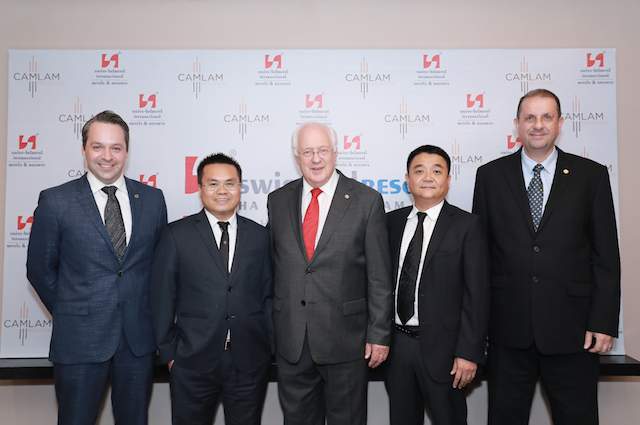
From left: Swiss-Belhotel International’s Edward Faull; Vu Duc Toan from owning company of Swiss-Belresort Nha Trang; Swiss-Belhotel International’s Gavin Faull; Kieu Xuan Nam from owning company of Swiss-Belresort Nha Trang; and Swiss-Belhotel International’s Emmanuel Guillard

The Swiss-Belresort Nha Trang will feature two-, three- and four-bedroom villas, each complete with a private swimming pool. It features an all-day international dining venue and Italian restaurant, a swimming pool and poolside bar.

The resort is set for phase one opening later this year.

Dorsett Singapore makes duo sales appointments

0

Dorsett Singapore has appointed Wendy Ho as director of sales and Jasmine Gan assistant director of sales.

In her new role, Ho will head the sales team in driving business for the hotel. Prior to joining Dorsett, the 15-year industry veteran was with Parkroyal on Beach Road Singapore for three years in a similar capacity, heading both room and catering sales.

Gan will assist Ho in her assistant director role, as well as focus on the hotel’s leisure portfolio. She was formerly with Four Points by Sheraton Hotel in Singapore in a similar capacity, and her portfolio includes stints with the Park Hotel Group, M Hotel and various travel agencies in Singapore.

Genting to cruise the skies on world’s largest private tour plane

0

Crystal AirCruises – the luxury private jet operator owned by Genting Hong Kong – has unveiled the inaugural itinerary onboard its soon-to-launch 86-seater Crystal Skye aircraft, the world’s only twin-aisle private plane.

Crystal Skye will depart from Hong Kong or Macau on September 30 on a eight-night voyage to Nairobi and Tahiti, priced at US$45,000 per guest and including hotels and accommodation, food, all beverages, entertainment, private plane transfers and butler service.

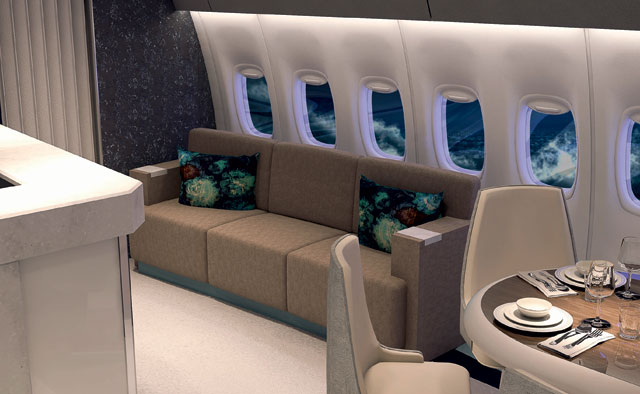
Plane interior

The plane also has the highest crew to passenger ratio of any twin-aisle aircraft, and offers 88 Crystal Exclusive Class seats designed for maximum personal space and convertible to 180-degree lie-flat beds. Features include a social lounge with stand-up bar, while cuisine will be prepared by an executive chef in two state-of-the-art galleys, and paired with an elegant premium wine list from the Crystal Skye Cellar.

Other comforts available onboard include Bose Noise Cancelling headphones, Apple iPads, complimentary global Wi-Fi, interactive TVs with on-demand programming and music library, individual USB ports and power outlets, and a live cockpit-to-ground listening channel.

Crystal AirCruises will take delivery of Crystal Skye on August 1 from Greenpoint Technologies in Washington and will be christened on August 12 during the Virtuoso Week in Las Vegas.

Crystal Skye will also be made available for private charters for one to 28 nights. With its ability to fly non-stop for 19 hours, longer than any commercial air flight (surpassing the current longest route from Singapore to New York at 16-17 hours), it affords guests a wide range of destinations to choose from on their private journeys.

The Crystal US offices and Genting offices will be the main sales points for the aircraft charters, while the aircraft will be operated for Crystal AirCruises by Comlux Aruba NV.

DoT targets US market with Philippines-Asia packages

0

Amid the US market’s growing travel interest to Asia-Pacific, the Philippine Department of Tourism (DOT) is deploying a strategy to twin destinations at home with others in the region.

Addressing Asian-American travel agents and media during the Philippine business mission in San Jose, California this week, Philippine tourism secretary Wanda Tulfo-Teo said: “While destination twinning has already been an established programme of the DOT in the recent years, we have been working to expand the reach of this strategy to new emerging markets like Vietnam, Thailand and Malaysia, among others.”

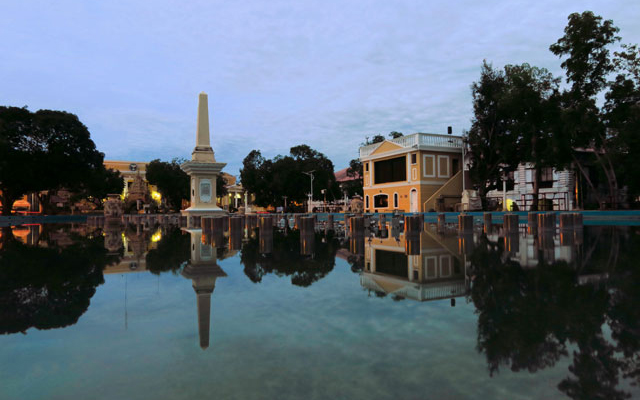
Opening up secondary destinations; Colonial Plaza Salcedo, Vigan pictured

One of the immediate plans of the DOT is hence to strengthen its partnership with the travel trade in the US’ West Coast, which has already committed to bring US tourists to Manila and Bangkok in October this year.

Purificacion Molintas, DOT attache in San Francisco, said the tourism office in San Francisco recently started implementing the twin-destination promotions in collaboration with DOT Los Angeles targeting Thailand, Vietnam and Malaysia.

She added that California and Vancouver, being home to diverse Asian diasporas in North America, are perfect target markets for the programme.

With the significant improvements seen in the Philippines’ air connectivity in recent years, Teo is enlisting the support from various stakeholders in implementing the twin-destination tour packages, including Philippine Airlines; Eva Air, which flies to Cebu; Asiana Airlines; and Korean Airlines, which has just added flights from San Francisco to Manila.

The tourism chief is confident that twinning Philippine destinations will not only bring in foreign arrivals especially from North America, but also open up opportunities for domestic tourism and secondary gateways.

For instance, packaging Clark – a secondary gateway to Laoag, Vigan and La Union in the Philippines – with other Asian destinations could help bring the country’s lesser-known destination to prominence.

The US, second top foreign visitor market for the Philippines, contributing 428,767 arrivals in the first five months of 2017, up 12.8 per cent on the period last year.

Air France unveils Joon, its new millennial-focused airline

0

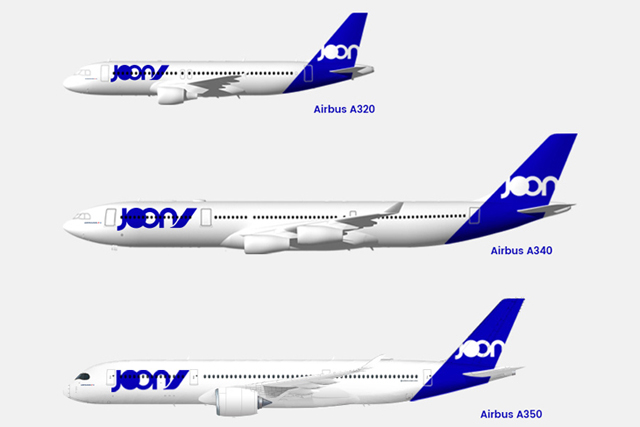
Air France has launched Joon, a new millennial-focused carrier that will start operating mediumhaul flights from Paris-Charles de Gaulle this autumn, followed by longhaul flights in summer 2018.

The name Joon, which echoes the word “jeune” for “young” in French, is aimed at young working adults aged 18 to 35 year, whose lifestyles revolve around digital technology.

Positioned as “a lifestyle brand and state of mind”, Air France states that Joon is not a low-cost airline as it will offer original products and services that reflect those of the French flag carrier.

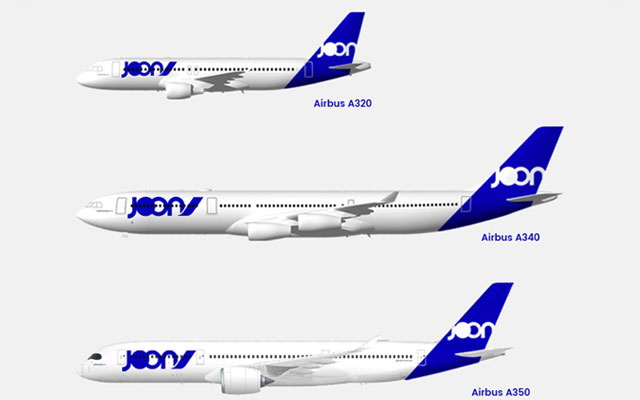
This new brand – which features an electric blue code as its visual identity to symbolise the airline’s dynamic attitude as well as the sky, space and travel – is said to be entirely designed to meet millennials’ requirements and aspirations, according to Air France.

Jean-Michel Mathieu, who has spent most of his career with the Air France and Air France-KLM group, has been named the CEO of Joon.

Franck Terner, CEO of Air France, said: “Joon is another step in the deployment of the Trust Together strategic project. Its creation will improve the profitability of the Air France Group, enabling it to reduce its costs and ensure the sustainability of its business model.”

More details on Joon’s content, products, services, destinations and range of fares will be provided in September, according to Dominique Wood, executive vice president brand and communications at Air France.

Sri Lanka talks new marketing plan for overseas markets

0
Galle, Sri Lanka

Sri Lanka Tourism Promotion Bureau (SLTPB) plans to appoint PR agencies and its own marketing officers in key source markets, a change from its earlier move of having tourism offices in the UK, Germany and France which have since closed.

The first stage of this plan, SLTPB chairman Udaya Nanayakkara told TTG Asia, is to appoint representatives with experience in tourism marketing in Delhi, Mumbai and Chennai in India; Beijing, Shanghai and Guangzhou in China; and London, Frankfurt, Paris, Tokyo and Melbourne.

Galle 

The agencies will handle all areas of destination marketing and coordinate with the SLTPB officer in those markets, while decisions on ad placements will be made in Colombo.

Nanayakkara said all approvals are in place with the terms of reference to be finalised shortly by a ministerial committee, after which it will accept global tenders from creative, PR and advertising agencies. He hopes to increase the earlier estimated budget of U$3 million to US$6 million.

Following multiple postponements, the new US$1.3 million digital campaign is now scheduled for a December launch in the UK, Germany and France, followed by the global destination marketing campaign in May 2018.

GBTA forecasts pricier airfares, hotels in 2018

0

The 2018 Global Travel Forecast released by by Carlson Wagonlit Travel and GBTA Foundation projects a 3.7 and 3.5 per cent increase in global airfares and hotel prices respectively, although ground transportation costs are expected to rise only 0.6 per cent, significantly less than the three per cent inflation rate forecasted.

“The higher pricing is a reflection of the stronger economy and growing demand,” said Kurt Ekert, president and CEO, Carlson Wagonlit Travel. “The global numbers from this forecast should be considered strong leading indicators of what 2018 will mean for global businesses, as we anticipate higher spending.”

Across Asia-Pacific, hotel prices are expected to be up 3.5 per cent – with a large discrepancy as Japanese prices are expected to fall 4.1 per cent while New Zealand is set to rise a full 9.8 per cent.

GBTA also cautioned that buyers should anticipate more challenging rate discussions with newly merged hotel groups, especially in high-volume markets such as Bangkok, Beijing, Shanghai and Singapore.

Hotel prices across EMEA are likely to also rise – 6.6 per cent in Eastern Europe, 6.3 per cent in Western Europe, but only 0.6 per cent in the Middle East and Africa. Within Latin America however, prices are expected to fall 1.2 per cent.

North America hoteliers may be banking on economic growth as demand has levelled off since mid-summer 2016, but supply is expected to continue growing steadily through 2018.

In air travel, Asia-Pacific could see a 2.8 per cent rise in airfares with domestic demand increasing, particularly in China and India.

Air travel is anticipated to continue growing across EMEA, with prices rising 7.1 per cent across Eastern Europe and 5.5 per cent in Western Europe. However, Middle East and African countries are projected to see only a three per cent increase as they face ongoing security threats and an oil industry that is still in recovery.

In North America, GBTA forecasts a modest 2.3 per cent rise in price. Canadian airlines are expected to aggressively compete given new market entrants. With the region’s air travel market nearly flat year-over-year in early 2017, competition is fierce between carriers who now compete on branded fares rather than bundled fares or by carrier type.

Meanwhile, minute increases are projected for ground transportation prices globally. In Asia-Pacific, continued uncertainty in mining and a cautious recovery in the oil and gas industry will result in flat rates for 2018.

As well, sharing economy suppliers Didi Chuxing in China, Ola in India and Grab in South-east Asia have all achieved economies of scale that make them key competitors to more traditional car rentals firms and taxis.

US laptop ban finally lifted

0

The US has entirely lifted its laptop ban for passengers flying from 10 airports in the Middle East and North Africa into the country, after the Department of Homeland Security declared that it is satisfied with “enhanced security measures in place”.

The controversial ban, which was imposed in March this year to address the potential threat of hidden explosives, was lifted earlier this month for Emirates, Etihad Airways, Qatar Airways and Turkish Airlines. The remaining airports and airlines are now exempted too.

Welcoming the end of the laptop ban, Greeley Koch, executive director of the Association of Corporate Travel Executives, commented: “This is one less burdensome regulation business travellers – and tourists – must grapple with as they plan their future travel. The policy was insufficient as a standalone measure to address very real ongoing security threats, and did not take into account the need for travellers to maintain connectivity and productivity, especially for long intercontinental flights where being off the grid can lead to business interruption.”

A travel ban on citizens from six Muslim-majority countries – Iran, Libya, Somalia, Sudan, Syria and Yemen – still remains but this is being challenged in US courts.

New hotel openings: Hotel Indigo Bali Seminyak Beach, Amari Galle and more

0

The latest hotel openings and announcements made this week.

Hotel Indigo Bali Seminyak Beach
Situated across 4.7ha on the Balinese beachfront is the Hotel Indigo Bali Seminyak Beach. The design-led property offers 270 rooms and suites, all of which come with daybeds and spa-inspired bathrooms. The resort is also home to 19 villas, each featuring a private outdoor swimming pool, whirlpool and marble bathrooms. Facilities on-site include seven F&B options, four outdoor swimming pools, the Sava Spa with 10 treatment rooms, and a fitness centre. There are several meeting spaces as well, the largest of which can hold 100 guests.

Amari Galle
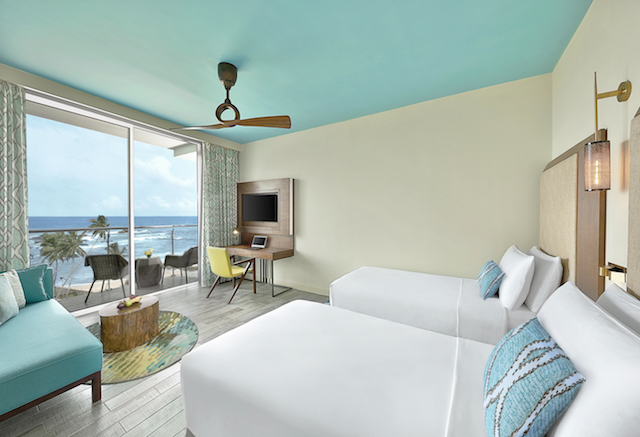
Onyx Hospitality Group has opened its latest property, the beachfront Amari Galle, in Sri Lanka. All 172 rooms across five categories boast private balconies and direct sea views. Facilities include three dining locations, the Voyager Lounge, an outdoor swimming pool, fitness centre, Breeze Spa, and family-friendly services such as a kids’ pool, and Kids Club. For events and meetings, Amari Galle offers three Idea rooms, as well as a ballroom that can accommodate 250 people banquet-style.

Cardamom Tented Camp
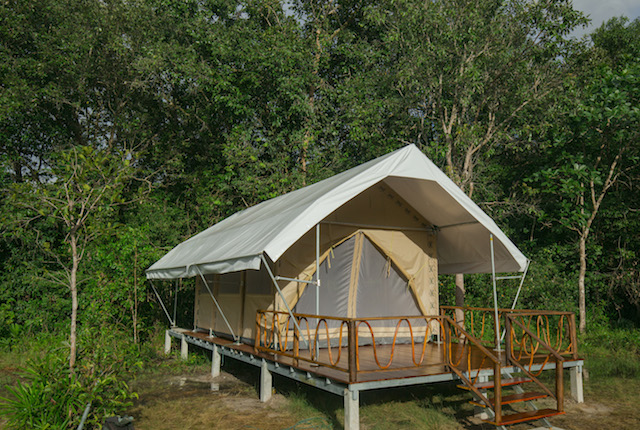
This tented camp in Cambodia’s Cardamom Mountains feature nine furnished, tented accommodations, each with an ensuite and a patio area. The solar-powered camp stands in Botum Sakor National Park, part of a vital elephant migration corridor, and can be reached via road from Phnom Penh. A riverside restaurant is its sole facility, but guests can go on guided day hikes and river trips with local rangers to learn about the surrounding flora and fauna. Visitors can also replant indigenous trees, kayak or engage in other conservation activities.

Citadines Millennium Ortigas Manila
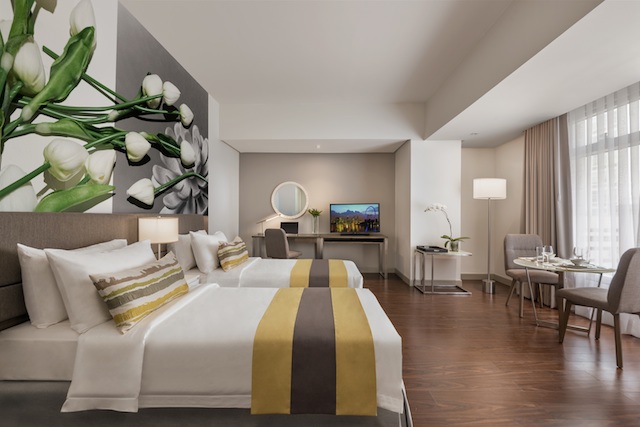
Ascott has opened its seventh serviced residence in Ortigas Center within Metro Manila’s CBD. The property offers 293 units ranging from studio to one-, two- and three-bedroom apartments. Facilities such as a residents’ lounge overlooking the city, a swimming pool, fitness centre, restaurants, function rooms and garden deck are available. Citadines Millennium Ortigas Manila is a 10-minute walk to the Ortigas MRT Station, and about a 50 minute-drive to Ninoy Aquino International Airport.

Mantra Hotel at Sydney Airport
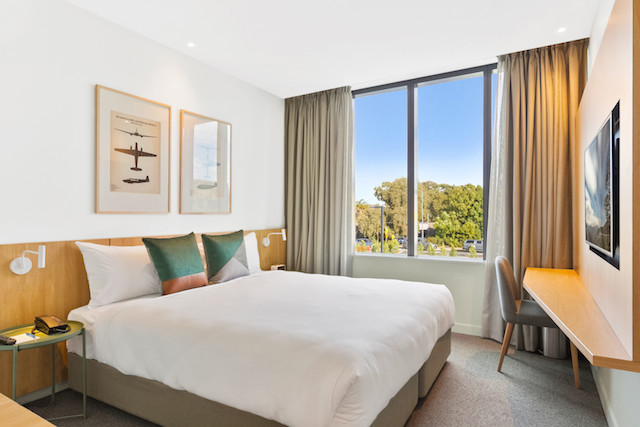
The eight-storey Mantra Hotel at Sydney Airport, located a short distance from Sydney Airport’s T2 and T3 domestic terminals, offers 136 studio rooms. Airport-facing rooms located on the fourth floor and above boast views of the domestic and international airport runways, as well as the arrivals section of the airport where all VIP charter jets park. Amenities include a restaurant and bar, an Internet kiosk, as well as an integrated lobby and reception space.

The business of protection

0

With insolvencies and bankruptcy filings on the uptick among travel businesses in recent years, is the trade seeing enough protection against such risks from insurance providers? TTG Asia reporters find out

As the middleman in the travel business, running a travel agency in the current challenging economic climate is not without its perils, as risks ranging from bankruptcy and sudden cessation of services from partners could affect their operations and cause financial loss.

However, a check with agencies across the region reveals that there is currently no insurance or scheme in place that offer a hedge against such specific business risks.

“Travel agencies are the weakest part of the entire travel distribution (chain), but there is no insurance protecting our business,” lamented Royanto Handayam, CEO of Panorama JTB Tours Indonesia.

Travel agents are also vulnerable as there is no insurance protection against defaulters or scams, some common risks that agencies face, especially as the threshold for entry into the travel agency business is relatively low in certain markets.

Fe Abling-Yu, second vice president of Philippine Tour Operators Association, welcomes the tackling of such issues. “It is easier to apply for a business permit to open travel agencies unlike before when licensing is with the Department of Tourism, and there are cases of consumers getting scammed. If something happens to consumers, the bottom line is we need to take care of them more than anyone else.”

“There is no insurance policy in existence as it is difficult to prove to an insurance company that you have not been paid by your client whose business is still in operation,” said Ally Bhoonee, executive director of World Avenues Malaysia. “If they default, there is also nothing much we can do. If we decide to take them to court, it will have to be in their home country and getting a hearing may take years.”

Limited insurance coverage
Earlier this year, the collapse of Tokyo-based discount travel agency Tellmeclub, which affected as many as 90,000 corporate and leisure travellers, has forced the Japanese trade to reappraise its existing regulations on insurance, which were last revised around 20 years ago.

“The bankruptcy of Tellmeclub has the potential to damage the image of the travel industry,” admitted Yoshinori Ochi, director of the board and secretary general at Japan Association of Travel Agents.

“For this reason, the Japan Tourism Agency has set up a working group to look into ways to conduct management governance in the industry so that the involved parties can act accordingly, and in a timely manner, in the event of travel agency bankruptcies in the future.”

He added: “Consumers are protected from bankrupted agencies – if they are JATA members – under our Compensation Security System, but neither consumers nor the agencies buy insurance against bankruptcy from insurance companies. JATA’s system does not cover agents dealing with errant clients or partners, although they are eligible for protection through other channels not related to JATA compensation.”

Current insurance protection in the travel agency community is typically limited to IATA’s default insurance scheme or selected programmes signed up based on their own needs, Elly Hutabarat, chairman of the Association of the Air Ticketing Companies in Indonesia (ASTINDO), told TTG Asia.

She said: “As IATA agents, it is mandatory for us to take the Default Insurance Programme as well as the bank guarantee payable to banks appointed by IATA.

“If an agency defaults, the insurance company will settle the payment to IATA. But it does not mean that the default agent is free from any debt. Instead of paying to IATA, it will need to pay back the debt to the insurance company. In this case, the insurance that we are paying is to protect the airlines and not the agents. On the other hand, if an airline collapses, agents will be impacted.

“ASTINDO once worked on finding an insurance company who would protect agents from a default airline. This move was (initiated) when a number of Indonesian airlines like Sempati Air, Adam Air and Mandala Airlines collapsed, leaving agents in limbo and forcing some to close shops.”

Elly added that Raya Insurance had rolled out a scheme to protect agents’ deposits with domestic non-IATA airlines, so that if an airline ceases operation agents can get back their deposits. However, few took up the insurance. Furthermore, following the improved regulation in Indonesia’s transportation sector, there has not been no more airline defaults.

ASTINDO is currently working with airlines to agree on transactions using credit cards only, starting with Garuda Indonesia, according to Elly. “With credit card payment, liability will lie with the credit card operators, not with us,” she said.

Elsewhere in the region, Hong Kong Association of Travel Agents’ (HATA) chairman, Jason Shum, said: “For inbound travel agents, it’s not mandatory to insure for professional indemnity, but agents handling group tours tend to have their protection in place if clients (make claims in event of accidents). Therefore, some operators handling inbound groups would buy insurance.”

HATA, as an example, also insured its annual overseas convention from AIA to ensure a safe trip for delegates, said Shum.

Other Hong Kong agents like Swire Travel, which uses Aon, also takes up insurance separately for its cruise business, according to managing director, Gloria Slethaug.

Worth paying a premium?
Intensifying competition from OTAs, discounts on direct flights and hotel bookings, and higher merchant fees for credit card companies are some key reasons why more agencies are “struggling to stay afloat”, remarked Kay Swee Pin, president of Singapore Outbound Travel Agents Association (SOTAA).

The industry is seeing more agencies shuttering, with the most recent case of the Singapore Tourism Board revoking MISA Travel’s agency licence. As a result, the sudden closure of high-profile agencies makes it “increasingly harder” for the surviving operators to acquire financing from banks, explained Kay.

And even if insurance was available to travel agents to protect themselves against bankruptcy, the premiums are likely to be exorbitant, several agents pointed out. Most players, big and small alike, hence do not see the urgency of taking up such insurance.

Pauline Suharno, managing director of Indonesia’s Elok Tour, said: “There are a lot of small- and middle-sized agents who feel that paying the premium means cutting their slim profit margins even thinner.”

World Avenues’ Bhoonee shares similar sentiments: “It is good to have bankruptcy protection coverage, but the premiums will be high. How can we cover premiums when profit margins are so thin? If we increase the profit margin, it will be ideal.

“However, to do this, we have to educate our clients (both local and overseas agents) who buy from us that they are protected. This way they will accept higher rates knowing that they are covered in the event that my company goes bankrupt,” he added.

The Philippine Travel Agencies Association (PTAA) had earlier tried to push for industry-wide coverage for its members, said Jojo Clemente, president of Rajah Tours, during his term as PTAA president from 2005-2007. “But it didn’t push through because of the big amount involved and not all agencies wanted to be a part of it,” he explained.

Exercising own diligence, checks
In the absence of  insurance coverage against partners’ insolvency and defaulting clients, it all boils down to having their own checks and schemes in place to protect their business, said travel agency bosses.

“We will study how bona fide the client or business partners are,” said Panorama JTB Tours’ Royanto, who added that it is still “easier” to monitor a partnership than with a company contracted through a sub agent.

To minimise business risks and potential losses from bad business dealings, Abdul Rahman Mohamed, general manager at Mayflower Holidays, said: “We have a set of internal criteria for procurement dealing with agents. Our partners must be the top three players in their respective markets. We also ask for documentation such as the last three years of audited accounts to check their credit worthiness. We check our partners on a yearly basis to check their financial health.

“It is the same with clients who engage our services. They too will do their due diligence and check our financials. If our shareholder fund is in a negative position, they will reduce their risks by giving us small projects or not appoint us as well.”

World Avenues’ Bhoonee shared: “We protect ourselves when dealing with a new client by asking them to pay a bank guarantee. On the other hand, regular clients expect us to give them limited credit so they are not inconvenienced and they don’t have to pay bank charges for every booking they make.”

As well, Chan Brothers Travel in Singapore has cast its own safety net with more than “S$200 million (US$144.6 million) of asset backing in local and overseas properties… (spanning) Singapore, China, Hong Kong and Australia”, said spokesperson Justine Koh.

The agency is also selective in choosing only “longstanding partners” and establishing “a wide network of operators worldwide”, said Koh, in order to“circumvent such circumstances and minimise its liabilities”. – Reporting by Mimi Hudoyo, S Puvaneswary, Julian Ryall, Pamela Chow, Prudence Lui and Rosa Ocampo

Viewpoints What kind of insurance coverage do travel agents want?

Ally Bhoonee, executive director, World Avenues, Malaysia
Insurance companies could look at devising policies to protect agencies from going insolvent in the event of civil unrest, war and continuous acts of terrorism in a particular destination. Banks may close so how are agents to transfer money to their partners’ overseas? Agents may also face cash flow problems due to weak business at the time.

Raaj Navaratnaa, general manager, New Asia Holiday Tours & Travel, Malaysia
The umbrella bodies of the travel associations in ASEAN should spearhead a group insurance coverage to cover its members against potential bankruptcy and other forms of business losses. By having a centralised insurance policy, the coverage can be wider and premiums made more affordable. The minimum requirement of premiums can be met based on an individual company’s turnover.

Jojo Clemente, president, Rajah Tours, Philippines
It would be helpful if there’s an insurance policy that will cover all incidents that occur against our clients. Travel agencies going bankrupt have happened before, and sad to say you are only covered by how much the Philippine Deposit Insurance Corp covers you – there’s no protection. The most you can do is to be accredited by the Department of Tourism if you’re an inbound (agency) but if you’re outbound, you don’t need to be accredited.