TTG Asia
Asia/Singapore Monday, 6th April 2026
Page 1568

Travel tech pulls in more than just millennial business

0
Mobile users seen as lucrative market in travel

A spike in technology adoption rates in the trade sees not just millennials but consumers across all ages using the services.

Industry players that have adopted technology in recent months include Flight Centre with its new mobile-augmented services, Dynasty Travel offering Samsung Pay as a mode of payment, Singapore Tourism Board’s collaboration with Alipay, and KLM enabling bookings via Facebook Messenger.
Mobile users seen as lucrative market in travel

In Singapore, daily mobile usage time clocks in more than 12 hours, said Callum Brown, general manager, Flight Centre Asia, quoting a study by The New Paper.

Flight Centre recently introduced mobile consulting, which enables customers to arrange for a meet-up with a consultant at a location of their choice via WhatsApp, live chat, email and more.

The agency’s digital strategy aims to cast a wide net over “all generations (which) have become increasingly mobile savvy, including the baby boomers”, said Brown.

Since launching WhatsApp and live chat, Flight Centre has seen a five-fold and a year-on-year 155 per cent growth in enquiries for each respective medium.

Similarly, Dynasty Travel sees mobile users as a “highly lucrative market”, and has begun channelling more funds into digital advertising and platforms, said Alicia Seah, its director of public relations & communications.

She said the agency is increasing its digital social media budget from 10 per cent to 25 per cent of its overall 2018 budget.

In this move “to evolve from a single channel of interaction (in-store) to omni-channel” interaction, Dynasty aims to bring more products and services onto mobile platforms, said Seah.

The shift into mobile technology is not without its challenges. Brown shared: “There was an initial concern (about) real-time replies, as consumers expect to have their queries addressed almost immediately.”

However, employee adoption and training proved easier than anticipated, and Flight Centre’s staff was “able to quickly adapt to such technological changes”, said Brown.

For companies facing employee inertia, government-led initiatives and on-going training should be prioritised, opined Andrew Chan, founder and CEO of ACI HR Solutions.

He added: “Ideally, with widespread access to mobile technology, training could also be implemented digitally, thereby allowing the organisation’s employees access to new and relevant information.”

He also cautioned that “should a company be reluctant to invest in digital training for their employees, the organisation can expect to face a high turnover rate and the possibility of losing its staff to competitors”.
Singapore, Tokyo good for baby boomers, not so much millennials

0
Singapore well-suited to families and baby boomers

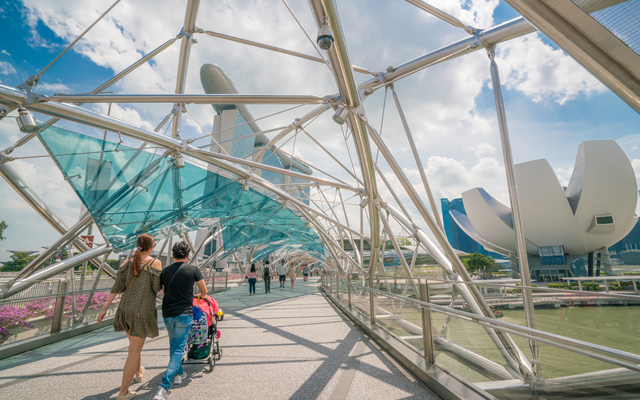
Singapore and Tokyo placed among weekenGO’s top 10 cities for baby boomers to visit for the weekend, but Asian destinations were absent from the ranking of best cities for millennial travel.

Singapore ranked sixth best city for baby boomers to spend a weekend in. With an overall ranking of 27th, the city placed well (11th) for families too, but is much less favoured for millennial travel (31st).

Singapore well-suited to families and baby boomers

The Lion City fared best in mobility (ranked second, scoring 96.13), security (ranked 14th, scoring 96.06) and dining (ranked 17th, scoring 95.15).

It did not do so well, however, on measures of walkability (84th, 81.72), concerts (74th, 77.88) and LGBT-friendliness (71st, 80.30).

With top marks (100) for dining is Tokyo, placing it close behind Singapore in eighth spot for baby boomer travel. Japan’s capital also did well on measures of mobility (89.3), cultural events (94.24) and security (98.49).

Meanwhile, weekenGO’s 10 best cities for millennial travel are (in order) Berlin, London, Amsterdam, Vienna, Paris, Toronto, Zurich, Dublin, Munich and Edinburgh.

To determine best cities for millennials, factors such as LGBT-friendliness, women safety, concerts, clubs, bars, accommodation, green spaces, walkability and mobility were considered.

While Asian cities did not make the top 10 for millennial travel, Shanghai snatched the winning score for the best club options.

Tony Fernandes gets hitched – and it isn’t a low-cost ceremony

0

AirAsia Group chief executive Tony Fernandes last Saturday wedded his South Korean girlfriend, known to the media only as Chloe, in the French Riviera or Cote d’Azur.

Fernandes and his wife had been dating for over two years, reported the New Straits Times.

Wedding bells a-ringing: Fernandes sporting a three-piece suit and his beautiful wife in an off-shoulder, mermaid-cut number

CIMB Group chairman and brother of Malaysian prime minister, Nazir Razak, was the best man at the wedding.

Congratulations Tony & Chloe from all of us at TTG Asia.

Wishing our Hindu readers Happy Diwali

0

As October 18 is a public holiday in Singapore, where TTG Asia is based, there will be no e-daily news tomorrow.

News will resume on October 19.

TTG Asia wishes all our Hindu readers a Happy Diwali.

A bigger Hotelbeds ‘true alternative’ to Priceline, Expedia, says chief

0

Having completed the GTA acquisition on October 4, Hotelbeds Group’s executive chairman Joan Vilà envisions “a whole new company” and one that will help hoteliers and the trade to reduce dependency on the two unicorns, Priceline and Expedia groups.

It is undecided yet if the GTA and Tourico brands – acquisition of the latter was completed in June – will be kept, with Vilà saying that’s a “secondary” concern to be decided later, while the primary “big” task is to integrate “three specific companies into one new company with a new culture that will make it a great place to work”.

Hotelbeds’ acquisition of GTA completed, now on to integration

“You know, the price is too big too fail,” he told TTG Asia in a phone interview from Palma, Spain, adding that he guarantees the birth of a new organisation whose consolidation is driven by growth, not cost cuts.

To understand the scale of the integration, a source tipped that the combined value of the GTA and Tourico acquisitions is some 1.3 billion euros (US$1.5 billion), with GTA being “the bigger buy, but not much bigger”.

That’s about as much as what Cinven and Canada Pension Plan Investment Board paid to TUI for Hotelbeds Group itself in September 2016, tipped to be around 1.2 billion euros.

Combined, the new group will have 8,300 employees, around 1,600 from GTA and 800 from Tourico.

Its marketshare shoots up to 15 per cent, from seven to eight per cent currently, observed the source, reflecting a sector that is highly fragmented, which means plenty of growth opportunities still for Hotelbeds Group.

According to Vilà, a new management team is already taking shape and leading the integration, and it includes leaders from GTA and Tourico.

“At the top of company, we have myself, Carlos Munoz (MD, Bedbanks) and Andres Garcia-Tenorio (Finance & Strategy). Yes we come from Hotelbeds (Group) but below that we have plenty of leaders from the three companies and people are pleased about this,” said Vilà.

He pointed to CEO of Tourico, Asi Ginio, as having taken an important responsibility (for Commercial & Strategic Partnerships), while CEO of GTA, Ivan Walter, “is going to take an important role in the integration”.

“His knowledge of the business is deep, and he’s had this critical position at GTA, so he will help us a lot in the coming months,” said Vilà.

Asked what results he would like to see for a year after integration, Vilà said: “I’d like to see two things, one internal related and one external.

“Internally, in a year’s time, we are almost there working as a single company, with many of the functions completed and integrated, and we are much better as three (combined) than standalone.

“Externally, we are big enough to be the true alternative for hoteliers who want to reduce dependency on the two big players (referring to Priceline and Expedia groups). You’ve seen how some hoteliers, though mainly in the US, talk of an oligopoly situation, so this increase in size and scale will make us more attractive to hoteliers. They see that we can be a very good, independent distribution channel because we don’t want to steal their clients, we don’t compete with them.

“For all the OTAs, tour operators and travel agencies, we will improve a lot in the number of hotels we have, and many of these hotels will have special agreements and conditions with us. So they (the trade) will think we are big enough, they don’t have to work with our competitors the big two as they have a choice, one that offers them excellent rates and portfolio of products for their customers.”

This is why Vilà believes a successful integration will result in a lot of growth for the group. “The primary driver of consolidation is growth. Hotelbeds was market leader but its market share was not big enough. Now there’s plenty of business and we should capture the growth.

“Being bigger, we can invest more in technology, systems and best practices to satisfy our clients and deliver the service they expect. Of course when you consolidate, there will be some duplications, for example, instead of three technology platforms, there will be just one in the future, but we will spend more on technology. (Manpower) costs may reduce (as a result of duplicated roles), but growth will favour hiring new people.”

Blockchain-based travel platform in the works

0
Winding Tree to launch a token sale of its cryptocurrency "Líf"

A Swiss-based startup is dedicating itself to “the reorganisation of travel distribution”, starting by building the first public blockchain-based marketplace for travel content with the Lufthansa Group on board as content partner.

With a decentralised B2B marketplace system powering blockchain-based travel booking transactions, startups and companies will be able to gain direct access to travel service providers’ offerings without the need for many intermediaries, according to the startup, Winding Tree.

Winding Tree to launch a token sale of its cryptocurrency “Líf”

Winding Tree envisions that in the future, airlines, hotels and other travel service providers will offer their services on its platform, and companies interested in content will only connect to its B2B marketplace to present specific offers, which will result in a large number of new apps for travellers.

“Lufthansa Group has engaged in the development of APIs, for instance supporting IATA NDC standard, to offer a direct access to its offers to customers and distribution partners”, said Markus Binkert, senior vice president distribution & revenue management Lufthansa Group Airlines.

“By integrating these APIs with Winding Tree’s public blockchain Lufthansa Group enables all innovative partners who develop cutting-edge travel applications to access these offers via a decentralised and intermediate-free travel marketplace.”

In order to finance the initial development and facilitate acceptance by suppliers, Winding Tree will on November 1 launch a token sale of its cryptocurrency “Líf”. Lufthansa Group will participate in the presale upon regulatory clearance from Swiss authorities.

The contact with Winding Tree was established via the Lufthansa Innovation Hub.

Airside transfer service to roll into Kuala Lumpur airports

0

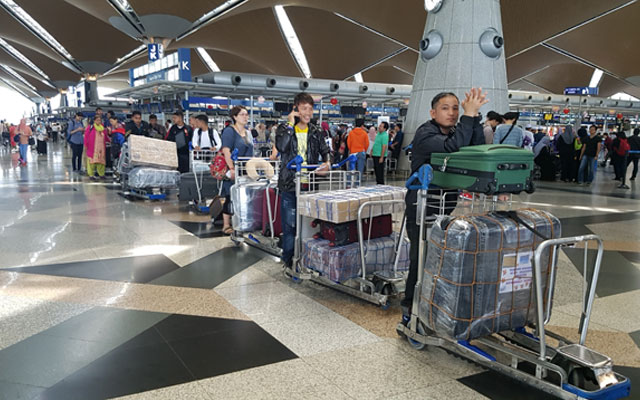
Malaysia Airports Holdings will introduce airside transfer check-in service at Kuala Lumpur International Airport (KLIA) and LCC terminal klia2 from next year.

The new service is expected to provide greater convenience to passengers with onward international destinations as they will not be required to check out their baggage at the point of transit, explained Malaysia Airports Holdings managing director, Badlisham Ghazali, in a Bernama report.

Part of the company’s larger modernisation plans, the transfer will be introduced at both KLIA and klia2. Badlisham also announced that both passengers and their baggage will be transferred free between both terminals.

Ally Bhoonee, executive director of World Avenues, said: “While it is a good improvement in services, there is an operational issue that needs to be addressed. There must also be interlining baggage between different airlines which do not have codeshare agreements. For example, if someone were to travel by Emirates from Dubai to KLIA, then proceeds on to Laos on AirAsia departing from klia2, their bags must be tagged correctly all the way through so that he collects it in the final destination.”

Agreeing, Adam Kamal, manager, Aidil Travel, said: “More international passengers will use airlines flying into Kuala Lumpur if Malaysia Airports can resolve the issue of interlining baggage between two different PNR numbers. The airlines that will benefit are the local carriers. Providing free shuttle services between the two airport terminals makes it very convenient and (saves cost) for passengers.”

Only in America are there fewer arrivals: ForwardKeys

1
ForwardKeys attributes fall to a "Trump Slump" compounded by stronger US dollar

Since US president Donald Trump first initiated a travel ban, the country has suffered a slowdown in international arrivals while the rest of the world pushes ahead, according to recent ForwardKeys analysis.

The decline also coincides with the strengthening of the US dollar, making the destination more expensive, ForwardKeys acknowledged.

ForwardKeys says there’s been a “Trump Slump” compounded by the stronger US dollar

Since January 27, there has been an overall dip of 1.4 per cent compared to the same period last year, while international arrivals in the rest of the world shows an increase of 4.6 per cent.

ForwardKeys observed that the decrease is from around the world – Europe, Asia-Pacific and the Middle East. Only travel from elsewhere in the Americas, and Africa (which has a small 2.1 per cent market share of travel to the US) have shown growth.

Europe, with a 39.4 per cent market share, slumped by 2.3 per cent over the year to the end of September, while Asia-Pacific, with a 23 per cent market share, was down 3.8 per cent.

ForwardKeys co-founder and CEO, Olivier Jager said: “Our latest findings confirm what our data has been predicting since the first travel ban. There has been a Trump Slump and the strong dollar has compounded it.”

“This must be worrying for the US economy – travel is a huge earner for the US and relative to the rest of the world, its tourism exports are losing ground.”

Heard of Mecklenburg-Vorpommern? It’s ITB Berlin official partner country 2018

0

Although it is not a country, Mecklenburg-Vorpommern, a federal state in northern Germany, is the official partner country of ITB Berlin 2018, picked for the destination’s strong sustainable tourism concept, according to the show organiser.

Those visiting Mecklenburg-Vorpommern will be able to offset their carbon footprint by purchasing so-called forest shares, 85,000 of which have already been sold. Five square metres of mixed woodland can be planted for 10 euros (US$12).

Schwerin Castle is just one of the more than 2000 castles and mansions in Mecklenburg-Vorpommern

As a result of the project, extensive reforesting is now taking place, according to a statement from the show organisers.

ITB Berlin is also expected to have its opening ceremony leave zero carbon footprint next year.

A public tree-planting ceremony was held last weekend in Göhren-Lebbin in the Mecklenburg Lake District, at which ITB Berlin will become a forest shareholder.

Chairman of the Tourism Association of Mecklenburg-Vorpommern Wolfgang Waldmüller said: “We are looking forward to organising Mecklenburg-Vorpommern’s appearance at ITB Berlin 2018. This is a big challenge, which we gladly accept, and it gives us the opportunity to score points on the international market.”

At ITB Berlin 2017 Mecklenburg-Vorpommern occupied a stand covering 400m2. According to the Statistics Office, last year the state registered 30.3 million overnights. Tourism is a mainstay of Mecklenburg-Vorpommern’s economy and currently provides jobs for a total of 130,000 people.

Furthermore, annual gross turnover in this sector is around 4.1 billion euros, and consumption by visitors totals 7.75 billion euros.

Club Med to hit Sri Lankan shores

0

Club Med will make its Sri Lanka debut with the opening of Club Med Ceylon in the small town of Beruwela come August 2019.

A 90-minute drive from Colombo International Airport, Club Med Ceylon will sit along he 1.5km Golden Beach and feature 372 rooms ranging from deluxe rooms to suites.

Beruwela

Apart from a children’s club, MICE facilities and restaurants and bars, the resort will also offer over 20 facilities including flying trapeze, tennis, football and archery.