Recovery efforts include international promotions and lobbying for countries to lift travel advisories
The Indonesian Ministry of Tourism is allotting a budget of 100 billion rupiah (US$7.4 million) towards Bali’s tourism recovery.
The plunge in arrivals due to Mount Agung’s eruption is considerable for Indonesia with Bali being the country’s top destination, contributing 40 per cent of total arrivals.
Recovery efforts include international promotions and lobbying for countries to lift travel advisories
While actual data for the whole of 2017 is not available yet, the Ministry of Tourism has estimated 14 million arrivals for last year, a million short of its target.
Announcing the recovery allotment at the 2017 Year End Press Conference, tourism minister Arief Yahya said: “We will be focusing on the recovery of Bali in the first three months of 2018.”
Apart from organising international promotions, the ministry has been lobbying for countries to lift travel advisories to Indonesia, particularly Bali.
I Gde Pitana, deputy minister for international marketing development, said that while travellers for some countries continued visiting despite the advisories, others – such as those from China – were following government notices.
Arrivals to Bali from China dropped to zero following the eruption which led to the airport closing for two days and China issuing a travel advisory against Indonesia. China has since revised its advisory.
“We inform (travellers) that Bali is safe to visit, except for the radius of 6km (reduced from 8-10km) from the mountain’s crater.
“We also inform them of contingency plans should the mountain erupt again, including land and sea transportation to the nearest airports like Lombok and Banyuwangi. Travellers will have their boarding passes for the onward journeys when they leave Bali so arrangements will be finalised before they leave the island.”
A simulation of disaster mitigation was conducted on December 27.
In the meantime, the Association of the Indonesian tours and travel agencies (ASITA) is to organise an ‘Ayo ke Bali’ (Let’s Go to Bali) campaign this month to attract domestic travellers as well as business event visitors to the island.
The Ministry of Tourism’s arrivals target for 2018 is 17 million.
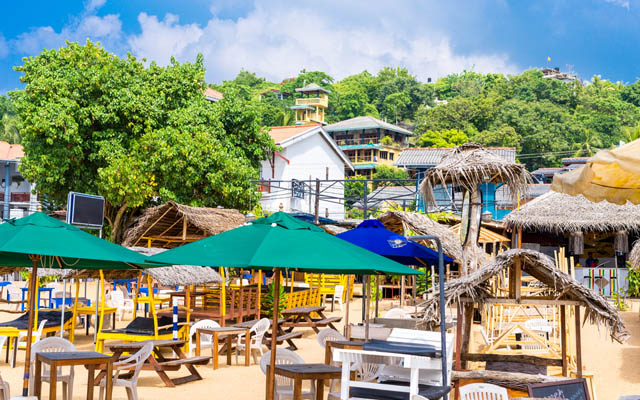
Some restaurants and resorts on Unawatuna only serving foreigners
Sri Lanka’s authorities and tourism industry players alike are making clear their opposition to attempts by some hotels to deny service to domestic visitors.
The issue came to the fore last week when provincial councils minister Faiszer Musthapha told reporters that Sri Lankan tourism authorities had been instructed to take legal action against offenders who turn away local visitors.
Some restaurants and resorts on Unawatuna only serving foreigners
Musthapha said many Sri Lankans visiting the Unawatuna and Mirissa areas in the south had been barred from certain hospitality establishments. Some Sri Lankans took to social media to vent their anger and calling on the government to take action against this “apartheid-type” policy. Further instances of displeasure about the policy came last month when small guesthouses and restaurants on the beach were reportedly displacing ‘foreigners-only’ signboards.
Sri Lankans account for 30 per cent to 50 per cent of total room and F&B revenue in these destinations.
“We wholeheartedly support efforts by the authorities to stop such discrimination,” commented Sanath Ukwatte, chairman of the Tourist Hotels Association of Sri Lanka (THASL).
Separately THASL stated in a media release: “This practice involves a type of discrimination which is not only unethical but also a clear violation of the principle of equality of treatment enshrined in the Constitution of Sri Lanka.”
Local inbound agent Harith Perera, managing director, Diethelm Travel Sri Lanka/Maldives, agreed with his hotel industry counterparts, saying: “We strongly support the view that there shouldn’t be any discrimination against locals. Furthermore foreigners love to associate with locals, love local curries, cuisine and culture.”
Industry experts shared that such forms of discrimination extended to a few high-end small boutique hotels run by foreigners who told locals, on inquiring about rooms, that the venue was “full” or that it was for non-Sri Lankans only.
Meanwhile, lending insight to the possible intention behind banning locals, Siri Goonewardene, who founded the Coral Sands hotel in southern Hikkaduwa 42 years ago, said these incidents were mostly prevalent in the informal sector and were a response to sometimes unruly locals and brawls that broke out. “However, these should be tackled internally and with police intervention without (having to ban) locals,” he added.
One of the hoteliers who resorted to the policy was quoted in the local media as saying that “when our people are there, there is no freedom for foreigners. Local boys come and harass foreign women”.
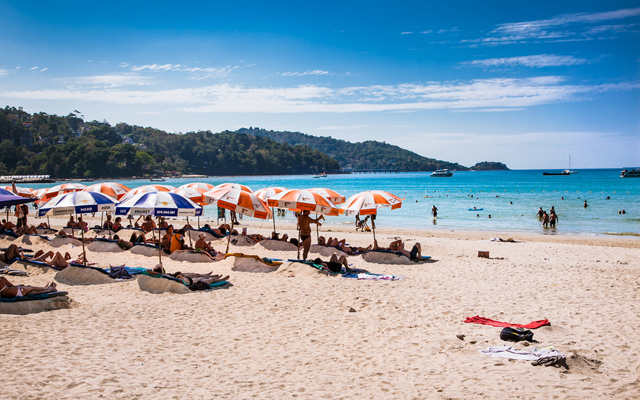
Bolstered by a strong low season and double-digit China growth, arrivals into Phuket hit a historic high of 8.4 million in 2017, growing 11.3 per cent over the previous year, according to C9 Hotelworks’ Phuket Hotel Market Update report.
Demonstrating the destination’s progress towards becoming a year-round destination, C9 revealed passenger arrivals averaged 641,863 per month during the low season last year compared to 759,703 in the high season, closing the gap between high and low seasons.
Phuket now sees more year-round demand
Another key trend is marketwide occupancy was pushed up as 54 per cent of Chinese and 55 per cent of Australians chose to visit Phuket during the May-October low and shoulder seasons.
C9 further shared STR data showing that hotel performance continued to see an uptick in occupancy at 77 per cent last year, although the volume metric pushed the median room rate slightly to 3,740 baht (US$116.20).
C9’s managing director Bill Barnett is quick to point out that island hoteliers need to be pragmatic about the shifting geographic segments. “Phuket International Airport is the de facto entry point for tourists to Khao Lak, which has nearly 9,000 hotel keys in its inventory. Lower-priced accommodation and a large selection of beachfront properties are benefiting from increasing Australian and Chinese numbers in July and August,” he said.
And while arrival growth prevails, the average length of stay is shrinking due to regional Asian market take-up. Moreover, exponential growth in shared economy offerings such as Airbnb are becoming mainstream competitors to hotels.
Barnett further cautioned: “While the recent upgrading of Phuket International Airport and new terminal has been a welcome change, the longterm reality is it’s just a band aid to a macro issue. As Khao Lak continues growing along with the beach areas north of Phuket, the need to diversify Phang Nga’s rising tourism market with its own airport is becoming more and more urgent by the day.”
GuestCentric the first booking solution to integrate with PlayMaker
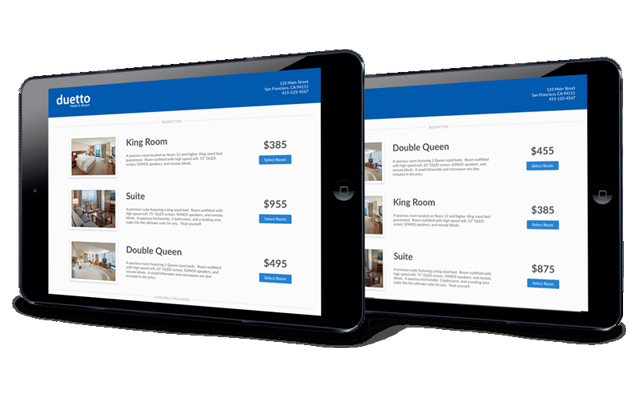
Revenue strategy platform Duetto and GuestCentric have partnered to enhance personalisation capabilities and boost conversion and direct bookings for the hotel and casino industries.
Combining Duetto’s recently launched personalisation application, PlayMaker, and GuestCentric’s global booking engine, the partnership will enable customer hotels to customise merchandising content and pricing in rea- time based on consumers’ previous booking history and shopping behaviour.
GuestCentric the first booking solution to integrate with PlayMaker
GuestCentric, a cloud-based platform that helps hotels manage their website design, online bookings, social media and channel management, is the first booking solution to integrate with Duetto’s newest cloud application.
With PlayMaker, properties connect browsing behaviour, demographic information, past stay history and third-party data to make make pricing decisions instantly, according to a joint statement by the two partners. These “plays” are delivered to GuestCentric’s booking engine, helping hotels increase conversion through quicker response time and relevant offers for guests, said the statement.
Marco Benvenuti, Duetto’s co-founder and chief marketing and strategy officer, said: “Hotels and casinos will be able to increase their booking conversion and revenue by customising the prices, merchandising and content that potential guests — especially the most profitable customers in their loyalty programmes — see on properties’ direct channels.”
Pedro Colaco, CEO of GuestCentric, added: “Our partners want to convert as many online shoppers into confirmed reservations as possible, and the ability to leverage dynamic customer data, past purchases and preferences, in real time thanks to this integration, goes further than (other available solutions) to achieve that goal.”
Las Vegas-based Affinity Gaming, which operates 11 casino-hotels in four states, is the first joint customer of Duetto and GuestCentric to deploy PlayMaker.
PlayMaker joins Duetto’s flagship Open Pricing app, GameChanger, in the company’s lineup of solutions, along with its ScoreBoard and BlockBuster products.
Singapore-based CapitaLand’s wholly-owned serviced residence business unit, The Ascott Limited (Ascott), has exceeded its target of 20,000 units for China in 2017, ahead of its planned schedule of 2020, as it sealed contracts to manage nine properties with over 2,000 units.
The achievement also heralded a new CEO, Kevin Goh, formerly Ascott’s COO, who succeeded Lee Chee Koon earlier this month. Lee is now CapitaLand’s group chief investment officer.
Ascott Zumiao Foshan slated to open in 2021
Of the nine new properties, Somerset Gubei Shanghai will be the first to open this year, while Ascott Raffles City Chongqing and Tujia Somerset City Hub Zhuhai Serviced Residence are scheduled to open in 2019.
Ascott Jing’an Shanghai and Citadines Baoyu Riverview Harbin are targeted to open in 2020, while Ascott Zumiao Foshan, Ascott Gaoxin Wuxi and Gaoxin Serviced Residence Wuxi are slated to start operations in 2021. Lastly, Ascott Hengqin Zhuhai is due to open in 2023.
With these properties, Ascott has entered new cities such as Harbin and Zhuhai, and widened its presence in Chongqing, Foshan, Shanghai and Wuxi.
Overall, Ascott added over 5,600 units across 28 properties in 2017, double the over 2,700 units across 15 properties added in 2016.
Kevin Goh, newly appointed Ascott’s CEO, said: “2017 was our strongest year as Ascott’s global portfolio crossed 72,000 units, adding a record high of about 24,000 units within the year. We are confident of achieving our global target of 80,000 units in 2018, well ahead of 2020 as we press ahead with our aggressive expansion plans via strategic alliances, management contracts, franchises and investments.”
“As we scaled up, we also opened 18 properties with close to 3,800 units last year in China, India, Indonesia, Japan, Korea, Philippines, Thailand, Vietnam, the US, and this includes our first properties in Cambodia and Turkey,” added Goh.
Tan Tze Shang, Ascott’s managing director for China, further shared that Ascott’s first lyf property will open in Shenzhen this year, and the company has also introduced technological initiatives – such as service robots, and the use of WeChat or smartphone apps – across all properties to boost operational efficiency and enhance customer experience.
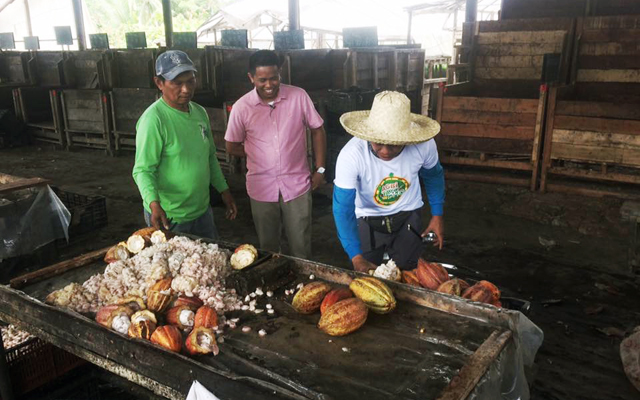
Malagos Chocolate Tree to Bar experience (photo credit: Facebook/malagos.garden.resort)
The Philippines is broadening its tourism offering with the launch of farm and faith-based tourism.
While Davao is the launching pad for farm tourism because of its vast cacao, banana, durian, pomelo and other fruit farms, the template will be replicated all over the Philippines, said tourism regional director Roberto Alabado III.
Malagos Chocolate Tree to Bar experience (photo credit: Facebook/malagos.garden.resort)
He said provinces like Guimaras and Zambales already have existing mango tours while some of the best farm tourism models are in Cavite, Laguna, Batangas and Quezon, where farm-to-table and organic farm concepts are starting to get noticed.
With the foreign market for farm tours being promising, several farms have already incorporated accommodations and related facilities.
Alabado said durian tours have a strong market from China and Japan, while Hermie Tabanag, general manager of Malagos Garden Resort, noted increasing tourist traffic as the resort’s cacao and chocolate products gain awards in Europe, leading them to add a new attraction, the Chocolate Museum, in March.
Meanwhile, in a separate development, assistant tourism secretary Eden David said a workshop encouraging tour operators to come up with pilgrimage tour packages will be organised.
Existing pilgrimage sites include the Spanish-era Basilica Minore del Santo Nino in Cebu and San Agustin Church in Intramuros, but new shrines have sprouted in recent years including the Divine Mercy in Cagayan de Oro, Padre Pio in Santo Tomas in Batangas and the Miraculous Shrine of Our Lady of Piat in Cagayan.
Faith-based tourism also offers pilgrims immersion and volunteerism opportunities in different communities. For instance, Sister Eva Maamo, president and general surgeon of the Foundation of Our Lady of Peace Mission, said the foundation needs volunteers for the numerous indigenous communities that it takes care of, including the Aetas in Subic and its hospital in Paranaque City.
The Nueva Segovia Consortium of Cooperatives also offers the same community immersion in the Ilocos region.
Ctrip is at the top of its game. What is its future direction as a Chinese brand, and as an international brand? What work still needs to be done?
Ctrip is dedicated to serving Chinese outbound travellers and still has a long way to go. We are very lucky to be in this huge market and we are only touching the tip of the travel opportunity.
Through online and offline stores, our brand strategy in China covers all customer bases and types, especially mid- to high-end customers. We have invested in Skyscanner, a leading flight meta-search company with approximately 65 million monthly active users and over 200 million global searches every month. Our omni-channel strategy enables us to understand and serve Chinese travellers through our comprehensive product offerings and 24/7-customer service, which is at the core of our DNA.
Following our customers’ global footprint, Ctrip aims to bring prosperity to the destinations with the Chinese traveller’s strong spending power. From Ctrip’s report and data of 2017 National Holiday destination distribution, 46 per cent of the six million Chinese travellers went to South-east Asia, making this region a favourite destination. Ctrip contributed over four million hotel roomnights to the region in 2016 and this number is expected grow to 6.5 million last year. Travellers from first-tier cities such as Shanghai and Beijing spent an average of well over US$1,400 per head.
As our Chinese customers travel internationally, Ctrip will remain by their side and ensure that our service capabilities can cater to their needs and bring ease and efficiency to their travel experience, and at the same time promote cultural exchange and contribute to the world.
Tell us about the additional Priceline Group investment and the Skyscanner acquisition. Where have these recent developments taken Ctrip so far?
Priceline and Skyscanner are Ctrip’s important business partners. We work closely together to increase product offerings and improve efficiency and service quality. Our partnership with Priceline and Skyscanner enables Ctrip to better serve the ever-growing Chinese outbound tourists and their needs.
With Priceline Group’s international travel resources, Skyscanner’s technology and quality service in air ticket search and Ctrip’s own understanding of Chinese customers, we are confident of creating enjoyable experiences for all of our users.
Where are the growth opportunities?
The online penetration rate of the Chinese travel market is only about 15 per cent. While customers from first-tier cities are familiar with online travel booking, those in lower-tier cities are not. We see the need to educate and provide a personalised service to this new customer base.
Also when you compare China’s 10 per cent passport-holder rate to that of the US at roughly 40 per cent, and the population size of China, it is very clear there is still a very large untapped opportunity for outbound business.
Travellers from secondary cities are spending as much, if not more than their first-tier counterparts. During last year’s Labour Day Holiday, eight of the top 10 cities with the highest per capita travel spending were Dalian, Shenyang, Hangzhou, Nanjing, Jinan, Fuzhou, Xiamen and Changchun. The other two were Shanghai and Beijing.
Ctrip turns 20 in 2019. What other strategic moves are needed to take the company to the next level and what is the next level?
Apart from ongoing technical innovations, Ctrip is expanding into lower-tier cities in China (with the opening of 5,500 physical stores) and increasing our ability to serve Chinese outbound customers. In full support of China’s Belt and Road Initiative, Ctrip has also set out to allow travel to connect and bridge the East with the West. With more integrated products and services, we can better serve the 120 million-plus Chinese outbound customers who wish to seek services that are holistic and efficient.
Lower-tier cities will be the key driver of the growth of China’s travel industry for the coming decade. Ctrip is well positioned to benefit from both increasing online penetration as well as consumption of growth trends in lower-tier cities. We have created omni-channels through our network of about 6,000 travel agencies across China. We have expanded our product offerings in these markets and have streamlined user experience by allowing multi-product reservation and order changing services.
Diversity, efficiency and a more global and innovative approach will take us to the next level.
What is Ctrip’s biggest challenge and who is its biggest competitor?
We have been dedicated to drive travel innovation since 1999 (when Ctrip was founded). It will not be easy to replicate the experience and talent that we have accumulated through the years. The only way for us to deliver sustained value to our users and partners is by focusing on our core competencies.
We have established a well-grounded travel ecosystem through investments and partnerships. This helps Ctrip to offer efficient and long-lasting win-win relationships with all partners on our supply chain. In order to deliver the most excellent travel experience for our customers, we will need to pay close attention to develop the required expertise. From global SOS systems to 24/7 call centres, we need to maintain and ensure that high-quality customer service is always our top priority. These solid foundations have allowed Ctrip to overcome challenges and to remain a travel friend to our Chinese customers.
Share some examples of Ctrip’s’ innovations.
As a 24/7, one-stop-shop, customer-centric travel platform, Ctrip continues to invest more than 15 per cent of revenue to invest in the ABC of technology – AI, big data and cloud computing.
Customers who book any travel product with Ctrip are invited to join our free Virtual Tour Manager (VTM) service on the Ctrip app as well as the WeChat platform. Customers can join the group chat to exchange information with other Ctrip customers in the same destination and directly contact our tour managers and local tour guides for help. VTM has been serving millions of travellers per year. Ctrip’s global SOS service is also provided on the basis of VTM. Whenever and wherever anyone is in an emergency situation, Ctrip customers can call for help through VTM.
During the Las Vegas shooting incident in early-October, Ctrip knew within two minutes where its customers were, identified those in the city in 20 minutes, located them in an hour and offered those who wanted to go home, to fly out the next day.
Crip’s QR code ticket purchase app has resulted in a 20 per cent increase in admission ticket sales for Zhangjiajie National Forest Park, where the prototype for various elements in the movie Avatar were taken. Overseas, the app helped the Sydney Aquarium, Sydney Tower, Sydney Wild Park and Madame Tussauds increase sales by a whopping 460 per cent.
Leveraging on AI technology, our new online chatbot has been helping customers solve their problems, serving 70 per cent of Ctrip’s total hotel-related customer services and 40 per cent of flight ticket-related customer services.
How has Ctrip changed since you joined the company and what is your mission as CEO?
I have grown alongside the company as I made the transition from CFO to COO and now to CEO. Ctrip is currently operating in an ever-growing market with evolving travel trends and customer needs to fulfil. Apart from ensuring top customer service and experiences, we are also looking into providing wider high-quality travel products and services. This cannot be achieved without investments in R&D and our ability to innovate to ensure that AI and big data can better serve our customers and partners.
We are also fostering a culture of innovation through hosting special (start-up) programmes, most notably the Baby Tiger Programme, which drives and transforms new business ideas into innovative products that serve our customers and partners.
My mission is to ensure that Ctrip creates more enjoyable travel experiences for our customers and that we grow with all of our stakeholders. With the right resources, flexibility and innovative culture within our reach, we will continue to be that one-stop platform where all questions are answered, where needs are fulfilled and where everyone mutually benefits from being in this ecosystem.
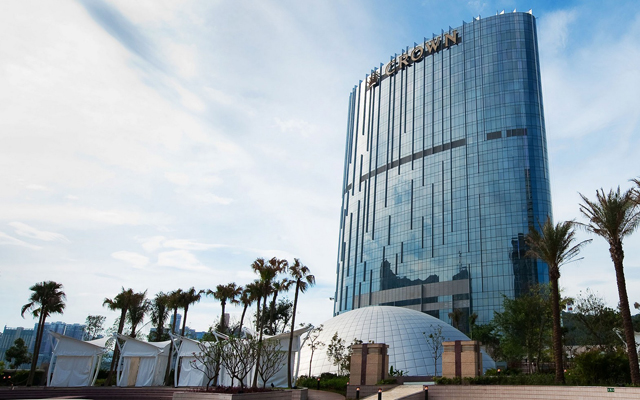
Gaming and entertainment developer Melco Resorts & Entertainment will rename its Crown Towers hotels NÜWA with effect from January 16.
A brand of former Melco investor, Crown Resorts, Crown Towers hotels sit within Melco’s flagship City of Dreams properties in Manila and Macau.
NÜWA is Melco’s newest luxury hotel brand
According to Melco, the new brand marks the first step towards the launch of phase three of City of Dreams Macau in the second quarter of 2018.
Inspired by the eponymous heroine from Chinese mythology, NÜWA represents classic Asian refinement. Lawrence Ho, chairman and CEO of Melco Resorts and Entertainment said: “We are excited to introduce NÜWA. The new hotel brand embodies the very essence of Melco’s pursuit to provide our guests the very best in sophistication, quality and innovation.”
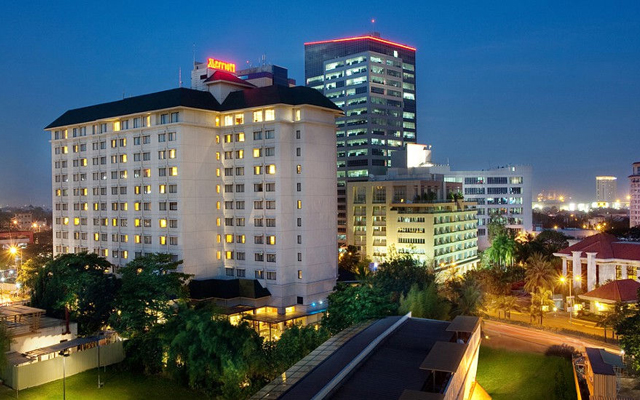
With Marriott International’s contract to manage Cebu City Marriott Hotel ending December 31, 2017, hotel owner AyalaLand Hotels and Resorts Corporation (AHRC) has announced the property will reopen under its own brand, Seda, later this year.
The hotel has closed its doors and will undergo refurbishment on rooms and amenities before its relaunch.
Marriott out of Cebu Business Park after 20 years
Cebu City Marriott Hotel, which opened in 1997, has over the years helped position Cebu Business Park as the premier business district in the city and region, said AHRC’s president and CEO Al Legaspi.
But now, Seda, which has more than 1,400 rooms throughout the Philippines, is “ready to fill the needs of Cebu Business Park locators and visitors”, Legaspi continued.
Since launching in 2012, the Seda brand has expanded its footprint across the Philippines, including in the Bonifacio Global City in Taguig, Bacolod, Cagayan de Oro, Davao, Iloilo, Nuvali in Laguna, and Quezon.
Seda in the Cebu Business Park will be the brand’s biggest in the Visayas island, Legaspi shared. Construction on another Seda hotel will begin at Cebu IT Park, set to be the first Seda hotel and serviced apartments outside of Metro Manila.
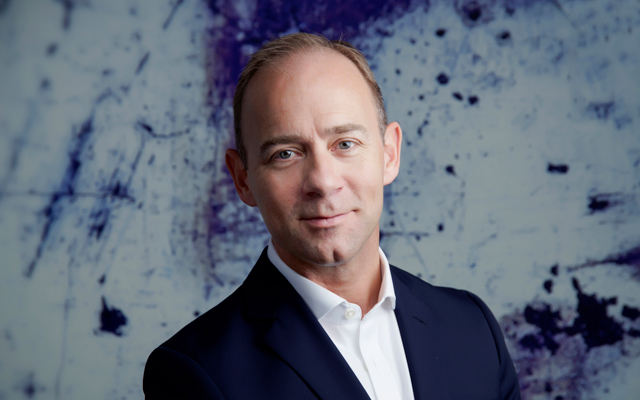
Mövenpick Hotels & Resorts has appointed Mark Willis as president Asia as the company works towards its target of 30 properties in the region by 2020.
Responsible for overseeing Mövenpick’s Asian operation, he will take over from former senior vice president for Asia, Andrew Langdon, who will now focus solely on his role as chief development officer.
Willis brings with him two decades of management, operations and business development experience in the global hospitality sector, most recently as senior area vice president Middle East, Turkey & Africa, at Carlson Rezidor Hotel Group.
British-born Willis has completed a number of senior management programmes at Cornell University in the US and also holds an MBA in International Business from Oxford Brookes University in the UK.