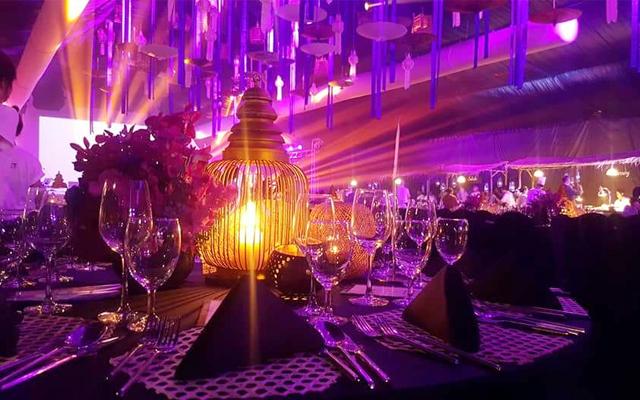
The Phuket Hotels Association Benefit (PHAB) will take place on April 28, 2018 to raise funds for over 20 hospitality scholarships and traineeships for local residents.
Organised by the Phuket Hotels Association, the Glam, Glitz and Glitter event will take place at the Latitude Marquee, Laguna Phuket from 19.00 until midnight.
Last year’s gala raised about US$130,000
Last year’s PHAB gala drew 300 guests and raised over four million baht (US$130,000) for the scholarship fund. The association is targeting a similar figure at this year’s event, where 400 guests will participate in an evening of cocktails, dining and entertainment, including a live, silent auction.
Among the auction items are a chef’s degustation menu by two Michelin-starred Gaggan, as well as three-night stays in a number of Accor, Anantara, Hyatt, Dream Group and Marriott Group hotels worldwide.
All proceeds from the benefit will be used to support the education of 20 plus young scholars and trainees from Phuket, who would otherwise be unable to fund their education. The training will last from three to four years and cover vocational and degree courses, as well as overseas learning, helping to pave the way for a new generation of hospitality managers, chefs and other key personnel for the island’s tourism sector.
The entertainment highlight will be live music from Mark Zitti ei Fratelli Coltelli, a seven-piece swing band flying in from Italy to support the event for the second year in a row. DJ Benjamin Jenkins (Ben Jay) will also take to the stage.
Tickets to the PHAB fundraiser start from 3,900 baht.
Anam invites guests to experience romance of the matchmaking show, away from the eyes of cameras and crew
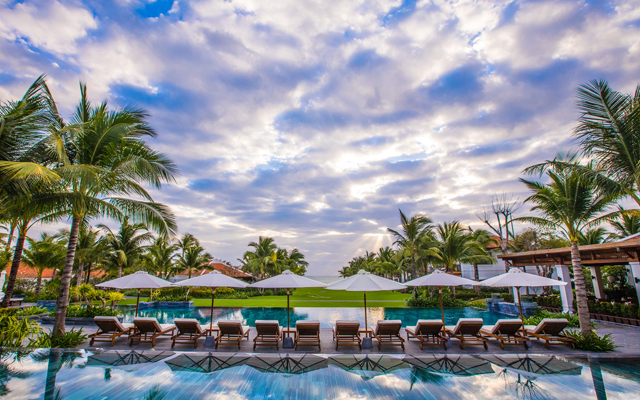
After being selected as the filming location for the grand finale of the German spinoff of The Bachelor, Vietnamese beachfront resort The Anam is unveiling a package inspired by the reality TV series.
The 10-night Following The Bachelor’s Trail package includes limousine transfers, couples massage, bubblies and a bouquet of roses in a villa, in addition to a Vespa trip through the countryside that concludes with a gourmet picnic and wine by a waterfall.
Anam invites guests to experience romance of the matchmaking show, away from the eyes of cameras and crew
On the same beach captured in Der Bachelor, the couple is also treated to a seafood BBQ dinner under the stars. The couple is split up at one point, with one half heading for the resort’s Sri Mara Spa for a three-hour massage, manicure and pedicure, and the other to the kitchen and the tutelage of professionals. He then decorates the table for two on the edge of the lawn fronting the sand before a private waiter serves the five-course seafood feast.
At the resort’s cinema, the couple can enjoy a private movie screening of either the grand finale or Hollywood films such as La La Land, Forever Love and Pretty Woman, complemented with champagne, popcorn and ice-cream, and access to the Anam’s Colonial Club Lounge where high tea is served. The couple also takes home two plush bathrobes.
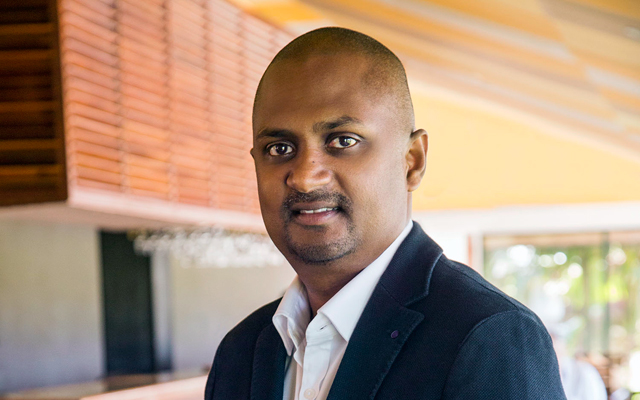
Dileep, a self proclaimed 'pracademic', believes in marrying research with practice
The successful debut of the first Broadway theatre production in Sri Lanka, which saw the legendary Sound of Music performed to full houses every day, marked a significant milestone in the country’s entertainment industry – and another feather in the cap for tourism veteran Dileep Mudadeniya.
“There was a lot of planning that went into it,” recalled Dileep, head of brand marketing at Cinnamon Hotels and Resorts, a key figure at the hospitality company tasked to transform the capital Colombo into a vibrant events destination in South Asia.
Dileep, a self proclaimed ‘pracademic’, believes in marrying research with practice
Dileep’s entry into the private sector – moving from the public sector to John Keells Holding (JKH), owing company of Cinnamon Resorts – has not only transformed the company but made Cinnamon a driving force in Colombo’s entertainment scene.
He has brought in foreign musicians, artistes, celebrity chefs including Australia’s MasterChef judge George Calombaris, as well as contestants from the Miss UK, Miss China and Miss India beauty pageants in the past two years to profile them as signature events in Sri Lanka.
The 45-year old, also a key member of the national tourism task force under the Prime Minister’s Office, sees branding as an asset for the tourism sector.
“Destination marketing is one of the (most) complex marketing (types) in the world. People can get easily lost; there are many stakeholders, a lot of egos are around, (and) money can be wasted by overdoing things,” he opined.
When he joined JKH in 2012, he brought with him a brand of research-driven decision-making that has helped take the conglomerate to new heights.
“I was able to convince John Keells on a forward-thinking approach and they became involved in destination marketing as a result of our research and they saw the benefit. We have built a powerful brand and come up with cutting-edge marketing campaigns,” he said, alluding to the many events that the Cinnamon brand has organised in Colombo.
Prior to joining the company, he had already started the non-profit organisation, Research for Sustainable Studies in Tourism. “We did a lot of social research. We want to bring together academia and practitioners through research and are developing an employer value proposition for tourism,” he said.
A non-believer of traditional promotion platforms like print ads or a TV commercials, Mudadeniya is strong proponent of user generating content. “People believe what is said on social media, which they are most accustomed to relate to. Brand and development comes through these platforms,” he said, referring to the annual Asian Travel Bloggers conference that Cinnamon launched in 2014.
While Sri Lanka has struggled to launch a marketing campaign since the war ended in 2009, Mudadeniya has engaged bloggers from around the world, organised innovative treasure hunts for writers, run best photography, video and blogging competitions to promote the Cinnamon brand and, in the same breadth, the Sri Lankan product.
“One good thing that has come out of the (Cinnamon) campaigns is that we were able to rally everyone in the industry to agree on the destination positioning strategy. That is kind of carved in stone,” he remarked.
A firm believer that the private sector should take the lead, Mudadeniya cited New Zealand’s private sector-led success in tourism as an inspiration, and hopes to develop similar “industry maturity” for Sri Lanka.
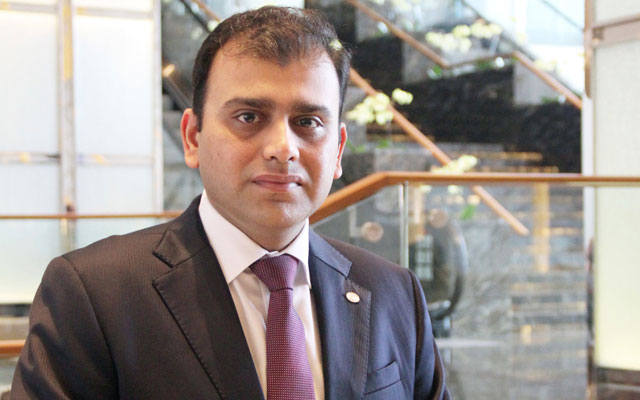
Hilton Kuala Lumpur has appointed Gagan Talwar as hotel manager, replacing Linda Pecoraro who has been promoted to general manager of Hilton Kota Kinabalu.
In this new position, Talwar will support regional general manager Jamie Mead by overseeing the operations and leading the management at Hilton Kuala Lumpur.
Talwar returns to Malaysia after six years from leading the operations and business development team in Hilton Hanoi Opera and Hilton Garden Inn Hanoi.
Half of the tourism tax imposed will go to the state where it is collected
Malaysian tourism and culture minister Mohamed Nazri Abdul Aziz has announced that the tourism tax will be split 50:50 between the federal and state governments, rather than 90:10, a welcome move for the Malaysian Association of Tour and Travel Agents (MATTA).
This means that state governments are to receive RM5 (US$1.30) for every RM10 collected in the tourism tax.
Half of the tourism tax imposed will go to the state where it is collected; parade participants at the 4th Usunan Festival competition in Kota Belud, Sabah, Malaysia pictured
This is a sharp contrast to the initial share of 33 per cent, or RM3.30 for every RM10 collected, before the tourism ministry reduced it further to 10 per cent, the percentage used when the tax was implemented.
MATTA president, Tan Kok Liang, said: “It is certainly a right move in empowering the states to be more involved with tourism, which brings immense opportunities and economic benefits to its people.
“The additional funds would allow the states to showcase areas in their own backyards they know best. Each district can develop a strong ecosystem to attract and ensure visitors enjoy their stay so that they will want to come back for more and recommend to others,” he remarked.
This will enable state tourism organisations to be “more aggressive in overseas promotions”, Tan stated, as the funds could be invested into tourism infrastructure development and digital marketing such as destination apps that provide information and on-the-spot bookings.
“A portion of the extra fund should be allocated for human capital development to train frontliners to provide better customer service, including learning to communicate in basic foreign languages,” he added.
Nazri had said the funds will be channelled to the states every quarter for their tourism promotions and activities. The government had raised almost RM40 million in revenue from the tourism tax collected in the first four months of its implementation.
TravelKoin allows travel suppliers to transact with one another without bank charges
Amid a polarisation of views on the practical value of cryptocurrency, TravelKoin is positive it can alleviate persistent travel industry painpoints – think many thousands of dollars on unneeded costs annually, according to Fabian Bartnick, TravelKoin’s head of strategic partnerships.
TravelKoin, which offers payment and loyalty applications for the travel industry, will launch an initial coin offering next month.
TravelKoin allows travel suppliers to transact with one another without bank charges
A familiar problem for travel companies is the substantial amount of bank fees that come with international transactions.
Bartnik, who is also with revenue management firm Lodgiq, shared that a US$500 service can come with US$20 in bank fees, resulting in US$520 being paid by the hotel and US$480 received by the technology vendor, and that’s not taking into account currency exchange.
For DMCs, which deal with many layers of payment, the siphoning effect is even more severe, explained Sandor Levai, CEO of ICS Travel Group – which last month became an early integration partner of TravelKoin.
Frictional costs also come into play. “(Some banks charge) a flat fee of US$80-100 per transaction, so we have to wait until we (get bulk) so it makes more sense to pay the bank fee than to fly (to another country) to deliver payment,” Levai said.
Levai added that transactions can take up to five days to process, while TravelKoin offers a near instant solution. For him, quicker turnaround could well mean greater business volumes.
And when it comes to certain countries, “sometimes payment doesn’t arrive, or gets blocked”.
Take for example Myanmar, “a politically incorrect country… for a lot of banks”, but in the travel industry represents a big emerging destination, Levai pointed out.
Bartnick said TravelKoin solves such problems by removing the bank intermediary from the equation and having the same currency on both sides, with users charged only a small fee for currency to be mined.
For many travel service providers however, a new currency isn’t a total alternative until the many parts of the supply chain – down to the smaller tours and activities provider – get on board.
But Bartnick said TravelKoin could be an easier sell than one would expect. Regardless of the industry’s track record of technology inertia, savings and convenience are ideas that resonate.
“Every start-up has to get over a hump, but it’s only as big as its limitations of value creation,” he said.
If transacting in the new currency requires a simple click of a button, and results in thousands in savings, “then the value creation is already bigger than the hump”.
Even for providers of tours and activities, who may lack organisational resources, the same applies. “They (may not understand the technology) but they understand savings, convenience and reach. The heavy lifting is already done by the DMCs and all (the activity supplier) has to do is sign up,” he reasoned.
If a future where cryptocurrency payment is the norm is still a remote idea, Levai points to history. “We used to (barter trade). Someone came along and said why don’t I give you a coin in exchange. Suddenly people started having these coins, then credit cards which people also initially didn’t trust. But at some point everyone is using them – because it was the logical next step,” he said.
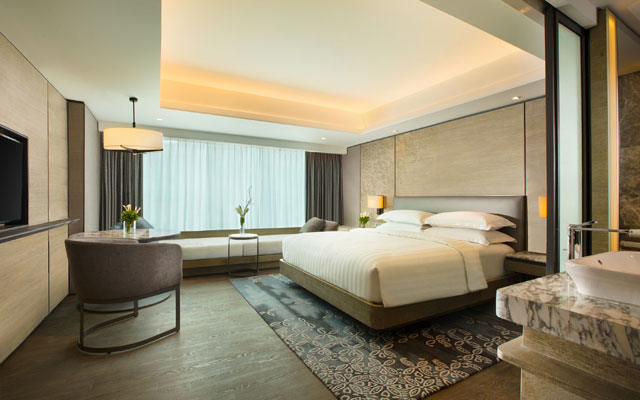
Having soft opened last November, the 347-room Yogyakarta Marriott Hotel is in its early days seeking volume in order to gain visibility in the market.
The hotel, the first under the Marriott Hotels brand in Indonesia, currently features the biggest hotel ballroom in the city, club room and lounge, and is adjacent to Hartono Mall, the largest mall in Central Java.
A guestroom in Yogyakarta Marriott
Winkie Wong, senior director brand and marketing Asia Pacific, Marriott International, said: “Indonesia has immense potential as a growing source market and we see a lot of opportunity there for the Marriott Hotels brand.”
As for the choice of Jogjakarta, Wong told TTG Asia: “In addition to having a great owning partner, Duta Merlin Dunia Properti, there’s a lot of potential in the destination for international leisure and business travellers. Jogjakarta is a hub of art, culture and education as well as a dynamic city that is growing in terms of business and economic development.”
The city has direct air access with Singapore and Kuala Lumpur and is only a 50-minute flight from Jakarta.
The opening of the hotel is also considered timely as the city is expected to have a new international airport by 2020.
Alain Rigodin, general manager of Yogyakarta Marriott Hotel, believes the opening of the airport would be a game changer for the destination. The hotel will officially launch 12-18 months ahead, affording it the time needed to position itself in the market and be ready when the airport is up, he said.
With the biggest, pillar-less ballroom in town measuring 1,870m2, seven meeting rooms and one boardroom, business events will be its primary focus, followed by corporate and leisure travellers, Rigodin said.
During this introductory period, the hotel has benchmarked prices for the lead-in category between one million rupiah (US$77) and 1.5 million rupiah.
“This is reasonable when you compare with other destinations like Jakarta, Bali or even Singapore. where you will see similar offerings for three to five times the price.”
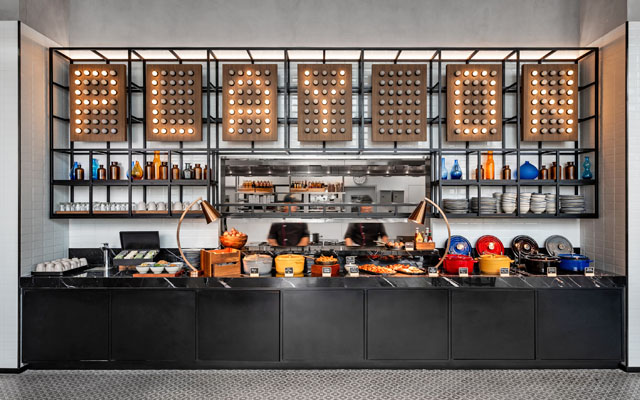
To attract corporate and community gatherings, the hotel is also putting in place various promotions such as nightly all-you-can-eat buffet with different themes, the first such hotel offer in the city.
“We are (currently) looking for volume because want to showcase the hotel and our strategy is to get more people to talk about it – such as through social media,” Rigodin shared.
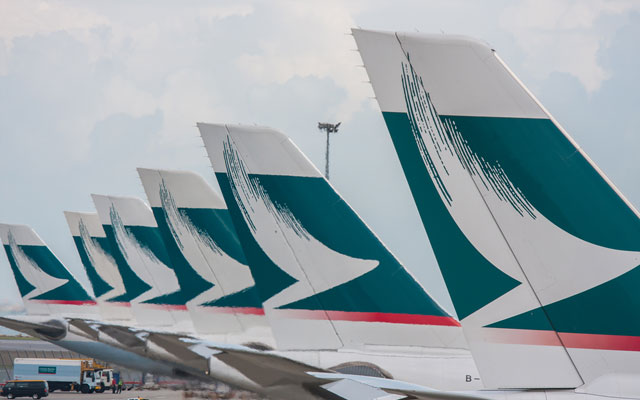
The Cathay Pacific Group is seeing progress from its three-year transformation programme, as a strong cargo business, a weaker US dollar and improved premium class passenger demand come together to deliver a less-than-expected annual loss for the company.
For 2017, the Cathay Pacific Group reported an attributable loss of over HK$1.2 billion (US$160 million), up from HK$575 million in 2016.
This is the airline’s biggest annual loss in nine years, but it was slimmer than expected as a rebound in the cargo market helped offset fuel hedging losses and stiff competition
However, recovery was underway in 2H2017 as the Cathay Pacific Group reported an attributable profit of HK$792 million, compared to an attributable loss of HK$2.1 billion in 1H2017 and an attributable loss of HK$928 million in 2H2016.
Cathay Pacific and Cathay Dragon reported an attributable loss of HK$1.5 billion in 2H2017, compared to HK$2.8 billion in 1H2017 and an attributable loss of HK$2.6 billion in 2H2016.
Changes implemented include a reorganisation of the head office, and appointing new management and leadership teams. Six hundred jobs were reportedly slashed as part of the redundancy plan last year.
The Cathay Pacific Group is determined to prioritise its transformation programme in 2018 to better contain costs and revive earnings.
Cathay Pacific chairman John Slosar said: “Our priorities for 2018 (include) our transformation programme, changing the way that we work so as to better contain costs which will strengthen our passenger business further. We are confident of a successful outcome from these efforts.
“We also look to benefit from a slowing of the decline in passenger yields as global economic conditions improve.”
Slosar added that the airline is improving its competitive position by expanding route network, increasing frequencies on popular routes and buying more fuel-efficient aircraft.
The airline will introduce services to Brussels in March 2018, to Dublin in June 2018 and to Washington D.C. in September 2018. It will start flying to Barcelona all year round in April 2018, and seasonal services will be introduced to Copenhagen between May and October 2018 and to Cape Town between November 2018 and February 2019.
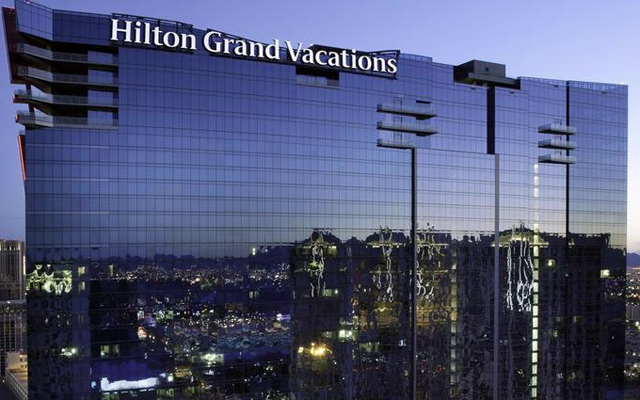
HNA selling stakes in Hilton Grand Vacation and Park Hotels & Resorts
In the middle of an asset reorganisation, debt-ridden Chinese conglomerate HNA Group is selling its shares in Hilton Grand Vacations for US$1.1 billion and is transferring much of its tourism portfolio to its airline subsidiary, Hainan Airlines.
HNA sold 22.3 million shares at US$46.25 a share, or 1.6 per cent below the stock’s latest closing price. It also sold 2.5 million shares back to the timeshare company for US$44.75 a piece.
HNA selling stakes in Hilton Grand Vacation and Park Hotels & Resorts
The deal is scheduled to be completed March 19.
With the group having put its stakes in another Hilton spinoff, Park Hotels & Resorts, up for sale, Bloomberg reports there are speculations if Hilton Worldwide is next.
HNA reportedly still owns about a quarter of Hilton Worldwide, a stake valued at US$6.7 billion.
The group had in 2016 bought a quarter of Hilton Worldwide and the two spinoffs from the Blackstone Group for about US$6.5 billion.
Meanwhile, in a statement to the Shanghai stock exchange last weekend, HNA’s flagship carrier said it would take controlling stakes in HNA Hospitality Group, an unnamed overseas hotel operator, West Air, Guilin Airlines, among several other tourism and aviation assets.
Exceptional branding as an asset for travel companies
Several readers weighed in with their perspectives in response to senior editor Raini Hamdi’s Opinion piece on ‘Why can’t Singapore create an A&K?’.
Gaurav Sundaram, president, ProKonsul & regional director – India, Global Business Travel Association
“Very relevant thought…venturing beyond your comfort zone and taking calculated risks will allow for this. The Singapore model can sometimes cloud imagination and creativity.”
Anonymous
“A&K has masterfully created a brand that is bigger than its actual business size. Geoffrey Kent loves to repeat the story that there was never an Abercrombie, that he formed the name based on the nice ring to it. Marketing brilliance over product substance…My main points are these: that it shows the power of exceptional branding, making the brand appear greater and stronger than the underlying business, and that A&K may be an exceptional case of branding that transcends the product offering. So the lesson for others is not to expect massive growth at that high end of the market (which prefers custom solutions from intimate provider relationships).”
“Great article and I am sure the readers will really benefit from your thoughts and insightful perspectives.
Just a couple of comments and viewpoints:
a. At Dynasty Travel, we do take our brand seriously and had been very focussed on building it from the inside out brand vision of Dynasty Travel – Customer satisfaction is our first priority and we had successfully implemented it in our business strategies. We have a clear, compelling internal brand and provides direction and motivation to employees and partners;
b. We are also continuously building our brand externally with our corporate social responsibility, D&D, roadshows, brochures production to maintain brand consistency and brand identity;
c. On why companies stay domestic is primarily companies may not want to handle risks and uncertainties on unfamiliar environment and there is lack of resources and expertise to go global.”
What’s holding back bookings growth for Thailand?
After we wrote about why German-speaking markets’ “solid” appetite for the Far East hasn’t translated into increased bookings and longtime favourite Thailand lagging behind, readers offered their thoughts.
Manuel Gordillo, senior manager, travel channels, distribution partners South-east Asia, Amadeus Asia
“Good article. Sustainability is the key word here as far as Thailand is concerned. Mass tourism from China has a lot to do with what is happening here right now – easily one-hour queues in Suvarnabhumi airport upon landing, which is not good for leisure or business travellers. On the other hand, Thailand tourism has always proved resilient. The question is whether local island operators in Phuket and Samui pick up the signals.”
Anonymous
“You don’t suppose that rampant and egregious police corruption and mistreatment and gouging of tourists by the locals could be some reasons for the diminished arrivals in Thailand? In the article, why not tell the whole truth?”