Six Flags Entertainment Corporation, Riverside Investment Group and Turner Asia Pacific, are joining hands to bring Turner’s original, branded experiences to Six Flags parks throughout China.
The first addition is a dark ride themed after Tuzki, a Turner-owned rabbit IP that has become a household name in China, with millions of Tuzki emoticons exchanged through instant messaging apps each day.
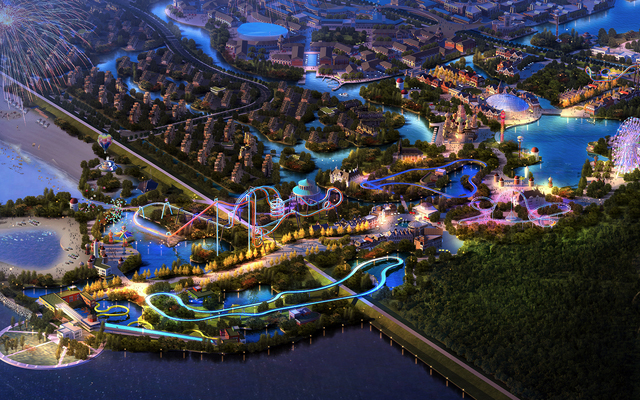
The ride will join attractions at Six Flags Zhejiang and Six Flags Chongqing, scheduled to open in 2019 and 2020 respectively.
Rendering of the upcoming Six Flags in Zhejiang
Ricky Ow, president of Turner Asia Pacific, said: “This is the first time Tuzki’s loyal fans will be able to experience their favourite emoticon in such a tangible and authentic way.”
In addition to the ride, both parks will also feature Tuzki theming and new retail locations offering branded merchandise.
The agreement between Turner and Riverside Investment Group also allows for other Turner-owned IP from Cartoon Network’s portfolio of characters and shows to be featured inside Six Flags Kids World. The family-friendly park will be built adjacent to both Six Flags Zhejiang and Six Flags Chongqing.
One in 10 jobs globally can be traced to travel and tourism
One in five of all new jobs created globally in 2017 are attributable to travel and tourism, according to new research from the World Travel & Tourism Council (WTTC).
WTTC’s annual Economic Impact Research shows that the industry was responsible for the creation of seven million new jobs worldwide. Overall, travel and tourism accounted for one in 10 jobs globally.
The report also showed that 2017 was a bumper year for the sector which grew at 4.6 per cent, 50 per cent faster than the global economy as a whole (three per cent growth during 2017). Travel and tourism also showed stronger growth than all other sectors, including manufacturing (4.2 per cent), retail and wholesale (3.4 per cent), agriculture, forestry and fisheries (2.6 per cent) and financial services (2.5 per cent).
Asian countries continue to drive global tourism growth, with North-east Asia growing at 7.4 per cent and South-east Asia at 6.7 per cent. China leads the way at 9.8 per cent.
One in 10 jobs globally can be traced to travel and tourism
WTTC projects that over the next 10 years over one third of absolute GDP growth and nearly half of employment growth will be generated by China and India.
Europe’s performance was better than previously expected with 4.8 per cent growth as longhaul demand recovered, accompanied by strong intra-regional travel thanks to the strength of the European economy.
Meanwhile, Latin America showed a decline of 1.4 per cent in tourism GDP, largely a result of a contraction in international spend to the largest Latin American economy, Brazil, of 18.1 per cent compared to 2016, and compounded by the ongoing political and economic problems in Venezuela.
Gloria Guevara, WTTC president and CEO, said: “2017 was the best year on record for the travel & tourism sector. We have seen increased spending as a result of growing consumer confidence, both domestically and internationally, recovery in markets in North Africa and Europe previously impacted by terrorism and continued outbound growth from China and India. This is great news for the millions of people who depend on our sector for their livelihoods.”
Last year, direct, travel & tourism’s indirect and induced impact accounted for US$8.3 trillion contribution to global GDP (10.4 per cent); 313 million jobs; US$1.5 trillion exports (6.5 per cent of total exports, 28.8 per cent of global services exports); and US$882 billion investment (4.5 per cent of total investment).
Forecasts for 2018 suggest that growth will continue, albeit at a slower rate than in 2017 as a result of higher oil prices.
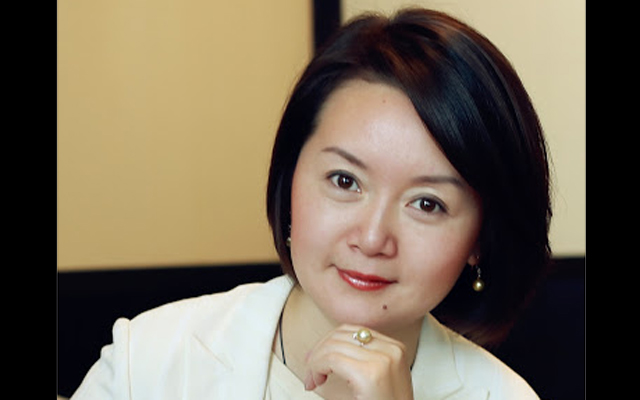
Bangkok-based Onyx Hospitality Group has appointed Gina Wo to the newly created role as senior vice president and head of Greater China, effective March 26, 2018.
Joining Onyx after over 16 years at InterContinental Hotels Group, Wo will oversee all aspects of the company’s growth and expansion in China. Based in Onyx’s regional headquarters of Shanghai, she will report directly to president and CEO Douglas Martell.
Key priorities of Wo in her new role will be to increase Onyx’s corporate talent capabilities in Greater China by reviewing the existing manning and structure, as well as strengthening the company’s regional operations, hotel openings and commercial expertise, the company said in a release.
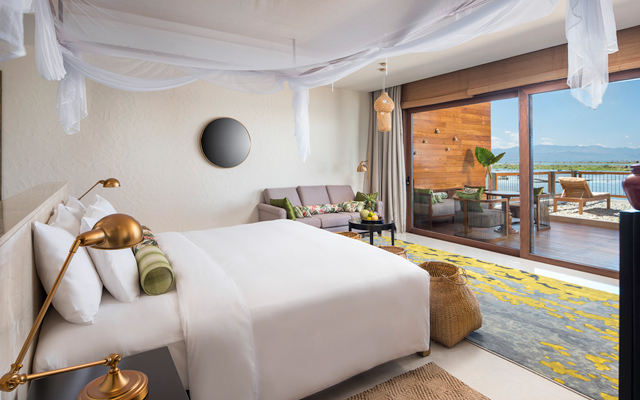
Sofitel Inle Lake Myat Min, Myanmar
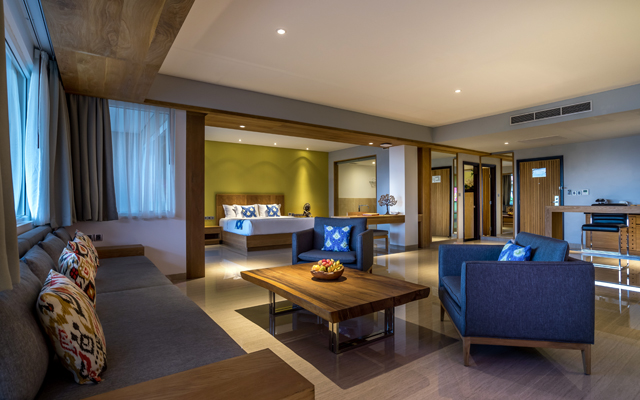
Myanmar’s first Sofitel has opened on the shores of Inle Lake. The hotel features 101 rooms – 36 Luxury Rooms, 25 Junior Suites, 12 Prestige Suites, 27 Opera Suites and one Imperial Suite – with high-speed Internet, Bluetooth speakers and IPTV. For F&B, guests can choose from two restaurants (an all-day dining and fusion Burmese concept) and two bars, including one by the lake. Facilities include two swimming pools – one of which is an infinity adult pool set directly by the lake – fitness centre and spa, clubhouse, kids club, Mac corner and games room.
Hotel Nikko Bali Benoa Beach, Indonesia
Marking the return of the Hotel Nikko brand to Indonesia, Hotel Nikko Bali Benoa Beach has opened about 15km from Ngurah Rai International Airport. The 188-key hotel features a lagoon swimming pool, a range of F&B options and a spa, with the shores of Tanjung Benoa just steps away for guests.
Hotel Wing International Premium Kanazawa Ekimae, Japan
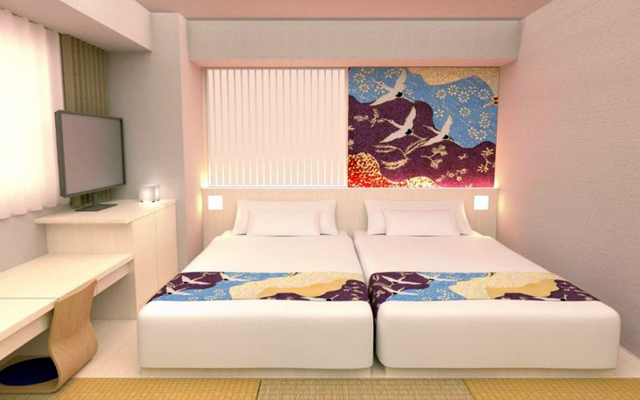
The Forbes Co.-operated Hotel Wing International Premium Kanazawa Ekimae will open its doors on April 1. Located a five-minute walk from JR Kanazawa Station, the hotel will feature traditional Japanese elements across hospitality, design and food. Breakfast, for example, could be done in the style of Hokurikuzukushi no Kamameshi Gozen, comprising kamameshi (rice in a pot) and side dishes made out of seasonal local ingredients. All rooms are air conditioned and equipped with a TV, coffee machine and kettle as well as private bathroom complete with a bathtub.
Golden Tulip Bund New Asia, China
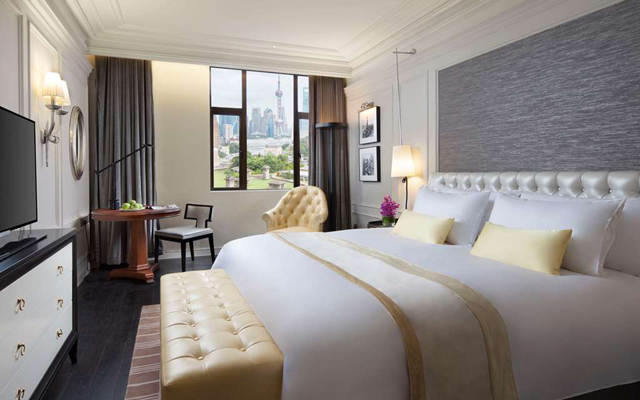
The Golden Tulip Bund New Asia hotel offers 266 keys, housed in a nine-storey building once regarded as the first European-style skyscraper in Shanghai. It also features six function rooms, the largest being Baiyun Hall for 230 guests; a business centre; dim sum restaurant Taste; and a fitness centre, among others. Guests will also be able to select a free set of fragrances from the hotel’s Body Care Bar. Located in Shanghai’s Hongkou District, the hotel puts guests within easy reach of various convention centres, sightseeing spots and two airports.
Mercure Chennai Sriperumbudur, India
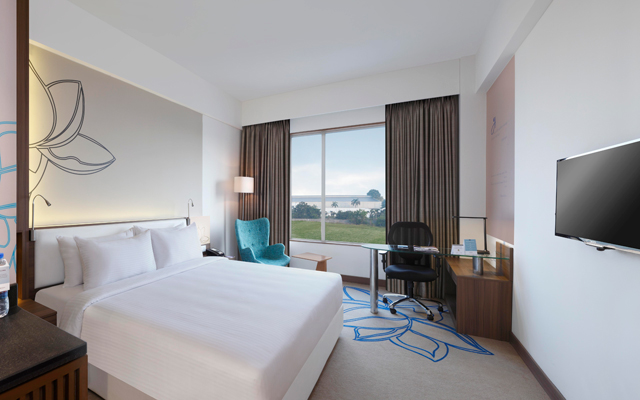
The first international brand hotel in the Sriperumbudur industrial and automobile belt, Mercure Chennai Sriperumbudur offers 100 guestrooms, including six suites. Each room comes equipped with complimentary high-speed Wi-Fi. F&B options include an all-day dining restaurant, sports bar, deli and poolside restaurant. For events and gatherings, the hotel features six meeting rooms with banquet facilities. Mercure Chennai Sriperumbudur is a 45-minute drive from Chennai International Airport and an hour’s drive from the historic monuments and beaches of Mahabalipuram.
Location
Sitting along the picturesque Galle Face promenade and close to the upcoming Colombo financial city, the hotel’s location makes it ideal for both business and leisure. It is also a stone’s throw from shopping malls, street markets and office blocks.
Ambience
Serviced apartments feature plush interiors – with contemporary light wood, lush carpeting and rich marble blend – creating exquisite spaces that are both lavish and cosy.
Rooms/Apartments
In addition to its 500 hotel guestrooms, Shangri-La Hotel, Colombo also has a residence component offering 41 fully furnished one-bedroom and two-bedroom apartments for both short- and long-term stays.
I stayed in a two-bedroom apartment, which boasts a spacious living room, a fully equipped kitchen, signature Shangri-La Beds, an en-suite bathroom, complimentary Wi-Fi, 49-inch LED TV with cable channels and plush amenities.
Apartment guests can can order from any of the hotel’s six restaurants and bars, on top of room service. And for those who would like to put the kitchen to use, a mall opening in mid-2018 and also managed by Shangri-La will include supermarkets, food court and other conveniences.
Shangri-La Hotel, Colombo’s two-bedroom apartment
All units are well equipped for a longer stay – with a cooker, dishwasher, washing machine, refrigerator, cutlery, bread toaster, rice cooker, large frying pan and microwave, etc.
Long-stayers will also be happy to know there is ample storage space in the form of built-in wardrobes and drawers (also a completely bare room which I figured could work as additional space for baggage).
Moreover, the apartment can be transformed into a discussion room for groups of five to seven, ideal for small meetings. And after a long night of drinks and networking, any tired local colleague could use the spare bedroom for a night rather than travel a long distance to get home.
Facilities
The hotel has over 3,500m2 of events space including two ballrooms – including a pillarless one, the largest in the city – several function rooms and a private outdoor lawn.
Horizon Club Lounge
The Chi Spa on the fourth floor is a great place to unwind with a massage, which I was more than happy to test out. I chose the Signature Asian Blend Massage, which involved a hot towel being placed under the neck – a small touch that went a long way to sooth my neck muscles.
I recommend catching the sunset at the Horizon lounge on the 32nd floor, exclusively for Horizon Club members. The feeling of the sea breeze brushing against your skin as you watch rows of traffic, old colonial buildings of a forgotten British and Dutch era and listen to the occasional toot of a train or ships blowing their horns from the nearby Colombo harbour. For me, that made for great relaxation after a day’s work.
F&B
Offered the choice of having dinner in one of the restaurants or a meal in the comfort of the apartment, I opted for the latter. The four-course meal comprised sautéed prawns for starters; asparagus bisque; a main course of pan-seared barramundi; and classic baked cheesecake for dessert.
Among the hotel’s seven restaurants, several stood out. Shang Palace serves Sichuan, Dongbei and Cantonese cuisine. Apart from its striking name, Sri Lankan restaurant Kaema Sutra also benefits from the star power of chef Dharshan Munidasa (of Ministry of Crab fame) and Bollywood actress Jacqueline Fernandez, who is of Sri Lankan origin.
Service
Staff is warm, engaging and ready to accommodate every need.
Verdict
The Shangri-La Hotel, Colombo is a good choice for premium travellers seeking to experience the comfort of home with five-star service levels.
No of rooms/apartments: 500 hotel guestrooms, 41 apartments Rates: From US$270 (one bedroom)
Sentosa Island and its neighbouring attractions are ostensibly absent from the first wave of Passion Made Possible campaign videos, leading some in the trade to wonder where they fit into the country’s new destination branding.
Sentosa’s no one-trick pony, say the island’s operators
“Many years ago, the highlight used to be the HarbourFront/Sentosa area… If you visit STB’s website (now), a majority of the content and marketing is directed at the Marina Bay or Tanjong Pagar areas,” pointed out Philip Cyril Raj, group general manager of Bay Hotels & Resorts.
Lynette Ang, chief marketing officer, Sentosa Development Corporation (SDC), observed: “We find that many have an age-old perception that Sentosa is still the same place it was 20 years ago.”
Judy Lum, general manager, Diethelm Travel (Singapore), opined that Passion Made Possible’s “abstract” message is “probably why many attractions in Singapore did not get the headline in this campaign”.
As such, operators in the Harbourfront area and Sentosa are carving out their own means to increase visitor volumes.
Yue Weng Leong, general manager, KidZania Singapore, shared that the Sentosa-based attraction is expecting more demand from families that “rely heavily on reviews and word-of-mouth”.
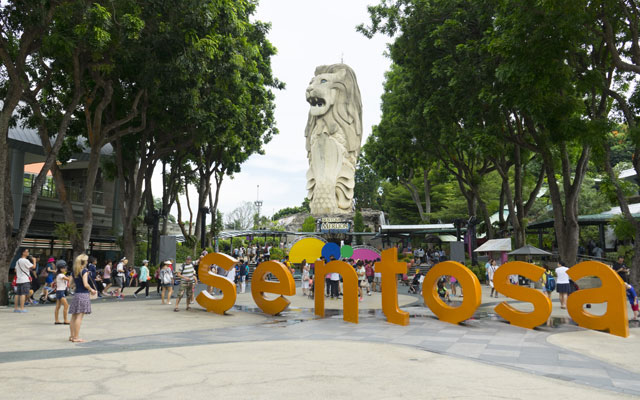
One Faber Group – an autonomous subsidiary of SDC that manages attractions such as Sentosa’s iconic Merlion structure, Singapore Cable Car and Faber Peak Singapore – has launched its own brand material and will promote them to target markets such as India and China.
However, the prevalent sentiment is that the district has a place in Singapore’s new identity.
Tracy Lui, assistant director, marketing & communications, One Faber Group, said: “In a Passion Made Possible video, there is a scene of the Henderson Waves, which is actually located at Mount Faber Park. We hope to use that platform to extend the reach wider for tourists to visit the park… and, using the cable cars, continue their journey into Sentosa.”
Raj suggested: “A HarbourFront guide in line with the Passion Made Possible campaign should be done up and promoted to tourists as well.
“The walking trail along Mount Faber should be promoted more to bring out the passion for exploration in visitors. There is a lot of good food options in the area too and that should bring out the foodies in travellers.”
But hope is not lost for the precinct. TTG Asia understands that SDC is “working closely with STB”, revealed Ang.
She continued: “What STB has released to the market is just the beginning of a multi-year branding effort. Sentosa is working closely with STB in several markets to be part of the future phases of this brand building effort.
“Sentosa is not a one-trick pony. Our overall value proposition as The State of Fun will continue to come out more strongly through our own brand and campaigns,” Ang concluded.
With support from the NTO and a dash of ingenuity among a new generation of entrepreneurs, a fresh wave of walking tours has taken off in Hong Kong over the last five years, all wanting to show visitors the local characteristics and colours of the city.
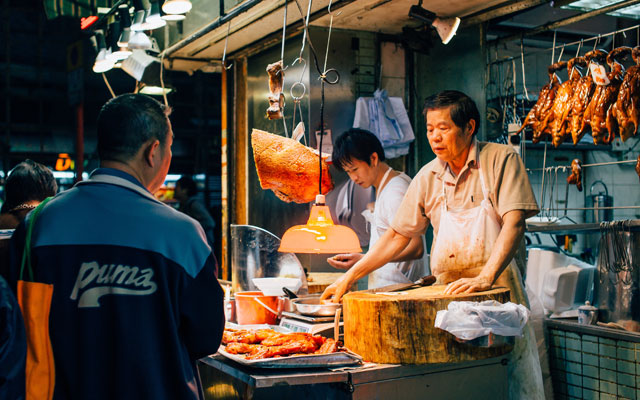
Food is a central experience for many walking tours. A night market in Sham Shui Po pictured
The new ideas are, in part, spurred by Hong Kong Tourism Board’s (HKTB) New Tour Product Development Scheme, which was launched in 2012-13 to encourage the local trade to create unique and diverse experiences and tours for visitors to the city.
By the seventh round of the scheme in late 2017, about 46 tour products had been launched to date, covering living culture, nature/outdoor, food & wine, heritage and arts & culture. Selected tours are subsidised dollar for dollar, up to a limit of HK$500,000 (US$63,900), for one to three years of marketing support.
The initiative has also spurred the growth of small-scale agents specialising in niche products that big operators seldom venture into.
One beneficiary of the HKTB initiative is Walk in Hong Kong, which was established in 2014 and currently operates more than 20 curated walking tours routes, mostly covering Kowloon and Hong Kong Island.
“Our vision is to unveil various interesting facets of our city. Instead of shopping, we visit old shops, street corners and even cultural scene,” said co-founder and CEO Paul Chan.
Finding the city’s tourism products lacking the depth and quality that overseas walking tours offer, Ling Ho established Ho Ho Go Experience in 2015 to offer cultural walks, community tours and hiking excursions; the enterprise has since received HKTB’s funding twice.
Said Ho: “What sets us apart is the in-depth aspects of our tours. Our cultural hosts all possess a university degree and some are retired professionals.”
Hong Kong Foodie Tasting Tours is another walking tour operator that focuses on the city’s culinary culture. Tasting locations so far only cover Sham Shui Po, Taipo, Central and Sheung Wan, with more spots to come later this year.
Its tailor-made tours are catered for small groups, led by licensed tour guides with an emphasis on interaction and offering knowledge about the local neighbourhoods, director Cecilia Leung told TTG Asia.
“We visit small family-run eateries with a unique history behind them instead of large chain restaurants without any character,” she stated.
Besides direct online bookings and digital marketing, the outfit also works with travel agents to attract different clienteles.
Hotels are also looking for off-the-beaten-track experiences like neighbourhood tours for their guests, noted Chan. Walk in Hong Kong recently collaborated with Marriott Hotels in Hong Kong to provide exclusive tour programmes for its guests.
“Unlike traditional operators targeting the mass market with marketing dollars on leaflets for hotels, we sell it online. Young visitors skip asking hotel concierges for information and search online for something unusual,” Chan added.
Walking tours are also starting to receive attention from outside the tourism and hospitality sectors, as they are seen as a way to rejuvenate and engage the local community. For instance, Link Real Estate Investment Trust’s four community tours (Kowloon, Stanley, Taipo and Yuen Long where its malls are located) encompassed 20-plus themed tours covering four curated routes to let participants experience the authentic Hong Kong lifestyle from different perspectives. The initiative ended last December, with only the Kowloon Tour still being run upon private request.
A group spokesman said Link is currently in discussion with tour operators to explore the feasibility of running the guided tours again this year.
While enthusiasm for such immersive walking tours run high, operators acknowledged the challenges of running these programmes.
“It’s not easy money and requires immense efforts to nurtue tour guides with passion,” pointed out Leung.
Getting experts to lead the tours also translates into higher operating costs. “The key challenge is that a lot of sub-standard operators in the market copy ideas and offer tours at very cheap prices,” said Ho.
“It means our operations are dearer compared with traditional tours, but are definitely of high-quality caliber,” she added. “That’s why we are not yet in the profit stage.”
Sharing similar sentiments, Chan shared: “(Walk in Hong Kong) hasn’t yet grown into a cash cow and requires our persistence and foresight to find irreplaceable cultural content and guides for organic growth.”
However, Chan believes that the “emerging” walking tours concept will soon become mainstream when the group tours travel preferences diminish in future and more visitors opt for experiential and immersive experiences.
Which is why the trade does not view the entry of Airbnb into the touring space through its Experiences programme as a threat but a reflection of a new travel mindset and phenomenon. Said Chan: “My concern is whether they can tap more visitors to Hong Kong and make the pie bigger.”
Why carve ILTM Asia into two separate shows?
Suppliers told us that they increasingly have two business strategies – one for China and one for the Asia-Pacific region – so we have responded by creating ILTM Asia-Pacific in Singapore (in May) and ILTM China (staying put in Shanghai, in October); two separate events to support two demanding economies.
The Asia-Pacific region has grown, and continues to grow, faster than any other. The 2017 UNWTO Asia Travel Trends talks of the perfect climate for “exceptional performance” in international tourism into Asia and how, also considering economic growth, this has given an added “boost to tourism, particularly through a vibrant and affluent middle-class, with 80 per cent of travel intra-regional”.
Alison Gilmore
The creation of ILTM Asia-Pacific supports and taps into this dynamic growth in travel. This will be the first intra-regional luxury travel show with curated buyers from 21 countries across Asia-Pacific as well as from key international markets.
There will only be a limited number of Chinese buyers present at ILTM Asia-Pacific. Chinese agents will be invited to ILTM China.
So there will be buyers from Asia-Pacific who were never at ILTM Asia previously?
Yes, the size of ILTM Asia-Pacific allows us to increase the number of buyers to the event and we are currently expecting some 600 to be attending (Editor’s note: ILTM Asia fielded around 800 buyers, many of them Chinese buyers).
As regards new faces from key Asia-Pacific source markets, we have already received a 60 per cent increase in interest from Australian buyers as well as key source markets including Singapore (+47 per cent), India (+50 per cent) and Japan (+32 per cent). There is also intensified interest from Hong Kong and South Korea, as well as the Philippines and Indonesia.
What budgets do these buyers work with?
All buyers who are invited and apply to attend must prove they have a client base of high net worth individuals. In processing applications individuals have to be established, provide references, be a senior decision maker and have to be dealing with regular outbound travel for their clients.
To give an idea of spending power, at ILTM Asia 2017, 59 per cent of buyers placed orders at the event and 90 per cent planned to place orders in excess of US$10,000 as a direct result of the show. Over a third of all buyers expect to spend US$100,000+ with clients they met at the event.
What luxury products are in demand?
One buyer describes her clients and some trends in the sector of high-end luxury weddings in Asia. Evelyn Mills, founder of Marriage Maestros and Wedding Maestros in Hong Kong, said she is seeing a healthy increase in spend and demand for more diverse venues and destinations for the regions wedding ceremonies. Clients can spend anything from US$300,000 to US$1 million, depending on the size and duration of the wedding. Equally more and more couples are opting to do multiple celebrations as opposed to one main big event, so destination choice for not only the happy couple but also their guests means some of these ceremonies take out entire resorts. Eighty per cent of her clients plan their weddings inter-regionally.
Why incorporate ILTM Japan into ILTM Asia-Pacific?
With the continuing global demand for Japanese luxury travel experiences, ILTM Japan is now part of ILTM Asia-Pacific with its own area of the show and more space to grow. This new location for the event means that not only suppliers have access to all of the buyers attending, but they also can take advantage of the networking and social themes, all of which will add more opportunities to do business. We are expecting some 30 brands including, Andaz Tokyo Toranomon Hills, Cox & Kings Japan and Kyushu Railway Company, and just over 40 specialist buyers and agents.
What percentage of the exhibitors who were at ILTM Asia last year are coming to ILTM Asia-Pacific?
We expect the majority of those who were with us at previous ILTM Asia events to be part of this new experience. So far that’s about 74 per cent of the brands, and a number of new suppliers who want access to the increased spread of Asia-Pacific and international buyers.
Established global brands returning include: Accor Luxury Brands, Alila Hotels and Resorts, Belmond, Capella Hotel Group, Como Hotels, Edition Hotels, Four Seasons Hotels & Resorts, Heavens Portfolio, Langham Hotels International, Mandarin Oriental Hotel Group, Marriott International Luxury Hotels, Oetker Collection, Pandaw River Cruises, Ponant, Preferred Hotels & Resorts, Regent Seven Seas Cruises, Relais & Chateaux, Rocco Forte Hotels, Rosewood Hotel Group, Silversea Cruises, Small Luxury Hotels of the World, Taj Hotels Resorts and Palaces and also, Waldorf Astoria Hotels and Resorts and Conrad Hotels and Resorts. A full list of exhibitors is available over the coming months on the show website.
New destinations so far include Fiji, South Korea, New Zealand, Dubai and Botswana who will be joining many destinations who have been with the event over the past years, including Catalonia and Los Angeles, Switzerland and Spain, with others due to confirm in the coming weeks.
Who’s new?
New brands to ILTM Asia-Pacific will be Crystal Cruises, Joali and Kudadoo in the Maldives, new Ganges experience Aqua Indica and new wellness resort Alba Vietnam, to name a few.
Are there any unique aspects to ILTM Asia-Pacific?
Yes! ILTM Asia-Pacific is going to have the feel and style of ILTM Cannes, famous for its ability to draw the very best quality buyers and suppliers to an annual gathering where business merges with a lot of entertaining, parties and serious networking. It’s what the ILTM Collection is all about: L events that explore the world of luxury travel.
TTG Asia Luxury is the exclusive trade media partner for ILTM Asia-Pacific 2018 and will be producing a special edition to be distributed at the show, in addition to its normal circulation to luxury travel planners across Asia-Pacific.
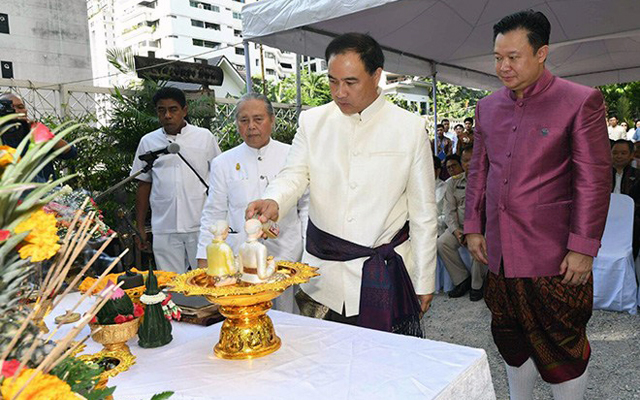
Kalin Sarasin and Yuthasak Supasorn leading a traditional ceremony
Kalin Sarasin and Yuthasak Supasorn leading a traditional ceremony
The Tourism Authority of Thailand (TAT) celebrated the 58th anniversary of its founding with traditional Thai ceremonies on Monday.
At the TAT headquarters, TAT board chairman Kalin Sarasin and governor Yuthasak Supasorn led the ceremony, with staff, former TAT governors as well as private sector and media representatives in attendance.
Ceremonies to mark the occasion included a Buddhist monk blessing; a ritual to worship the Cham Devi Shrine, which houses a statue of Chao Mae Cham Devi; and the paying of respect to a bronze image of Field Marshall Sarit Thanarat, who established TAT (then the Tourism Organisation of Thailand) in 1960.
In the afternoon, former TAT governors were presented with Buddha images, and senior staff were awarded for their long-serving contributions.
Many Chinese cruise goers want newer, bigger ships over local brands
The first Chinese cruise company targeting the mid- to high-end mainland China market will be gone by the end of this year, proving a short-lived experiment by Ctrip and Royal Caribbean Cruises and spotlighting once more the question: do Chinese really want a ‘China-centric’ brand?
Those who believe that Chinese passengers prefer global cruise brands win the bet in this round. When asked why Ctrip and Royal Caribbean are ending the joint venture after only three years in the waters, SkySea outlined the reason: The market has made it clear that it prefers newer, bigger ships from other well-known global brands. It is hard for a local Chinese brand to gain awareness among the competition now. Shareholders have agreed this makes the most sense for the global deployment strategy of the Royal Caribbean brands.
How times have changed in just three to five years for the Chinese cruise market. SkySea Holdings was established in 2013, with Ctrip and Royal Caribbean owning 35 per cent each in the venture, while Shanghai-based private equity firm Stone Capital holds the rest. It is indeed the first “real” Chinese cruise company (i.e. not built for ‘the gambling at high seas’ crowd) and it is a wager that the Chinese will take cruising like fish to water if a line fields ships that meet their specific needs.
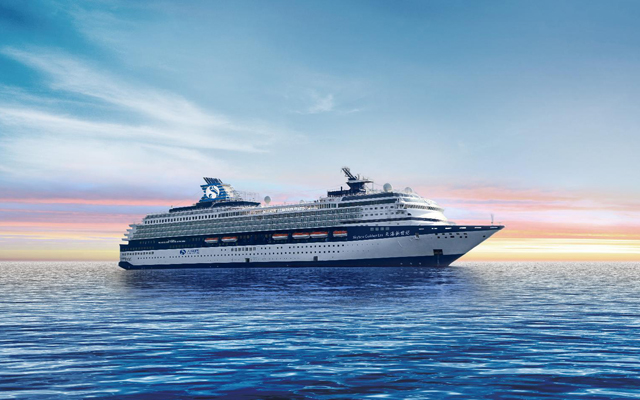
Golden Era, built in 1995 as a Celebrity Cruise ship, now competes with new, big ships that bear international brands
Any wonder that its first – and lone – ship is named the Golden Era. It was the former Celebrity Century, an aged Royal Caribbean ship which first entered service in December 1995 and was retuned to meet Chinese needs in 2006.
With hundreds of new balconies, brighter paint schemes, a grand new staircase, a chandelier with LED lighting, a more modern and spacious retail area, more table games in the casino to appeal to Chinese preference for group play, the addition of two Asian restaurants, a traditional teahouse and a new spa, it started operation in 2015 and was SkySea’s torchbearer as “the first contemporary cruise line specifically created for the Chinese market”.
However, in the past three to five years, the global cruise lines have also made a flotilla for the Chinese market, including even Royal Caribbean, which anointed the first-ever Chinese nationality godmother for a ship – famous actress Fan Bingbing for its most technologically advanced cruise ship, Ovation of the Seas.
Genting Hong Kong, parent of Star Cruises, fielded “the first Asian luxury cruise line”, Dream Cruises, basing the inaugural ship, Genting Dream, in Guangzhou. Norwegian Cruise Line re-entered Asia and based the Norwegian Joy in Shanghai – “a ship that Chinese VIPs deserve”, it told this editor.
Likewise, Princess Cruises with the Majestic Princess, also based in Shanghai. MSC Cruises reconfigured the MSC Lirica to suit Chinese needs, while Costa Cruises, one of the first international cruise lines to tap the China market, ordered two new ships built with the China cruise market in mind, to be delivered in 2019 and 2020.
In short, the Chinese are now so spoilt with newer ships, global brands, and prices going south as capacity goes north. The announcement that Ctrip and Royal Caribbean are ending the joint venture by autumn comes even as SkySea are making big announcements, including its most expansive deployment of the Golden Era to a record five seasonal homeports this year and for the first time to Taiwan.
Asked if he was surprised by what seemed an abrupt ending, SkySea Cruise Line CEO, Ken Muskat, said: “We never stop being creative and aggressive, and even with this latest announcement, we will continue to do everything to provide guests sailing on Golden Era during our last season with the best cruise experience possible.”
Muskat: focus now on SkySea’s final season
Muskat is a long-time Royal Caribbean executive (18 years) before jumping ship to MSC Cruises USA as executive vice president, then returning to the Royal Caribbean family as CEO of SkySea in mid-January last year.
Asked if he would be going back to Royal Caribbean and what the fate of the rest of the SkySea staff would be, Muskat said: “One hundred per cent of my focus at this time is on SkySea and making our last season in China the most successful ever as well as managing the wind-down process of the company later this year.
“Our shareholders at Royal Caribbean and Ctrip have committed to doing everything possible to absorb our eligible staff, which is under 1,000 employees, the majority are crew members onboard SkySea Golden Era. We will work to re-assign the crew to other ships within the Royal Caribbean family of brands and believe we will be very successful doing this for the large majority of crew. For our shoreside employees, we will also assist in trying to find new homes at Royal Caribbean or Ctrip to the best of our ability.”
SkySea had the ambition to add one ship a year. Instead, the Golden Era will be sold to TUI Germany’s Marella Cruises, with the transaction expected to be completed end-2018 and its specific last voyage to be announced in the coming weeks.
Not yet a golden era for any ambition towards creating a Chinese cruise company.