Wintastar Shanghai is believed to be KOP's largest project to-date
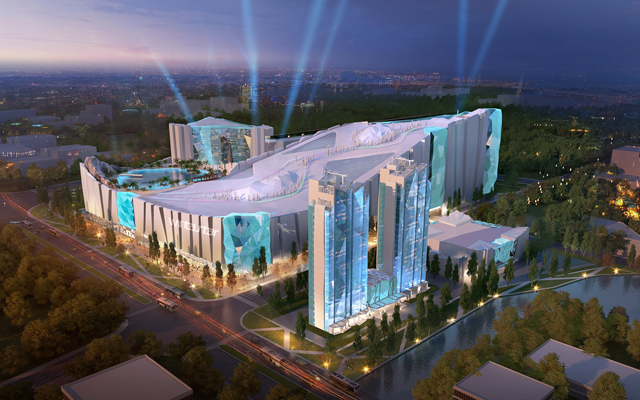
SGX Catalist-listed property developer KOP has begun construction on Wintastar Shanghai, an integrated resort that will house the world’s largest indoor ski and snow park of its kind.
The “multi-billion renminbi”, 227,000m2 Wintastar Shanghai marks KOP and its luxury hospitality brand Montigo Resorts’ maiden entry into China. Montigo Resorts will operate four themed hotels with over 1,000 room keys, including an Ice Hotel.
Wintastar Shanghai is believed to be KOP’s largest project to-date
Dubai-based Majid Al Futtaim, operator of Ski Dubai and Ski Egypt, will operate Wintastar Shanghai’s 90,000m2 Ski & Snow Park, which will offer hotel ski-in-ski-out access and après-ski.
Commenting on what she says is the developer’s largest project to date, Ong Chih Ching, executive chairman and executive director of KOPL, said: “The large-scale mixed-development will offer opportunities for KOPL to build new income streams, many of which are recurring in nature, for our sustainable growth going forward.
“The timing for Wintastar Shanghai could not be better, with Chinese consumers yearning for travel, leisure, novel experiences, and winter sports being the next big thing in China because of the Beijing Winter Olympics 2022.”
Targeted to complete in 2022, Wintastar Shanghai is expected to attract an estimated 3.2 million visitors annually on a stabilised basis.
Cookie-cutter experiences no longer cut it in a world where personalisation rules. This philosophy applies even before someone hops on a plane.
While it is good news that travellers are expanding their travel repertoires, this also means that the online journeys travellers take before making their final purchases are winding and unpredictable. These travellers are moving between platforms and increasingly migrating to mobile to make bookings via the mobile web and apps, accounting for 60 percent of overall travel bookings .
These trends are both an opportunity and a challenge for travel suppliers and OTAs. Not keeping up with the latest mobile commerce strategies means losing access to the modern, tech-savvy traveller. With competition in the travel industry more intense than ever, travel marketers who fail to keep up face the risk of being left behind as competitors take off without them.
Feeling daunted by the journey ahead? Here are some ways in which travel businesses can rise to the task and meet the needs of today’s digital nomads:
Make turbulent customer experiences a thing of the past
Travellers are looking up options between PCs, mobile web pages and mobile applications before making a booking. A consistent user experience across platforms is now paramount.
Moreover, Asian travellers take the top spot when it comes to making travel bookings on mobile, accounting of up to 49 percent of monthly mobile share of bookings. Apps are no longer just a “nice-to-have” feature for travel suppliers and OTAs. They have become a critical channel and source for online booking conversions.
Beyond that, apps are leading in terms of conversions and amount of money spent compared to the mobile web, meaning that snoozing on mobile app optimisation can cause you to leave precious revenue on the table.
Leveraging Asia’s mobile-first mindset no longer just entails developing responsive mobile webpages but requires a more concerted effort into optimising mobile apps and adopting in-app personalisation technologies to ensure frictionless customer journeys.
Understand the journey that happens before take-off
In 2017, two in five travel bookings were made on the day of the activity itself, while travel-related searches on Google with the terms “tonight” and “today” also grew by more than 150 per cent in 2017 .
These numbers highlight how the growing trend of last-minute travel bookings cannot be ignored by travel vendors, as these types of bookings are emerging as another major source of travel revenue.
According to Criteo’s Summer Travel Report 2018, mobile is key in capturing last-minute bookings with up to 80 percent of last-minute bookings being made on mobile devices worldwide. More specifically, mobile apps account for 41 percent of last-minute bookings. This comes as no surprise as travellers are seeking quick and convenient ways to make bookings on-the-fly.
Make relevant and attractive offers that travellers can’t refuse
Considering the importance of mobile app optimisation and the strong demand for last-minute bookings, it has never been more important for travel suppliers and OTAs to keep their audience engaged as they scour for recommendations and offers.
Aggregating data across multiple channels will therefore allow travel providers to make sense of the winding online journeys taken by today’s tech-savvy travellers. Applying machine learning and cross-platform personalisation technologies will supercharge travel suppliers and OTAs’ abilities to deliver personalised offers that can nudge customers in the right direction even when they are faced with countless other options.
Investing in an omni-channel advertising strategy is essential so travel providers’ offerings don’t get lost in the noise. Ensure that your customer’s journey does not just end via a one-way ticket out of your website or app. Keep them coming back for more with the right personalisation strategy.
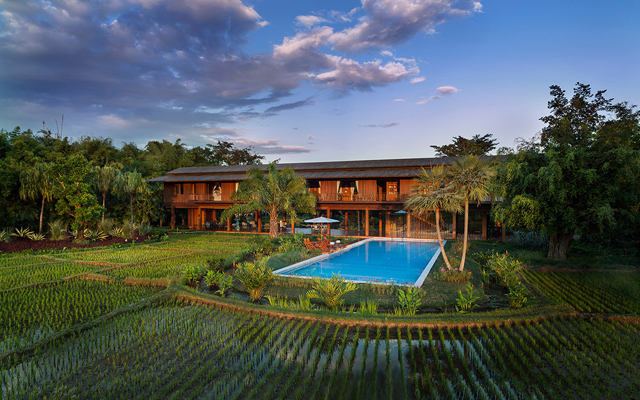
Effective immediately, Bangkok-based luxury travel specialist Smiling Albino will be the exclusive agent for Pa Sak Tong villas in Chiang Rai.
Pa Sak Tong, a secluded luxury estate, is made up of two luxury villas: Pa Sak Tong three-bedroom villa and Khum Sak Tong six-bedroom villa.
Khum Sak Tong six-bedroom villa
As the property’s exclusive agent, Smiling Albino will issue contracts and take reservations for the Chiang Rai villas. All existing contracts issued are still valid, although reservations and inquiries can be made through Smiling Albino.
Smiling Albino’s business development manager Stephanie Rowe said: “Smiling Albino has enjoyed a close relationship with Pa Sak Tong for over six years now. Our team has an intimate understanding of the property and Pa Sak Tong’s services. It makes sense for our team, with expertise in the niche luxury travel industry, to handle bookings for Pa Sak Tong, allowing them to focus on (providing guest experiences).”
Legacy Yen Tu, MGallery, Vietnam
Legacy Yen Tu, MGallery is perched 1,068m above sea level on the sacred Yen Tu mountain, located near Halong Bay in Vietnam’s north-east. The resort features 133 rooms, the Tho Quang restaurant, the Thien Tra Lobby Bar and a ballroom for up to 800 guests. Tue Tinh Am Wellness offers an open space for meditation, yoga and Truc Lam Zen practices.
W Kuala Lumpur, Malaysia
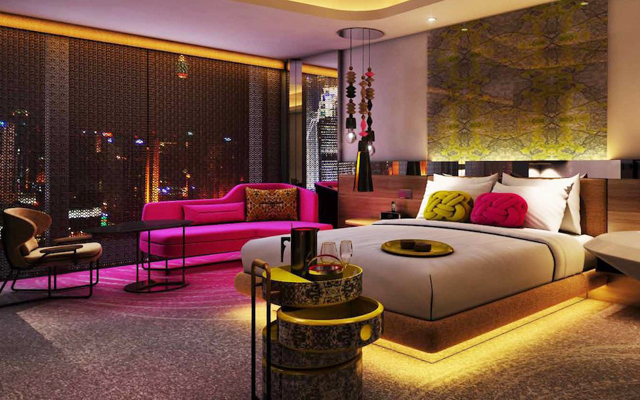
W Kuala Lumpur has opened its doors steps away from the Petronas Twin Towers. The first W hotel in Malaysia features 150 guest rooms and suites, including two Wow suites and the Extreme Wow Suite, measuring over 520m2.
F&B concepts include Yen, which offers contemporary Cantonese cuisine and fresh seafood; all-day dining restaurant Flock, where chefs serve up Australian, farm-to-flock dishes out of an open kitchen; Woobar; and the Wet Deck pool bar. W Kuala Lumpur will also offer two privately-managed dining and entertainment venues including Saint Pierre, a 70-seat French eatery that has earned a Michelin star at its Singapore location, and Wicked, a VIP club.
In addition to over 1,500m2 of function space, the hotel also offers a spa, gymnasium and beauty house for manicures, pedicures and more.
Mercure Mandalay Hill Resort, Myanmar
Mandalay Hill Resort has been rebranded as a Mercure. Set at the foot of Mandalay Hills, the resort offers 208 rooms and suites across categories of Corner Deluxe, Junior Suite, Executive and President Suite, as well as the Spa Villas which give guests executive lounge access. F&B options at Mercure Mandalay Hill Resort include Yadanabon Café; Ming’s restaurant showcasing Thai, Burmese, and Chinese flavours; Kinsana Garden Theatre restaurant, where cultural performances are staged; Kipling’s Music & Cigar Lounge; and a pool bar. The resort also features meeting rooms and a ballroom that can accommodate up to 160 guests banquet style.
Hyatt Regency Shanghai Jiading, China
Hyatt Regency Shanghai Jiading features 304 guestrooms from floors 27 to 40, including 23 suites, four executive suites, and a presidential suite. The hotel offers four dining and lounging spaces – Xiang Yue Chinese restaurant, Market Cafe, The Lounge and Pastry Shop. For meetings and events, the hotel offers Regency Ballroom, which spans 1,100m2 and adjoins an outdoor terrace, as well as eight meeting rooms.
Amartya Jogjakarta Hotel, Indonesia
Amartya Jogjakarta Hotel offers 18 rooms in three categories, sized from 30-38m2. In addition to a lobby that functions as a co-working space, the hotel also features a multi-functional event space. The Sidji Kitchen&dine all-day-dining restaurant serves up Western and Indonesian dishes, offering semi buffet breakfast and afternoon tea. The hotel is set to open its rooftop cafe and panoramic deck in a few months’ time.
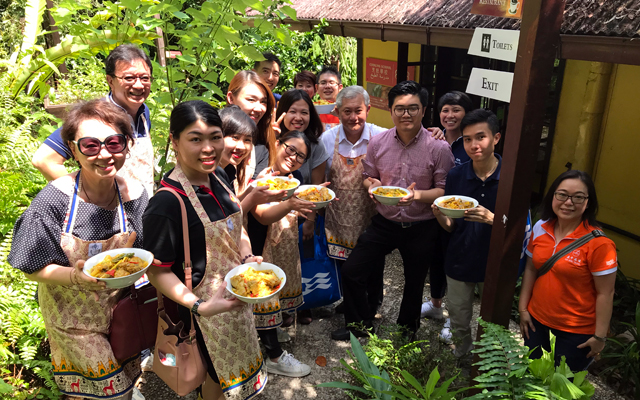
Farriek and travel agents pose with their culinary creations
Over 60 travel agents attended a cooking challenge held by Princess Cruises in Kuala Lumpur and Penang, as part of the company’s ongoing efforts to build relationships with the local travel industry community.
Through the fun activities, Farriek Tawfik, director of Southeast Asia says the company hopes to “strengthen bonds with travel agents who play an increasingly important role in booking cruises”, especially when it comes to fly-cruising itineraries.
Farriek and travel agents pose with their culinary creations
“This is also a way for us to reward travel agents who specialise in selling cruises and I was delighted to see the agents enjoying themselves with plenty of laughter and gusto,” he added.
Before the cooking challenge, Princess Cruises gave a presentation on its new 2019 itineraries to Alaska, Europe, Japan, Taiwan, Australia/New Zealand and more. It also highlighted new sailings from Singapore from November 2018 to March 2019 for sailings in the region.
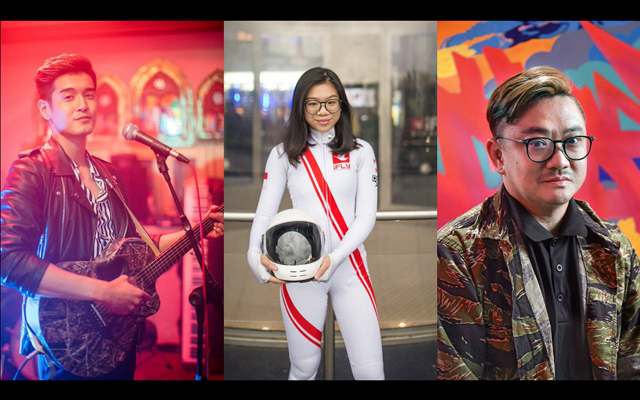
Singer Nathan Hartono, indoor skydiving champion Kyra Poh and contemporary artist Jahan Loh will feature in STB's marketing activities
The Singapore Tourism Board (STB) has kicked off the second wave of its Passion Made Possible campaign with a greater emphasis on co-creation with local talents.
Since taking off last year, the campaign has been launched in 20 markets through marketing activities and industry partnerships. Over the next few months, STB will roll out brand activations in at least 16 overseas markets.
In the campaign’s second wave, STB is introducing three new passion tribes – namely Culture Shaper, Socialiser and Action Seeker – adding to Foodie, Collector, Explorer and Progressor introduced last year.
Singer Nathan Hartono, indoor skydiving champion Kyra Poh and contemporary artist Jahan Loh will feature in STB’s marketing activities (credit: STB)
STB has been partnering local travel operators to launch Passion Tours. One of the three newly added tours in the collection of 27 is The Street Art and Food Tour, meant to appeal to Foodies and Culture Shapers.
“Anecdotally, we have (received) good feedback from the trade. There’s also been a lot of cross collaboration, on tours for example. Some (tour operators) have gone on to get in touch with personalities whose stories we have profiled; they are weaving these into their experiences,” said Lim Shoo Ling, director, brand, STB.
“From a Tribe perspective, overseas trade (players) have found it easier to convey the overall experience of Foodies, Collectors and so on. (Overall) the campaign has been useful in supporting the work being done in the travel trade.”
Thomas Cook (India), for instance, has joined forces with STB to “showcase the hidden gems that are yet unknown to many Indians”, in line with the experiential direction it is taking with the launch of its new My Holiday, My Way line of products, Rajeev Kale, president and country head of leisure travel and MICE of the company, shared in an STB statement.
Moreover, the campaign will this year see more active participation from 80 new local personalities.
Where STB and creative agency TBWA had previously led the creation of videos used in the campaign, this time the tourism board says local filmmakers are helming the conceptualisation and creation of short films.
“This is the first time we are doing (campaign videos this way). Last year we were telling stories on behalf of the Tribes. This year, we want (the ambassadors) to tell the stories from their perspectives, and that of others in their Tribe,” said Lim.
To co-create videos appealing to the Culture Shapers and Socialisers, STB has partnered Viddsee, an online video platform for short content contributed by creatives, along with local filmmakers Wee Li Lin (Culture Shaper) and Jacky Lee (Socialiser).
STB is also working with Khairuddin Hori, curatorial director and partner of Chan+Hori Contemporary, to bring pop-up art showcases to cities including Moscow, Yangon and New Delhi.
Named Atypical Singapore, the showcase presents work that deviate from what is expected of conventional “museum art” into the realm of “street art that (reflect the social) undercurrents”, said Khairuddin.
Other pop-ups include speakeasy-style bars targeting Socialisers and exhibits that showcase the stories and achievements of Action Seekers.
As cruise tourism gains steam among Indonesian travellers, Royal Caribbean Cruises sees strong growth potential for this emerging market that is likely to play a bigger role in regional cruising in the coming years.
“Cruise passengers from Indonesia in 2017 grew by 40 per cent over 2016, a total of 46,500 passengers, said Angie Stephen, managing director, Asia-Pacific of Royal Caribbean Cruises, citing figures from the Cruise Lines International Association (CLIA). “For Royal Caribbean, the number of passengers from Indonesia last year grew by 25 per cent compared to 2016.”
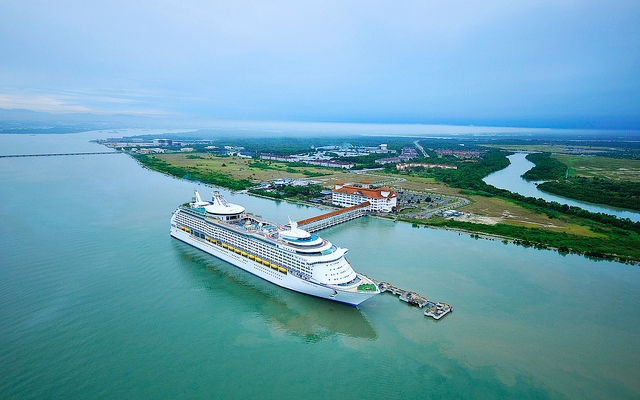
Voyager of the Seas at Port Klang, Malaysia
Despite the stellar growth posted by Indonesia in recent years, the country contributes only over one per cent of the total number of cruise passengers in Asia in 2017, which according to CLIA reached four million.
With only less than one per cent of Indonesia’s population having cruised before, coupled with the rapid expansion of the middle class and the desire of travellers to explore new things, Indonesia presents immense opportunities for cruising.
Ivan Soetikno, general manager of Multi Alam Bahari International, Royal Caribbean Cruises’ international representative in Indonesia, said: “Data from the Indonesian immigration shows that there are around 10 million Indonesian passport holders. Looking at arrivals to Singapore – the embarkation point of cruises for the Indonesians – there were around eight million arrivals. This market represents a huge potential for us.”
This year, Ivan expects the cruise line to achieve a 20 per cent year-on-year growth in cruise passengers from Indonesia.
Within the leisure segment, Ivan saw growing interest from families and millennials. “They enjoy the facilities and activities on board. There are many Instagramable spots that we have on board,” he said, adding that millennials were becoming increasingly important decision makers in family cruise travel.
Stephen was in Jakarta yesterday to promote the return of the Voyager of the Seas in South-east Asia next month, which is expected to appeal to vacationers in the region, including Indonesians, with its mix of short and long sailings from Singapore.
Voyager of the Seas’ South-east Asia season runs from September 2018 to June 2019, with over 70 sailings of three to seven nights from Singapore.
Stephen said: “In 2017, the majority of travellers (70 per cent) from Indonesia took the Asia sailings, with the 4D3N trips being the most popular one.”
At the same time, the company is also promoting the newly launched Symphony of the Seas offering sailings in the Caribbean from Miami to entice travellers to cruise beyond Asia.
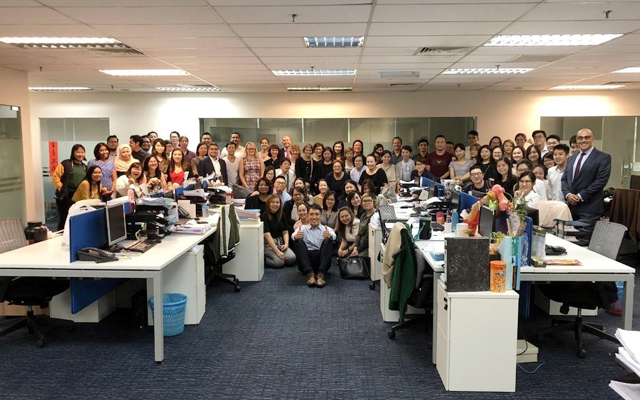
Miki Travel managers from around the world and staff from its Kuala Lumpur office
Miki Travel recently invested in two online booking systems to facilitate ease of doing business and enhance confirmation speed, as the company plots its expansion in Asia.
In January, the company’s online group hotel booking system went live, enabling its 14 markets in Asia to communicate and deal directly with hotel suppliers in Europe.
Olivier Moeschler, CEO Asia Division at Miki Travel, said: “The online hotel booking system is doing very well with more than 3,000 hotels in Europe using the system. Our sourcing team is continuously educating suppliers in Europe on the needs and requirements of Asian travellers and how to generally work with Asians, and vice versa.
Miki Travel managers from around the world and staff from its Kuala Lumpur office
“The big difference between Europe and Asia is that in Europe there are more independent owned small hotels, thus the education process takes longer. In Asia, there are more chain hotels.”
In addition, an online booking system for group bookings to restaurants and food outlets in Europe is in the works. Set to go live in 2019, this will work the same way as the group hotel booking system, enabling Miki’s representatives in Asia to deal directly with restaurant and food outlet suppliers without having to go through Miki’s staff in Europe.
The company is also developing a Michelin-star restaurant programme for restaurants that can serve tour groups. Clients can be seated at smaller tables and enjoy a more intimate dining experience while also benefiting from reduced group rates, shared Moeschler.
The programme is the result of a growing trend among Asians seeking local dining experiences on their holidays in Europe. Other trends the company has seen over the last few years is the growing interest for newer destinations for repeat Asian visitors to Europe.
“We see growing demand for requests to visit smaller cities outside of the capital. The length of tours to Europe has also gotten shorter over the past five years. The average is currently between 7 to 10 days, whereas in the past it was between 10 days and two weeks,” said Moeschler, adding that travellers also tend to make more trips to Europe annually as compared with five years ago.
He said requests for private tours, of up to six people are also on the rise. “With incentive travel, Europe has also regained its popularity and there are more groups travelling there as compared with two years ago, when Asian companies tend to avoid travelling to Europe due to fear of terrorist attacks,” shared Moeschler.
Over the last two years, Miki Travel had expanded to four new Asian markets, namely the Philippines, Vietnam, India and South Korea and the company has hired more than 200 full-time staff for its various Asian markets.
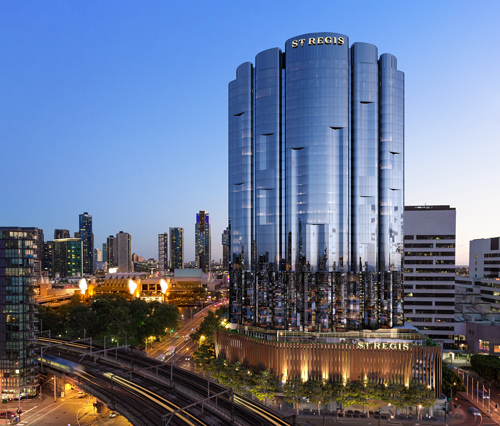
The St Regis Melbourne will rise in 2022 as the luxury brand’s first in Australia, adding to the growing crop of new hotels that are opening in the city.
Owned by Century Group Aus, this new-build hotel will be located in the luxury mixed-use precinct Flinders Bank on the corner of Spencer and Flinders Streets. Guests will also be within walking distance of Collins Street and the Melbourne Convention and Exhibition Centre.
St Regis Melbourne
1 of 2
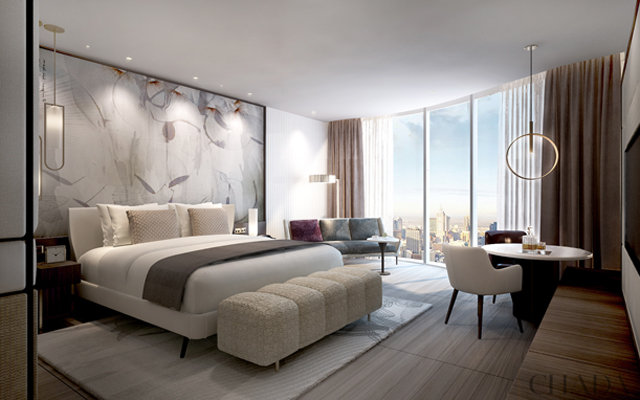
The 33-storey Flinders Bank will house the St Regis Melbourne across levels two to 11 and include 168 guestrooms and suites, offering views of either the Yarra River or city skyline.
F&B offerings will include a speciality restaurant in addition to a sophisticated Drawing Room space and the St Regis Bar, which will serve up the local rendition of the brand’s signature cocktail, the Bloody Mary.
The hotel will also feature a fitness and wellness centre with a 25m indoor swimming pool, spa and beauty salon.
The Pyeongchang Winter Olympics and recent international affairs have launched the Gangwon province into a momentum of growth, with tourism stakeholders rolling out programmes and infrastructure expansion for the region.
Most notably, the games brought the high-speed rail (KTX) to the quiet seaside city of Gangneung. Travellers can now commute to and from Seoul in just 1.5 hours, compared to the previous 4.5 hours.
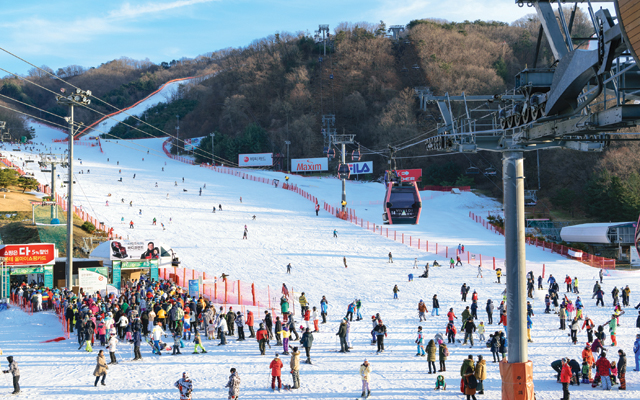
Gangwon is popular for ski tourism; Vivaldi Park ski resort pictured
Chung Man Ho, vice governor of the Gangwon Provincial Government, told TTG Asia that transportation accessibility for the province has “improved dramatically”.
Some 2.4 trillion won (US$2.1 billion) was spent for the Pyeongchang Olympics, and of that 1.5 trillion won went towards social overhaul – including the construction of highways and cleaning up of streets – which “had a huge benefit for Gangwon as a whole”, he described.
The area has also seen a slateol of hospitality developments, among them Ramada Gangwon Sokcho by Wyndham Hotel Group, Lakai Sandpine Resort, St John’s Hotel and Gangneung Tourist Hotel.
Michael Kim, director franchise operations, South Korea, Wyndham Hotel Asia-Pacific, shared: “Sokcho and the whole of Gangwon have received huge benefits from the Olympic Games. Ramada Sokcho saw 100 per cent occupancy during the Olympic Games, and now reports an average of over 80 or 90 per cent. Tourism is booming in the Gangneung area too, so we have opened properties… such as in Chuncheon.”
More is still to come. Leanne Harwood, InterContinental Hotel Group’s vice president operations, South-east Asia and Korea, hinted that the group is eyeing developments that can “cater to guests (such as) winter sports enthusiasts” visiting Alpensia Pyeongchang.
Beyond the Winter Olympics, stakeholders believe that the improving North-South political climate has also instilled confidence in tourism to Gangwon, which lies along the border with North Korea.
Yoon Seung Hwan, Korean Tourism Organization’s (KTO) director of Singapore office, said the impression of North Korea as a safe destination is “getting better”, and that KTO is working to incorporate the Korean Demilitarized Zone into more tour itineraries.
He added that KTO is also promoting Gangwon as an outdoor destination through “complementary activities to skiing and more experiences using the new facilities”.
To support an anticipated visitor influx, Gangwon is working on expanding tourism infrastructure, said Chung. This includes facilities in the mountainous regions, a marine tourist complex on the east coast and Legoland Korea in Chuncheon.
Of the 100 million visitors to Gangwon annually, three million are foreigners. The province hopes to grow this to four million this year, and five million by 2020.
With the help of the upcoming international events, Chung is confident that arrival numbers will grow “beyond expectations”.


 Legacy Yen Tu, MGallery, Vietnam
 Mercure Mandalay Hill Resort, Myanmar
 Amartya Jogjakarta Hotel, Indonesia