HolidayTaxis buy a 'strategic' fit with Hotelbeds' ancillary push
Hotelbeds is making a bigger push into the rapidly expanding ancillary distribution space with its acquisition of HolidayTaxis Group, a UK-based provider of transfer and wider mobility solutions across 150 countries.
Deemed a “strategic fit”, the latest acquisition follows Hotelbeds’ recent rename of its ancillary product line as Beyond the Bed, a business unit involved in the sourcing and distribution of transfers, activities, tickets, theme parks, car hire, travel insurance and specialist tours.
HolidayTaxis buy a ‘strategic’ fit with Hotelbeds’ ancillary push
Joan Vilà, executive chairman of Hotelbeds, commented: “In recent years our ancillaries business has grown substantially as the strength of our technology platform and global distribution network has positioned us effectively to take full advantage of the increasing demand for in-destination activities worldwide.”
HolidayTaxis will remain a separate and independent brand from Hotelbeds, but will form part of the Beyond the Bed business unit. The CEO of HolidayTaxis, Ian Coyle, will report to Javier Arévalo, director of Beyond the Bed.
Coyle added that the acquisition would enable HolidayTaxis to share additional ancillary revenue generating solutions with the 60,000 global travel selling partners of Hotelbeds, “many of whom are very hard to reach otherwise”.
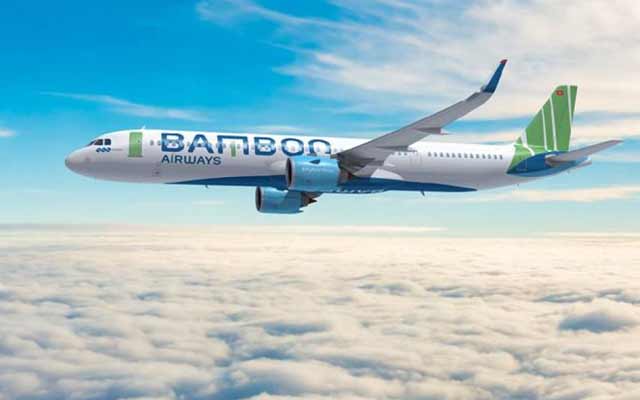
A new Vietnamese airline, Bamboo Airways, is expected to launch its first flights within weeks.
According to a Reuters report, the Vietnamese government on Monday issued an aviation licence to the new carrier, a unit of FLC Group.
The airline will operate 100 domestic and international routes when operational, Reuters reported quoting a government statement.
Bamboo Airways will soon take to the skies
The government said in its statement that the airline’s first flights will connect Hanoi and Ho Chi Minh City with the country’s tourism cities.
In March 2018, under the witnesses of general secretary Nguyen Phu Trong and president of France Francois De Rugy, FLC group signed the agreement to purchase 24 Airbus 3210 Neo aircraft, with the contract valued at a listed price of US$3.1 billion.
Bamboo Airways’ representative went on to sign an MoU with Boeing at the US Chamber of Commerce in Washington DC, witnessed by Vietnam’s deputy prime minister Vuong Dinh Hue.
With this, FLC completed the deposit procedure for the agreement, which was worth US$5.6 billion.
Based on the agreement, Boeing will deliver 20 Boeing 787-9 Dreamliner to Bamboo Airways from April 2020 to the end of 2021.
Capital infusion will help KKday expand into new markets
Taiwanese tours and activities e-commerce platform KKday has announced an undisclosed investment from its series B+ funding co-led by Line Ventures and the Alibaba Entrepreneurs Fund.
Existing investors, including CDIB Capital and Monk’s Hill Ventures, also participated with follow-on investments.
The strategic funding is expected to accelerate KKday’s efforts to leverage technologies in travel bookings and experiences and further its global expansion into new markets.
Capital infusion will help KKday expand into new markets
The capital infusion will help KKday grow its operations in Japan, China and South Korea, and expand into new markets including Europe, Australia and New Zealand, and the US.
KKday, which launched in 2015, has been expanding its business and its array of product offerings and today offers more than 20,000 experiences in over 500 cities and 80 countries.
The two parties will begin their first strategic collaboration later this month in Taiwan when Line launches Line Travel, an in-app service that enables users to search and book flights, hotels, tours and activities, as well as to plan and share their itineraries with friends.
According to KKday, more global collaboration with Line is in the pipeline.
“Asia’s travel experience booking market has had explosive growth due to the changing of consumer behaviour,” said Masato Endo, investment director of Line Ventures.
Chen Ming-ming, the founder and CEO of KKday, commented: “The investment and collaboration with Line is a huge breakthrough, not just for KKday, but also for the travel industry. We are committed to digitising travel experiences with our partners and are very excited to be working with Line to build frictionless travel experiences for travellers worldwide.”
Starting with its last round of investment, led by Japanese travel giant H.I.S., KKday has been deepening its partnerships with strategic investors.
Earlier this July, KKday announced financing from Alibaba Entrepreneurs Fund and launched a flagship store under Fliggy, Alibaba Group’s travel portal in China.
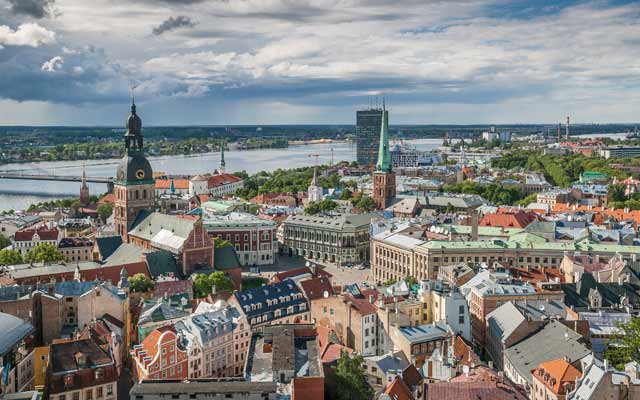
Latvia sees surging interest from Chinese travellers
Europe continues to be firm favourite among Chinese outbound travellers, but it’s niche destinations such as the Baltic states which are seeing high pace of growth from the Chinese market.
The EU-China Tourism Year (ECTY) in 2018 is bearing fruit for European destinations, which saw a year-to-date increase of four per cent in Chinese arrivals for the first eight months of 2018, along with a year-on-year increase of 2.2 per cent during May-August.
Latvia sees surging interest from Chinese travellers
Forward bookings from China to EU countries for September to December are ahead by 4.7 per cent from last year’s booking situation.
CITS group Shanghai, secretary director and general manager, Lu Jun, estimated that the ECTY resulted in more than 10 per cent increase in traffic to Europe.
Speaking to TTG Asia at the recent Global Tourism Economy Forum in Macau, he said: “Eastern/Central Europe, especially the Baltic states, have seen great growth. In fact, we have already seen Chinese visitors’ footprints spread beyond key cities through EU’s promotions of destination countries like Slovenia, Czech and Poland.
“The Chinese have learnt more about them as these countries created (dedicated marketing) to woo Chinese. For example, Slovenia highlighted the good (diplomacy with) China dating back to the 1950s.”
Fosun Tourism Group, chairman and CEO, Qian Jiannong also attributed the growth to favourable factors like visa easing, growth of disposable income and the increase of direct flights.
These, combined, have driven traffic between Asia and Europe in the first half of 2018. Qian said: “Europe is currently our key market and accounts for 48 per cent of our business. After taking full control of Club Med in 2015, our company also invested in Thomas Cook which runs 3,000 agents in Europe. We work with these two big European players and learn from them on how to increase our expertise.”
While about 80 per cent of Chinese traffic travel to big cities in Europe, there is burgeoning interest in lesser-known areas and the company continues to open more resorts offering in-depth experiences, he shared.
“As with our skiing village or beach resorts, guests do not just stay inside as we provide new products such side-line tour programmes to explore areas outside our premises.”
For Hua Yuan International Travel Group (ETI Holidays), the number of bookings for travel to Europe in 2Q2018 surged more than 100 per cent over the same period of 2017.
Chairman and CEO, Guo Dongjie, remarked: “The post-World Cup effect sent some good signs for the Chinese outbound market in the traditional low season. Meanwhile, it also spurred us players to come up with quality products in order to suit the new travel trends… We upgraded products for visiting multiple countries in Europe (Austria, Hungary, Czech Republic and Poland) and included a series product of visa-free countries like Serbia.”
The Republic of Latvia has seen similar staggering growth from China.
Deputy state secretary, Raimonds Aleksejenko, said: “Chinese visitors have doubled in number every three years and the number grows 30 per cent year by year. Baltic countries expect to welcome 60,000 more visitors per year. It’s vital for small and second-tier countries like us to have cooperative platforms as visitors come to the Baltic Sea region to see Warsaw, Helsinki and Baltic states so we need to work together to provide a coordinated package.”
Promotion of the Veneto Region of Italy started in China five years ago and Beijing-based manager, Sebastian Magrin, has worked to educate the market.
However, he contends that the regions is not top choice for Chinese yet and awareness is still low. Some signs that point towards further growth include more air connections to Italy from second-tier Chinese cities like Wuhan-Bolonga. And in 2019, Qingdao and Hangzhou may also be connected.
EU special counsellor responsible for ECTY tourism, emerging and creative industry, Eric Philippart, said: “Having Chinese travellers to visit Europe beyond key cities is pursued through a number of ongoing campaigns and is aligned with the desire of many Chinese travellers, especially among FITs (25 to 35 years of age). We will be looking at booking patterns during the first half of 2019 to measure the success of our efforts.”
Switzerland Tourism recently concluded its annual roadshow across the four Indian cities of Mumbai, Pune, Kolkata and Delhi to showcase the country’s diverse offerings.
Key partners included the cities of Zurich, Lucerne, Interlaken and St. Moritz, regions such as Lake Geneva Region and the Swiss Travel System, among others.
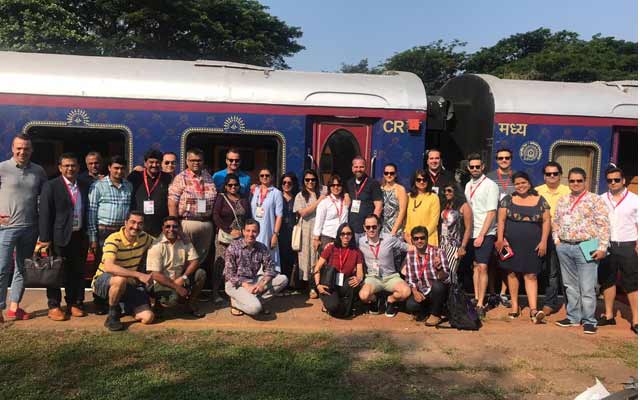
Networking programme on board Deccan Odyssey to Goa
As The Grand Train Tour of Switzerland encompasses the country’s top attractions and marks a key aspect of promotions for 2018-19, Switzerland Tourism also saw it opportune to offer a unique networking experience on Deccan Odyssey to Goa for its 22 suppliers and 34 buyers this year.
Switzerland’s appointment of Bollywood actor Ranveer Singh as the brand ambassador in August 2016 has led to increasing number of Indian overnights, according to Switzerland Tourism in a statement. In 2017, Switzerland recorded a 23.4 per cent increase in the overnights spent by Indians.
“Our numbers this year are also encouraging – we are up 10 per cent in hotel overnights in the period January to August 2018 as compared to the same period last year,” said Claudio Zemp, director – India, Switzerland Tourism.
“Besides this campaign, we also continue our travel trade campaigns – with regular webinars, training sessions in tier 2 and tier 3 cities as well our new e-learning modules on the Switzerland Travel Academy.”
Singapore
No longer content with just thrilling hardware, parkgoers are being wooed by value-added events in Singapore’s theme parks, with Halloween being the most notable season in the calendar.
Capitalising on this, Universal Studios Singapore (USS) is pulling in crowds with this year’s eighth edition of the marquee Halloween Horror Nights, which features its first intellectual property haunted house in collaboration with Netflix’s Stranger Things.
Universal Studios Singapore’s annual Halloween Horror Nights feature Netflix show Stranger Things
Having such international content helps the event attract more global and regional visitors, explained Markham Gannon, assistant director, creative, Resorts World Sentosa (RWS), operator of USS. He also described the collaboration as a way of reaching out to “a new breed” of younger audiences who now visit the event without their parents.
For this event, RWS has extended its marketing efforts in the region to include social media engagements, collaborations with travel partners and digital marketing channels to target digitally engaged young adults. Key markets other than Singapore include China, Indonesia, Malaysia, Thailand and the Philippines.
Beyond Halloween, USS has also rolled out other themed events based on popular movies, such as TrollsTopia and Jurassic World: Explore & Roar.
Wild Wild Wet (WWW), the water theme park in NTUC Downtown East, also held Cosfest WaterWorld in July this year. A first for Singapore, the cosplaying event in a water park featured a parade of international celebrity cosplayers floating along the river in costume.
Also in the spirit of Halloween, WWW last year hosted Singapore Halloween Festival’s Panic In The Park, a five-kilometre fun run that featured zombies hunting participants down.
While events work to draw in new and repeat visitors, WWW has also upgraded its hardware to continuously appeal to multiple generations. The water park recently doubled its size and introduced seven new attractions, including Asia’s first hybrid ride, Singapore’s first near-vertical high-speed body slide, and Singapore’s first high-speed 360-degree extreme loops ride.
The Royal Flush hybrid ride at Wild Wild Wet
Ronnie Tan, general manager, Downtown East, observed: “New high-thrill rides like Free Fall and Kraken Racers have quickly become a favourite of the younger crowd, while families with kids enjoy a miniature version of the thrill rides at Kidz Zone.
“We are also expanding our capability to host night events, ranging from launch events to movie screening on floats at the tsunami pool.” – Pamela Chow
Hong Kong
Hong Kong theme parks are switching things up, using technology to add new dimensions to rides and transforming park grounds into a venue for lifestyle events.
Ocean Park Hong Kong last year launched the first virtual reality (VR) rollercoaster in town. The Mine Train leveraged gamification and VR technologies, transporting riders into a 3D virtual rainforest world that combines thrill with conservation messages.
New entertainment offering based on Moana at Hong Kong Disneyland
While it has long been firmly associated with family-friendly day-time fun, Ocean Park now organises weekend evening events that fit easily into the social calendars of millennials and Gen Z, and hosted the Drink’N Music Fest in March 2018.
Marketing director, Rose Yeung said: “By directly tapping into the interests of young people – music and food – and giving them interesting content, we redefined what they (would typically) expect from the Park. Drink’N Music Fest is the first local music event that provides such a wide variety of quality beers and gourmet food for the audience.
“Young people are a key segment for the park, with social a big part of our engagement strategy. Content wise, collaboration with key opinion leaders and influencers has proven to be highly effective in taking the Ocean Park experience to young people in all our strategic markets.”
Meanwhile on Lantau Island, Hong Kong Disneyland Resort (HKDL) continues to ride on The Walt Disney Company’s popular franchises to woo a new generation of parkgoers.
Travel trade sales, director, James Tung, said: “More Marvel attractions have been lined up in HKDL’s ongoing park expansion. An attraction themed after Ant-Man and The Wasp is slated for 2019, with the Marvel themed area expanded… Other than Marvel, we will also leverage the stories and characters of Disney·Pixar, which is another popular franchise among the millennials.”
HKDL also constantly refreshes its seasonal and festive programmes. This Halloween, it will recreate scenes of The Nightmare Before Christmas in a walk-through Halloween Town, while Jack Skellington and Disney villains will invite guests to join them in their wicked antics.
Tung added: “The resort kicked off a multi-year expansion and development plan last October with at least one new attraction or entertainment offering to be launched almost every year from 2018 to 2023. This is expected to continue to enhance the appeal of the resort to its diverse markets in Asia.” – Prudence Lui
Desaru Coast Adventure Waterpark’s Penawar River
Malaysia
Sunway Theme Parks, one of Malaysia’s most established theme park operators, wants to breed loyalty in a fresh generation of parkgoers by reaching out to them in new ways, while keeping alive the timeless spirit of purveying family-friendly fun.
Senior general manager, Calvin Ho, said: “We stay in touch with the millennials and post-millennials and engage them through contests and promotions on our Facebook page and Instagram posts.”
For students, Sunway Theme Parks organises educational programmes, such as those focused on wildlife at both its parks, and some that delve into the Perak’s tin mining history at the Lost World of Tambun.
“It is our hope that student segment of today will remain loyal to us as they progress in life and bring their children and grandchildren to be entertained in the future. We have built such loyalty at Sunway Lagoon, with guests who have been visiting us when they were in their teens and in their 20s, and now visit with their children or grandchildren,” said Ho.
Some fun events at the park include Aqua Run 2, an annual fun run held in Sunway Lagoon that commenced in 2017. Through the 3.5 km run, participants will go through obstacles that involve climbing, sliding, crawling and running.
“Our year-end parties at both theme parks are memorable events with great fireworks displays and DJs,” he added.
Meanwhile, Desaru Coast Adventure Waterpark (DCAWP) opened on July 19, and features more than 20 rides and slides in five zones.
One highlight is the Shipwreck Reef, with an adventurous water coaster and flume ride that reaches up to 30m high with a series of loops, dips and spins, Philip Whittaker, chief commercial officer and CEO, Integrated Theme Parks & Attractions, shared.
Apart from the usual waterpark hits like slides and the lazy river, there are also added features such as a swim-up bar, cabanas and F&B facilities, Whittaker said.
“We are also planning a series of school holiday activities, surfing demonstrations, events and entertainment to give visitors fresh reasons to continue to experience the park,” he added. – S Puvaneswary
Japan
With the millennial generation having no lack of entertainment and amusement literally at their fingertips, Japanese theme park operators say they need to deliver a steady supply of new events and attractions, as well as fresh engagement strategies, to keep this segment satiated.
Universal Studios Japan (USJ), the second-largest theme park in Japan with 14.9 million visitors in 2017, rolled out three new attractions at this summer to attract repeat visitors and first-time guests, said Taku Maruyama, vice president of the company’s sales and alliance marketing department.
Curious George attraction at Universal Studios Japan in Osaka
The Universal Spectacle night parade was launched on May 17, followed by the Freeze Ray Slider and Playing With Curious George, both of which opened on June 30.
“Our main targets for visitors are millennial-age females and young families with children,” Maruyama told TTG Asia.
To reach those segments, USJ has identified a new trend in consumer behaviour that it has named “toki-shohi” – which literally translates to “moment consumption”.
“A lot of people nowadays spend money on having a ‘special moment’ that they can enjoy with others, so we are turning out park into a place where guest can create that ‘moment’ and share it with their friends,” said Maruyama.
Meanwhile, millennials account for about 15 per cent of all visitors to Huis Ten Bosch, the Dutch-themed park outside Nagasaki in Kyushu and the third most visited park in Japan. This segment peaks between September and February, when it is popular among students on graduation trips, said Kotaro Takada, corporate officer for the park.
“We have found that millennials really want to take advantage of the photogenic spots that are throughout the park, such as flower events and the umbrellas street,” he said, adding that information on these locations is passed on via millennial-friendly SMS and social media.
Tying in with that, the park has high hopes for its Water Magic illuminated fountain show, which will start in late October and mesh with the Kingdom of Lights attraction – the largest illumination attraction in the world.
“We take social media and social networking sites very seriously in promoting the park and encourage our guests to share their images by offering them gifts,” he said. “That in turn spreads the news about our attractions to more potential customers.”
Meanwhile, Megumi Ueda, general manager of Ayabex, observed: “We get regular requests from customers to visit Tokyo Disneyland or USJ, but we have recently noticed an increase in requests for tickets to the Studio Ghibli museum in Tokyo.
“These places are famous among (visitors) to Japan and, in most cases, they do not have the same sort of theme parks in their home countries. That is what makes them popular.” – Julian Ryall
Dreamworld mascots Kenny & Belinda
Australia
Australia’s major theme parks are updating their attractions with innovative technology and working to strike the right balance to provide a holistic experience for park visitors.
While new technologies are not as quickly or widely installed as its American counterparts, parks like Dreamworld and Warner Bros Movie World are introducing VR and projection mapping into their rides, with Dreamworld launching the i-Ride flying simulator for the first time in the Southern Hemisphere by end-2018.
Partnering with leading simulation company, Brogent Technologies, Dreamworld’s flying theatre will suspend up to 40 riders in 10-seat gondolas over a hemispherical screen while they heave, sway, surge and roll through an immersive journey of the Australian landscape, and experience special effects such as wind, mist and scents as they soar mid-air.
“Not unlike most current retail operators, we continue to challenge, balance and juggle both physical and digital environments for our guests,” says Paul Callander, Dreamworld’s COO.
“Technology can be seen as a disruptor to the traditional theme park model, but the way we see it, new state-of-the-art technology can complement traditional and immersive experiences.
“Theme parks need to embrace and evolve with new technology, without taking away from traditional experiences such as our rides, shows and attractions, which provide an emotive connection for our guests,” he continued.
Movie World has launched the Southern Hemisphere’s first VR coaster experience on its Arkham Asylum Coaster, which transforms the ride into a 360-degree experience with the technology syncing the physical movements of the popular coaster with the visual to take guests on a multidimensional journey at speeds of up to 85kmh and pulling 4.2Gs.
Movie World is also upgrading its Scooby Doo attraction, adding special effects such as projection mapping, mist and sound effects for a more immersive experience.
Parent company Village Roadshow Theme Parks’ executive general manager, Greg Yong, stressed that while technology can play a role in improving a theme park’s attractiveness, its implementation needs to be carefully planned.
“I believe the theme park experience is evolving and we now need to provide our guests with a holistic in-park experience.”
“We need to look outside of the trends and innovations within the industry and identify what guests are experiencing outside of the theme parks. This is something we have executed with our restaurant offerings at Movie World,” said Yong. – Adelaine Ng
Hokkaido was struck by two earthquakes in recent months, but tourism business has been quick to rebound particularly in the high-end sector, according to some of Japan’s luxury travel players.
A deadly 6.6-magnitude quake rocked the south of Hokkaido on September 6, damaging public infrastructure and triggering widespread power outages. Many evacuees are still living in temporary accommodation at press time.
Luxury demand up for post-quake Hokkaido
To soften the impact of the September tragedy on tourism, the Japanese government in October rolled out discounts for holidaymakers.
While the government subsidies were meant to attract bargain-seeking holidaymakers, it was the less price-sensitive high-end travel segment that showed quicker recovery, according to Masami Kono, CEO of Cril Privee, which provides customised travel services.
Speaking to TTG Asia on the sidelines of the Further East luxury travel show in Bali, he said his clients were choosing to proceed with their holiday plans as early as a few days following the disaster, soon after power returned to the prefecture.
In the mass market segment, group tours that included Hokkaido were delayed for weeks, he claimed. “Travel agencies have greater liability considerations, and hence had to allow for a wider window (for the risks to settle).”
High-end travellers, in contrast, were better able to make up their own mind about visiting the destination. “Many of our clients draw from (various) sources of information that led them to decide that the destination was safe to visit,” he shared.
Demand for Hokkaido is already back to the usual level for Cril Privee, driven by a recent surge in interest for Niseko from markets such as mainland China, Singapore, Hong Kong and Malaysia, Kono said.
Similarly, Hiroshi Kuchiki, founder and CEO of Magella Resorts & Trust, was positive that business recovery is in motion at the Japanese luxury travel company.
Unsurprisingly for him, the government’s discount initiative did little to entice high-end travellers to visit Hokkaido. Rather than seek to benefit from the tragedy, many in this segment tend more to be motivated by how they can help the disaster-struck destinations, he explained.
A more effective scheme to hasten recovery, he suggested, would be for a portion of what tourists pay to go towards quake recovery.
Meanwhile, Hokkaido Treasure Island Travel saw only two cancellations in the immediate aftermath of the earthquake, said Yuki Homma, director, inbound department executive manager, while disclaiming that this was off the small base number the specialist agency handles.
Homma shared that the agency, which hails most of its business from Asia, has recently observed growth in clients from Europe and the US seeking more active holidays in Hokkaido.
Space travel will remain domain for the ultra-rich for time being
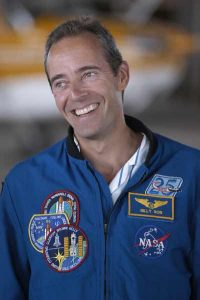
Imagine travelling from New York to Shanghai in 40 minutes or from Hong Kong to Singapore in 22 minutes. This may be possible within the next 15 to 20 years, said Jean-Francois Clervoy, a European Space Agency astronaut and veteran of three NASA Space Shuttle missions.
Space travel a domain for the ultra-rich for time being
Clervoy believes that given the developments in sub-orbital travel technologies and the fascination with space travel, we may witness such drastic improvements within our lifetime.
Clervoy: vast improvements in space travel technology
“It is interesting to observe that when very rich people wonder about what to do with their money, the first idea coming to their mind is space travel. Most of them have become rich thanks to their successful entrepreneurship. Therefore we can expect that following the fulfilling of their own dream, their next step will be to develop businesses based on space travel,” he said at the recent 10th APG World Connect Conference in Monaco.
Still, he qualified that it may be a good while more before space travel becomes accessible to the masses.
“Space travel is subject to universal laws of physics which makes it possible only with a huge amount of energy involved, making it necessarily more expensive and riskier than today’s regular air travel. I expect to see in my lifetime regular space flights for the privileged, rich individuals but mass space travel will likely come far later,” said Clervoy.
Moreover, beyond the technologies that will enable space travel, a great deal of work remains to be done in evaluating the practical needs that will arise.
“Due to its extreme conditions, space travel requires such a high level of excellence that it forces the aerospace industry to constantly challenge itself to get more efficient and safe.
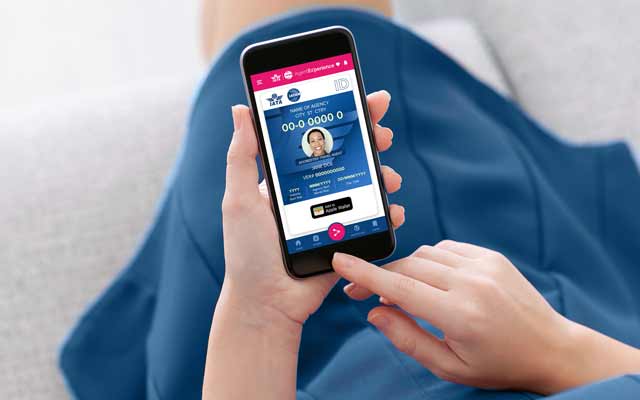
IATA is stepping up its global outreach efforts for its new digital identification cards for travel agents, encouraging industry professionals to get on board its paperless initiative to enjoy the perks and advantages as accredited cardholders.
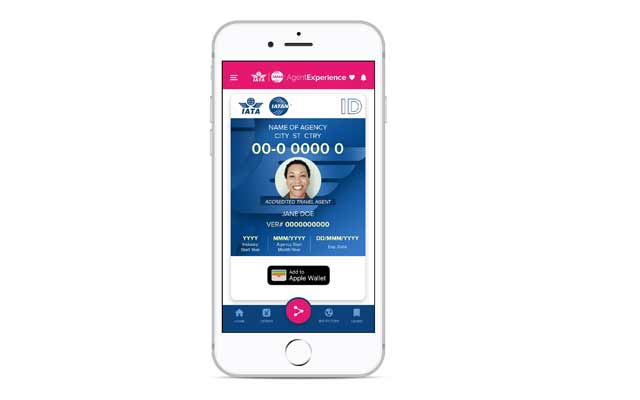
The IATA ID Card – also known as IATAN ID card for travel agents based in the US – is a globally recognised identification card issued by IATA to travel professionals working for IATA-accredited travel agencies.
The digital IATA ID card was piloted in Canada and Australia in August 2018, followed by a global rollout in September.
IATA's new digital ID cards for travel agents
1 of 4
Asia, in particular, is where the Montreal-based organisation now hopes to make greater inroads for its new digital card, Inigo Prieto, T&T product manager at IATA, told TTG Asia. “Penetration in Asia-Pacific is low, unlike strong acceptance of the card in Australia, Canada and the US,” he said.
The digital version, which complements the existing physical ID card, can be assessed through the IATA AgentExperience mobile app.
According to IATA, the new digital ID card accrues significant benefits to agents, among which is the easy proof and verification of travel agents’ professional status through email or QR code scan, greater protection against theft, and quicker access to industry offers and benefits from across travel suppliers worldwide within 48 hours of order confirmation.
The digital card is open to all IATA-accredited agents issuing air tickets through the BSP system, as well as Travel Industry Designator Service travel agents and tourism sales intermediaries.
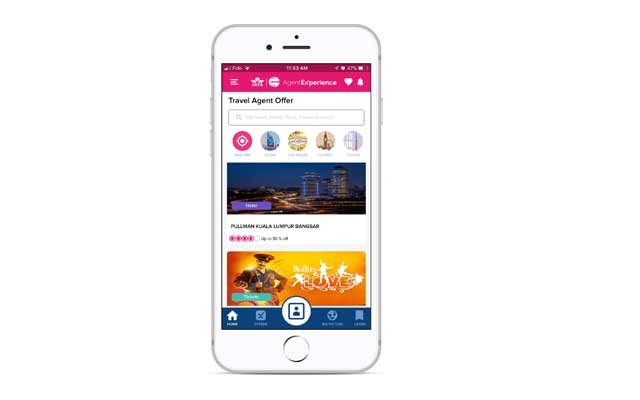
To entice more agents to adopt the paperless initiative, Prieto said IATA is actively enlisting industry industry suppliers to offer travel concessions and rewards to its accredited agents.
However, “education” is still needed for local suppliers to understand the benefits of granting rewards and concessions to travel agents, Prieto stated, with wider outreach and distribution of their products and services through authentic sellers being a key advantage.
So far, the app has saw over 13,000 downloads in the two months since its launch, accounting for 10 per cent penetration among the 120,000-plus cardholders worldwide.
The next phrase in 2019 is to “add more features and build a community of agents on the app”, Prieto revealed, including “delivering micro, bite-sized training such as best practices” for agents.
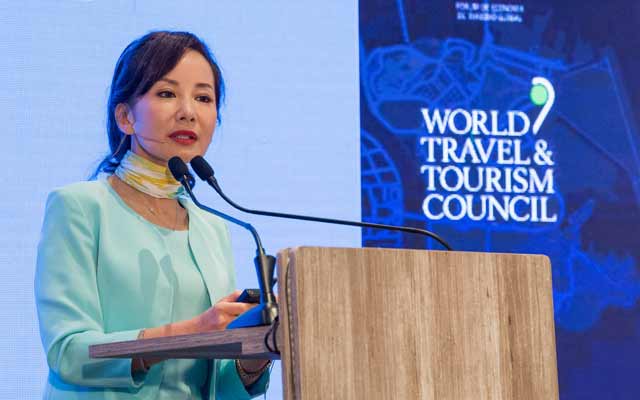
Ctrip CEO Jane Sun speaking at the Asia Leaders Forum in Macau
WTTC is highlighting the urgent need for more efficient processing of airport passengers using technology such as biometrics, but in Asia, trust and security as well as intergovernmental cooperation could pose challenges.
Air traveller capacity is estimated to grow from four billion in 2017 to 7.8 billion by 2036, according to IATA projections.
Speaking at the Asia Leaders Forum, which was held in Macau and hosted by the Global Tourism Economy Forum last month, WTTC president & CEO, Gloria Guevara, said: “We have an initiative which uses biometric data to (facilitate more) seamless experience and safe journeys in all aspects of travel including airport, cruise, hotels and car rentals.”
Ctrip CEO Jane Sun speaking at the Asia Leaders Forum in Macau
As it is, she said many airports around the world already use facial scans for identification and hotels are allowing check-in via mobile phones or fingerprint scans.
“Asia is hot for technology and its adoption is really fast in this part of the world. About 50 per cent of millennials come from Asia where they are very used to (new) technology.”
The downside of the technological age, however, is that automation could mean a lot of jobs may not be around in five to 10 years, which highlights the need to better understand what the future holds. “With that knowledge, we can determine the necessary skill sets and train people appropriately.”
Ctrip.com International is also pushing for biometrics and for using WTTC’s platform as a traveller digital identity database.
CEO Jane Jie Sun, explained: “This requires the joint effort of three parties, namely authorities, travel industry and travellers. The only way to success is by gaining consent from travellers to access their data – passport/identity card, flight information, hotel reservation, car rental booking – as well as the cooperation from industry and support of government.”
Given technological advancements – such as in biometrics, blockchain and cryptography – authorities can retrieve required data for visa screening, border security, tax refund, anti-terrorism and other purposes, she remarked.
“It enables us to identify who’s travelling at what time, when or where, who needs help and what kind of person poses a threat to the travel ecosystem. Also for tax refund where we often have very long lines, by working together and using a robust database, the process can be streamlined.”
Exo Travel, CEO, Hamish Keith, said: “It’s vital to move forward, to become pioneers and to be at the forefront of this kind of technology. Obviously, a number of countries in South-east Asia are connected with a lot of travelling across the borders, so if we can synchronise this travel technology and data, it’d really help us to move our tourism forward quickly.
He opined that Asia is not ready for such all-encompassing technological change yet, but is hopeful that change will come.
Industry stakeholders like ZuZu Hospitality Solutions, co-founder, Vikram Malhi Sikram, added that challenges include the lack of resources for smaller hotels as well as security issues.
He said: “It is really hard for small independent hotels run by local entrepreneurs to adopt such technology. Unlike international hotel chains, they can’t afford and don’t have the know-how.
“It’s also about how quickly customers can trust and adapt to the process as security… Questions of trust in suppliers arise with information security (a big concern). There are a lot of consumer issues that need to be resolved.”